
You're staring at a long resort list, watching airfare rise, and wondering whether to buy a pass before your dates are even settled. Colorado rewards decisive planning, but it punishes vague planning. The best trip balances resort choice, snow conditions, ticket timing, lodging, transportation, equipment, and backup options in one budget rather than treating each decision separately.
This Colorado Ski Resort Guide and Vacation Planning Tips approach is built for that reality. You'll learn how to narrow the mountains, choose dates that fit your priorities, decide between day tickets and passes, prepare for altitude and road conditions, and protect the trip against a weak snow start. If you also want broader ideas for how to plan a pain free vacation, apply the same principle here: remove avoidable decisions before departure.
Planning a Colorado Ski Trip From the Ground Up
Start with the resort, not the airfare. Colorado offers a dense collection of established mountains, but the right choice depends on who's traveling, how much terrain they need, whether they'll share a base area, and how much driving the group will tolerate. A family with beginners has different priorities from an expert group chasing steep terrain, even if both have the same trip length.
Build the decision in the right order
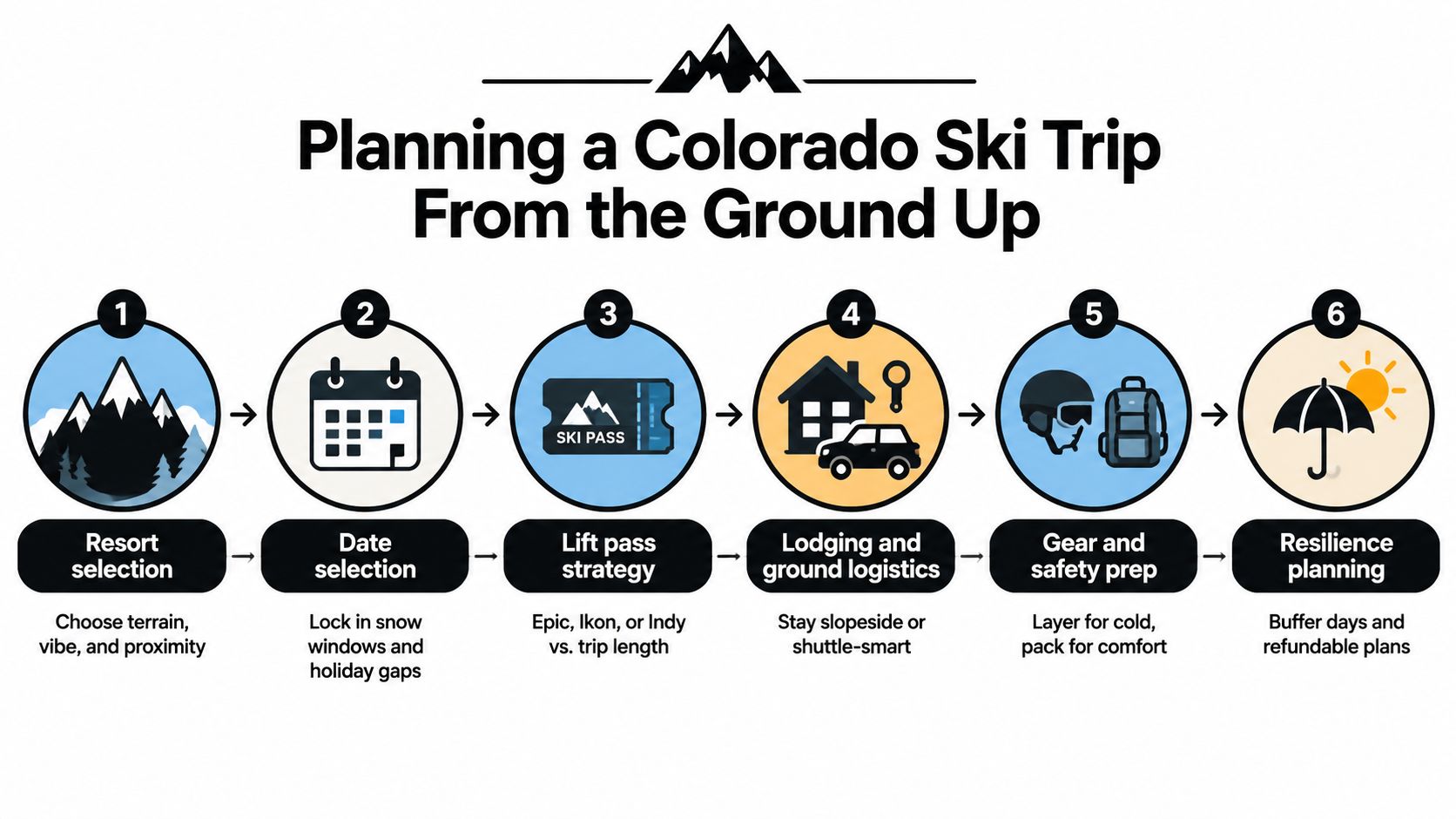
Use this sequence:
- Resort selection: Choose terrain, atmosphere, elevation, and access before comparing hotels.
- Date selection: Separate powder priorities from price priorities. Holiday weeks offer energy and full demand, while weekday shoulder periods usually offer calmer slopes and better availability.
- Lift pass strategy: Compare single-day tickets with Epic, Ikon, Mountain Collective, or Indy access only after you know how many days you'll ski and which mountains you'll use.
- Lodging and ground logistics: Decide whether slopeside convenience justifies its premium or whether a shuttle-friendly town provides better value.
- Gear and safety preparation: Reserve rentals, plan layers, and account for altitude before arrival.
- Resilience planning: Keep cancellation flexibility, buffer time, and non-ski alternatives in the same spreadsheet as your core reservations.
Planning rule: Don't chase the cheapest bed if it creates an expensive daily commute. Compare the complete cost of lodging, transport, parking, time, and missed ski hours.
The central trade-off is simple. Iconic destinations such as Vail, Aspen, Breckenridge, and Telluride offer mature infrastructure and distinctive resort experiences, but less famous mountains can deliver a more relaxed trip. Renting on arrival is usually the sensible choice for a short visit, while owning equipment makes more sense for frequent skiers who already know their fit.
Keep a written shortlist with one preferred resort, one value alternative, and one weather fallback. The Alaska cruise deals and packing guide offers a useful reminder that destination planning works best when logistics and contingency choices are made together. By the time you finish this process, you should have a defendable mountain choice, a booking window, a practical packing plan, and a fallback if coverage disappoints.
Why Colorado Stands Apart as a Ski Destination
Colorado's advantage comes from the combination of market depth, elevation, resort variety, and historical maturity. The state's ski areas hosted 14 million skier visits in the 2023–24 season, compared with a record 14.8 million in 2022–23, while spending across 18 ski-area municipalities reached $4.5 billion from November through March (Colorado Sun). The 2024–25 season recorded 13.8 million skier visits, the third-busiest season on record, reinforcing Colorado's position as a major destination market.
That demand concentrates winter activity into a limited seasonal window. Lodging, lift access, restaurants, parking, and airport transfers all become more competitive when travelers converge on the same mountain corridors. Your booking strategy matters because the state's appeal creates its own operational pressure.
Colorado's resort network also has deep roots. Loveland Ski Area opened in 1936, and resort development accelerated after World War II as former mining communities evolved into ski destinations. Expansion from the 1940s through the 1970s helped establish resorts including Winter Park, Vail, Steamboat, Breckenridge, Keystone, Copper Mountain, and Telluride as part of a mature destination network (Colorado Ski Authority history timeline).
Elevation changes the operating plan
Major Colorado resorts commonly begin around 8,000 to 10,000 feet and rise to approximately 11,500 to 13,050 feet. Higher terrain can preserve colder snow crystals and reduce rain exposure, but it also creates a real acclimatization issue for visitors arriving from sea level. Vail lists an 8,120-foot base, an 11,570-foot summit, and 3,450 feet of vertical, while Breckenridge rises from a 9,600-foot base to 12,998 feet. Arapahoe Basin reaches 13,050 feet (OnTheSnow Breckenridge resort information).
| Metric | Value |
|---|---|
| 2023–24 Colorado skier visits | 14 million |
| 2022–23 record skier visits | 14.8 million |
| 2024–25 skier visits | 13.8 million |
| Related spending period | November through March |
| Municipalities included in spending total | 18 |
| Early Loveland milestone | Opened in 1936 |
Choose the mountain based on more than snowfall totals. North-facing terrain, a high base, and reliable snowmaking can matter more than a headline annual average. For a useful warm-weather contrast, the Colorado hiking trails guide shows how the same elevation and terrain diversity shape summer travel decisions.
Matching Resorts to Skill Level and Travel Style
Don't choose a resort because it appears on a generic best-of list. Choose it because its terrain, village layout, crowd profile, and après-ski character match your group. A technically strong skier can enjoy a beginner-oriented mountain, but a group with mixed abilities needs enough separation and meeting points to keep everyone engaged.
| Archetype | Best For | Representative Resorts |
|---|---|---|
| High-alpine expert playgrounds | Advanced skiers and riders seeking demanding terrain | Telluride, Crested Butte, Silverton |
| Family-friendly intermediate hubs | Mixed groups, families, and broad groomer access | Breckenridge, Keystone, Copper Mountain |
| Après-ski nightlife scenes | Travelers prioritizing dining, bars, and village energy | Vail, Aspen, Steamboat |
| Beginner-soft learning resorts | First-timers, lessons, and low-pressure progression | Beaver Creek, Ski Cooper, Eldora |
For experts who want terrain first
Telluride offers a destination feel and serious terrain, but its remote position makes it a poor choice for a quick, low-friction weekend. Crested Butte suits confident skiers who value character and challenging lines over a polished resort village. Silverton is a specialist choice, not a casual group mountain. Its appeal lies in steep, guided, or expert-oriented experiences, so it shouldn't be your default recommendation for mixed ability.
For families and mixed groups
Breckenridge is the broadest all-purpose choice in this category. Its multiple peaks and substantial base-area services make it easier to divide the day without losing the group entirely. Keystone works well for families who want a straightforward base village and accessible progression. Copper Mountain's naturally separated terrain can help beginners, intermediates, and experts ski different zones while regrouping efficiently.
Group rule: Pick the mountain where the least confident skier can progress without forcing the strongest skier to sit out every afternoon.
For atmosphere and convenience
Vail is the polished choice for travelers who want expansive resort infrastructure, dining, and a recognizable village experience. Aspen is better suited to visitors who care as much about restaurants, art, shopping, and nightlife as skiing. Steamboat adds a more relaxed western identity and works well for groups that want a destination atmosphere without making every decision about technical terrain.
Beaver Creek is an excellent learning environment for travelers who value service and a controlled resort layout. Ski Cooper offers a quieter, less commercial experience. Eldora stands out for travelers based near Denver who want a mountain day without committing to a long resort stay. For car-free visitors, check shuttle availability before choosing a day-trip mountain, because transport convenience can matter more than terrain variety.
Timing Your Trip Around Price Crowds and Snow
The cheapest trip isn't automatically the trip with the lowest lift-ticket price. You need to combine date demand, advance-purchase timing, pass restrictions, lodging availability, and snow reliability.
Colorado resort coverage indicates that travelers can save up to 40% by booking lift tickets at least 48 hours ahead for the 2026–27 season, while other coverage reports potential savings of 35% to 50% when booking four to six months in advance rather than at the last minute (Colorado Ski Country). Treat those figures as planning signals, not guarantees. Exact prices vary by resort, date, and ticket inventory.
Read the calendar by travel objective
November averages 20 to 50 inches of snowfall, with very low crowds and walk-up tickets around $80 to $130, while March averages 60 to 100 inches, moderate crowds, and tickets around $120 to $250 (Colorado chauffeur seasonal guide). Early-season travel can be attractive for inexpensive lodging, but coverage and open terrain may be limited. March offers a stronger snow opportunity, but demand and ticket pricing rise.
| Trip Window | Lodging Cost Index | Lift Ticket Range | Typical Base Depth | Crowd Level | Pass Blackout Risk |
|---|---|---|---|---|---|
| November opening period | Lower | Around $80 to $130 walk-up | Variable and developing | Very low | Usually lower, verify pass terms |
| January midweek | Value-oriented | Date-dependent | More established | Low | Usually lower, verify pass terms |
| February through early March | High demand | Often higher | Often deeper | High | Holiday restrictions may apply |
| March spring period | Variable | Around $120 to $250 | Weather-dependent | Moderate | Spring-break restrictions possible |
The familiar advice to “book early” needs a sequence. For peak weeks, secure lodging four to six months out when possible. Buy lift tickets as soon as your dates are firm and the advance window is open. Reserve lessons and rentals before the busiest dates, especially for children and first-time skiers.
Passes require date discipline
Epic, Ikon, Mountain Collective, and Indy can make sense for repeat visits or multi-resort itineraries, but only if the included mountains match your route. Don't assume a pass is cheaper just because you're skiing several days. Compare the product's access rules, reservation requirements, holiday restrictions, and the number of days you'll realistically use.
Christmas, New Year, Presidents' Day, and spring-break periods carry the greatest demand. If your schedule allows, move the trip to weekdays outside those peaks. That single change often improves lodging choice, lift access, and the overall pace of the vacation more effectively than switching between similar resorts.
Lodging Logistics and Getting to the Mountain
Lodging determines how much of each day you spend skiing rather than driving, parking, or waiting for transport. Slopeside hotels offer the easiest mornings and simplest lunch breaks, but you're paying for that convenience. Base-village condos are often the strongest family option because kitchens, shared space, and walking access reduce daily friction.
Town hotels in Aspen, Vail, and Breckenridge can offer a better room or bed value, but they require a dependable shuttle plan, parking budget, or willingness to walk in winter conditions. Outlying options in Silverthorne, Eagle, or Grand Junction can reduce lodging expense, yet the trade-off is a rental car and longer daily logistics. Don't compare nightly rates without adding transport, fuel, parking, and weather risk.
Choose transport by where you stay
Denver International Airport is the main arrival point for many resorts, while Eagle or Vail Regional Airport can simplify access to Vail and Beaver Creek. Colorado Springs is more relevant for southern destinations. Your best option depends on party size and lodging location:
- Slope-side group: A shared mountain shuttle can be practical when several travelers arrive together.
- Outlying-town stay: Rent a vehicle if you need grocery access, flexible departure times, or the ability to change mountains.
- Car-free itinerary: Choose a base with dependable resort and town transit rather than assuming rideshare will solve every mountain transfer.
- Mixed plans: Keep one vehicle only if the group values flexibility more than the simplicity of a shuttle.
Colorado winter driving deserves its own line in the budget. Traction laws can require snow tires, 4WD or AWD, or tire chains during storms, and drivers should check COtrip.org road conditions before leaving the airport or lodging area. A rental car that lacks suitable traction equipment can turn into a serious problem at a mountain check station.
Road rule: Don't schedule a tight flight after a final ski day if your route uses the I-70 corridor. Saturday morning and Sunday evening traffic can disrupt an otherwise well-organized itinerary.
Reserve the airport transfer before arrival, confirm the cancellation policy, and ask the lodging provider about shuttle frequency, parking, snow removal, and equipment storage. The Glacier National Park travel guide reinforces a broader mountain-travel lesson: scenery is only part of the trip, and access planning deserves equal attention.
Packing Gear and Staying Safe on the Mountain
Colorado conditions can move from bitter summit wind to warm spring afternoon in one day. Pack a system, not a single heavy jacket. A moisture-managing base layer, insulating mid-layer, and waterproof shell give you more control than a bulky coat that works in only one temperature range.
Build the clothing system
Use merino or synthetic material next to your skin. Add fleece or light insulation for warmth, then finish with a waterproof shell that blocks snow and wind. Bring a separate insulated parka for lift rides, lunch, and village time, particularly if you'll spend long periods outside the active skiing cycle.
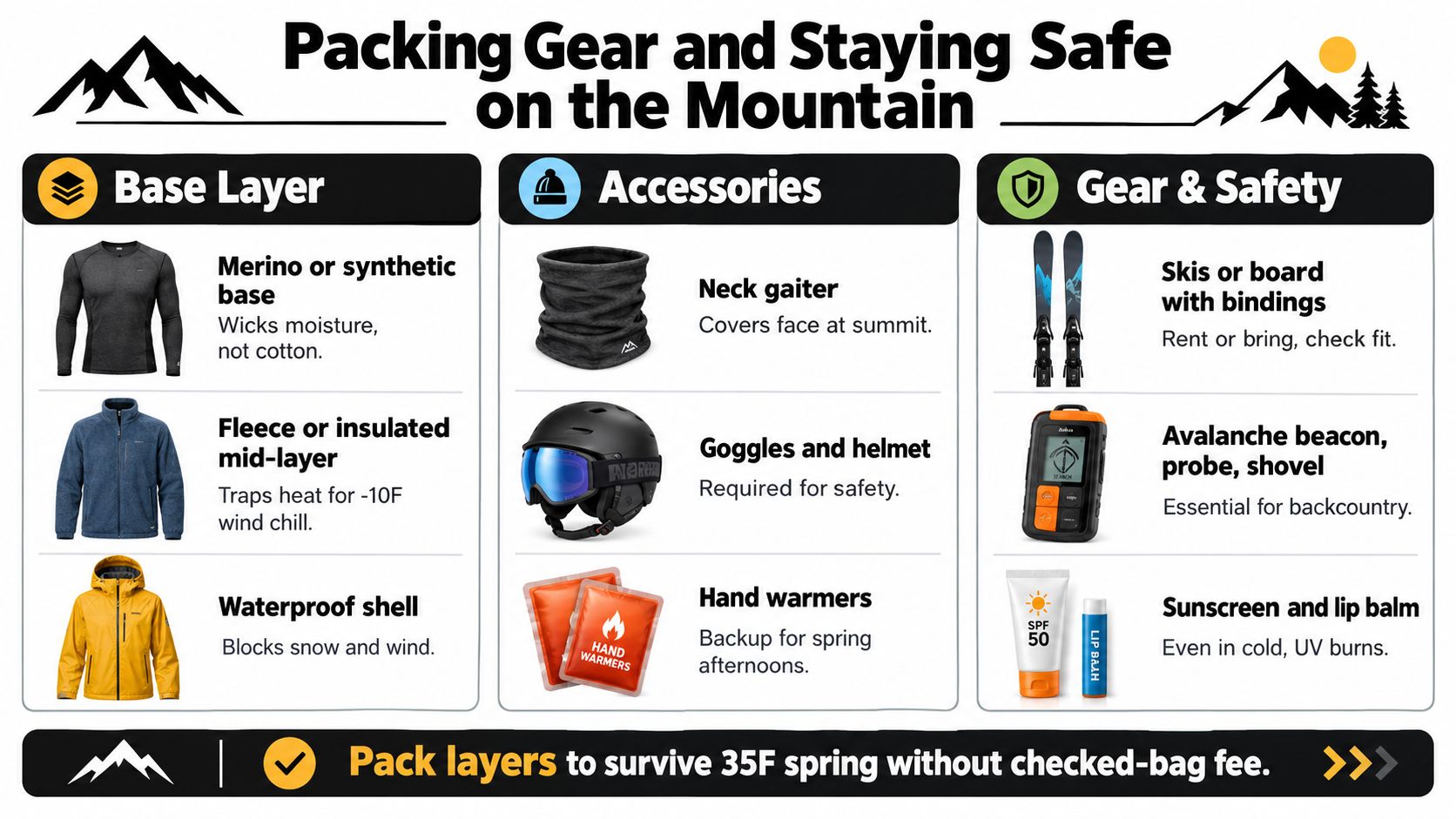
Prioritize hands, feet, eyes, and face. Pack two pairs of ski socks per ski day, a backup pair of goggles for fog or scratches, a neck gaiter, sunscreen, lip balm, and chemical hand warmers for children or anyone who runs cold. A small backpack should carry water, snacks, an extra layer, and basic personal medication.
A broader cabin packing guide can help with the non-ski portion of a mountain stay, particularly shared food, comfort items, and cabin organization. Keep your ski essentials in a separate bag so they're accessible before the main luggage is unpacked.
Respect altitude and uncontrolled terrain
Major resorts commonly operate at elevations that demand acclimatization. Arrive early when possible, hydrate before travel, limit alcohol on the first night, and keep the first ski day physically modest. Headaches, unusual fatigue, nausea, and dizziness are reasons to stop and rest, not symptoms to push through.
Expert gates at mountains such as Steamboat, Crested Butte, and Aspen Highlands can lead into avalanche terrain. If you're entering backcountry or gated terrain, carry a transceiver, probe, and shovel, and know how to use them. AIARE Level 1 is the minimum sensible training before booking a backcountry day, and you should read the daily avalanche report before any lift-served ungroomed run.
Rent or buy with a clear rule
Rent if the trip is short, you're still learning, or you're unsure about equipment fit. Intermediate and advanced skiers who expect frequent annual use should compare a quality demo package with purchasing equipment, especially when rental repetition becomes a recurring expense. Have the shop adjust bindings and boots to your ability, weight, and preferred terrain.
Use a helmet, ski with a buddy in trees and bowls, control speed near merges, and check the trail map before leaving the lift. For anyone shipping personal equipment or electronics to a mountain residence, the electronics packing guide provides practical handling principles that also reduce damage during travel.
Building a Trip That Holds Up in Weak Snow Years
A resilient ski vacation doesn't depend on a perfect forecast. It combines a high-elevation option, meaningful snowmaking, flexible reservations, and activities that remain worthwhile when the mountain underdelivers.
Recent Colorado reporting described a very dry start to the season in late 2025, while the National Weather Service outlook for 2025–26 gave the state equal chances of above-, below-, or near-normal snowfall and temperatures (Colorado Public Radio). That uncertainty makes a rigid, prepaid itinerary a poor strategy.
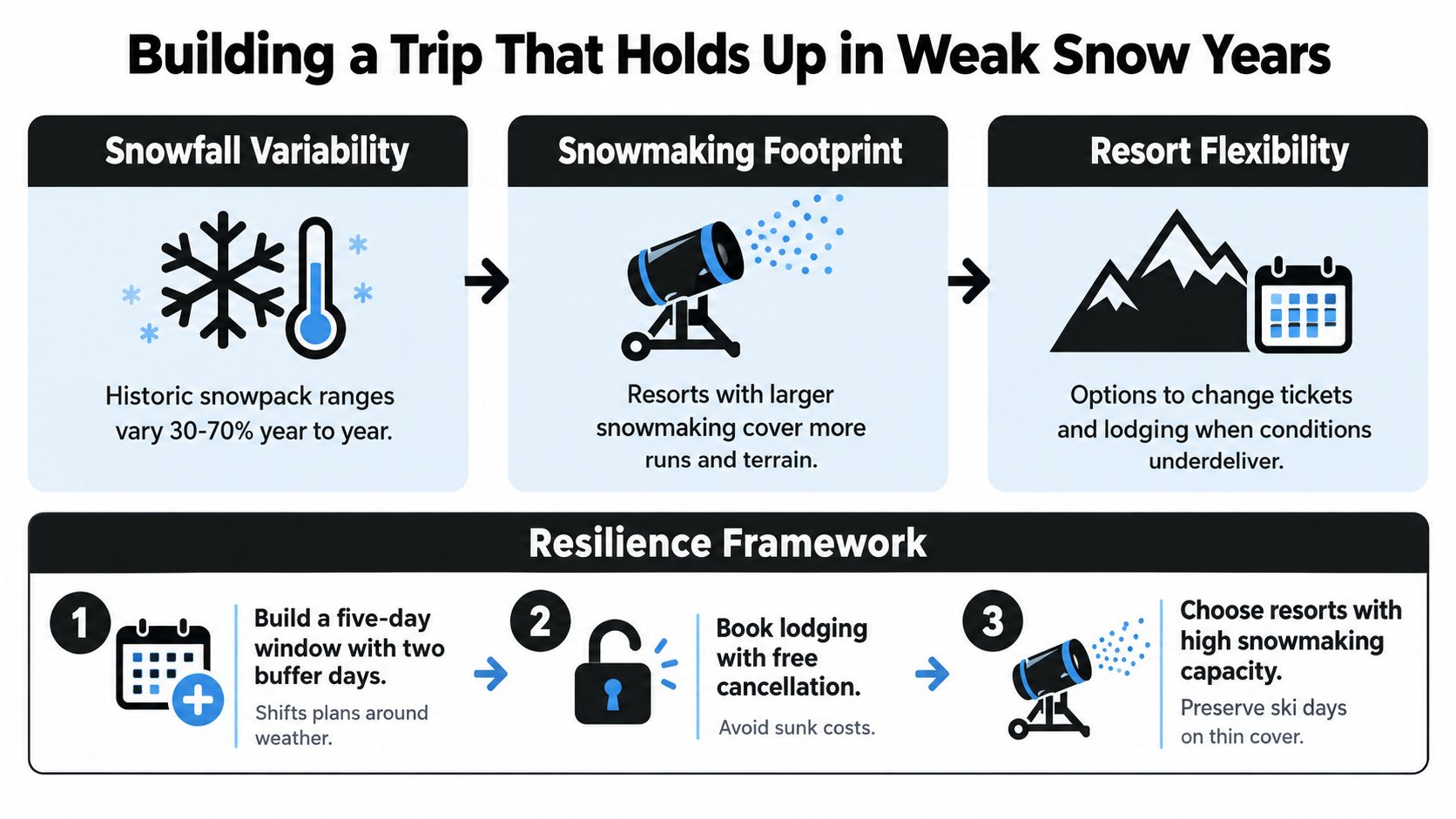
Book a five-day travel window with two buffer days when your schedule allows. Choose lodging with a low-cost cancellation policy, and favor a base resort with substantial snowmaking and north-facing terrain. Winter Park reports more than 344.6 inches of annual snowfall, with about 50% north-facing terrain noted in snow-quality analysis, while Vail and Copper Mountain combine average snowfall in the 250 to 257-inch range with snowmaking across important areas (OnTheSnow Vail resort information).
Use a mixed itinerary rather than forcing every day onto skis. Pair mountain days with cross-country skiing, snowshoeing, or fat-tire biking at lower elevation. Regional backups can include the Georgetown Loop Railroad, Glenwood Hot Springs, Aspen art museums, or downtown Denver breweries.
Set a departure-minus-seven-days review point. If the home resort's reported base depth is below 60% of its average, shift toward a higher-elevation or more north-facing alternative when your bookings permit. That threshold is a practical editorial rule, not a guarantee, but it forces a decision before deposits become irreversible.
For more nature-focused contingency thinking, the Yellowstone wildlife and travel guide is a useful companion resource. Flexibility isn't pessimism. It's cost control, because a movable booking can let you wait for a late storm without sacrificing the entire trip.
Your Pre-Trip Planning Checklist
The most valuable planning work happens before the weather forecast becomes useful. Put each decision on a calendar and assign it a deadline.
Twelve to sixteen weeks before departure
Compare Epic, Ikon, and Indy access against your actual resort shortlist and trip length. Set a hard budget that includes a contingency reserve, then prioritize refundable airfare and lodging if your dates or resort choice remain uncertain.
Eight to ten weeks before departure
Purchase lift tickets if you aren't using a pass, especially when advance pricing is available. Reserve ski school for children, confirm rental availability, and verify whether your vehicle needs snow tires, AWD or 4WD, or chains under Colorado traction requirements.
Four to six weeks before departure
Review the trail map and identify suitable terrain for every skier. Arrange altitude-friendly arrival plans, pre-order specialized equipment, and confirm airport transfers. If the group includes beginners, secure lessons before the most popular dates fill.
One to two weeks before departure
Monitor the long-range forecast, resort opening updates, snowmaking status, and the avalanche forecast at avalanche.state.co.us. Download offline trail maps, check road conditions, and make sure every traveler has a functional layering system rather than relying on a last-minute resort purchase.
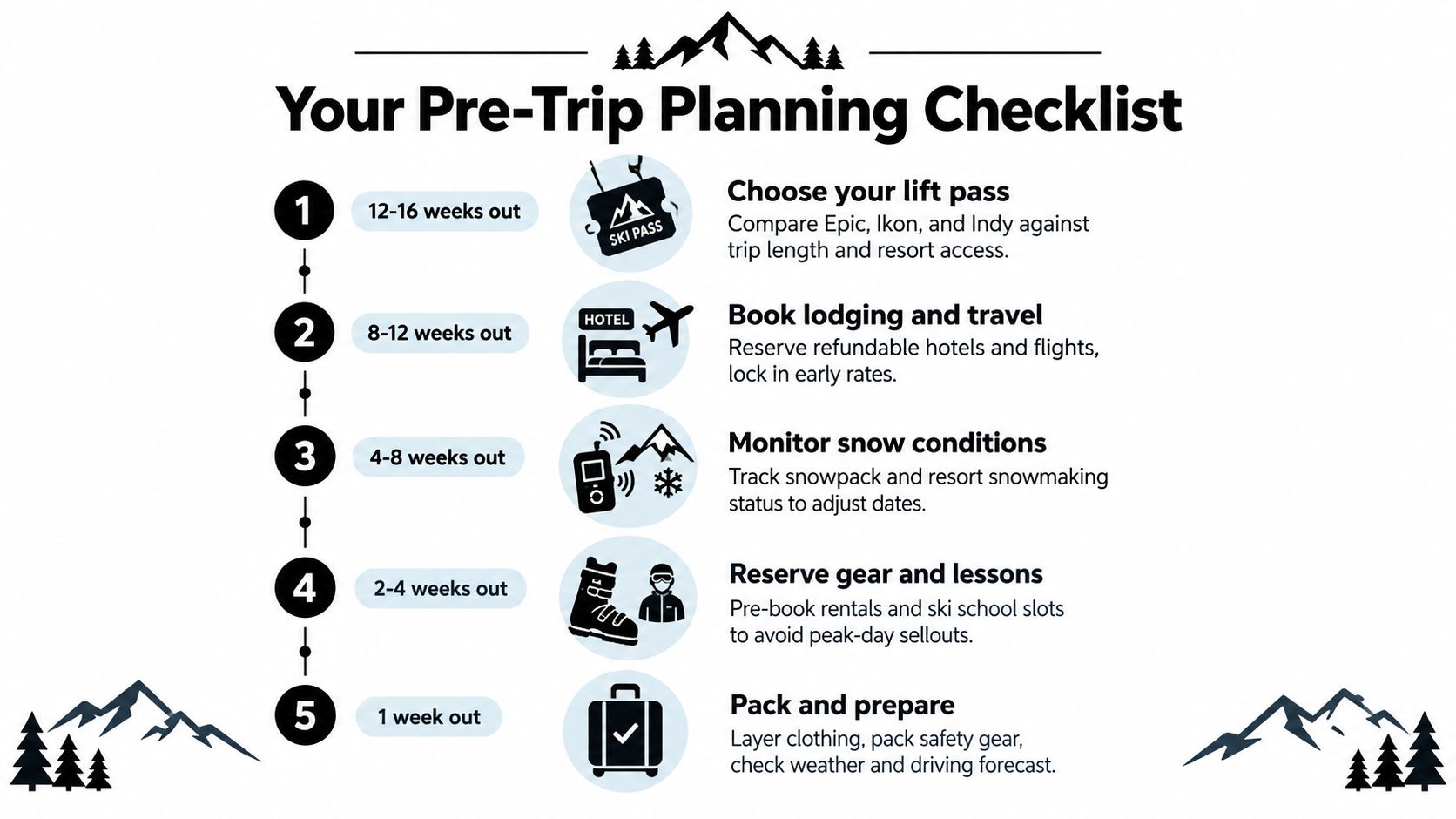
In the final forty-eight hours
Confirm reservations, refill prescriptions, charge navigation devices, prepare snacks and water, and inspect the vehicle or shuttle details. Check the latest mountain report and driving forecast before leaving, not after you're already committed to the route.
Small decisions made early protect the trip more effectively than improvisation on the mountain. Pass math, cancellation terms, realistic arrival timing, and a backup resort give you control when demand or weather changes.
Reworx Recycling helps businesses responsibly retire laptops, computers, and other outdated technology through electronics recycling, secure data destruction, business pickups, equipment decommissioning, and IT asset disposition services. If your office, school, facility, or corporate team is replacing equipment before a winter trip or technology refresh, visit Reworx Recycling to donate old devices, schedule a pickup, or discuss a responsible recycling partnership that supports community access and workforce development.