

You're trying to book seven vacation days around three children who want three different trips. One wants big slides, one needs warm shallow water and an afternoon nap, and the youngest may be happiest feeding animals or walking downtown with a snack. Your budget won't support a full week at a waterpark resort, so the question isn't “What can we do in Wisconsin Dells?” It's which days, which resort, and which paid attractions deserve your money.
Wisconsin Dells rewards families who plan around season, child age, stamina, and stay length. The region has grown from a settlement incorporated as Kilbourn City in 1856 into a major family-travel destination, officially taking the Wisconsin Dells name in 1931 after visitors had already adopted it. Henry Hamilton Bennett's photographs, published in the 1870s, helped establish the scenic gorge as a tourist attraction. Today, tourism supports more than 15,000 jobs, nearly three times the number of year-round residents, according to the Wisconsin Dells history and facts overview.
What This Family Guide Helps You Decide
A successful Dells trip starts before anyone chooses a waterslide. Set the travel window, match the resort to your children's ages and abilities, then decide how many paid attractions your budget and energy can support. That order prevents a toddler from dictating a teen-heavy schedule, or a seven-day booking from turning into seven expensive waterpark days.
The Dells is a concentrated vacation market. It reported more than 5 million visitors in 2025, with a $2.08 billion total economic impact and $1.45 billion in direct visitor spending, according to the Wisconsin Dells tourism history report. Families get an enormous range of resorts and attractions, but timing affects the entire experience. A weekday room with easy pool access can feel very different from a peak-period stay with crowded decks, restaurants, and parking areas.
Make four decisions before you book
- Choose the season around your children's temperament. Summer offers the widest attraction schedule. Winter and shoulder seasons suit shorter, indoor-focused trips, especially for toddlers or children who tire quickly in crowds.
- Choose the resort for the youngest child. Check nap access, bathroom distance, shallow water, indoor pool layout, and how quickly your family can return to the room. Older children can handle a simpler setup; toddlers usually cannot.
- Set the stay length by energy. One focused day can work for a toddler family if you select one paid anchor and leave room for rest. Four days suit active tweens and teens, provided you alternate high-energy attractions with slower mornings, nature, or downtown time.
- Protect free time alongside paid attractions. The Riverwalk, downtown browsing, low-cost nature stops, and an unhurried meal give children a break from wristbands and queues. Skip attractions that duplicate what your resort already provides.
Families planning other destinations can apply the same method found in a decision-first Glacier National Park family planning guide. List the child's needs, the family's real stamina, and the experiences worth paying for before comparing packages.
Practical rule: Book around the child who needs the most support, then plan one standout activity for the child who needs the most action.
Before you reserve, name one preferred resort, one backup, one paid anchor per day, and the attractions you will skip. That final list is where the value appears.
Picking the Best Season to Visit With Kids
A summer Saturday with a stroller means full parking lots, longer queues, and a child who may run out of patience before lunch. A winter weekday can deliver warm water, shorter lines, and a much easier two-night escape. Choose the season around your children's stamina, the outdoor attractions they want, and your tolerance for peak pricing.
Summer delivers the complete Dells lineup. Outdoor waterparks, boat tours, evening entertainment, and more attractions operate together. Late June through Labor Day also brings the heaviest demand and the most pressure on resorts. The visitor bureau reports that summer generated about $555.1 million in direct visitor spending, or 40.0% of the annual total, while winter, spring, and fall accounted for 22.0%, 21.6%, and 16.4%, respectively, in its Wisconsin Dells tourism snapshot. Lodging represented $479.1 million in direct visitor spending in that source, so securing the right room early matters.
Choose by calendar, crowd window, and child age
Spring, from mid-April through early June, suits flexible families who want indoor pools, short hikes, and lower-pressure days. Weather changes quickly, outdoor water stays cold, and some attractions operate on limited schedules. Confirm opening dates before paying for activities.
Summer, from late June through Labor Day, is the clear choice for children who would feel disappointed without outdoor slides and the broadest attraction schedule. Book lodging well ahead, arrive at major attractions early, and avoid summer weekends when possible. Use mornings for high-demand rides, then reserve the afternoon for a resort break or a low-cost walk.
Fall, from mid-September through early November, gives families useful indoor waterpark time and mild days for Wisconsin River bluff walks or nature outings. Outdoor attractions reduce their schedules or close, so check each calendar before buying a bundle. This season works particularly well for mixed-age families that value calmer pacing over a complete ride lineup.
Winter is the strongest short-trip option for toddlers and preschoolers who care more about warm water and novelty than outdoor rides. Holiday periods bring more demand, but ordinary winter dates can support a focused resort stay without trying to cover the entire Dells.
Families comparing other destinations can use this Myrtle Beach vacation planning resource for broader seasonal planning. The Dells demands a closer check of individual resort and attraction calendars, because “open” may mean indoor access only. These shoulder season travel tips also support choosing lower-demand dates without assuming every attraction will run.
| Season | Crowd Level | Avg. Nightly Rate | Outdoor Waterparks | Weather Range | Best For Ages |
|---|---|---|---|---|---|
| Spring | Lower to moderate | Varies by property and date | Limited or weather-dependent | Cool and wet at times | Toddlers, preschoolers, flexible families |
| Summer | Highest | Peak pricing | Broadest operations | Warm, with storm risk | School-age children, tweens, teens |
| Fall | Moderate to lower | Shoulder offers may appear | Reduced operations | Mild to cool | Mixed ages, hikers, indoor-waterpark fans |
| Winter | Moderate around holiday periods | Varies sharply by date | Closed outdoors | Cold outside, warm indoors | Toddlers, preschoolers, indoor-focused families |
Use one firm booking test. If outdoor rides justify the trip, choose summer. If your family needs predictable water temperature, shorter lines, or a manageable two-night break, choose winter or a shoulder period. Check the forecast, operating calendar, and resort schedule before you commit.
Choosing the Right Waterpark or Resort Complex
選度假村時,先問一個實際問題:當孩子累了、餓了或突然需要午睡,這間住宿能不能讓你少走一段路、少處理一個麻煩?比起廣告裡最大的滑水道,更應檢查室內水上樂園、幼兒戲水區、身高限制、房間分隔、餐飲、停車,以及客房到泳池是否需要穿過整個園區。
Wisconsin Dells 的水上樂園市場密集,選擇很多。規模資料可先作為背景參考,實際訂房則應回到家庭年齡組合、停留天數與園區動線。Wisconsin Dells 將 Kalahari 稱為全州最大的室內水上樂園,並將 Noah's Ark 稱為美國最大的水上樂園,詳見其 waterpark overview。這些名號不等於最適合你。兩晚短途旅行,交通簡單、房間靠近設施,通常比園區更大更有價值。
先用家庭需求縮小名單
Kalahari 適合打算多次使用室內水上樂園的混齡家庭。非洲主題、寬敞的室內空間和不同強度的設施,能同時照顧想玩刺激滑道的孩子,以及只想玩溫和水池的幼兒。訂房前確認身高規定與家長輪替安排,因為最刺激的設施未必適合年幼孩子。
Great Wolf Lodge 適合幼兒到青少年需要清楚、以孩子為中心的遊樂配置的家庭。套房式房間有助於孩子分開入睡,付款前要比較整體度假村費用,不要只看房價標示。
Wilderness Resort 適合大家庭或多人同行,尤其是孩子想分頭活動時。多個室內區域讓不同年齡層各自選擇,但園區很大,走路時間和決策疲勞也會增加。帶嬰兒車的家庭,應優先確認客房、停車點和主要泳池之間的距離。
Noah's Ark 是戶外刺激設施的首選,適合游泳能力較好、年紀較大的學齡兒童、學童後期孩子與青少年。它不適合作為淡季旅行的主要訂房理由,因為核心體驗依賴戶外營運。若旅程只有兩天,預留完整的一天給戶外水上樂園,不要再塞入另一個大型付費景點。
Mt. Olympus 適合重視價格和簡單進出方式的家庭,也適合考慮露營住宿的人。整體更接近遊樂園體驗,而不是設施集中、服務完整的度假村。帶大孩子或青少年的家庭,通常較能接受這種取向。
Chula Vista 的室內水上樂園氛圍較安靜,適合青少年、祖父母同行,或希望在活動區塊之間保留更多休息時間的父母。
| Resort | Indoor Waterpark Size | Best Child Age Fit | Suite Capacity | Dining On-Site | Outdoor Park Open | Off-Season Deal |
|---|---|---|---|---|---|---|
| Kalahari | Large | Mixed ages, school-age children through teens | Room types vary | Multiple options | Seasonal | Often available by date |
| Great Wolf Lodge | Family-focused | Toddlers through tweens | Suite-style options | Resort dining | Seasonal | Check calendar offers |
| Wilderness Resort | Very large | Large or mixed-age families | Condos, villas, and suites | Broad selection | Seasonal | Date-dependent |
| Noah's Ark area lodging | Primarily outdoor access | Older school-age children through teens | Varies by hotel | Nearby and on-site options vary | Seasonal | Shoulder dates may help |
| Mt. Olympus | Indoor and outdoor access | Value-focused families, older children | Hotel and campground options | Nearby options | Seasonal | Often tied to package dates |
| Chula Vista | Indoor-focused | Teens, mixed generations | Resort room types vary | On-site options | Seasonal | Check shorter-stay offers |
最後,安排不碰水的恢復時段。帶紙牌、簡單球類或其他小型活動,讓孩子在客房、草地或野餐地點休息,不必再買一張景點門票。這份 Playz guide to outdoor games 可協助你準備適合家庭攜帶的戶外遊戲。
Sample One to Four Day Itineraries by Child Age
A successful Dells itinerary has one major energy demand per day. The mistake I see most often is stacking a full waterpark day, a paid attraction, and a late dinner, then expecting a four-year-old to wake up cheerful the next morning.
A one-day toddler plan should stay deliberately small. Use the morning or early afternoon for a mild indoor waterpark session, return for a nap or quiet room break, then take a stroller-friendly downtown walk. A giraffe-feeding stop can provide novelty without requiring another full day of rides. Eat early, before the family reaches the hunger-and-noise threshold.
Build around the youngest child first
For ages four through seven, two days provide a better balance. Make the first day the major waterpark anchor. On the second morning, choose a scenic Wisconsin River duck boat ride or Dells Boat Tours excursion, then spend the later part of the day at a quieter state park or waterfront stop. Don't schedule another high-intensity attraction that evening.
Ages eight through eleven can handle three days if you protect the middle of the day. Pair one waterpark day with mini-golf, go-karts, or Bigfoot Zipline on another day, but keep the afternoon open for a half-day resort hop or rest period. Tweens often say they want nonstop action, then become much more cooperative after a meal and an hour away from the crowd.
Teens can support a four-day plan with more variety. Add Mt. Olympus water and theme park, Lost Canyon mini-jeep tours, and an evening at the Tommy Bartlett Show, but avoid putting all three into one day. If a child gets motion-sensitive or overstimulated, replace the second thrill block with downtown browsing or a nature walk.
| Stay Length | Best Age Range | Day 1 Anchor | Day 2 Anchor | Day 3 Anchor | Day 4 Anchor |
|---|---|---|---|---|---|
| One day | Toddlers and preschoolers | Mild indoor waterpark | Downtown stroll if energy allows | Not needed | Not needed |
| Two days | Ages four to seven | Main waterpark day | Boat tour and quiet nature morning | Not needed | Not needed |
| Three days | Ages eight to eleven | Waterpark | Mini-golf, go-karts, or zipline | Resort recovery and selected attraction | Not needed |
| Four days | Tweens and teens | Waterpark or Mt. Olympus | Lost Canyon or outdoor activity | Half-day resort hop | Tommy Bartlett Show or downtown evening |
Schedule naps and quiet periods as appointments, not vague intentions. Toddlers usually need a room return before the late-afternoon meltdown window. Older children need a lower-stimulation block even when they refuse to call it rest.
Families planning a similarly attraction-heavy destination can use the pacing logic in this Branson family attractions guide. The same principle applies: one anchor, one flexible block, and one easy meal.
Budgeting, Passes, and Ticket Bundles That Save Money
Set the budget around four costs: lodging, waterpark access, meals, and extras such as go-karts or mini-golf. Resort lodging with waterpark access included may carry a higher nightly rate, yet it can eliminate separate admission decisions, driving, parking, and wasted time moving wet, tired children between locations. An off-property hotel makes sense only after you add day passes, parking, lockers, fuel, and convenience meals.
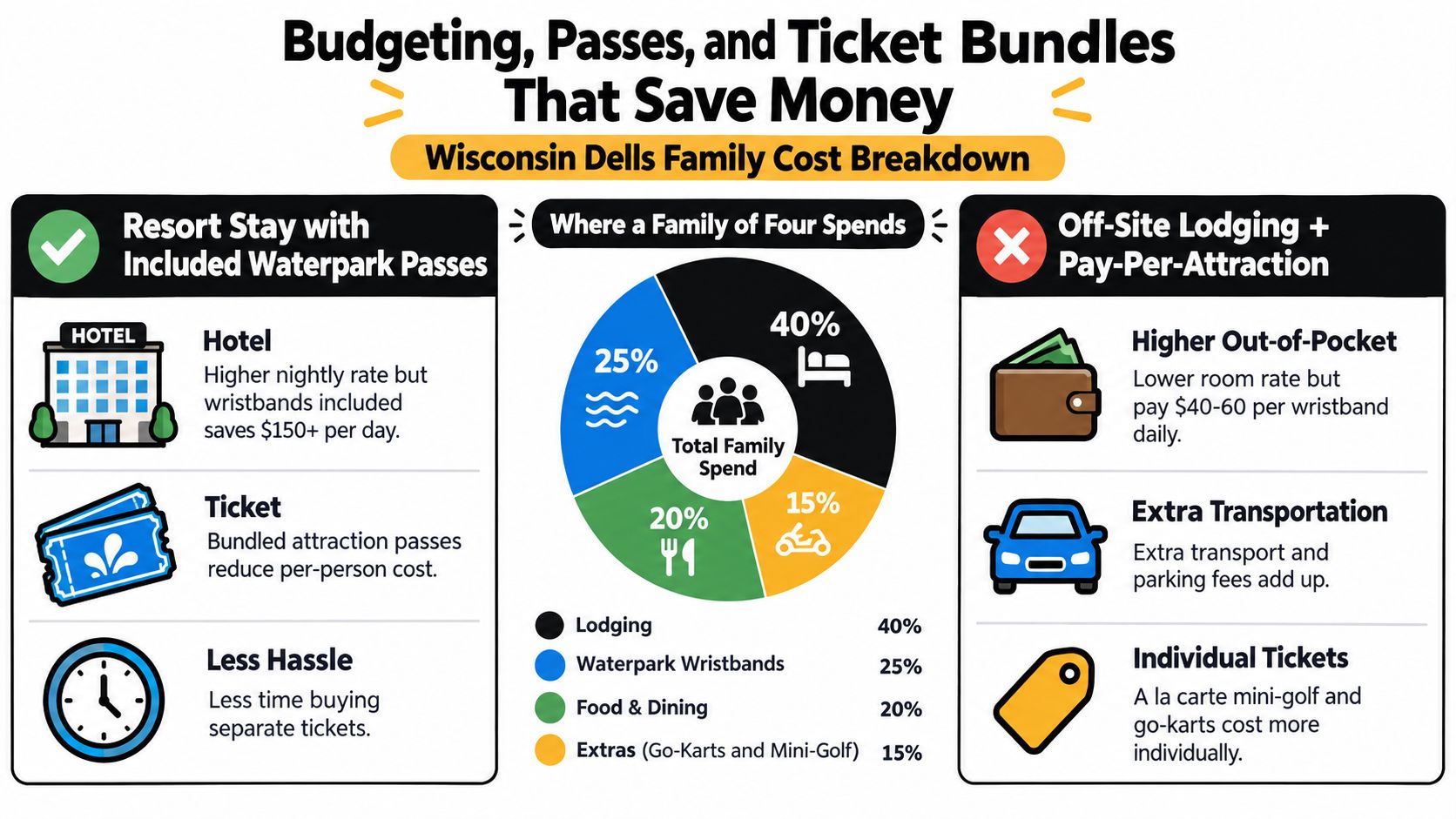
Price the whole plan before buying a bundle.
- Resort stay: Add the room, included wristbands, resort fees, parking, meals, and the value of walking straight to the waterpark.
- Off-site stay: Include admission for every swimmer, daily driving, parking, locker rentals, and food purchased inside the park because returning to the hotel is inconvenient.
- Mixed plan: Book one resort waterpark day, then shift to lower-cost attractions and outdoor time. Children still get the highlight, while every day avoids becoming an admission day.
Use a Big 5 Adventure Pass, multi-day waterpark hopper, or Wisconsin Dells coupon book only when your itinerary already includes enough eligible attractions. A bundle is a poor deal if it pushes your family into extra activities, rushed meals, or a second waterpark day that nobody wants.
Keep inexpensive breaks on the schedule. The Riverwalk, downtown candy shops for browsing, public beach access on Lake Delton, and a Devil's Lake day trip provide a change of scenery without another wristband charge. They also give parents recovery time between high-energy resort days.
Before paying, confirm parking, amenity charges, towel access, and the exact park dates covered by the package. Those details decide the actual price, not the room rate shown first.
Transportation, Parking, and On-Site Logistics
A tired family can lose the first vacation hour in a check-in queue, a distant parking space, or a wet child's bathroom emergency. The Dells is straightforward to reach by car from Madison, Milwaukee, and Chicago, but arrival timing matters more than clever routing. Build in a meal or bathroom stop, and do not aim to reach the resort exactly at check-in if everyone is already worn out.
Treat resort parking, downtown parking, and attraction parking as separate decisions. Confirm whether your resort stay includes parking, then check the rules for each off-site stop. Arriving near opening usually gives you a shorter entry wait, a better parking choice, and time to organize towels, shoes, and snacks before the afternoon crowds arrive.
Set up the day around fewer delays
A compact stroller is the practical choice for older attractions with stairs, long corridors, or limited storage. Ask about those conditions before leaving the hotel. Property shuttles make sense for wet children, grandparents, or mobility equipment, while walking can be quicker than waiting during busy periods.
Choose one meeting point immediately inside Noah's Ark or Kalahari. Every child should know to find a uniformed employee if separated from the group. Check life-jacket availability and wave-pool rules before arrival, since flotation equipment and age requirements can differ by area.
Children with sensory needs benefit from a plan made before the first major session. Identify a quiet corner, a lower-volume pool, and a direct retreat route. That preparation lets a child leave the stimulation early instead of reaching a full meltdown.
Pack sun protection where you can reach it. Hats, sunscreen, water breaks, and shaded meal periods matter on bright Midwest summer days, even when the pool is the only place anyone wants to be.
For families planning other city trips with mobility needs, this New York City travel guide reinforces the same planning rule: transportation belongs in the itinerary from the start.
Insider Tips, Hidden Gems, and Smart Packing
Start one morning with a lower-cost change of pace. An early Upper Dells boat tour lets families return before the day becomes hot and crowded, leaving time for a relaxed lunch and an afternoon nap. Toddlers can sleep, while older children still have energy for a short evening walk. That rhythm beats stacking another expensive, high-stimulation attraction onto an already full day.
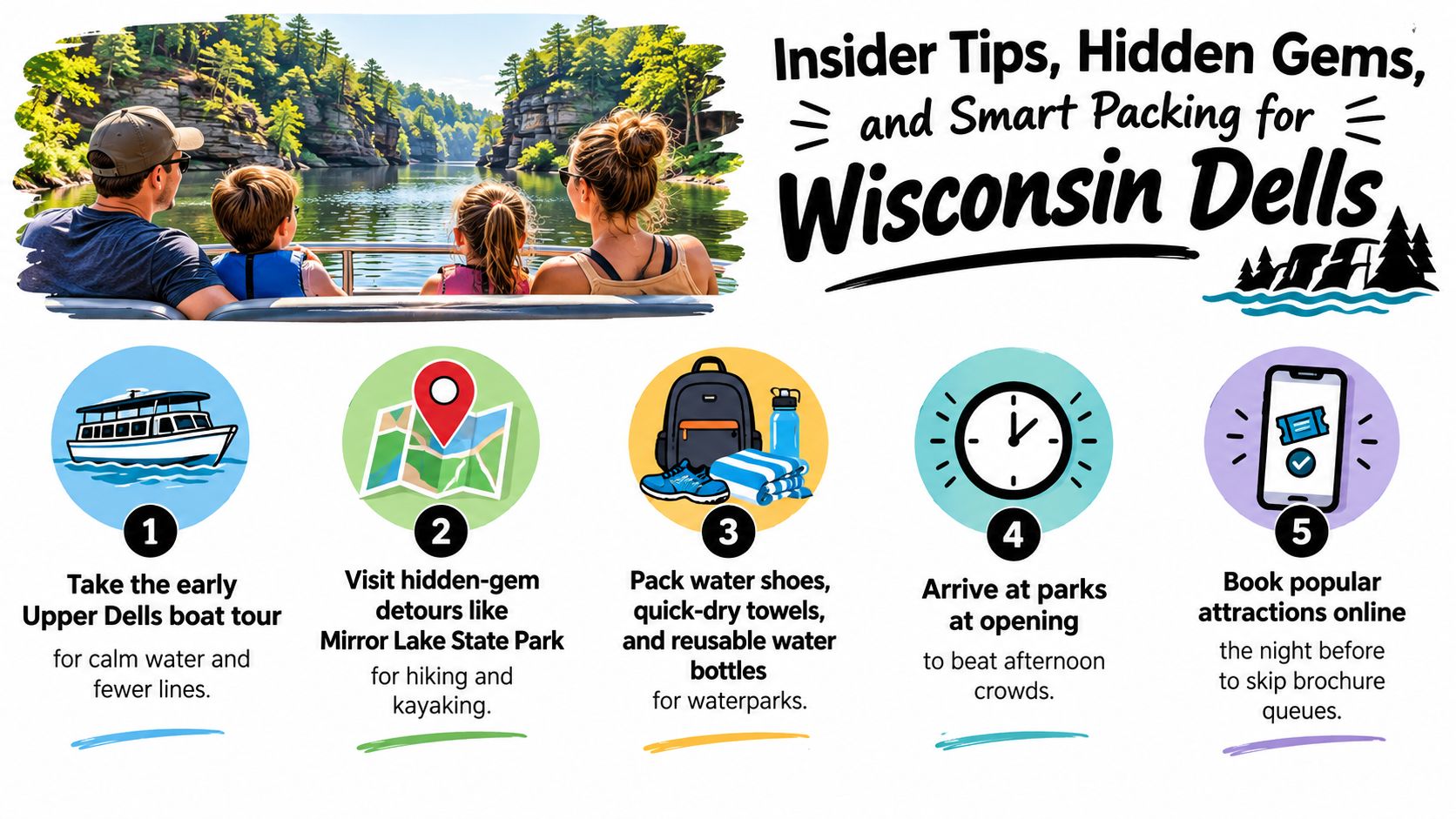
Choose detours with a clear purpose
Use the free Wisconsin Deer Park stroll when children want animals without another elaborate attraction. The Riverwalk works well for a calm after-dinner transition. Visit Timbavati Wildlife at opening, before heat and crowds build. Top Secret is usually easier on a weekday morning than in the busiest afternoon window.
Pack for wet transitions, not every possible outfit. A dry-bag laundry system keeps swimsuits from sitting damp in the room. Label individual ponchos for sudden storms, and bring water shoes for heated outdoor decks. Sunscreen sticks are easier around children's faces than sprays. Refillable bottles also cut repeated resort purchases.
A compact dental kit simplifies hotel mornings when children share sinks and parents are packing around wet gear. These travel kit recommendations help organize small essentials without taking much space.
Use the resort strip on foot for short trips, then choose the Dells Trolley for downtown loops when little legs are tired. Book character dinners as soon as online reservations open. Check attraction schedules the night before, because breakfast brochures may not reflect current operating times.
For families planning another music-focused city trip, this Nashville music travel guide offers a useful model: pair headline experiences with lower-pressure neighborhood time. Apply the same value lens in the Dells by balancing waterpark blocks with nature, downtown walks, and an unhurried meal.
Quick-Start Planning Checklist Before You Book
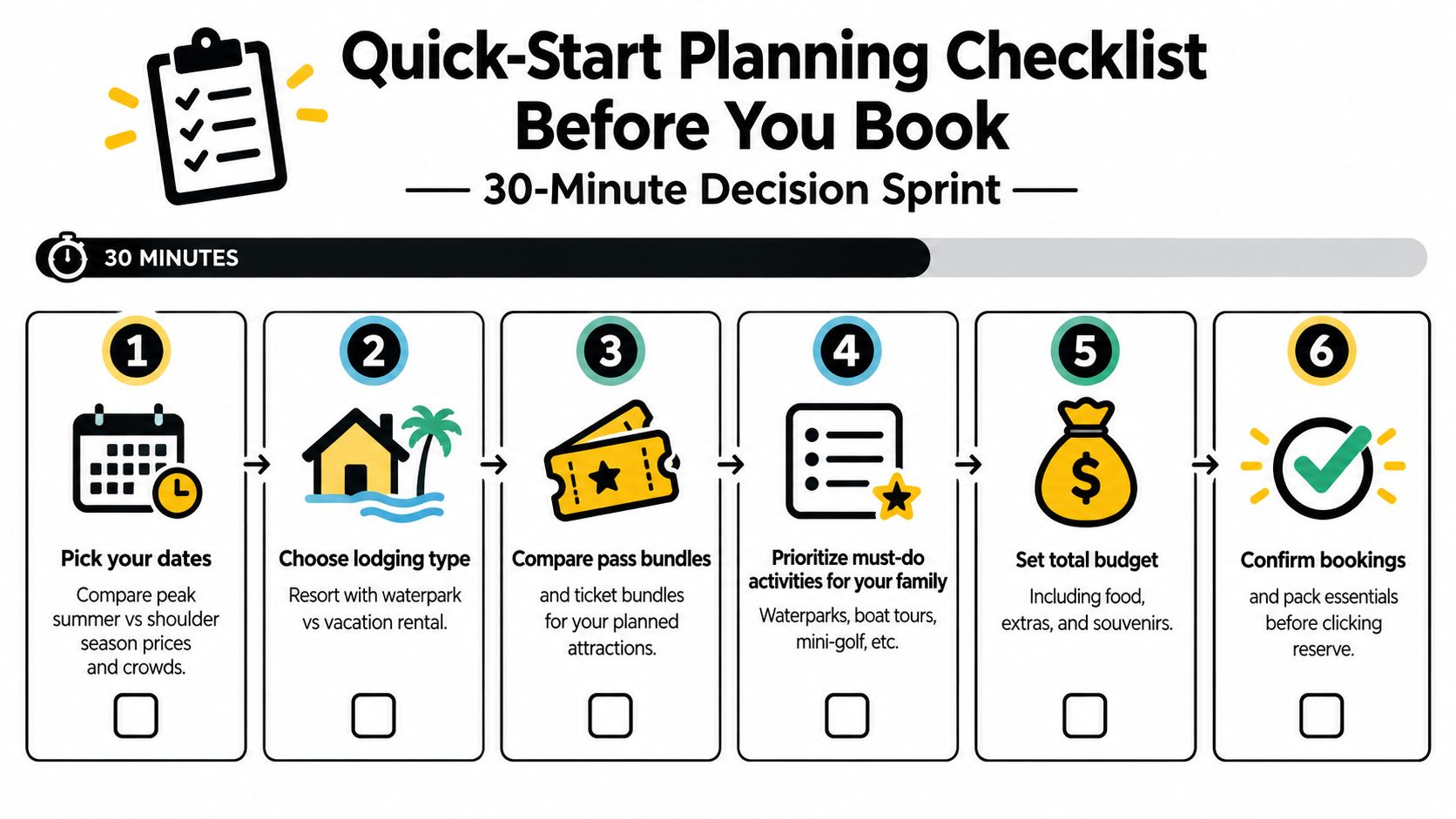
Your family's best Dells plan starts with three decisions: children's ages, travel season, and stay length. Set a 30-minute limit, then choose a workable trip instead of opening more tabs.
- Choose dates first. Mark school breaks, compare summer with shoulder or winter timing, and decide whether outdoor operations or lighter crowds matter more.
- Match the stay to the youngest child. For toddlers, prioritize short walks, easy room access, and a resort with indoor waterpark access. Tweens can handle longer attraction days, but still need a planned break.
- Shortlist two resorts. Compare room separation, dining, parking, waterpark proximity, and what is included. For a shorter visit, staying on-site usually saves time. For a longer stay, add downtown and nature time instead of buying more attraction hours.
- Price the complete trip. Include admission, parking, lockers, meals, transportation, and convenience purchases. Compare an included-waterpark resort with off-site lodging plus separate tickets.
- Give each day one anchor. Choose a waterpark, boat tour, mini-golf outing, nature stop, or evening show. Leave the rest flexible, especially with toddlers.
- Set a spending limit. Reserve room for one unplanned treat, not a full unplanned day.
- Confirm before reserving. Check waterpark access dates, deposit terms, cancellation deadlines, operating schedules, parking rules, dining reservations, and the packing list.
The Dells area covers just over 19 square miles, has about 5,600 permanent residents, and receives more than 4 million annual visitors, according to this Wisconsin Dells destination overview. Plan for a compact community handling heavy visitor demand. Book early for peak periods, and schedule downtown walks or nature stops outside the busiest attraction window.
Before clicking reserve, record the exact room type, waterpark access dates, parking terms, cancellation deadline, and the attraction you will skip if everyone is tired. That decision protects the rest of the trip.