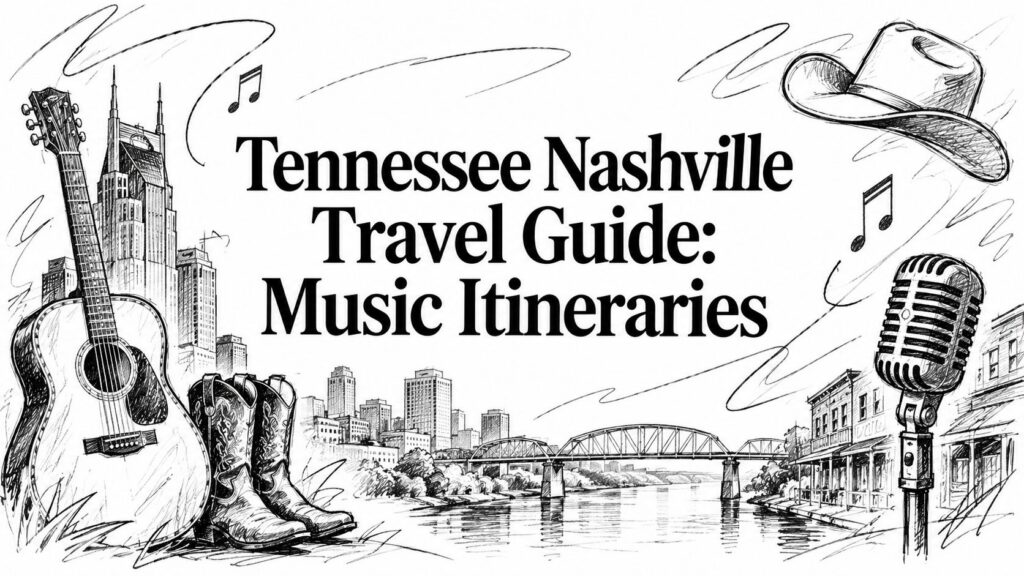
You've just arrived in Nashville with a phone full of saved venues, a dinner reservation across town, and no clear idea where to begin. Broadway is glowing, music is spilling from open doors, and every neighborhood seems to promise a different version of Music City. The answer isn't to visit everything. It's to understand how Nashville's music districts fit together, then build your days around one cluster at a time.
This Tennessee Nashville Travel Guide: Music itineraries follows that approach. You'll learn how the city's history shaped its sound, which neighborhoods suit different travelers, how to prioritize landmark venues, and how to find independent shows beyond the busiest tourist corridor. You'll also get practical guidance on tickets, transportation, accessibility, food pairings, hearing protection, and seasonal planning, so your trip feels intentional instead of rushed.
Introduction to Nashville Music Culture
Nashville's music identity began over the airwaves. The Grand Ole Opry debuted as a radio broadcast on November 28, 1925, and its long-running presence helped establish Nashville as Music City. The program later became weekly, and after its final broadcast at Ryman Auditorium on March 15, 1974, the Opry continued its legacy from a new home. The Ryman's account of the Grand Ole Opry's history shows why Nashville's music culture feels continuous rather than recently manufactured.
That history matters when you plan a visit. Nashville isn't merely a place with a few famous country attractions. It's a working music ecosystem with Broadway honky-tonks, songwriter rooms, recording-industry landmarks, student-oriented bars, independent clubs, outdoor stages, and museums that preserve the people and technology behind the songs.
Start by choosing your priority. If you want recognizable landmarks, center a day on downtown and the Ryman. If you prefer emerging artists, spend more time in East Nashville and independent off-Broadway venues. If you're traveling with a group, plan around walkable clusters and reserve transportation before the evening rush.
Practical rule: Treat each neighborhood as its own evening, not as a quick stop on a citywide checklist.
The best itinerary leaves room for discovery. Book the experiences that sell out, keep one flexible time window for an unexpected gig, and protect your hearing during long nights in amplified indoor spaces. With that framework, Nashville becomes easier to explore and much more rewarding.
History and Neighborhoods of Nashville Music Scene
Nashville's musical reputation developed in stages. The Grand Ole Opry's first broadcast on WSM-AM in 1925 gave country performers a national platform, while the program's long relationship with the Ryman Auditorium connected radio history to a physical stage. The Ryman opened in 1892 as the Union Gospel Tabernacle, became Ryman Auditorium in 1904, and served as the Opry's home from 1943 to 1974, according to Visit Music City's Nashville music history overview.
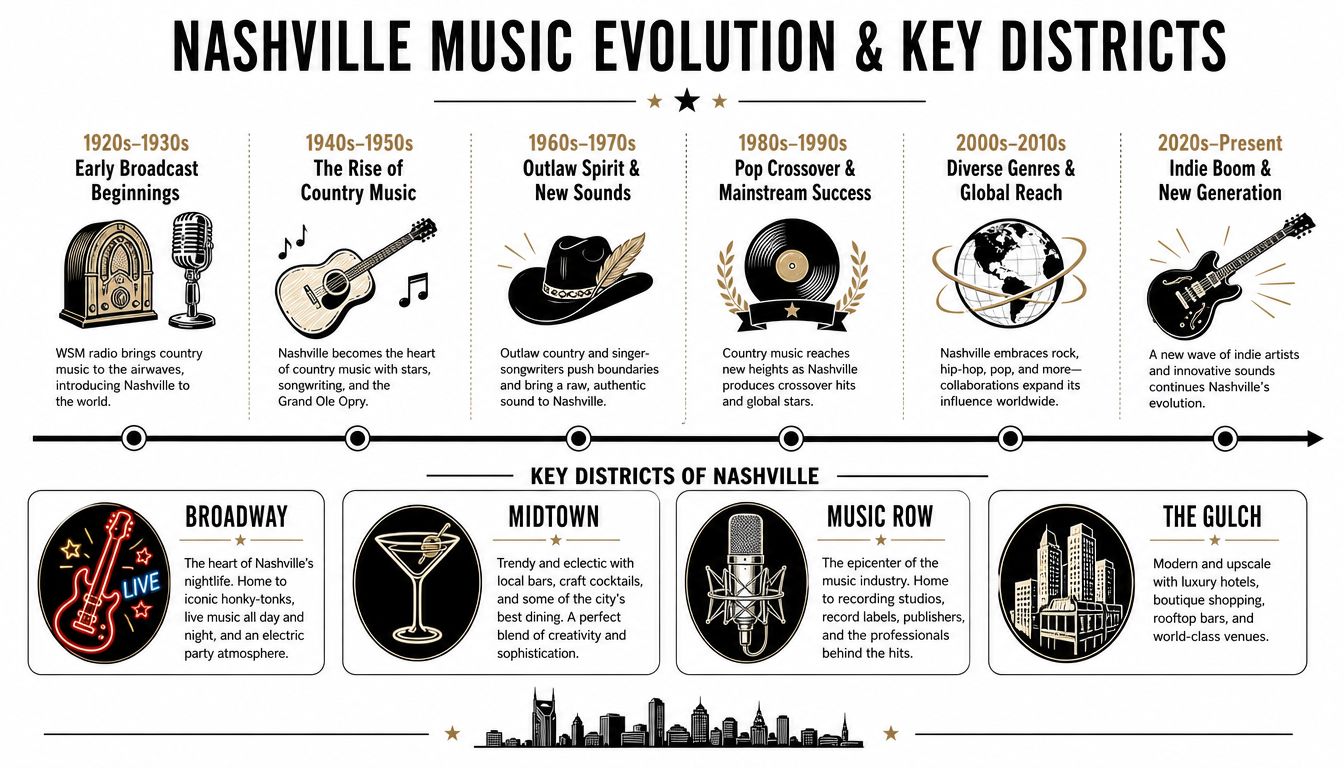
That heritage created a city where music is both industry and public life. Music Row developed around studios, publishers, labels, and professional songwriting. Downtown turned its entertainment identity into a dense concentration of bars and stages. Later, creative communities in East Nashville and other districts gave independent artists more room to experiment, helping visitors hear styles that don't fit neatly into traditional country categories.
Broadway for high-energy honky-tonks
Broadway is the easiest introduction to Nashville's live-music spectacle. Neon signs, open doors, multiple floors, and bands playing within short walking distance create an atmosphere that rewards spontaneity. You can compare several rooms without changing neighborhoods, but the same density can make the corridor feel crowded and loud.
Choose Broadway when you want a lively first night, recognizable Nashville imagery, and quick access to multiple venues. Go earlier if you want a calmer look at the buildings and streets. Later hours bring stronger energy, larger crowds, and more competition for rideshares.
Midtown for student energy and local bars
Midtown has a different rhythm. Its proximity to Vanderbilt University supports a younger, social bar scene, with pubs, casual restaurants, and venues that can feel less staged than the main tourist strip. The district works well for travelers who want dinner, drinks, and live music without committing to a full Broadway crawl.
Midtown also makes a useful base for groups with mixed interests. One person can choose a bar, another can find a restaurant, and everyone can regroup without crossing the entire city.
East Nashville for independent discovery
East Nashville is the strongest choice for travelers who want a creative neighborhood rather than a concentrated tourist experience. Five Points and nearby streets offer independent businesses, songwriter-oriented rooms, intimate clubs, and a community atmosphere that feels more exploratory.
Independent venues require more deliberate planning than Broadway. Check the evening lineup, confirm door policies, and allow time for a rideshare or designated driver. The payoff is a closer connection to local artists and a better chance of hearing music that isn't built around visitor expectations.
The Gulch for polished evenings
The Gulch combines modern hotels, restaurants, shops, and upscale entertainment. It suits visitors who want a polished night with a convenient meal before or after a show. The district can also work as a transition point between downtown attractions and Music Row.
A useful way to think about Nashville is as a set of musical micro-markets. Broadway emphasizes spectacle, Midtown blends social nightlife with music, East Nashville favors independent character, and the Gulch pairs entertainment with contemporary hospitality. Your choice should follow your preferred pace, not just the neighborhood with the highest online visibility.
Unmissable Music Venues and Museums
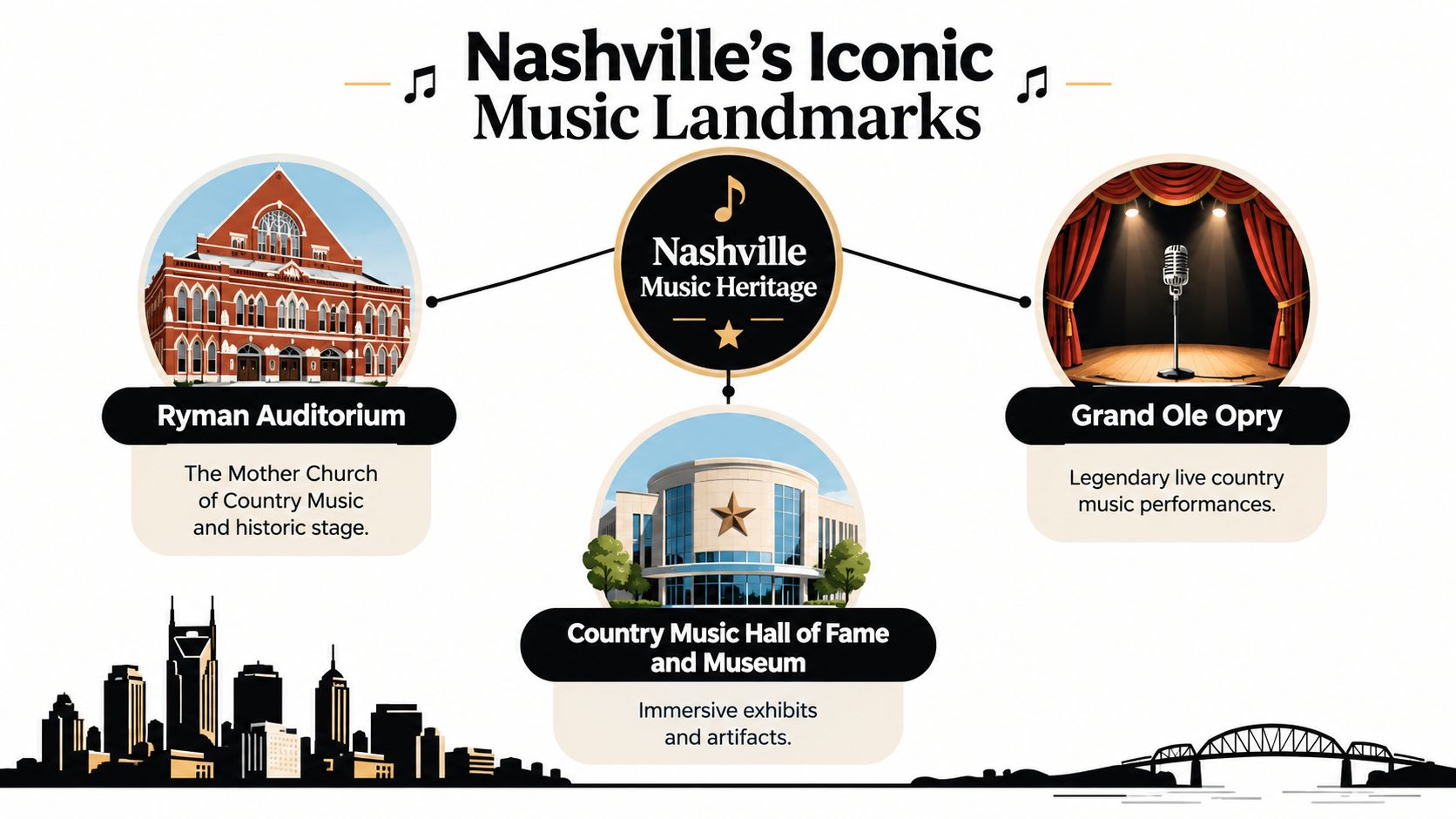
Nashville's landmark venues answer different questions. The Ryman explains where the city's stage tradition became tangible. The Grand Ole Opry shows how that tradition continues. The Country Music Hall of Fame and Museum places performers, instruments, recordings, and cultural history into a broader story. The Bluebird Café offers a more intimate look at songwriting.
Ryman Auditorium
The Ryman is often called the Mother Church of Country Music, a nickname tied to its former role as the Grand Ole Opry's home. Its historic interior gives performances a sense of occasion, but the venue remains an active downtown stage rather than a museum frozen in time. The building seats 2,362 people, and recent reporting has described it hosting more than 150 events annually, as noted by Fox 17 Nashville's Ryman facts.
Book a performance if the artist matches your interests. If the concert calendar doesn't work, look for daytime tours and backstage options through the venue. Check the current schedule, tour availability, seating layout, and accessibility information directly before you go. Historic buildings can have different routes and seating considerations than newer venues.
Grand Ole Opry
The Grand Ole Opry is the right choice when you want a living broadcast tradition rather than a single-artist concert. A typical program can move between performers and styles, so the appeal lies in the format as much as in any individual name. Confirm the show date, arrival guidance, seating, and tour options before purchasing.
Backstage tours can add useful context, especially for first-time visitors. They help explain how performers, dressing rooms, stage transitions, and broadcast traditions fit together. If you're staying downtown, remember that the Opry House sits outside the central entertainment cluster, so plan transportation as part of the booking.
Country Music Hall of Fame and Museum
The Country Music Hall of Fame and Museum opened on Music Row in 1967, moved to its current downtown location in 2001, and expanded by 210,000 square feet in 2014. The museum reports more than 1.2 million visitors annually, figures documented by the Tennessee Arts Commission's museum profile.
Allow enough time to read, listen, and follow the exhibits instead of treating the museum as a quick photo stop. Check current exhibitions, timed-entry information, tour availability, and accessibility services on the official site. Its downtown location makes it easy to pair with the Ryman, though you'll want a quieter meal break between visits.
For another destination-based planning example, compare the structure of this New York City travel guide, then apply the same principle locally, group nearby attractions instead of crossing town repeatedly.
Bluebird Café
The Bluebird Café is built around close listening. It's better suited to travelers who want songwriter performances and a seated room than to visitors seeking a loud, high-volume bar crawl. Reservations are important because the venue's intimate format limits casual walk-in flexibility.
Check the official calendar and policies before planning around it. Arrive with realistic expectations, respect the room's listening culture, and avoid scheduling a distant attraction immediately afterward. The experience depends on attention, not rapid movement between venues.
Tailored Itineraries for Music Lovers
Nashville has over 250 live-music venues, with roughly six times the venue density of Tokyo or New York, according to the Nashville Hospitality Authority's music tourism overview. That density creates choice, but it also creates decision fatigue. The practical solution is to organize days by neighborhood cluster, then leave one opening for a surprise performance.
The itineraries below are templates, not rigid schedules. “Budget” means prioritizing free or low-cost browsing and casual meals. “Midrange” balances landmark admissions, reserved shows, and neighborhood exploration. “Luxury” emphasizes premium seating, guided experiences, destination dining, and private transportation.
| Day | Budget | Midrange | Luxury |
|---|---|---|---|
| Day 1 | Walk downtown, explore Broadway from an early hour, choose a casual hot chicken meal, and listen for free or low-cost performances. | Visit the Country Music Hall of Fame and Museum, dine near downtown, then attend a planned show at the Ryman or another central venue. | Arrange a private or premium city transfer, tour the museum at a relaxed pace, enjoy a reserved dinner, and attend a headline performance. |
| Day 2 | Explore East Nashville, browse independent shops, and choose a smaller venue after checking its calendar. | Pair Music Row or the Ryman with dinner in Midtown, then attend a songwriter-focused or independent show. | Book a backstage or guided experience, schedule a chef-led meal, and use reserved transport between Music Row and an evening venue. |
| Day 3 | Revisit your favorite district, attend an open-mic or free community performance, and keep the day flexible. | Visit the Grand Ole Opry or its surrounding attractions, then finish with a carefully selected neighborhood dinner. | Combine a premium Opry experience with a private dinner, upgraded seating, and a late return arranged in advance. |
The budget backpacker
Use one central walking zone each day. On the first day, explore downtown and Broadway without trying to enter every venue. Listen briefly, compare the rooms, and choose the artist or atmosphere that feels most distinctive.
On the next day, spend time in East Nashville. Independent venues often provide a stronger sense of discovery, but you'll need to verify schedules rather than rely on constant walk-in music. A self-guided route can help you understand the city's music geography, while resources such as guided and self-guided music routes offer useful ideas for structuring a music-focused walk.
The midrange explorer
Build each day around one ticketed anchor. The museum works well during daytime, the Ryman suits an evening performance, and the Grand Ole Opry deserves its own transportation plan. Add one nearby meal and one flexible venue rather than stacking reservations across distant districts.
The luxury seeker
Luxury planning is less about spending continuously and more about reducing friction. Reserve the experiences with limited availability, choose restaurants close to the evening venue, and arrange a driver when the group has different mobility or timing needs.
Leave a gap in the schedule. Nashville's best surprise may be a small room you discover after listening to the first act, not the attraction you rushed toward next.
If your plans include a wider regional travel strategy, this Branson vacation guide provides another example of organizing attractions around the type of experience you want rather than collecting disconnected stops.
Live Shows Planning and Ticketing Tips
A strong Nashville show plan starts with the calendar, not the venue entrance. Identify the artists or formats you care about, then check official venue listings before comparing tickets through authorized sellers, as a free songwriter round, a general-admission club show, and a reserved-seat performance require different expectations.
A practical booking sequence
- Start with the official listing. Confirm the artist, date, door time, age policy, seating arrangement, and venue address.
- Compare the complete cost. Review service charges, delivery terms, taxes, and refund rules rather than comparing only the headline price.
- Match the ticket to your priorities. General admission may offer energy and flexibility, while reserved seating provides predictability for older travelers or groups.
- Set an arrival plan. Popular shows can create queues, rideshare congestion, and limited nearby dining availability.
- Keep a backup option. Choose a second venue in the same cluster in case your preferred performance sells out.
Day-of opportunities exist, but they work best when you're flexible about artist, time, and seating. Free and donation-based performances can also fit a budget, especially in smaller rooms or community-oriented settings. Don't assume “free” means unplanned. Check start times, door policies, and whether reservations are still required.
For broader festival-ticket planning principles, Paul Robins Promotions' ticket guide offers useful context on comparing ticket types and preparing for high-demand events.
Protect your hearing
Downtown honky-tonks can be technically demanding listening environments. Vanderbilt University Medical Center reported average maximum sound levels of about 127 dB, comparable to a jet takeoff, in a study of local honky-tonks, as described in this RIAA-hosted Nashville music industry study.
Carry high-fidelity earplugs, step outside between sets, and avoid treating every venue as a long stay. Seated rooms, acoustically treated spaces, and outdoor stages may feel more comfortable for extended listening. If you're planning a full night, think of loudness as cumulative exposure, not a series of isolated stops.
For an additional travel-planning example focused on cultural destinations, see this Santa Fe art travel guide.
Getting Around and Group-Friendly Accessibility
Nashville is easiest when transportation decisions follow the venue cluster. Downtown Broadway, Midtown, the Gulch, Music Row, East Nashville, and the Grand Ole Opry area don't function as one continuous walkable district. A group that plans dinner in one area and a show in another should build in more time than a map's straight-line distance suggests.
Choosing the right mode
Walking works best within downtown, the Gulch, and compact parts of Midtown. It gives you control over short hops and avoids curbside pickup confusion, but it becomes less practical when the itinerary crosses neighborhoods or ends late.
Rideshares are useful for evening transfers and groups that don't want to designate a driver. Set the pickup point away from the busiest curb when possible, and confirm the vehicle accommodates the full party before leaving the venue.
Buses can support daytime movement, especially for travelers who are comfortable checking routes and schedules. Service patterns may be more useful for local commuting than for rapid nightlife hopping, so don't build a tightly timed concert plan around an unfamiliar route without a backup.
Pedicabs and bike shares can help with short downtown connections. They're weather-dependent and less suitable for luggage, mobility equipment, or large groups.
Car rentals provide flexibility for East Nashville, Music Valley, and destinations outside the core. They also add parking, navigation, and sober-driver responsibilities, so they're most valuable when your itinerary extends beyond walkable music districts.
Planning for accessibility
Check each venue's official accessibility information before buying tickets. Ask about step-free entry, accessible seating, restroom routes, elevator access, hearing assistance, companion seating, and drop-off procedures. Historic venues may have different constraints from recently built facilities, while newer rooms may offer easier circulation but still vary by event configuration.
For business teams, family groups, or multigenerational travelers, choose a hotel near the dominant cluster and schedule fewer venue changes. You can also split the evening, with one subgroup attending a louder show while others choose a seated performance or dinner nearby.
A group itinerary succeeds when everyone can participate without rushing. This Las Vegas travel guide beyond the Strip illustrates the same broader planning lesson, major destinations become more manageable when you organize experiences by district.
Pairing Music with Nashville Eats Budget and Seasons
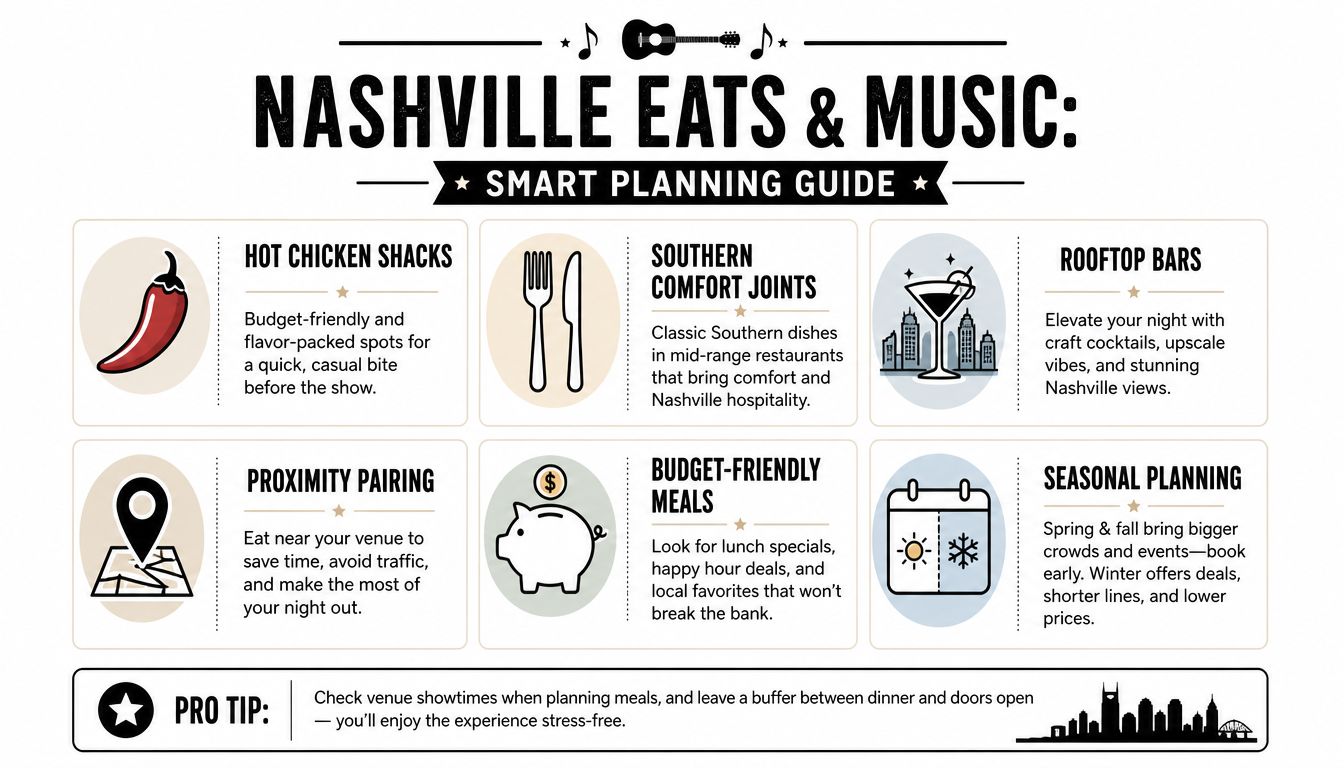
A Nashville music night works better when food and venue choices share a geographic plan. Eating near the show reduces transit pressure, protects your ticket timing, and lets you choose the meal style that matches the evening. A casual hot chicken stop suits a flexible bar crawl, while a longer Southern meal belongs before a seated performance with a defined start time.
Match the meal to the district
Hot chicken shacks provide a casual, budget-conscious introduction to Nashville flavor. Start with a manageable spice level if you're unfamiliar with the style, and leave enough time for the meal before entering a venue.
Southern comfort restaurants work well for a midrange itinerary. Choose them when you want a substantial meal, a slower pace, and a convenient connection to downtown, Midtown, or the Gulch.
Rooftop bars are best used as an atmosphere stop rather than the foundation of an entire night. They can provide city views and drinks before a nearby performance, but weather, lines, and event demand can affect access.
Proximity beats prestige. The restaurant with the best online reputation isn't always the smartest choice if it forces you to cross town before a ticketed show.
Use the calendar strategically
Peak event periods can change the economics of a trip. In 2026, CMA Fest generated an estimated $93 million in visitor spending, while downtown hotel occupancy reached 89.4% during the event and 92.5% on July 4th, according to Visit Music City's summer tourism update. Those figures signal why visitors should expect tighter lodging availability and stronger pricing pressure around major celebrations.
If your schedule is flexible, consider quieter travel windows and weekdays. Winter can offer a calmer pace, while spring and fall may provide a balance between outdoor comfort and active programming. Always verify the specific event calendar because a major show can change the crowd pattern of an otherwise relaxed week.
Keep food spending under control
Reserve destination restaurants only when they add something meaningful to the trip. For other meals, use lunch specials, casual counters, food halls, and neighborhood cafés. A flexible dinner also gives you room to follow an unexpected performance rather than abandoning a reservation.
For travelers interested in combining food planning with cultural attractions, this New Orleans attractions and food guide offers a useful comparison point. The same principle applies in Nashville: choose meals that support the day's route, budget, and energy level.
Conclusion
Build your Nashville trip around history, then narrow it by neighborhood. Choose Broadway for concentrated honky-tonk energy, East Nashville for independent discovery, Midtown for social evenings, and the Gulch for polished dining and venues. Reserve landmark experiences early, check show calendars, carry high-fidelity earplugs, and plan transportation around clusters rather than the city as a whole. With those choices made, you can leave room for the unplanned song, the small venue, and the soundtrack that becomes yours.
If your business is replacing laptops, servers, medical devices, or office technology, Reworx Recycling provides electronics recycling, secure data destruction, business pickups, equipment decommissioning, and donation-based recycling. Schedule a responsible equipment retirement plan so your old technology can support environmental stewardship, digital inclusion, and community workforce development.