
You've finished the hardware refresh. The new laptops are deployed, the old tablets are stacked in a conference room, and someone on your team is ready to send everything out for recycling. Then shipping asks a simple question that slows the whole project down.
Do these boxes need a UN 3481 label?
That's where many office cleanouts stall. The devices look harmless because they're familiar. They're just used laptops, retired phones, and old handheld tools. But the moment those items leave your building, the lithium-ion batteries inside them move from an IT issue to a transport compliance issue.
For an IT manager, that matters most during IT asset disposition, office moves, lease returns, refresh cycles, and recycling events. If your company is sending old equipment for secure processing, you need to know when battery shipping rules apply, what the label means, and how to avoid delays with a carrier or recycler.
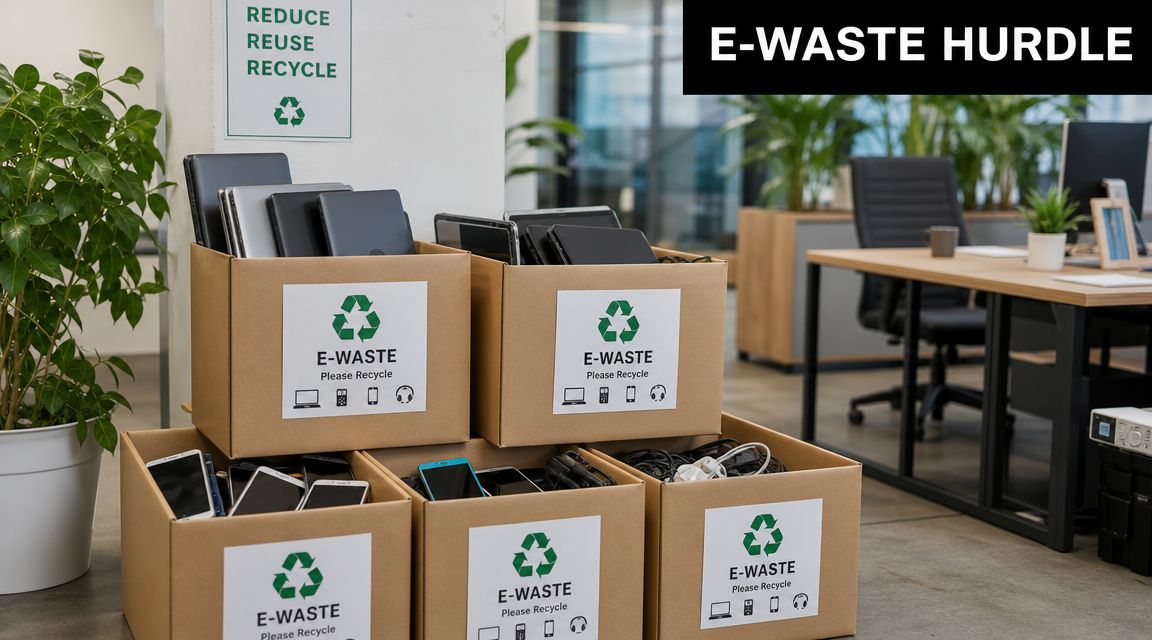
The Hidden Hurdle in Your Office Cleanout
A common version of this problem starts with good intentions. Facilities schedules a pickup. IT wipes devices. Procurement wants the old inventory gone before the new quarter starts. Then someone notices that many of the outgoing assets still contain rechargeable batteries.
That changes the shipment.
A box of keyboards and monitors is one thing. A box of laptops and smartphones is different because those devices contain lithium-ion batteries, and carriers treat that differently during transport. The issue often surfaces late, after the equipment is already packed.
Why office moves create confusion
During a relocation or office cleanout, teams tend to group all “old tech” into one category. Shipping rules don't. A desktop tower without a battery doesn't raise the same transport questions as a laptop with an installed battery. A retired smartphone in a drawer may look insignificant, but it still affects how the package should be prepared.
That's one reason move planning and device retirement should happen together. If you're coordinating furniture, files, and surplus electronics at the same time, a practical resource like this playbook for your office move in Perth shows how easily logistics details can multiply when relocation and disposal overlap.
Many companies also miss the operational side of e-waste handling during transitions. If you're relocating staff, consolidating floors, or closing a branch, it helps to align shipping decisions with a documented office relocation process.
Practical rule: If the outgoing equipment contains rechargeable batteries, don't assume standard parcel prep is enough.
The recycling shipment is still a regulated shipment
This catches people off guard because recycling feels like the final step, not the risky one. But from a transport perspective, the carrier still needs to know what's in the box. Emergency responders do too. The label is part of that communication.
For IT teams, the lesson is simple. Compliance starts before the recycler receives the equipment. It starts when your staff identifies what's being shipped and how those batteries are configured inside the package.
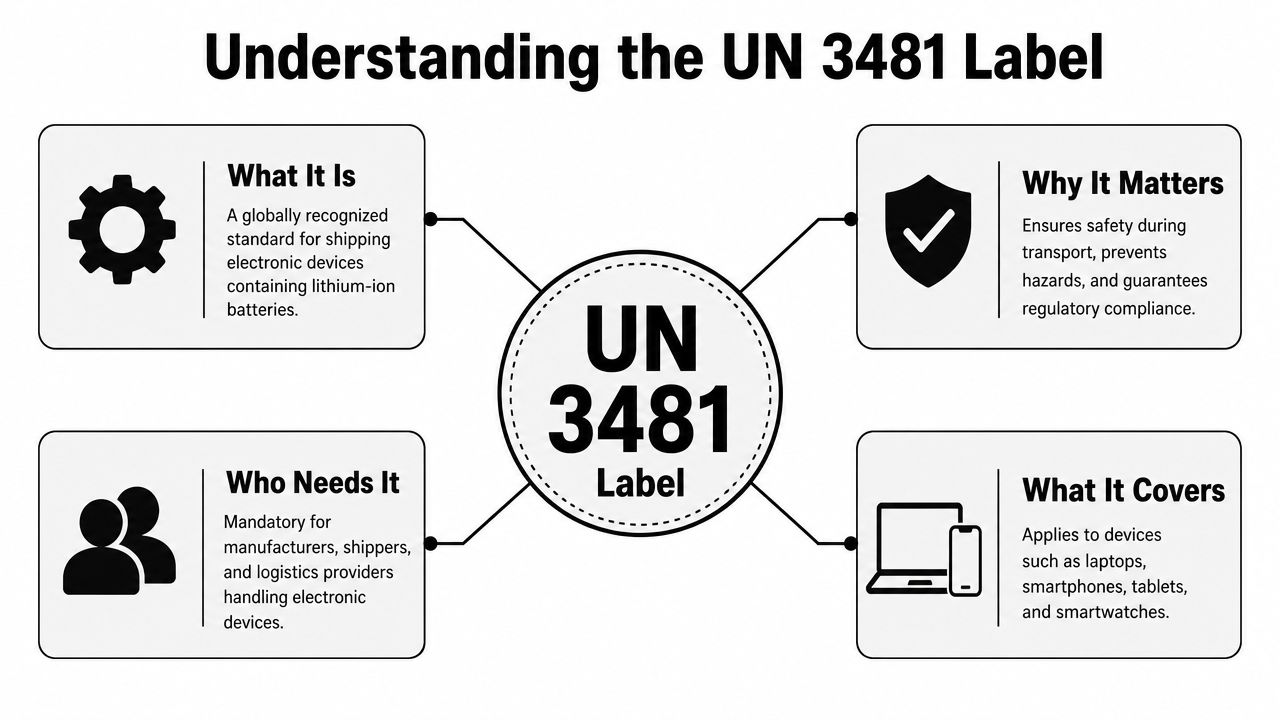
What Is the UN 3481 Label
The UN 3481 label is a transport identifier for lithium-ion batteries contained in equipment or packed with equipment. Under major transport systems, it is treated as Class 9 miscellaneous dangerous goods, including IATA air rules, IMDG sea rules, and ADR road rules, as described by NS Labels' lithium battery label overview.
That definition matters because it separates one kind of shipment from another. If the battery is traveling with the device it powers, or in the same package as that device, the shipment falls into the UN 3481 category. Batteries shipped by themselves fall under a different identifier.
A simple way to think about it
Use this analogy with your team.
- Battery shipped alone: that's like sending a passenger without a car.
- Battery inside a laptop: that's like the passenger sitting in the car.
- Battery packed beside the laptop in the same box: that's the passenger riding along with the car but not seated in it.
In the last two cases, the shipment is still associated with the equipment. That's the logic behind UN 3481.
Why the label exists
The label isn't there to make recycling harder. It gives carriers and handlers a consistent signal that the package contains a lithium-ion power source that needs proper handling. If a package is damaged, stacked badly, or exposed to the wrong conditions, responders need a clear way to identify what they're dealing with.
That's especially relevant in business recycling. Old equipment often travels in mixed loads, with devices in different ages and conditions. A compliance review should separate universal waste handling from battery transport rules, which is why many IT and facilities teams also review universal waste guidance alongside shipping prep.
The label is not branding. It is a hazard communication tool tied to how the battery is packed.
Where people get tripped up
Most confusion comes from the phrase “with equipment.” Some teams assume it only applies when the battery is installed in the device. In practice, the category also covers batteries packed in the same package as the equipment they belong with.
That's why your staging table matters. If your staff removes batteries from devices and bags them separately, you may change the shipment category. The difference between “contained in” and “packed with” is small in plain English, but important in logistics.
Key UN 3481 Label Specifications
Once you know the shipment falls under this category, the next question is physical compliance. What should the package display?
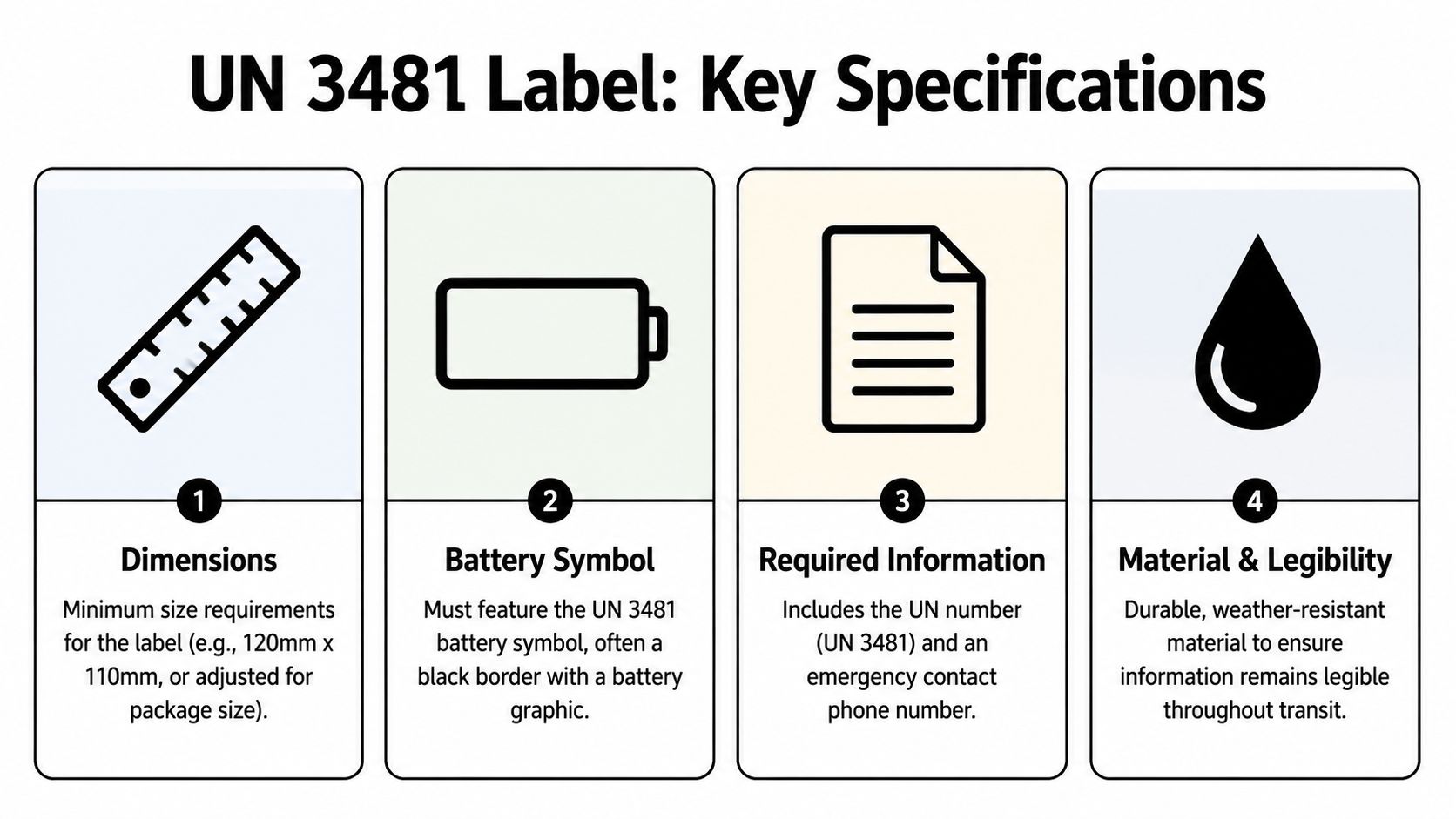
For air shipments, packages under this designation often require the Class 9 hazard label and, in many cases, the Lithium Battery Handling Mark with the UN number and a contact telephone. The mark has a minimum size of 100 mm × 100 mm, and a reduced size of 100 mm × 70 mm is allowed for very small packages. Batteries manufactured after December 31, 2015 must display the watt-hour rating on the outer case, according to the PHMSA Lithium Battery Guide.
What should appear on the package
A compliant package review usually includes these checks:
- Correct mark size: The lithium battery mark needs to meet the minimum dimensions allowed for the shipment type and package size.
- UN number shown clearly: If the package is moving under this classification, the UN identifier needs to match that shipment.
- Telephone contact included: The handling mark often includes a contact number tied to shipment questions or emergency response routing.
- Other required labels present: Air shipments may also require the Class 9 hazard label, not just the lithium battery mark.
The Class 9 label and the handling mark are not the same thing
This is one of the most common mistakes in outbound recycling shipments. Teams print one symbol and assume they're done. In reality, the battery handling mark and the Class 9 hazard label serve different purposes. Depending on the shipment details, you may need one or both.
That's why packaging should be reviewed by the person booking transport, not just the person boxing assets.
Important distinction: A package can look neatly packed and still be noncompliant if the wrong marking is used or a required label is missing.
Don't overlook the battery casing itself
The watt-hour marking on the battery can affect how the shipment is classified and documented. If your team is preparing old laptops for recycling and the battery markings are worn off, don't guess. Pull the device specification from the manufacturer or hand the shipment review to a qualified shipping partner.
This is also a good point to separate lithium-ion compliance from other battery streams. If your facility handles UPS units, backup systems, or telecom cabinets, those may belong in a different battery process, such as lead-acid battery recycling guidance, rather than under the same shipping assumptions as laptops and tablets.
When the UN 3481 Label Is Required
The label comes into play when your company is shipping lithium-ion batteries contained in equipment or packed with equipment. In air transport, that designation maps to IATA Packing Instructions 966/967, and the treatment depends on whether the battery is installed in the device or packed in the same package, as shown in the IATA lithium battery addendum.
That sounds technical, but the business scenarios are familiar.
Typical situations in business operations
An IT team may trigger these rules when it ships old laptops from a branch office back to headquarters, sends tablets to a recycler after a field program ends, returns leased equipment, or moves retired devices to an ITAD vendor for processing. The shipment can be headed to a reuse partner, a liquidation channel, a secure destruction stream, or an electronics recycler. If the package contains the devices and their lithium-ion batteries, the classification question still applies.
The same issue appears during sustainability initiatives. A company may run a donation drive for used business laptops, but if those units are shipped off-site, the transport step still needs to be handled correctly.
Recycling doesn't erase the transport obligation
Many organizations assume the recycler will solve everything at pickup. Sometimes that's true if the recycler controls packaging, labeling, and carrier handoff from your dock forward. But if your team is boxing equipment in advance, generating labels internally, or consolidating gear from remote offices, the compliance responsibility may start before the recycler touches the material.
That's why ITAD planning should treat battery shipping as part of disposition workflow, not as a separate warehouse detail.
Cases that need a closer review
Not every outgoing device load is handled the same way. A shipment of laptops with batteries installed may follow a different packaging and documentation path than a carton with devices plus loose replacement batteries in the same box. The phrase “packed with equipment” is where people often misclassify.
A second point of confusion is quantity and format. Small, simple shipments may move under a more simplified pathway, while larger or differently configured shipments may require more formal handling. If your team doesn't ship electronics often, it's safer to escalate the review rather than rely on memory from a prior project.
A Compliance Checklist for Shipping Your Devices
When old equipment is headed out for recycling, a short checklist prevents most labeling mistakes. This works especially well for branch offices, school districts, medical groups, and multi-site businesses where non-shipping staff may be the ones packing retired devices.
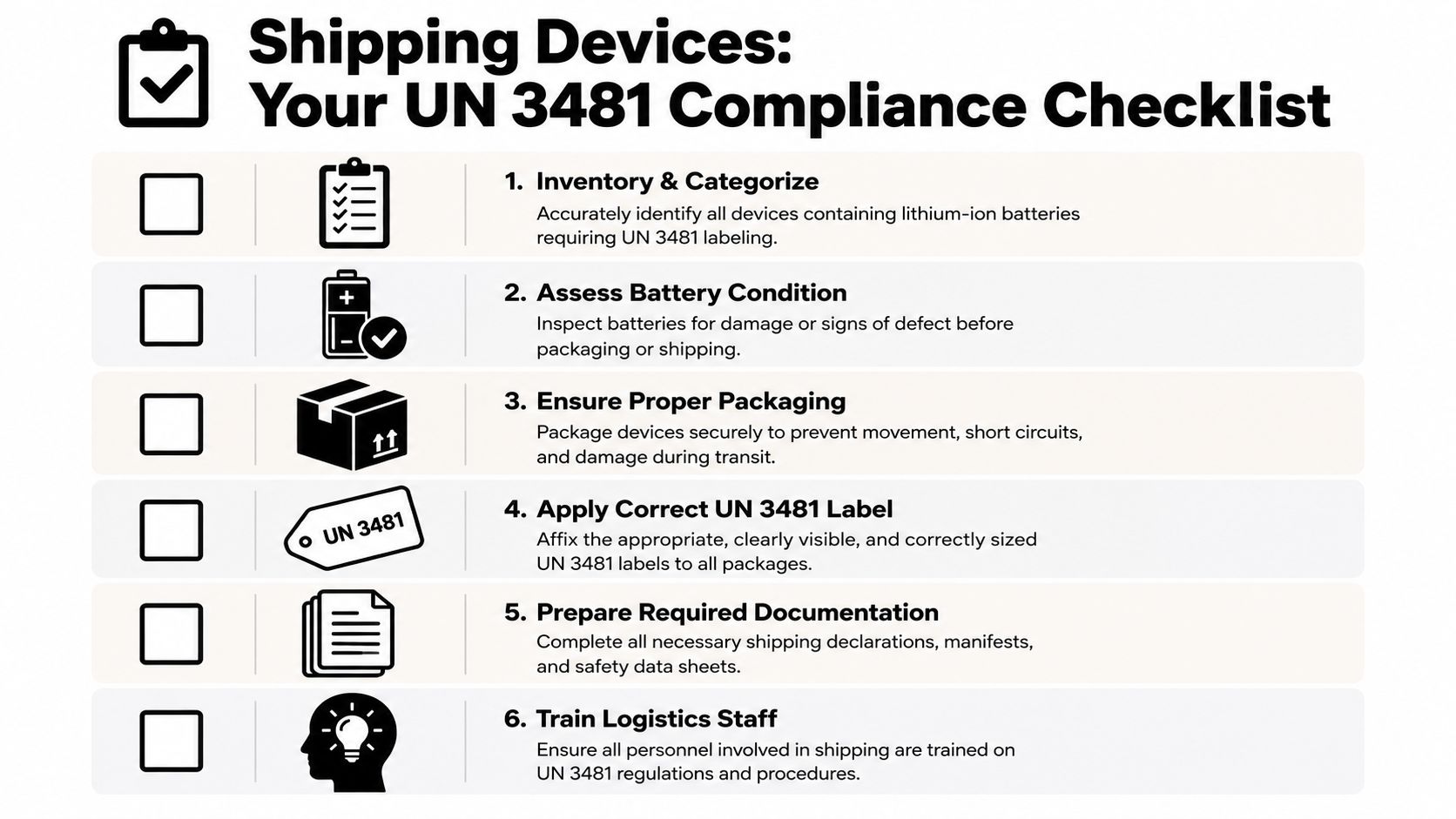
Use this workflow before anything leaves the building
-
Inventory the outgoing devices. Separate laptops, tablets, phones, scanners, and tools from non-battery electronics. Confirm whether the batteries are installed or packed alongside the equipment.
-
Check the battery markings. Look for the watt-hour information on the battery case when available. If it isn't readable, pull manufacturer specs instead of estimating.
-
Inspect physical condition. Don't ship damaged, swollen, or questionable batteries through a routine recycling workflow. Escalate those units for special handling.
-
Package to prevent movement. Devices shouldn't slide around inside the carton, press against each other, or power on accidentally in transit.
Review labels and overpacks carefully
For air transport, a 30% state-of-charge limit applies to certain fully regulated lithium-ion cells and batteries shipped by cargo aircraft. When packages are overpacked, the Class 9 Lithium Battery label, UN ID number, and Proper Shipping Name must remain visible or be replicated on the overpack, according to the Aeroclass overview of UN 3481 requirements.
If your warehouse team pallets multiple cartons together, that overpack rule matters. A compliant inner box doesn't help if the required markings disappear under stretch wrap or outer packaging.
- Label placement: Put required markings where handlers can see them.
- Overpack review: If boxes are bundled together, confirm the outside still communicates what the shipment contains.
- Supply quality: Use durable stock that won't smear, peel, or disappear during transit. Teams that need consistent materials often standardize with resources like wholesale shipping labels and tags.
Document the chain of custody
Shipping compliance and asset accountability should travel together. If you're sending devices for recycling or secure destruction, match your packing checklist with your asset list, serial records, and release documentation. A formal chain of custody documentation process helps ensure the shipping record and the IT disposition record match the same equipment.
Train the person sealing the carton, not just the manager approving the shipment. Most shipping errors happen at the packing table.
Partner with Reworx for Compliant ITAD
Battery shipping rules are manageable, but they're rarely the best use of an internal IT team's time. Your staff already has enough to handle during a refresh, relocation, or cleanup project. They're tracking assets, coordinating data destruction, supporting users, and closing out inventory. Adding dangerous goods interpretation on top of that creates avoidable risk.
An ITAD partner can simplify the process. If the vendor controls pickup, packaging expectations, disposition workflow, and downstream processing, your company has fewer handoff gaps to manage. That matters most when old laptops, tablets, and phones are leaving multiple offices or when assets are being consolidated after a facility cleanout.
For teams that want a structured disposition path, Reworx Recycling's IT asset disposition services cover business equipment retirement, secure handling, and electronics recycling as part of a broader ITAD workflow. In practice, that gives companies one operating process for device pickup, data-bearing asset control, and end-of-life management.
It also helps to prepare staff for the physical side of transport. If your office manager or branch admin is boxing devices before pickup, practical guidance on packing electronics for moving can reduce preventable damage before a recycler or carrier even gets involved.
The main takeaway is straightforward. If your company is sending old electronics for recycling, the shipment should be treated as both an environmental responsibility and a transport compliance task. When those two pieces are aligned, you reduce delays, protect your staff, and keep the disposition project on schedule.
If your business is planning an office cleanout, laptop disposal project, data center decommissioning, or broader electronics recycling effort, Reworx Recycling can help you turn retired equipment into a controlled, responsible disposition process. Donate old devices, schedule a pickup, or explore a partnership that supports secure IT equipment disposal, sustainable recycling, and community impact through technology reuse.