A lot of Lebanon-area businesses reach the same point at once. The spare office turns into a holding area for old laptops, dead monitors, a retired firewall, badge printers nobody wants to touch, and a few hard drives that nobody wants to throw away without knowing what's on them.
That pile is more than clutter. It affects floor space, audit readiness, data security, and disposal compliance. For a small cleanup, a public drop-off option may help. For an office cleanout, equipment refresh, medical equipment disposal project, or data center decommissioning workflow, it usually won't be enough.
The Growing Challenge of Business E-Waste in Lebanon County
A typical Lebanon County business doesn't create e-waste in one dramatic event. It builds up over time. An accounting firm replaces desktops over two budget cycles. A manufacturer retires HMIs, scanners, and old networking gear after a plant update. A healthcare office swaps laptops and keeps the old units in storage because no one wants to risk improper laptop disposal or leave patient data exposed.
The result is predictable. IT managers want the room back. Operations wants the equipment gone. Leadership wants the job done without creating a compliance problem. That's where electronics recycling in Lebanon PA stops being a janitorial task and becomes an IT asset disposition decision.
Three issues usually show up together:
- Compliance pressure means electronics can't be treated like regular trash.
- Data risk means even a single forgotten drive can turn a cleanup into an incident.
- Logistics friction means the team keeps postponing the project because pickup, sorting, and chain of custody aren't simple.
A lot of businesses also underestimate the variety of assets involved. It's not just computer recycling. A real office cleanout can include docks, phones, printers, cabling, networking hardware, point-of-sale devices, access control panels, and legacy backup media. A lab or clinic may also need laboratory equipment disposal or medical equipment disposal handled with more care than a residential program is built to provide.
Practical rule: If your internal team is asking who owns the drives, whether anything needs to be backed up, and where the equipment can legally go, you're not dealing with trash removal. You're dealing with end-of-life asset management.
The environmental side matters too. If you need a quick refresher on why this isn't just an operational nuisance, this overview of the impact of e-waste on the environment is worth reading. The business case and the environmental case usually point in the same direction. Remove the equipment, protect the data, and route usable hardware into a more responsible downstream process.
Navigating Local Electronics Recycling Regulations in Lebanon PA
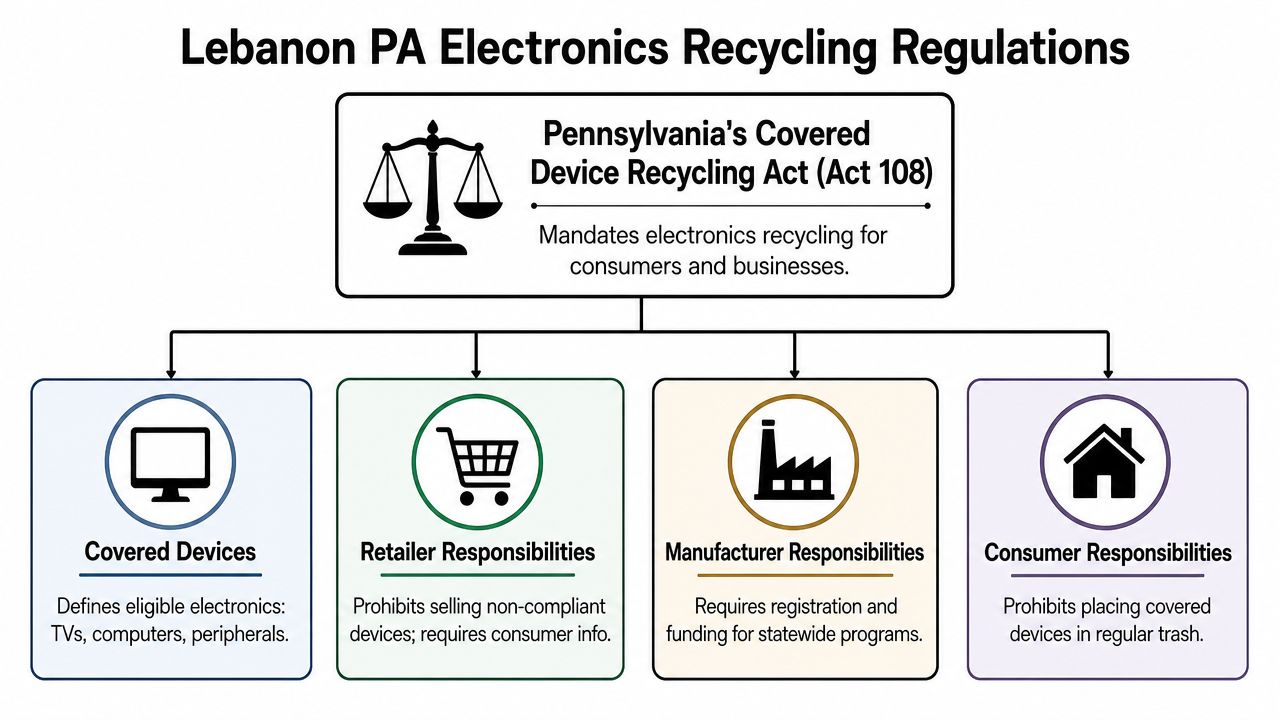
Pennsylvania doesn't leave this to guesswork. Under Pennsylvania's Covered Device Recycling Act (Act 108 of 2010), disposal of electronics in landfills is banned. The Greater Lebanon Refuse Authority at 1805 Russell Road offers free drop-off but enforces a strict limit of a maximum of 5 computers or televisions per person per day, turning away truckloads and large quantities according to the GLRA Electronics Recycling Facility information.
What the local facility does well
For residents and very small quantities, the GLRA site fills an important role. It gives the community a legal, accessible place to bring covered devices instead of pushing them into the trash stream. That's valuable public infrastructure, and businesses in Lebanon should know it exists.
For a very small office with only a handful of eligible items, that may solve the immediate disposal problem. It's also useful context for facilities managers who need to understand what employees may already know from residential recycling habits.
Where public drop-off stops working for business
Business cleanouts usually fail against public-site limits for practical reasons, not legal ones. The minute you have a batch of retired desktops, several monitors, old TVs in a breakroom or conference area, and a few loose peripherals, the maximum of 5 computers or televisions per person per day becomes a scheduling burden instead of a solution.
The same issue shows up with:
- Office moves where equipment has to leave on a lease deadline
- Facility cleanout projects tied to renovation or closure
- Data center decommissioning where assets need documented handling
- Corporate donation programs that require triage between reuse, secure destruction, and recycling
A public drop-off model also isn't designed around business process controls. You don't get the same fit for serialized inventory, internal signoff, chain of custody, product destruction decisions, or secure data destruction planning.
Public recycling access is helpful. It isn't a substitute for a formal business disposition workflow.
There's also a category problem. Local governments often focus on covered devices first. Businesses, meanwhile, generate mixed loads. That can include telecom gear, specialty electronics, medical peripherals, test equipment, and accessories that don't fit neatly into a resident-facing stream. If you're comparing public collection pathways with more structured options, this regional recycling center example helps illustrate how acceptance rules can vary and why companies need to verify scope before loading a truck.
A practical decision test
Use the local facility if your situation looks like this:
| Situation | Public drop-off may work |
|---|---|
| Very small batch | Yes |
| No sensitive data concerns | Possibly |
| No need for pickup or audit trail | Yes |
| Mixed business assets in volume | No |
| Need for secure data destruction | No |
| Need for documented ITAD process | No |
If your team is planning recurring electronics recycling, not a one-time personal drop-off, move to a business-grade process.
How to Prepare Your IT Assets for Secure Disposal
Most disposal problems start before the truck arrives. The internal prep work determines whether the project moves cleanly or turns into a messy scramble for chargers, asset tags, and backup confirmations.
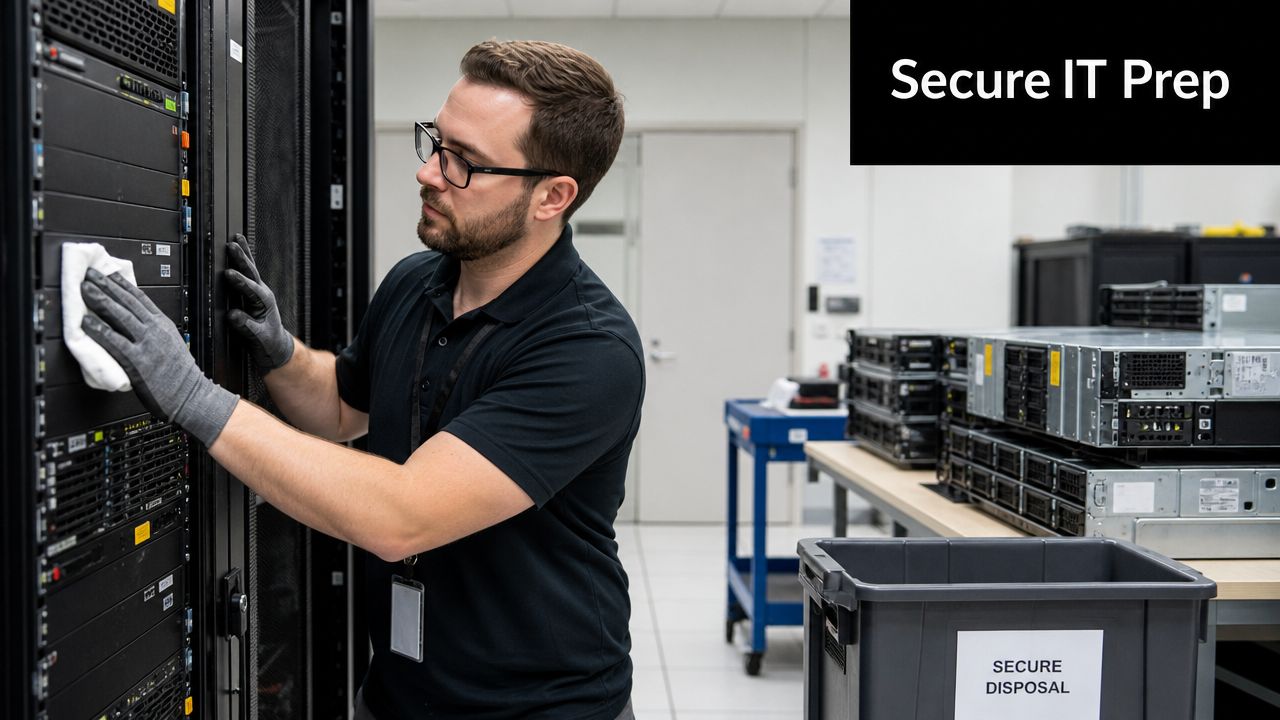
Start with an inventory that operations can use
Don't aim for a perfect spreadsheet on day one. Build a working list that helps your team make decisions. At minimum, capture device type, location, user or department, whether it stores data, and whether the asset may have reuse value.
A good inventory separates equipment into groups such as end-user devices, servers, networking equipment, printers, specialty devices, and media. That makes pickup planning easier and reduces the chance that a sensitive item gets mixed into a general load.
For teams that need a framework before a pickup, this guide to IT inventory audits before recycling is a useful planning reference.
Protect the data before you touch the hardware
Many office cleanouts often go sideways. Someone assumes a device is obsolete, but the local drive still contains finance records, customer files, design assets, HR documents, or browser-saved credentials. Before anything leaves a desk, confirm whether the system has been backed up, migrated, or decommissioned properly.
Use a short internal checklist:
- Confirm business ownership of the device and any linked accounts.
- Verify backup status for local files, shared folders, and application data.
- Identify storage media inside the device, including removable drives or backup cartridges.
- Flag regulated data so the downstream destruction method matches the risk.
If your team can't answer "what data is on this device?" the device shouldn't leave your control yet.
Consolidate for pickup, not for convenience
I've seen companies stack mixed electronics in whatever room has space. That creates confusion later. A better approach is to stage assets by category and by handling requirement. Put laptops together, servers together, networking gear together, and clearly isolate anything needing product destruction or special review.
A simple staging plan works well:
- Red tag items for physical data destruction review
- Blue tag items for possible redeployment or remarketing
- General recycling pallet for commodity equipment with no reuse path
- Hold area for anything with unresolved ownership or data questions
That small amount of organization saves time, reduces mistakes, and gives your disposal partner a much cleaner handoff.
Beyond Recycling Secure ITAD and Data Destruction
Basic recycling solves one problem. It gets obsolete equipment out of the building. It doesn't automatically solve data exposure, disposition documentation, asset value recovery, or internal control. That's why businesses need ITAD, not just hauling.
What ITAD actually covers
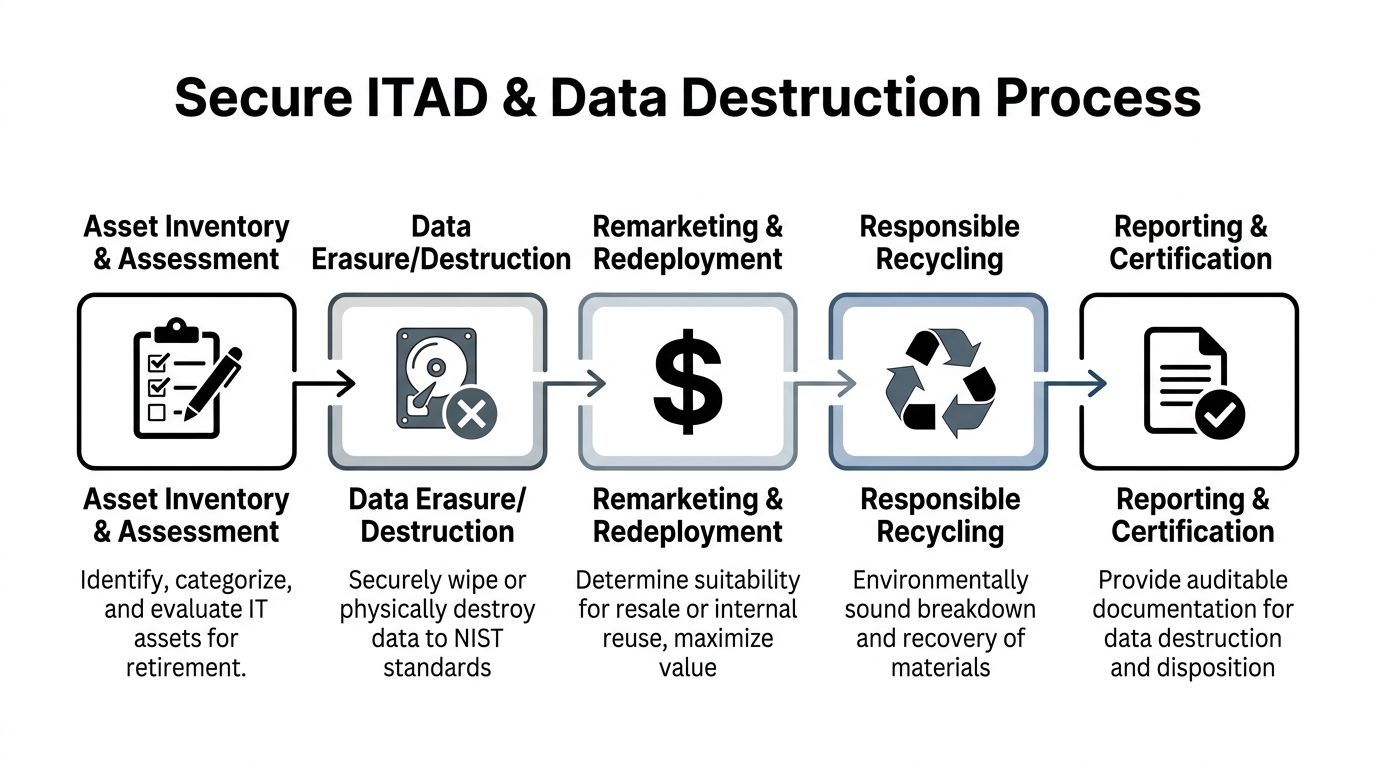
IT asset disposition is the managed retirement of business technology. That includes collection, serialized tracking, data handling, triage for reuse or remarketing, compliant recycling, and reporting. For an IT manager, it's a control system. For finance, it's an asset closeout process. For compliance teams, it's evidence that retired hardware was handled correctly.
That distinction matters because the electronics stream is unstable. The GLRA facility opened on January 16, 2012, and had to narrow what it accepted effective May 1, 2016, ceasing acceptance of non-covered devices including microwaves and large copy or fax machines due to a decline in the electronics recycling market. The same source notes the global documented collection rate was 22.3% in 2022 and is forecast to drop to 20% by 2030 according to North Lebanon Township's hazardous waste and electronic recycling guidance. For a business, that volatility is a warning. If your disposition plan depends on a narrow public acceptance list, it can break when market conditions change.
Wiping versus shredding
Not every asset needs the same data destruction method.
Software wiping is usually appropriate when a device is still functional and may be redeployed or remarketed. The goal is secure erasure while preserving hardware value. This method makes sense for many laptops, desktops, and some servers.
Physical shredding or destruction is often the right call when a drive is failed, encrypted media can't be validated, chain of custody is uncertain, or the data sensitivity is high enough that reuse isn't worth the residual risk. That decision comes up often in legal, healthcare, finance, and public sector environments.
A sound ITAD program decides between those paths intentionally, not by habit.
The cheapest disposal option can become the most expensive one if a retired drive resurfaces with readable data.
Value recovery is part of the job
Not every retired device is scrap. Some batches contain newer equipment that still has internal reuse or resale potential. A mature process identifies that early. Otherwise, companies throw recoverable value into a mixed recycling load and lose the chance to offset refresh costs.
That matters in projects involving laptop disposal, endpoint refreshes, and branch office consolidations. Good triage can separate equipment into three lanes:
| Disposition lane | Typical goal |
|---|---|
| Redeployment | Extend useful life inside the organization |
| Remarketing | Recover value from marketable assets |
| Responsible recycling | Process obsolete or damaged equipment properly |
When a business needs support across that full chain, one available option is Reworx Recycling's secure data destruction service, which is relevant for organizations looking for secure data destruction, business pickups, and broader IT equipment disposal support.
The Reworx Advantage Partnering with a Social Enterprise
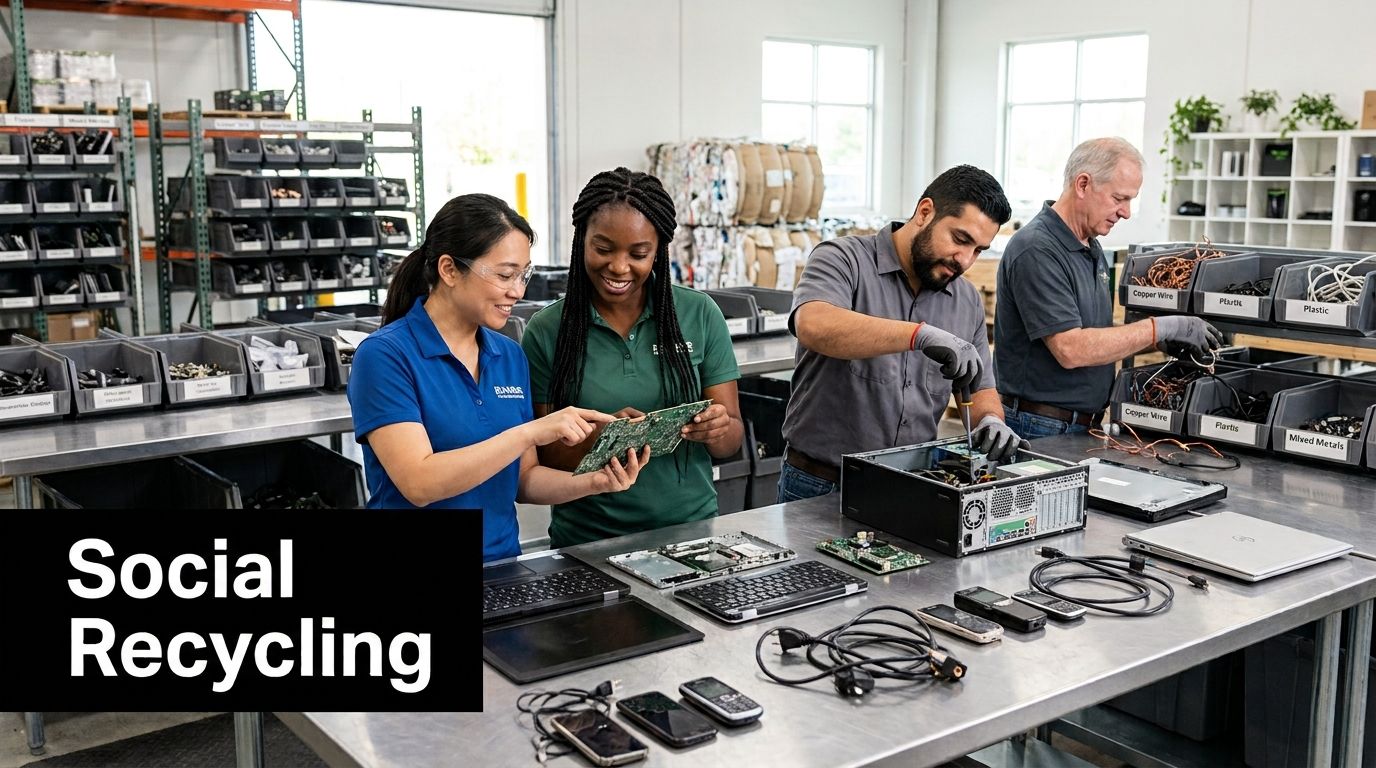
For many sustainability leaders, the vendor decision isn't only about risk removal. It's also about what happens after pickup. That's where a social enterprise recycling model changes the conversation.
Why a donation-based model matters
A donation-based recycling approach can support more than material recovery. It can help route suitable equipment into community benefit rather than treating every retired asset as waste from the start. For companies with ESG or CSR goals, that opens a stronger narrative than "we cleared the storage room."
The business benefits are practical:
- Sustainable recycling goals become easier to explain when reusable equipment is evaluated for donation pathways before final processing.
- Corporate donation programs can align IT refresh cycles with community technology access.
- Internal stakeholder buy-in improves when legal, IT, facilities, and community relations all see a credible outcome.
That doesn't eliminate the need for secure controls. It strengthens the need for them. Donation-based recycling only works when inventory discipline, data handling, and condition grading are done correctly.
Community value and business value can align
Lebanon businesses already understand local responsibility. The same mindset that drives safe operations and careful procurement can also shape how retired technology is handled. Equipment that still has useful life may support digital inclusion efforts. Non-reusable material can still move through responsible downstream recycling. In both cases, the company avoids landfill disposal and creates a more defensible story around end-of-life management.
This matters for more than office desktops. It applies to school upgrades, branch closures, warehouse technology refreshes, facility cleanout projects, and mixed loads generated by administrative and technical teams.
A strong disposition program doesn't end when the asset leaves your dock. It tracks whether the outcome matched the organization's security, environmental, and community standards.
If your organization wants that broader lens, this perspective on partnering for impact is useful. It connects the operational side of IT asset disposition with the social outcomes many companies now want from vendor relationships.
A standard recycler may remove equipment. A social enterprise model can connect computer recycling, secure processing, and community benefit in one chain of custody. For sustainability managers and corporate leadership, that's often the difference between a disposal line item and a program worth reporting internally.
Develop Your Strategic Recycling Plan in Lebanon Today
If you're managing old equipment in Lebanon County, the next move should be deliberate. The local regulatory baseline is clear. Electronics can't go to the landfill. Public collection infrastructure has a role, but business volumes, mixed asset types, and secure handling needs often push companies beyond a simple drop-off model.
A workable strategy usually includes four decisions. Know what assets you have. Decide what data destruction method each category requires. Separate reuse candidates from scrap. Then choose a partner that can support pickup, documentation, and responsible downstream processing.
For business owners, this protects the company from preventable risk while clearing expensive space. For IT managers, it creates a repeatable process for laptop disposal, server retirement, office cleanout work, and secure data destruction. For sustainability leaders, it turns electronics recycling in Lebanon PA into a program that supports environmental responsibility and community impact at the same time.
The worst approach is waiting until the pile becomes urgent. At that point, teams rush, inventories get sloppy, and the chance of missing a data-bearing asset goes up. The better approach is to build a standing plan for IT equipment disposal, product destruction decisions, and pickup logistics before the next refresh cycle starts.
If your organization has outgrown the local drop-off model, now is the right time to move to a formal process. Review your retired assets, identify the devices that need special handling, and line up a partner that can support secure, documented, sustainable recycling across the full project.
If your company needs a more structured path for electronics recycling, computer recycling, secure data destruction, or a business pickup tied to an office cleanout, facility cleanout, or ITAD project, Reworx Recycling is one resource to review. Businesses can use it to explore donation-based recycling, discuss equipment pickup, or evaluate how a social enterprise approach may fit corporate donation programs and long-term sustainability goals.