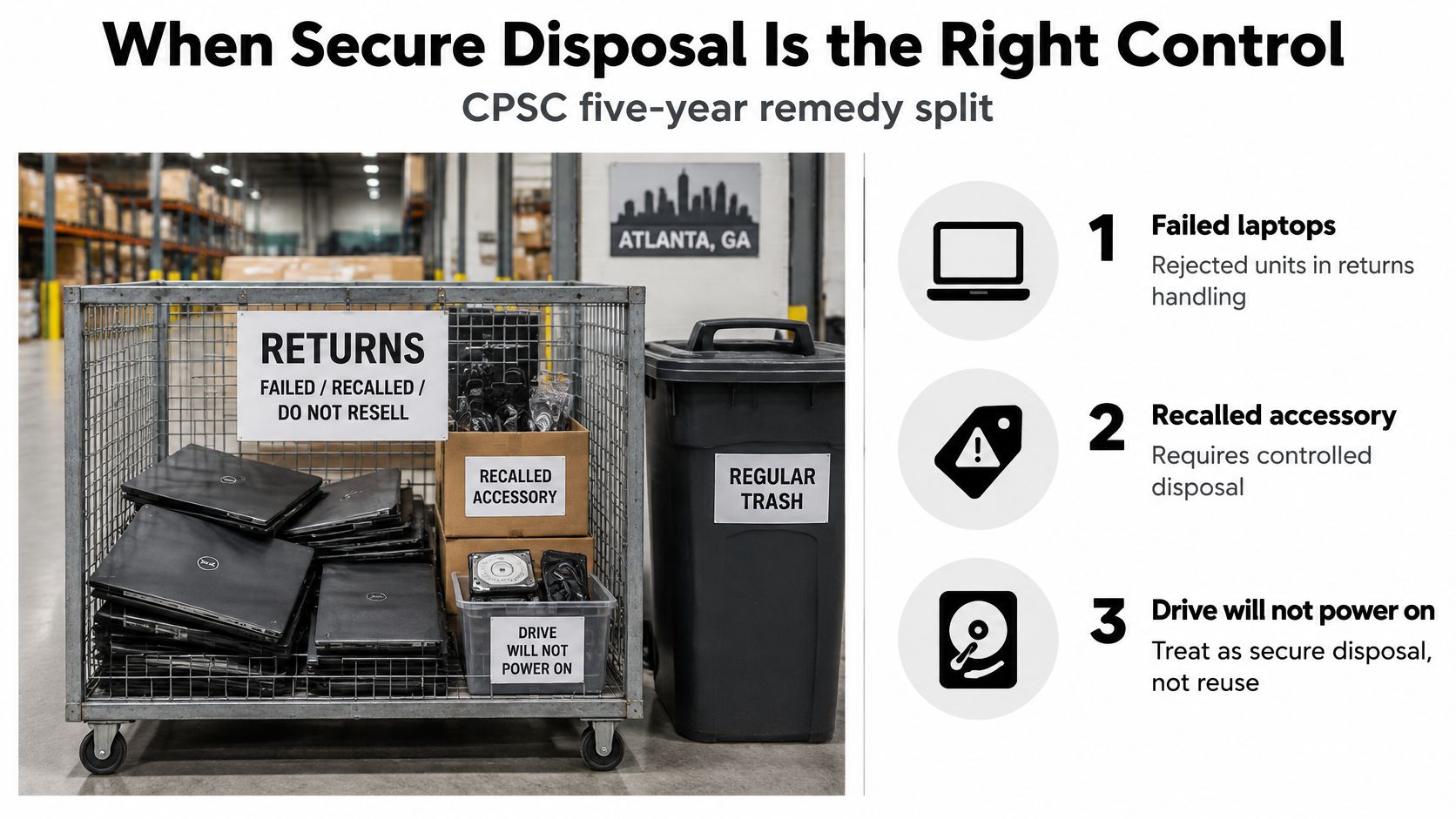
Disposal is the remedy you reach for last, not first. When a defective laptop, a recalled accessory, or a drive that won't power on lands in your returns cage, the question isn't how fast you can clear the floor. It's whether that unit can safely stay in circulation, whether its storage media can be trusted after sanitization, and whether its battery makes ordinary handling unsafe. Secure disposal of defective products answers all three questions in order, with records that prove your decision was proportionate.
When Secure Disposal Is the Right Control
Say you're looking at a returns cage in an Atlanta warehouse. There are failed laptops from a warranty batch, a recalled accessory still in its retail box, and a loose drive that won't power on. Someone has parked the cage beside regular trash, and that's exactly where the risk starts.
In the five-year summary in the U.S. Consumer Product Safety Commission recall records, refunds accounted for 1,107 actions, or 54.6%, repairs for 534, or 26.3%, replacements for 343, or 16.9%, and disposal for 23, or 1.1%. Regulators and manufacturers return a safe product to use when they can. Destruction applies only when a unit can't stay in circulation without creating a safety, resale, or exposure risk.
CPSC Five-Year Recall Remedy Distribution
| Remedy | Actions | Share of total |
|---|---|---|
| Refund | 1,107 | 54.6% |
| Repair | 534 | 26.3% |
| Replacement | 343 | 16.9% |
| Disposal | 23 | 1.1% |
That split matters for business owners, IT managers, and sustainability leads handling warranty returns, an office cleanout, laboratory gear, medical equipment disposal, or data center decommissioning. If you destroy everything, you waste repairable equipment and recoverable materials. If you recycle everything as ordinary scrap, a recalled or defective unit can re-enter a secondary market, and data on failed media can leave with it.
Four Controls Before You Call a Hauler
- Identify affected units: Match model, SKU, and recall notice to what's physically in the cage, not just what's in your inventory system.
- Quarantine them: Move them to a labeled, access-controlled area so they can't be restocked, donated, or liquidated by mistake.
- Record serial or batch numbers: Capture the identifier that ties each unit to the recall or return authorization.
- Follow the manufacturer recall instruction: Confirm disposal is the authorized remedy before you arrange product destruction.
Practical rule: If you can't name the serial numbers in the cage, you're not ready to dispose of anything in it.
Storage media needs a separate decision. A device cleared for material recycling still needs verified sanitization or physical destruction before it leaves your control, because electronics recycling recovers materials, not data risk. The method table that follows helps you choose that treatment item by item, instead of sending the whole cage down one path.
Choose Clear Purge or Destroy
Classify every serialized item before it leaves the building. NIST SP 800-88 defines Clear as logical techniques that protect against simple, noninvasive recovery, Purge as physical or logical techniques intended to make recovery infeasible with state-of-the-art laboratory methods while potentially preserving the device for reuse, and Destroy as making recovery infeasible and preventing the media from being reused for data storage.
Sanitization Outcome by Defective-Product Case
| Case | Outcome | Media reusable | Proof to keep |
|---|---|---|---|
| Repairable device, low sensitivity | Clear | Yes, if the device is safe | Completed logical sanitization record |
| Confidential data, sanitization reliable, drive may leave custody | Purge | Possible | Method, tool, date, and verification |
| Recall, prototype, or highly sensitive data with no reuse | Destroy | No | Certificate of destruction and serial list |
| Failed, encrypted, or physically damaged media | Destroy, not overwrite | No | Exception record and destruction method |
| Device unsafe to reuse but materials recoverable | Destroy media, then recycle the rest | Media no; materials yes | Separate media and material disposition |
| Manufacturer directs refund, repair, or replace | Do not destroy | Set by recall instruction | Recall instruction and batch record |
Read the table as two separate decisions that people often collapse into one. A device that can't be resold isn't the same problem as media that can't be sanitized. A laptop with a cracked hinge and a healthy drive may be unfit for resale but suitable for Purge, parts recovery, or controlled recycling. A cosmetically perfect laptop with a failed, encrypted drive is the opposite. The chassis looks fine, but you can't verify what's on the media, so the drive belongs on a Destroy row.
Deleting Files Isn't Clearing
The IRS media sanitization guidelines state that deleting files is insufficient because clearing must prevent recovery through data, disk, or file-recovery utilities. For certain ATA drives manufactured after 2001 with capacities above 15 GB, that guidance notes clearing and purging have converged, and it identifies firmware Secure Erase for ATA drives and degaussing as acceptable purge methods. That's why you inventory storage technology and capacity at intake. The right method depends on what the media is, not on a generic wipe-or-shred slogan. Our explainer on what data destruction covers walks through that distinction for teams writing a secure data destruction policy.
Multi-pass overwriting doesn't fix a weak decision, either. The NIST SP 800-88 revision FAQ clarifies that multi-pass overwriting is unnecessary under the newer revision and that purge can preserve a device in a potentially reusable state, whereas destroy is appropriate when reuse isn't intended.
Condition still decides what happens to the remaining hardware. For networking equipment, we handle secure transportation and data erasure after a detailed assessment, and decide whether to recycle or refurbish based on the equipment's condition. In the Recycle step, customers choose between eco-friendly recycling or equipment refurbishment for their devices. A repairable laptop with low-sensitivity files can move toward donation-based recycling after Clear or Purge. A recalled unit goes to destruction, and Reworx Recycling's secure hard-drive shredding matches the Destroy rows when media can't be reused. Whatever row you pick, trained staff handle destruction, and batteries get isolated before any of it starts.
Contain Defective Batteries Before Handling
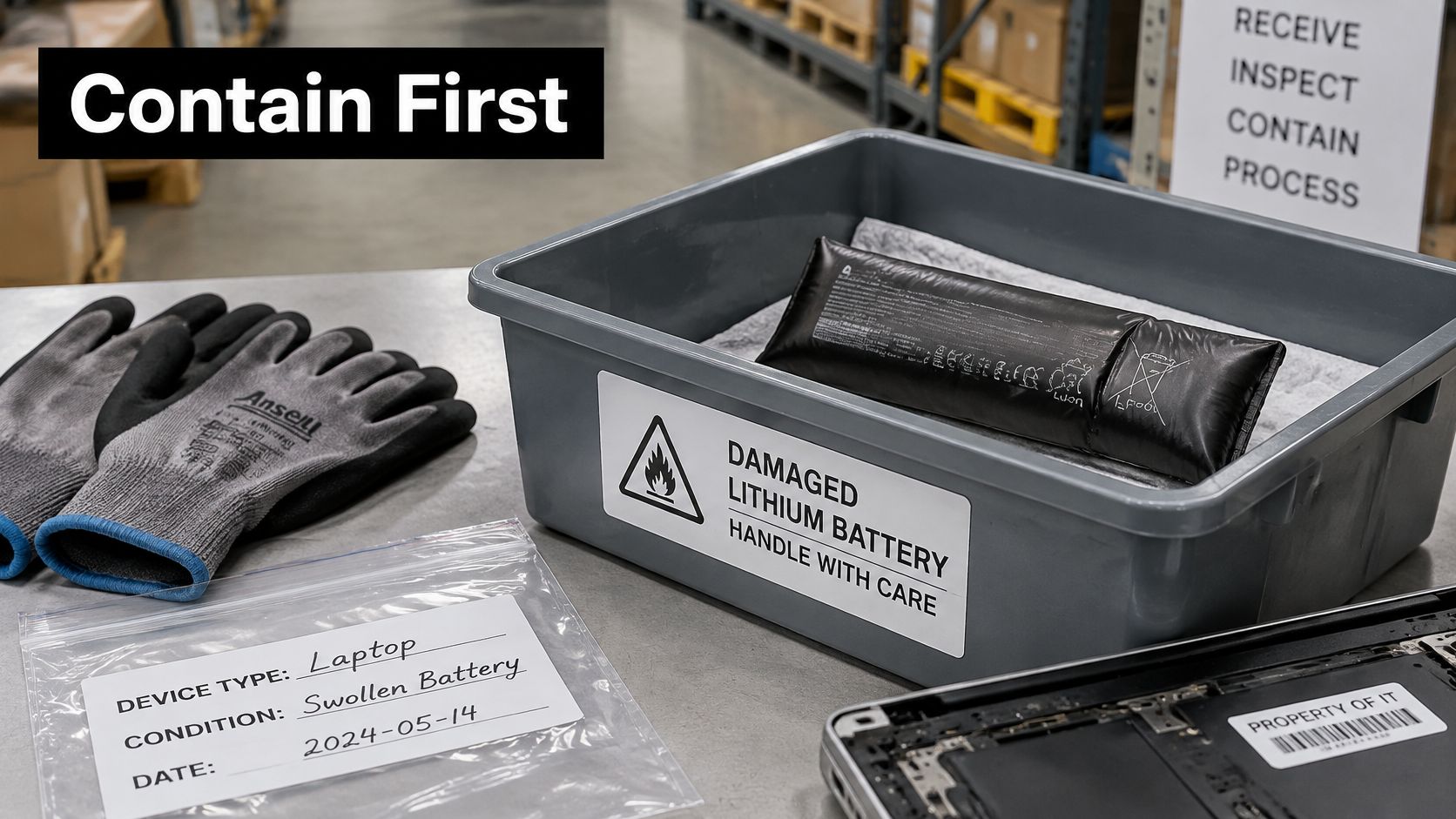
A damaged battery changes the order of work: contain the hazard before assessing data or moving the rest of the pallet. Lithium-ion cells that are swollen, leaking, crushed, punctured, burned, or hot after a drop may ignite or injure someone during handling. A routine electronics pickup is not a safe substitute for isolating them.
Treat every visibly damaged battery as a separate hazard. The EPA battery collection tip sheet recommends separating damaged batteries from ordinary waste. It also advises businesses to consider managing all used lithium batteries as hazardous waste under universal-waste rules. Requirements can depend on the material and local rules, so confirm the applicable handling route before shipment.
Packaging Sequence for a Damaged Cell
- Stop and assess: Pause handling if terminals are exposed or the unit shows swelling, odor, or heat.
- Power down only if safe: Shut down the device only if doing so does not require direct contact with a damaged cell.
- Isolate the unit: Keep it away from metal carts, other batteries, and combustible packing material.
- Enclose it individually: Use non-metallic inner packaging for each damaged battery to prevent contact between terminals and conductive material.
- Cushion and seal: Add non-combustible absorbent cushioning, then place the package in UN-rated outer packaging.
- Separate other hazards: Keep CRTs, lamps, refrigerants, and parts that may contain lead, mercury, cadmium, PCBs, or brominated compounds out of the laptop tote.
A mixed returns pallet can contain laptops, phones, and power tools alongside equipment with other hazardous components. Keep battery handling separate from routine sorting, whether the items come from a school, office, warehouse, or government facility. Fleet teams comparing battery formats for golf carts can browse golf cart upgrades and accessories, but removed packs still need protected terminals and separate staging.
For business pickups, lithium battery disposal guidance explains how to approach battery handling. If a battery is hot, leaking, or refused downstream, stop movement of the pallet and investigate the hazard before the remaining load proceeds.
Run Intake Triage and Destruction
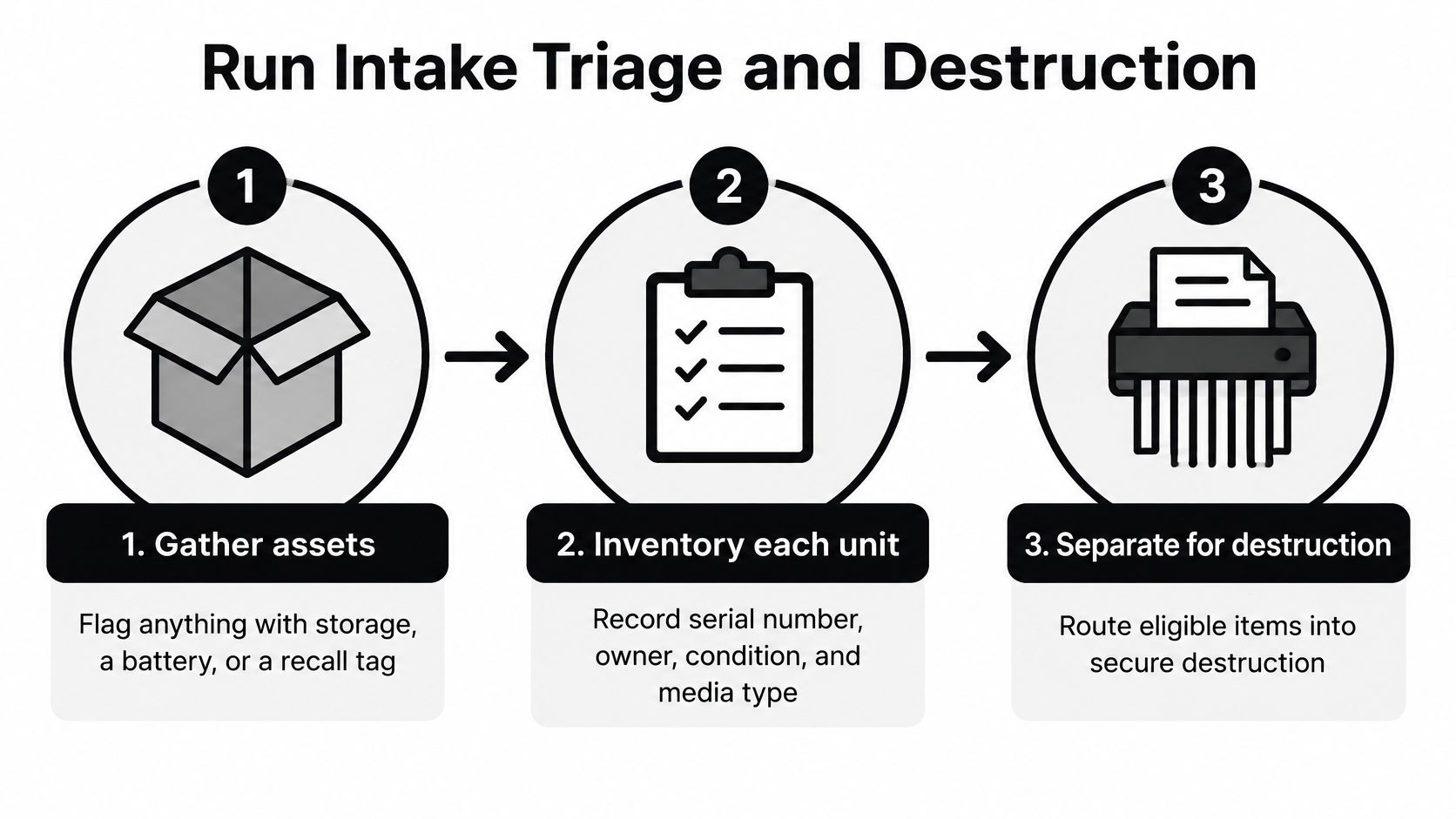
Once battery and other hazards are contained, route each returned device through a controlled intake. NIST SP 800-88 covers media-sanitization method selection and verification. Keep that guidance distinct from the chain-of-custody controls: as an operational target, reconcile every serialized asset to a documented disposition and resolve every verification exception before closing the job.
The Eight-Step Intake Workflow
- Gather and flag: Gather unwanted electronics and note which devices contain sensitive data, have a battery, or carry a recall tag.
- Inventory each unit: Record each item's serial number, owner, condition, and media type. This list is the baseline for tracking the pallet.
- Quarantine failures: Separate defective or damaged devices so they cannot be resold, redeployed, or donated by mistake.
- Match the method: Select Clear, Purge, or Destroy for each item, and identify the authorized operator. The method depends on the media and its condition.
- Sanitize or seal: Wipe accessible media or use degaussing where appropriate. For off-site shredding, seal and identify serialized drives separately from general e-waste.
- Destroy physically when required: Use a suitable physical destruction method, such as disintegration, pulverizing, shredding, or melting. Separate hazardous components first, and have trained staff handle the work.
- Verify twice: Check each item, then inspect a sample again using a different verification tool.
- Close data status first: Record and verify each device's data disposition before sending it for recycling or refurbishment.
Reworx Recycling's four-step process is to schedule a drop-off or pickup, prepare the electronics, securely wipe or shred data-bearing devices, and recycle electronics responsibly. Its reverse logistics returns process describes how returned stock moves through intake and handling.
On-Site Versus Off-Site Destruction
Choose the location according to the need for direct observation. On-site shredding may suit a data center decommissioning or legal hold, where staff need to witness the destruction of specific serials. Off-site processing can suit a routine office or facility cleanout when serialized drives are scanned and sealed before transport.
A software success message shows that a command ran, but it does not confirm that the intended media responded or that the correct drive was processed. Verification connects the method to the specific asset. Medical and laboratory equipment follows the same intake sequence, with devices that may contain regulated data or hazardous components identified at the start.
Finish with records, not just cleared space. The operator documents the method, date, identity, and any exceptions, then requests a certificate while the serial inventory is available for reconciliation. If a drive is inaccessible or fails verification, record the exception and its destruction method. Keep its status open until its disposition is documented.
Audit Chain of Custody and Vendor Controls
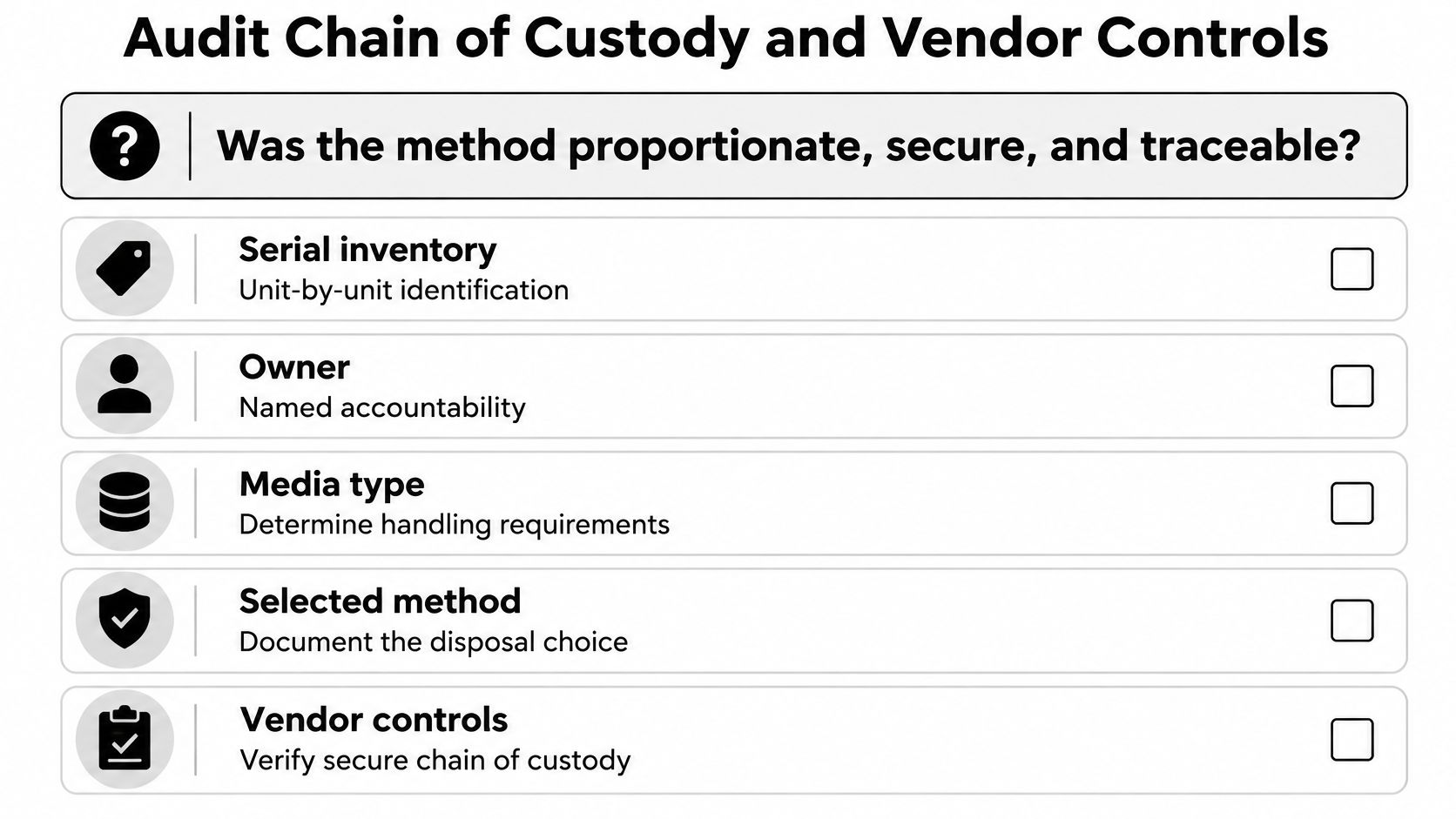
A disposal record should let an auditor trace each asset from intake to its final destination. For every item, keep the serial number, owner, media type, selected method, operator, date, verification result, exceptions, and downstream material fate. Require a certificate that identifies the assets, not only the pickup date. Reworx Recycling provides detailed reports and a Certificate of Destruction for completed work. For a practical outline of custody records, review the chain of custody documentation. The GoSafe Dark Web monitoring evidence handling page also discusses evidence handling, though secure-disposal audits should be grounded in records specific to the assets and process being reviewed.
Recycler Controls Worth Checking
| Control | Acceptable evidence | Red flag |
|---|---|---|
| Certification | R2 or e-Stewards certification, plus environmental and worker-safety review | Treating an EPA permit as certification |
| Data method | Clear, Purge, or Destroy matched to the media | File deletion or an unverified batch report |
| Verification | Each serial reconciled, with a second-tool check on a sample | One success message for the whole pallet |
| Downstream | Named processors and documented material disposition | An unknown destination after the first processor |
| Batteries | Damaged cells segregated, packaged, and documented as held | Mixing them into ordinary electronics bins |
| Reporting | Certificate listing serials, operator, date, and exceptions | Pickup receipt without an asset list |
A permit and a recycler certification are different things. The EPA certified electronics recyclers page explains that an EPA identification number or permit is not independent certification and does not, by itself, guarantee recycling quality. Ask vendors to show how they segregate materials and document custody, and whether downstream processors hold R2 or e-Stewards certification. Reworx Recycling specializes in secure data destruction, follows EPA rules for e-waste disposal, and recycles e-waste according to industry practices and regulations.
Track what happens beyond the first vendor. A pallet may pass through several processors before materials are recycled or equipment is refurbished, so request the downstream destination in writing. That record helps distinguish reuse from scrap and gives your audit trail a clear endpoint.
Five Questions to Ask Any Vendor
- Who witnesses destruction, and can your staff attend for high-risk lots?
- How are serials reconciled at pickup, during processing, and on the final certificate?
- Is refurbishment separated from scrap, so a quarantined unit cannot enter a resale channel?
- How are damaged batteries handled, and who decides whether a load is unsafe to move?
- How long are certificates retained, and can you retrieve one by serial number?
Cost and timing depend on the work involved, not just pallet weight. A small cleanout with accessible, serialized drives may close in days. Data center or multi-site work can take longer when witness schedules, verification checks, or hazardous-item holds are involved. On-site witnessing and exception handling add work compared with routine pickup of non-data equipment, but they may be appropriate when your audit requirements call for direct observation or detailed reconciliation.
Schedule Pickup or Donate Usable Gear
Before arranging collection, separate equipment by intended outcome. Working devices may be candidates for donation or refurbishment; defective or recalled products need a documented disposition route that keeps them from returning to use. For a Georgia business, the process can include staging and labeling electronics, identifying data-bearing devices, and arranging pickup or drop-off. Reworx Recycling is a full-service electronics recycling and IT asset disposition partner based in Smyrna, Georgia.
Choose the service to match the lot. Usable equipment may be suitable for donation through a corporate program. Defective or recalled stock may need product destruction and documented disposition. For an office, school, or facility cleanout, sort items load by load. Reworx's IT asset recovery services can help route equipment with remaining value differently from items that need recycling.
Send This Checklist With Your Request
- Serial list: Include each unit to be reconciled, with model and condition notes.
- Media types: List drive technology and capacity when known. Flag failed or inaccessible drives in advance.
- Known recalls: Include the manufacturer's instructions and batch information for affected units.
- Damaged batteries already isolated: Confirm whether they have been packaged and staged separately. If not, say so before pickup.
- Witnessing requirement: State whether your team needs to observe destruction on site.
This information helps define the scope and the handling route. Reworx Recycling offers no-cost electronics pickup and handles transportation logistics. Its process includes Certification & Reporting, with detailed reports and a Certificate of Destruction; the certificate documents completed work for audits and legal matters.
After collection, equipment can be routed according to condition and data risk. Reusable devices may be considered for refurbishment or donation, while defective data-bearing media can undergo secure data destruction through shredding or erasure. Electronics that are not suitable for reuse can be responsibly recycled, supporting material recovery instead of sending the entire load to landfill.
A clear inventory makes those decisions easier to track. Keep the serial list with the pickup request, note which units are recalled or defective, and specify any observation requirements before collection. Then the disposition record can show what was collected and how the work was documented.
If you have a returns cage, warranty batch, or facility cleanout coming up, send the checklist with your request so each item can be matched to an appropriate route. You can also contact Reworx Recycling to discuss pickup, drop-off, or the handling options for your equipment.