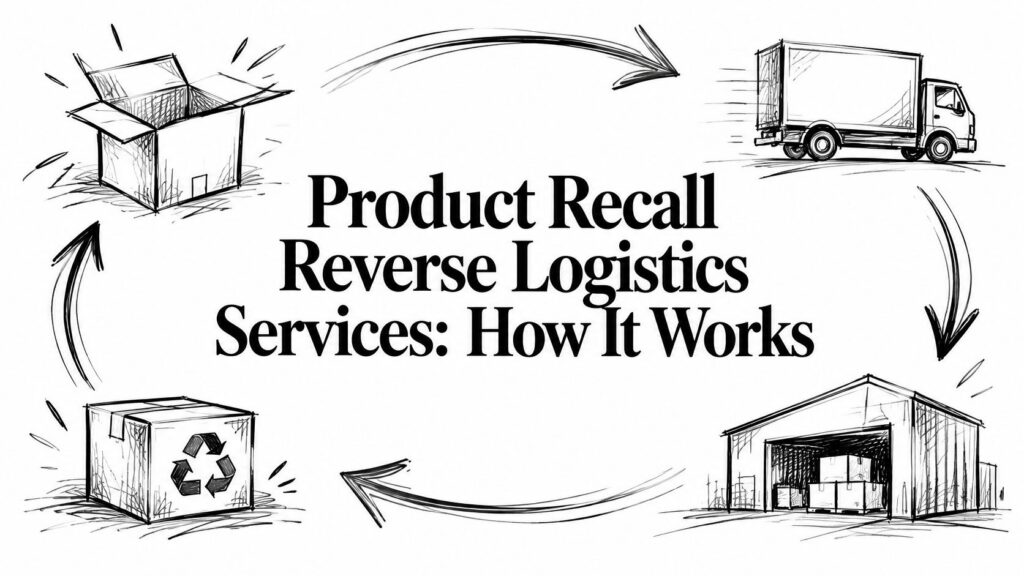
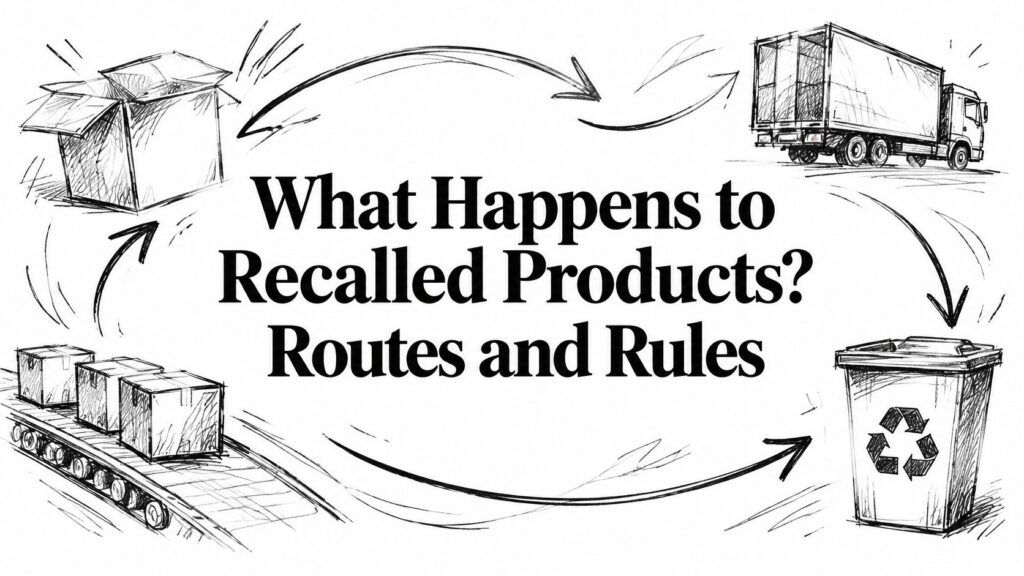
The most popular advice after a recall is to "recycle it responsibly." For many electronics, that advice is the wrong first move. A recall notice names a remedy, not a waste bin. Refund, replacement, repair, a safety modification, retailer removal, or destruction are separate decisions from end-of-life. What happens to recalled products? It follows the hazard, the manufacturer's written instructions, and whether a claim is still open. The unit stays quarantined until someone matches the situation to a route. Dropping a recalled lithium-ion pack into a standard electronics bin can start a fire, and it can erase the record a regulator will ask for later.
Where Recalled Products Go and Why It Varies
A recall does not end at the recycling bin. In the United States, a product recall usually leads to a corrective action, not one universal disposal outcome. The U.S. Consumer Product Safety Commission fiscal year 2024 annual report states that the agency negotiated and implemented 333 voluntary recalls covering approximately 41 million consumer-product units. Those recalls can involve refunds, replacement products, repairs, safety modifications, retailer removal, or destruction, depending on the hazard and product type.
The same report shows why stock lingers. 166 of the 333 recalls used the Fast-Track program, and in 98.08% of those cases corrective action began within 20 days of the company's report. The overall consumer-product recall response rate was only 33%. Many units never come back promptly. They sit in homes, warehouses, resale channels, and institutional inventories until someone acts on the notice.
CPSC recall-effectiveness rules prohibit firms from continuing to sell, offer for sale, manufacture for sale, distribute, or import products covered by a notified voluntary corrective action. Isolate inventory before you pick a destination. The route is set by the hazard, the product category, and written manufacturer instructions, not by whether the item is technically recyclable.
| Route | When it applies | Record to keep | Who decides |
|---|---|---|---|
| Refund or replacement | Manufacturer offers a remedy and the unit is returned | Return receipt, serial number, refund or replacement confirmation | Manufacturer under the recall notice |
| Repair or safety modification | Remedy restores the product to safe use | Repair certificate and updated serial list | Manufacturer's written instructions |
| Quarantine pending remedy | Ownership, warranty claim, or investigation is unresolved | Quarantine log, photographs, and asset tag list | Legal or compliance lead |
| Authorized recycling | Remedy requires disposal and local rules allow recycling | Processor certificate, quantity, weight, and custody transfers | Manufacturer, plus the regulator where required |
| Witnessed or documented destruction | Manufacturer or regulator requires destruction | Destruction certificate, affidavit, or photographs | Regulator notified before any action |
Practical rule: Match the unit to one row before anyone moves equipment.
Identify serial numbers, stop redistribution, and document disposition. Return, repair, recycling, or secure destruction is an authorized route, not a cleanout shortcut. Once that route is confirmed as recycling or destruction, Reworx Recycling can take the handoff for downstream processing that includes data destruction and responsible recycling.
Deciding Between Repair, Refund and Destruction
The remedy and the end-of-life pathway are separate decisions. Public coverage often implies that recalled products are destroyed. They usually are not. A 2025 summary of government recall data reported refunds as the most frequent remedy at 46.9%, while disposal represented only 1.6% of responses. Manufacturers more often provide refunds, repairs, or replacements. A fleet can sit in quarantine while ownership, refund eligibility, replacement logistics, data security, and final disposition get resolved.
Consumer refund mechanics are a different problem from asset control. Online Brand Growth's Amazon refund guide shows how a marketplace can close a buyer refund without a physical return. That shortcut doesn't exist for a recalled laptop still on your asset register. You still need serials, photographs, and a named authorizer.
Weigh these before anyone ships a unit:
- Remedy status: A remedy is available and a return or repair date is on the calendar.
- Open claims: A warranty, insurance, or regulatory file still needs the device as evidence.
- Data: The drive holds information that must be wiped or shredded without blocking the manufacturer's process.
- Hazard and battery: Swelling, damage, or a fire hazard changes the destination.
- Sample or witness rules: The manufacturer requires return, inspection, sample retention, or witnessed destruction.
- Local acceptance: The material is accepted under local hazardous-waste or electronics rules.
- Clearance for reuse: Donation or resale is allowed only after the remedy is closed in writing.
Three cases cover most operations desks. A device under a pending claim stays quarantined. A device with a confirmed remedy goes back for repair or refund. A device with no remedy, a damaged battery, or a regulator instruction goes to destruction or a hazardous-waste channel. Destruction can wipe out evidence a claim still needs, so the decision itself belongs in the file.
If nobody can name who authorized destruction, the unit stays in quarantine.
For FDA-regulated medical devices, add a classification step. FDA recall strategy guidance uses Class I, Class II, and Class III, with Class I as the most serious health hazard. The strategy also sets recall depth, notification, and planned disposition. A correction is work done where the device sits, such as inspection, repair, adjustment, relabeling, destruction, or patient monitoring. A removal moves the device elsewhere for repair, modification, relabeling, destruction, or inspection. When destruction is the path, the recalling firm proposes a method and contacts the FDA district recall coordinator before destroying the product. The FDA may review the method and elect to witness it. Keep destruction records even when no investigator attends, as the FDA destruction documentation guidance requires both the firm and its customers to retain them.
Reverse logistics for returns only starts after that written remedy is in hand.
Why Recalled Electronics Need Special Handling
Batteries are the reason recalled electronics can't follow a standard e-waste drop-off. Recent CPSC notices on recalled lithium-ion battery packs prohibit trash, curbside recycling, and ordinary retail battery boxes because damaged or defective cells can ignite. They direct people to household hazardous-waste programs first, because acceptance isn't the same in every county. The U.S. Environmental Protection Agency advises separating batteries, taping terminals, bagging each battery or device, and using certified battery or electronics recyclers or household hazardous-waste facilities.
"Recycle responsibly" is unsafe advice for a recalled lithium-ion product. The safer destination is often a specialized hazardous-waste channel, not the bin at the loading dock. Landfilling or burning damaged cells risks fires at waste sites and metals in soil and water. An authorized recycler recovers metals and plastics and keeps those materials out of landfill. That is the lower-impact choice and the compliant one.
| Item | Main hazard | Before handoff | Acceptable destination |
|---|---|---|---|
| Lithium-ion battery packs and power banks | Fire from damaged or defective cells | Tape terminals, bag each unit, store away from combustibles | Household hazardous-waste program or certified battery recycler |
| Laptops with removable batteries | Swelling or short circuit from aged cells | Remove and separate the battery if safe, keep device powered off | Certified battery handler, not standard drop-off |
| Phones and tablets with sealed batteries | Heat or puncture during transport | Power off, bag individually, label as recalled | Authorized e-waste processor after written confirmation |
| Data-bearing drives | Exposure of stored information | Wipe or shred before any recycling step | Certified recycler that issues a destruction record |
| Lamps, refrigerants, and other regulated parts | Mercury, gas, or chemical release | Segregate and do not dismantle without manufacturer instructions | Downstream processor licensed for that material |
A laptop with a removable pack and a phone with a sealed cell don't share a path. You can often separate a laptop battery if it isn't swollen or hot, then send the pack to a certified battery handler. A sealed phone or tablet stays intact. Power it off, bag it, and don't puncture the case in transit. A drive is a third problem. Data handling comes before any recycling step, or the metal recovery creates a privacy incident.
The same caution shows up in consumer goods. Families comparing safer toy choices with Playz are sorting ordinary product risk, not a fire-prone cell. Business electronics need a written destination because chemistry, damage, transport rules, and local acceptance all change the handoff. Ask the manufacturer or the local hazardous-waste program to confirm that destination in writing before the truck leaves. Lithium battery recycling belongs in that confirmed channel, not in a mixed office cleanout.
From Recall Notice to Custody Record
Destruction or recycling is a compliance event, not a waste decision. CPSC's Regulated Products Handbook states that recalled-product destruction or other action must comply with state and local requirements and may be supervised by CPSC or Customs and Border Protection personnel. Before destroying, disposing of, or recycling recalled products, firms notify CPSC staff, who may require an affidavit and photographic evidence. Some notices call for repair or refund. Others require discard or recycling under local rules. Shredding or material recovery is appropriate only after you confirm that return, inspection, sample retention, or witnessed destruction isn't required. FDA recall termination depends on reasonable efforts to remove or correct the product and on disposition matched to the hazard. The file proves you executed the recall, not merely that you pulled stock from service.
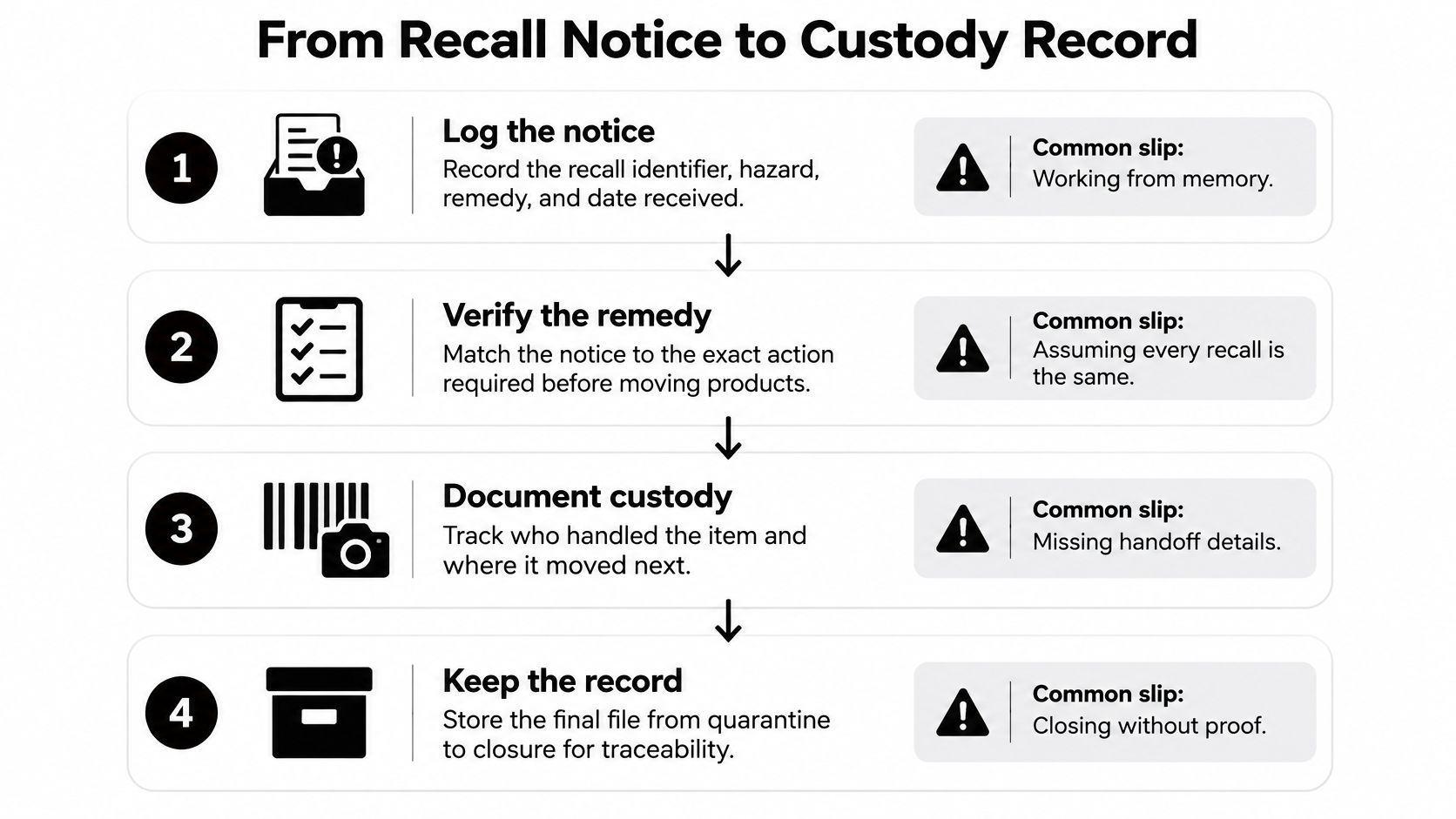
Seven steps and the slip that breaks each one
- Log the notice. Record the recall identifier, hazard, remedy, and the date you received it. Working from memory is how serial ranges get dropped.
- Match the register. Compare serial numbers or lot ranges with the asset list, including spares, loaned units, and equipment in storage. A spreadsheet that ignores the spare closet leaves live units in service.
- Quarantine. Move affected stock to a locked, labeled area and set data-bearing devices apart. Redeploying a unit before the remedy is confirmed puts a recalled asset back into use.
- Get the remedy in writing. Confirm return, repair, dismantling, or destruction with the manufacturer before anyone opens a case. Don't dismantle batteries, lamps, or refrigerants on a verbal okay.
- Notify the regulator where required. For CPSC-covered goods, notify staff before destruction, disposal, or recycling, and be ready for an affidavit and photographs. Skipping notice is what turns a lawful disposition into an unauthorized one.
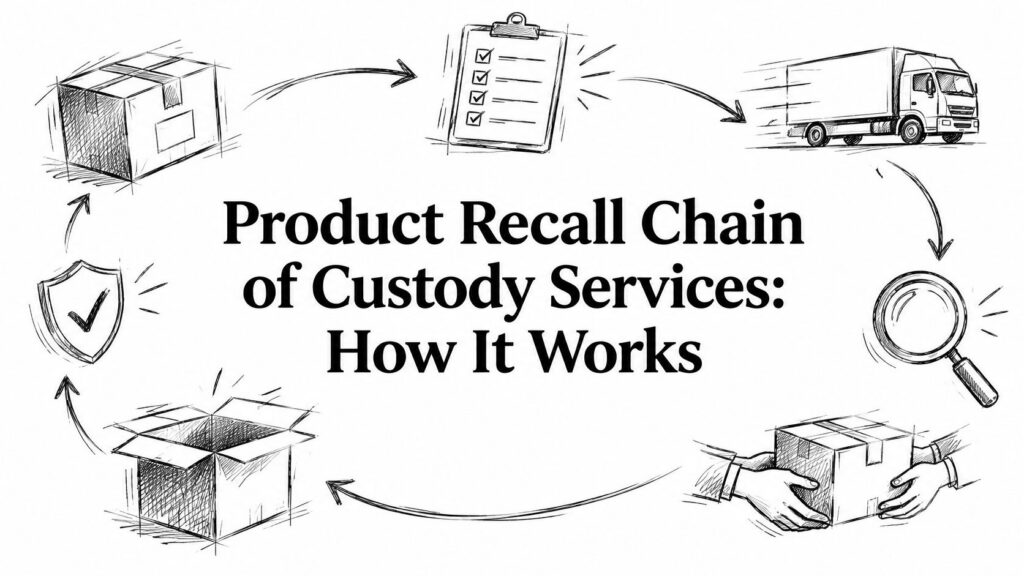
- Hand off with a custody form. List quantity, serials, transport method, and treatment, and use an authorized processor when hazardous or electronic waste rules apply. A bill of lading with no serials isn't custody.
- Close on a certificate. File the certificate of recycling or destruction against the same identifier you logged on day one. Removal from service without that certificate doesn't close the recall.
What the custody file actually holds
Build one file per recall identifier. Include quantity, serial or lot range, quarantine location, transport, processor, treatment method, and final outcome. Add asset tags, photographs, and a copy of the notice. Customers should gather unwanted electronics and note any devices that contain sensitive data before that file opens, so drives aren't mixed with inert scrap.
For drives, wipe units that still power on. Shred failed or highly sensitive media. Issue a certificate per batch. If the manufacturer wants the device as evidence, image or photograph it first, then wait for written release before sanitization. Reworx Recycling securely wipes or shreds data-bearing devices to protect that information. The responsible recycling step keeps data security in front of material recovery and handles materials in recycling facilities rather than treating recall stock as ordinary surplus.
A disposal receipt without serials, photographs, and a named processor will not survive a regulator query.
Chain of custody documentation is the closeout, not a side form you fill in after the truck leaves.
Costly Recall Mistakes and What Each One Costs
The expensive mistake is treating recalled stock as ordinary surplus and stripping asset tags during a facility cleanout. Once the tag is gone, you can't prove which unit left the building, and you can't answer a remedy request.
Sending recalled batteries to a standard e-waste drop-off risks fire at the collection site and a rejected load. The battery handoff rules exist because damaged cells ignite. A mixed pallet doesn't become safe because the vendor accepts laptops.
Donating or reselling before the remedy closes voids the file and can forfeit whatever refund or replacement value the notice still offered. A school or agency that "puts it back into use" has redistributed a covered product.
Destroying units before the manufacturer or regulator confirms that return or witnessed destruction isn't required can fail the next query. You may also destroy the only sample an investigation still needs.
Relying on a disposal receipt with no serial list fails an audit. Weight on an invoice doesn't identify the recalled lot.
Treating a refund as the end of the obligation leaves the file without proof of disposition. Money received isn't evidence the unit was controlled.
Missing spares, loaned units, and storage stock leaves live liability on the register. The unit in a closet is still your unit.
Most of these errors start when staff work from memory instead of a serial-number register. Build that register before the next notice arrives, and keep transport under transportation compliance so a recalled battery isn't booked as general freight.
This week, pull current recall stock and compare its serial list with the asset register. Every gap is a unit you still own and can't yet defend.
Confirm the Route and Schedule the Next Step
Three checks decide whether a recalled unit can leave your building. Pick the route that matches the remedy, the hazard, and the written instructions. Confirm that remedy, and any regulator notice, in writing before destruction, disposal, or recycling. Keep a custody file from quarantine through the final certificate, including serials, photographs, and the processor record.
Businesses holding recalled electronics on a confirmed route can schedule a pickup with Reworx Recycling, a donation-based electronics recycling and IT equipment disposal social enterprise. We document custody through secure data destruction and responsible recycling, and our recycling processes follow EPA rules for e-waste disposal. Pickups are free nationwide, which removes the excuse to leave a quarantined pallet in the hallway.
Organizations with clear, non-recalled equipment can donate it. Those donations support digital inclusion and workforce development in local communities. Don't donate a unit that is still under a recall notice. Clearance in writing comes first. After that, donation is a responsible use of surplus, not a way to skip the remedy.
If you're an operations, IT, or sustainability lead sitting on recalled stock, name the route, lock the quarantine, and get the written instruction before the next cleanout. Then donate eligible equipment, schedule a pickup, or partner with Reworx Recycling as your reverse logistics and compliance partner.
Reworx Recycling takes confirmed recalled electronics through documented custody, secure data destruction, and responsible recycling, and we offer free nationwide pickups once your route is cleared in writing. Clear, non-recalled equipment can be donated so communities gain devices through digital inclusion and workforce programs. Visit Reworx Recycling to donate old equipment, schedule a pickup, or set up a partnership.