
Businesses don't have an e-waste problem only because old devices pile up. They have an e-waste problem because retired technology still carries data risk, compliance exposure, and unrealized asset value.
That's why React E-Cycling matters as a business idea. It reflects a more responsive way to handle end-of-life electronics, one that treats laptops, servers, phones, drives, lab devices, and network hardware as part of a managed asset lifecycle rather than as trash. For business owners, IT managers, facilities teams, and sustainability leaders, that shift changes the conversation from disposal to decision-making.
The old model was simple and flawed. Put obsolete equipment in storage, wait for a cleanout, then look for the fastest way to get it off-site. The modern approach is different. It asks better questions first. What data sits on these devices? Which assets still have reuse or buyback potential? Which items need product destruction, secure data destruction, or structured IT asset disposition? Which partner can document the chain of custody and support corporate donation programs without creating added risk?
For organizations managing office moves, data center decommissioning, medical equipment disposal, laptop disposal, or a routine office cleanout, responsible electronics recycling has become part of operational discipline. It also fits a broader sustainability strategy. The environmental stakes are clear in Reworx Recycling's overview of the impact of e-waste on the environment, but the business stakes are just as important.
The Rising Tide of E-Waste A Modern Business Challenge
The scale of the issue is hard to ignore. The world generated a record 62 million tonnes of e-waste in 2022, an 82% increase since 2010, yet only 22.3% was properly collected and recycled. This leaves an estimated $62 billion in recoverable resources unaccounted for annually, according to the Global E-waste Monitor update.
For businesses, that isn't just an environmental headline. It signals a system problem. Companies upgrade fleets of laptops, replace AV equipment, retire servers, swap out networking gear, and clear storage rooms every year. If those assets aren't handled through a disciplined process, the result is a mix of wasted materials, unknown data exposure, and poor visibility into what happened after pickup.
Why outdated disposal habits fail
A blue-bin mindset doesn't work for commercial electronics. A desktop with a failed motherboard may still contain a drive. A copier may hold stored data. A laboratory device might require specialized handling. A rack from a data center decommissioning may contain components with different recycling and destruction needs.
That's why React E-Cycling is a useful way to think about modern end-of-life management. It means reacting to the specific condition, risk, and value of each asset category instead of treating everything as generic waste. A monitor doesn't need the same process as a hard drive. A reusable laptop shouldn't follow the same path as a damaged server. A donation-based recycling program should be structured differently from a bulk product destruction project.
Practical rule: If your team can't explain where each retired asset goes next, your disposal process isn't finished. It's only been outsourced.
What business leaders should take from the trend
Responsible e-cycling now sits at the intersection of operations, IT, sustainability, and legal oversight. It touches chain of custody, secure data destruction, sustainable recycling, and community impact.
That matters whether you run a medical office in Atlanta, a manufacturing facility in Columbus, a university department in Athens, or a corporate office in Savannah. Different cities and industries generate different electronic waste streams, but the management challenge is the same. Leaders need a process that's secure, auditable, and practical for routine pickups, facility cleanouts, and larger refresh cycles.
For many organizations, the smart move is to build e-cycling into normal asset management instead of waiting for a one-time purge.
Understanding E-Cycling Beyond the Blue Bin
In plain language, e-cycling means collecting, sorting, processing, reusing, refurbishing, or responsibly recycling electronic equipment at the end of its useful life. In a business setting, it also means controlling what happens to the data and documenting what happens to the hardware.

The U.S. picture shows why this matters. In the United States, over 6.9 million tons of e-waste was generated in 2019, but only 15% of it was recycled, squandering billions of dollars in valuable materials like gold, silver, and copper that could have been recovered, as summarized in this review of U.S. e-waste recycling metrics.
Two business risks sit inside every retired device
The first risk is environmental. Electronics contain materials that shouldn't be dumped through informal or careless channels. Businesses that treat old equipment casually often underestimate how many device categories count as e-waste. It's not just desktops and printers. It can include switches, docking stations, phones, tablets, medical equipment, cables, backup devices, and specialty tools from laboratories or production environments.
The second risk is data security. It is often a sticking point for many small and mid-sized businesses. They want easy electronics recycling, but they also need confidence that hard drives and storage media won't leave the building without proper control. Free or local recycling options can sound attractive, yet many decision-makers aren't sure whether those services include documented shredding, serial tracking, or a defensible chain of custody.
A good starting point is learning the basics of what electronic waste recycling includes, then mapping those principles to your own equipment categories.
What responsible e-cycling looks like in practice
A business-grade process usually includes:
- Asset identification: Teams separate reusable equipment from scrap, accessories, and data-bearing devices.
- Secure handling: Drives, servers, and storage media follow a documented path for secure data destruction.
- Value review: Usable equipment may qualify for refurbishment, redeployment, donation-based recycling, or equipment buyback.
- Downstream accountability: The recycler should explain how materials move after collection, not just where the truck goes.
Discarded electronics are never just objects. In a business environment, they're records of prior activity, containers of sensitive information, and potential sources of recoverable value.
That's the difference between tossing electronics and managing them.
The Business Case for Strategic IT Asset Disposition
Many organizations still budget for disposal as if it's a pure loss. That assumption is getting weaker.
According to React E-Cycling's overview of industry direction, while most businesses view e-cycling as a cost, the industry is pivoting toward value recovery. Modern "adaptive capacity" technologies are transforming recycling into a competitive solution that can upgrade value streams and generate revenue from discarded assets.
That shift matters for any company replacing computers, closing an office, refreshing a fleet of laptops, or winding down infrastructure. The question isn't only how to recycle. It's how to make smarter decisions across the whole retirement process.
Why old equipment shouldn't be treated as worthless
A retired asset can fall into several different buckets. Some equipment still has reuse potential. Some has parts value. Some belongs in refurbishment or donation channels. Some should be dismantled for material recovery. Some must go straight to destruction because the data or condition makes reuse inappropriate.
That's why IT asset disposition, or ITAD, is more useful than the word disposal. It suggests active management rather than passive removal. A strong IT asset disposition process helps a company decide what to resell, what to donate, what to destroy, and what to recycle.
The value recovery paradox
The paradox is simple. The same organizations that say recycling is too expensive often hold surplus hardware that still has recoverable value. They may pay for storage, delay cleanouts, and miss opportunities to offset replacement costs because everything gets lumped together as junk.
That's avoidable when teams separate three decisions:
| Asset type | Better business question | Typical end path |
|---|---|---|
| Working or repairable devices | Can this be reused, donated, or bought back? | Redeployment, resale, corporate donation programs |
| Data-bearing but obsolete equipment | What destruction method protects the business? | Secure data destruction, shredding, controlled processing |
| Damaged or low-value scrap | How do we recover materials responsibly? | Sustainable recycling and downstream material recovery |
A business owner doesn't need to become a recycler to use this framework. They just need to stop approving one undifferentiated “junk removal” event.
Where the financial case shows up
The business case for React E-Cycling appears in several places:
- Lower replacement pressure: Buyback or resale can offset part of a hardware refresh.
- Cleaner storage areas: Teams stop paying the hidden operational cost of keeping obsolete devices in closets and back rooms.
- Better audit readiness: A documented process is easier to defend than ad hoc disposal.
- Stronger sustainability reporting: Donation-based recycling and responsible material recovery support ESG and community impact narratives.
This is especially relevant during office cleanouts, facility cleanouts, laptop disposal programs, and end-of-year IT projects. Companies that treat end-of-life electronics as managed assets tend to see more options and fewer surprises.
Innovations Shaping the Future of Recycling
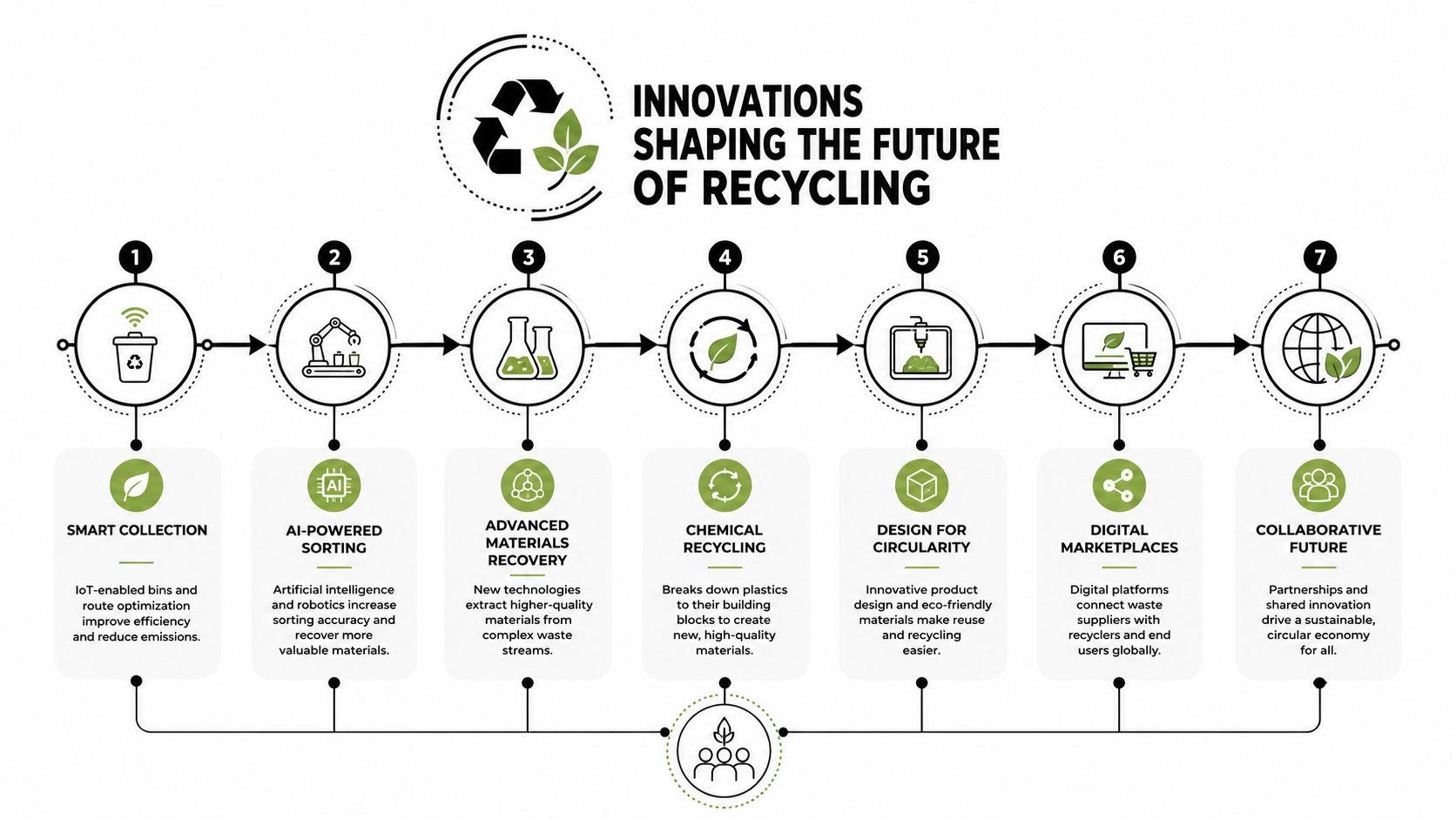
Not all recycling systems recover value the same way. Traditional e-scrap processing often focuses on the most obvious metal streams and leaves harder-to-separate fractions with less attention. Newer approaches aim to do more.
One of the clearest examples is the REACT project. According to Resource Recycling's coverage of the initiative, the REACT project, a finalist in the 2025 US Department of Energy E-SCRAP Prize, uses an adaptive technology to maximize the recovery of critical materials like aluminum, copper, and precious metals, aiming to reduce dependence on overseas smelters.
Why this matters beyond engineering
Business leaders don't need to know every mechanical detail to understand the significance. Better separation technology can support higher-value product streams, improve domestic processing capacity, and make material recovery more economically attractive.
That has practical implications for the market:
- More value from mixed streams: Complex electronics may yield better recovery outcomes.
- Less dependence on blunt processing: Adaptive methods can sort with more precision.
- A stronger domestic circular economy: More value can stay closer to the point of collection.
The future of e-cycling isn't only about removing waste. It's about building systems that recover more from what businesses already own.
What to look for in a future-ready partner
If the industry is moving toward adaptive recovery, business buyers should look for partners who understand that shift. Ask whether they can explain how they sort assets, when they prioritize reuse, how they handle precious-metal-rich fractions, and what documentation they provide after pickup.
That's particularly important for companies with diverse inventories such as workstations, networking hardware, phones, peripherals, and specialized gear from healthcare or lab environments. A forward-looking recycler should be able to discuss more than collection logistics. They should be able to describe how process choices affect security, recovery, and sustainability outcomes.
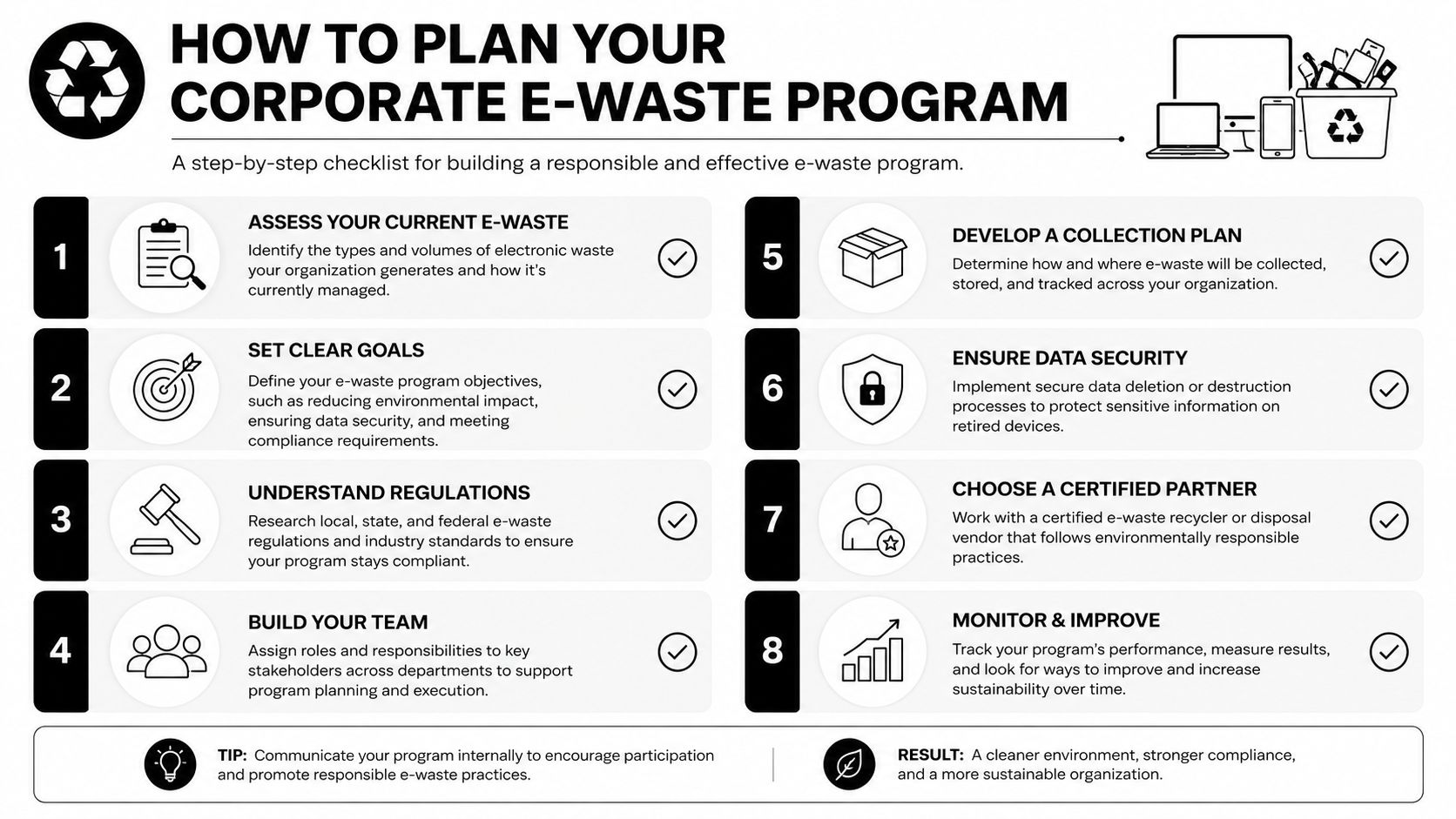
How to Plan Your Corporate E-Waste Program
A corporate e-waste program works best when it feels routine, not heroic. The companies that handle electronics recycling well don't wait for a storage room crisis. They create a repeatable process for office equipment, server retirements, facility cleanouts, and periodic refresh cycles.
Start with visibility
Before scheduling pickup, get clear on what you have. That sounds obvious, but many teams skip it. They know there are “old laptops in storage” or “network gear from the last upgrade,” yet they don't have a clean inventory.
For organizations that need a more structured starting point, Constructive-IT's infrastructure assessment is a useful reference for thinking through asset review before retirement decisions are made. It helps frame the operational questions that come before recycling, such as what's still in use, what's surplus, and what needs secure handling.
Build the program around a chain of custody
A strong plan usually includes these elements:
Inventory the categories
Separate computers, monitors, servers, drives, phones, cables, printers, medical devices, and lab equipment. Mixing categories too early creates confusion.Flag data-bearing assets
Hard drives, SSDs, copiers, servers, backup devices, and some multifunction equipment require special controls.Decide the end path
Reuse, refurbishment, donation-based recycling, product destruction, or material recycling should be assigned before pickup if possible.Assign internal ownership
IT, facilities, compliance, and sustainability teams should know who approves what.Schedule logistics carefully
Pickup windows, loading access, pallets, and secure staging all matter more than is commonly anticipated.
Keep the process practical for busy teams
The best programs are simple enough to repeat under pressure. If your process only works when one experienced employee is present, it isn't dependable.
A practical internal checklist often looks like this:
- Document serial-sensitive assets: Keep records for equipment that matters for audit, finance, or security.
- Use a staging area: Don't let staff scatter retired devices across offices, closets, and loading docks.
- Communicate pickup rules: Tell employees what belongs in the collection stream and what doesn't.
- Match the plan to the event: A routine laptop disposal day doesn't need the same workflow as data center decommissioning.
- Request final paperwork: Certificates, inventory summaries, or destruction records should be part of the closeout.
Operational note: If your team is unsure whether an item contains storage, treat it like a data-bearing device until someone verifies otherwise.
Adapt the model to your site type
A medical office might prioritize secure handling and medical equipment disposal. A university department may care about donation pathways and periodic lab cleanouts. A corporate headquarters may need a formal office cleanout process during relocation. A logistics facility may have fewer laptops but more rugged devices and specialty hardware.
The structure can stay consistent even when the equipment mix changes. That's what makes React E-Cycling practical. It adapts to the asset stream instead of forcing every site into the same script.
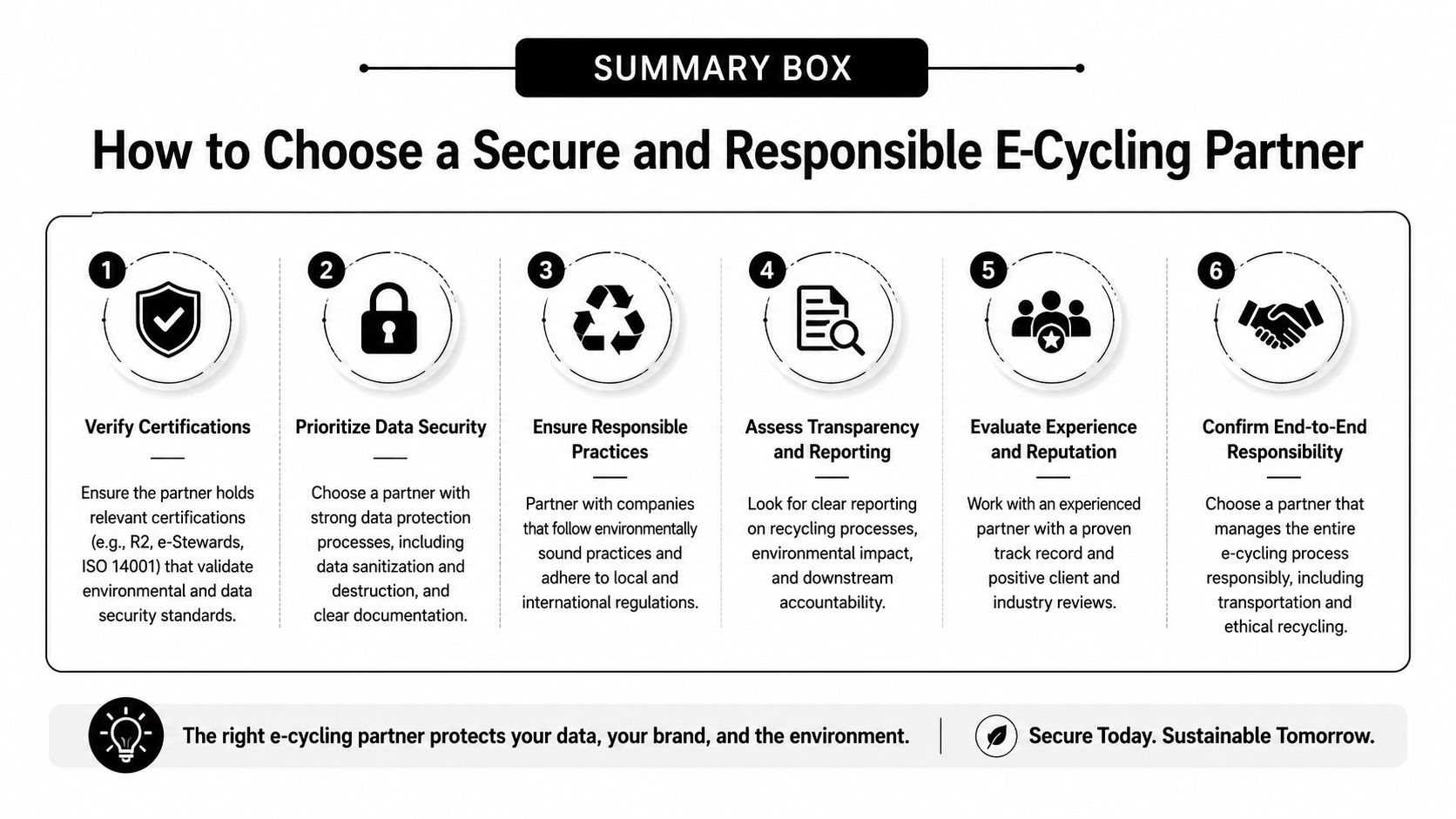
How to Choose a Secure and Responsible E-Cycling Partner
Most companies don't struggle to find a recycler. They struggle to judge one.
That's where a structured scorecard helps. According to Reworx Recycling's vendor selection criteria, a recommended ITAD vendor-selection scorecard assigns 30% weight to technical capability, 20% to track record, 20% to cost, and 30% to support and stability, offering a clear framework for B2B evaluation.
A simple comparison model
Using that weighting, buyers can move past vague claims and compare vendors on the factors that affect risk.
| Score area | What to examine | Why it matters |
|---|---|---|
| Technical capability | Data destruction methods, item handling, downstream process knowledge | This determines whether the provider can manage complex assets safely |
| Track record | History with business pickups, decommissioning, reporting, and issue handling | Experience often shows up in execution, not brochures |
| Cost | Pickup structure, service scope, potential buyback terms, total cost of ownership | The cheapest quote may create hidden cost later |
| Support and stability | Communication, scheduling reliability, documentation quality, business durability | A responsive partner reduces operational friction |
Questions every buyer should ask
Some recyclers market convenience. Others market security. You need both. Ask direct questions such as:
- How do you handle secure data destruction?
- What documentation do you provide after pickup?
- Can you explain your downstream recycling chain in plain language?
- How do you separate reusable equipment from scrap?
- Do you support donation-based recycling or corporate donation programs?
- How do you manage pickups for office cleanouts, facility cleanouts, or medical equipment disposal?
Notice what you're listening for. Clear answers matter more than polished language. If a provider can't explain their process without hiding behind generic phrases, that's a warning sign.
The SMB accessibility problem
Small and mid-sized businesses often face a trade-off. Enterprise-grade ITAD programs can seem too complex, while basic drop-off options may feel too vague on security. That's why partner selection should focus on the process gap between convenience and assurance.
A secure recycler doesn't just promise data protection. They explain how custody, destruction, and reporting work from handoff to final record.
This is also where support quality becomes more important than many buyers expect. A technically capable vendor that's hard to reach can create just as much disruption as an underqualified one. For routine laptop disposal, server retirement, or social enterprise recycling initiatives, responsiveness is part of the service.
Partner with Reworx for Impact and Peace of Mind
React E-Cycling is a better frame for modern electronics recycling because it matches how businesses operate. End-of-life electronics aren't only waste. They're retired assets that require secure data destruction, thoughtful logistics, responsible downstream processing, and, in many cases, an eye for value recovery.
That's why a donation-based social enterprise model stands out. It connects environmental responsibility with practical asset management and community benefit. Equipment that can support digital inclusion shouldn't automatically be treated like scrap. Hardware that still holds value shouldn't automatically be treated like a cost. Data-bearing devices shouldn't leave your organization without a documented process.
Businesses looking for a partner with that broader view can explore how partnering for impact with Reworx aligns responsible electronics recycling with technology donations, workforce development, and sustainable recycling goals. That combination matters for organizations that want their IT equipment disposal program to protect the business and support the community at the same time.
For business owners, IT managers, and sustainability leaders, the takeaway is simple. Build a process that protects data, recovers what can be recovered, and routes the rest through a responsible system. That's good operations. It's also good stewardship.
If your organization is planning an office cleanout, laptop disposal project, data center decommissioning, or broader IT asset disposition program, Reworx Recycling offers a practical next step. Businesses can donate old equipment, schedule a pickup, or explore partnership options that support secure data destruction, sustainable recycling, and community impact through technology donations and digital inclusion.