Disposing of old corporate computers safely isn't a one-step task. For Atlanta businesses, it’s a strategic process centered on two critical goals: first, ensuring the absolute and permanent destruction of all sensitive data, and second, choosing an environmentally responsible disposal method like certified IT asset disposition (ITAD) or a donation-based recycling program. This dual approach protects your organization from data breaches, ensures regulatory compliance, and aligns with corporate sustainability objectives.
Why Atlanta Businesses Can't Just Unplug and Forget Old Computers
The moment a computer is decommissioned, its identity shifts. It transforms from a valuable company asset into a significant liability. For any Atlanta-based organization, from a FinTech startup to a major healthcare provider, retiring old hardware is far more than a logistical cleanup.
You're facing two major challenges: protecting sensitive corporate and client data from exposure, and complying with stringent environmental laws to avoid hefty fines and reputational damage.
An old work computer is a repository of sensitive information. It could hold financial records, employee PII, proprietary R&D data, or customer lists. A simple file deletion or a standard "factory reset" is insufficient; data recovery software can easily resurrect this information. A single data breach from one carelessly discarded hard drive can lead to devastating consequences, including regulatory penalties, lawsuits, and a loss of customer trust. You can get a clearer picture of these risks by reading about the environmental and legal impacts of improper commercial e-waste disposal.
The Environmental Stakes Are Higher Than You Think
Beyond data security, there’s a critical environmental responsibility. Computers are filled with hazardous materials like lead, mercury, and cadmium. If this hardware ends up in a landfill, these toxins can leach into the soil and groundwater, posing significant health risks to communities.
The scale of the e-waste problem is staggering. In 2022, the world generated approximately 62 million tonnes of e-waste, but only 22.3% was properly collected and recycled. This means a vast quantity of hazardous material is mismanaged, polluting our planet.
For IT managers and corporate sustainability leaders, the decision of how to handle retired IT assets isn't just an operational task—it's a crucial component of your company's risk management and corporate social responsibility strategy.
Your Three Main Paths for Retiring IT Gear
For IT managers and business owners, the first step is knowing your options. When it's time to retire corporate computers, you generally have three main routes you can take.
- Certified Electronics Recycling: This involves partnering with a certified ITAD provider who understands how to properly dismantle devices. They safely manage hazardous components and recover valuable materials like gold, copper, and aluminum for reuse. Always look for recyclers with R2 or e-Stewards certifications—it’s your guarantee they adhere to the highest environmental and data security standards.
- Strategic Donation Programs: If the equipment is still functional, give it a second life. Partnering with a donation-based social enterprise like Reworx Recycling allows your old computers to empower non-profits, schools, or community programs across Georgia. It’s an excellent way to bridge the digital divide and transform a compliance obligation into a powerful corporate social responsibility initiative.
- Secure Product Destruction: In some cases, a device must be physically destroyed. For proprietary hardware, prototypes, or any asset that cannot risk falling into the wrong hands, secure shredding is the only solution. The entire unit is physically destroyed, eliminating any possibility of data or intellectual property recovery.
Comparing Business Computer Disposal Options
To help you decide, here’s a quick breakdown of the main disposal methods. This table summarizes the pros and cons of each, focusing on what matters most to businesses: data security, compliance, and social impact.
| Disposal Method | Data Security Risk | Environmental Impact | Compliance & Reporting | Recommended For |
|---|---|---|---|---|
| Certified Recycling | Low (with a certified partner) | Positive | High (provides chain-of-custody) | Businesses needing compliant, secure, and environmentally sound disposal for most assets. |
| Donation | Moderate (requires thorough wiping) | Very Positive | Varies (get donation receipts) | Functional, non-sensitive equipment that can benefit community organizations. |
| Resale/Buyback | Moderate-High (data wiping is critical) | Positive (extends product life) | Low | Newer, high-value equipment where the company can ensure complete data sanitization. |
| Secure Shredding | None | Neutral (materials are recycled) | High (certificate of destruction) | Highly sensitive data, proprietary hardware, or devices that must be destroyed completely. |
| Landfill/Trash | Extremely High | Very Negative | Non-Compliant | Never recommended. Poses severe legal, financial, and environmental risks. |
Ultimately, choosing the right path—or often, a mix of them—comes down to your company's specific security policies, regulatory obligations, and sustainability goals.
Implementing Ironclad Data Destruction Protocols
For any business, the data residing on old computers is infinitely more valuable—and potentially more dangerous—than the hardware itself. A single data breach from an improperly wiped device can spiral into devastating financial penalties, legal challenges, and lasting damage to your company’s reputation. Simply dragging files to the trash or running a standard factory reset is not a secure data destruction method.
Why? Because "deleted" files are not truly gone. They often remain on the hard drive, invisible to the user but easily recoverable with specialized software. This makes every retired computer a potential data security threat.
Software Wiping vs. Physical Destruction
When it comes to ensuring your data is permanently gone, you have two primary options: software-based wiping and physical destruction. The appropriate choice depends on the sensitivity of your data and your specific compliance requirements.
- Software-Based Data Wiping: This method uses specialized software to overwrite every sector of a hard drive with random data, often multiple times. This process adheres to standards like NIST 800-88 and renders the original data completely unrecoverable. It is the ideal solution for standard office laptops or desktops intended for donation or resale, as it sanitizes the drive while preserving the hardware's functionality.
- Physical Destruction: This is the ultimate solution for data sanitization. It involves either degaussing (using powerful magnets to scramble data) or, more commonly, shredding the hard drive into small, unusable fragments. Shredding is the mandatory method for devices that contained sensitive intellectual property, protected health information (PHI), or critical financial records. It offers irreversible data destruction.
This simple decision tree can help you make the initial call between donating still-working equipment and recycling gear that’s seen better days.
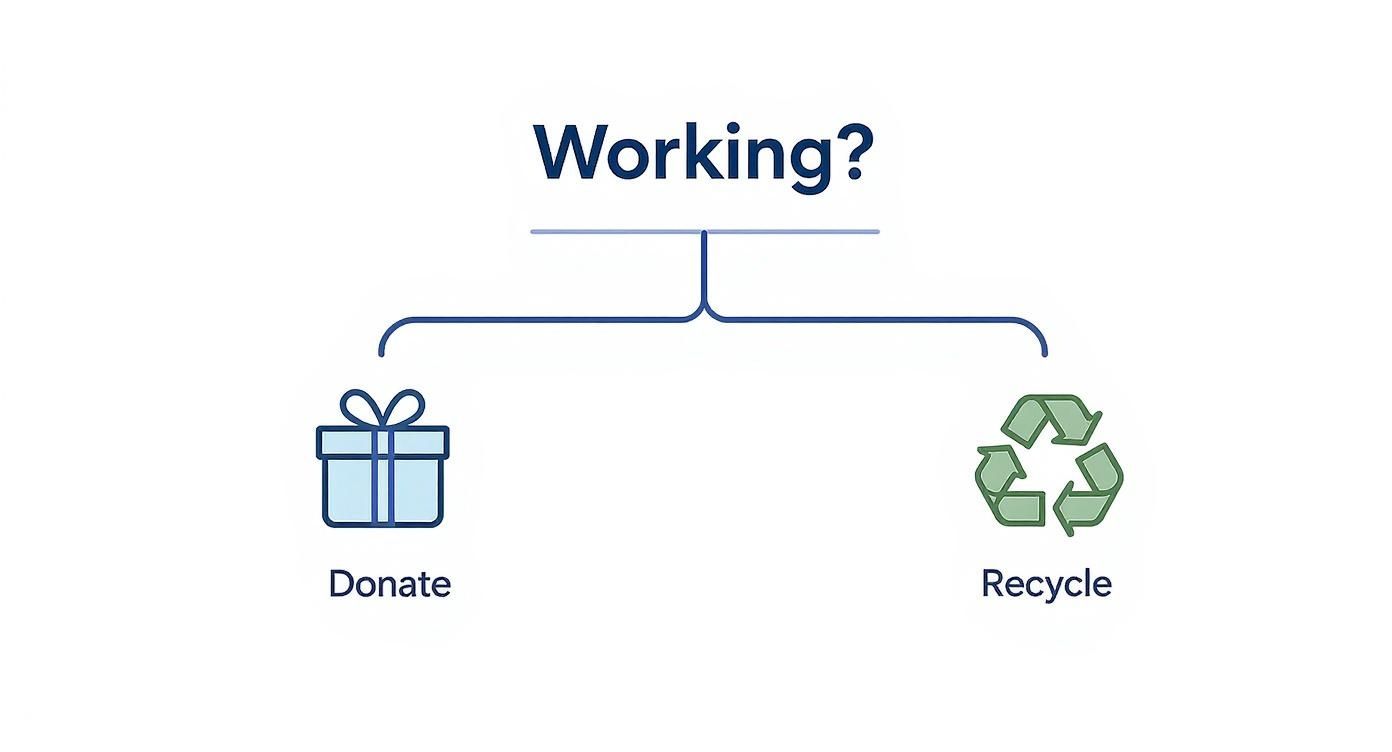
As you can see, the first question is always about an asset's viability. That single answer directs whether you can create community value through a donation or if you need to pursue responsible recycling.
The Critical Role of Certification
Regardless of the method you choose, the process is incomplete without proper documentation. A Certificate of Data Destruction (CoDD) is your most important document in this process.
A Certificate of Data Destruction is more than just a receipt; it is your auditable, legally defensible proof that you have fulfilled your due diligence in protecting sensitive information. This document is your shield in the event of a compliance audit.
This certificate should be provided by your IT Asset Disposition (ITAD) partner, like Reworx Recycling, for every single device they handle. It must always include:
- The date of destruction.
- The method used (e.g., wiping, shredding).
- A list of the unique serial numbers of the destroyed hard drives.
- A statement of compliance with relevant regulations.
This documentation is essential for meeting the stringent requirements of data privacy laws like GDPR, HIPAA, and FACTA. If you want to get into the weeds on sanitization methods and compliance, check out our comprehensive guide to secure data destruction.
Integrating Physical and Digital Security
Don't forget that your data security strategy has to extend beyond just digital files. Many businesses still deal with sensitive information on paper, and those documents need the same careful handling during disposal as your hard drives. To build a truly comprehensive security plan, you should also consider your physical information protocols. Learning about effective document archiving best practices can be a great way to round out your digital efforts.
Ultimately, the most effective way to build an ironclad data destruction protocol is to team up with a certified and transparent ITAD provider. At Reworx Recycling, we not only ensure your data is completely and verifiably destroyed, but we also help you transform your retired assets into opportunities for community support, blending your security needs with a powerful social mission.
Choosing Your Path: Certified Recycling vs. Donation-Based Social Enterprise
Once you’ve wiped all sensitive data, that pile of old hardware transforms from a liability into an opportunity. For any business that takes its responsibilities seriously, the next step isn’t just about making old computers disappear. It’s about choosing a path that aligns with your security, environmental, and social goals.
The two best options on the table are certified e-waste recycling and strategic donation. Understanding the nuances here is the key to making a smart decision. While both are light-years ahead of sending equipment to a landfill, they serve very different purposes and bring unique benefits to your company.
The Gold Standard of Certified E-Waste Recycling
When a computer or server is truly at the end of its useful life, certified electronics recycling is the most responsible choice for the planet. But let's be clear: not all recyclers operate on the same level. That word "certified" is everything—it points to specific, tough standards that guarantee your equipment is handled correctly from the moment it leaves your facility.
You need to look for partners holding top-tier certifications. The big ones are:
- R2v3 (Responsible Recycling): This certification is a big deal. It means the recycler follows strict rules for protecting the environment, keeping their workers safe, and ensuring data security through the entire process.
- e-Stewards: Often seen as the toughest certification out there, e-Stewards has a zero-tolerance policy against exporting hazardous e-waste to developing nations and bans the use of prison labor.
Going with a certified partner like Reworx Recycling guarantees your assets will be processed in an environmentally sound way. Hazardous materials are managed properly, and valuable stuff is recovered, which means less need to mine for new resources. This is a world away from uncertified vendors who might cut corners, leading to illegal dumping and putting your brand’s reputation at serious risk.
The Power of Donation-Based Social Enterprise
But what if your old computers still have some fight left in them? This is where partnering with a donation-based social enterprise turns a simple disposal task into a genuine act of corporate social responsibility. Instead of just grinding up the equipment for scrap metal, this approach is all about refurbishment and reuse to help bridge the digital divide.
The value locked inside e-waste is staggering but mostly ignored. Globally, recoverable metals in e-waste were recently valued at $62.5 billion, yet only about 17% of this waste was actually recycled. That huge gap shows just how broken typical disposal systems are and why we desperately need better options. You can dive deeper into the data on global e-waste challenges on wastedirect.co.uk. Working with a donation-based recycler tackles this problem head-on by making reuse the top priority.
By donating functional IT equipment, your company can directly empower non-profits, support educational programs, and provide essential technology to underserved communities. It’s a tangible way to invest in society using assets that would otherwise be scrapped.
Combining Environmental and Community Impact
Working with a social enterprise like Reworx Recycling gives you a smart hybrid approach. We look at every single piece of equipment your business retires.
- Functional devices are professionally refurbished, sanitized, and prepped for a second life at schools, community centers, and other non-profits.
- Non-functional or obsolete equipment is sent directly into our certified recycling process, making sure every component is handled responsibly.
This dual-pathway system gets the maximum value out of your retired assets. It can turn a disposal cost into a measurable social investment, which comes with potential tax benefits and powerful stories for your ESG reports. You can get a better sense of what we do by learning more about our role as a leading electronic waste recycling company.
In the end, the choice isn't really recycling versus donating. It's about finding one partner who can intelligently manage both, ensuring every laptop, server, and monitor is put to its highest and best use—whether that's as raw material for a new product or as a vital tool for a local charity.
Managing the Logistics of IT Asset Disposal
The journey your old computers take from your office to a certified facility is a critical link in your security chain. A sloppy pickup can expose your business to theft and data loss just as easily as a failed data wipe. Let's be clear: the physical transportation of retired assets isn't some minor detail. It's a core component of secure IT Asset Disposition (ITAD).
Proper logistics are built around a secure chain of custody. This is just a formal way of saying there’s a documented trail that tracks every single asset by its serial number from the moment it leaves your control until it’s verifiably processed. A missing link in that chain isn't just a headache—it’s a potential security breach and a major compliance problem waiting to happen.
What to Demand From a Pickup Service
When you're arranging an office cleanout or a full data center decommissioning, the quality of the logistics service is non-negotiable. Just having someone show up with a truck is nowhere near good enough. Your ITAD partner should provide a professional, secure, and transparent experience from start to finish.
Here’s what to look for in a professional pickup service:
- Secure, GPS-Tracked Transport: The vehicle itself should be secure and monitored. GPS tracking gives you real-time visibility and ensures assets don’t go off-route, which is a powerful layer of security against theft or loss.
- Uniformed, Background-Checked Technicians: The people handling your sensitive equipment should be easy to identify, professionally trained, and have undergone thorough background checks. This simple step minimizes insider threats and ensures your assets are handled with care.
- Meticulous On-Site Documentation: From the moment they arrive, the technicians should be documenting everything. This means scanning and recording the serial numbers of every single asset being collected and giving you a receipt before they even think about departing.
A comprehensive and documented hardware disposal process is critical for ensuring secure and compliant practices, and it forms the very foundation of your audit trail.
Professional Logistics vs. DIY Transport
Sure, for a couple of old machines, having an employee drop them off might seem efficient. But for any kind of bulk disposal—like a multi-floor facility cleanout or retiring a server rack—relying on your own staff introduces massive risks.
Your employees aren't trained in secure asset handling, their personal vehicles aren't secure, and there's no formal chain-of-custody protocol in place.
Just imagine this scenario: An employee loads a dozen old company laptops into their car. They stop for coffee on the way to the recycler, and someone breaks into the vehicle. The laptops are gone, and with them, a trove of unverified company data. Your business is now staring down a potential data breach notification, regulatory fines, and serious reputational damage.
Professional logistics services are designed to prevent exactly this kind of disaster. Partners like Reworx Recycling manage the entire process, from secure on-site packing and inventorying to transport in locked, tracked vehicles. This provides an unbroken and legally defensible chain of custody.
This structured approach is essential for both compliance and your own internal governance. You can explore a detailed look at how these systems work in our comprehensive guide to reverse logistics services.
Ultimately, investing in professional logistics isn't an added cost; it's an investment in risk mitigation. A documented chain of custody gives you the auditable proof your organization needs to demonstrate due diligence, protecting your data, your reputation, and your bottom line.
What About All the Other Stuff? Handling Specialized IT Assets
A company's tech footprint goes way beyond the desktops and laptops sitting on desks. A truly secure ITAD strategy has to account for everything else—the servers in the data center, the routers in the closet, and even the old VoIP phones. If you're only focused on the obvious, you're leaving massive security holes and environmental risks wide open.
This is where a comprehensive plan for disposing of old computers safely really shows its value. It needs to cover every single piece of tech your company owns. Working with an end-to-end partner like Reworx Recycling ensures no asset, big or small, gets left behind.
Tackling Data Center Decommissioning
Your data center is the nerve center of your business. It’s packed with servers, storage arrays (SANs), and networking gear holding your most valuable and sensitive information. When it's time to retire this hardware, there's zero room for error—the need for secure data destruction is absolute.
For most data center hardware, on-site physical destruction is the only way to go. This means a mobile shredding truck comes directly to your facility to pulverize hard drives and SSDs before they ever cross your security perimeter. You get an unbreakable chain of custody, and your team can even watch the destruction happen in real-time.
Navigating Medical and Laboratory Equipment Disposal
Disposing of medical and lab equipment adds a whole new level of complexity. You've got strict healthcare regulations like HIPAA to worry about, not to mention the risk of biohazardous contamination. Devices like patient monitors or diagnostic machines are often loaded with Protected Health Information (PHI) that requires meticulous destruction.
On top of that, some lab equipment might need to go through a certified decontamination process before it can even be moved for recycling. You absolutely need a specialist who gets these requirements. An experienced ITAD provider will handle the entire workflow, from HIPAA-compliant data destruction to ensuring all safety and environmental protocols are followed to the letter.
The global e-waste crisis is escalating at an alarming rate, far outpacing recycling capabilities. Since 2010, the volume of electronic waste has surged by approximately 82%, reaching 62 million tonnes in 2022. Projections show this figure could hit 82 million tonnes by 2030. This rapid growth highlights the urgent need for responsible disposal methods to prevent illegal dumping and environmental harm. Discover more insights about the environmental risks of e-waste and its global impact on genevaenvironmentnetwork.org.
Managing Comprehensive Office and Facility Cleanouts
When you're clearing out an office, you'll find a lot more than just PCs. There’s a whole ecosystem of electronics that are easy to overlook but still carry significant data risks.
Think about all the other gear you might find:
- Networking Gear: Routers, switches, and firewalls can hold network configurations and access credentials.
- Telecom Systems: Old VoIP phones and PBX systems often store call logs, contact lists, and voicemail data.
- Peripherals: Don't forget printers and multifunction devices! Their internal hard drives keep a copy of every single document that's been scanned, copied, or printed.
A proper office cleanout demands a partner who can spot and sanitize every single one of these devices. To see how we handle this variety, check out our guide on recycling laptops and networking equipment. It’s the only way to be sure no data-bearing device gets missed.
The Necessity of Secure Product Destruction
Sometimes, data sanitization isn't enough. You need the entire product completely and physically destroyed. This is critical for proprietary hardware, defective products being recalled, or counterfeit goods that can't ever be allowed to re-enter the market. Secure product destruction isn't just about the data; it’s about physically annihilating the unit to protect your brand and intellectual property.
Reworx Recycling offers certified product destruction, providing a full audit trail to prove your items were permanently destroyed and their materials were handled responsibly. This makes us the single partner you need to manage your company's entire e-waste portfolio, from a simple mouse to a complex data center array.
Got Questions About Safe Computer Disposal? We’ve Got Answers.
Even with the best strategy, it's natural for questions to pop up when it's time to retire old IT gear. Getting clear on the details is the best way to make sure your business stays secure, compliant, and environmentally responsible.
Let's walk through some of the most common questions we hear from our partners.
What Is the Most Secure Method for Destroying Data?
This really comes down to your data's sensitivity and any specific industry regulations you need to follow.
For the vast majority of business data, a multi-pass data wipe that follows the NIST 800-88 standard is more than enough. This isn't just deleting files; it's a process that completely overwrites everything on the drive, making the original data impossible to recover. The big upside here is that the hard drive can be safely reused or refurbished, which is a great, sustainable option for most corporate laptops and desktops.
But when you're dealing with highly confidential, proprietary, or regulated data—think healthcare records, financial data, or R&D secrets—physical destruction through shredding is the undisputed champion. It does exactly what it sounds like: it physically annihilates the drive into tiny pieces. There’s simply no coming back from that, offering absolute certainty that your data is gone for good.
A certified partner like Reworx Recycling can help you figure out which path makes sense and will always provide a Certificate of Data Destruction for your records.
Can My Business Get a Tax Deduction for Donating Computers?
Absolutely. In many cases, businesses can receive tax deductions when they donate functional computer equipment to a registered 501(c)(3) non-profit organization. This is one of the huge advantages of working with a social enterprise.
When you partner with Reworx Recycling, our first step is to carefully assess all your equipment to see what's suitable for refurbishment. We determine the fair market value of those devices and give your business all the documentation you need to support your tax deduction claims. It's a great way to turn a disposal liability into a positive investment in the community.
What Happens to Equipment That Cannot Be Donated?
Anything that's non-functional, too old to be useful, or just doesn't pass our rigorous testing goes straight into a responsible de-manufacturing process at a certified facility. You can rest assured that nothing ever ends up in a landfill.
Our process strictly follows R2v3 and e-Stewards standards, which means:
- Manual Dismantling: First, devices are carefully taken apart by hand to separate core materials like circuit boards, plastics, metals, and glass.
- Hazardous Material Removal: We safely isolate and contain toxic materials such as lead, mercury, and cadmium, following all environmental regulations to the letter.
- Commodity Recovery: Finally, the separated raw materials are sent to certified downstream processors. They're refined and reintroduced into the manufacturing supply chain, closing the loop and supporting a true circular economy.
Ready to implement a secure, sustainable, and socially impactful ITAD strategy for your Atlanta business? Reworx Recycling is your local partner for donation-based electronics recycling and secure IT equipment disposal. Contact us today to schedule a pickup or learn more about our corporate donation programs. Visit our blog to learn more: https://www.reworxrecycling.org/category/recycling-blog