Most recycling advice is too simple for the decisions businesses have to make.
“Recycle more” sounds responsible, but it leaves out the hard part. Not every recycling process delivers the same environmental result. Some systems recover high-value materials efficiently. Others burn energy on contamination, poor sorting, or low-quality outputs that can't replace virgin material in a meaningful way.
That doesn't mean recycling is overrated. It means environmental impact recycling has to be judged by net benefit, not by good intentions.
The scale matters. In the United States, recycling and composting municipal solid waste saved over 193 million metric tons of carbon dioxide equivalent in 2018, while the country still generated 292.4 million tons of municipal solid waste and achieved a combined recycling-and-composting rate of 32.1%, according to the EPA's recycling basics and benefits page. For a facilities manager, that's the big takeaway: recycling already avoids emissions at national scale, and there's still a lot of room to improve outcomes.
For IT teams, the picture gets more complicated. A retired laptop isn't just “waste.” It's a mix of metals, plastics, circuit boards, batteries, and data-bearing components. If you send that device into the wrong stream, you may lose both environmental value and control over data security. If you route it well, you can extend product life, recover materials, and support more credible sustainability reporting.
That's why businesses are moving past checkbox recycling programs and asking better questions. What gets reused? What gets dismantled? What gets shredded? Which materials return to manufacturing? Which ones create more processing burden than benefit?
A useful starting point is understanding the impact of e-waste on the environment. Once you see electronics as a lifecycle management issue rather than a disposal task, better decisions follow.
Beyond the Blue Bin The Real Impact of Recycling
The blue bin has done one thing very well. It taught companies to treat recycling as a simple yes-or-no action.
For a business, that shortcut causes problems. Recycling is not a single environmental outcome. It is a chain of decisions, and each step affects whether you get a clear benefit, a marginal one, or extra handling with little value at the end.
A cardboard box, an aluminum fixture, a server chassis, and a mixed-material keyboard all move through different recovery systems. Some are easy to sort and turn back into feedstock. Others require labor-intensive dismantling, careful separation, or specialized downstream processors. For an IT or facilities manager, the better question is not "Did we recycle it?" It is "What did this item become after collection, and was that result worth the effort and impact required to get there?"
Why net benefit matters
The most useful lens is net environmental benefit.
That means looking at both sides of the equation. Recovery can reduce demand for virgin materials and keep usable commodities in circulation. Collection, transport, sorting, cleaning, and reprocessing also consume energy and create emissions. The goal is to choose recycling paths where the environmental gains are larger than the processing burden.
A simple way to picture this is to compare recycling systems to supply chains. A supply chain only works when materials arrive in the right condition, at the right place, with enough value left in them to justify the work. Recycling works the same way. If material quality stays high, the environmental return is usually stronger. If contamination, breakage, or poor sorting lowers quality, the result may be downcycling, disposal, or inefficient processing.
Recycling creates the most environmental value when recovered materials can replace new raw inputs without excessive extra processing.
That is why tonnage alone can mislead a business. A report can show a large volume "recycled" while saying very little about reuse, actual material recovery, or downstream outcomes.
This matters even more for electronics. Devices are not single-material products. They are assemblies of metals, plastics, glass, circuit boards, batteries, and data-bearing parts, each with a different recovery path and different environmental risk. A useful starting point is understanding the environmental impact of e-waste, because it shows why electronics need a more careful framework than standard office recycling.
For business leaders, the practical takeaway is straightforward:
- Measure quality, not just volume. Ask what share of material is reused, refurbished, or returned to manufacturing.
- Match the process to the asset. Paper, packaging, pallets, and retired IT equipment should not be managed as if they create the same environmental outcome.
- Treat recycling as an operations decision. Facilities, IT, procurement, and sustainability teams all influence whether recovery creates a net positive result.
For complex assets, especially retired IT equipment, the strongest option is often a hierarchy. Reuse comes first when it is feasible. Parts recovery comes next. Material recycling follows when the asset has reached the end of its useful life.
How Recycling Reduces Your Carbon Footprint
An item avoiding the trash through recycling does not itself result in emissions reductions. The bigger climate win usually happens earlier, at the point where recovered material replaces virgin inputs in manufacturing.
That distinction matters for business decisions. A ton of material sent to a recycler sounds good on a report, but the carbon benefit depends on what the recycler can turn back into usable feedstock, how much energy that process takes, and whether manufacturers can use the output instead of newly extracted material.
The clearest gains show up in energy-intensive materials
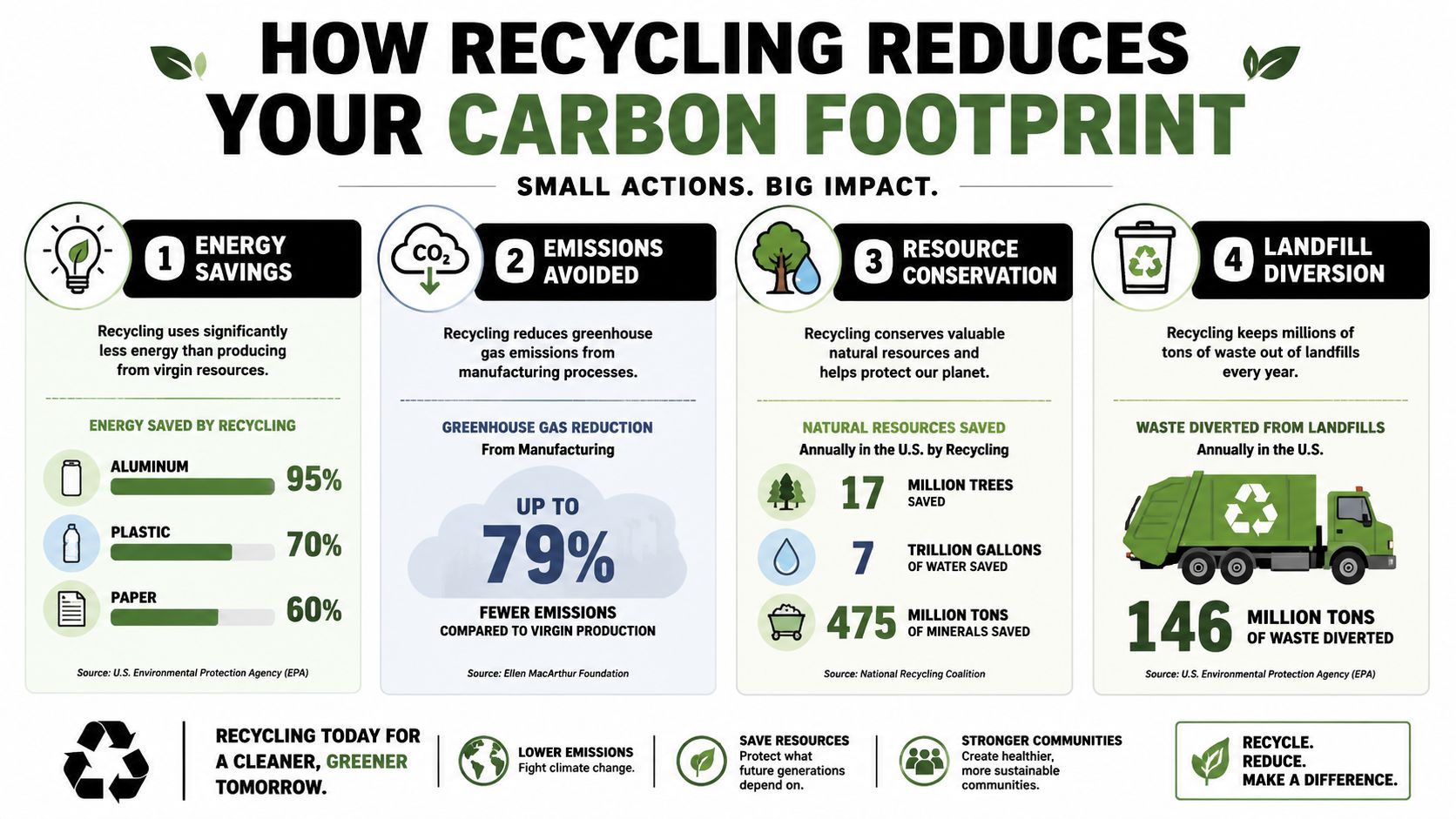
Aluminum is the easiest example because the difference is so large. The U.S. National Institute of Environmental Health Sciences reports that recycling aluminum uses 95% less energy than producing it from raw materials. The same benefits of recycling summary also notes lower energy demand for recycled steel, newspaper, plastics, and glass, along with lower water use and mining waste for scrap steel.
A practical way to read that is simple. Recycling helps most when it avoids the dirtiest part of production. For metals, that often means less extraction, less refining, and less furnace time. For an operations leader, the point is not to memorize percentages. It is to recognize which materials carry the biggest upstream burden, because those are often the places where better recovery choices produce the strongest carbon return.
That matters across offices, warehouses, and data environments. Furniture frames, shelving, appliances, cable trays, server racks, and metal device housings all sit closer to the high-value end of the recovery spectrum than mixed, low-grade waste.
Carbon reduction depends on replacement, not collection alone
A useful analogy is spare parts in a maintenance program. A recovered part only creates value if it can do the job of a new one. Recycled material works the same way. The environmental benefit rises when the recovered output is clean enough, consistent enough, and available at the right scale to displace virgin material in manufacturing.
That is why plastics and electronics are harder to evaluate than aluminum cans or steel scrap. Plastic streams can be mixed or contaminated. Electronic devices contain many materials bonded together in ways that make separation more energy- and labor-intensive. If recovery is inefficient, some of the expected carbon savings shrink.
Practical rule: Ask what material your recycler is recovering, and what manufacturing need that recovered material replaces.
What this means for IT and facilities leaders
For business teams, recycling lowers carbon footprint in three practical ways:
- It cuts demand for virgin production. Recovered material can replace newly extracted or newly manufactured inputs.
- It reduces some disposal-related impacts. Less material goes to landfill or incineration.
- It improves asset decisions upstream. Teams start separating items that should be reused, repaired, harvested for parts, or recycled by material type.
That last point is especially important for organizations working to reduce the carbon footprint of IT departments. A laptop, monitor, switch, or server is closer to a kit of materials than a single product. Steel, aluminum, copper, plastics, circuit boards, and batteries do not carry the same recovery value or the same processing burden. Once facilities, IT, and procurement teams treat those differences as operational inputs, recycling stops being a generic waste activity and becomes a more accurate carbon-reduction tool.
The Full Lifecycle of Recycled Materials
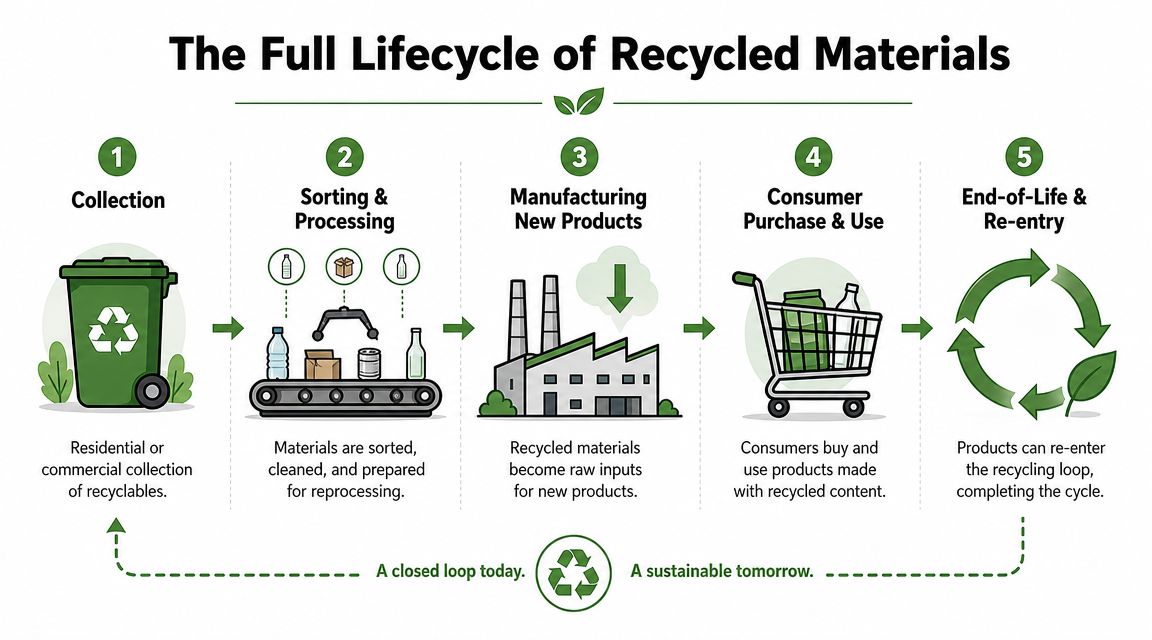
A recycled item doesn't move from desk to new product in one step. It passes through a chain of decisions, and each step affects environmental outcome.
Collection comes first. Then transport. Then sorting and grading. Then cleaning or dismantling. Then reprocessing into a usable feedstock. Then manufacturing. If any part of that chain fails, the environmental case weakens.
The recycling loop has multiple pressure points
The European Environment Agency defines high-quality recycling by whether recycled material can effectively displace primary material in a new product, as described in its publication on measuring the quality of recycling. That's an important shift in thinking. It moves the conversation away from “Was it collected?” to “Did it retain enough value to replace virgin material?”
The EEA also emphasizes preserving functional properties. If a recycled material loses strength, elasticity, or heat resistance, manufacturers may have to add more virgin input back into the mix. At that point, the environmental benefit drops.
A simple way to evaluate the process
For business waste streams, it helps to think in five checkpoints:
Collection quality
Mixed loads create trouble early. If electronics, packaging, food residue, and scrap materials are bundled carelessly, downstream recovery gets harder.Sorting accuracy
Correct identification determines whether material goes to reuse, repair, parts harvesting, or raw material recovery.Processing burden
Washing, shredding, chemical treatment, and separation all have their own footprint.Output quality
Can the resulting feedstock be used in new products at meaningful value?Market re-entry
If there's no practical demand for the recycled output, collection alone doesn't complete the loop.
A recycling stream isn't “circular” just because a truck picked it up. The loop closes only when recovered material performs in a new product.
That framework is especially useful when thinking about the lifecycle of IT equipment from acquisition to recycling. For many devices, the highest-value move happens before shredding ever begins. It may be redeployment, repair, or component harvest.
Common Recycling Pitfalls and Their Environmental Costs
Recycling can increase environmental impact if the system around it is poorly designed.
That sounds backwards, but it is the reality many businesses run into. A company may pay for collection, report a diversion win, and still end up with material that needs extra transport, extra sorting, extra washing, or disposal because the stream was mishandled at the start. For an IT or facilities manager, that is the key distinction. The goal is not just to move waste out of the building. The goal is to create a clean path to reuse or recovery with a lower total footprint.
A few common examples explain the problem quickly. Packaging film gets tossed in with rigid plastics. During an office cleanout, cords, batteries, adapters, paper, and food residue end up in the same gaylord. During a device refresh, working laptops are packed together with broken keyboards and miscellaneous scrap. Each decision lowers material quality and raises processing burden.
Contamination can erase value fast
A recycling line works a lot like a production line. Good inputs produce usable outputs. Dirty, mixed inputs force rework and increase loss.
The environmental payoff of recycling varies by material and by the efficiency of the system handling it. Some processes require significant energy, water, or chemical treatment, as discussed in Boise State University's article on whether recycling is as good as we think. That is why contamination matters so much in practice.
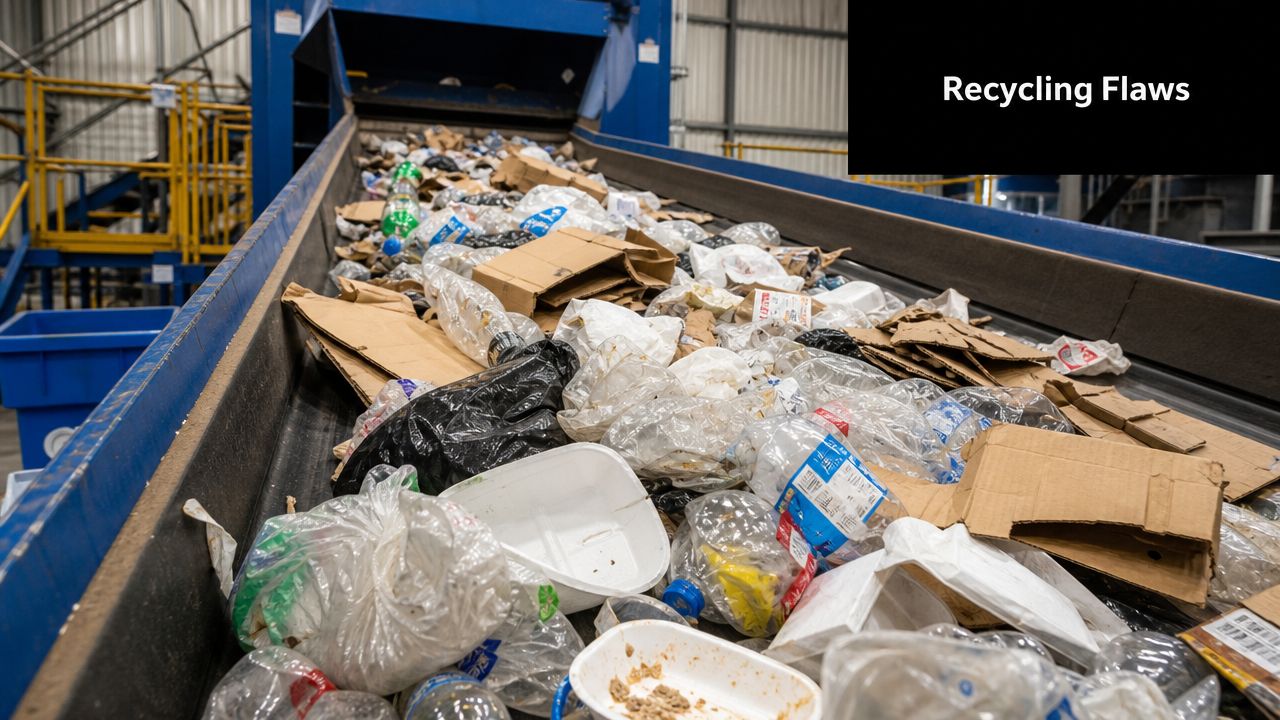
If a load arrives heavily contaminated, processors have fewer good options. They may need more labor to separate it. They may need more cleaning steps to make any portion marketable. Part of the load may be downgraded or discarded entirely. The business still paid for pickup and handling, but the net environmental benefit shrinks.
Plastics are a good example of the tradeoff
Plastic recycling often gets discussed as if collection alone solves the problem. Process quality is what decides the outcome.
Mixed resins, food residue, labels, and non-target materials can turn a potentially useful plastic stream into a low-value one that needs intensive cleanup. That added cleanup has its own footprint. In some cases, the recovered output is also lower grade, so manufacturers still need a meaningful share of virgin resin to meet performance requirements. That weakens the carbon benefit the business expected when it set the material aside for recycling.
For global and regional context on how businesses are addressing e-waste and recycling policy, REDCHIP's guide for Philippine companies offers a useful reference point.
Three business mistakes that weaken outcomes
- Wish-cycling during office cleanouts: Staff put questionable items in recycling carts and assume the vendor will sort everything correctly later.
- Mixing reusable assets with scrap: Devices or parts with remaining use are handled as waste too early, which destroys value that could have been preserved.
- Choosing vendors based only on pickup convenience: Fast collection can hide weak downstream sorting, limited material recovery, or poor reporting on what occurred with the load.
These mistakes are expensive in environmental terms because they add friction at every later step. More sorting. More transport. More material loss. More replacement manufacturing to make up for what was not recovered at useful quality.
For business recycling, the best question is simple: what condition is this material in when it leaves our site? That question usually matters more than how full the bin was.
Why Electronics Recycling Requires a Specialized Approach
Electronics don't belong in a standard recycling mindset. They're too complex, too material-dense, and too sensitive from both an environmental and security perspective.
A desktop computer can contain aluminum, steel, copper, plastics, circuit boards, glass, and data-bearing storage. A medical device or networking appliance may add specialized components, batteries, or regulated handling requirements. That's why electronics recycling, computer recycling, and IT asset disposition need a more deliberate pathway than general commercial waste.
Reuse often beats raw material recovery
For many IT assets, the most environmentally sound option isn't immediate shredding. It's extending useful life through redeployment, donation-based recycling, refurbishment, or component harvesting.
If a functioning laptop can be repaired and used again, the organization preserves the value of the whole product instead of recovering only its raw materials. That usually aligns better with the logic of environmental impact recycling because it avoids the need to manufacture a replacement unit right away.
A donation-based model can be highly impactful. When an organization can route suitable devices into reuse, it supports both environmental outcomes and community benefit. Reworx Recycling operates in that space as a social enterprise focused on electronics recycling, IT equipment disposal, secure data destruction, and donation pathways for retired equipment.
Don't ask only, “Can this be recycled?” Ask, “Can this still be used, repaired, or harvested before recycling?”
A practical decision table for IT teams
| IT Asset Type | Key Materials | Primary Risk | Best Practice Disposal |
|---|---|---|---|
| Laptops | Aluminum, plastics, circuit boards, batteries, storage drives | Data exposure, battery handling, premature shredding | Secure data destruction first, then evaluate reuse, donation, or parts harvesting before recycling |
| Desktops and workstations | Steel, aluminum, copper, boards, drives | Mixed asset grading, data-bearing components | Separate by condition, remove storage media for secure destruction, then prioritize reuse or dismantling |
| Servers and networking gear | Steel, aluminum, copper, boards, fans, power supplies | Chain of custody, decommissioning complexity | Managed data center decommissioning, documented asset tracking, component recovery, then downstream recycling |
| Monitors | Glass, plastics, metals, electronic components | Breakage, mixed material handling | Keep intact for processing, avoid tossing into mixed office cleanout streams |
| Printers and peripherals | Mixed plastics, metals, boards | Low recovery value if contaminated or broken apart | Consolidate separately and send through a qualified electronics recycler |
| Medical or lab equipment | Metals, plastics, electronics, specialized components | Compliance, hazardous parts, poor general handling | Use specialized medical equipment disposal or laboratory equipment disposal channels |
Some global teams also look at regional guidance to compare practices. For example, REDCHIP's guide for Philippine companies is a useful reference for how organizations outside the U.S. frame e-waste responsibilities and recycling decisions.
Meeting ESG Goals with Responsible ITAD
A company can hit a recycling target on paper and still miss the larger ESG goal.
That happens when old IT equipment is treated as one waste stream instead of a set of business decisions. ESG teams need more than a pickup receipt. They need a defensible record of what happened to each asset, how data was protected, whether usable equipment stayed in circulation, and how residual materials were managed.
Responsible ITAD helps create that record. It connects environmental reporting with operational discipline, which is often the difference between a claim that sounds good and one that stands up to review.
Environmental reporting depends on what happens after pickup
For electronics, the environmental outcome is shaped by process quality. A recycler that sorts carefully, tests for reuse, removes data-bearing components under controlled procedures, and sends remaining materials to qualified downstream processors will usually deliver a better result than one that shreds mixed loads as fast as possible.
That distinction matters for ESG reporting. Recycling works like a supply chain audit. The headline goal may be waste diversion, but its primary value stems from traceability, material quality, and clear handling records.
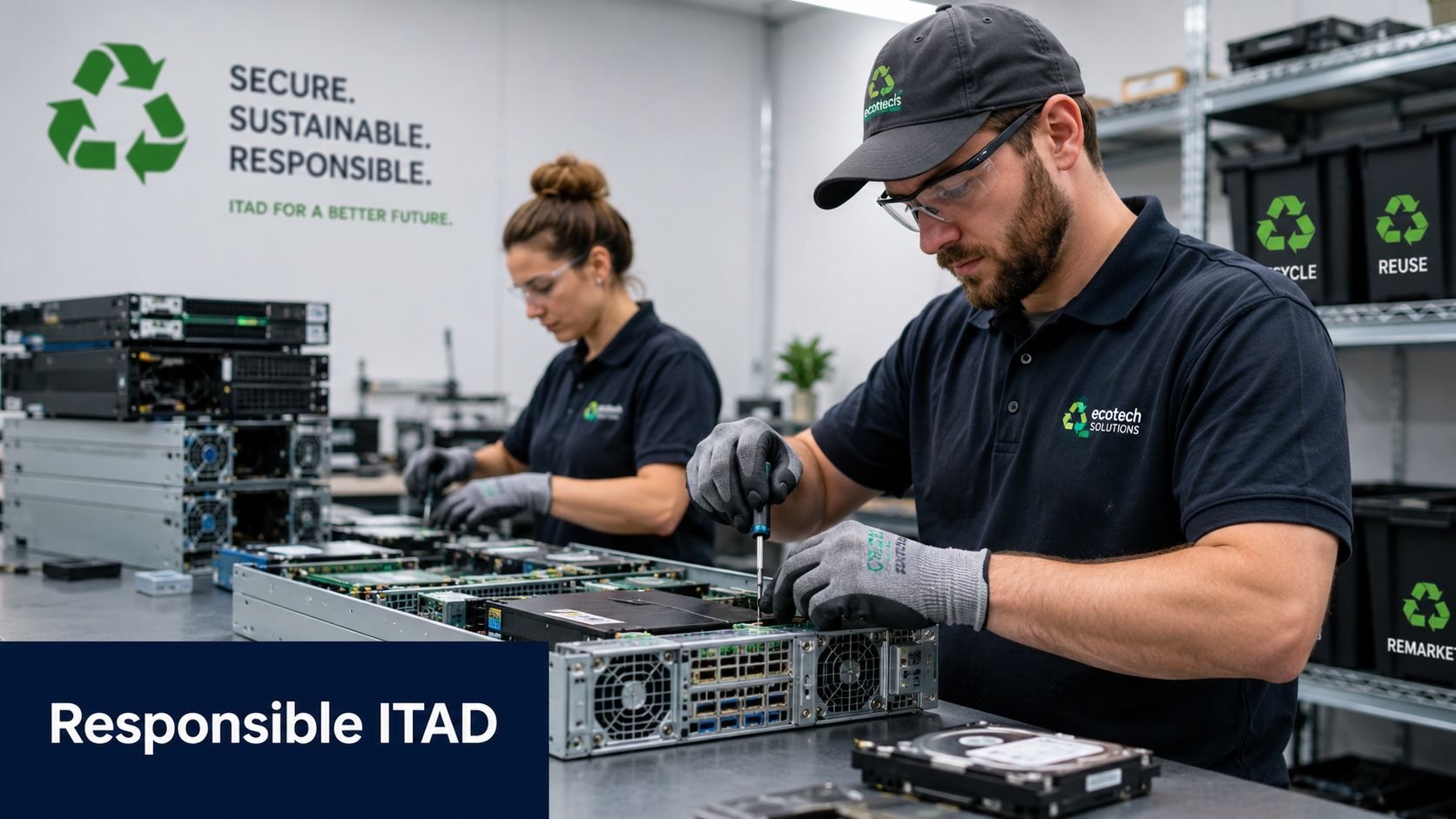
If a downstream process is opaque, contaminated, or poorly documented, the environmental claim gets harder to defend. If a vendor can show chain of custody, secure data destruction, tested reuse pathways, and documented material recovery, your reporting gets much stronger.
ESG is also about how long equipment stays useful
The environmental side of ESG is not only about recycling tonnage. It is also about avoiding unnecessary replacement. Extending the life of a working laptop or server often preserves more value than sending it straight to materials recovery, because reuse keeps the embedded energy and manufacturing impacts in play for longer.
The Social pillar can benefit too. Devices prepared for second-life use may support employee programs, nonprofits, schools, or digital inclusion efforts, provided the equipment is functional, data is fully removed, and transfers are documented.
That is why some organizations ask for asset recovery support that evaluates reuse before recycling. Recovery means the equipment is assessed like inventory, not treated like anonymous scrap.
Questions worth asking in vendor reviews
A short vendor checklist can reveal a lot:
- How do you identify reuse candidates before dismantling or shredding?
- What controls govern storage devices and data-bearing equipment from pickup through destruction?
- What documentation do you provide for office closures, facility projects, or data center retirements?
- Can you show where equipment, components, and recovered materials go downstream?
Clear answers usually signal a provider that understands ESG as a chain of decisions, not a hauling service with a sustainability label.
How Your Business Can Improve Recycling Outcomes Today
Most organizations don't need a brand-new sustainability framework. They need tighter operating habits.
If you want better environmental outcomes from electronics recycling, office cleanout work, laptop disposal, product destruction, or secure data destruction, start with a short checklist that people can follow.
A workable action list for business teams
Audit what you're retiring
Separate laptops, desktops, servers, monitors, printers, accessories, batteries, and non-electronic scrap. Don't let all surplus equipment become one generic pile.Sort by next best use
Create basic categories such as reuse, repair, parts harvest, and recycle. That one step improves both IT asset disposition and sustainable recycling decisions.Keep data-bearing assets under tighter control
Secure data destruction should be planned before pickup day, not improvised during loading.Reduce contamination in facility cleanouts
Don't mix cardboard, food waste, cables, batteries, plastics, and electronics if you want high-quality recycling.Ask vendors operational questions
Find out how they manage chain of custody, decommissioning, and downstream processing. A pickup service alone doesn't tell you much.Document outcomes for internal reporting
Sustainability teams, IT, and facilities should all be able to explain what happened to retired assets.
Small process changes usually beat broad recycling slogans. Clear sorting rules and better vendor questions can improve outcomes quickly.
What a better program looks like in practice
A better program is usually less glamorous than people expect. It's labeled containers. It's a clean staging area. It's a rule that reusable laptops don't get tossed in with broken peripherals. It's procurement and IT agreeing on refresh timing. It's facilities knowing who approves a pickup.
If you're updating your internal process, this guide to optimizing your company's e-waste recycling strategy and best practices is a practical place to start.
The payoff is clarity. Better material recovery. Better data handling. Better ESG support. And fewer situations where “recycled” turns out to mean “we're not sure what happened next.”
If your organization is planning an office cleanout, laptop disposal project, data center decommissioning, or a broader IT equipment disposal program, Reworx Recycling offers a practical next step. You can use their resources to plan donation-based recycling, schedule a pickup, or evaluate a partnership that supports secure handling, responsible electronics recycling, and community-focused reuse.