Retiring data center hardware in Worcester, Massachusetts, is more than an operational task—it's a critical moment for your data security, environmental compliance, and corporate social responsibility. A successful project hinges on a clear plan, from asset inventory to secure data destruction. This guide provides a practical framework for navigating this complex process, ensuring your business protects its assets while making a positive community impact.
Your Strategic Roadmap For Data Center Decommissioning In Worcester
Shutting down a data center is a major project requiring a well-defined strategy. For any Worcester business, from healthcare providers around the UMass Memorial Health campus to the city's growing tech and biotech firms, a misstep can lead to significant financial and reputational damage.
The goal is to balance operational efficiency, ironclad data security, and environmental responsibility. A poorly handled disposal project can expose you to data breaches, which carry steep penalties under laws like HIPAA. It can also lead to fines for non-compliance with the Massachusetts Department of Environmental Protection (MassDEP) regulations on e-waste.
Core Pillars Of Decommissioning
Every successful decommissioning project is built on three core pillars: security, compliance, and impact.
- Security: This is the non-negotiable foundation. It involves using verifiable data destruction methods like physical shredding or wiping to NIST 800-88 standards and maintaining a secure chain of custody for every asset.
- Compliance: You must adhere to federal data privacy laws and state-level environmental rules. In Massachusetts, this means ensuring all electronic waste is handled by a certified recycler and never ends up in a landfill.
- Impact: This is where modern IT Asset Disposition (ITAD) moves beyond simple disposal. Partnering with a donation-based social enterprise like Reworx Recycling turns retired equipment into a positive force for your corporate social responsibility (CSR) and the local Worcester community.
This process flow illustrates how security, compliance, and social impact can be integrated into your decommissioning plan from the start.
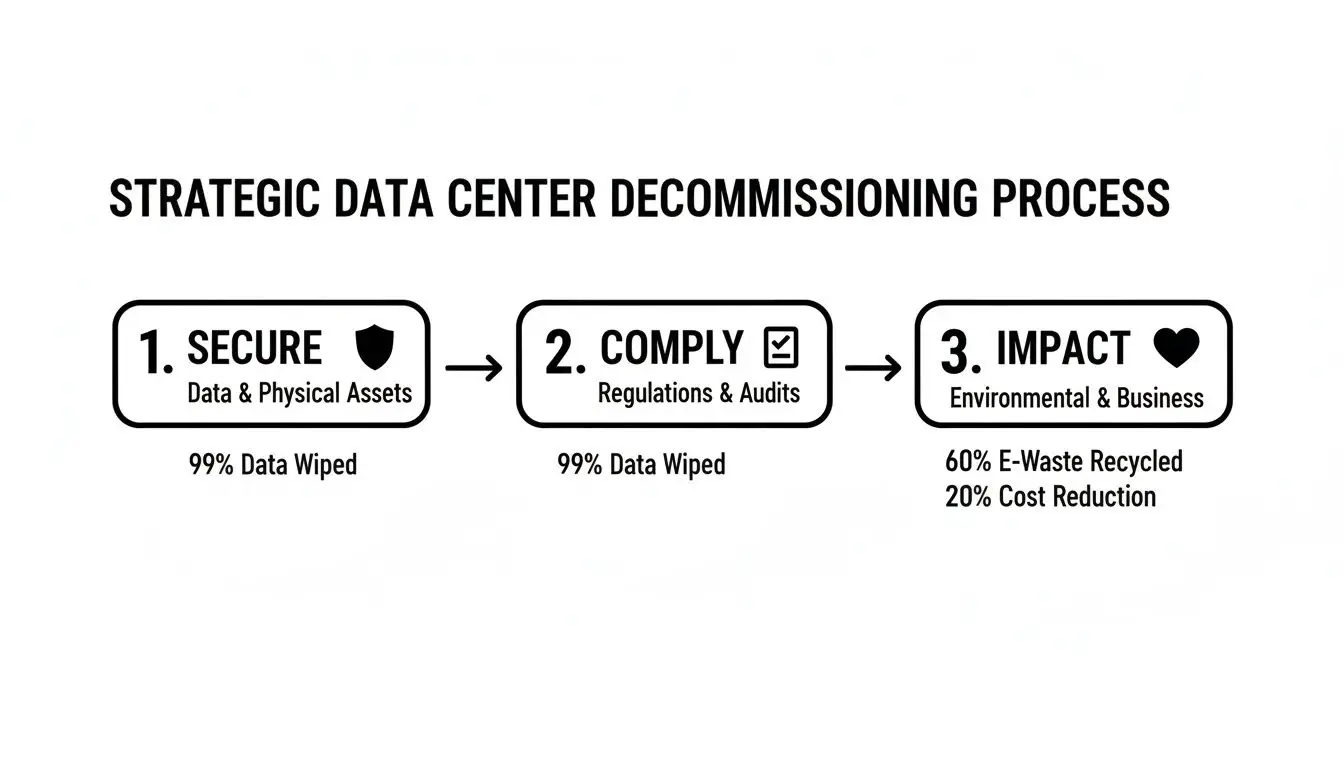
This approach transforms a logistical challenge into a strategic opportunity to strengthen your company’s security posture and demonstrate a tangible commitment to the community.
Partnering with Reworx Recycling aligns perfectly with this modern strategy. We ensure your data is securely destroyed and all hardware is responsibly recycled, while your business supports digital inclusion and workforce development programs. This converts a standard operational cost into a powerful statement of your corporate values. To help organize your project, consult our comprehensive server decommissioning checklist.
It All Starts With a Detailed Asset Inventory
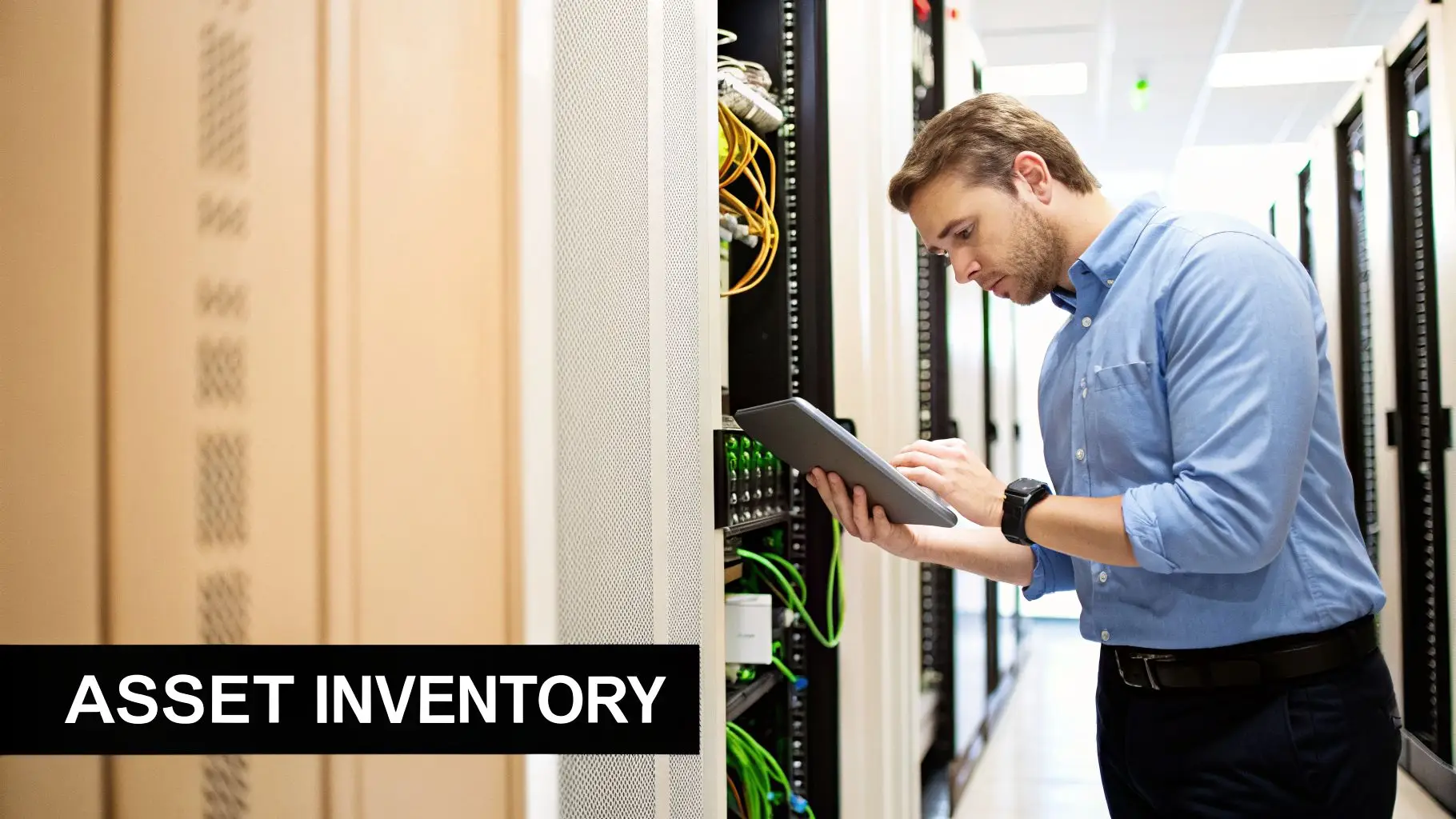
A successful decommissioning project begins not with unplugging a server, but with a detailed spreadsheet. For any Worcester business, a thorough asset inventory is the foundation for the entire data center equipment disposal process. Without it, you’re operating blind.
This is more than a simple count of servers; it's a deep dive into every piece of hardware, from storage arrays and networking gear to individual power distribution units (PDUs) and overlooked cables.
What to Document for Each Asset
A vague list like "50 Dell servers" is insufficient. Your ITAD partner requires specifics for an accurate quote and to properly plan logistics and data destruction. Projects are often derailed by surprise equipment not included on the initial list.
Get granular. Your inventory should track these key details for every item:
- Internal Asset Tag: Your company’s unique identifier.
- Serial Number: The manufacturer's serial number is essential for chain of custody tracking.
- Make and Model: Be specific, e.g., "Dell PowerEdge R740" or "Cisco Catalyst 9300."
- Physical Location: Note the exact rack and U-position (e.g., Rack A1, U-22-24).
- Component Details: Document CPU type, RAM amount, and the number and type of hard drives.
This level of detail prevents scope creep and unexpected costs.
Sort Your Assets for a Smarter Disposal Strategy
With your inventory complete, the next step is to classify each asset. This directly impacts your security protocols and potential financial return. Sorting hardware into key categories helps prioritize what matters most.
A robust classification system transforms an equipment list into an actionable ITAD strategy. It ensures the highest security measures are applied to the most sensitive assets while identifying opportunities for value recovery.
We advise clients to sort equipment into three main buckets:
- Data Sensitivity: Categorize assets based on the information they held. A server that processed protected health information (PHI) requires a different disposal path than a network switch. Use labels like "High-Risk PHI/PII," "Confidential Corporate Data," or "No Sensitive Data."
- Potential for Resale: Newer servers, high-performance switches, or modern storage arrays often have significant resale value. Tagging these for a corporate donation program or buyback can generate revenue to offset project costs.
- Recycling vs. Donation: Older or broken equipment is slated for responsible recycling. However, items like working monitors or workstations are perfect for donation. As a social enterprise, Reworx Recycling excels at identifying these opportunities to support local community programs.
A solid grasp of inventory management principles provides an excellent framework. One final tip: verify which equipment is leased versus owned to avoid contractual issues. This upfront diligence ensures a secure and transparent disposal from day one.
Ensuring Bulletproof Data Security and Compliance
When disposing of data center equipment, data security is paramount. For any Worcester organization, from biotech hubs to financial firms, one improperly wiped hard drive can have devastating consequences, including reputational damage and financial penalties.
A single error can expose sensitive corporate files, customer data, or PHI, leading to severe penalties under regulations like HIPAA or SOX. Understanding your data destruction options is the first step toward a trustworthy disposal strategy.
Comparing Data Destruction Methods
Not all data destruction methods are equal. The right choice depends on data sensitivity, industry compliance rules, and your risk tolerance. Let's compare the three main approaches.
Data Destruction Methods: A Comparative Overview
| Method | Process | Best For | Compliance Level | Considerations |
|---|---|---|---|---|
| Software Wiping | Overwrites all data on a drive with random patterns of 0s and 1s, making the original information unrecoverable by software tools. | Assets intended for resale or reuse, where the drive must remain functional. | Meets standards like NIST 800-88 Clear. | Can be time-consuming for many drives; hardware must be operational. |
| Degaussing | Uses a powerful magnetic field to instantly scramble the magnetic platters inside a hard drive, permanently erasing data. | Older magnetic media like LTO tapes and traditional HDDs not slated for reuse. | Meets standards like NIST 800-88 Purge. | Renders the drive unusable. Does not work on Solid-State Drives (SSDs). |
| Physical Shredding | Mechanically grinds hard drives, tapes, and other media into tiny pieces, making data retrieval impossible. | The ultimate security for any end-of-life asset containing highly sensitive data. | Exceeds all compliance standards, including NIST 800-88 Destroy and HIPAA. | Completely destroys the asset, eliminating any opportunity for remarketing. |
For most Worcester businesses handling high-stakes information, physical shredding offers an absolute guarantee, removing all doubt and providing the strongest defense against future liability. Our certified secure data destruction services deliver that peace of mind.
The Importance of a Verifiable Chain of Custody
Secure data destruction is a continuous process tracked from the moment an asset is unplugged. A verifiable chain of custody is the documented trail following every piece of equipment from your Worcester facility to its final destruction. This documentation is your proof of due diligence and should include:
- Serialized asset lists matched against your original inventory.
- Secure, locked transportation from your site to the processing facility.
- Sign-offs at every handover point.
- A final Certificate of Data Destruction.
The Certificate of Data Destruction is a legal document serving as your official record for compliance audits, proving you met your security obligations. It details what was destroyed, the method, date, and media serial numbers.
Navigating Massachusetts E-Waste Regulations
In addition to data security, you must comply with state environmental laws. The Massachusetts Department of Environmental Protection (MassDEP) has strict rules for e-waste disposal, banning many electronics from landfills to prevent hazardous materials like lead and mercury from polluting our environment.
Working with a certified e-waste recycler ensures every part of your old data center equipment is handled correctly. This protects the environment and shields your company from fines. A sound security plan also needs a process for handling data deletion requests, ensuring information is wiped from retired equipment for good. By choosing a partner who manages both secure data destruction and responsible recycling, you address both sides of IT asset disposition simultaneously.
Managing The Logistics Of Deinstallation And Transport
With your data security plan in place, the project shifts to the physical work of clearing out your data center. For data center equipment disposal in Worcester, Massachusetts, this phase demands precision, safety, and specialized skill.
This isn’t an average moving job; it’s a highly technical operation requiring an airtight security process from start to finish.
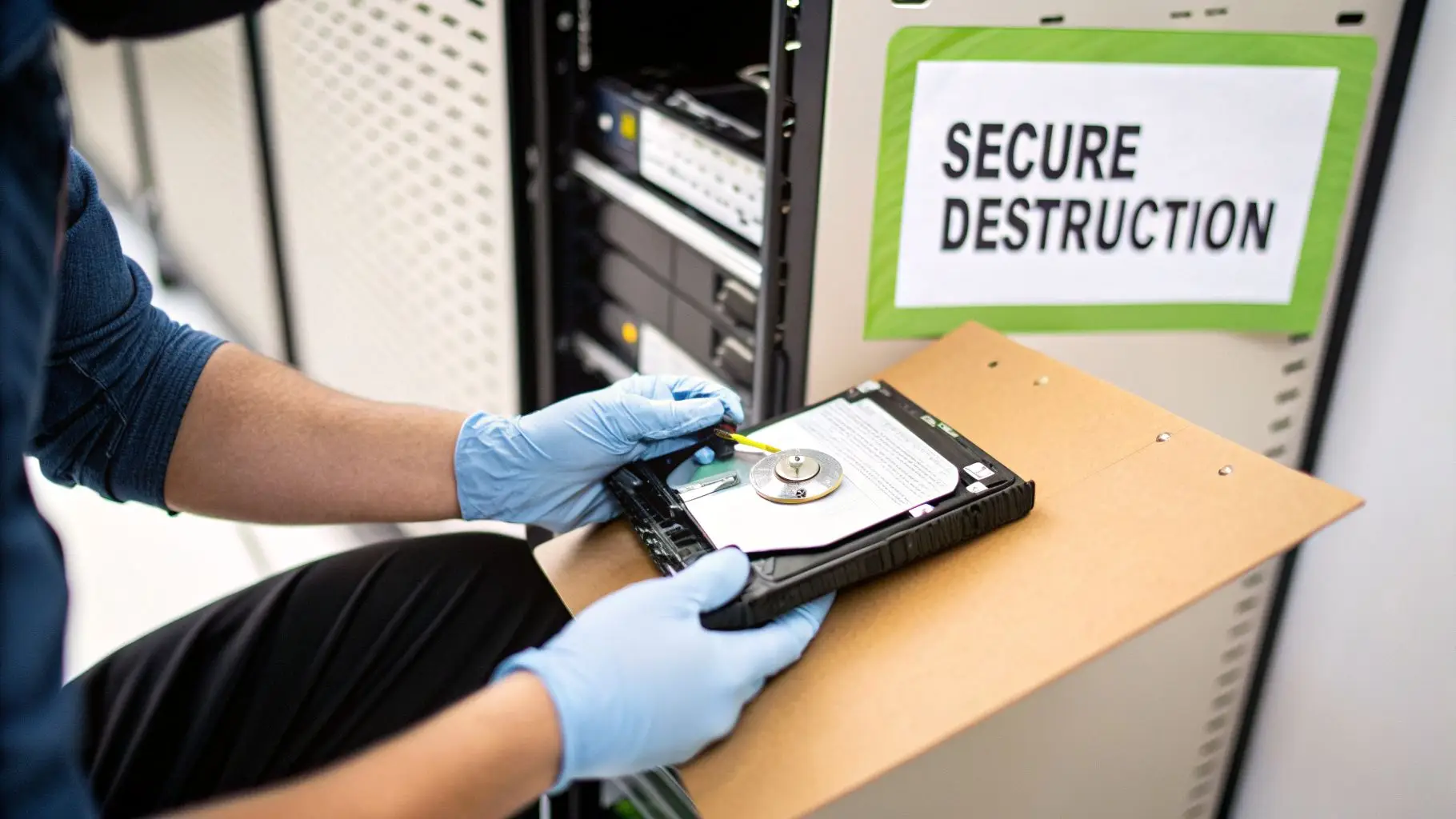
Clearing out a data center involves methodically de-racking heavy servers, managing complex cabling, and preparing every asset for secure transport. Attempting this with an inexperienced internal team can lead to damaged equipment, safety hazards, or costly disruptions.
The Value Of Professional On-Site Deinstallation
A full-service IT Asset Disposition (ITAD) partner is invaluable here. Instead of diverting your team from their core duties, a professional deinstallation crew can execute the entire takedown safely and efficiently. Their experience ensures the job is done right and minimizes headaches.
An experienced team offers several key advantages:
- Safety and Expertise: They are trained to handle bulky equipment in tight spaces while following strict safety protocols.
- Efficiency: They use a proven system for disconnecting and removing hardware, significantly reducing facility clear-out time.
- Minimized Disruption: For live environments, they can work during off-peak hours to avoid impacting business operations.
By outsourcing the physical labor, your IT staff remains focused on critical responsibilities. See how we handle these projects on our equipment decommission services page.
Ensuring A Secure Chain Of Custody During Transport
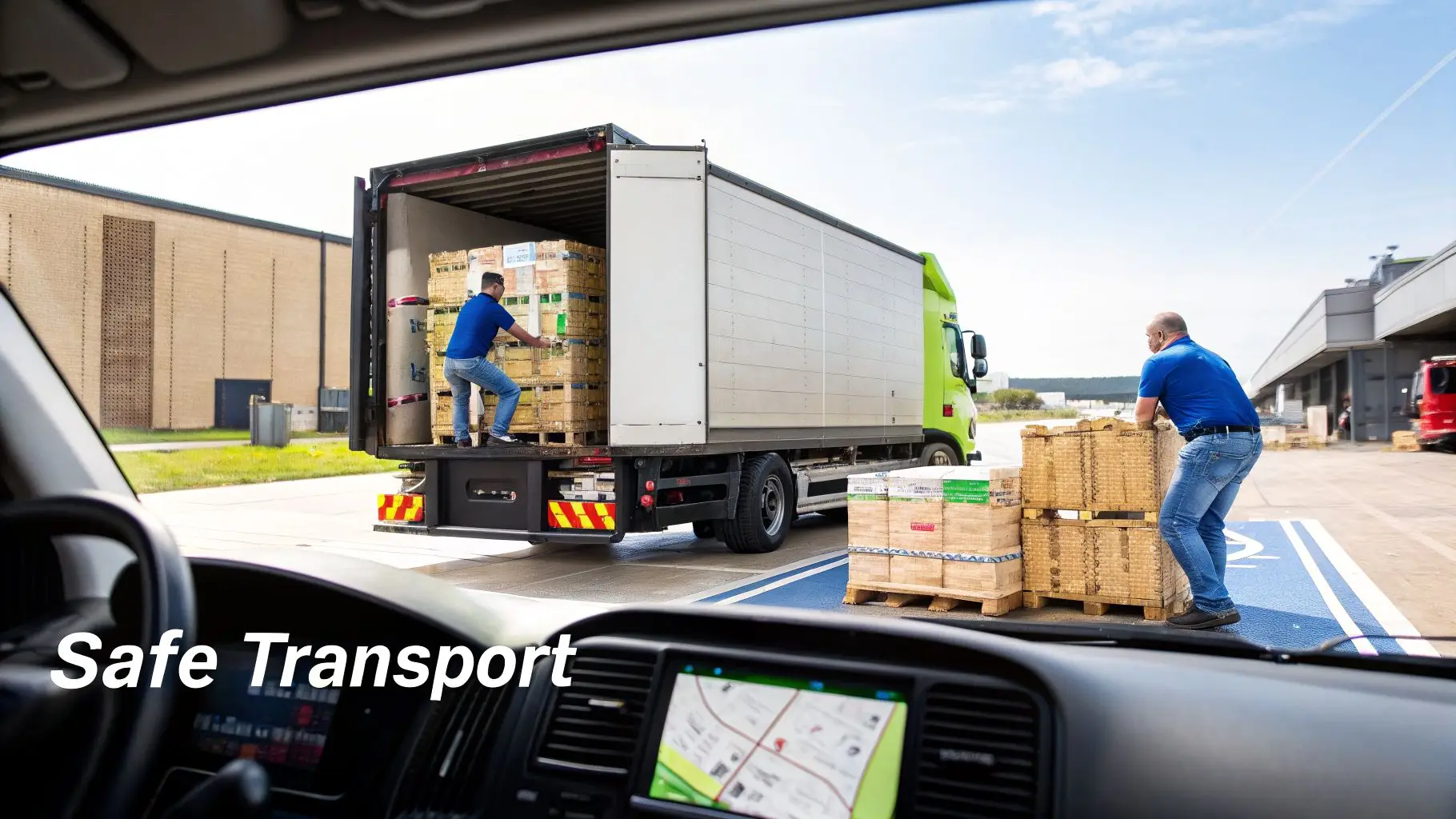
Once your hardware is de-racked and palletized, transporting it securely is as critical as data destruction itself. The chain of custody must remain unbroken. A single missing server or hard drive in transit constitutes a massive security failure.
Secure transportation is a non-negotiable part of risk management. Using vetted personnel and GPS-tracked vehicles ensures your sensitive assets are monitored from the moment they leave your Worcester site until they arrive for processing.
Coordinating separate vendors for deinstallation, transport, and recycling can become a logistical nightmare. A single, accountable partner makes all the difference.
At Reworx Recycling, we manage the entire process end-to-end. Our team handles planning, professional on-site deinstallation, secure packing, and final transport to our certified facility. This provides one point of contact and total transparency, ensuring every asset is tracked and handled to the highest security and environmental standards.
How To Choose Your ITAD Partner In The Worcester Area
Selecting the right IT Asset Disposition (ITAD) partner is the most critical decision for your data center equipment disposal Worcester Massachusetts project. A low quote from an uncertified vendor may seem appealing, but it pales in comparison to the potential cost of a data breach or environmental fine.
Your choice of partner impacts your company’s security, compliance, and community reputation. This isn’t just about hauling away old hardware; it's a vital risk management decision. A professional ITAD vendor will welcome your questions and be transparent about their security, processes, and certifications.
Vet For Industry-Leading Certifications
Your first step is to look for key industry certifications. These are not just logos; they are proof that a third-party auditor has verified their processes against the highest standards for data security and environmental responsibility.
Two certifications are paramount in the ITAD industry:
- R2 (Responsible Recycling): This certification ensures the vendor follows strict guidelines for environmental protection, data security, and worker safety throughout the recycling chain.
- e-Stewards: Known as one of the most rigorous standards, e-Stewards focuses on preventing the export of hazardous e-waste and guarantees a zero-landfill policy.
If a potential partner holds one or both, it signals they are a trustworthy steward for your sensitive assets and your company's reputation.
Demand A Transparent And Documented Process
A trustworthy partner operates with complete transparency. You should expect and demand detailed documentation for every step, creating an unbroken chain of custody that serves as legal proof of your due diligence.
This includes:
- Serialized Asset Tracking: The vendor must track your equipment by serial number from pickup to final disposition.
- Secure Logistics: Inquire about their transportation methods. Do they use locked, GPS-tracked vehicles and vetted personnel?
- Certificate of Destruction: This is non-negotiable. For any data-bearing device, you must receive a formal Certificate of Data Destruction listing serial numbers and the method used.
Choosing the right partner is a strategic decision that supports your entire business. A certified partner provides peace of mind, knowing every piece of equipment is handled securely and responsibly.
As the data center decommissioning services market continues to expand, driven by rapid IT turnover and tightening data regulations, making an informed choice is more important than ever. You can find more details about our comprehensive Massachusetts ITAD services and dig deeper into market trends with this detailed analysis of the data center decommissioning market.
Consider The Business Model And Its Impact
Finally, evaluate the partner’s business model. A traditional ITAD vendor focuses solely on the transaction. A social enterprise like Reworx Recycling offers something more. We provide the same secure, certified, and compliant services, but our mission extends further.
By partnering with us, you transform a standard operational expense into a measurable good. We identify viable equipment—workstations, laptops, monitors—and refurbish them for donation to schools and nonprofits in the Worcester community, directly supporting digital inclusion. This is a powerful way for your business to meet its Environmental, Social, and Governance (ESG) goals with an action that resonates with employees, customers, and stakeholders.
Common Questions About Data Center Disposal In Worcester
Even with a solid plan, a data center decommissioning project will raise questions. For businesses in Worcester, Massachusetts, clarity on compliance, value recovery, and local impact is key. Here are answers to the most common inquiries.
What Are The Biggest Risks Of Improper Data Center Equipment Disposal In Massachusetts?
The two primary risks are data breaches and environmental non-compliance. Here in Massachusetts, businesses must adhere to MassDEP e-waste regulations, which prohibit landfilling old servers or networking gear and impose steep fines for violations.
However, a data breach from an improperly sanitized retired hard drive is often far more damaging. It can lead to major legal liability under rules like HIPAA, cause permanent harm to your company’s reputation, and erode customer trust.
The best way to mitigate these risks is by working with a certified ITAD provider like Reworx Recycling. We provide a legally defensible Certificate of Data Destruction, which serves as your proof of compliance and due diligence in any audit.
Can We Get Money Back For Our Old Data Center Equipment?
Absolutely. This process, known as IT asset value recovery, is common. Not all retired hardware is obsolete. Equipment like recent-generation servers, high-performance network switches, or enterprise storage often retains significant value on the secondary market.
A good ITAD partner will audit your inventory to identify these valuable assets. Partners like Reworx Recycling can offer a buyback program, providing a fair market price for the hardware. This helps offset decommissioning costs and can even return revenue to your IT budget.
How Do We Decommission Without Disrupting Our Live Systems?
This is a major concern, especially for businesses consolidating their footprint or moving out of a partial data center. The key is careful, professional coordination between your IT team and the deinstallation crew.
A qualified ITAD vendor will collaborate with you to create a phased project plan. This often involves scheduling physical work after hours or on weekends to ensure zero impact on your live production environment. Experienced teams follow strict, documented procedures to safely isolate and remove retired racks without disturbing active systems.
Why Should My Worcester Business Choose A Social Enterprise Recycler?
Partnering with a social enterprise for your ITAD needs offers benefits beyond standard recycling. A social enterprise like Reworx Recycling operates with a dual mission: providing top-tier professional services while creating a positive impact on the community and environment.
When you choose us for your data center equipment disposal in Worcester Massachusetts, you receive the same secure, certified, and compliant services as any premier vendor. But the outcome is far greater. We actively identify viable equipment—laptops, desktops, and monitors—for refurbishment. This hardware is then donated to schools and nonprofits, directly supporting digital inclusion and workforce development in our community.
For a Worcester business, this turns a necessary task into a powerful demonstration of your commitment to Corporate Social Responsibility (CSR). It’s an excellent way to strengthen your brand and show employees, customers, and stakeholders that you are invested in making a local, sustainable impact.
Ready to transform your retired IT assets into a positive force for the Worcester community? Reworx Recycling offers secure, compliant, and socially responsible ITAD solutions. Connect with us to schedule a pickup or learn how our donation-based model can support your ESG goals. Explore our services at https://www.reworxrecycling.org/category/recycling-blog.