For any IT manager or business owner in Springfield, the thought of a data center equipment disposal project can be a real headache. It's so much more than just hauling out old hardware. You're juggling strict Massachusetts e-waste laws, ensuring ironclad data security, and coordinating tricky logistics—all while trying not to disrupt your daily operations.
As a B2B leader in the Pioneer Valley, whether you're in healthcare, finance, or manufacturing, handling this process correctly isn't just an IT task—it's a critical business function that impacts your security, compliance, and corporate reputation.
Your Guide To Responsible Data Center Decommissioning In Springfield
Taking a data center offline is a high-stakes project. A one-size-fits-all plan just won't cut it, and a single misstep can lead to hefty compliance fines, a devastating data breach, or a blow to your company’s reputation. For businesses across the Pioneer Valley, from the growing healthcare tech hubs to our long-standing manufacturing firms, getting this right isn't just about logistics. It's a critical business function.
This guide is designed to give you a clear, practical path. We’ll show you how a smart strategy can transform a complex obligation into a secure, compliant, and even socially responsible success with a donation-based recycling partner like Reworx Recycling.
The Challenge Of Modern ITAD
Let's be honest: the sheer amount and variety of gear in a data center makes a cleanout a job for specialists. You're not just moving boxes. You're dealing with servers, storage arrays, networking equipment, and cooling units, and every single piece has its own set of risks. This is where professional IT Asset Disposition (ITAD) becomes essential.
- Data-Bearing Devices: Every server, SAN, and hard drive is a potential liability, packed with sensitive information that needs to be permanently destroyed through secure data destruction. No exceptions.
- Hazardous Materials: Your equipment is full of stuff like lead, mercury, and cadmium. These materials are heavily regulated and absolutely cannot be dumped in a landfill.
- Logistical Hurdles: Just getting this equipment out the door is a challenge. It takes professional tools and a skilled team to safely de-rack and transport heavy, bulky hardware from a secure facility, a process that includes everything from an office cleanout to a full facility cleanout.
This simple process flow breaks down the three pillars of a well-run decommissioning project.
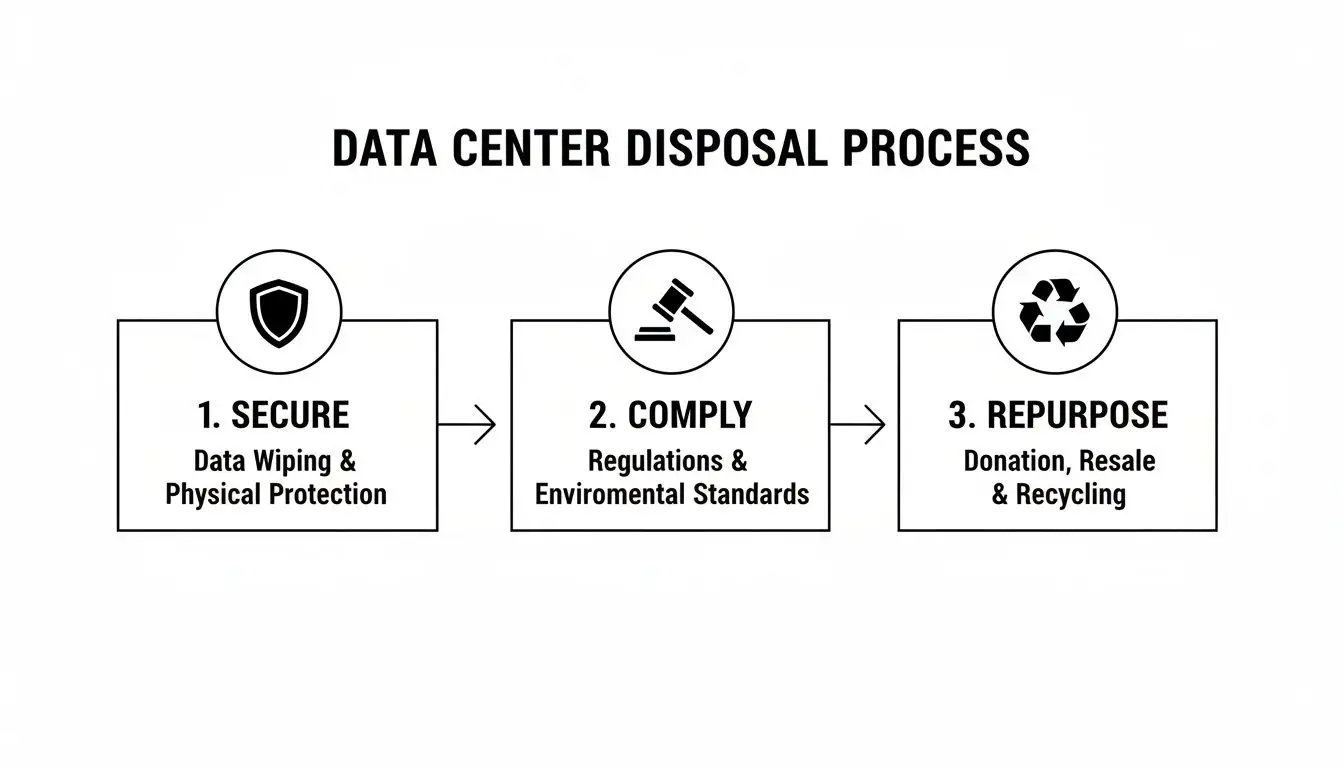
As you can see, security, compliance, and repurposing aren't just separate tasks; they build on each other to ensure a successful project from start to finish.
Compliance In The Bay State
The rules and regulations in Massachusetts are another reason why bringing in a professional partner is a no-brainer. The state has one of the strictest e-waste bans in the country, making it illegal to send any electronics to a landfill. This has a direct impact on data center equipment disposal in Springfield and every other community in the state.
In fact, the state's 2030 Solid Waste Master Plan is pushing to cut annual disposal by 1.7 million tons. This ambitious goal makes certified ITAD providers essential partners for any business looking to retire equipment the right way.
When you work with a certified social enterprise like Reworx Recycling, you’re turning a problem into an opportunity. That pile of retired IT assets—whether from a data center decommissioning, a simple laptop disposal, or even medical equipment disposal—goes from being a potential liability to a valuable community contribution, boosting your corporate social responsibility efforts. For organizations here in Western Massachusetts, it’s a perfect fit for the growing focus on sustainable, local business.
While this guide focuses on Springfield, you might also find our guide on data center equipment disposal in Worcester useful, as many of the same principles apply.
Building Your Asset Inventory And Valuation Plan
Before you unplug a single server in your Springfield data center, the first move is always the same: figure out exactly what you have. A thorough inventory isn't just about counting boxes; it's the strategic document that will guide your entire disposal project, from security to financial return. Getting this right from the start is the foundation for a smooth and profitable decommissioning.
A detailed list empowers you to make smart decisions. When you create a granular record of every server, storage array, switch, and PDU, you gain complete control. This is the only way to guarantee every data-bearing device is identified and tracked from your facility all the way to its final destruction or recycling.
Categorizing Your Assets For Maximum Clarity
To get started, break down your equipment into logical groups. This simple step keeps the project from feeling overwhelming and makes the valuation process much easier down the road. Most data center inventories fall into a few key categories.
Core IT Infrastructure:
- Servers: This includes your rack-mounted workhorses, blade servers, and any tower units.
- Storage: Document all storage area networks (SANs), network-attached storage (NAS), and individual hard drives (HDDs and SSDs).
- Networking: List out your switches, routers, firewalls, and load balancers.
Supporting Equipment:
- Power: Don't forget the uninterruptible power supplies (UPS), power distribution units (PDUs), and any backup generators.
- Racking & Cabling: Catalog all server racks, cabinets, and significant amounts of copper or fiber optic cabling, which often have scrap value.
This initial breakdown gives you a clear snapshot of the project's scope. It also helps an ITAD partner like Reworx Recycling quickly grasp what you're dealing with, which leads to a far more accurate initial assessment.
The Devil Is In The Details Recording And Assessing
Once your categories are set, it’s time to capture the specifics for each asset. This is where you create real value. A vague list will only get you a vague estimate, but a detailed spreadsheet opens the door for a precise valuation. For every piece of equipment, make sure to record the following.
| Data Point to Record | Why It's Important | Example |
|---|---|---|
| Manufacturer & Model | Identifies the gear's original specs and current market relevance. | Dell PowerEdge R740 |
| Serial Number | A unique identifier, absolutely essential for tracking, security audits, and chain of custody. | S/N: GHY789K |
| Asset Tag (if any) | Your internal tracking number, which helps you reconcile your records with the final disposal certificate. | Asset ID: 774-201 |
| Physical Condition | Notes on visible damage or missing parts that could affect its resale value. | "Minor cosmetic scratches on case, fully functional" |
| Data-Bearing? | A simple "Yes/No" flag to ensure the device is routed for secure data destruction. | Yes |
This level of meticulous record-keeping is non-negotiable for both compliance and security. It forms the backbone of your Certificate of Data Destruction, giving you auditable proof that every single drive was handled correctly.
A strong inventory plan is the difference between a chaotic cleanout and a strategic asset recovery project. By investing time upfront to detail what you have, you enable your ITAD partner to identify every opportunity for resale, refurbishment, or donation, turning potential costs into tangible returns for your business.
It's also smart to understand the necessity of insurance for valuable equipment relocation, which protects your assets against any issues during transit. While your ITAD partner should be fully insured, knowing the principles of asset protection is just good practice for any IT manager overseeing a high-value project. For more on this, you can learn about maximizing the value of retired IT assets in our detailed guide.
When you partner with Reworx Recycling, this inventory becomes a powerful tool. We use it to provide a transparent buyback offer or a detailed valuation for your corporate donation program, ensuring your Springfield business maximizes its financial outcome while meeting its environmental and community commitments.
Implementing Ironclad Data Destruction Protocols
Let's be blunt: when decommissioning data center hardware, nothing matters more than how you handle the data. A single hard drive going astray isn't just a mistake; it can become a nightmare of financial penalties, a damaged reputation, and serious legal trouble. That’s why the secure data destruction part of any data center equipment disposal in Springfield Massachusetts is where you can't afford to cut corners. It demands a thorough, verifiable process to ensure every bit of your information is gone for good.
One of the first calls you'll have to make is whether to destroy the data on-site at your facility or have it done off-site. Each path has its own security and logistical trade-offs, and your choice will likely hinge on your company's internal security policies and compliance needs.
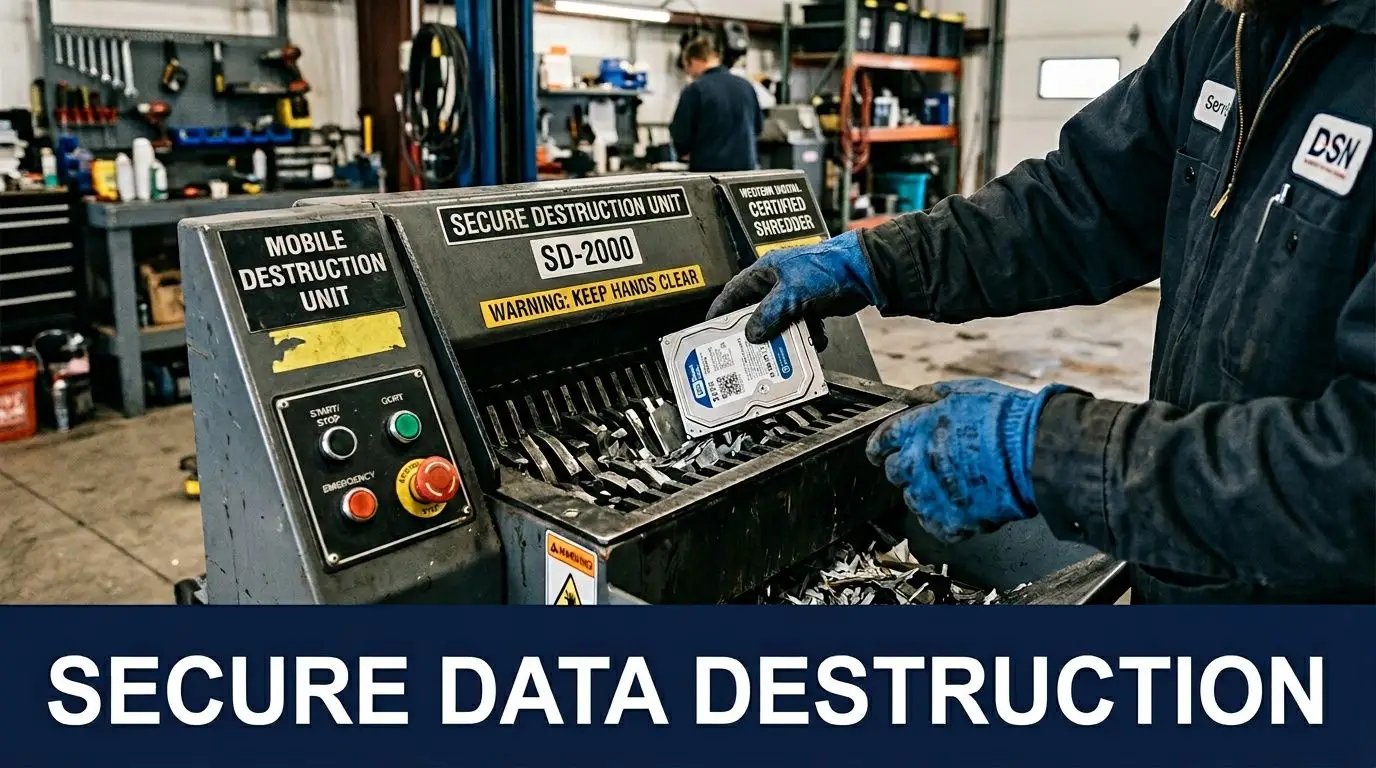
On-Site Versus Off-Site Destruction
For many businesses in Springfield—especially in fields like healthcare, finance, or government work—the idea of data-bearing devices leaving their control is simply a non-starter. This is where on-site destruction provides the highest level of assurance.
- On-Site Destruction: A mobile shredding truck, outfitted with an industrial-strength shredder, rolls right up to your location. You and your team can physically watch as every hard drive is turned into confetti, giving you an undisputed, unbroken chain of custody.
- Off-Site Destruction: Your assets are cataloged, packed into sealed and locked containers, and transported via a GPS-tracked vehicle to a secure, access-controlled facility for destruction. For larger projects, this is often the more cost-effective route, and it’s just as secure when done by a certified professional.
To help you weigh the options, here’s a look at how the two methods stack up for Springfield organizations.
On-Site vs. Off-Site Data Destruction Methods
| Feature | On-Site Destruction (e.g., Mobile Shredding) | Off-Site Destruction (at a Secure Facility) |
|---|---|---|
| Security | The absolute highest. Assets never leave your property, and you witness the destruction yourself. | Very high. Involves secure transport in locked containers, GPS tracking, and constant surveillance at the facility. |
| Verification | Immediate and visual. You see the drives being destroyed with your own eyes. | Verified through a formal Certificate of Data Destruction and facility audit reports. |
| Logistics | You need to schedule the mobile unit and have adequate space for the truck to park and operate. | Much simpler for you. Your partner handles all transportation and logistics from the moment of pickup. |
| Cost | Typically more expensive due to the dedicated truck, equipment, and personnel sent to your location. | Generally the more budget-friendly option, particularly for large quantities of media. |
| Best For | Organizations with the most stringent internal security policies or regulatory mandates (e.g., DoD, HIPAA). | Businesses seeking a balance of high security, cost-effectiveness, and logistical ease. |
No matter which path you take, working with a NAID AAA Certified provider like Reworx Recycling is non-negotiable. This certification is the gold standard in our industry, guaranteeing the process adheres to the strictest standards for security, employee screening, and documented procedures.
Wiping vs. Shredding: Following the NIST 800-88 Standard
There's more than one way to destroy data, but the two main techniques are data wiping (sanitization) and physical destruction (shredding). The industry bible on this topic is the NIST 800-88 publication, which provides clear guidelines for "Media Sanitization."
Data wiping uses specialized software to overwrite a hard drive with random data, sometimes multiple times, making the original information impossible to recover. This is a great option for newer, working drives that still have resale value because it keeps the hardware intact.
But for older drives, failed drives, or when you need 100% certainty, nothing beats physical destruction. The process is exactly what it sounds like: a shredder chews up the drive into tiny, mangled pieces of metal and plastic. There’s no coming back from that.
The most important document you will receive in this entire process is the Certificate of Data Destruction. This is your legally defensible proof that you did everything right. It should list the serial number of every single drive destroyed, giving you an auditable record that you fulfilled your duty to protect sensitive information.
Reworx Recycling provides this vital documentation for every single project, whether you go with wiping or shredding. Our experts can walk you through the right choice for each asset, helping you balance your security requirements with potential value recovery. To get a better sense of our certified processes, check out the details on our secure data destruction services. This commitment to a transparent and verifiable process is key to a truly responsible solution for data center equipment disposal in Springfield.
Handling The Logistics Of Decommissioning And Removal
Once you've sorted out data destruction, you're faced with the physical reality of the job: moving tons of heavy, awkward equipment. This is where the data center equipment disposal in Springfield, Massachusetts plan gets real. Safely clearing out a data center is a specialized skill that takes more than just brute force. It requires a careful, methodical game plan and a team that knows their way around a live or recently powered-down environment.
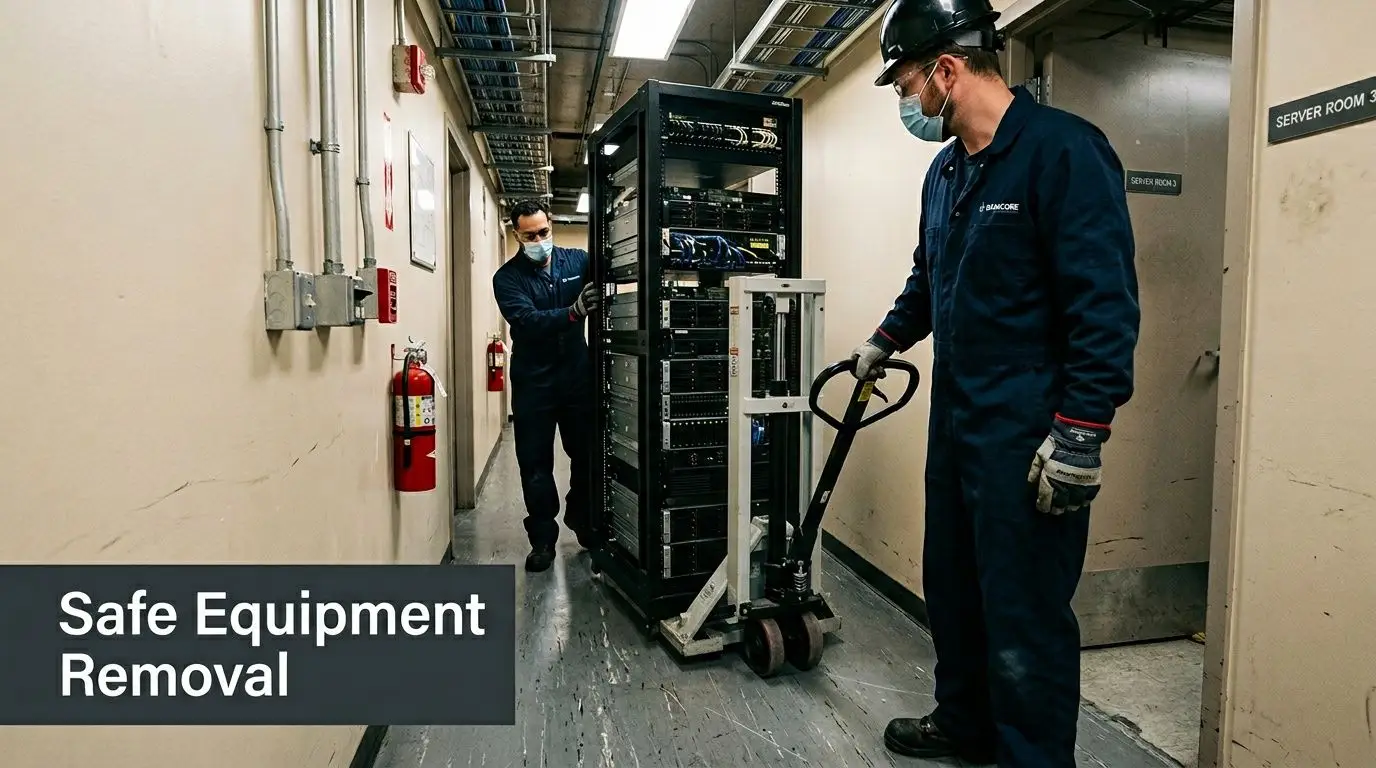
The entire process hinges on a controlled, careful de-installation. It all starts with a clear power-down sequence, confirmed with your IT team, to prevent equipment damage and respect system dependencies. From there, it’s about untangling the massive web of power and data cables, which need to be disconnected, labeled, and removed before a single server can be touched. Only then can the real work of un-racking enterprise servers, storage arrays, and networking gear begin.
A Decommissioning Checklist That Actually Works
To prevent the job from descending into chaos, a professional decommissioning team always works from a detailed plan. This isn't just about ticking boxes; it's about ensuring every step happens in the right order to protect people and property.
- Power-Down Confirmation: Get the final sign-off from IT that every system is fully offline and safe to unplug. No assumptions.
- Cable Disconnection and Removal: Systematically unplugging all network and power cords from the back of the racks and getting them out of the way to create clear, safe pathways.
- Asset Un-racking: Using specialized server lifts to carefully remove heavy chassis and servers from racks. This is crucial for preventing back injuries and dropped equipment.
- On-Site Staging: Moving all decommissioned gear to a designated staging area. Here, you'll do a final inventory check before anything gets loaded onto a truck.
- Secure Palletization: Properly packing, wrapping, and securing all assets on pallets to make sure they are stable and protected for transport.
Following a proven structure like this is what separates a professional operation from a risky, amateur-hour mess.
Overcoming Logistical Hurdles In Springfield
Let's be honest—many commercial buildings in Springfield and the Pioneer Valley weren't designed with data center decommissioning in mind. We see logistical challenges all the time, and a good team knows how to spot them before they become a problem.
The real value of a professional logistics team isn't just their ability to lift heavy things. It's their foresight and problem-solving skills when faced with narrow corridors, limited freight elevator access, or strict building management rules. An insured, professional team doesn't just move equipment—they manage risk.
Common headaches we plan for include:
- Navigating tight corners in office hallways without leaving a single scratch on the walls.
- Coordinating with building management for dedicated freight elevator time.
- Using special dollies and floor protection to move heavy gear through finished office spaces.
When you outsource these complex logistics to an experienced partner like Reworx Recycling, you free up your internal IT staff. Instead of worrying about physical risks and heavy lifting, your team can stay focused on what they do best—ensuring a smooth migration to your new system or cloud environment. This is not just more efficient; it's much safer for everyone.
For a closer look at the nuts and bolts of equipment transport and planning, check out our comprehensive guide to reverse logistics services.
Staying Compliant with Massachusetts Environmental Rules
When you're dealing with electronics disposal in Springfield, staying on the right side of environmental laws isn't just a good idea—it's a must. The rules for data center equipment disposal in Springfield, Massachusetts, are strict, and ignoring them can lead to serious headaches, from hefty fines to a tarnished reputation.
The biggest rule you need to know is the Massachusetts Department of Environmental Protection (MassDEP) electronics landfill ban. This law makes it illegal to simply toss old computer equipment, monitors, or other electronics in the trash. For a data center with tons of hardware, this ban is the starting point for any decommissioning plan. Every single server, storage array, and network switch has to be properly recycled.
This is where a partner focused on sustainable recycling makes all the difference. Choosing the right vendor ensures that every piece of equipment, from servers to laboratory equipment disposal, is handled in full compliance with state and federal laws.
Why Certifications Are Your Best Defense
So, how do you know if your disposal partner is actually following the rules? The answer is third-party certifications. These aren't just logos for a website; they are your proof that a recycler meets the highest standards for environmental safety, data security, and transparent operations.
For any business in Springfield, there are two certifications you absolutely must look for in an ITAD provider:
- R2 (Responsible Recycling): The R2 Standard is a comprehensive framework that ensures electronics are managed safely and sustainably. An R2-certified partner is audited to prove they handle hazardous materials correctly and track every step of the recycling process.
- e-Stewards: This is another top-tier global standard for electronics recycling. It places a special focus on preventing the illegal export of hazardous e-waste to developing countries, so you know your old gear won't cause an environmental crisis overseas.
Insisting on these certifications is a key part of your due diligence. It protects you from downstream liability. If your uncertified partner messes up and disposes of equipment improperly, your business could be the one left holding the bag.
Choosing a certified social enterprise recycling partner like Reworx Recycling is the most direct path to full compliance. It provides a clear, defensible, and transparent record showing that you met your legal and ethical obligations, protecting your brand's reputation and upholding your commitment to corporate social responsibility.
Your Local Actions in a Global Context
The importance of certified electronics recycling becomes crystal clear when you zoom out. Globally, a staggering amount of e-waste is mismanaged, creating environmental and health crises. Many organizations, even large ones, lack a formal e-waste management plan, posing a massive compliance risk that directly affects facilities right here in Springfield. Without certified partners, local businesses risk becoming part of this global problem.
This is where Reworx Recycling’s unique model really shines. We’re a social enterprise, so our work goes beyond just checking compliance boxes. With a strict zero-landfill policy, we make sure every component from your computer recycling or product destruction project is either responsibly refurbished for community programs or carefully de-manufactured for recycling.
Our approach doesn't just meet MassDEP requirements—it exceeds them. Partnering with us lets your Springfield organization turn a regulatory chore into a positive story of environmental leadership and community impact. When you work with a certified, socially conscious partner, you actively help build a circular economy while supporting workforce development and digital inclusion right here in Massachusetts.
We handle everything from the initial pickup to final reporting, providing all the documentation you need—like Certificates of Recycling and Data Destruction—for your internal audits and sustainability reports. This paperwork is your proof that every piece of equipment was managed correctly under all state and federal regulations, safeguarding your business for the long haul.
Your Top Data Center Disposal Questions, Answered
When it's time to retire a data center in Springfield, it’s natural to have questions. A lot of questions, actually. We get it. Decommissioning projects are complex, and you need clear, straightforward answers to make the right decisions for your business.
We’ve heard just about every question there is from IT managers and business owners across the area. Here are the answers to the ones that come up most often.
What Happens To Our Old Data Center Equipment?
Once your equipment leaves your facility, you need to know it’s being handled responsibly. With Reworx Recycling, nothing is wasted. Your assets follow a carefully documented path that’s all about security, reuse, and sustainable recycling.
First things first: security. Our technicians immediately single out every device that holds data. These are flagged and sent straight to our certified data destruction process to wipe out any risk.
Next, we look for a second life. We evaluate every server, switch, and storage unit for its potential. Anything that’s still functional gets professionally refurbished. Some of this gear is donated to support local digital inclusion programs, while the rest is resold to give it a longer operational life.
Equipment that’s too old or broken is carefully de-manufactured. Our team breaks it down into its basic components—metals, plastics, circuit boards—and sends them to our R2v3 certified partners for recycling. This process ensures your business stays 100% compliant with Massachusetts' strict landfill ban.
Is It Expensive To Dispose Of Data Center Equipment?
This is the big one, isn't it? The cost of a data center disposal project in Springfield can vary widely, but here's the good news: many projects end up being cost-neutral or even generating revenue for your company. It all comes down to the mix of equipment you have.
Sure, older or broken gear might have a recycling fee to cover safe processing. But many of your assets likely have significant cash value.
- High-Value Assets: Newer servers, enterprise-grade networking switches, and modern storage arrays are often in high demand on the secondary market.
- Balancing Costs: The money we recover from selling these valuable items can easily offset—or even completely cover—the costs for logistics, data destruction, and recycling the less valuable stuff.
At Reworx Recycling, we always start with a detailed asset valuation. We’ll give you a transparent breakdown of exactly what your equipment is worth, helping you turn a potential headache into a smart financial move with a clear ROI.
How Can We Be Sure Our Sensitive Data Is Gone For Good?
We provide total peace of mind through a strict, documented, and NAID AAA Certified process—the highest standard in the industry for secure data destruction. We offer two main options, so you can choose what works best for your organization's security policies.
You can have us bring our mobile shredding truck right to your Springfield facility for on-site destruction. This way, you can physically watch every single drive get shredded. Or, you can opt for secure off-site destruction at our monitored, access-controlled facility.
The most important thing you'll receive is the Certificate of Data Destruction. Think of this as your legal proof of due diligence. It lists the serial number of every drive we destroy, giving you an auditable record that protects your business from the massive risks of a data breach.
Our Data Center Has Strict Security Protocols. How Do You Handle That?
We’re used to it. Our decommissioning team has years of experience working inside highly secure, active environments. We know every facility has its own set of rules, and our entire project plan is built around respecting them.
Before we even touch a piece of equipment, our project manager will coordinate with your facility and security teams. We’re ready to adapt to all your access protocols, including:
- Providing our team's information for background checks.
- Signing any necessary non-disclosure agreements (NDAs).
- Following your specific check-in, check-out, and escort procedures.
Our fully insured, uniformed team shows up knowing exactly what's expected. We work efficiently to minimize disruption, ensuring your security is never compromised at any point in the process.
Transform your data center decommissioning from a complex cost center into a secure, compliant, and socially impactful project. Partner with Reworx Recycling to ensure your assets are handled responsibly while supporting community initiatives through our corporate donation programs.
Ready to get started? Schedule a pickup or contact us today to partner with Reworx Recycling. Visit our blog to learn more and explore our services.