You've got a box of old laptops in the back room, a printer nobody wants, and a recycling deadline that keeps slipping because nobody's sure which items can go where. That's the exact point where lake area recycling Springfield stops being a simple drop-off question and turns into a planning problem, especially for businesses that can't afford contamination, rejected loads, or loose hard drives sitting around for another quarter.
Lake Area Disposal & Recycling has been part of Springfield's waste system for a long time, and that history matters because it shapes how the city's recycling works today. The practical issue for business owners, IT managers, and sustainability leads is simple, though. A local recycling outlet is useful, but it's not the same thing as a secure IT asset disposition process.
Understanding Springfield's Lake Area Recycling Ecosystem
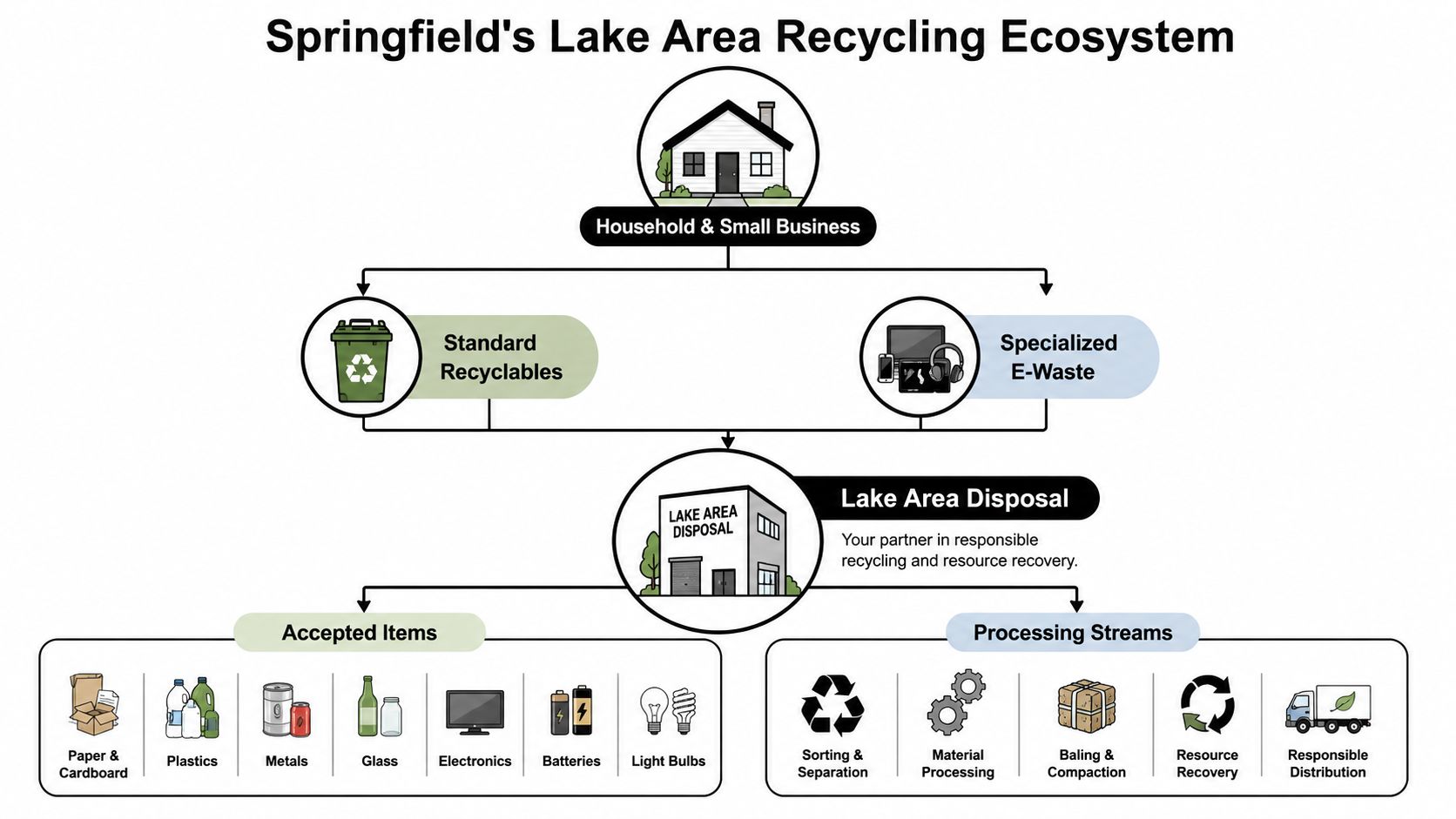
Lake Area Disposal & Recycling is one of Springfield's long-running waste infrastructure operators. The company traces its roots to 1932, when the Crenshaw family established the business, says its public history page. Its curbside recycling program started in 1992, and the dedicated recycling facility opened in 1996. By 2016, the company said it had expanded from four pickup trucks with trailers to eight full-time recycle trucks and three part-time recycle trucks, while keeping 3,315 tons of recyclable material out of the landfill in that year alone, according to its about page. Those milestones show a local system that has grown from a family operation into a material handling network with real scale. The company's history is documented on Lake Area's about page.
Lake County, Illinois offers a useful regional comparison for how much material can move through a recycling system when participation holds up. The county collected 59,678 tons of recyclables in 2024, up from 56,580 tons in 2023 and 58,560 tons in 2022, while also reporting 205,541 tons of disposal volume in 2024, which shows how recycling growth can coexist with heavy landfill dependence in the same market (Lake County 2024 recycling and waste report). That contrast is useful for Springfield operators because it shows the planning challenge, diversion can improve without reducing the need for disciplined disposal channels.
Why the collection model matters
Lake Area uses a dual-stream / multi-stream model, so separation happens before pickup rather than after collection. The city's guidance on the program makes the operational consequence clear, contamination is checked at the curb, and flagged items are left behind in the bin instead of being rescued downstream by a materials recovery facility. That's very different from the way many people imagine recycling works, and it changes how you prep a load before it ever leaves your property.
Practical rule: if your team can't sort it correctly in the staging area, the curbside system won't fix it for you.
For a facilities manager or IT lead, that means the front end matters more than the truck. The best reference point is a broader waste program framework, like the waste management programs guide from Facility Management Insights, which is useful because it frames waste handling as an operational process, not a one-off errand. In Springfield, that mindset lines up with how Lake Area works.
What Electronics Belong in Lake Area's Recycling Stream
A clean electronics load starts with knowing where Lake Area's curbside and drop-off system stops. Springfield's public guidance lists e-waste among the accepted materials, along with aluminum, tin, plastics #1 through #7 except #6, newspaper, chipboard, junk mail, corrugated cardboard, glass, and magazines. It also says the location will buy aluminum cans and scrap metals during business hours, so the site handles both recycling and commodity recovery (Springfield recycling guidance).
That acceptance list matters, but the compliance question matters more. A monitor, a docking station, a printer, and a retired laptop may all count as electronics, yet each one carries a different risk profile once it leaves the office. In practice, Lake Area's local facility handles only a subset of electronics needs, while the rest belongs in a structured disposition process that protects data, supports chain-of-custody documentation, and aligns with how to protect revenue with proof of execution.
Acceptance versus preparation
The line between accepted and responsibly prepared is where office cleanouts usually go sideways.
| Accepted Items | Notes | Alternative If Needed |
|---|---|---|
| Aluminum and tin | Can go through the normal commodity stream | Use the aluminum buyback center if you're bringing scrap metals |
| Plastics #1 to #7 except #6 | Follow Lake Area's sorting rules carefully | Hold back items that don't fit the accepted numbering |
| Corrugated cardboard | Treated as its own fiber grade | Keep it separate from mixed paper |
| Newspaper, chipboard, junk mail, magazines | Accepted as paper commodities | Remove non-paper attachments first |
| Glass | Accepted, but only if clean and sorted properly | Keep broken or contaminated glass out |
| E-waste | Accepted as a distinct category, but device type still matters | Use a structured electronics handling plan |
For a business, that last row is where the hidden compliance gap shows up. A simple “electronics” label does not tell you whether a device still contains data, whether batteries need removal, or whether peripheral gear should move with the main unit. Before you send mixed loads out the door, check a full list of accepted materials and separate anything that falls outside the local curbside or drop-off scope.
Lake Area's customer drop-off site is open Monday through Friday from 8:00 a.m. to 3:00 p.m., and the public guidance also notes 24/7 drop-off at the 2742 S. 6th St. location (Springfield recycling guide). Access still depends on who is using the site. Lake Area says the customer drop-off site is for Lake Area Disposal customers only, while its aluminum buyback center is open to the public (Lake Area recycling page). For a business cleanup, that rule decides whether you are planning a straightforward drop-off or setting up a customer-specific disposal path.
Preparing Electronics for Safe and Compliant Recycling
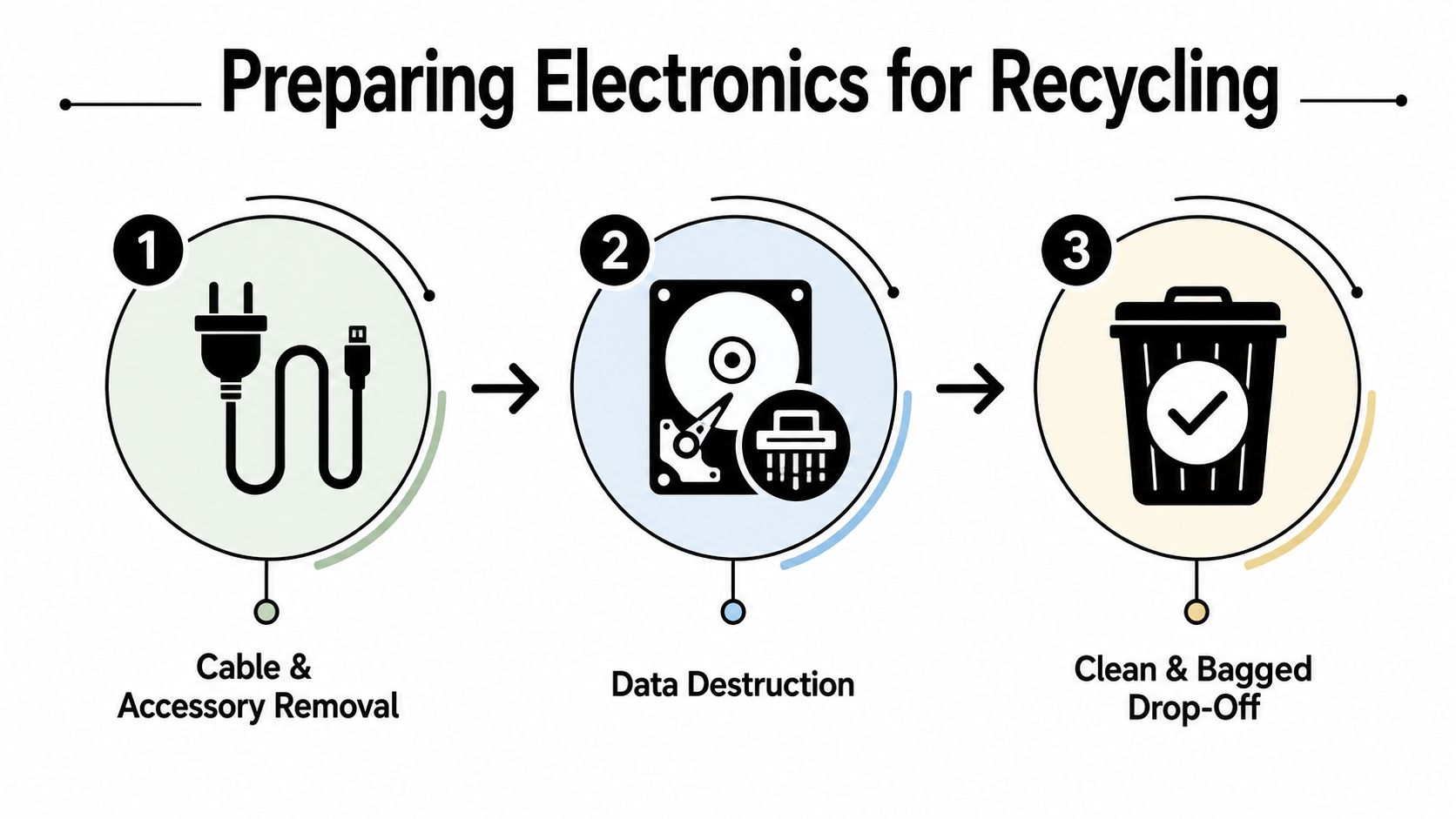
Most electronics recycling mistakes happen before the truck ever arrives. A dual-stream system depends on clean material separation, so the first job is physical preparation. The second job is data security, and that's the part office teams often underestimate until a retired laptop shows up with old files still on the drive.
Start with a clean asset inventory
Before anything leaves the building, list the devices by type and condition. That means separating laptops from monitors, printers from docking stations, and anything with batteries or peripheral attachments from the bulk load. If you skip that step, you end up with mixed material that takes longer to inspect and is more likely to create a curbside problem.
For offices, schools, and public-sector teams, a written inventory also helps you decide whether the load belongs in a local recycling stream or in a formal IT asset disposition workflow. Reworx Recycling's prepare your company's electronics for recycling page is a useful internal reference if you're building a repeatable process around that inventory stage.
Remove data before you remove the devices
A recycle bin icon doesn't erase a hard drive. If a device ever held customer records, employee files, login credentials, financial data, or medical information, the organization needs a real wipe or destruction process, not a desktop delete. That's especially true when the load includes laptops and drives that were assigned to named employees.
Compliance note: the safest path is to treat every storage device as recoverable until you've documented otherwise.
If your organization needs proof of execution, documentation matters as much as the destruction method. OnRoute's article on protecting revenue with proof of execution is helpful because it highlights the broader business value of keeping clean records. In recycling and ITAD, that same logic applies. A certificate, log, or chain-of-custody record gives you something a verbal assurance never will.
Stage the load for curbside reality
Once devices are wiped and cleaned, remove loose cables, detach accessories that don't belong in the stream, and keep the load together by class. Don't mix greasy food containers, broken plastic, or unsorted paper into an electronics pallet. Lake Area's curbside model is built to check contamination immediately, and any flagged material can be left in the bin.
That's why good staging is less about aesthetics and more about preventing rejection. If a device is going to a drop-off point, it should arrive as a clean, labeled, documented asset, not as mystery equipment in a cardboard box.
Where to Drop Off and What to Expect at the Curb
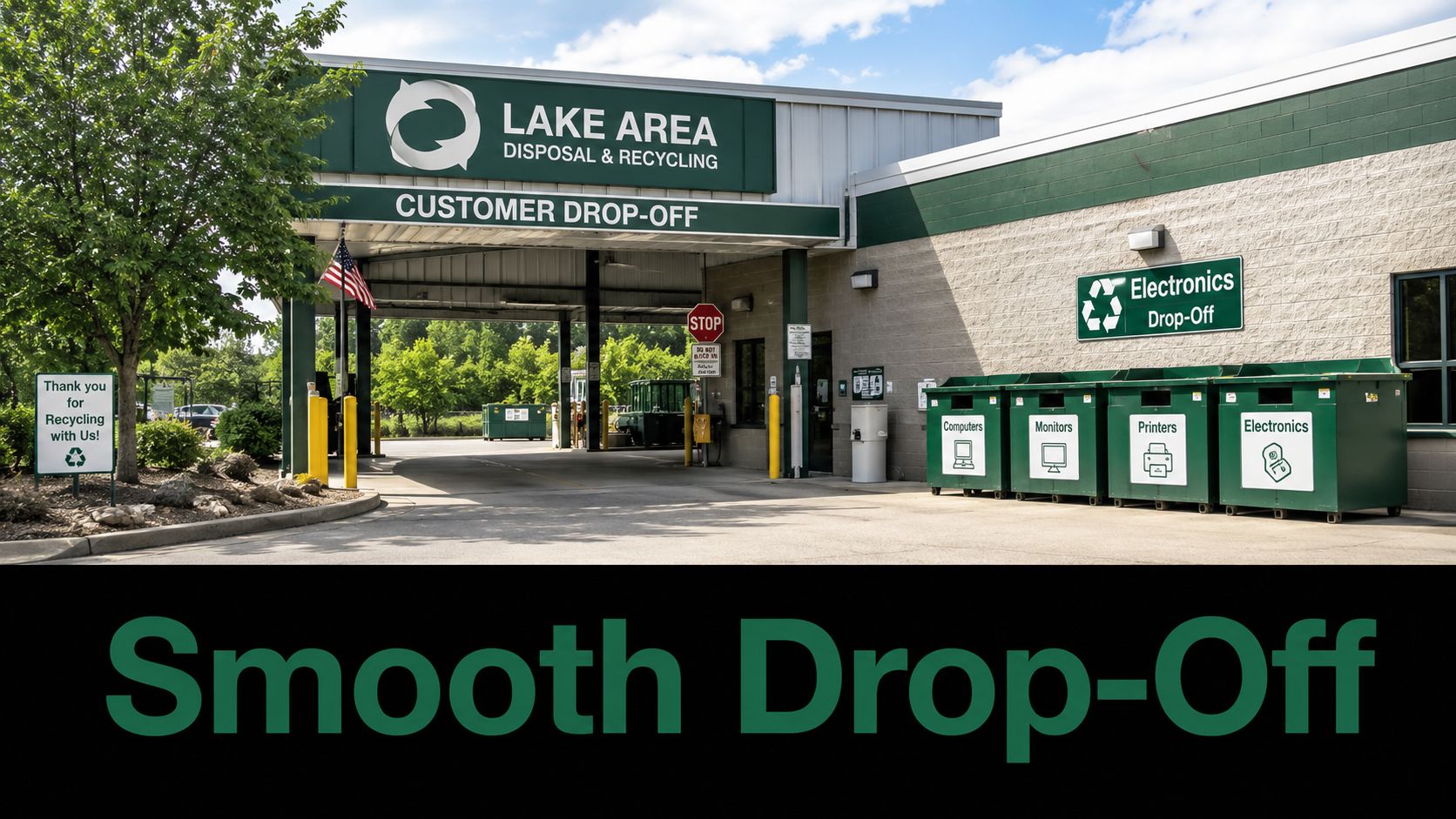
For an office cleanout, the first practical question is where the load can legally go without creating extra handling problems. The main customer recycling drop-off location is at 2742 S. 6th Street in Springfield, and Lake Area's public guide says the customer drop-off site is open Monday through Friday from 8:00 a.m. to 3:00 p.m.. It also notes 24/7 drop-off access at the same location, with the details laid out in the Springfield recycling guide. That flexibility helps when schedules are tight, but the access rules still depend on which part of the site you are using.
Who can use which drop-off
The city identifies Lake Area Disposal as the vendor for its branch drop-off program and says branch drop-off is free for city residents with ID all year long (City of Springfield branch drop-off program). That matters for resident-led collection events, and it also matters when employees want to know whether a personal load can go through the municipal path.
Lake Area also distinguishes between its customer drop-off site and its public-facing aluminum buyback center. The customer drop-off site is for Lake Area Disposal customers, while the aluminum buyback center is open to the public (Lake Area recycling page). Those are different access rules at the same property, and a mismatch is the fastest way to end up with a rejected load.
What staff actually do at arrival
Staff will inspect your materials before processing them. They check for contamination, separate accepted items from rejects, and handle metal buyback items on the spot when appropriate. For businesses, that means arriving with electronics grouped together, cardboard separated from paper, and plastics already sorted by number.
If you are using the city's resident-facing branch drop-off option, bring proof of identification as required by the municipal guidance. If you need a pickup or a controlled after-hours handoff for electronics that should not sit in a public bin, use the after-hours drop-off options instead of improvising at the curb. For business materials, verify the access rule first and stage by commodity class before you leave the site.
The load goes faster when it is already disciplined. That is especially true for office cleanouts, where one bad bin of mixed material can slow the rest of the unload and force your team into manual rework.
When Drop-Off Isn't Enough for Business Electronics Recycling
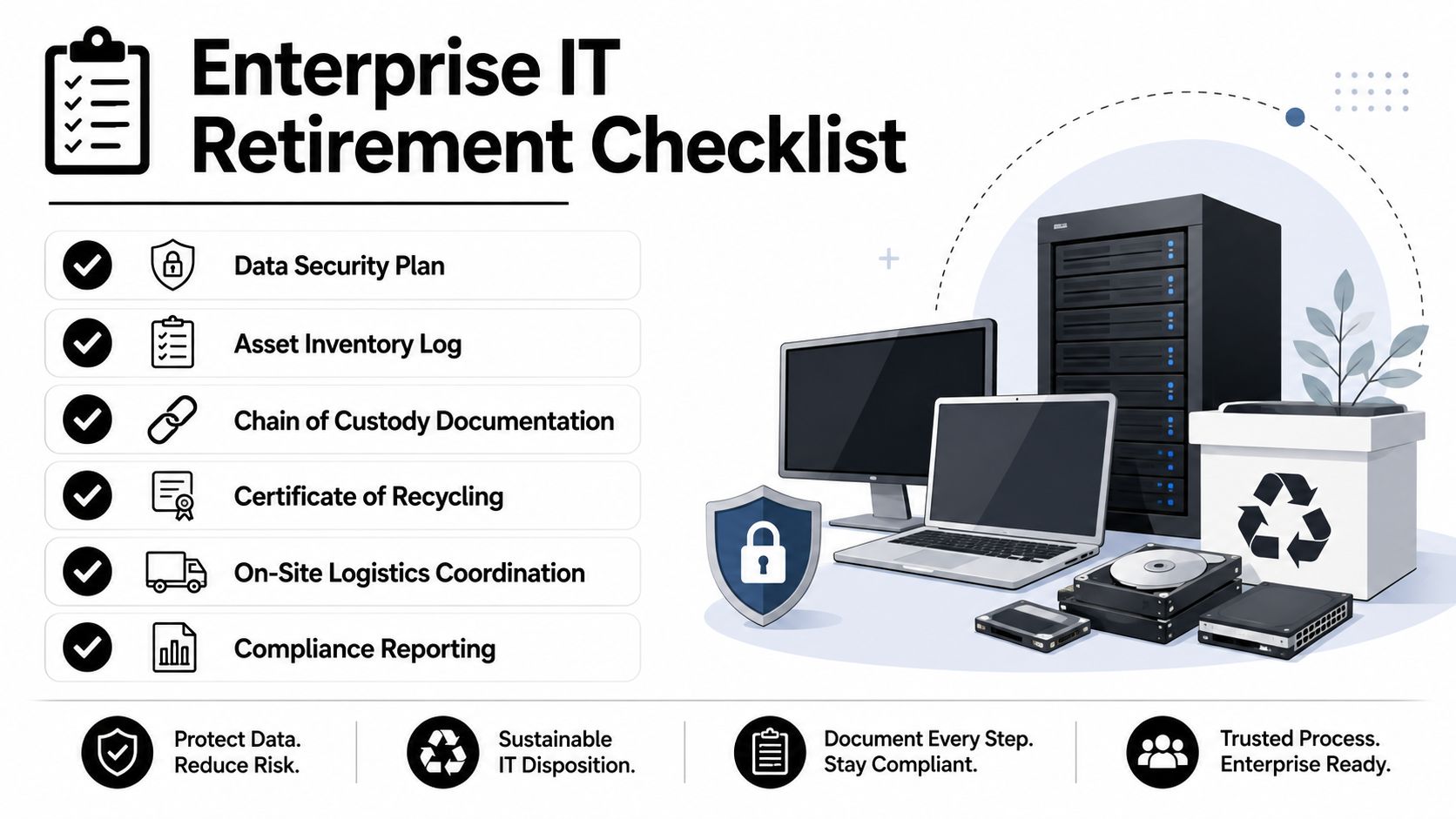
Local drop-off works well for a handful of devices, but it starts to strain when the load includes retired laptops, network gear, monitors, printers, and storage devices from a full office cleanout or data center decommissioning. At that point, the question isn't just whether the facility accepts e-waste. It's whether your process protects the data, the chain of custody, and the schedule.
The business risk changes with scale
A few home devices can be staged by hand. A corporate refresh can't. Once you're managing multiple departments, offsite storage, or assets that need documented destruction, manual drop-off turns into a bottleneck. You also inherit the burden of proving that the devices were wiped, tracked, and transferred properly.
That's where professional ITAD comes in. Reworx Recycling is a donation-based electronics recycling and IT equipment disposal social enterprise that handles business pickups, equipment decommissioning, and secure hard drive shredding with data destruction. It also offers equipment buyback for surplus hardware, which can help recover value from retirements that still have useful life left.
What a professional partner adds
Lake Area's model is built for source-separated recycling, not enterprise chain-of-custody management. A business ITAD partner fills that gap by coordinating pickup logistics, documenting asset movement, and issuing a certificate of destruction for the material that needs it. That matters for organizations with security policies, audit requirements, or public trust obligations.
A simple decision rule helps here.
- Use local drop-off when the load is small, low-risk, and already prepared by commodity.
- Use ITAD pickup when devices held sensitive data, when the volume is high, or when staff can't spare time for multiple trips.
- Use secure destruction when drives, SSDs, or other storage media need documented final processing.
The operational difference is real. Drop-off is about moving material. ITAD is about closing the loop on both assets and information.
Why the compliance gap matters
For SMBs, schools, and public agencies, storage closets are often where retired gear accumulates. That creates privacy risk, fire risk, and an ugly habit of delaying the final disposition step. A documented pickup process reduces all three.
Reworx Recycling's business electronics recycling page is the right place to start if your load looks more like an IT retirement than a curbside recycling run. When the process involves sensitive hardware, donation-based recycling can support both environmental goals and community impact, but only if the material is routed through the right channel.
Your Next Steps for Responsible Electronics Recycling
If you're a resident with a few old devices, sort the materials first, bring ID if the drop-off site requires it, and follow the Springfield rules that apply to your load. Small household jobs usually stay simple when the items are already separated and you know which categories the site accepts.
If you manage a business cleanout, start with an inventory of every asset. That tells you whether the load is straightforward enough for local handling or whether it includes devices with stored data, mixed media, or enough volume to justify a professional ITAD partner.
Lake Area Recycling Springfield works well when the material is already sorted and the access rules fit your plan. It is a practical option for the right kind of load, and it stops being practical fast when staff are moving office equipment that still needs documented custody or data handling. Match the stream to the material before anyone loads a truck.
For businesses, the safer route usually combines electronics recycling, secure data destruction, and documented pickup or drop-off. Reworx Recycling offers those services along with donation-based processing and buyback options, which helps when you need compliance, cleaner recordkeeping, and a better end-of-life path for equipment that still has usable value.
If old computers, phones, or office electronics are sitting in storage, arrange the next step now instead of letting them wait another quarter. Use schedule a pickup to move the process forward, then visit Reworx Recycling to explore donation-based recycling options and make sure the retirement of that equipment is handled with the data security and documentation your organization needs.