That storage closet filled with old office televisions is more than just wasted space—it's a hidden liability. For every outdated smart TV collecting dust, there's a potential data breach waiting to happen, loaded with old network credentials and sensitive app data. For business owners, IT managers, and corporate sustainability leaders, responsibly managing the disposal of old televisions is a critical component of risk management.
Properly handling retired IT assets isn't just about being green. It's about smart risk management and protecting your business from the ground up.
The Real Cost of Stored Office Televisions
Stockpiling old electronics is a significant and often overlooked risk for any modern business. Those outdated televisions stacked in a back room aren't just depreciating assets; they're ticking time bombs of environmental, financial, and data security liabilities.
Each unit can contain sensitive corporate information and hazardous materials, creating a complex challenge that goes far beyond simple clutter. Ignoring the problem exposes your organization to tangible threats that can impact your bottom line and your reputation. The most immediate danger lies in the data left on smart TVs. These devices often hold onto Wi-Fi passwords, login credentials for corporate accounts, and potentially sensitive information from presentations. A simple factory reset may not be enough to prevent a determined data thief from recovering information.
Hidden Financial and Environmental Liabilities
Beyond data security, improper disposal carries serious financial penalties. The materials inside televisions, especially older models, are regulated for good reason. Partnering with a professional service for your IT equipment disposal is crucial.
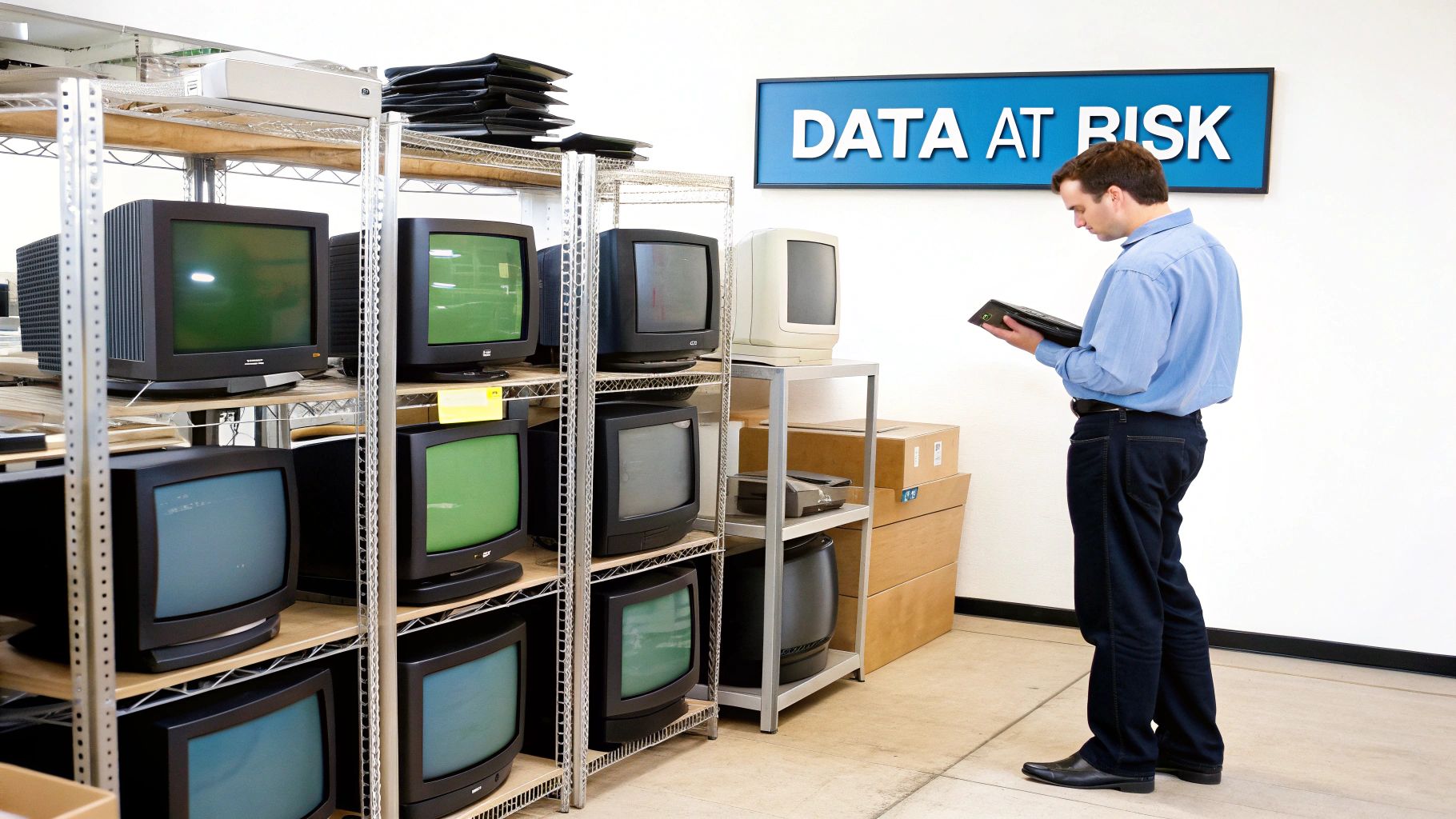
- Hazardous Materials: Cathode Ray Tube (CRT) televisions, common in offices just a decade ago, can contain 2 to 5 pounds of lead per unit. Modern LCD and LED screens contain mercury in their backlights. These substances are toxic and can contaminate soil and water if they end up in a landfill.
- Regulatory Fines: Environmental laws like the Resource Conservation and Recovery Act (RCRA) are clear: electronics with these materials must be handled as e-waste. Failing to comply can lead to hefty fines and legal action under "cradle-to-grave" liability, which means your company is responsible for that waste long after it leaves your facility.
- Reputational Damage: In an era of heightened corporate social responsibility, news of improper e-waste disposal can permanently tarnish a company's brand. It's the kind of thing that alienates customers and partners who prioritize sustainability. If you're wondering about the scale of the problem, consider the hidden costs associated with too much office e-waste and the risks it poses.
A Strategic Approach to IT Asset Disposition (ITAD)
Viewing television disposal through the lens of IT Asset Disposition (ITAD) transforms a compliance chore into a strategic advantage. A proper ITAD program doesn't just get rid of old equipment; it protects your company, recovers value, and reinforces your commitment to corporate responsibility. This is where a partnership with a certified electronics recycling provider becomes essential.
Choosing the right partner means ensuring a secure chain of custody, receiving certified proof of data destruction, and guaranteeing that every component is recycled in compliance with all federal and state regulations.
A social enterprise recycling partner like Reworx Recycling takes this a step further. We not only mitigate your risks but also turn your retired assets into opportunities for community benefit. Functional televisions are securely wiped, refurbished, and donated to support digital inclusion programs, giving your old tech a new purpose. This approach converts a potential liability into a positive story of corporate citizenship, protecting your business while making a measurable impact.
Securing and Prepping Televisions for Disposal
Before any television leaves your facility, there are critical steps to take. This isn't just about unplugging things; it's your first line of defense against data and compliance risks. Getting this prep phase right sets the stage for a secure and responsible IT asset disposition (ITAD) process.
Modern smart TVs are essentially large computers. They’re often connected to your corporate network and might hold app logins, network credentials, and even browsing history from the conference room. Just pulling the plug and hauling them out isn’t an option for security-conscious businesses.
Data Security Starts Before Disposal
For any smart TV, the absolute baseline is a factory reset. This is designed to wipe user accounts and get the device back to its out-of-the-box state. It's a necessary first step, but IT managers must understand its limits. A factory reset is a good start, but it is not a foolproof guarantee of data erasure.
If your business deals with sensitive client information or proprietary data, a simple reset won't meet the tough standards for corporate security or compliance rules like HIPAA. Recoverable data fragments can be left behind. This is why certified secure data destruction is the gold standard for any corporate ITAD program, especially during an office cleanout.
At Reworx Recycling, our process includes certified data destruction services that provide an auditable guarantee. We ensure every data-holding component is made completely unrecoverable, either through advanced wiping software or physical destruction. Your company's digital footprint is eliminated.
Creating a Secure Physical Workflow
Once you've handled the data, your focus shifts to the physical side of things—getting the TVs ready for pickup. A disorganized process is a recipe for lost assets, damage, or even workplace injuries.
Before anyone starts moving or unplugging old TVs, it's smart to identify potential hazards. Taking a moment to understand what a risk register is in health and safety can help you systematically manage these issues, especially when you're dealing with older, heavier equipment.
A methodical approach to the physical prep is key. Here’s what you should do:
- Create a Detailed Inventory: Document every unit you're disposing of. Log the make, model, serial number, and any internal asset tags. This list is the foundation of a secure chain of custody.
- Safely Disconnect All Units: Ensure all TVs are unplugged from power and disconnected from any networks or other devices. Bundle the cords and cables neatly with their TV to keep walkways clear and safe.
- Designate a Staging Area: Set up a secure, out-of-the-way spot where the prepped TVs can be gathered. This prevents them from cluttering workspaces and reduces the risk of damage or theft before your scheduled pickup.
Documenting the Chain of Custody
The chain of custody begins the second a TV is marked for disposal. This is a documented trail that tracks the asset from its spot in your facility all the way to its final destination, whether that’s recycling, donation, or destruction.
That inventory you created is where it all starts. When a recycling partner like Reworx Recycling arrives, we reconcile our count against your list to ensure every asset is accounted for. This paperwork isn't just a formality—it's your proof of due diligence.
Properly preparing your company's electronics for recycling is a critical step that many businesses overlook. To ensure you're covering all your bases, you can learn more about how to prepare your company's electronics for recycling in our detailed guide. This documentation protects your organization from potential liability and confirms you've met your legal and ethical responsibilities for managing e-waste correctly.
Choosing The Right Disposal Path For Your Business
Once your televisions are prepped and secured, it's time to decide on their fate. For any business, this isn't just about clearing out old equipment. It's a strategic choice that directly impacts your data security, environmental compliance, and corporate reputation.
The three main routes are donation, resale, and certified recycling. Each has benefits and potential pitfalls that every IT manager or sustainability leader must weigh. Choosing the wrong path can expose your company to risk, but the right choice can bolster your brand and guarantee full compliance.
Donation: Community Benefits Versus Corporate Risks
On the surface, donating working televisions seems like a fantastic solution. You support local schools, community centers, or nonprofits, turning a retired asset into a resource. It's a great story for any corporate donation program.
But for businesses, donation comes with serious risks. A TV that stops working could become a burden for the recipient, but the real issue is the data. Donating a smart TV without professional data destruction is a huge security gamble. Unless you have a partner who provides certified data wiping as part of their donation process, you risk exposing sensitive corporate information.
Resale: Unlocking Value While Navigating Compliance
Selling off newer, high-value TVs can feel like a smart financial move. It's a way to recover some of the initial investment, which can help offset the cost of new equipment.
This path, however, requires significant hands-on management. Your business is still responsible for ensuring every device is professionally wiped clean before it changes hands. Furthermore, the logistics of determining values, creating listings, and managing shipping can quickly become a major distraction from your core business operations.
This flowchart walks you through the key decision points for your old TVs, from identifying smart devices to ensuring the data is handled correctly.
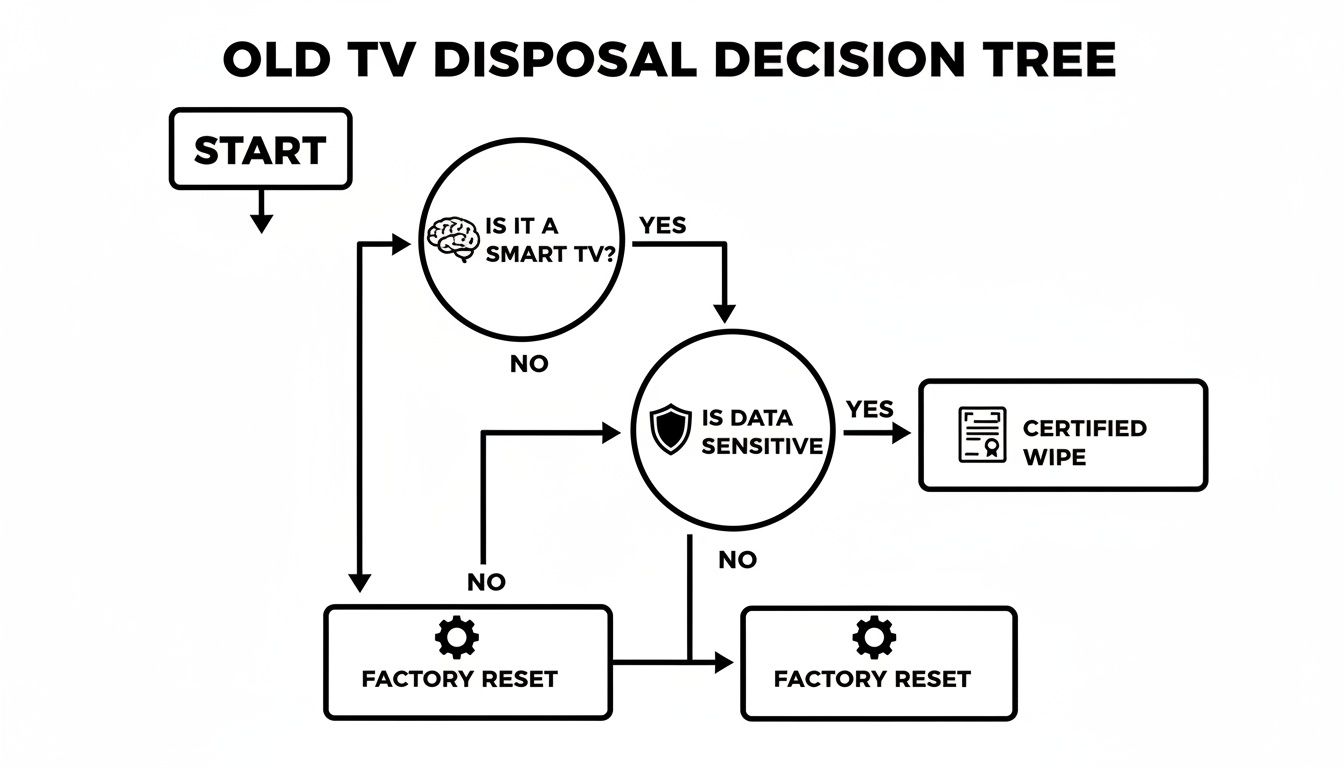
As you can see, the moment sensitive data enters the picture, a certified data wipe becomes essential. A simple factory reset doesn't meet business-level security requirements.
Certified E-Waste Recycling: The Gold Standard
For most businesses, certified e-waste recycling is the safest, most compliant, and most responsible way to dispose old televisions. This approach directly addresses the weaknesses of donation and resale by prioritizing data security and environmental responsibility. A certified partner provides a complete, auditable trail.
Old televisions are a huge contributor to the global e-waste problem. In fact, screens and monitors accounted for 12.5% of the 62 million tonnes of e-waste generated in 2022. With a global recycling rate of just 22.3%, that means over 5.2 million tonnes of TVs likely ended up in landfills, leaking toxic materials into the ground.
A certified recycler ensures every part is handled correctly. Here’s what that looks like:
- Secure Chain of Custody: Your devices are tracked from the moment they leave your facility until they are fully processed.
- Guaranteed Data Destruction: All data security risks are eliminated through certified wiping protocols and physical shredding.
- Environmental Compliance: Hazardous materials like lead and mercury are safely extracted and managed according to all federal and state regulations.
- Full Documentation: You receive certificates of destruction and recycling, which serve as your proof of compliance.
If you're tackling a larger office cleanout that includes televisions and other furniture, working with professional commercial office movers can be a huge help in managing the physical logistics of getting everything out the door.
Comparing Television Disposal Methods For Businesses
Choosing the right disposal strategy depends on your business's priorities. This table breaks down the key considerations for donation, resale, and certified e-waste recycling to help you see which path aligns best with your goals for security, compliance, and value.
| Disposal Method | Data Security Level | Environmental Compliance | Value Recovery | Best For |
|---|---|---|---|---|
| Donation | Low to Moderate | Variable | None | Functional TVs with no sensitive data, supporting CSR goals. |
| Resale | Moderate (Requires In-House Wipe) | Low | High | Newer, high-value TVs where the business can manage logistics and data wiping. |
| Certified E-Waste Recycling | High | High | Low to None | All TVs, especially smart TVs with sensitive data; prioritizing compliance and security. |
Ultimately, certified recycling offers the most comprehensive protection for your business, ensuring both data security and environmental laws are fully addressed.
For businesses that want a partner who can blend these approaches responsibly, Reworx Recycling offers a unique social enterprise model. We always prioritize refurbishment and secure donation-based recycling for community programs, but only after performing certified data destruction. Any equipment that can’t be given a second life is recycled to the highest standards.
This way, your IT asset disposal becomes a force for good without ever compromising on security or compliance. You can find out more about our complete process and what makes us a leading electronic waste recycling company.
Meeting Environmental and Legal Disposal Standards
Deciding what to do with your company's old televisions is much more than a simple logistics puzzle. It's a serious decision that sits right at the intersection of environmental stewardship and legal compliance. Getting this wrong can lead to hefty fines, long-term damage to your reputation, and very real environmental consequences. Every business needs to understand the rules governing e-waste to stay protected.
The real problem is what’s lurking inside these old TVs. That bulky CRT television from the conference room isn't just an outdated piece of tech. It’s packed with hazardous materials, holding anywhere from 2 to 5 pounds of lead in its cathode ray tube alone. Even modern LCD and LED screens have their own baggage, containing mercury in their backlights—another highly toxic substance.
When these TVs are dumped in a landfill, those toxic heavy metals can seep into the soil and contaminate groundwater for generations. This is exactly why tossing them in a dumpster is not only irresponsible but, in most places, illegal.
Navigating the Web of E-Waste Regulations
The legal frameworks around e-waste exist specifically to prevent this kind of pollution. For businesses, the concept of "cradle-to-grave" liability is absolutely critical to understand. It’s a foundational principle of regulations like the Resource Conservation and Recovery Act (RCRA), and it means your company is legally on the hook for its hazardous waste from the moment you create it until it's properly and finally disposed of.
Your responsibility doesn't just vanish when a recycling vendor hauls your equipment away. If that vendor cuts corners and improperly dumps your old televisions, your business can still be held liable for the cleanup costs and face massive fines. Vetting your recycling partner isn't just a good idea—it's non-negotiable.
On top of that, many states now have Extended Producer Responsibility (EPR) laws. These laws put some of the end-of-life management responsibility back on the manufacturers. While this mainly targets the producers, it's a clear signal of a broader regulatory push toward a more responsible, circular economy for electronics that every business should be paying attention to. You can get a much clearer picture of these risks by reading up on the environmental and legal impacts of improper commercial e-waste disposal.
The scale of this issue is almost hard to comprehend. In 2022, the world generated a staggering 62 million tonnes of electronic waste, an 82% jump from 2010. And it's not slowing down; projections show that number hitting 82 million tonnes by 2030. Old screens, including televisions, accounted for 6.7 million tonnes of the 2022 total, yet a dismal 22.3% of all e-waste was actually collected and recycled correctly. That leaves over 48 million tonnes of waste free to contaminate the globe. You can discover more insights about global e-waste statistics to see the full scope of the problem.
De-Risking Your Operations with Certified Recycling
With such complex compliance rules and severe consequences for getting it wrong, partnering with a certified e-waste recycler is the only smart move for a business. A certified partner isn't just another vendor; they're your shield against downstream liability.
Here’s what you get with a certified process:
- A Clear Chain of Custody: You get meticulous documentation that tracks your assets from the moment they leave your facility to their final disposition.
- Certificates of Destruction and Recycling: These are auditable, official documents that prove you've done your due diligence, confirming all data was destroyed and materials were handled by the book.
- Guaranteed Regulatory Adherence: A certified partner lives and breathes e-waste laws. They stay on top of all federal, state, and local regulations so your disposal methods are always compliant.
When you work with a trusted partner like Reworx Recycling, you effectively transfer that risk. We have the expertise and the certified processes needed to manage the hazardous materials in old TVs safely and legally. This turns a complicated compliance headache into a simple, documented, and responsible business practice that protects your organization and proves your commitment to sustainable recycling.
How Reworx Recycling Streamlines the Entire Process
Knowing the rules and risks is one thing, but implementing a compliant disposal plan is another. This is where partnering with an expert like Reworx Recycling turns a complex chore into a simple, documented process. We become your dedicated ally, managing every detail from your initial call to the final report.
Picture this: your office is undergoing a renovation, and you have dozens of old TVs on multiple floors that need to go. Instead of your team figuring out the logistics, you make one call. We handle all the scheduling, planning, and heavy lifting, allowing your staff to focus on their core responsibilities.
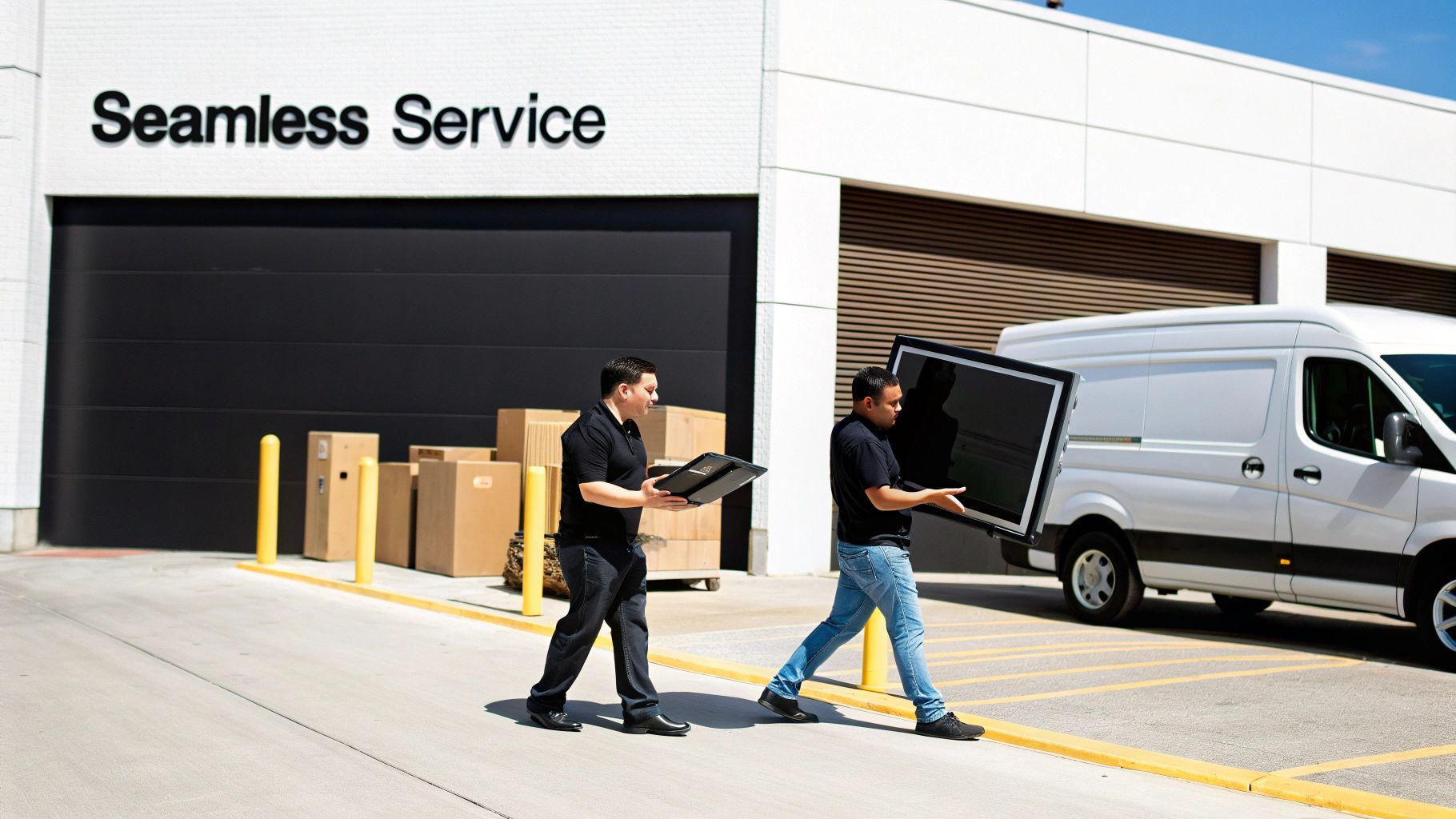
This isn't just about convenience. It’s about giving your IT and compliance teams total peace of mind.
A Secure and Transparent Chain of Custody
The second our team steps into your facility, we establish a secure and transparent chain of custody. It's a meticulous process that ensures every single asset is tracked, from your loading dock right through to its final destination. For any business, that documented trail is your proof of due diligence.
Our professional, uniformed crew works quickly to inventory and collect your old TVs and other IT gear. We provide serialized asset tracking for every device, giving you a detailed record that lines up perfectly with your own asset management system. This level of detail is non-negotiable for any serious corporate IT asset disposition (ITAD) program.
We design the whole process to cause minimal disruption to your daily operations. Whether you need a scheduled bulk pickup for a full facility cleanout or just a smaller collection, our logistics are planned around your schedule.
Once your equipment is safely on its way to our facility, the real work starts. We don't just jump straight to recycling; we assess every single item for its potential.
Certified Data Destruction and Responsible Recycling
For any smart TV or display that's been used in a corporate setting, the number one priority is wiping any and all data. At Reworx Recycling, we provide certified data destruction that meets NIST 800-88 standards—the gold standard for media sanitization.
Here’s what that looks like:
- Secure Segregation: Any device that could hold data is immediately moved to a secure, access-controlled area as soon as it arrives.
- Data Erasure: We use advanced software to perform a multi-pass wipe on functional hard drives, making data completely unrecoverable.
- Physical Destruction: For devices that don't work or for situations that demand the absolute highest level of security, we offer hard drive shredding, either on-site at your location or at our facility.
After we've guaranteed data security, our focus shifts to environmental responsibility. Our R2 certification is your assurance that every component gets recycled in an environmentally sound way. Hazardous materials, like the lead in old CRT monitors or the mercury in LCD backlights, are safely extracted and handled by our certified downstream partners.
In the end, you get a Certificate of Destruction and Recycling, officially closing the loop on your "cradle-to-grave" liability.
More Than a Vendor—A Social Enterprise Partner
What truly distinguishes Reworx Recycling is our mission as a social enterprise. When you dispose old televisions with us, you’re not just ticking a compliance box. You’re making a real, positive impact on the community.
Functional equipment that has been securely wiped is refurbished and donated to support local digital inclusion programs. These initiatives get vital technology into the hands of underserved students, families, and community organizations, helping to bridge the digital divide. To see how this works, you can read our guide on how Reworx Recycling helps reduce electronic waste while creating social value.
This approach transforms your end-of-life IT assets from a liability into a powerful tool for corporate social responsibility. Partnering with Reworx means your disposal process isn't just an expense—it's a strategic investment in sustainability and your community.
Your Top TV Disposal Questions Answered
When it's time to handle old electronics, questions are inevitable. We hear them constantly from business owners and IT managers trying to do the right thing when they dispose of old televisions. Here are straightforward answers to the most common queries we receive.
Are we liable if our recycling vendor fails to comply?
The short answer? Yes, absolutely. Under federal laws like the Resource Conservation and Recovery Act (RCRA), your business has what's called "cradle-to-grave" liability. That means your responsibility for that old TV doesn't end when the truck pulls away from your loading dock.
If your chosen vendor cuts corners and illegally dumps TVs full of lead or mercury, your company can be hit with serious fines and be held responsible for cleanup costs. This is exactly why partnering with a certified e-waste recycler is essential.
A certified partner like Reworx Recycling provides a full chain of custody and issues Certificates of Recycling. Think of this as your official proof that you performed your due diligence, protecting your company from any downstream liability and ensuring full compliance.
Is a factory reset sufficient for our company's smart TVs?
A factory reset is a decent first step, but for a business, it is almost never enough to meet today's data security standards. It wipes user accounts and settings, but it often leaves behind data fragments that could potentially be recovered with the right tools.
That’s a risk no business can afford, especially when dealing with sensitive corporate, employee, or customer information. To be truly compliant with standards like HIPAA or GDPR, you need a guaranteed, auditable process for data sanitization.
At Reworx Recycling, we provide certified secure data destruction. This can mean advanced software wiping that overwrites every bit of data or physically shredding the storage components. You get an irrefutable, documented guarantee that every last piece of corporate data is gone for good.
What's the real difference between donating and recycling a TV?
Donating a working TV gives the device a second life, but for a business, it opens potential data security holes and doesn't solve the problem of broken equipment. Traditional recycling handles everything responsibly but often misses the opportunity to reuse perfectly good electronics.
Our donation-based recycling model at Reworx Recycling bridges that gap, giving you the best of both worlds:
- Reuse Comes First: We test and identify TVs that can be refurbished.
- Security is Guaranteed: Before any item gets a new home, we perform certified data destruction to eliminate security risks.
- Community Support: Refurbished TVs are then donated to community programs, helping bridge the digital divide and support workforce development.
- Responsible Recycling: Anything that is broken or obsolete is responsibly recycled according to the highest environmental standards.
This approach allows your business to make a real social impact without ever compromising on data security or environmental commitments.
Are old, bulky CRT televisions more difficult to dispose of?
Definitely. Those old Cathode Ray Tube (CRT) TVs—the big, heavy "tube" models—are a different challenge. The leaded glass inside the tube classifies them as hazardous waste, which means they are more heavily regulated and more expensive to recycle properly.
A single CRT monitor can contain 2 to 5 pounds of lead. Because of this, they are banned from almost every landfill in the country. It's critical to work with a recycler who has the certifications and experience to handle these materials safely. Reworx Recycling has the certified processes in place to manage CRT televisions, ensuring your business stays compliant and environmentally sound.
Figuring out electronics disposal is a crucial job for any modern business. When you pick the right partner, you're not just ensuring compliance—you're turning a potential liability into a chance to make a positive impact. With Reworx Recycling, you can be confident that every single asset is handled securely, responsibly, and with a clear purpose.
Ready to simplify your IT asset disposition process and enhance your corporate social responsibility? Partner with Reworx Recycling.
Schedule a pickup or request a quote today to start recycling your old business equipment responsibly.