When you hear "corporate e-waste solutions," what comes to mind? For many, it's just a fancy term for getting rid of old office computers. But for modern business leaders, IT managers, and sustainability officers, it's a strategic process. It involves wiping data securely, recovering value from retired IT equipment, and recycling what's left responsibly. Done right, it protects your business from major liabilities, strengthens your brand, and minimizes your environmental footprint.
The Growing Challenge of Corporate E-Waste
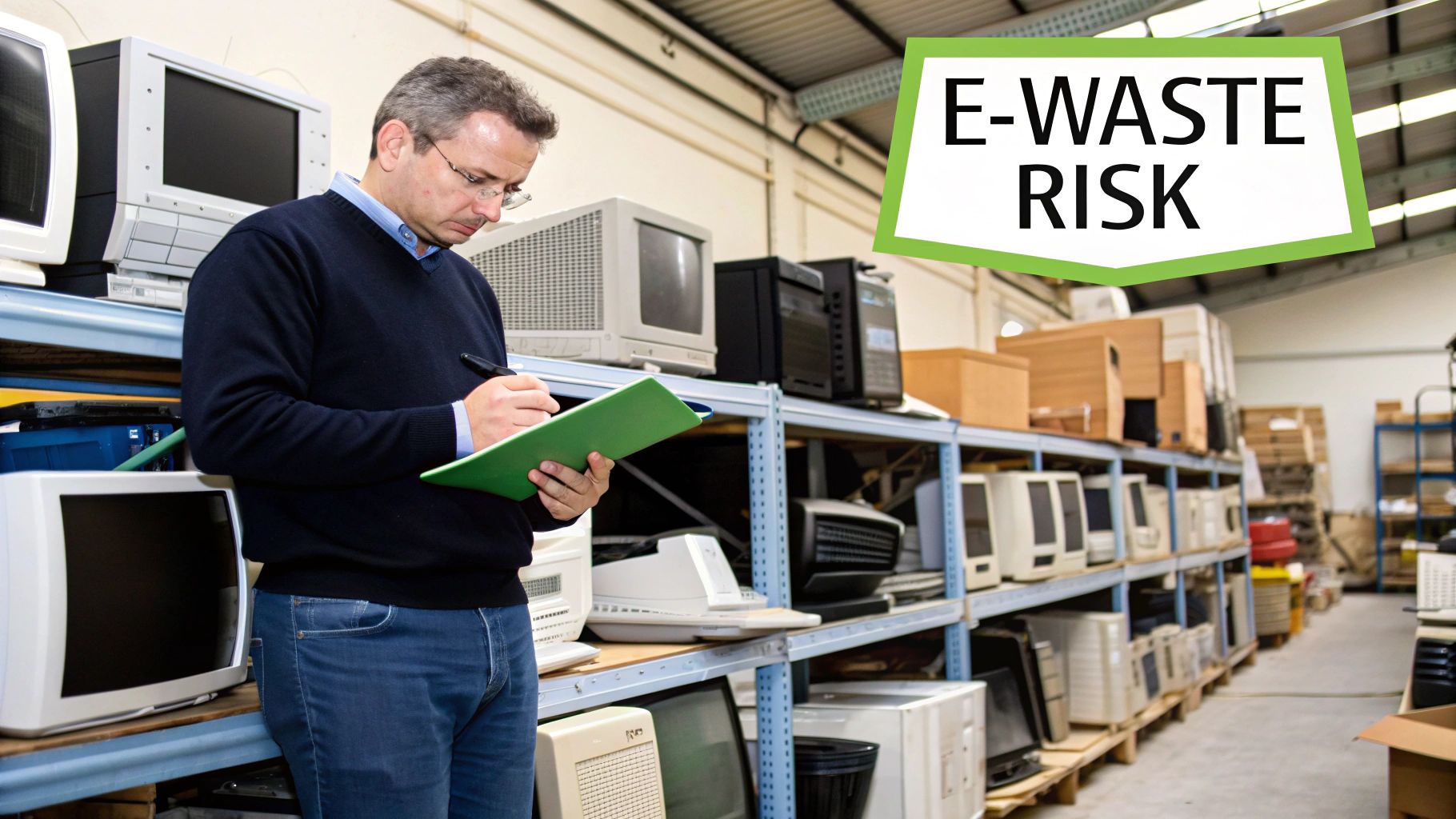
That closet full of outdated electronics? It’s a familiar sight in almost every business. Each of those retired servers, laptops, and monitors is more than just clutter. It's a hidden liability—a ticking clock of data risks, compliance headaches, and potential environmental harm. Unmanaged electronic waste is one of the fastest-growing waste streams in the world, posing a significant challenge for businesses of all sizes, especially in tech-forward cities.
The numbers are staggering. The global e-waste market is projected to grow from 62 million tonnes in 2022 to a massive 82 million tonnes by 2030. This surge is fueled by constant technology upgrades and shorter device lifecycles.
Here's the really concerning part: according to the EPA, only a fraction of e-waste is properly collected and recycled. That places the responsibility squarely on businesses to step up. Managing this proactively isn't just an option anymore; it's essential for protecting your brand, safeguarding sensitive data, and demonstrating you're a responsible corporate citizen.
Understanding the Pillars of E-Waste Management
A solid corporate e-waste program is built on a few key pillars. Each one addresses a specific risk and works with the others to create a process that's both secure and sustainable. Getting a handle on these pillars gives IT managers and sustainability leaders a clear picture of what a complete solution looks like.
A well-structured e-waste strategy transforms a regulatory burden into a strategic asset. It protects your data, enhances your brand's reputation, and aligns with corporate social responsibility goals through responsible electronics recycling.
To break it down, here’s a look at the essential components that form a comprehensive e-waste management strategy for any business.
Core Pillars of a Corporate E-Waste Solution
| Pillar | Objective | Key Services |
|---|---|---|
| Secure Data Destruction | To eliminate all sensitive data from retired assets, preventing breaches and ensuring privacy compliance. | Certified software wiping, physical hard drive shredding, degaussing, and Certificates of Data Destruction. |
| Asset Value Recovery | To maximize the financial return on retired equipment by identifying items that can be reused or resold. | IT Asset Disposition (ITAD), equipment testing and refurbishment, and remarketing through certified channels. |
| Responsible Recycling | To ensure that non-viable electronics are dismantled and processed in an environmentally sound manner. | R2 or e-Stewards certified recycling, materials separation, and recovery of commodities like metals and plastics. |
| Logistics and Chain of Custody | To provide a secure and transparent audit trail for every asset from pickup to final disposition. | Secure transportation, detailed inventory reporting, asset tracking, and documented chain of custody. |
| Community Impact | To leverage retired technology to support social good, aligning business goals with corporate social responsibility. | Donation-based recycling programs, partnering with social enterprises like Reworx Recycling, and supporting digital inclusion. |
Addressing these pillars protects your organization from the many risks tied to e-waste. It shifts the mindset from simple "disposal" to strategic management. When you learn about the impact of e-waste on the environment, the need for a structured approach like this becomes crystal clear.
What Are Your E-Waste Management Options?
A solid corporate e-waste solution isn't just one service—it's a suite of them, each designed to handle a specific part of a device's end-of-life journey. Getting familiar with these options is the first step toward building a program that works for your business, whether your top priority is airtight data security, recovering value, or fulfilling your corporate sustainability mission.
Think of it as building a mental map. Once you see the landscape, you can pinpoint exactly what services your organization needs. A truly great partner will combine these into a seamless workflow, moving your company beyond simple disposal and toward strategic IT equipment disposal and asset management.
The Foundation: IT Asset Disposition (ITAD)
IT Asset Disposition (ITAD) is the strategic backbone of any smart e-waste program. It's a holistic process that goes way beyond just getting rid of old gear. Think of ITAD as the master plan for maximizing the value of your retired assets while minimizing risk at every single turn.
ITAD covers the entire lifecycle, from the moment a device is unplugged to its final destination. A proper ITAD strategy involves detailed inventorying, secure transportation, and rigorous testing to see what can be refurbished and resold. Done right, this can turn what used to be a cost center into a surprising source of revenue.
For any business undergoing a tech refresh or facility cleanout, a solid ITAD plan is non-negotiable. It’s how you ensure every last server, laptop, and phone is accounted for and handled according to a secure, predefined process.
Securing Your Digital Legacy: Data Destruction
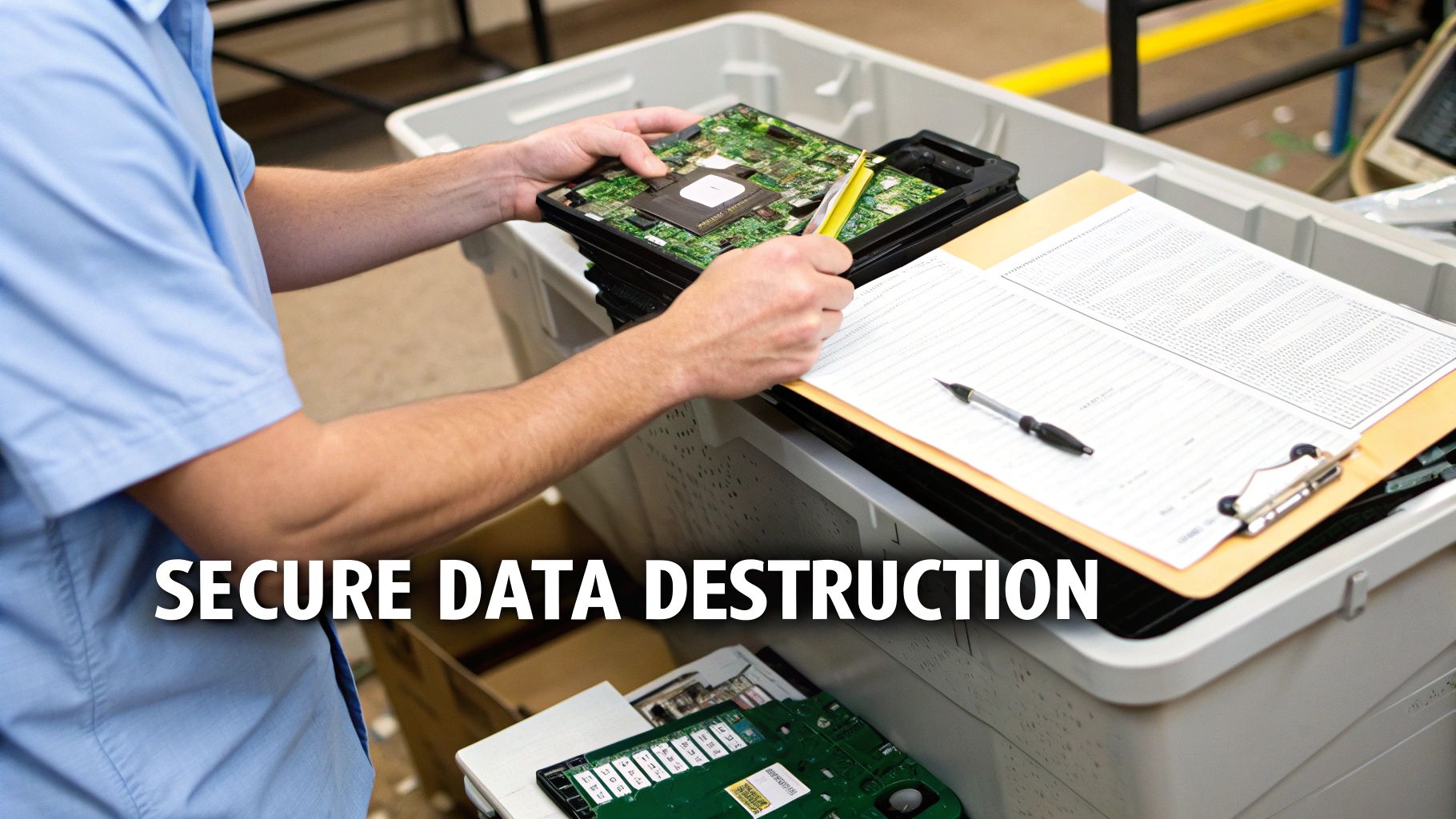
In a world where data is currency, secure data destruction is your most critical line of defense. Just hitting 'delete' or formatting a hard drive doesn't cut it—that sensitive information can often be recovered. Lingering data on retired devices is a massive liability waiting to happen.
To eliminate this risk, professional e-waste partners use several certified methods to ensure your data is gone for good:
- Software Wiping: Specialized software overwrites the entire hard drive with random data, making the original information completely unrecoverable. This method follows strict standards, like those from the National Institute of Standards and Technology (NIST).
- Physical Shredding: For the highest level of security, hard drives and other storage media are fed into industrial shredders. These machines reduce them to tiny, unsalvageable fragments. There's no coming back from that.
- Degaussing: This process uses an incredibly powerful magnetic field to instantly and permanently erase the magnetic data stored on drives and tapes.
Once the job is done, a reputable partner like Reworx Recycling will provide a Certificate of Data Destruction. This document is your official proof, your audit trail, showing you took every necessary step to protect company, client, and employee data.
A single data breach can cost a company millions in fines, lawsuits, and damage to its reputation. Certified data destruction isn't an expense; it's an essential investment in risk management.
Beyond the Basics: Specialized Disposal Services
Not all e-waste is the same. Many businesses have unique equipment that requires special handling. For example, data center decommissioning is a massive undertaking that involves the systematic shutdown and removal of servers, racks, and networking gear. It demands meticulous planning to avoid downtime and prevent data loss.
Likewise, your facility might need help with things like:
- Medical Equipment Disposal: Requires careful handling of sensitive devices according to strict healthcare regulations.
- Laboratory Equipment Disposal: Involves machinery that may have been exposed to hazardous materials.
- Office or Facility Cleanouts: Large-scale projects to clear entire floors or buildings of outdated technology.
Partnering with a provider who truly understands what electronic waste recycling entails ensures every type of asset is managed correctly and safely.
Finally, a truly modern approach also thinks about community impact. Social enterprises like Reworx Recycling build corporate donation programs into their services. This turns your surplus but still-functional equipment into a powerful tool for local non-profits, schools, and communities. It's a great way to build a positive story for your brand while helping bridge the digital divide.
Navigating Compliance and Environmental Responsibility
Choosing an e-waste partner is about much more than just logistics. It’s a critical business decision that ties directly into your legal compliance, data security, and environmental reputation. For IT managers and business owners, the regulatory landscape can feel like a maze of acronyms and state-specific rules, but understanding the basics is key to avoiding serious risks.
Federal laws like the Resource Conservation and Recovery Act (RCRA) set the baseline for managing hazardous waste, which covers many materials inside your old electronics. On top of that, many states have their own e-waste laws, creating a patchwork of requirements you need to follow. Getting this wrong isn't a small slip-up; it can lead to hefty fines and legal trouble. For a closer look at what's at stake, you can learn more about the environmental and legal impacts of improper e-waste disposal.
The Role of Certifications in Due Diligence
So, how can you be sure your e-waste partner is handling your old equipment ethically and legally? This is where industry certifications become your best friend. Think of them as a seal of approval that steers you away from the dangers of non-compliance and shady disposal practices.
Two of the most respected certifications in the electronics recycling world are:
- R2 (Responsible Recycling): This standard is all about protecting the environment, ensuring worker health and safety, and guaranteeing data security through the entire recycling chain.
- e-Stewards: Developed by the Basel Action Network, this certification is known for being incredibly strict. It includes a firm commitment to prevent hazardous e-waste from being exported to developing nations.
When a provider like Reworx Recycling holds these certifications, it means they’ve passed rigorous third-party audits. It’s your proof that they’re committed to the highest standards for data destruction, environmental safety, and accountability.
The High Cost of Cutting Corners
Partnering with an uncertified recycler might look like a way to save a few bucks, but it's a gamble with dangerously high stakes. The fallout from a bad decision can ripple through your entire organization, causing damage that is both expensive and long-lasting.
Choosing an uncertified vendor is like handing over your company's sensitive data and environmental reputation to a stranger with no verifiable credentials. The potential for a data breach or illegal dumping becomes a significant and unnecessary business risk.
The global e-waste landscape is unfortunately fragmented, fueling a massive illegal trafficking problem. In fact, e-waste now makes up 70% of the world's toxic waste stream, which makes your choice of vendor a critical piece of the global environmental puzzle.
The consequences of choosing the wrong partner can be severe:
- Steep Fines: Regulators don't hesitate to impose heavy fines for improper disposal.
- Brand Damage: News of your old equipment being illegally dumped or involved in a data breach can cause irreversible harm to your reputation.
- Legal Liability: Your company can be held legally responsible for its e-waste from cradle to grave—even long after it has left your building.
To get this right, strong internal compliance is a must. For tips on building an effective program, you can explore these Actionable Compliance Training Best Practices. Ultimately, choosing the right partner isn't just about following rules; it's about protecting your business from the ground up.
How to Choose the Right E-Waste Partner
Picking a partner for your company’s e-waste is one of the most critical decisions you’ll make in your entire asset management strategy. This isn't just about hiring someone to haul away old equipment. You're entrusting a vendor with your sensitive data, your brand’s reputation, and your commitment to doing the right thing for the environment.
Get this choice right, and a logistical headache transforms into a strategic advantage. You gain peace of mind from a secure, transparent process. But the wrong partner can open the door to a world of risk, from data breaches that make headlines to costly compliance violations. That’s why vetting potential partners requires a sharp focus on certifications, security, transparency, and the real-world impact they create.
Verifying Certifications and Security Protocols
Your due diligence should always start with certifications. These aren't just fancy logos for a website; they are hard-earned proof that a vendor has passed rigorous, independent audits and is committed to the highest industry standards.
Keep an eye out for these two key credentials:
- R2 (Responsible Recycling): This certification is a strong indicator that the provider follows established best practices for protecting the environment, keeping workers safe, and securing data.
- e-Stewards: Known for having some of the strictest standards in the business, e-Stewards provides an ironclad guarantee that no hazardous e-waste gets exported to developing countries. It’s the gold standard for ethical disposal.
But certifications are just the beginning. You need to dig into their security protocols. Ask for a detailed breakdown of their data destruction methods. A partner you can trust, like Reworx Recycling, will issue a formal Certificate of Data Destruction for every single asset processed. This creates a clear, auditable paper trail proving your data was permanently and securely eliminated.
Ensuring Transparency and Chain of Custody
A transparent chain of custody is completely non-negotiable. From the moment your assets leave your facility to their final recycling or refurbishment, you need to know exactly where they are.
Ask potential vendors how they track assets and what kind of reporting you can expect. A reliable partner will give you serialized inventory reports that follow each device through its entire journey. This isn't just for your own internal accountability—it's essential for proving regulatory compliance. When you're making your selection, remember that implementing effective vendor risk management is key to making sure your partner upholds your company’s standards.
A partner who can’t provide a clear, documented chain of custody is a major red flag. This transparency is your best defense against the risks of data loss and improper disposal.
Evaluating Different Vendor Models
Not all e-waste providers are built the same. They typically fall into one of three buckets, each offering a different mix of services and impact. Figuring out these differences is the key to finding the right fit for what your organization wants to achieve. For a deeper look, check out these key factors for choosing an e-waste recycling partner.
Before we dive in, it helps to see how these models stack up against each other.
Comparing E-Waste Vendor Models
| Feature | Basic Recycler | Comprehensive ITAD Partner | Social Enterprise (e.g., Reworx Recycling) |
|---|---|---|---|
| Primary Focus | Material recovery and commodity sales. | Maximizing financial return on assets. | Balancing environmental, social, and financial goals. |
| Data Security | Varies; may not offer certified destruction. | Offers certified data destruction as a core service. | Provides certified data destruction and prioritizes data security. |
| Value Recovery | Minimal; focuses on scrap value. | Strong focus on testing, refurbishing, and remarketing. | Recovers value through remarketing but prioritizes donation. |
| Reporting | Basic weight-based reports. | Detailed, serialized asset tracking and reporting. | Detailed reporting plus impact metrics (e.g., items donated). |
| Social Impact | Generally none. | Limited to environmental compliance. | Core mission; donates tech to bridge the digital divide and supports workforce development. |
| Best For | Businesses with low-value, non-sensitive assets. | Enterprises seeking maximum ROI on high-value equipment. | Organizations wanting security, compliance, and a positive community story. |
As you can see, the right choice really depends on your priorities. Choosing a partner like Reworx Recycling allows you to tick all the boxes for security and compliance while also turning your retired technology into a powerful tool for social good. It elevates a simple operational task into a meaningful part of your corporate social responsibility strategy.
Implementing Your Corporate E-Waste Program
Moving from theory to action is where the rubber meets the road in managing your company's electronic waste. Kicking off an effective e-waste program doesn't have to be a monumental task, but it does demand a clear, step-by-step approach. A winning strategy starts with one simple thing: knowing what you have. From there, you can decide how to handle it from the moment it's retired to its final destination.
The first phase is always a comprehensive inventory. You need a clear picture of every IT asset your company owns, where it is, and where it stands in its lifecycle. This audit is the bedrock of your program, giving you the intel needed to create solid retirement policies that spell out exactly when and how equipment is taken out of service. Once you have that foundation, you can start bringing key people into the conversation.
Building Your Internal Framework
A truly successful program needs buy-in from more than just one department. Your IT team will handle the technical side, of course. But Finance will want to know about asset value and costs, and your sustainability leaders will be focused on environmental impact and corporate responsibility. Getting everyone on the same page from the beginning is the secret to a smooth rollout.
With everyone aligned, you can set up a consistent collection process. This could be as simple as designated drop-off points for old gear or as structured as regular sweeps of office floors. The main goal is to make responsible disposal the easiest, most obvious choice for every single employee.
That’s where employee training comes in. Brief, clear communications can explain the "why" behind the program—hitting on data security and environmental benefits—and the "how" of participating. When your team understands the importance of the program, they become your greatest champions. For a deeper dive, check out our guide on how to implement an IT asset disposition strategy.
Partnering for Seamless Execution
Let's be honest, handling all the logistics internally can be a heavy lift. Working with a flexible and certified partner like Reworx Recycling can make implementation feel almost effortless. A professional partner can manage everything from a one-time facility cleanout to ongoing, scheduled pickups, adapting to exactly what you need. This takes the burden off your internal teams, letting them focus on what they do best.
The process of finding and working with the right partner is critical to your program's integrity. This workflow breaks down the key stages.
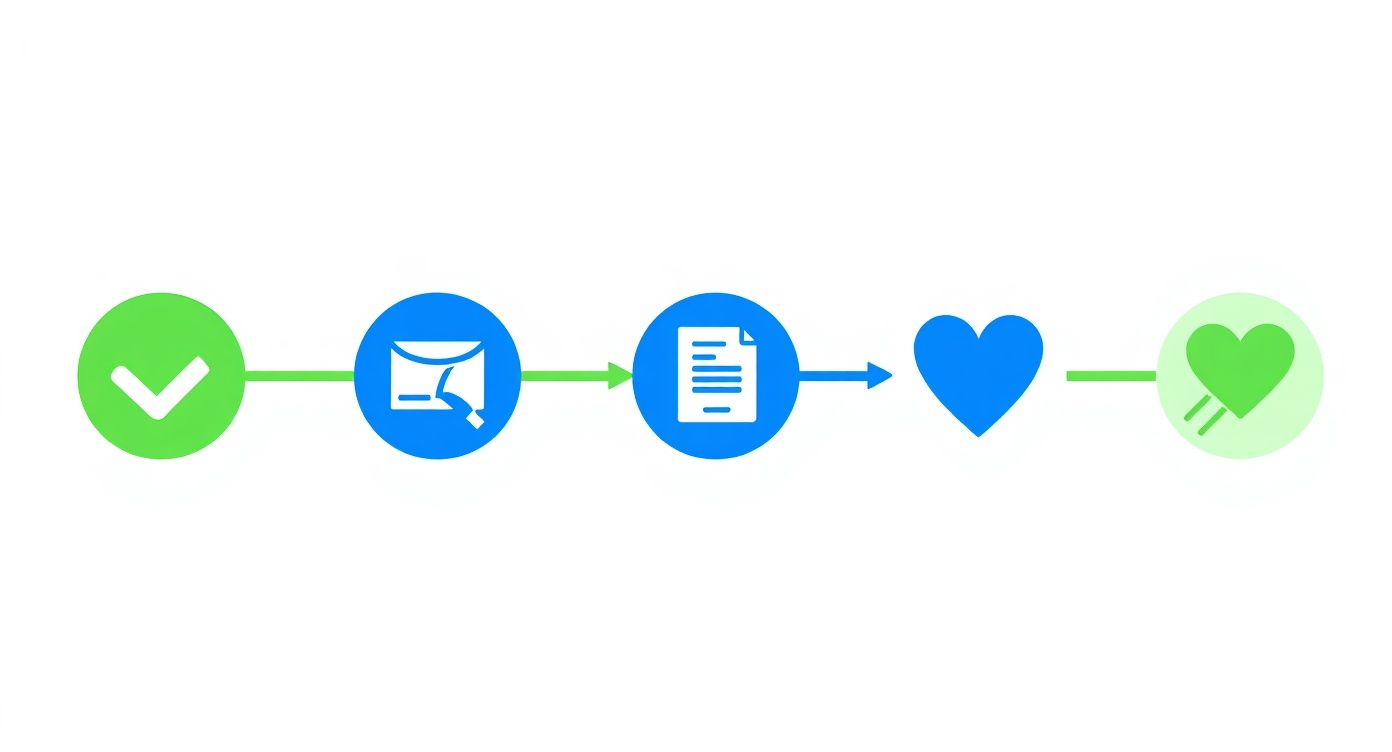
As you can see, it all comes down to verifying your partner’s credentials, ensuring you have transparent tracking of your assets, and being able to measure the positive community impact.
A well-implemented corporate e-waste solution transforms a potential liability into a structured, secure, and impactful process. It's about creating a system that protects your company while contributing positively to the community and environment.
The need for these programs is more urgent than ever. E-waste is the fastest-growing waste stream on the planet. Frighteningly, only about 20% of electronics are recycled through proper channels. A structured corporate program isn't just nice to have; it's essential for responsible stewardship. As you build your own program, remember that this isn't just another cost—it’s an investment in security, reputation, and sustainability.
The Hidden ROI of Sustainable E-Waste Management

It’s easy to look at a pile of old computers and see only a disposal cost. But that’s a huge missed opportunity. A truly effective corporate e-waste solution delivers a return on investment that goes way beyond recovering a little cash from old hardware.
The real ROI is a powerful mix of risk mitigation, brand enhancement, and genuine community impact. It’s about turning a logistical headache into a strategic advantage.
The financial upside starts with sidestepping disaster. The average cost of a data breach can run into the millions, which makes investing in certified data destruction feel more like high-return insurance. Likewise, fines for not complying with environmental regulations can be brutal. A documented, responsible recycling program simply takes those risks off the table.
More Than Money: Brand and Community Returns
Beyond the balance sheet, the return shows up in your company’s reputation. Today’s customers, employees, and investors are actively looking to support companies that show a real commitment to corporate social responsibility (CSR).
When you partner with a social enterprise, your e-waste is no longer a problem. It becomes a powerful story about community support and environmental stewardship. This approach creates tangible social value. Your retired tech doesn't just get shredded; it gets a second life empowering others, building a narrative that resonates deeply with everyone you do business with.
Your outdated laptops and servers are not just liabilities; they are potential assets for a community in need. A strategic partnership can transform your end-of-life IT equipment into the beginning of someone else's digital journey.
A Real-World Example of Impact
Think about a mid-sized marketing firm that recently upgraded its entire office. Instead of just recycling their 80 older laptops, they decided to partner with Reworx Recycling, a donation-based recycling social enterprise.
After we handled the secure data destruction, the functional laptops were refurbished and donated to a local non-profit running a digital literacy program for underserved youth.
The result? A triple win. The firm met its data security and compliance obligations, got positive local press for its community work, and directly helped students gain critical tech skills. This reframed their IT refresh from a simple operational task into a meaningful community investment.
This is the hidden ROI we're talking about. It’s about seeing the immense potential locked away in your retired assets. By choosing a partner focused on social impact, you can convert an e-waste liability into a community asset.
Ready to transform your approach? Schedule a pickup or explore a corporate donation program with Reworx Recycling today.
Frequently Asked Questions
When you start digging into corporate e-waste solutions, a lot of questions pop up. It's completely normal. As you put together your company's strategy, you want to be sure you've got all the details right. Here are some of the most common questions we hear from IT managers and business owners just like you.
These quick, practical answers should help clear up any lingering uncertainties.
What's the Difference Between Electronics Recycling and ITAD?
It’s easy to get these two mixed up, but they're quite different. Think of electronics recycling as the final step—it’s the process of breaking down old, non-functional devices into their raw materials so they can be used again. This is what happens when a piece of equipment has truly reached the end of its road.
IT Asset Disposition (ITAD) is the much bigger picture. An ITAD strategy is all about squeezing every last drop of value out of your retired tech through testing, repairing, refurbishing, and reselling it. Recycling only comes into play after every chance for reuse has been explored. A partner like Reworx Recycling handles both, but we always prioritize giving devices a second life through our donation programs before they ever touch the recycling stream.
How Can I Be Sure My Company's Sensitive Data Is Actually Destroyed?
This is a big one, and you absolutely should not take anyone’s word for it. Any reputable vendor will give you concrete, verifiable proof. When you're vetting partners, make sure they provide a fully documented data destruction process that meets strict standards, like those from NIST 800-88.
The single most important piece of paper in this whole process is the Certificate of Data Destruction. This isn't just a receipt; it's your official, auditable proof that every bit of sensitive information was securely wiped or physically destroyed before any device was recycled, resold, or donated.
Trying to manage e-waste without this certificate is like leaving the front door of your company wide open. It’s a non-negotiable part of any secure ITAD program.
Is a Professional E-Waste Solution Expensive?
Let's flip that question around: what’s the cost of not having one? When you factor in the massive financial hit from a single data breach or a fine for improper disposal, a professional e-waste program suddenly looks like a bargain. Those risks can easily dwarf the cost of a secure, compliant service.
In fact, a smart program can actually pay for itself. By recovering value from equipment that can be resold, you can generate a positive ROI. And when you work with a social enterprise like Reworx Recycling, you not only get cost-effective services but also potential tax benefits for donated gear. It’s a great way to turn a necessary expense into a powerful community contribution and a win for your budget.
Ready to turn your retired IT assets from a liability into a force for good? Reworx Recycling provides secure, compliant, and genuinely impactful corporate e-waste solutions. We help businesses recycle responsibly while supporting communities through technology donations, digital inclusion, and workforce development.
Schedule a pickup or partner with Reworx Recycling to make a difference today.