Many visitors treat Theodore Roosevelt National Park as a quick scenic-drive stop between North Dakota destinations. That approach works only when every road, trail, fee station, and campground aligns with your arrival. In practice, this is a dynamic badlands park where weather, construction, prescribed burns, snow, and changing reservation rules can reshape a day's plan.
This North Dakota Theodore Roosevelt National Park Travel Guide is built for travelers who want more than a list of overlooks. It focuses on the decisions that matter on the ground, including which unit fits your schedule, how to prepare for 2026 access changes, where to sleep, and why a flexible itinerary beats an overly ambitious route.
Why This Park Demands More Than a Quick Stop
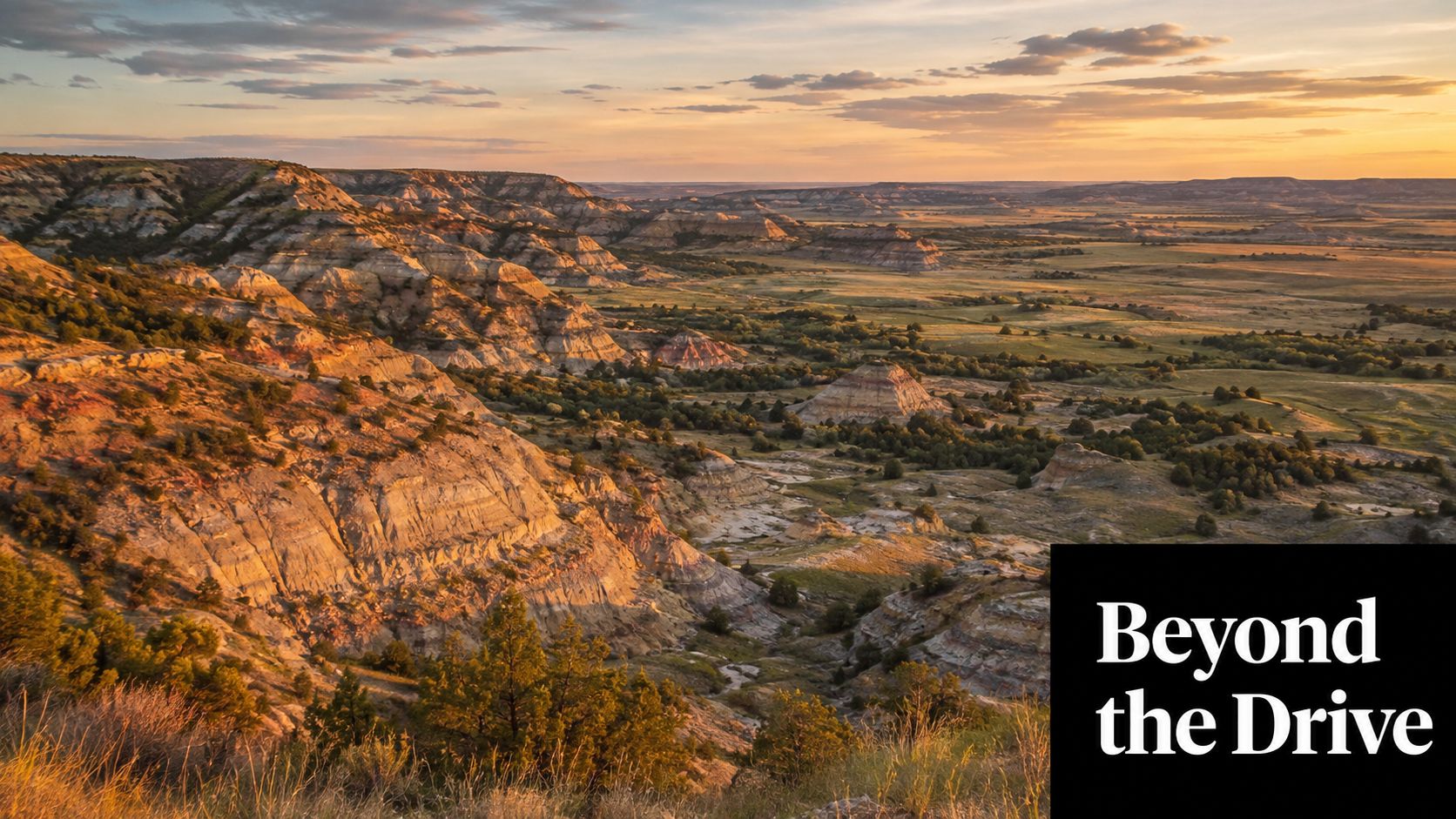
The park's scale is the first reason to slow down. Theodore Roosevelt National Park covers about 70,446 acres across the South Unit, North Unit, and Elkhorn Ranch Unit, according to National Park Service historical records. Those units aren't interchangeable. They differ in terrain, access, nearby services, road character, and the amount of time you'll need to experience them without rushing.
The park's history also reflects a changing conservation philosophy. Congress established it as Theodore Roosevelt National Memorial Park on April 25, 1947, and legislation changed its designation to Theodore Roosevelt National Park in 1978. That same legislation set aside 29,920 acres as wilderness, creating a useful lens for understanding why the park feels less like a polished attraction and more like protected open country. The story moved from memorial preservation toward formal national park stewardship, and the visitor experience still carries both purposes.
Why a flexible plan works better
A scenic loop can be affected by construction closures or winter conditions. Trails can close temporarily for prescribed burns. Summer thunderstorms can turn exposed overlooks into unsafe places, while winter snow and ice can make a road technically open but practically difficult.
The park remains a major destination, not an overlooked roadside pullout. Visitation tracking recorded 729.9 thousand recreation visits in 2025, placing the park No. 33 among 63 U.S. national parks, with 37.24 thousand overnight stays, according to park visitation tracking data. That level of visitation can create real pressure at entrances, viewpoints, campsites, and popular wildlife areas even though the park feels spacious.
Practical rule: Build your trip around access verification first, then choose scenic stops. A beautiful itinerary that depends on one road or trail staying open isn't a reliable itinerary.
Navigating 2026 Fees and Park Access Changes
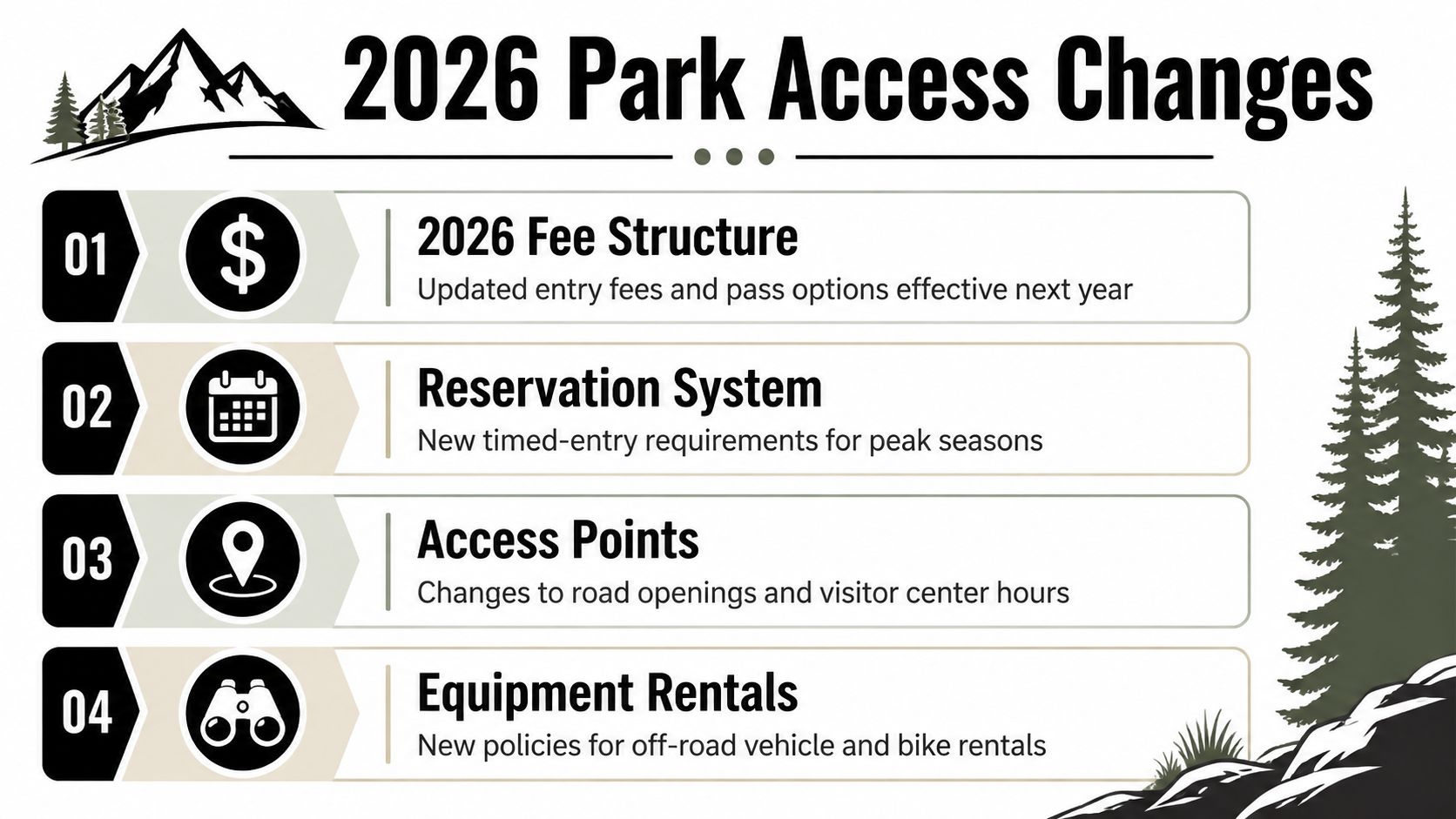
The most important arrival detail for 2026 is payment. Theodore Roosevelt National Park announced that it will move to a fully cashless fee system beginning May 1, 2026, as explained in the National Park Service cashless-fee announcement. Travelers should arrive with an accepted electronic payment method and shouldn't assume that cash will solve an unexpected entrance-station problem.
The standard private-vehicle entrance fee is $30, the motorcycle fee is $25, and the per-person fee is $15. Each pass is valid for 7 days, according to the official fee information. The pass structure is useful for travelers who visit more than one unit during the same trip, because you won't need to treat each entrance as a separate park visit.
What to expect by season
The park is open 24 hours a day, year-round, across all units, according to official park-hours guidance. That doesn't mean every facility or road will operate continuously. Staffed services follow seasonal schedules, and winter access can be affected by snow and ice.
The National Park Service says entrance fees are required year-round. From May through September, payment is collected at entrance stations. During winter, fees are collected at visitor centers, and when a visitor center is closed, visitors can deposit fees in a drop box near the flagpole, as described in the park's basic information.
The South Unit is especially convenient for road-trippers. Its entrance is directly off Interstate 94 in Medora at exits 24 and 27, making it a practical stop for travelers crossing western North Dakota.
Reservations are part of access planning
The 2026 change isn't limited to entrance payments. Reservations are required through Recreation.gov for Cottonwood Campground, Juniper Campground, and Roundup Group Horse Camp, so camping should be arranged before you commit to an overnight plan.
North Unit Versus South Unit Breakdown
The South Unit is usually the easier introduction because it sits beside Medora and Interstate 94. The North Unit rewards travelers who can give it more time and tolerate a more remote setting. Choosing between them isn't a matter of ranking one as better. It's about matching the unit to your available hours, services, and appetite for solitude.
The North Unit scenic road runs 14 miles in and 14 miles out, 28 miles total, according to current road-closure information. The route ends at Oxbow Overlook, and the out-and-back format makes the turnaround point part of the plan. You're not driving a conventional loop, so delays from wildlife viewing, pullouts, or trail time affect the return journey.
The South Unit offers a scenic loop with broad badlands views and more convenient access to Medora. It's also the unit where construction-related closures and seasonal snow-and-ice closures can most directly disrupt a classic drive. Check the current road status before assuming the full loop is available.
| Feature | North Unit | South Unit |
|---|---|---|
| Road design | 14 miles in and 14 miles out, 28 miles total | Scenic loop with possible construction or seasonal closures |
| Overall character | Quieter, more remote, and rugged | More accessible, developed, and connected to Medora |
| Best use | Extended viewpoints, wildlife watching, and longer hiking | First-time visits, short stays, and efficient sightseeing |
| Nearby services | Plan more carefully around remote access | Medora provides lodging, meals, and supplies |
| Planning risk | Return drive is required | Loop access may change by segment |
The third unit
The Elkhorn Ranch Unit serves a different purpose. It's the historic site associated with Theodore Roosevelt's North Dakota ranch, and it appeals most to visitors who want context rather than a concentrated sequence of overlooks. Facilities are limited, so it works best as a deliberate historical excursion rather than an add-on squeezed into an already full day.
For a short visit, choose one main unit. For a full day, combine the South Unit with selected North Unit stops only if current road conditions and driving time support it. A multi-day stay makes it easier to treat all three units as distinct experiences rather than racing between them.
Best Scenic Drives and Hiking Trails
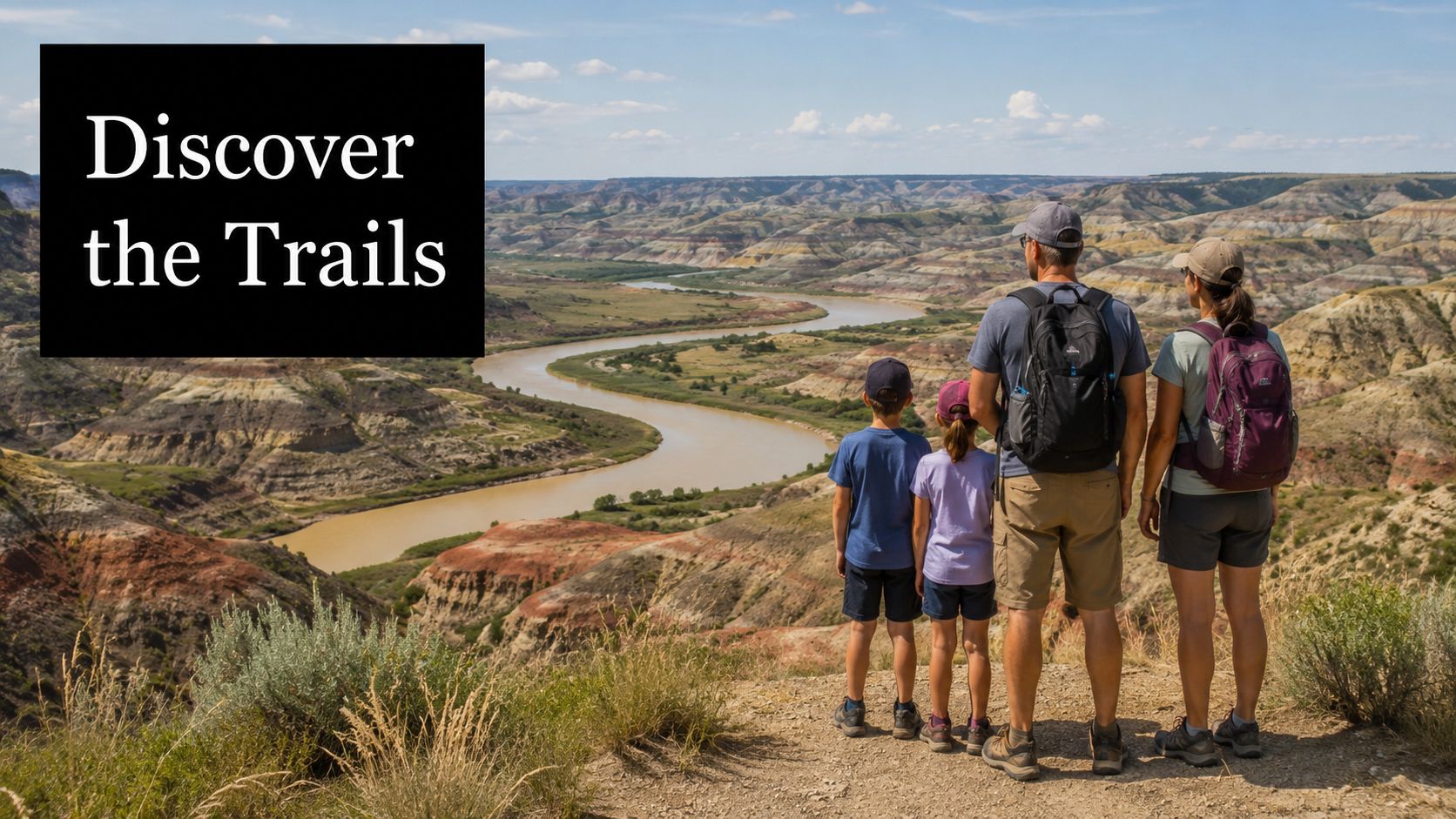
The South Unit gives you the strongest concentration of accessible scenery. Its route moves through layered badlands, open prairie, river views, and wildlife habitat, with pullouts that make it easy to adjust the pace. Wind Canyon is particularly effective near sunset, when the Little Missouri River and surrounding formations take on stronger contrast.
Painted Canyon Overlook is another worthwhile orientation point, especially for travelers approaching from Interstate 94. Prairie dog areas provide a different kind of encounter, with small animals active around their burrows and larger wildlife sometimes visible nearby. The practical mistake is trying to stop everywhere for the same amount of time. Choose a few overlooks for sustained viewing and use the others as brief scenic stops.
Match trails to your energy
Short trails can deliver excellent views without turning the day into an endurance exercise. Buck Hill is brief but steep, while Wind Canyon offers a compact walk toward a river overlook. In the North Unit, Sperati Point begins near Oxbow Overlook and descends toward the valley, making the return climb an important part of the decision.
Petrified Forest routes offer a more committed backcountry experience. The trail can be customized by turning around before completing the larger loop, which makes it a better choice for hikers who want flexibility rather than a fixed-distance obligation.
- For a short walk: Choose an overlook trail with a clear turnaround and strong views.
- For a moderate outing: Use a North Unit route that descends into the valley, but reserve energy for the climb back.
- For a longer commitment: Treat petrified forest routes as backcountry hikes and carry sufficient water, navigation tools, and weather protection.
In 2026, prescribed burn notices in both the North and South Units resulted in temporary trail closures. A separate South Unit entrance closure was scheduled for July 1, 2026 for security-related reasons, according to the National Park Service prescribed-burn and closure notice. Check trail and entrance status on the day you visit rather than relying on an older itinerary.
For broader route-planning ideas, this guide to scenic drives offers useful perspective on building a day around changing road conditions rather than collecting stops.
Suggested Itineraries for Every Trip Length
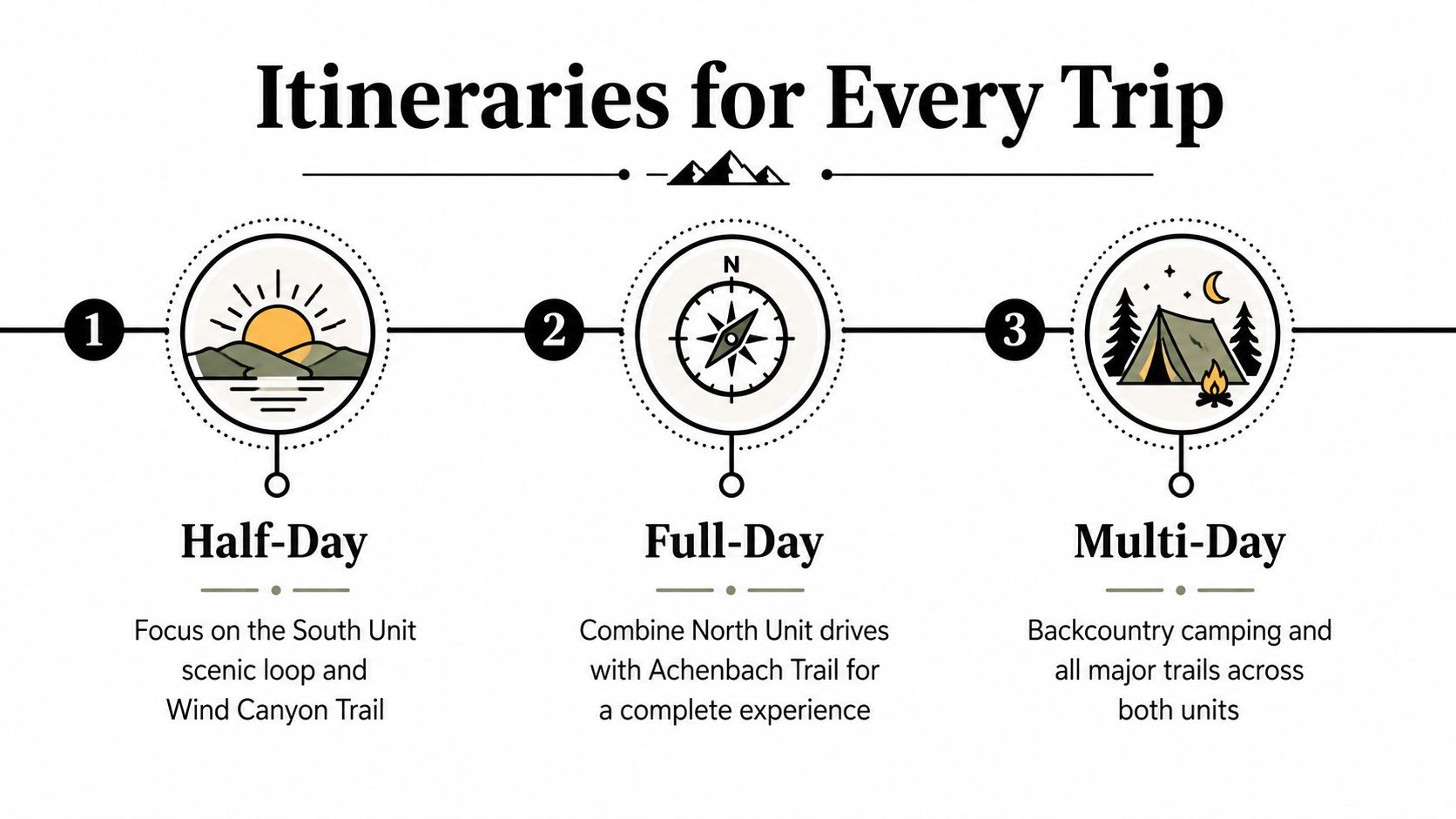
A good Theodore Roosevelt National Park itinerary protects time for observation. Wildlife can slow a drive, a storm can alter a hike, and a closed segment can make a neat loop impossible. The plans below work as frameworks, not rigid schedules.
Half-day
Base a short visit in the South Unit. Enter from Medora, confirm the current road situation, and prioritize the scenic loop sections that remain open. Add one short trail, such as Wind Canyon, then leave time for a wildlife pause instead of treating every pullout as a mandatory stop.
Bring food and water before entering. The National Park Service states that there are no hotels or restaurants inside the park, so a quick stop requires more self-sufficiency than many travelers expect. Medora is the practical place to buy supplies or eat before or after the drive.
Full day
Start in the South Unit while your schedule is fresh, then decide whether the North Unit is realistic after checking access and road conditions. The North Unit requires an out-and-back drive, so the route's 28-mile total should be treated as a fixed commitment rather than a casual detour.
If you'd rather avoid a long transfer, use the extra time for hiking, overlooks, and patient wildlife viewing in the South Unit. This often produces a better day than trying to force both main units into a narrow window.
Multi-day
A multi-day visit lets you separate the units and return to favored overlooks under different light. Use one day for the South Unit, another for the North Unit, and a dedicated outing for Elkhorn Ranch if Roosevelt history matters to you. Early and late outings are also easier to fit when you're not trying to cover every highlight in one daylight period.
Reserve camping before arrival and plan meals around Medora or Watford City. For a broader example of balancing scenery with practical stops, this national park travel guide is a useful itinerary-planning reference.
Wildlife Viewing and Photography Strategies
Wildlife watching works best when you give the park time to reveal itself. Bison, wild horses, elk, prairie dogs, bighorn sheep, and other prairie species can appear near roads, overlooks, and trails, but sightings aren't guaranteed at a particular pullout. Early morning and late evening generally offer more comfortable light and calmer conditions for patient observation.
Use the vehicle as a safe viewing platform near large animals. Don't approach bison or horses for a closer photograph, and never let a desired frame override distance and escape space. A telephoto lens is more useful than trying to move closer, while binoculars help you scan grasslands and opposite slopes before deciding whether a stop is worthwhile.
Locations and light
The South Unit's prairie dog areas can provide lively close-range viewing without requiring a long hike. Wind Canyon and other river-facing overlooks create layered compositions, with foreground grasses, sculpted badlands, and the Little Missouri River adding depth. In the North Unit, the road toward Oxbow Overlook gives you repeated opportunities to scan open slopes and canyon edges.
For photography, work with the terrain rather than fighting it. A wide lens suits expansive badlands scenes, while a telephoto lens isolates distant wildlife without disturbing it. Keep exposure compensation in mind when bright sky occupies much of the frame, and use a faster shutter speed when wind moves grass or an animal changes direction.
Wildlife practice: Stop where you have a clear view, stay patient, and let the animal determine the distance. The best photograph usually comes from better positioning, not closer positioning.
Avoid blocking traffic or gathering around animals. If a bison moves toward the road, remain in your vehicle and let it pass. For general outdoor route inspiration, this hiking guide for different skill levels can help you compare short walks with more demanding terrain.
Camping Reservations and Nearby Lodging Options
The park has no hotels or restaurants inside its boundaries, so overnight planning affects the entire visit. Camping offers the closest base to the terrain, while Medora and Watford City provide easier access to beds, groceries, and meals.
Camping reservations use Recreation.gov. The 2026 reservation requirement applies to Cottonwood Campground, Juniper Campground, and Roundup Group Horse Camp, so confirm availability before building a trip around a specific campsite. The National Park Service permits and reservations page is the appropriate place to verify current campground procedures.
Choosing a base
Cottonwood is the natural camping choice for South Unit visitors. It keeps you close to Medora and the southern badlands, which is useful for sunrise and sunset outings. Juniper Campground serves North Unit travelers and is listed as open year-round, located five miles from the North Unit entrance, according to the same official reservation guidance.
Roundup Group Horse Camp is designed for group equestrian use, so it isn't a substitute for a standard individual campsite. Read the facility description carefully before reserving.
For travelers who prefer indoor lodging, Medora is the most convenient South Unit base. It offers hotels, vacation rentals, restaurants, groceries, and seasonal visitor services. Watford City is a practical option for the North Unit, especially when you want to avoid commuting from Medora.
Food and timing
Stock breakfast, snacks, and water before entering the park. A restaurant meal in Medora can work well after a South Unit outing, but it won't solve a remote North Unit lunch unless you plan ahead. Campers should also account for changing weather when deciding whether to prepare meals outdoors.
The most dependable booking workflow is simple:
- Check the unit first: Reserve near the unit where you'll spend the most time.
- Use Recreation.gov: Confirm dates, campground type, and current operating details there.
- Keep a town backup: Medora or Watford City can provide a fallback if camping no longer fits the forecast.
For ideas about evaluating nearby communities as travel bases, this guide to Omaha neighborhoods offers a useful comparison mindset, even though the destination is different.
Packing Essentials and Badlands Safety Tips
The badlands punish casual packing. Theodore Roosevelt National Park averages about 15 inches of precipitation annually and roughly 30 inches of winter snowfall, with violent summer thunderstorms and winter blizzards possible, according to National Park Service weather guidance. Conditions can shift quickly on exposed overlooks, muddy roads, and unpaved surfaces.
Pack in layers, including a wind-resistant outer layer, sun protection, sturdy footwear, water, snacks, a basic first-aid kit, and offline navigation. A hat with a secure fit matters in strong wind, and traction becomes more important after rain or during icy periods. Before a longer hike, tell someone your route and expected return, especially where cell service is unreliable.
A practical checklist
- Weather protection: Layered clothing, rain protection, sunblock, sunglasses, and a secure hat.
- Trail equipment: Sturdy shoes, water capacity, snacks, navigation backup, and a small first-aid kit.
- Wildlife awareness: Binoculars and a telephoto lens, not a closer approach.
- Vehicle readiness: Fuel, food, water, and a plan for changing road access.
For a broader gear reference before you leave, browse the national park list and adapt the checklist to North Dakota's wind, storms, and winter conditions.
Stay on designated trails to limit erosion in fragile badlands. Give wildlife room, pack out waste, and avoid shortcuts across soft formations. Check current road closures, entrance notices, trail conditions, and weather before departure. The park is open year-round, but a successful visit depends on responding to the conditions that exist on your travel date.
For additional destination-planning perspective, this Santa Fe travel guide provides another example of pairing cultural stops with practical logistics.
Reworx Recycling helps organizations retire laptops, computers, servers, and other electronics through responsible electronics recycling, secure data destruction, IT asset disposition, and business pickup services. If your company is replacing equipment or planning an office or facility cleanout, visit Reworx Recycling to donate old technology, schedule a pickup, or explore a community-minded recycling partnership.