A Phoenix IT manager has a familiar problem: a room full of retired laptops, monitors, and phones, and no record showing where the equipment will go or what will happen to its data. The devices may be ready to leave, but until the organization can account for them from pickup through final disposition, the job isn't finished.
Computer recycling in Phoenix is an operational decision, not just a sustainability gesture. Arizona's voluntary approach to e-waste puts the burden on each organization to choose a responsible channel and keep evidence of what happened. The practical test is straightforward: can you show who collected each asset, how its data was handled, and whether it was reused or recycled?
Why Phoenix Businesses Need a Real Computer Recycling Plan
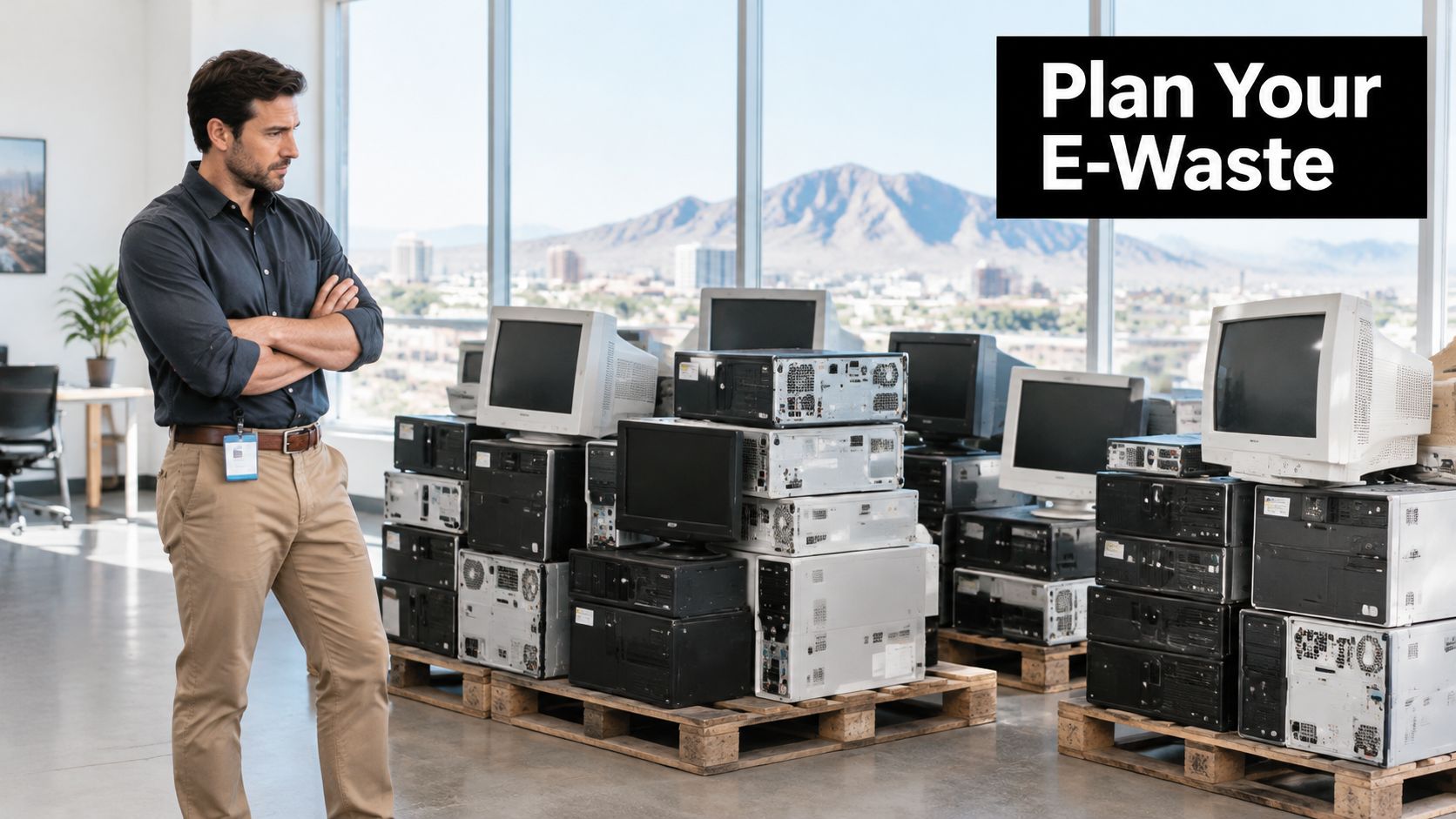
A healthcare group in Central Phoenix might be replacing laptops across offices while a school system clears out classroom computers. In either case, pallets of equipment can accumulate before anyone confirms what contains data, which devices can be reused, or who will document the transfer. Treating that pile as ordinary waste creates an avoidable gap between the organization's asset records and the equipment's final destination.
Arizona's electronics-recycling effort has been operating for years. The Arizona Department of Environmental Quality says it has worked with communities to divert e-waste from landfills since 2009, and community collection events had recycled more than 2.7 million pounds of used electronics by 2025, approximately 1,350 short tons (ADEQ's e-waste program). That history makes computer recycling an established part of technology lifecycle planning, not an occasional cleanup chore.
The operational risk begins when equipment leaves without clear ownership records or a verified data plan. A general pickup receipt may show that items were collected, but it won't necessarily tell an auditor which serial-numbered devices were sanitized, destroyed, reused, or sent for materials recovery.
Practical rule: Don't approve a pickup until you know what records the provider will return and who is responsible for each step after collection.
Start with an inventory, identify data-bearing equipment, and decide which assets may be suitable for reuse. Then choose a collection channel that can handle the volume and provide the documentation your organization needs. This playbook covers Phoenix disposal options, recycler screening, secure data destruction, and the records that support an audit or insurer review.
How Arizona's Voluntary E-Waste Framework Shapes Your Options
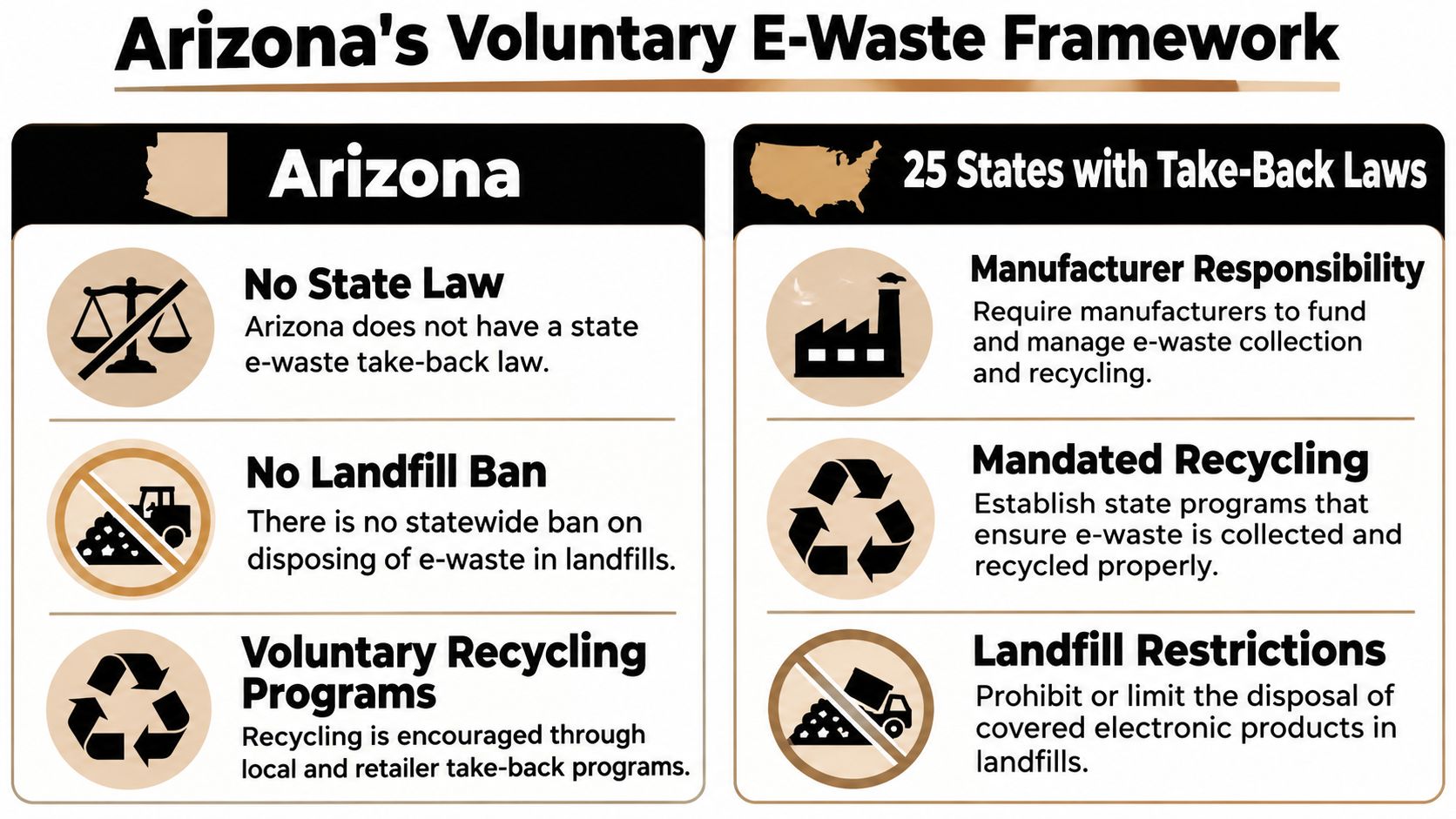
Arizona doesn't have a statewide electronics-recycling law or landfill ban. By contrast, 25 states have manufacturer take-back requirements or disposal bans, according to the Arizona e-waste compliance overview (Phoenix electronics recycling and Arizona requirements). For Phoenix organizations, the absence of a statewide mandate doesn't remove the need for responsible handling. It makes the organization's own selection and documentation process more important.
A handoff to a general hauler isn't, by itself, evidence of responsible disposition. Phoenix businesses should be able to account for the equipment's chain of custody, identify downstream processors, and show how storage media was sanitized or destroyed. Those controls matter for laptops and servers, but they also apply to drives and other data-bearing components removed during decommissioning.
The City of Phoenix directs residents and organizations toward designated electronics-recycling options rather than treating electronics as ordinary curbside material. Its guidance includes computers, laptops, monitors, printers, cell phones, televisions, and devices containing non-removable batteries. The city also cautions against placing household hazardous waste in regular trash or recycling containers. Phoenix solid-waste customers can use the city's household hazardous-waste collection service, while electronics with non-removable batteries should follow the designated electronics pathway (City of Phoenix household hazardous-waste guidance).
For businesses, the right response is to treat records as part of the disposal process, not an administrative extra. A sustainability director needs evidence to support diversion reporting; an IT manager needs asset-level closure; and facilities staff need a documented transfer. Phoenix organizations looking for local guidance can review Arizona electronics-recycling options for businesses.
Phoenix Drop-Off, Retail Take-Back, and Pickup Channels Compared
The right channel depends on volume, data risk, and the proof your organization needs. A household drop-off may suit a small batch of equipment, while a business retiring devices across departments needs a process that connects inventory, transport, and final disposition.
| Channel | Best for | Documentation |
|---|---|---|
| Municipal electronics-recycling pathway | Residents and small quantities of accepted household electronics | Follow the city's collection instructions; confirm what receipt or transfer record is available |
| Retail take-back | Limited quantities of eligible devices accepted by a participating retailer | Check the retailer's terms and keep the available transaction or drop-off confirmation |
| Commercial ITAD pickup | Office cleanouts, multi-site refreshes, data center decommissioning, or equipment containing sensitive data | Request asset inventory, transfer records, data-destruction evidence, and final disposition records |
Municipal options are useful when the load is small and the equipment fits the city's acceptance pathway. They aren't automatically a business ITAD program. Before taking organizational equipment to a public collection point, check whether the site accepts the quantity and device types involved and whether it can provide records appropriate for your internal controls.
Retail take-back can be convenient for a small number of eligible devices, especially when the organization doesn't need a complete asset-level disposition package. But a retailer's receipt may not document what happened to each serial-numbered device or how its data was handled. Don't assume a consumer-oriented collection program satisfies business audit requirements.
A scheduled commercial pickup is the sensible choice when equipment is spread across offices, includes servers or network assets, or contains storage media that must be tracked. It also fits office cleanouts and facility cleanouts where one team needs a coordinated transfer record. A business comparing local service details can review Phoenix computer and laptop recycling options before selecting a channel.
Decision rule: Use public or retail drop-off for small, low-complexity loads when the available receipt is sufficient. Choose a commercial ITAD provider when you need coordinated logistics, data controls, and a documented path for each asset.
Screening Recyclers With R2 and e-Stewards Standards
A vendor's sustainability language isn't a substitute for an independent operating standard. The U.S. Environmental Protection Agency identifies R2 and e-Stewards as the two accredited certification standards for electronics recyclers (EPA electronics recycling information). Arizona ADEQ also points organizations to these certifications, which address environmental protection, worker health and safety, secure downstream management, reuse and recycling, and data destruction (ADEQ's approved e-waste recycler guidance).
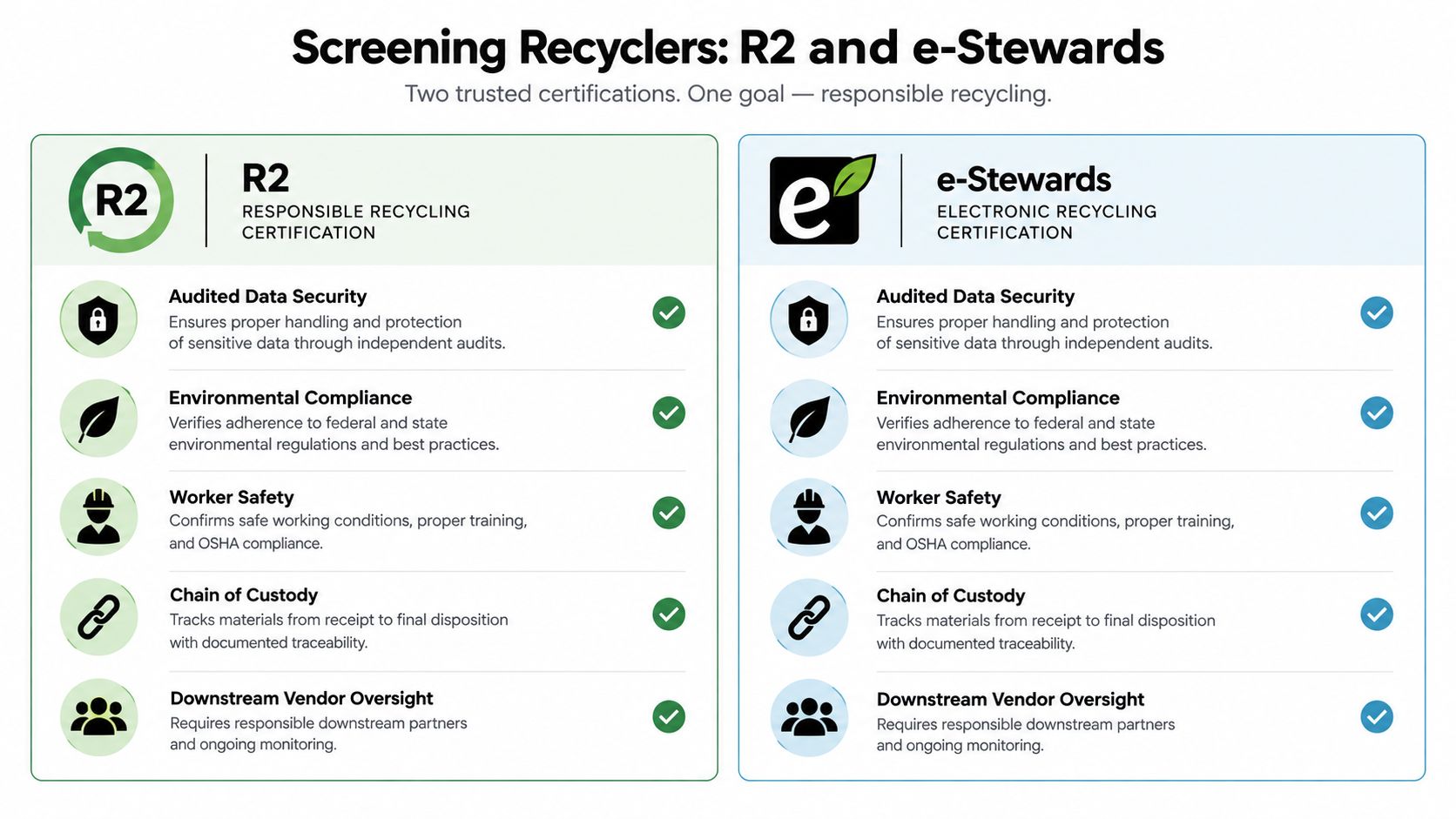
For a Phoenix procurement team, certification is a screening tool, not the end of due diligence. Ask the provider to explain how its certification applies to the site and processes handling your equipment. Then test whether the provider can answer specific questions about tracking, downstream vendors, and outcomes.
- Certification: Do you operate under R2 or e-Stewards, and can you provide current certification information?
- Downstream accountability: Which processors receive materials or equipment after your facility, and how are they controlled?
- Asset tracking: Can you tie collection and final disposition records to individual assets or serial numbers?
- Disposition reporting: Will you distinguish equipment directed to reuse from materials sent for recycling?
Don't accept a broad assurance that everything is “recycled responsibly” as the complete answer. The provider should be able to describe how it handles reusable systems, damaged devices, storage media, and components requiring separate downstream processing.
Reworx Recycling is a donation-based electronics recycling and IT equipment disposal social enterprise that can evaluate retired equipment for reuse before material recycling. That model is relevant to organizations seeking community benefit, but procurement teams should still apply the same standards-based screening and documentation expectations they'd use with any ITAD provider. For a starting point on certification criteria, see electronics recycling certification considerations.
Meeting EPA and NIST Standards for Secure Data Destruction
A computer that's powered off can still contain recoverable information. Phoenix organizations should address data on hard drives, system memory, and external media before equipment leaves their control. The EPA's federal equipment-transfer guidance points organizations to NIST Special Publication 800-88 for media sanitization practices and calls for data clearing to be verified (EPA federal electronics-disposition checklist).
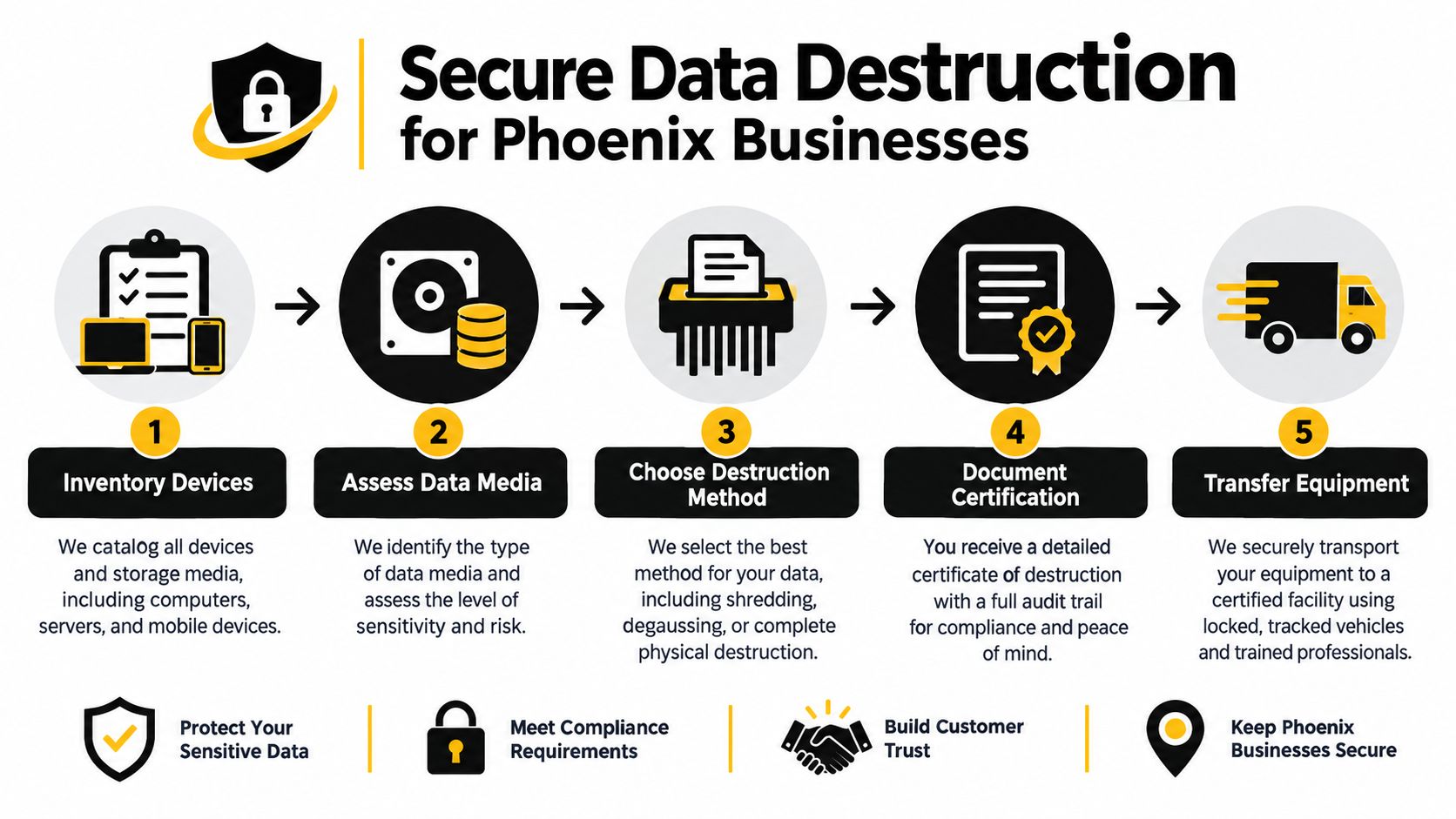
Choose the method based on the media and its condition. A software-based wipe can be appropriate for functioning storage devices when the process can be completed and verified. Cryptographic erasure may be an option where the storage system and encryption design support it, but the organization needs to confirm the method and retain evidence. A damaged or unresponsive drive may not allow a reliable wipe; physical destruction, such as hard-drive shredding, is the defensible alternative when sanitization can't be verified or policy requires destruction.
Build data handling into the transfer
Before pickup, inventory the devices and identify their storage media. Remove external media such as USB drives, disks, or tapes, and record how each item will be handled. The EPA's federal checklist also calls for property-disposal documentation, suitable packaging, and verification that data clearing succeeded. Equipment that fails data clearing should be treated as defective and scheduled for scrapping.
Your process should connect each data-bearing asset to its sanitization or destruction evidence. A general certificate covering a batch may not answer which drive was wiped, which was destroyed, or what happened to a failed device. Set that requirement before signing the work order.
For Phoenix businesses, a documented wipe or destruction record supports IT asset disposition (ITAD) whether equipment is later donated, resold, or recycled. Review data sanitization methods for retired equipment and agree on reporting details before equipment leaves the building.
Building the Documentation Phoenix Auditors and Insurers Expect
In a voluntary framework, the visible recycling fee isn't the whole cost of responsible disposition. The organization also needs evidence that the right assets were transferred, data-bearing equipment was handled correctly, and downstream processing was accountable. The documentation is part of the service.
| Record | What it demonstrates | Who may need it |
|---|---|---|
| Asset inventory with serial numbers | Which equipment entered the disposal process | IT asset management and internal audit |
| Pickup or transfer record | When custody changed and who accepted the equipment | Facilities, procurement, or a public-records response |
| Data-destruction certificate | How identified drives or media were sanitized or destroyed | Cyber-insurance review, security, or compliance teams |
| Reuse-versus-recycling disposition | Whether equipment was directed to reuse or material recovery | Sustainability reporting and asset retirement |
| Downstream processor information | Where materials or devices went after initial collection | Vendor oversight and environmental review |
A school or municipality may need transfer records for a public-records request. A cyber-insurance review may focus on whether data-bearing devices were sanitized or destroyed and whether the organization can demonstrate that process. A healthcare sustainability team may need disposition information to support internal reporting, while an enterprise IT auditor may ask for serial-level reconciliation between the asset register and the recycler's records.
Don't settle for a single pickup slip when your risk and reporting needs require more. Ask whether asset-level records will show the equipment collected, whether the chain of custody continues through downstream processing, and how exceptions are handled. That includes missing serial numbers, damaged drives, and devices that can't be cleared.
A file that says “electronics collected” proves collection. It doesn't prove what happened to each asset.
Put the documentation requirements in the scope of work. Define the asset fields, data-destruction evidence, disposition categories, and downstream information your team expects to receive. A provider that can't explain what it will document is asking you to accept an unverified handoff. See chain-of-custody documentation for electronics recycling when setting your recordkeeping expectations.
Preparing Equipment for Pickup in Phoenix
Use the week before pickup to make the transfer safer and easier to reconcile. Start by separating equipment that may be reusable from damaged devices, then capture serial numbers and ownership tags so the pickup list matches your asset records.
- Sort by condition: Keep reusable systems separate from equipment with broken screens, damaged cases, or failed components.
- Record identifiers: Capture serial numbers and ownership details before packing.
- Separate accessories: Remove items that need a different processing stream, such as loose batteries or external media.
- Protect devices: Package laptops, monitors, and other equipment to reduce the chance of screen or battery damage in transit.
- Screen batteries: ADEQ advises that batteries generally shouldn't go in trash or standard recycling bins, except for alkaline batteries. It recommends sending the whole device to an e-waste collector when battery removal could be unsafe; visibly damaged, bulging, leaking, or corroded batteries should be managed through the local municipality (ADEQ battery guidance).
Clear preparation makes asset reconciliation easier and gives working equipment a better chance of being assessed for reuse rather than sent straight to material recovery.
Partnering With Reworx Recycling for Phoenix ITAD
Reworx Recycling offers business pickups, equipment decommissioning, IT asset management, recycling consultations, and hard-drive shredding, alongside donation-based recycling and equipment buyback options. Those services can support a downtown office laptop refresh, a school district retiring classroom computers, or a healthcare provider managing data-bearing equipment. Confirm the pickup scope and required records before scheduling so the collection aligns with your organization's security and sustainability procedures.
Choose a disposition partner that treats documentation, data security, and reuse as core parts of the job. Invite Reworx to discuss a Phoenix pickup, an office or facility cleanout, or a longer-term partnership that directs suitable technology toward community programs, digital inclusion, and workforce development.
Arrange a business pickup with Reworx Recycling, or ask about donating retired computers and other IT equipment for responsible assessment and disposition. Visit Reworx Recycling to explore recycling guidance and start a conversation about your Phoenix organization's ITAD needs.