
You've probably opened a map of the Black Hills and discovered the problem: Mount Rushmore is only one stop among mountain roads, wildlife routes, historic towns, caves, and the Badlands. The challenge isn't finding places to visit. It's sequencing them so you aren't spending your best hours backtracking, searching for parking, or arriving at a scenic overlook with the day's crowds already in place.
This South Dakota Mount Rushmore Travel Guide and Nearby Attractions plan treats the region as a connected road trip. You'll find practical timing advice, lodging trade-offs, realistic attraction pairings, and sample routes that work for a short visit or a fuller Black Hills adventure. For travelers comparing this trip with other premium American journeys, Haute Black's guide to top luxury travel experiences in the USA offers useful inspiration, but the Black Hills rewards thoughtful logistics more than elaborate arrangements.
Planning Your Epic South Dakota Adventure
A first trip can become inefficient fast. Mount Rushmore, Crazy Horse Memorial, Custer State Park, Badlands National Park, Deadwood, and the cave parks sit across a broad area, and the best sequence depends on your base, arrival time, and willingness to treat scenic roads as destinations rather than simple connectors.
Group nearby stops before choosing lodging. Mount Rushmore, Keystone, Hill City, and Crazy Horse Memorial work well in one western Black Hills cluster. Custer State Park deserves its own block because wildlife routes and scenic drives can fill a day. Reserve a separate eastern excursion for Badlands National Park, with Wall Drug and Minuteman Missile National Historic Site if those stops fit your schedule.
Practical rule: Visit the busiest landmark early, use midday for museums or a longer drive, and save late afternoon for overlooks or a second major site.
Your lodging choice creates a real trade-off. Keystone reduces driving for Mount Rushmore and nearby attractions, while Hill City offers a practical position between the memorial, Crazy Horse, and Custer State Park. Staying farther south or east can suit a longer road trip, but it adds drive time to the western cluster. Build the itinerary around where you sleep instead of crossing the Black Hills repeatedly.
Summer brings the heaviest crowds at Mount Rushmore. The National Park Service identifies June, July, and August as the busiest months, and the memorial receives just over two million visitors each year in normal years. The NPS visitation statistics record 1,850,329 recreation visits in 2024, compared with 2,431,195 in 2023 and 2,440,449 in 2022. Arriving early and keeping the day flexible matters most around Keystone and the central Black Hills corridor.
The area's popularity also supports local businesses, while increasing pressure on roads, restaurants, and lodging during peak periods. Book popular meals and rooms ahead, then place the most time-sensitive attraction first. Travelers comparing this trip with other premium American journeys can browse top luxury travel experiences in the USA, but the Black Hills rewards smart sequencing more than elaborate arrangements.
Visiting Mount Rushmore Essential Logistics
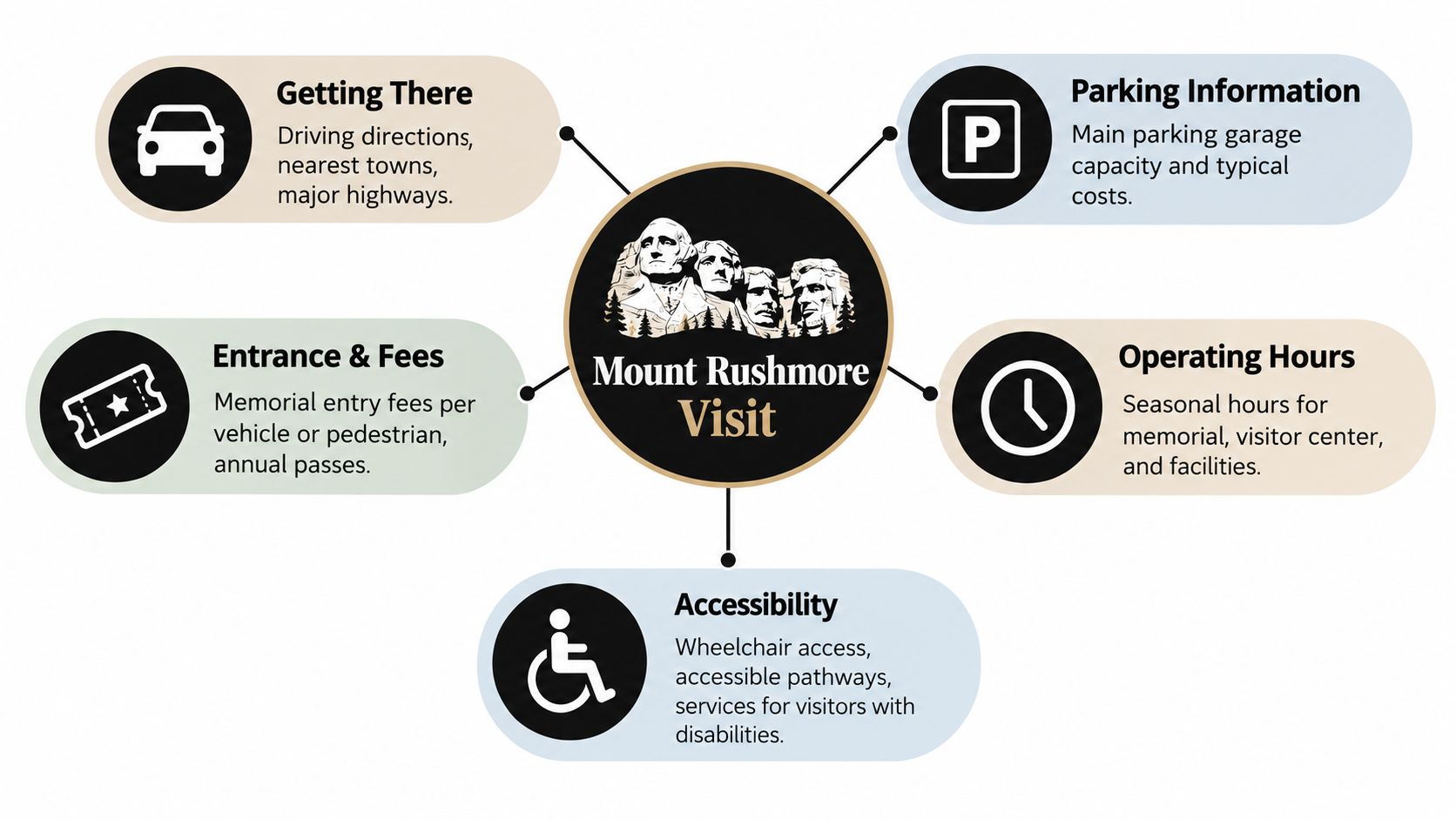
A Mount Rushmore visit can lose time before you even reach the sculpture. Parking, road conditions, and the order of nearby stops determine whether the day feels relaxed or rushed. The National Park Service states that there's no public transportation to the memorial, and Rapid City Regional Airport is 35 miles away, so a rental car or personal vehicle is the practical choice for linking Mount Rushmore with Keystone, Crazy Horse Memorial, Custer State Park, and the Badlands. Confirm current road conditions and directions through the NPS directions and transportation guidance.
Arrival timing that actually works
Mount Rushmore's official visitor facilities operate year-round except December 25, while the parking structure and memorial grounds follow seasonal schedules. Check the official NPS basic information page before departure, especially for an off-season trip or an evening visit.
During June, July, and August, the NPS recommends arriving before 9:00 a.m. or after 3:30 p.m. Those windows support two workable itineraries:
- Morning strategy: Enter before 9:00 a.m., visit the memorial grounds, walk the trail, and see the museum before continuing to Crazy Horse or Custer.
- Late-day strategy: Spend the morning elsewhere, arrive after 3:30 p.m., and stay for the evening lighting program when it is scheduled. This reduces the pressure of fitting every stop into the busiest part of the day.
- Shoulder-season strategy: May, September, and October are identified by the NPS as less busy than summer. Parking and walking generally feel more manageable, though seasonal schedules still require checking.
The best sequence depends on your base. From Keystone, Mount Rushmore works well as the first stop, followed by Crazy Horse or Custer. From Rapid City, an early departure matters more because a delayed start, a slow scenic road, or a full parking area can disrupt a scheduled tour elsewhere. Avoid promising yourself a precise morning arrival if the same day includes a distant attraction with a fixed start time.
Parking and entry costs
Mount Rushmore parking is $10 for cars, motorcycles, and RVs, $5 for seniors, free for active military, and $50 for commercial tour buses. The pass remains valid for 24 hours from first entry, according to the memorial's parking information.
That validity supports a split-day plan. Visit in the morning, explore another attraction during the afternoon, then return for the lighting ceremony without buying another parking pass during the valid period. Overnight parking inside the memorial boundary is not permitted. RV travelers therefore need a separate campground or lodging stop rather than using the memorial lot as a base.
Accessibility and evening planning
The main visitor areas accommodate visitors with mobility needs, while the Presidential Trail includes grade changes and steps that may not suit every traveler. Use accessible viewing areas, elevators, and visitor-center facilities where appropriate. Contact the memorial before arrival if someone in your group requires a specific service.
The evening lighting ceremony changes the pace of the visit. It suits travelers who want a quieter, more reflective experience, but darkness, cooler conditions, and the return drive require planning. Keystone or Hill City makes the trip back easier than Rapid City. Custer can work too, provided your group accepts a longer nighttime drive. Do not place a distant attraction immediately after the ceremony.
Crowd-avoidance insight: In summer, choose a deliberately early arrival or a late-afternoon entry. Midmorning combines heavier parking pressure with higher visitor volume.
Experiencing the Memorial Beyond the Sculpture
The granite faces are the visual centerpiece, but a quick photo from the Grand View Terrace leaves out the parts that explain why the memorial exists and how it was built. Allow time for the Avenue of Flags, the Lincoln Borglum Visitor Center, the Sculptor's Studio, and the Presidential Trail.
Begin at the Avenue of Flags. It creates a formal approach to the memorial and gives you a gradual change in perspective as the faces become visible beyond the columns. From there, continue toward the Grand View Terrace for the classic overlook, then decide whether your group has the time and mobility for the walking route.
Follow the story through the visitor facilities
The Lincoln Borglum Visitor Center adds context through exhibits and a film about the memorial's planning, carving, and political history. It's especially valuable for families and travelers who want more than a landmark photograph, because the displays help translate the scale of the mountain into a human construction story.
The Sculptor's Studio provides another layer of interpretation. Visitors can learn about the techniques used during the project and the practical challenges of carving large presidential portraits into granite. The setting makes the memorial feel less like a finished object and more like a long engineering and artistic undertaking.
Construction began on October 4, 1927, and the memorial was completed in October 1941, a span of 14 years. The carving itself took about 6.5 years of actual work, and the reported cost was $989,992.32, nearly $1 million at the time. Those figures are summarized in the historical account of Mount Rushmore's construction.
Walk for changing viewpoints
The Presidential Trail offers closer and changing views of the faces, along with interpretive information and access toward the Sculptor's Studio. Wear shoes suited to a maintained walking path, carry water, and avoid treating the route as a quick dash between photo stops.
The faces were unveiled in stages, Washington in 1930, Jefferson in 1936, Lincoln in 1937, and Theodore Roosevelt in 1939. Reading those milestones alongside the exhibits gives the visit a chronological shape. Instead of seeing four faces as a single image, you can follow the project's evolution and understand how the memorial developed over time.
Plan the memorial as a substantial stop, not a roadside pause. Visitors who rush to the terrace often miss the strongest educational material, while those who combine the trail, visitor center, and studio usually leave with a more complete sense of the site.
Exploring Key Attractions Near Mount Rushmore
The most logical nearby pairing is Crazy Horse Memorial. It's close enough to combine with Mount Rushmore, but its purpose and visitor experience are different. Mount Rushmore is a completed national memorial with a compact visitor route. Crazy Horse is an active, privately operated mountain-carving project supported by museums, cultural interpretation, and educational facilities.
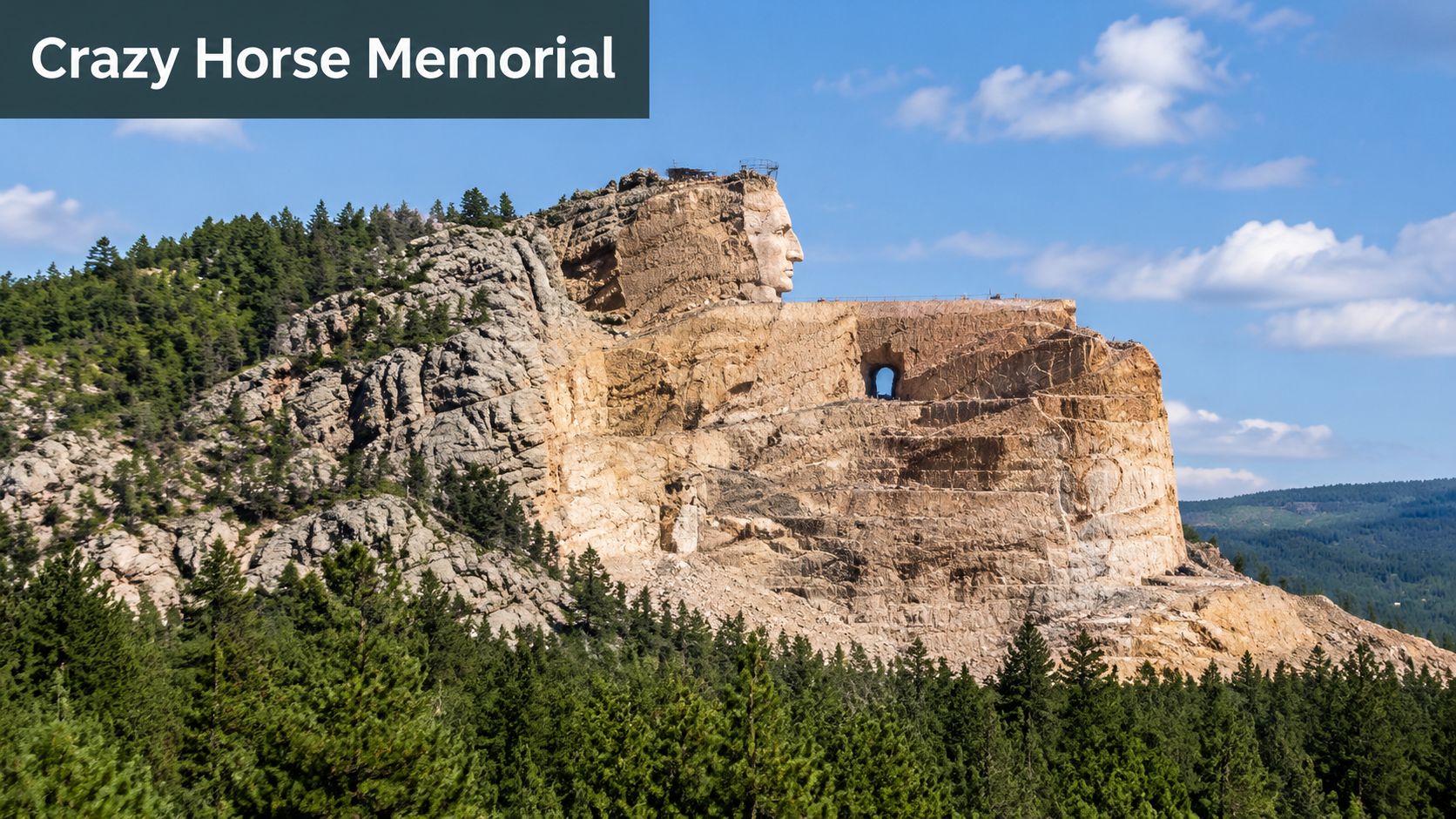
Crazy Horse's planned mountain dimensions are 641 feet long by 563 feet high. The completed face is 87 feet 6 inches high, and the outstretched arm is 263 feet long, according to the official Crazy Horse Memorial mountain information. That scale is difficult to appreciate from a passing vehicle, so the welcome center and museum deserve real time on the itinerary.
The trade-off is straightforward. Mount Rushmore gives you a polished, focused national memorial visit. Crazy Horse offers a broader cultural and educational experience, but the mountain remains unfinished and the site is more dependent on museum and interpretive programming. Travelers who only want a quick photograph may find it slower than expected. Those interested in Native American history, monumental sculpture, and the project's continuing story will usually find the additional time worthwhile.
Black Hills Major Attractions at a Glance
| Attraction | Entrance Fee (Per Vehicle) | Recommended Time | Best For |
|---|---|---|---|
| Mount Rushmore National Memorial | $10 parking pass, with senior and active military provisions described in the official parking information | Half day | Presidential history, sculpture, accessible visitor facilities, evening lighting |
| Crazy Horse Memorial | Confirm current admission details with the official site before travel | Multi-hour stop | Mountain scale, museum exhibits, cultural education, ongoing carving |
| Custer State Park | $25 temporary vehicle license valid for 1–7 consecutive days | Full day or longer | Wildlife viewing, scenic drives, granite formations, outdoor activities |
A useful sequence is Mount Rushmore early, Crazy Horse later, then a meal in Hill City or Custer. You can reverse the order in the shoulder season, but in summer the early Mount Rushmore visit usually solves the more difficult parking and crowd problem first.
Don't confuse proximity with interchangeability. Crazy Horse isn't a substitute for Mount Rushmore, and Mount Rushmore doesn't provide the same museum-centered experience. Treat them as complementary stops, then reserve a separate block for Custer State Park rather than trying to squeeze its scenic roads into the same afternoon.
Widening the Adventure to Custer and the Badlands
Custer State Park supplies the scenery that Mount Rushmore can't. Instead of a single monumental viewpoint, you get a network of roads through granite formations, forest, open grassland, and wildlife habitat. The strongest day usually combines the Wildlife Loop Road with either Needles Highway or Iron Mountain Road, rather than attempting every route at high speed.
The temporary entrance license costs $25 per vehicle for 1–7 consecutive days, and it's valid in any South Dakota state park or recreation area for that period, as explained by Custer State Park's visitor information. South Dakota regulations also specify daily entrance-license rules outside Custer State Park, including $10 per vehicle for residents and $15 for nonresidents, while the Custer temporary license provides broader seven-day use. Review the South Dakota park entrance regulations before finalizing a multi-park plan.
Build a Custer day around the road, not just the destination
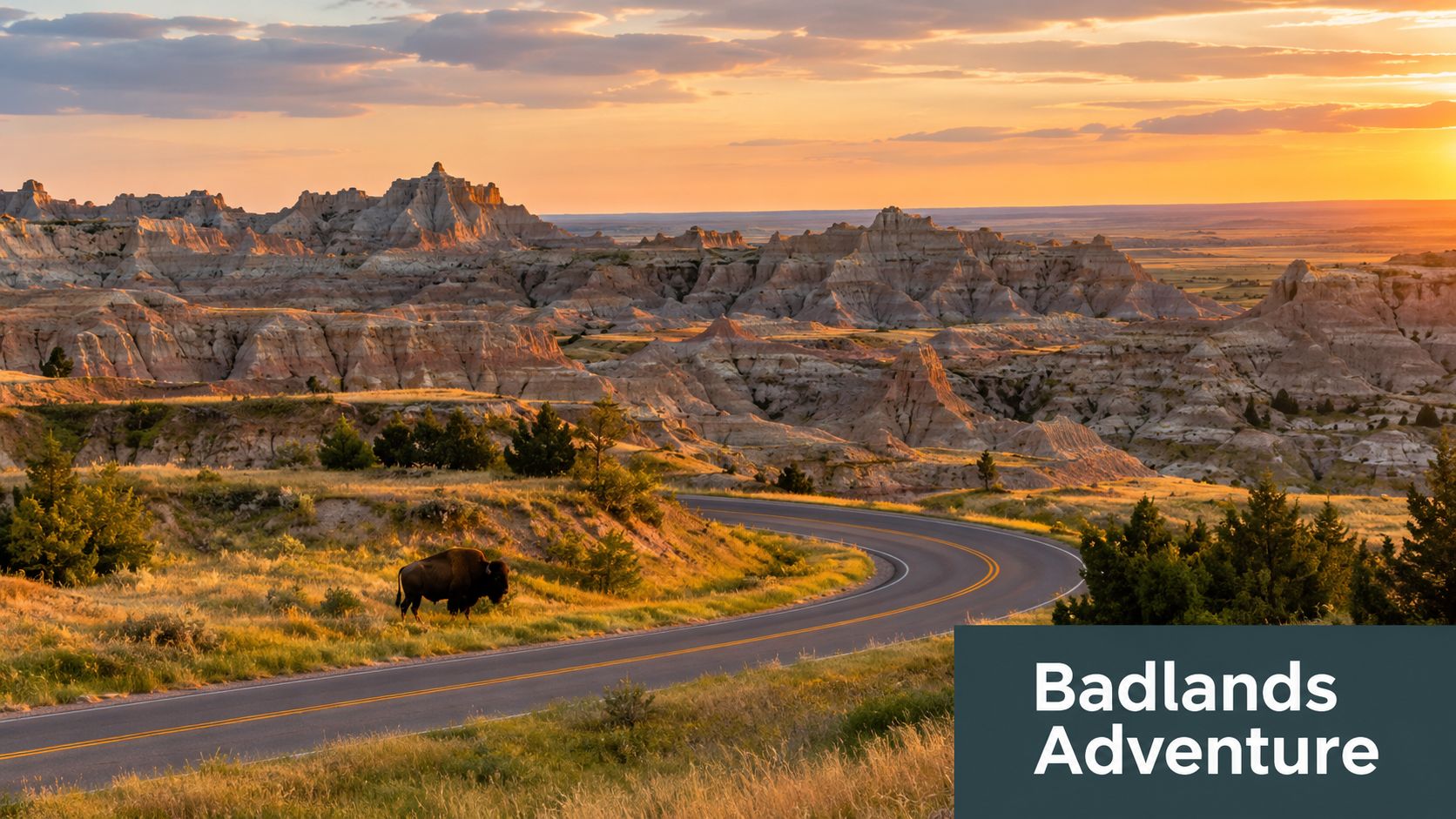
Start with the Wildlife Loop Road when animals are active and the light is comfortable. Bison, pronghorn, prairie dogs, and other wildlife may appear near or beyond the roadway, so drive slowly, maintain a safe distance, and never approach or feed animals. The route rewards patience more than speed.
Needles Highway works best when you leave time to stop at granite formations and overlooks. It's narrow and winding, so it's a poor choice for travelers trying to make a strict appointment on the other side of the park. Iron Mountain Road is another scenic option, especially for changing views toward Mount Rushmore, but it should also be treated as an experience rather than a shortcut.
Sylvan Lake makes a natural pause for a walk, photographs, or a meal break. If your vehicle is large, check route restrictions before choosing the narrow scenic roads. A conventional car gives you more flexibility than a long RV or trailer on the most constrained sections.
Give the Badlands its own rhythm
Badlands National Park feels entirely different from the pine-covered Black Hills. Plan for scenic overlooks, short walks, and exposed terrain rather than a single central attraction. The loop road works well when you stop selectively, stretch your legs, and leave room for weather changes.
Wall Drug is the classic roadside companion to a Badlands visit. It's deliberately kitschy, which is part of the appeal, but don't let it consume the time you need for the park's overlooks. The Minuteman Missile National Historic Site adds a historical dimension to the eastern itinerary and works well for travelers who want more than scenery.
If you're extending a broader regional road trip, the Theodore Roosevelt National Park travel guide can help you compare another prairie-and-badlands destination. Keep the same principle here: group stops by direction, and don't mistake a list of map pins for a workable day.
Sample Itineraries for Your Black Hills Trip
A workable Black Hills itinerary follows the region's driving pattern instead of stacking every attraction into one day. Mount Rushmore, Custer State Park, Crazy Horse Memorial, and Badlands National Park are best connected by direction, with the longest drives assigned to transfer days. Public transportation does not serve Mount Rushmore, so plan on a personal or rental vehicle for this route. The memorial is roughly 35 miles from Rapid City Regional Airport, making Rapid City a practical arrival point, though it is not always the best base for an early memorial visit.
Half-day highlights
Use this sequence when Mount Rushmore is one stop on a larger road trip.
Morning: Reach Mount Rushmore before 9:00 a.m. during peak season, before parking and walkways become busier. Walk the Avenue of Flags, visit the Grand View Terrace and Lincoln Borglum Visitor Center, then take the Presidential Trail if your group is comfortable with its steps and terrain.
Late morning: Continue to Crazy Horse Memorial. Allow time for the mountain viewpoint, museum, and welcome-center exhibits. Treating it as a quick photograph leaves out much of the visit.
Lunch: Choose Hill City or Custer according to the afternoon route. Hill City keeps you central; Custer works better if you are continuing toward the park or southern Black Hills.
Afternoon: Select one scenic road in Custer State Park, or continue east toward the Badlands as part of a transfer day. A half-day cannot comfortably cover the full Custer experience and Badlands National Park.
One full day around the central Black Hills
Keep the two memorials together, then give Custer State Park a specific role rather than trying to see every road.
- Early morning: Visit Mount Rushmore before summer crowds build.
- Late morning: Finish the visitor-center exhibits and Presidential Trail.
- Lunch period: Drive to Crazy Horse Memorial and allow time for its museum facilities.
- Afternoon: Enter Custer State Park for one selected scenic route or wildlife drive.
- Evening: Return to Mount Rushmore after 3:30 p.m. if you want the lighting ceremony and your parking pass remains valid within its 24-hour period.
The sequence is rewarding but full. Split the memorials and park across two days if your group wants leisurely meals, longer hikes, or more museum time. That trade-off reduces driving pressure and gives weather or wildlife delays less power over the schedule.
A balanced three-day itinerary
Day one, memorials and Keystone: Stay near Keystone or Hill City. Visit Mount Rushmore early, complete the visitor facilities and Presidential Trail, then spend the afternoon at Crazy Horse Memorial. Return for the evening lighting program if its schedule fits your group.
Day two, Custer State Park: Build the day around Wildlife Loop Road. Add Needles Highway only if your vehicle is suitable and you accept a slower scenic drive. Use Sylvan Lake for rest and photographs, or choose a short walk that matches your energy level.
Day three, Badlands and prairie history: Leave early for Badlands National Park. Follow the scenic route, prioritize accessible overlooks and short trails, then stop at Wall Drug. Add Minuteman Missile National Historic Site if its hours fit the route. Return through Rapid City or continue to the next destination.
For a more self-directed road trip, explore BTOURS self-drive options as a route-planning reference. Keep fixed-time visits first on the schedule, then place flexible overlooks and walks around them. Wildlife, weather, and scenic-road conditions can change the pace of any day.
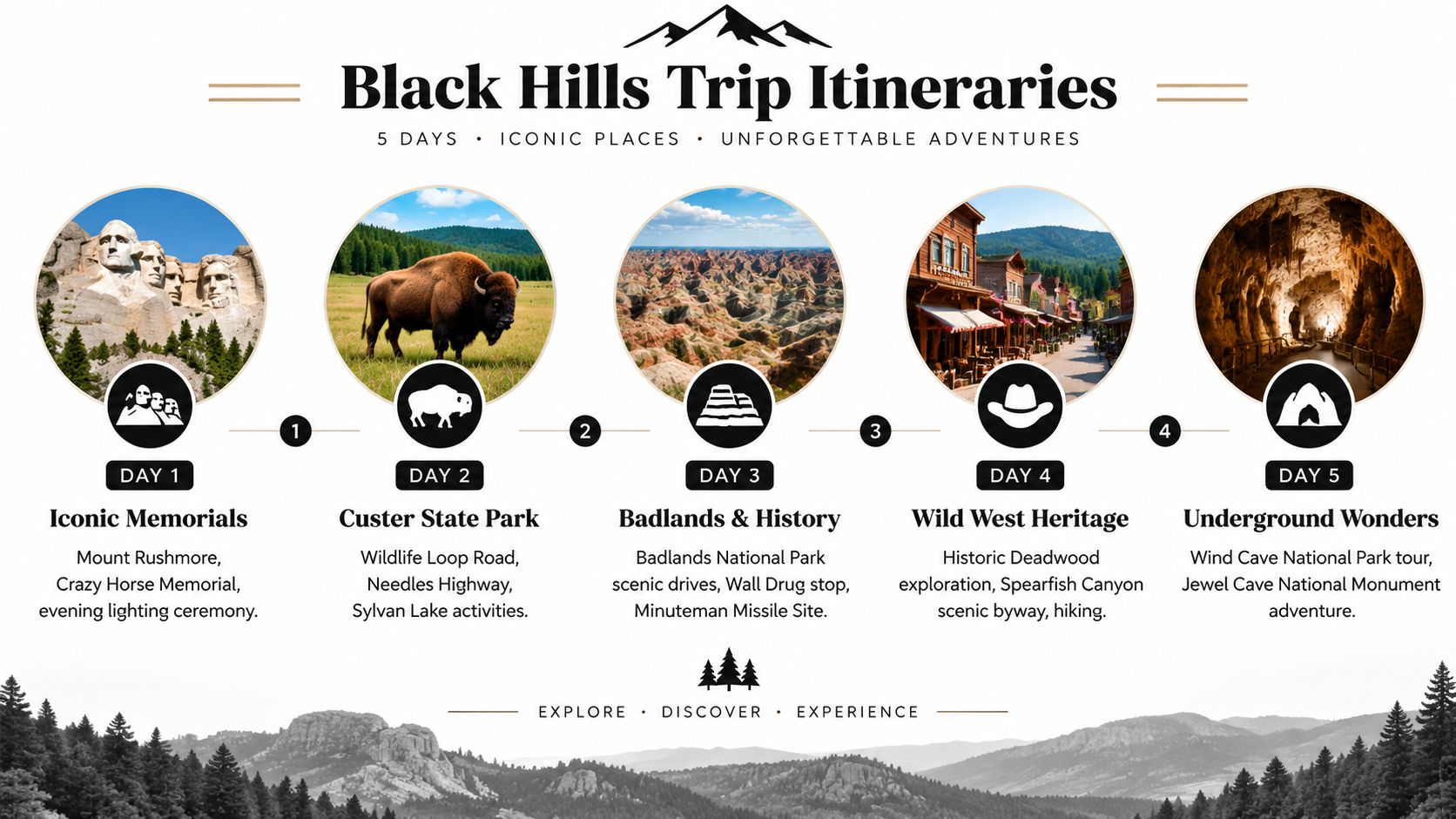
A fuller five-day version
Add northern Black Hills stops instead of forcing them into the central itinerary:
- Day one: Mount Rushmore and Crazy Horse Memorial.
- Day two: Custer State Park, including wildlife and scenic roads.
- Day three: Badlands National Park, Wall Drug, and Minuteman Missile history.
- Day four: Deadwood and Spearfish Canyon Scenic Byway.
- Day five: A cave-focused day at Wind Cave National Park or Jewel Cave National Monument, depending on tour availability and your interests.
For another example of planning a nature-focused road trip around limited access and long scenic corridors, see this Glacier National Park travel guide. Apply the same scheduling discipline here: reserve fixed-time experiences first, then fit flexible viewpoints and walks around them.
Where to Stay and Eat Near Mount Rushmore
Keystone is the obvious choice if Mount Rushmore is your priority. You'll be close to the memorial and can reach an early entry without a long approach, but the town feels tourist-focused and can be busy during the main season. Choose Keystone when convenience matters more than a quiet evening or a broad selection of lodging styles.
Hill City offers a stronger middle ground. It's central to Mount Rushmore, Crazy Horse Memorial, and Custer State Park, with a more relaxed small-town atmosphere than Keystone. The trade-off is that inventory can be limited, so late booking may leave fewer choices.
Custer makes the most sense for outdoor travelers. It positions you well for Custer State Park, southern Black Hills routes, and the cave parks, but it's less convenient if every morning begins at Mount Rushmore. Rapid City offers the widest range of hotels, restaurants, supplies, and services, with easier highway connections to the Badlands and northern Black Hills. The downside is the extra driving required for early Mount Rushmore visits and evening returns.
Match the base to the itinerary
- Choose Keystone for a Mount Rushmore-first trip with minimal morning driving.
- Choose Hill City for a central base that balances memorials, museums, and scenic routes.
- Choose Custer for wildlife drives, hiking, caves, and slower outdoor days.
- Choose Rapid City for hotel variety, dining flexibility, airport access, and a broader regional loop.
Dining choices follow the same pattern. Keystone is convenient after the memorial, Hill City works well between central attractions, and Custer is a practical dinner base after a park day. Rapid City gives you the broadest range, including casual family restaurants, breweries, and more varied evening options. Reserve ahead when possible during the busiest travel months, especially if you're traveling with a larger group.
Traveling with a dog adds another layer to the lodging decision. Policies vary by property and may restrict unattended pets, so use a resource such as this ultimate guide to dog friendly lodging while comparing rooms, fees, and nearby walking options. A pet-friendly hotel farther from Mount Rushmore can be a better choice than the closest property if it gives your group more space and easier evening routines.
Reworx Recycling helps businesses handle old laptops, computers, servers, and other electronics through responsible electronics recycling, business pickups, secure data destruction, IT asset disposition, and equipment donations that support community access to technology. Visit Reworx Recycling to learn how to schedule a pickup, retire IT equipment responsibly, or build a corporate donation program that keeps usable technology in circulation.