

You've crossed the Pell Bridge, the beach towels are in the trunk, and Newport's shoreline looks close enough to reach immediately. Then the practical questions arrive: Which beach accepts your car, what will parking cost, how far will you walk, and is swimming even advisable today? Newport rewards visitors who answer those questions before turning onto Memorial Boulevard.
This Rhode Island Newport, Rhode Island travel guide and beaches overview treats the coast as a layered access system, not a postcard checklist. Easton's Beach, Sachuest Beach, Gooseberry Beach, and the beaches around Middletown each offer a different mix of parking, amenities, crowd levels, and public access. The best choice depends less on the prettiest photograph than on your arrival time, mobility needs, weather, and tolerance for a long walk back to the car.
Arriving in Newport and the First Decision Every Visitor Faces
A first-time visitor arriving on a busy summer Saturday usually makes the most important decision before seeing the water. The choice is whether to drive directly toward a paid beach lot, leave the car near downtown and walk, or use public transportation and accept a longer approach to the sand.
Easton's Beach is the obvious first target because it sits closest to downtown and the Cliff Walk's southern end. Its public parking costs $25 per car on weekdays and $35 on weekends and holidays from April 1 through November 30, according to the official Easton's Beach parking policy. Newport residents with a city residential parking sticker can park free in the public lots year-round. The lot operates from 8 a.m. to 9 p.m. from May through November, as stated in the city's parking guide.pdf).
That price buys convenience, not a guaranteed relaxed day. You'll be close to the bathhouse, concessions, and the Cliff Walk entrance, but leaving later can put you into slow traffic around Bellevue Avenue and Memorial Boulevard. A cooler, stroller, or beach wagon is far easier to manage from Easton's lot than from a distant street space.
Practical rule: Decide whether your priority is minimizing the walk, avoiding a parking fee, or keeping the car out of the busiest streets. Newport rarely gives you all three at once.
If you're staying downtown, walking or using RIPTA can make more sense than moving the car repeatedly. A visitor who chooses a harbor-side base can combine breakfast, the wharves, and a shoreline walk without surrendering a parking space. For broader regional trip-planning ideas, the Massachusetts and Boston travel guide offers useful context for building a New England itinerary around fewer car transfers.
Biking works well for travelers carrying light gear and planning to explore the Cliff Walk corridor, but it's less practical for families hauling chairs, umbrellas, and coolers. The best arrival plan is the one that matches the day you want, not the one that looks fastest on a map.
The Four Anchor Beaches Compared at a Glance
Newport's major beaches solve different problems. Easton's is the easiest for amenities and a first visit, Sachuest and Second Beach suit travelers willing to drive toward Middletown, and Gooseberry offers a more enclosed cove experience with fee-based public access.
| Beach | Access | Fee | Vibe | Best Fit |
|---|---|---|---|---|
| Easton's Beach | Public, fee-based parking | $25 weekdays, $35 weekends and holidays | Busy, amenity-rich, central | First-time visitors and full-service beach days |
| Sachuest Beach | Public, fee-based access | Check current seasonal rate | Open, surf-oriented, less urban | Swimmers, walkers, and visitors seeking more space |
| Gooseberry Beach | Semi-private, open to the public for a fee | Check current seasonal rate | Sheltered, rocky-cove character | Families and visitors who prefer a quieter setting |
| Second Beach | Public beach in Middletown | Access rules vary by season and lot | Broad, relaxed, popular | Longer beach stays and visitors staying outside Newport |
Easton's Beach, also called First Beach, is Newport's largest public beach and a broad stretch of sand. It's the most forgiving option when your group needs restrooms, food, or a quick transition to the Cliff Walk. The trade-off is exposure to demand and a more structured parking experience.
Sachuest Beach, commonly called Second Beach, sits in Middletown and gives the day a more open, coastal feel. Gooseberry is different again. Because it's semi-private but open to the public for a fee, visitors should confirm current admission and parking rules rather than assuming that every Newport-area shoreline operates like a municipal beach, a distinction described in this Newport and Rhode Island coastal guide.
Travelers comparing surf conditions beyond New England may also appreciate this practical guide on where to learn surfing in Gisborne. The useful lesson is transferable: choose a beach based on water conditions and your group's experience, not only on scenery. Newport's beaches vary in exposure, access, and comfort, so the “best” beach changes with the day.
For another coastal comparison built around practical beach choices, see this Jersey Shore vacation guide.
Walking the Cliff Walk End to End
The Cliff Walk is Newport's defining shoreline route, but visitors often underestimate the time and footwear it requires. The public path runs 3.5 miles from Memorial Boulevard at Easton's Beach to Bailey's Beach, and Newport's official visitor materials recommend allowing two or more hours to walk the full length. It became New England's first National Recreation Trail in 1975, according to the City of Newport's Cliff Walk information/points-of-interest).
Treat the route as a shoreline hike with changing surfaces, not a flat promenade. The southern portion near Easton's is easier and more developed, while the middle sections can become uneven, rocky, and narrow. Sturdy shoes will serve you better than fashion sandals, especially after rain or during periods when coastal erosion has affected the path.
Choose your direction before you start
Walking north to south can give you strong ocean views and finishes nearer to restaurants and downtown streets. Starting at Easton's Beach is simpler for visitors who've parked there, and it lets you turn around whenever the path becomes uncomfortable without having to solve a second transportation problem.
A full end-to-end walk is a commitment. If your group includes young children, anyone with limited mobility, or people carrying beach gear, an out-and-back from Easton's may be more satisfying than forcing the entire route. The southern stretch still delivers mansion views, ocean overlooks, and the visual connection between the beach and Newport's Gilded Age architecture.
Know where the route demands attention
The path passes historic mansion districts and follows a shoreline corridor shaped by earlier Indigenous use and later colonial coastal access. That history is part of what makes the walk more than a scenic exercise, but it doesn't make unstable edges safe. Keep away from bluff rims, obey closures, and expect conditions to vary after storms.
The Forty Steps and the areas near Rough Point are useful landmarks for judging how far you've gone. Don't assume every segment is equally suitable for strollers or beach carts. A shorter walk paired with a mansion visit often works better than exhausting the group before lunch.
The Cliff Walk also connects naturally with the city's broader coastal itinerary. A regional planning resource such as this guide to small coastal towns in Maine is useful for travelers extending the trip, but Newport's path deserves its own time budget. Build around the walk rather than squeezing it between unrelated reservations.
Parking, Fees, and What a Beach Day Actually Costs
Newport's beach costs depend on three separate decisions: parking access, resident privileges, and private or semi-private management. A short drive between beaches can change both the fee and the amount of walking required, so choose the lot before setting the day's itinerary.
Easton's has the clearest published structure. Daily parking is free from December 1 through March 31, then costs $25 on weekdays and $35 on weekends and holidays from April 1 through November 30, according to the city's beach parking page. Newport residents with a valid residential parking sticker can use the public lots without paying.
| Beach | Resident Daily | Non-Resident Daily | Surface | Access Note |
|---|---|---|---|---|
| Easton's Beach | Free with city residential parking sticker | $25 weekdays, $35 weekends and holidays | Public beach lots | Closest major beach to downtown and the Cliff Walk |
| Sachuest Beach | Rules vary by current permit system | Check current seasonal fee | Public lot | Plan for seasonal controls and possible capacity limits |
| Gooseberry Beach | Not a city resident lot | Fee-based public access | Managed private or semi-private access | Confirm gate and admission rules before arrival |
| Fort Adams | Free public access | Free public access | State park areas | The consistently free option in the Newport and Middletown area |
The comparison helps visitors decide whether central convenience justifies a fee or whether a farther shoreline better suits the day. The Newport beach cost and access guide outlines practical differences among Easton's, Sachuest, Gooseberry, and Fort Adams, including first-come, first-served parking during busy periods.
Match the lot to your gear
Easton's is the practical choice for a loaded vehicle. Families with a stroller, wheelchair, or large cooler should prioritize a short, manageable carry from the lot. A free space that leaves you crossing uneven ground with heavy equipment can demand more time and effort than a paid lot.
Fort Adams is the dependable no-fee choice when swimming is secondary to bay views, fort grounds, or a picnic. It suits visitors who want open space without committing to a beach parking charge.
Sachuest and Gooseberry require closer attention to current access rules because their management and payment arrangements differ. Check the day's policy before leaving the hotel, particularly if your schedule depends on arriving late. Capacity controls can turn an apparently convenient drive into a wasted trip, while arriving earlier gives you more room to choose between cost, distance, and shoreline conditions.
Beyond the Sand Mansions Harbor and Fort Adams
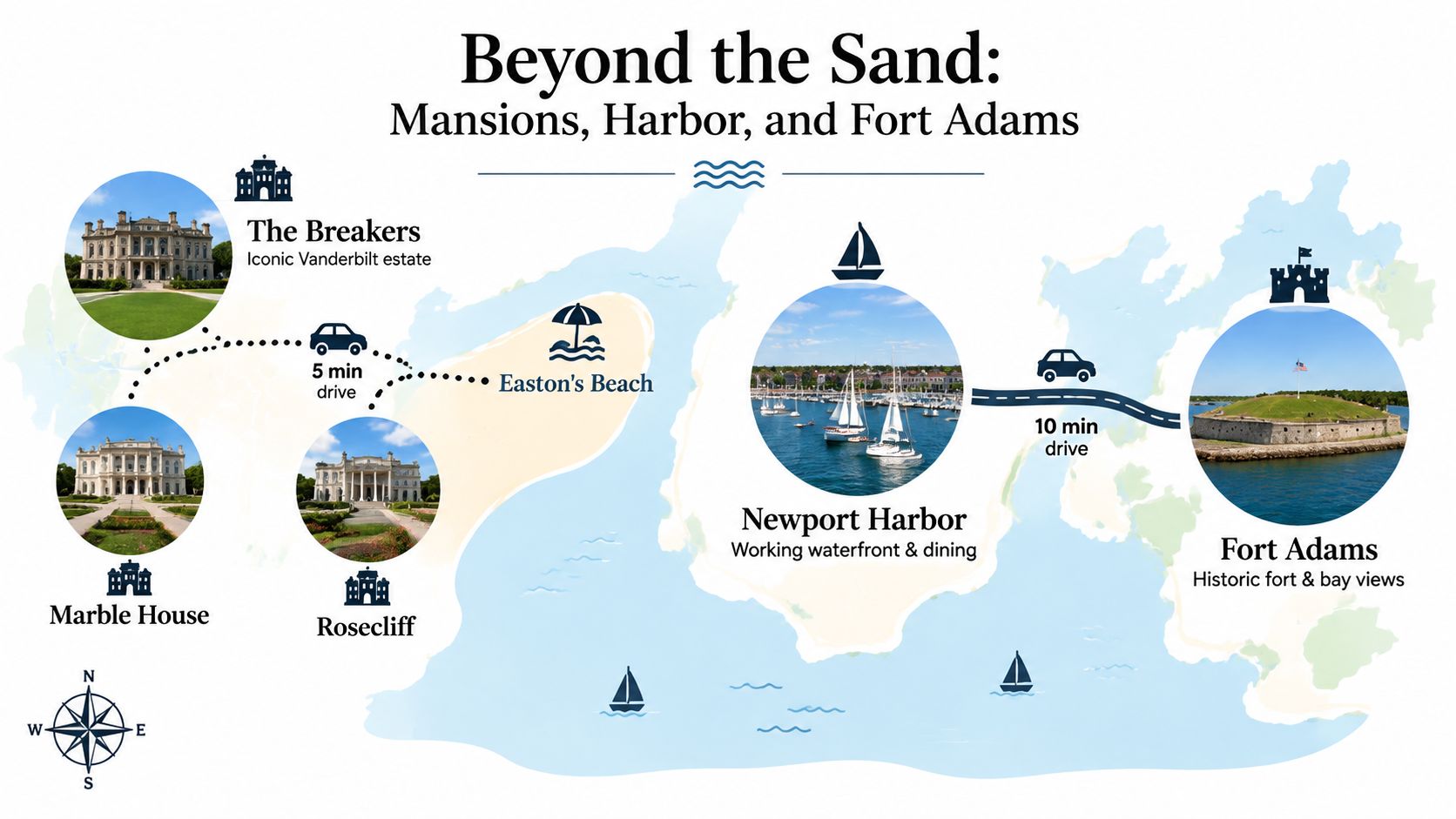
Newport's coastline works best as a connected itinerary. A morning at Easton's Beach can lead into the Cliff Walk and mansion district, while an afternoon at the harbor or Fort Adams changes the setting without abandoning the water.
The Breakers, Marble House, and Rosecliff sit close enough to the southern Cliff Walk area to pair naturally with a shoreline walk. The practical sequence is simple: arrive with enough time for the beach or path, tour one mansion rather than overloading the schedule, then continue toward the harbor for food or a boat departure.
Use the harbor as the middle of the day
Bowen's Wharf is the working center of Newport's visitor waterfront, with restaurants, shops, and sailing departures. Harbor cruises and sailing trips give tired walkers a way to keep the coastal experience going without adding more pavement. They also create a useful weather fallback when the beach is uncomfortable but the harbor remains active.
Fort Adams State Park provides a different kind of shoreline. Visitors can combine the historic fort, bay views, and open park space without treating the stop as merely a festival venue. It's especially useful for groups that need room to move after a crowded beach morning.
The official Rhode Island travel information describes Newport's mix of public beaches, private access, historic attractions, and seasonal tourism. That layered character explains why a good Newport day rarely stays in one place. The beach is the starting point, not always the main event.
Itineraries for a Day Trip Weekend and Family Visit
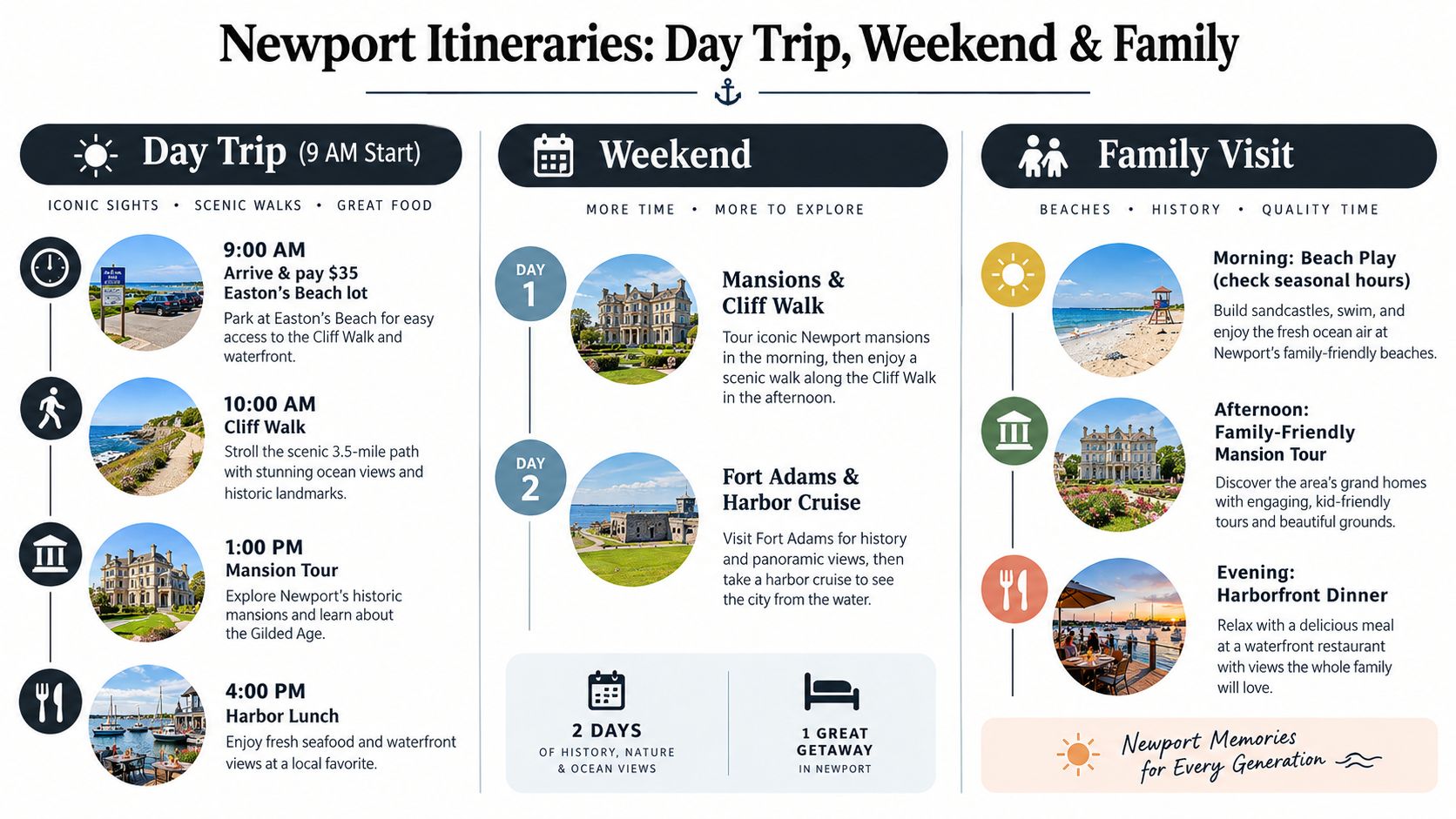
The right Newport itinerary protects time for parking, walking, and weather changes. It also avoids booking every hour around a shoreline that can be affected by tides, storms, and seasonal access rules.
The efficient day trip
Arrive at Easton's Beach around 9 a.m. and use the public lot while your group still has energy for the day. The applicable weekend or holiday fee is $35 per car, and the lot's seasonal operating window is 8 a.m. to 9 p.m. from May through November, based on the city's parking guide.
Walk the Cliff Walk from Easton's toward the mansion district, then turn back when the surface becomes too rough for your group. Have lunch downtown or at the harbor, and schedule one mansion rather than trying to tour several. Leave before late-afternoon traffic becomes the dominant part of the day.
Check the tide table before committing to swimming. A higher tide can reduce the usable beach width and make a shoreline walk less comfortable, while a calm morning may be better for families than a late-day surf period.
The weekend plan
Use the first day for downtown, the harbor, one mansion, and a manageable Cliff Walk segment. Keep the car parked and walk between nearby stops whenever possible.
Reserve the second day for Sachuest Beach, Fort Adams, or Ocean Drive. This arrangement spreads the trip across different shoreline environments and lets you choose the calmer side of the island if wind or surf makes the first beach unpleasant. Confirm each lot's current payment and access policy before departure, since public and semi-private beaches don't share a single operating system.
The family version
Start with the beach that best matches your children's comfort in the water, then build in a non-sand stop. Gooseberry's cove character can suit families who prefer a more enclosed setting, while Fort Adams offers space when children need to move without another swim.
After lunch, choose a short Cliff Walk segment rather than promising the full route. A one-way walk with a planned turnaround, stroller break, and snack stop is more realistic than treating the entire path as a family endurance test. Finish near the harbor, where dining and indoor alternatives are easier to reach if weather changes.
Water Quality Erosion and Storm Season Planning
Newport's shoreline can change during the same trip. Water quality, bluff stability, flooding, and storm damage all affect whether a beach is suitable for swimming or whether a walking route remains comfortable.
Rhode Island beach advisories are issued when saltwater samples exceed 60 colony-forming units per 100 milliliters, and Easton's Beach has experienced closures associated with high bacteria levels, as reported in this coverage of Newport beach closures. Check the current beach status before swimming, particularly after heavy rain. A beach that was open earlier in the week may not remain open after new sampling.
| Risk Factor | Threshold or Window | Pre-Trip Check | Trip Adjustment |
|---|---|---|---|
| Bacterial contamination | Advisories begin above 60 CFU per 100 milliliters | Confirm current Rhode Island beach status | Shift to sightseeing, harbor activities, or a non-swimming beach |
| Coastal erosion | Rhode Island's average coastal erosion rate is estimated at 1.6 feet per year | Review current path and bluff conditions | Avoid unstable edges and shorten exposed walks |
| Severe storm damage | A major event can remove tens of feet of bluff | Check municipal notices after storms | Replace cliff routes with inland or harbor stops |
| Waves and flooding | Conditions vary with storms and coastal exposure | Check forecast, tides, and closures | Choose protected activities and allow extra travel time |
Newport's hazard mitigation plan identifies Easton's Beach, Cliff Walk, Hazards Beach, and Bailey's Beach as especially vulnerable to wave energy from southwesterly winds. It also explains that storms, sea-level rise, flooding, and ocean waves can strip tens of feet of bluff during a severe event, while Rhode Island's average coastal erosion rate is estimated at 1.6 feet per year. Those findings appear in the City of Newport hazard mitigation plan.
Before leaving your hotel: Check beach advisories, municipal closure notices, tide conditions, and the forecast. A five-minute review can prevent a wasted drive and an unsafe walk.
After a nor'easter or tropical system, don't assume a familiar access point is unchanged. Use mansion tours, museums, harbor-side dining, or Fort Adams' inland-facing areas as substitutes, and confirm cancellation terms directly with any cruise or attraction provider.
For travelers planning other coastal trips around severe weather, this Florida hurricane season guide offers a useful reminder that storm preparation belongs in the itinerary, not only in the emergency plan.
Treating Newport as a Working Shoreline Not a Postcard
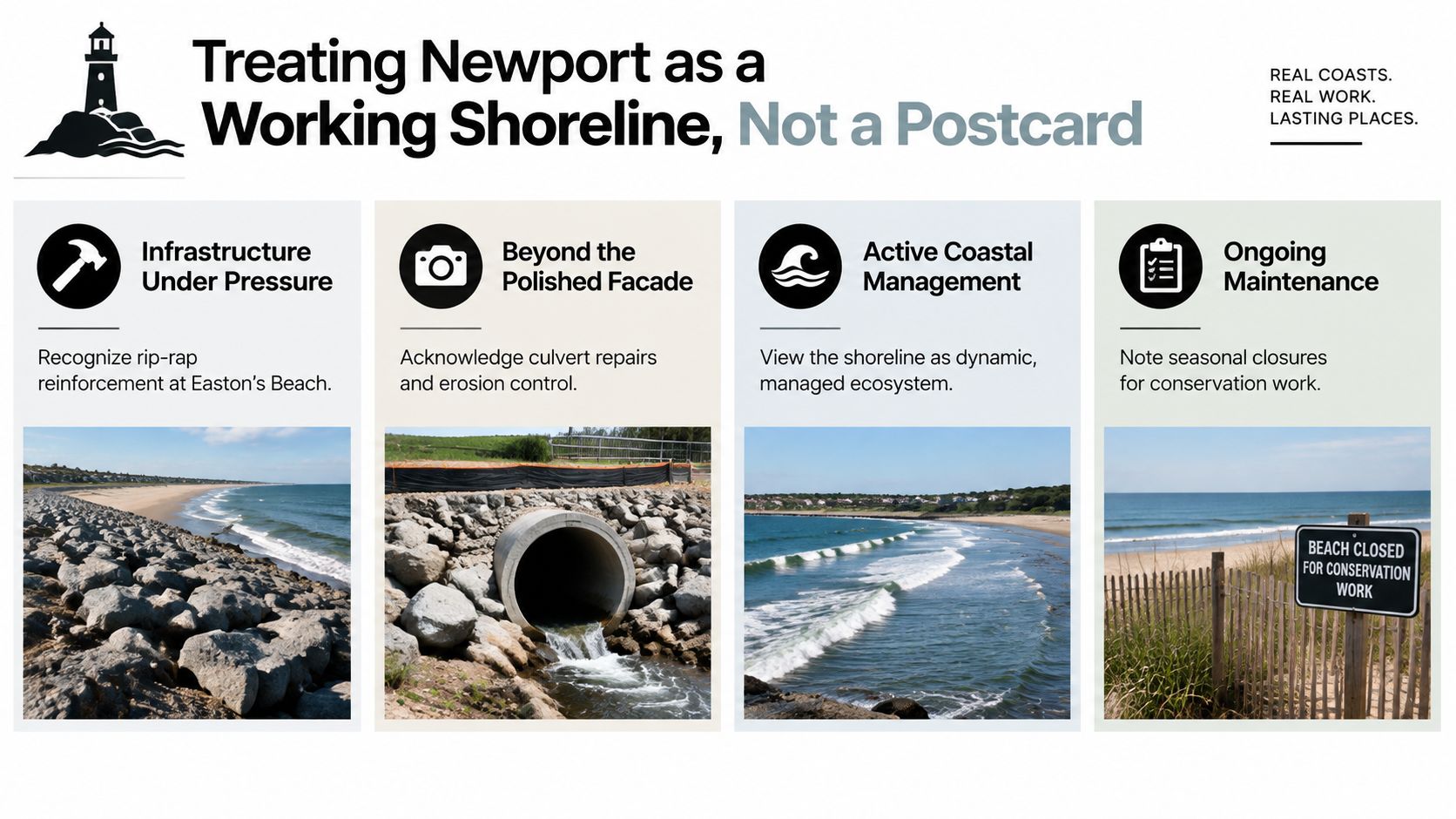
Newport looks polished from the right angle, but the shoreline is infrastructure under constant pressure. Beach lots, seawalls, drainage systems, bluff paths, dune vegetation, lifeguard operations, and municipal maintenance all shape the experience visitors remember.
That reality should change how you travel. Stay behind ropes, keep away from bluff edges after rain, and expect access routes to be adjusted after storms. Beach fees and parking controls are not only annoyances at the gate. They help support the services that make public shorelines usable, including maintenance, safety operations, and seasonal management.
Plan around the coast's actual rhythm
The postcard version of Newport suggests spontaneity. The working version rewards preparation:
- Arrive early: Secure the lot and avoid making the most crowded part of the day your first experience.
- Respect managed areas: Roped-off dune grass and closed paths protect the shoreline and the people maintaining it.
- Carry less: A lighter setup makes uneven paths and longer walks safer.
- Keep a backup: A mansion, harbor meal, or fort visit can rescue a beach day affected by water quality or weather.
- Read current notices: Conditions can change after storms, high water, and erosion events.
A useful parallel comes from the founder story of a Chicago cleanup, which shows how environmental care often begins with people noticing and responding to ordinary public-space problems. Newport's coast deserves that same attention. Visitors aren't passive spectators, they're participants in a managed shoreline.
The broader principle of environmental stewardship applies here in practical ways: stay on designated routes, follow posted access rules, dispose of waste properly, and choose plans that don't add pressure to fragile areas. Newport becomes more enjoyable when you stop demanding postcard conditions from a living coast and start planning for the shoreline that exists.
Reworx Recycling helps businesses retire computers, laptops, servers, and other electronics through responsible recycling, secure data destruction, equipment pickups, and donation-based programs that support community access and workforce development. Visit Reworx Recycling to schedule a pickup, donate old equipment, or discuss a sustainable IT asset disposition plan for your organization.