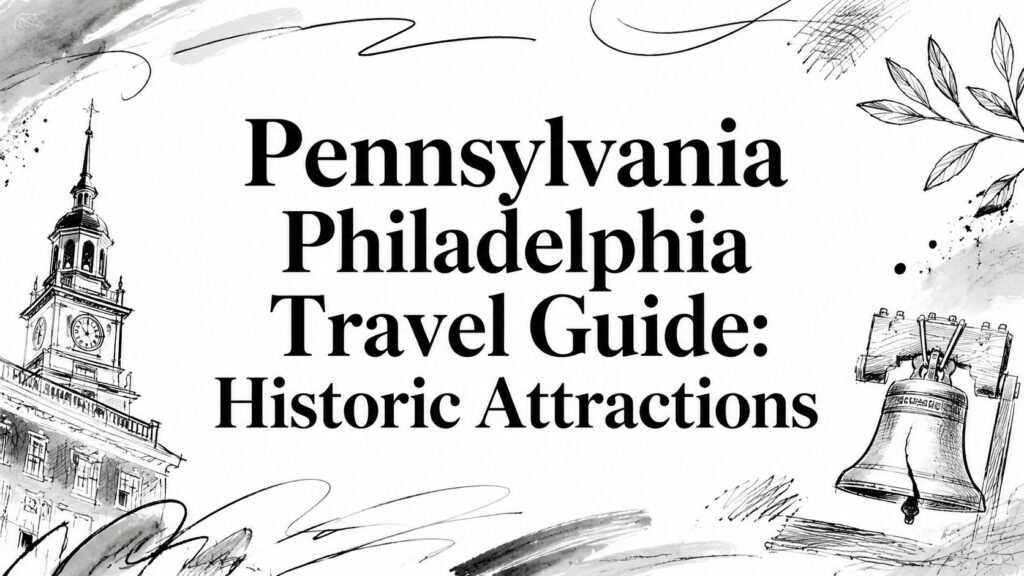
You've arrived in Philadelphia with one day, comfortable shoes, and a list that seems simple until you look at the map. Independence Hall, the Liberty Bell, Old City's brick lanes, Germantown's house museums, and the practical question of how to move between them all compete for the same limited hours. The best approach isn't a single checklist. It's a layered planning puzzle, with each neighborhood offering a different scale and pace of American history.
This Pennsylvania Philadelphia travel guide focuses on historic attractions, but it also deals with the details that determine whether the day feels rewarding or exhausting. You'll learn where the major sites fit together, how security and timed entry affect your route, why transit planning matters, and when it's worth leaving the central district for a deeper neighborhood experience.
Why Philadelphia Matters to American History
You step off the pavement near Independence Mall on a bright spring morning. SEPTA buses make a soft, rhythmic clatter nearby while school groups gather around a glass-fronted landmark and teachers count heads. Tourists pause with coffee in hand, trying to orient themselves before the first ranger program begins.
The scene feels orderly, but the history beneath it is unsettled and ambitious. Philadelphia grew from William Penn's Quaker-founded colony, established in 1682 as a place where religious experimentation and civic debate could take root. By the era of the American colonies' struggle for independence, the city had become a meeting ground for arguments about representation, trade, liberty, and the responsibilities of government.
In 1775, the Second Continental Congress chose Philadelphia as its wartime capital. Delegates arrived with competing regional interests and different ideas about how far resistance should go. The city's significance came from those disagreements as much as from the decisions that followed. Philadelphia gave political arguments a physical setting, with meetinghouses, print shops, homes, churches, and public squares close enough for ideas to move quickly from conversation to action.
A political laboratory, not a frozen backdrop
The district's central buildings are often presented as monuments to a finished founding story. A closer look reveals a more complicated public-history narrative. The same streets connected debates about independence with later struggles over abolition, women's suffrage, civic participation, and the meaning of equal rights.
Independence Hall became the setting where the Declaration of Independence was debated and ratified on July 4, 1776, and it later hosted the Constitutional Convention, according to the U.S. Government Publishing Office's guide to Independence Hall. The building was begun in 1732, while its bell tower was completed in 1753, giving visitors a physical timeline that predates the founding moment by decades.
The site also carries UNESCO World Heritage significance. Visit Philly identifies Independence Hall as the place where the Declaration of Independence was signed and the U.S. Constitution was created in its essential guide to Philadelphia.
A useful mindset: Don't ask only, “What happened here?” Ask who was included, who was excluded, and how later generations changed the meaning of the place.
Philadelphia's preservation story extends far beyond the central mall. A local preservation guide identifies more than 450 city buildings listed on the National Register of Historic Places, 75 designated National Historic Landmarks, and 4,764 historic resources individually listed on the Philadelphia Register, as documented in this Philadelphia historic-buildings guide. That density explains why a thoughtful route can move from national founding stories to neighborhood histories without leaving the city's larger civic narrative.
For travelers comparing American heritage destinations, Philadelphia also provides a useful reference point alongside other historic cities, including this Boston travel guide to top attractions and hidden gems. The difference is that Philadelphia's core lets you watch institutions form, argue, fail, and evolve within a remarkably concentrated urban area.
Independence Hall and the Liberty Bell Center
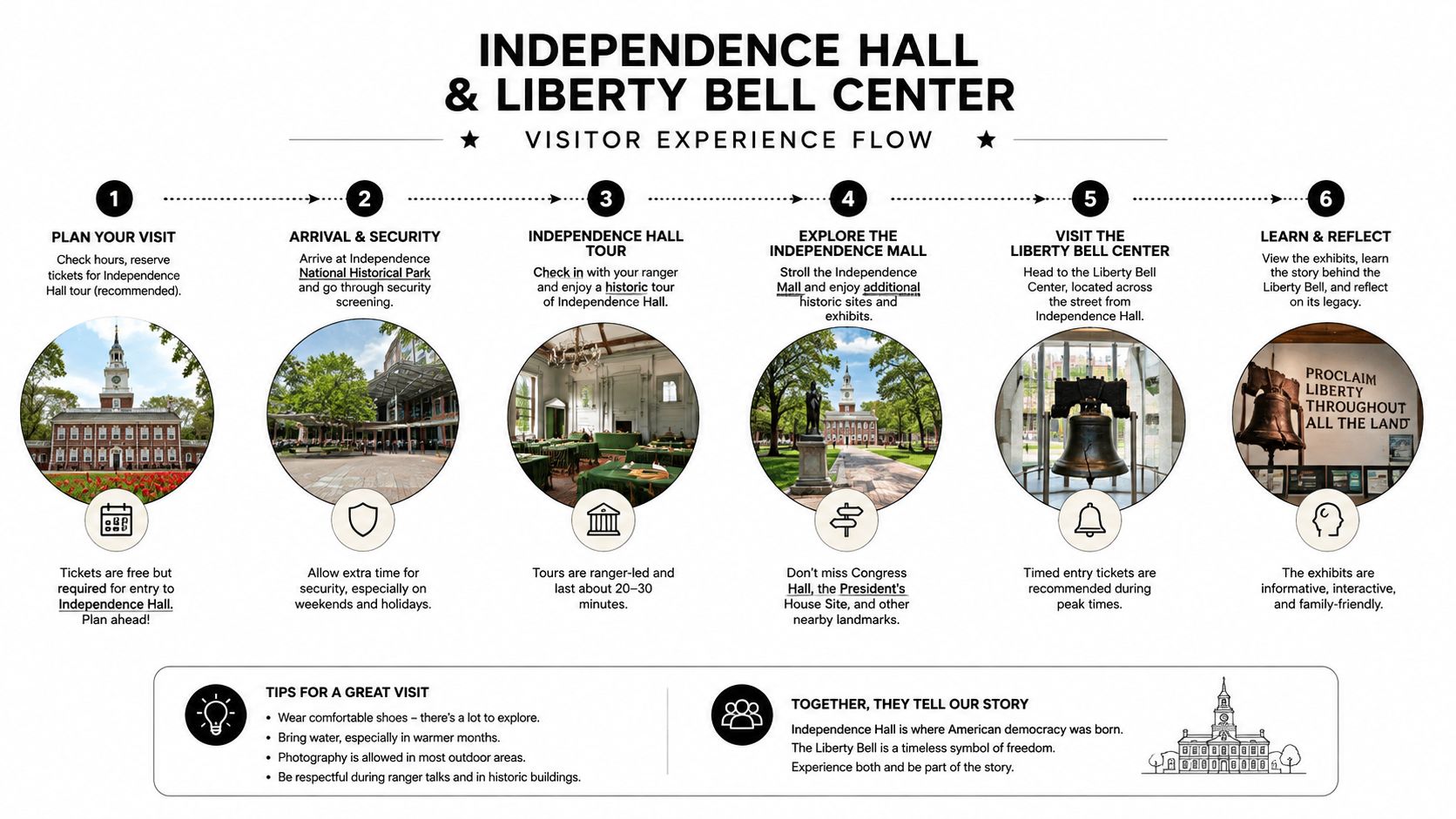
Treat Independence Hall and the Liberty Bell Center as one connected experience, not two unrelated stops. The Liberty Bell Center sits in the heart of Independence National Historical Park, and the National Park Service overview identifies the park as the setting where the Declaration of Independence was publicly read in Independence Square on July 8, 1776.
The Liberty Bell was already tied to the complex long before its modern symbolism. It was commissioned in 1751, hung in the State House tower in 1753, and ordered to commemorate the 50-year anniversary of William Penn's 1701 Charter of Privileges. The bell drew about 1.5 million annual visitors in the early 21st century, a reach that helps explain why the center remains one of Philadelphia's most visible historic attractions. The same National Park Service source notes that visiting the Liberty Bell Center requires no ticket or fee.
Build the morning around entry control
Independence Hall has more operational friction. Every visitor and belonging must pass screening, including a walk-through metal detector and x-ray or visual inspection of possessions. Open food and drink aren't allowed past the checkpoint, and screening closes 15 minutes before building closure, according to the National Park Service visitor information.
A practical sequence looks like this:
- Arrive early. Use the early part of the morning to reduce queue pressure and give yourself time to clear security.
- Check the access arrangement. Independence Hall offers an open-house period without tickets and later timed tours at 20-minute intervals, subject to the day's operating plan.
- Tour the building first. The ranger-led experience places the Assembly Room and Supreme Court chamber in historical context.
- Cross to the Liberty Bell Center afterward. You'll still pass through the standard security process, but the bell itself doesn't require a ticket.
- Keep bags and snacks simple. A lighter load makes screening easier, particularly for families and mixed-mobility groups using the 5th Street stairs or accessibility ramp.
The Liberty Bell's story also changes over time. It was rung on February 23, 1846, for George Washington's birthday before cracking again, and it moved to the Liberty Bell Center on October 9, 2003, a preservation milestone in how Philadelphia presents its heritage. Those dates remind you that the attraction isn't just an untouched relic. It has been interpreted, protected, relocated, and repeatedly assigned new civic meanings.
The Independence Visitor Center, across the street, is a useful base for restrooms, free Wi-Fi, orientation, and route adjustments. If you're comparing city-based heritage planning methods, the New York City travel guide offers another perspective, but Philadelphia's compact central cluster rewards an especially early start.
Walking the Old City Streets Between Major Sites
Leave the Independence Hall area and let the street texture slow you down. Old City's history works best at walking speed, when brick façades, narrow lanes, carriage-house details, and the smell of pretzels from nearby carts become part of the interpretation.
Start near the Betsy Ross House on Arch Street. The restored 18th-century home is presented through period interpretation and costumed guides, giving the famous seamstress story a domestic setting rather than leaving it as a name on a plaque. From there, the walk toward Elfreth's Alley shifts the mood from national symbolism to residential life. The alley's small scale makes it easier to think about the people who cooked, worked, traded, and raised families inside the city's political center.
Let each block answer a different question
Elfreth's Alley leads naturally toward Christ Church, where Benjamin Franklin and other Founders worshipped. Christ Church Burial Ground adds another layer, placing Franklin and other early American figures within a working urban cemetery rather than a distant national memorial.
The Second Bank of the United States provides a different kind of historical evidence. Its portrait gallery turns faces into an interpretive tool, helping visitors connect political decisions with the people who made, challenged, and inherited them. The U.S. Mint and the Museum of the American Revolution widen the story again, moving from government and portraiture toward national production, military conflict, and public memory.
These attractions sit close enough to combine, but don't mistake proximity for effortless movement. Cobblestones can slow wheelchairs, strollers, and anyone wearing unstable footwear. Sidewalks vary in width, and shaded benches appear intermittently rather than at every stop. The 4th and Market bus stop works well as a natural pause point when someone needs to sit, cool down, or shorten the loop.
Walking rule: Plan the route by energy, not only by distance. A short block with cobblestones, crowds, and a standing tour can feel longer than a clear stretch of pavement.
The Atlanta BeltLine guide offers a very different urban walking context, but the planning lesson carries over. A good route has rhythm. Alternate interior exhibits with outdoor pauses, use a café or transit stop as a reset, and let one landmark lead into the next instead of racing between isolated pins on a map.
Beyond Old City, Neighborhood Passes That Expand the Story
Old City is dense, legible, and efficient. Germantown is more distributed, more residential, and better suited to visitors who want to spend a half-day with individual houses, gardens, and stories of occupation, science, free-Black life, Quaker history, and abolition.
A newer Germantown tourism pass bundles access to nine historic sites and museums, with extended Friday and Saturday hours and tiered pricing, according to coverage of the Germantown historic pass. The pass includes properties such as Cliveden, Stenton, Grumblethorpe, Wyck, and Johnson House. Each one changes the scale of the visit: Cliveden connects the neighborhood to Revolutionary occupation, Stenton to Enlightenment-era botany and political networks, Grumblethorpe to wartime conflict, Wyck to Quaker family history and horticulture, and Johnson House to Black freedom and abolitionist history.
Choose by time and stamina
Choose Old City if you've got limited time, want many major attractions within a walkable grid, or prefer a fast sequence of iconic sites. Choose Germantown when the day's purpose is deeper interpretation and you're willing to trade compactness for residential streets and house-museum visits.
| Pass Type | Sites Included | Best For | Approx. Cost | Time Required |
|---|---|---|---|---|
| Old City core | Independence Hall, Liberty Bell Center, and nearby historic attractions | First-time visitors with a short schedule | Free for the Liberty Bell Center, while other sites may have their own access rules | Several hours |
| Germantown historic pass | Nine historic sites and museums, including Cliveden, Stenton, Grumblethorpe, Wyck, and Johnson House | Visitors seeking a distributed neighborhood history experience | Tiered pricing through the pass program | Half a day or longer |
The Route 23 bus is the most useful surface connection for many Germantown plans, while Regional Rail to Wayne Junction can make the neighborhood feel more manageable from Center City. Don't attempt to see every house if you're already tired after Old City. Select three properties with different themes, leave room for a meal on Germantown Avenue, and treat the pass as a framework rather than a command to collect every admission.
For a broader regional perspective on choosing destination clusters, compare this Delaware beaches travel guide. Philadelphia's advantage is that its neighborhoods offer distinct historic textures without requiring a completely separate trip.
Half-Day and Full-Day Itineraries Through Historic Philadelphia
A half-day works if you protect the morning and avoid treating every stop as a full museum visit. The route below uses clock times as anchors, not guarantees. Security, ranger programs, seasonal operations, and crowd levels can change the pace.
A compact Old City morning
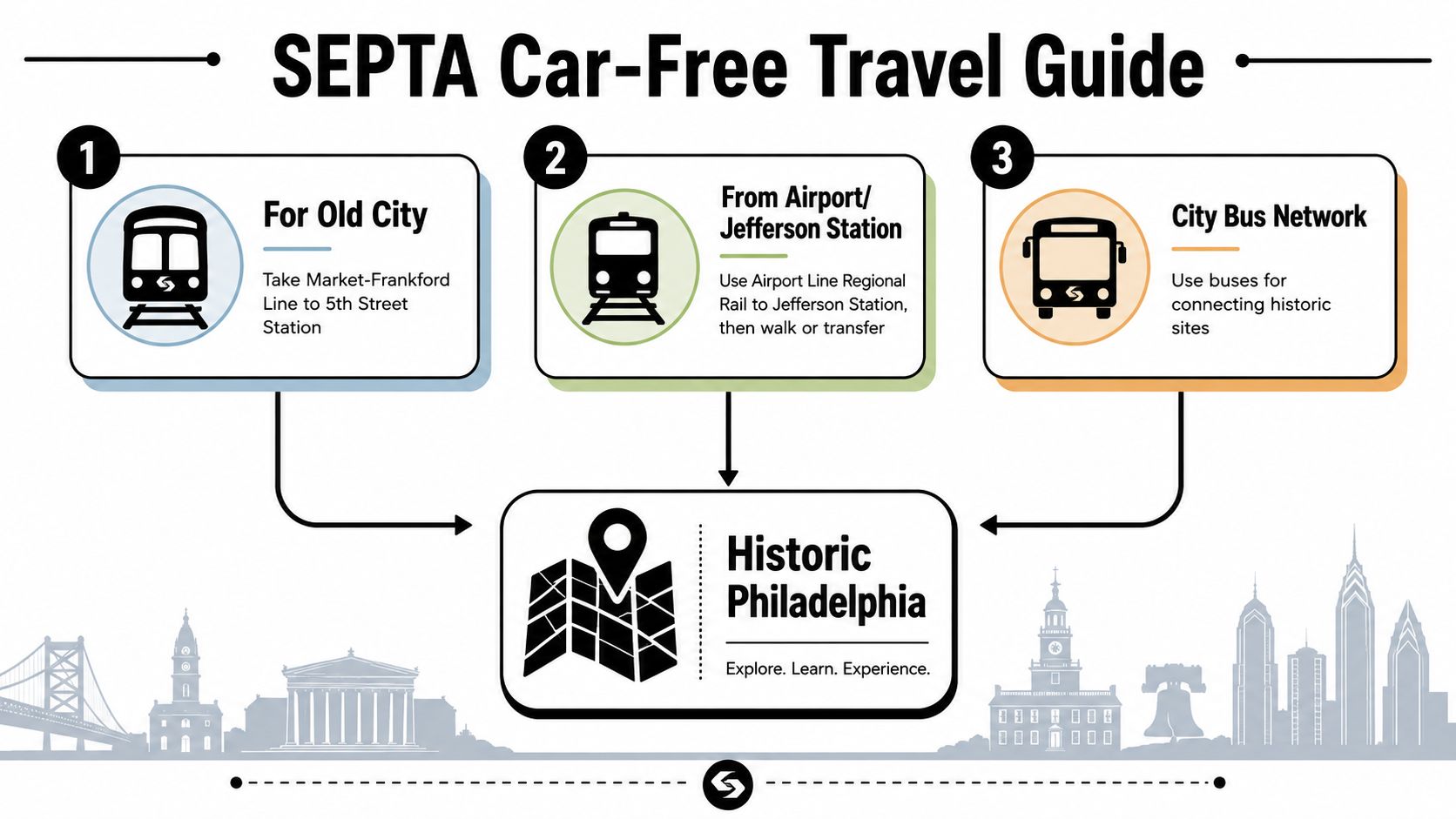
- 8:30 a.m. Arrive at Jefferson Station and walk toward the historic district. If you're already near the Market-Frankford Line, use the 5th Street station as your Old City arrival point.
- 8:45 a.m. Join the Liberty Bell Center line. The bell requires no ticket, but you'll still pass through security.
- 9:00 a.m. Enter Independence Hall if your timed access aligns. If you're using the open-house window, arrive early enough to account for screening.
- 10:15 a.m. Walk to the Betsy Ross House on Arch Street.
- 11:00 a.m. Continue to Elfreth's Alley, allowing time to notice the residential scale.
- 11:30 a.m. Visit Christ Church Burial Ground or the church, depending on opening conditions and interest.
- Noon. Stop at the Second Bank portrait gallery for a shorter, focused indoor experience.
- 12:30 p.m. Head toward Reading Terminal Market for lunch and a reliable break from historic-site pacing.
Reserve Independence Hall access when the operating schedule calls for timed entry. Keep the Liberty Bell as the flexible piece, since it doesn't require a separate ticket.
A full heritage day
Begin at sunrise on Independence Mall if you enjoy quiet streets and exterior photography. Complete the Independence Hall visit during the morning, then take an Old City walking lunch before moving north.
In the afternoon, use Regional Rail toward Wayne Junction or the Route 23 bus for Germantown. Buy the Germantown pass through the participating program before starting the house-museum circuit, then choose three properties rather than trying to cover the entire network. Cliveden, Stenton, and Wyck create a useful spread of historical, intellectual, domestic, and horticultural themes. Return through Center City around sunset, when the slower neighborhood day has given the central district a different context.
Families may prefer a softer version: spend longer at the Liberty Bell and Independence Hall area, add Franklin Court's hands-on exhibits, and limit the afternoon to one Germantown property. Children usually remember a tactile activity and a food stop more clearly than a rushed sequence of formal rooms.
If your group is splitting meals, transit, or admission-related expenses, a practical resource on how to split travel costs with friends can make shared planning less awkward. For another regional itinerary comparison, see this New Jersey Shore vacation guide.
Getting Around Philadelphia Without a Car
Philadelphia's historic core is unusually well suited to a car-free visit, but only if you plan around transit layers instead of assuming every attraction is equally close. A DVRPC study found that just 9 of 27 attractions provided walking, biking, or transit information beyond driving directions, even though 168 attractions were within a quarter-mile bus walkshed and 123 were within a half-mile rail walkshed, according to the DVRPC access study. The gap explains why visitors often understand what they want to see but still struggle with the route.
Use the right layer for each district
The Market-Frankford Line is the straightforward choice for Old City, with 5th Street providing access to the Independence Park area. From airport arrivals, Regional Rail to Jefferson Station creates a workable starting point for walking or transferring. Routes 47 and 48 provide north-south bus options around Old City, while Route 23 is the key surface connection for Germantown planning.
PATCO can help visitors coming from New Jersey, and Indego bike-share docks near Independence Mall offer a useful option for short connections when weather and traffic conditions cooperate. A DVRPC analysis also indicates that 6th and Market is within a 10-minute walk of every Independence Park site, supporting a central walking strategy once you reach the district.
Transit-first principle: Use rail to reach the historic core, walking for the dense center, and buses or rideshare only when neighborhood spacing makes the next leg inefficient.
Visitors arriving by car can consider the Bourse Garage rather than circling the central streets. On hot days with poor air movement near I-95, rail and walking can feel more comfortable than idling in traffic, especially for children, older adults, and visitors sensitive to heat.
Germantown's wide stops and separated house museums create a reasonable case for rideshare between selected properties when a family group is tiring. For visitors managing international payment choices alongside transportation costs, this SEPA vs. SWIFT fee comparison offers useful financial-planning context, though it won't replace checking current SEPTA fares and service alerts.
For accessibility planning, contact SEPTA's travel-training support before the trip. Ask about elevator status, boarding procedures, and the most practical route for your mobility device rather than relying on a generic map.
Seasonal Timing, Accessibility, and Visitor Essentials
Philadelphia's historic district changes character with the calendar. Spring brings azalea blooms around Independence Hall and generally mild days in the 55 to 70°F range, as described in local seasonal planning guidance. Summer adds humidity and heavier Independence Day demand, while fall brings foliage through Germantown's colonial streets and often creates the strongest photography conditions.
Winter can simplify some downtown walking routes but complicate individual attraction schedules. Check the Betsy Ross House before planning a Tuesday visit, and verify holiday hours for the Second Bank. Historic properties don't always share the same operating calendar, so a route that looks logical on a map can still fail at the door.
Plan for the surface beneath your feet
Independence Hall has a wheelchair-accessible ramp on the north side. The Liberty Bell Center's open floor plan and audio-description handsets make it easier to adapt the visit for different sensory and mobility needs. Elfreth's Alley is more challenging because of its cobblestones, so mobility-device users should investigate the alternate 2nd Street approach before setting out.
SEPTA buses 47 and 48 use lift-equipped vehicles, but availability and operating conditions can vary. Build in time for boarding and avoid stacking a tightly timed indoor tour immediately after a cross-town connection.
Families should also plan around bathrooms, water, shade, and food rather than treating them as afterthoughts. The Independence Visitor Center is a practical reset point, and Reading Terminal Market works well as a midday destination when the group needs choice and indoor seating. Travelers practicing conversational Spanish before a multilingual trip may find ChatPal's travel Spanish practice guide useful for building confidence with directions, meals, and accessibility questions.
Quick answers for common planning questions
What should visitors know about the 2026 semiquincentennial period? Philadelphia is preparing for programming connected to the nation's 250th anniversary. Check official attraction calendars close to your visit because events, security arrangements, and operating plans may change.
When should I reserve Independence Hall? During the 250th-anniversary period, Independence Hall is open without reservations only from 9 a.m. to 10 a.m. daily. After 10 a.m., entry requires a ticket, with some tickets released 30 days ahead and others the day before, according to coverage of Philadelphia's 250th-birthday planning.
Can I photograph inside Independence Hall? Follow ranger and site instructions. Indoor photography rules can vary by room, program, and current preservation requirements, so ask before taking pictures rather than assuming.
Where can I eat in Germantown? Germantown Avenue offers places to pause between Cliveden and Stenton. Choose a restaurant based on the day's opening hours and your route, because the properties are spread out and a convenient meal can prevent an unnecessary return trip downtown.
A successful Philadelphia history day depends less on seeing everything than on matching the district to your available energy. Start with the compact Independence Park cluster, use Old City's streets as connective tissue, and choose Germantown when you're ready for a slower, more distributed story.
For businesses planning an office cleanout, facility cleanout, laptop disposal, or broader IT asset disposition project, Reworx Recycling provides electronics recycling, donation-based recycling, secure data destruction, equipment pickups, and responsible IT equipment disposal. Visit Reworx Recycling to arrange a donation, schedule a pickup, or explore a partnership that supports sustainable recycling, digital inclusion, and community workforce development.