Data center decommissioning in Bowling Green, Kentucky, is more than just unplugging old equipment. It’s a complex, strategic process that’s becoming a major focus as our region’s tech and industrial sectors boom. This isn't just about clearing out old servers; it's a vital business move that tackles data security, environmental compliance, and even recovering value from outdated assets. For local businesses, partnering with a professional IT Asset Disposition (ITAD) provider like Reworx Recycling has become absolutely essential.
Why Decommissioning Is a Growing Priority in Bowling Green
As Bowling Green cements its status as a key industrial and tech hub in Kentucky, the lifecycle of its digital backbone is coming into sharp focus. Many of the data centers and server rooms that fueled the last decade of growth are now hitting their natural 10 to 15-year end-of-life. Suddenly, data center decommissioning is no longer a far-off IT chore—it's an immediate, critical business strategy.
For local business owners and IT managers, the pressure is on. The sheer amount of e-waste from a full facility cleanout is huge, and improper computer recycling can lead to serious environmental and financial fines. Plus, every single retired server, hard drive, and network switch is a potential data security risk if not handled with care. A data breach from a poorly sanitized piece of hardware can be a disaster for a company’s reputation and bottom line.
The Strain on Local Resources
This rapid digital expansion puts a real strain on local resources, a worry we’re hearing in communities all over the region. When massive facilities go up, they create a future responsibility for managing their end-of-life. You can see this in the public conversation around large-scale projects, like the Meta data center in the broader regional economy, which brought resident fears over water and electricity use to the forefront.
In fact, projections from Louisville Gas & Electric (LG&E) and Kentucky Utilities (KU) warned that these types of facilities could increase the strain on local utilities by 20-30% over the next few years. This kind of public awareness only increases the pressure on businesses to be sustainable when it's time to retire those centers.
Key Takeaway: Proactive decommissioning isn't just about disposal. It's about mitigating risk, ensuring compliance, and demonstrating corporate responsibility in a community that is increasingly aware of the environmental footprint of technology.
From Liability to Strategic Advantage
It’s easy to look at a room full of outdated IT gear and see a liability, but that’s a missed opportunity. A professionally managed IT asset disposition (ITAD) program can turn that potential burden into a real strategic advantage. It guarantees every piece of hardware is tracked, all sensitive data is securely wiped according to certified standards, and valuable materials are either recycled or refurbished.
A smart approach gives Bowling Green businesses several key wins:
- Financial Return: Corporate donation programs and equipment buybacks can put cash back in your pocket from retired assets, helping to offset the cost of new tech.
- Enhanced Security: Certified data destruction is your best defense against the legal and reputational nightmare of a data breach.
- Environmental Compliance: Working with a certified recycler like Reworx Recycling ensures you’re meeting all state and federal rules, avoiding fines, and supporting a circular economy.
- Community Impact: When you choose a donation-based social enterprise for your electronics recycling, your old equipment can directly support community programs, like getting technology to people who need it.
By planning ahead, companies in Bowling Green can tackle the complexities of data center decommissioning with confidence. A solid strategy doesn't just protect the business; it strengthens your commitment to the local community and environment. For anyone wanting to dig deeper into the bigger picture, exploring ways of reducing the environmental impact of data centers offers some great insights. This forward-thinking approach is what separates true industry leaders from those just reacting to inevitable change.
Executing a Flawless Decommissioning Project
A successful data center decommissioning in Bowling Green Kentucky is more than just pulling plugs and hauling out old servers. It’s a precise, strategic operation. Think of it less as a simple office cleanout and more as a multi-stage project where each step builds on the last.
Getting this right is the difference between a chaotic, expensive mess and a streamlined process that tightens up your security and actually recovers value from your old gear. For IT managers and business owners, a methodical approach is everything. It minimizes risk and can seriously boost your bottom line.
Strategic Project Planning and Scope Definition
Every smooth decommissioning starts with a rock-solid plan. This is where you get all your stakeholders on the same page, lock down the scope, and define exactly what success looks like. It's tempting to rush this part, but that's a classic mistake that opens the door to budget overruns and logistical headaches later.
Your plan needs to clearly answer a few core questions:
- What’s the main goal? Are you consolidating sites, moving to the cloud, or just upgrading your tech?
- Who’s on the team? Get leads from IT, facilities, finance, and even legal involved from the start. Everyone has a stake in this.
- What’s the timeline? Be realistic. Set clear milestones for everything from migrating data to the final walkthrough of the empty space.
- What’s the budget? Factor in everything—labor, data destruction, transport, and recycling fees. Don't forget to include potential revenue from selling remarketable assets.
Here in Bowling Green, with our booming manufacturing and logistics industries, a decommission often lines up with a facility expansion. A local manufacturer upgrading to a hybrid cloud setup, for instance, has to plan the project around production schedules to prevent costly downtime. Nailing down this scope from day one is absolutely crucial.
Meticulous Asset Inventory and Auditing
With a plan in hand, it’s time for the deep dive: a full inventory of every single asset in the data center. And I don’t mean just counting servers. This is a detailed audit that captures specific information for each piece of equipment. A perfect asset list is the bedrock of secure data destruction, smooth logistics, and getting your financials right.
A proper inventory process should feel almost obsessive. It involves:
- Physical Tagging: Every device gets a unique asset tag. That includes servers, switches, PDUs, and even individual rack components.
- Detailed Data Capture: You need the make, model, serial number, and configuration (CPU, RAM, storage) of each asset, plus its exact location down to the row, rack, and U-position.
- Condition Assessment: Grade each asset by its age, condition, and resale potential. This is key for deciding where it goes next.
A tight inventory prevents "ghost assets"—equipment that’s on the books but nowhere to be found—and ensures you don’t miss a single drive that needs sanitization. For a local healthcare provider, this step is absolutely non-negotiable for HIPAA compliance, as it creates a solid chain of custody for every device that has ever touched protected health information (PHI).
The constant push for new technology and the reality of hardware end-of-life means businesses are always under pressure to manage this process the right way.
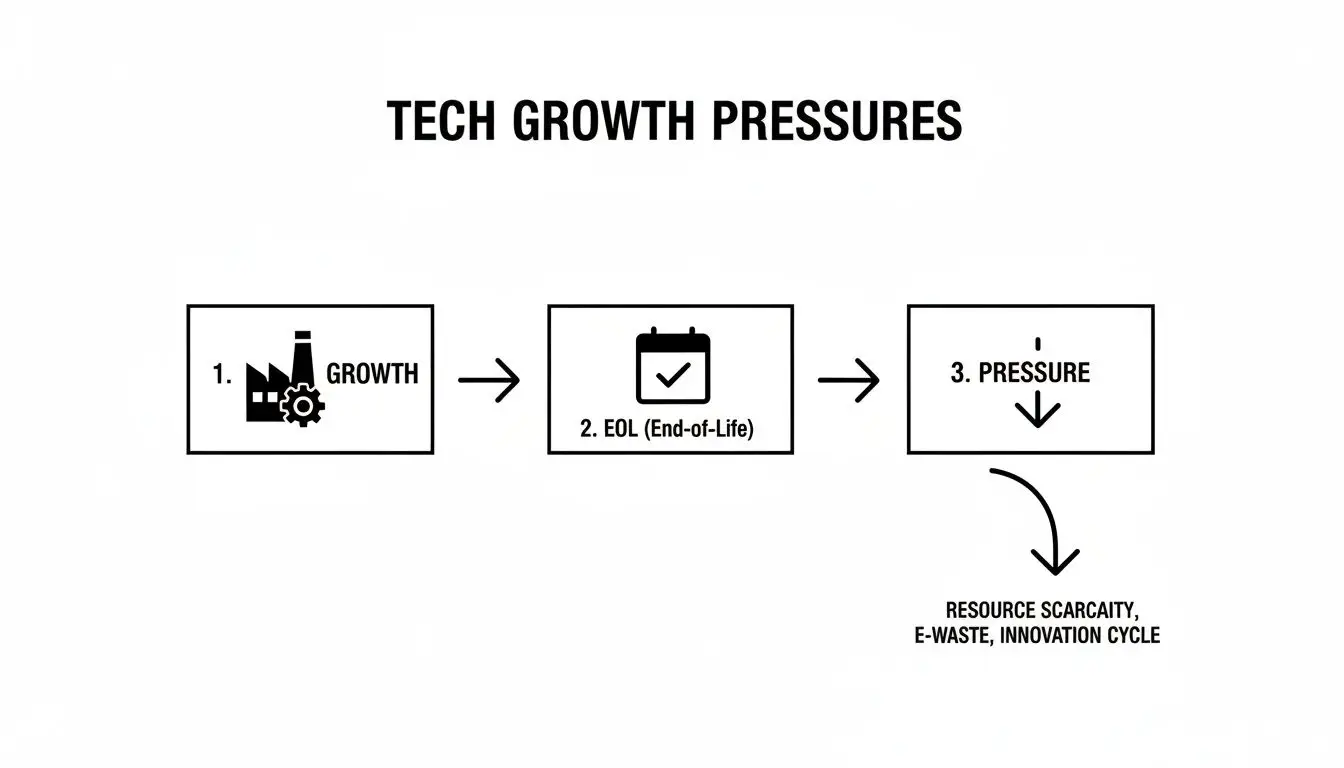
As this shows, business growth directly leads to outdated equipment, putting the responsibility for secure and responsible disposal squarely on your shoulders.
Secure Data Destruction and Sanitization
Once you know exactly what you have, the focus turns to the most critical part of the job: secure data destruction. Just deleting files or formatting drives won't cut it. That’s an open invitation for a data breach. Professional data sanitization has to follow established standards like NIST 800-88 to be considered truly complete.
You really have two main options, and they are often used together:
- Data Wiping (Software Sanitization): Certified software is used to overwrite every sector of a hard drive with random data, often in several passes. This is perfect for drives you plan to resell or reuse, as it keeps the hardware intact and valuable.
- Physical Destruction (Shredding): For drives that are old, out of warranty, or contained highly sensitive information, shredding is the ultimate solution. Industrial shredders turn the drives into tiny, unrecoverable fragments.
The right choice depends entirely on your internal security policies and whether you want to recover value from the assets. Reworx Recycling offers both on-site and off-site services, all fully certified and complete with Certificates of Destruction to satisfy any audit. That documentation is your proof of due diligence.
Physical Equipment Removal and Responsible Recycling
The final phase is all about muscle and logistics—de-racking, packing, and transporting all that equipment. This is heavy, detailed work that needs an experienced crew to avoid injuries and prevent damage to valuable assets.
Working with a certified ITAD partner like Reworx Recycling makes this whole stage painless. Our professional team can handle it all, from disconnecting and pulling the gear to palletizing it for secure transport to our facility. We take care of the logistics so your team can stay focused on their actual jobs.
By partnering with a social enterprise, you do more than just recycle. Your retired assets are processed in an environmentally responsible manner, and any value recovered can be reinvested into community programs that support digital inclusion and workforce development right here in the region.
This last step turns a daunting project into a win for your company, the community, and the environment. For organizations that want a step-by-step framework, you can learn more by checking out our comprehensive server decommissioning checklist to help guide your planning. When you execute each of these stages with care, your data center decommissioning in Bowling Green Kentucky becomes more than just flawless—it becomes a powerful statement of your corporate responsibility.
Meeting Kentucky's Environmental and Data Security Regulations
When you’re wrapping up a data center decommission in Bowling Green, the project isn't truly over until every last compliance box is checked. For any Kentucky business, figuring out the tangle of environmental and data security laws can feel like a job in itself. Getting it wrong can lead to steep fines, legal headaches, and a hit to your reputation that sticks around long after the last server is gone.
But this isn't just about dodging penalties. It's about doing the right thing and showing your commitment to corporate responsibility. That means following federal data privacy laws, meeting Kentucky’s specific rules for e-waste, and making sure your project aligns with our local sustainability efforts.
Aligning with Local Environmental Goals
Bowling Green is making a real push to become a more sustainable community, and local businesses are a huge part of that effort. Initiatives are popping up that focus on reducing waste and managing resources responsibly.
A great example is the Bowling Green Metropolitan Statistical Area's (MSA) Priority Climate Action Plan (PCAP), which was kicked off with the help of a $1 million EPA grant. This plan directly calls for better waste diversion and energy efficiency, recognizing that our region's growth will increase emissions if we don't act now.
A professional data center decommissioning in Bowling Green Kentucky fits perfectly into these goals. It ensures that tons of e-waste are kept out of landfills. To see how your own project can contribute, you can read the full PCAP and its goals on the EPA's website to learn more about local climate action strategies.
When you work with a certified ITAD partner like Reworx Recycling, you can ensure that up to 98% of the materials from your old assets are recovered and put back into the supply chain. This is the circular economy in action, and it’s exactly what our local leaders are trying to build.
Navigating State and Federal Data Security Laws
The second a server powers down for the last time, the data on it becomes a liability. Your company is legally on the hook for protecting that information until you can prove it's been destroyed for good. Several major federal laws come into play here, affecting everything from medical equipment disposal to laptop disposal:
- Health Insurance Portability and Accountability Act (HIPAA): If you handle any protected health information (PHI), the data privacy rules in HIPAA are absolute. Careless disposal of devices with PHI can result in massive penalties.
- Fair and Accurate Credit Transactions Act (FACTA): This law demands the secure destruction of consumer information to stop identity theft. It affects nearly every business holding customer data, from banks to local shops.
- Sarbanes-Oxley Act (SOX): For publicly traded companies, SOX sets strict rules for data integrity and record-keeping that don't stop when an asset is retired.
A documented, certified data destruction process is your only real safeguard. Simply wiping a drive is not enough; you need a Certificate of Destruction that provides an auditable record proving compliance with standards like NIST 800-88.
To make navigating these requirements easier, here's a quick reference for Kentucky businesses.
Kentucky Data Center Decommissioning Compliance Checklist
| Compliance Area | Key Consideration | Reworx Recycling Solution |
|---|---|---|
| Data Security | Is data destruction certified to NIST 800-88 standards? Do you receive a Certificate of Destruction for every asset? | On-site and off-site data destruction with serialized certificates for a complete audit trail. |
| Environmental | Are electronics disposed of according to Kentucky's Universal Waste Rule and federal EPA regulations? | R2v3 Certified recycling processes that ensure all materials are handled responsibly and kept out of landfills. |
| Chain of Custody | Is there a secure, documented process from pickup to final disposition to prevent asset loss or theft? | Secure, GPS-tracked logistics, sealed transport, and documented chain of custody from start to finish. |
| Reporting | Can you provide detailed reports for ESG, corporate governance, and regulatory audits? | Comprehensive asset reporting that details the final disposition of every piece of equipment for easy compliance verification. |
This table highlights the major checkpoints, but a truly compliant decommission covers every detail from start to finish.
Ensuring Physical Security and Chain of Custody
Compliance goes beyond just wiping data; it’s also about the physical control of your assets. From the moment a server is pulled from the rack to the time it’s processed, you need an unbroken, secure chain of custody. Any weak link in that chain is an open door for theft or loss, which can be just as bad as a data breach.
The physical security of decommissioned IT assets is critical during both storage and transport. A trustworthy ITAD partner will use locked cages, sealed trucks, and GPS tracking to keep an eye on everything while it's in transit. If you need to store equipment on-site before pickup, learning about shipping container security can give you some practical ideas for keeping things locked down.
Reworx Recycling offers a seamless, fully compliant solution built for Kentucky businesses. Our process covers every regulatory angle, from certified data destruction to responsible recycling and the detailed reports you need to prove it. When you need a partner who gets the local compliance landscape, check out our dedicated Kentucky ITAD services designed to protect your business and support our community.
How to Choose the Right ITAD Partner in Bowling Green
Picking the right IT asset disposition (ITAD) partner for your data center decommissioning in Bowling Green Kentucky is a massive decision. This goes way beyond just finding someone to haul away old electronics. You're entrusting a vendor with your company’s sensitive data, its public reputation, and your compliance with environmental laws.
Not all ITAD providers are created equal. Making the wrong choice can lead to devastating data breaches, costly compliance failures, and even lost money from recoverable assets. For IT managers and sustainability leaders in Bowling Green, vetting a partner means having a strict list of non-negotiables.

Non-Negotiable Certifications and Standards
Your vetting process must start with certifications. These aren't just fancy logos for a website; they are your concrete proof that a vendor is serious about security and environmental standards. Two are absolutely essential:
- R2v3 (Responsible Recycling): This is the gold standard in the electronics recycling industry. An R2v3 certified partner like Reworx Recycling has passed rigorous audits proving they follow strict protocols for data security, environmental safety, and worker health.
- e-Stewards: As another top-tier certification, e-Stewards places a heavy emphasis on preventing the illegal export of e-waste and ensuring that hazardous materials are handled responsibly.
Beyond recycling certifications, you must insist on adherence to NIST 800-88 guidelines for data destruction. This federal standard is the benchmark for media sanitization. A partner who can provide on-site or off-site destruction that meets this standard—complete with serialized Certificates of Destruction—is giving you an auditable, legally defensible paper trail. This documentation is your best defense against liability in a data breach.
Financial and Logistical Capabilities
A top-tier ITAD partner should act like a strategic part of your team, not just a disposal crew. This means they need to have solid logistical muscle and transparent financial processes. A huge area to dig into is their approach to asset value recovery.
Many servers, networking gear, and storage arrays from a decommission still have plenty of resale value. A trustworthy partner will have an established equipment buyback program. The process should be completely transparent, giving you a detailed audit of your assets and a clear quote for their fair market value. This can flip a decommissioning project from a pure cost into a revenue stream, helping to offset the expense of your new technology.
Furthermore, a vendor's logistics are critical. Do they have their own trained, insured teams to handle the physical de-racking and on-site packing? Do they use secure, GPS-tracked vehicles to maintain a complete chain of custody from your facility to theirs? These small details are what prevent asset loss and protect your data while it's on the move. You can find more advice on this in our detailed guide on selecting a reliable e-waste recycling partner.
The Social Enterprise Difference
While technical certifications and financial returns are crucial, there’s another layer to think about: community impact. This is where partnering with a social enterprise like Reworx Recycling brings a unique and powerful value to your project. Unlike a standard for-profit recycler, our donation-based recycling model channels business success directly back into the community.
When you decommission your data center with Reworx Recycling, you’re doing more than just recycling responsibly. You are also:
- Supporting digital inclusion by allowing us to refurbish and donate technology to local families and nonprofits.
- Creating workforce development opportunities for individuals who face barriers to steady employment.
- Boosting your brand’s ESG profile with a real, tangible story of corporate social responsibility.
This mission-driven model creates a compelling narrative that resonates with customers, employees, and stakeholders who expect modern businesses to be good corporate citizens.
Key Insight: Choosing an ITAD partner is a strategic decision that reflects your company's values. By selecting a certified social enterprise, you meet your technical and security needs while also making a positive, measurable impact on the community.
This dynamic is especially relevant as Kentucky's energy conversation evolves. The need for responsible data center decommissioning is underscored by community pushback against new hyperscale projects that strain local utilities, like the Franklin-Simpson Planning Commission's recent rejection of a massive data center. While such projects offer few jobs, a proper ITAD process can recover up to 95% of precious metals, generating buyback revenue that directly supports local organizations. You can explore more about these regional discussions and their community impacts on WNKY.com. Choosing the right partner ensures your company contributes positively to this evolving economic and environmental picture.
Launch Your Bowling Green Decommissioning Project With Reworx Recycling
When you’re facing a data center decommissioning in Bowling Green, Kentucky, you need a partner who gets the job done right. It’s not just about hauling away old gear. It’s about technical know-how, bulletproof security, and a real connection to our local community. At Reworx Recycling, we’re not just another vendor—we’re a full-service social enterprise ready to turn your retired IT assets into a positive local story. We’ve built our process to give IT managers, facility leaders, and business owners total confidence in a complex project.
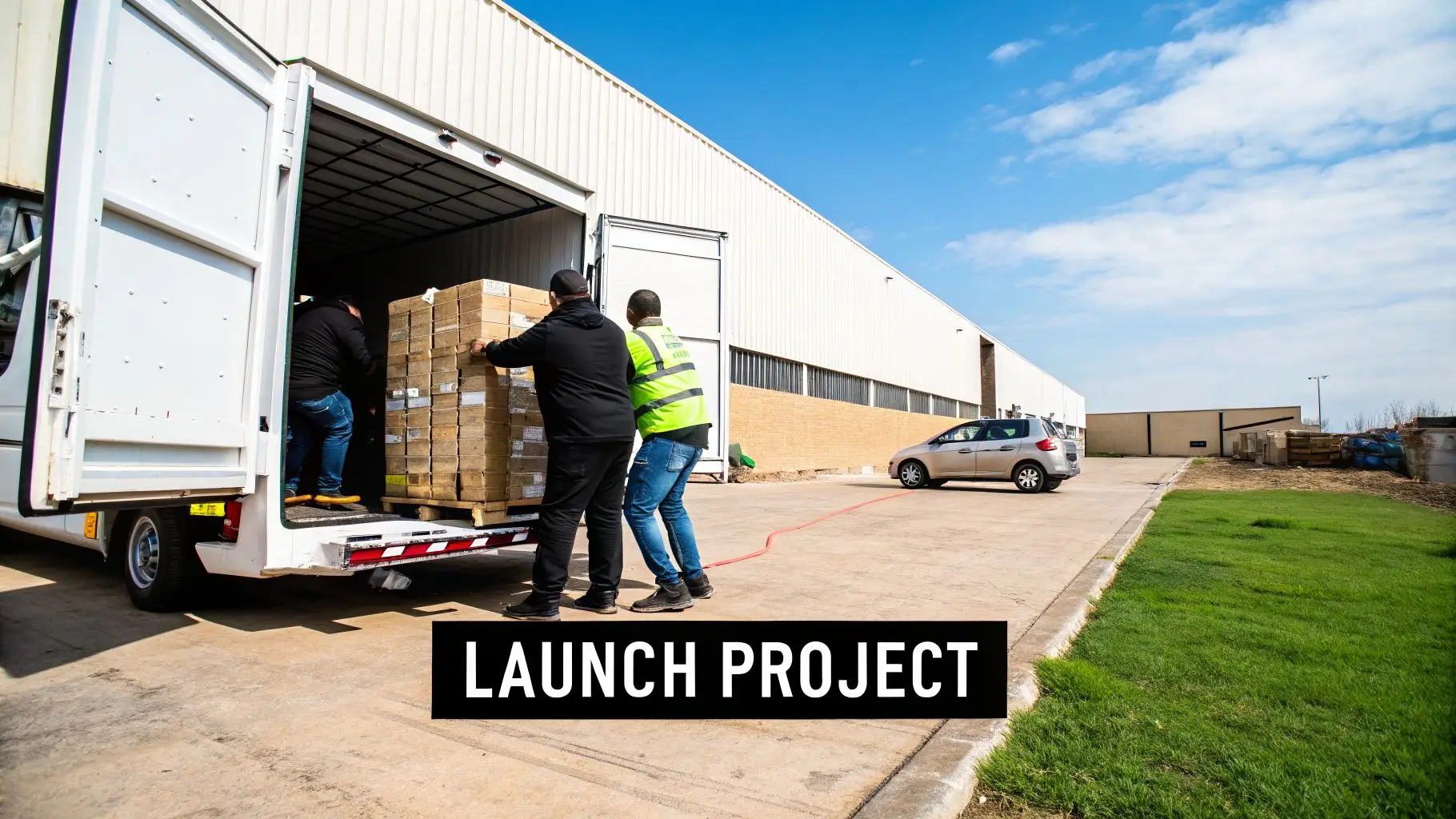
Think of us as a strategic ally. We handle every single stage of the project, from the first logistical puzzle piece to the final compliance report, so you can focus on what you do best.
Your All-Inclusive Decommissioning Solution
We’ve seen it all, and our services are built to cover every single requirement for a modern data center retirement. We handle compliance, security, and getting the most value back from your equipment. It’s a complete package.
Here's what we bring to the table:
- Certified Secure Data Destruction: We provide on-site and off-site data destruction that meets strict NIST 800-88 standards. Whether you need multi-pass data wiping to preserve asset value or physical shredding for total peace of mind, we provide serialized Certificates of Destruction for a clean, auditable trail.
- Full-Service IT Asset Disposition (ITAD): Our crew handles the heavy lifting. We’ll take care of the de-racking, asset tagging, secure packing, and GPS-tracked transport. Your team stays focused on their critical tasks, not on moving servers.
- Sustainable Electronics Recycling: As an R2v3 Certified recycler, we make sure that any assets without resale value are processed responsibly. This keeps hazardous e-waste out of landfills and puts valuable materials back into the circular economy.
- Corporate Donation and Buyback Programs: We’ll evaluate your retired equipment for any resale potential. Our competitive buyback options can turn your decommissioning project from a cost center into a revenue stream. Other assets can be refurbished and funneled into our corporate donation programs.
The Social Enterprise Advantage: Your Community Benefits
Working with Reworx Recycling is more than just good business; it’s a statement about your company’s commitment to corporate social responsibility. Because we operate as a donation-based social enterprise, your decommissioned assets do so much more than just get recycled. They help build a stronger community right here at home.
By partnering with us, your company directly supports digital inclusion initiatives that provide technology to underserved families and workforce development programs that create jobs for individuals facing employment barriers right here in our region. This turns a standard operational task into a compelling ESG story.
Ready to make your next decommissioning project simpler and more impactful? Our experts are here to help you map out a custom plan that fits your timeline, budget, and security needs. Getting started with a partner you can trust is easy.
Take the first step toward a secure, compliant, and socially conscious project today. You can learn more about our hands-on approach by exploring our equipment decommission services and see how we can create a solution for your Bowling Green business. Schedule a pickup or partner with Reworx Recycling to get your project moving with a leader in responsible ITAD.
Common Questions About Data Center Decommissioning
Even the most buttoned-up project plan is going to spark a few questions. That’s just the nature of a big IT undertaking. When it comes to a data center decommissioning in Bowling Green, Kentucky, we find ourselves having the same practical conversations with IT managers and company leaders.
Getting straight answers to these common questions is the best way to get everyone on the same page and avoid any surprises later on. Let's walk through some of the things we get asked most often.
How Long Does A Decommissioning Project Usually Take?
This is the big one, and the honest answer is: it depends. A decommissioning timeline can range from a few short weeks to several months. The real drivers are the size of your space, the complexity of your setup, and how much data needs to be migrated beforehand.
For instance, a small server room holding a dozen racks might be wrapped up in less than a month. But if you're looking at a large enterprise data center with hundreds of servers and active data replication, you could be looking at a six-month project or even longer. The key is to build a detailed plan with clear, phased milestones to keep everything moving forward.
What Is The Real Difference Between Wiping And Shredding?
Both are proven methods for secure data destruction, but they're not interchangeable. Choosing the right one comes down to the hardware itself and your security needs.
- Data Wiping (Sanitization): Think of this as a software-based process. We use specialized tools to overwrite every sector of a hard drive according to strict NIST 800-88 standards. This completely erases the data but leaves the drive physically intact and usable. It’s the perfect choice for newer, valuable equipment you plan to resell or put back into service.
- Physical Shredding: This is exactly what it sounds like. The hard drive is fed into a powerful shredder and ground into tiny, unrecoverable pieces of metal. Shredding is the go-to for old, end-of-life drives or any media that held highly sensitive data where you simply can't accept any level of risk.
Can We Actually Get Money Back For Our Old IT Equipment?
Absolutely. This is probably the most overlooked financial upside of a properly managed decommissioning. A lot of the gear in your data center—servers, CPUs, RAM, and networking switches—still has significant value on the secondary market.
A good ITAD partner will audit all of your assets to pinpoint what’s remarketable. Through our established equipment buyback program, we assess fair market value for that gear and can write you a check. That revenue flows right back to you, offsetting project costs and giving your budget a welcome boost.
How Does Partnering With A Social Enterprise Benefit Our ESG Goals?
Working with a donation-based social enterprise like Reworx Recycling gives your company’s Environmental, Social, and Governance (ESG) efforts a real, authentic story.
Instead of just being a line item on a budget, your decommissioning project transforms into a narrative about community impact. Your retired assets don't just disappear; they get a second life supporting local digital inclusion programs, providing technology to those in need, and creating workforce development opportunities right here in our community. This is how you turn a standard operational task into a powerful statement about corporate responsibility that connects with employees, customers, and investors.
Ready to transform your outdated IT assets into a force for good? Partner with Reworx Recycling for a secure, compliant, and socially impactful decommissioning project. Your equipment can help bridge the digital divide and create opportunities in our community. Explore our services and start planning your project by visiting our Recycling Blog.