Last quarter, a procurement manager closed a recycling pickup in a hurry, signed the driver's paperwork, and moved on. Two months later, audit season hit, and nobody could prove where the laptops went, who erased the drives, or whether the downstream processor handled the equipment. That's the problem with weak certificate requirements in electronics recycling, the gap only shows up after the truck is gone.
The fix isn't more paperwork for the sake of paperwork. It's a tight document set that proves chain of custody, secure data destruction, and responsible downstream handling without making your team chase ghosts during an audit. If you're trying to close that gap fast, start by treating the certificate stack like a vendor-control system, not a compliance afterthought, and use a resource like software ratings only to compare workflow tools, not to excuse sloppy records. Reworx Recycling's own guidance on audit documentation requirements fits that same mindset, because the right paperwork is the one you can produce when someone asks for it.
Why Certificate Requirements Matter for Every ITAD Program
A bad pickup rarely looks bad at the loading dock. The pallets leave, the schedule is met, and everybody feels productive until finance asks for proof that the retired gear was handled correctly. That's when the missing certificate becomes a real business problem, because a receipt is not the same thing as evidence.
What the paper trail actually protects
In ITAD, certificate requirements are the evidence layer that turns a disposal event into something you can defend. You need proof for data security, proof for environmental handling, and proof that the vendor didn't just disappear with your assets. If a customer, auditor, or board member asks what happened to end-of-life equipment, the answer has to be documented, not reconstructed from email threads.
The document set usually supports three questions. Did the equipment get sanitized or destroyed. Did the hardware get recycled, reused, or donated. Can you show who handled it at each step. That's why the paper trail matters more than the pickup confirmation itself.
Practical rule: if a vendor can't produce the right certificate quickly, they probably can't produce the operational discipline you need either.
For procurement teams, the risk is not just compliance exposure. It's the reputational damage of claiming responsible recycling with no records to back it up. That's especially painful when sustainability reporting, customer audits, or public-sector procurement reviews depend on clean documentation. A controlled ITAD process should leave you with evidence, not a scavenger hunt.
The easiest way to think about it is this. If the equipment left your facility, but your records can't show the destination, method, and responsibility chain, you don't have closure. You have a liability with a moving truck attached.
The Core Certificate Types in Electronics Recycling and ITAD
In a serious ITAD program, certificates function like a closing file. Each document locks into place so nobody has to guess later whether the equipment was sanitized, recycled, reused, or passed to the wrong channel. Without that structure, the file looks complete until someone reviews it.
The certificates you should expect
A Certificate of Recycling confirms that retired equipment moved through a recycling channel rather than being dumped or handled casually. A Certificate of Data Destruction shows that drives, SSDs, phones, and other storage media were sanitized or physically destroyed. A Certificate of Reuse or Donation documents that working equipment was redeployed instead of shredded, which matters when your sustainability report has to show both diversion and community benefit. For teams that want a vendor reference point, Reworx Recycling's electronic recycling certification is the kind of page procurement should review before signing, because it shows how a provider frames its certification claims.
Supporting records matter just as much. Serialized asset lists, weight tickets, and transfer logs give the certificate context. A certificate without asset detail is weak, because it tells you an event occurred but not what moved.
A certificate should read like the final page of a clean transaction, not like a marketing flyer.
For procurement, the practical test is simple. Ask whether the document answers who, what, when, where, and how. If the answer is vague, the certificate is theater. If it names the facility, the scope, and the method, it starts to become usable evidence.
One useful way to sort the paperwork is by audience. Finance wants proof of disposition and chain of custody. Security wants destruction evidence. Sustainability wants diversion and donation confirmation. Legal wants all of it to line up. When the same certificate set serves those four groups, your ITAD process is finally doing real work.
Federal and State Rules That Shape Certificate Requirements
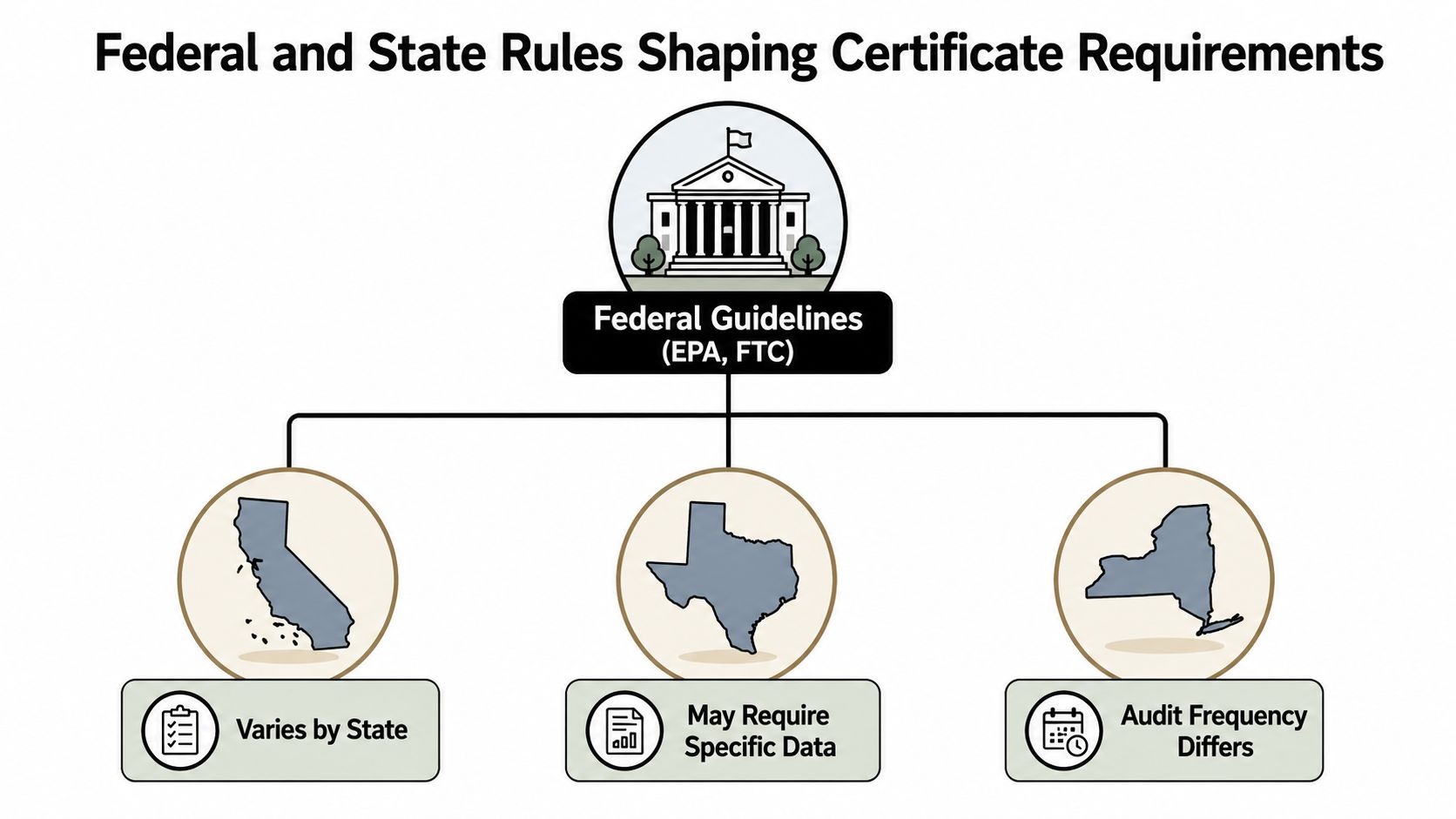
Federal rules set the floor, but they don't make the whole building. In electronics recycling and ITAD, the exact document expectations change with the product category, the disposal channel, and the state or program that touches the asset. That's why a one-size-fits-all certificate template usually falls apart the moment a regulator or buyer checks the details.
What the federal side actually requires
Under the U.S. Consumer Product Safety Act, manufacturers and importers of covered products manufactured on or after November 12, 2008 must issue a certificate of compliance that accompanies the product and can be furnished to certain parties, and the certificate must name each applicable rule, ban, standard, or regulation, with certification generally based on testing of each product or a reasonable testing program. The CPSC also distinguishes between a Children's Product Certificate and a General Certificate of Conformity, and the framework changes by product type and applicable rule set, not by wishful thinking. CPSC certificate requirements make one thing clear, the declaration has to match the actual tested scope.
Imported covered products bring another layer. A 2025 CPSC final rule requires importers to electronically file the certificate of compliance with Customs and Border Protection at the time of entry, and CBP then shares the certificate with CPSC. That doesn't sound like an ITAD issue until you realize how often retired hardware crosses borders through resale, redeployment, or downstream processing.
Where state and sector rules complicate the file
State and program rules are where buyers get burned. Some certifications depend on the location, the facility, or the current eligibility status of the site. Rural Health Clinics, for example, have to stay in a shortage area designated within the last four years, and NCUA underserved-area approvals require proof of economic distress, unmet need, and a facility-ratio test rather than just a form. Those are not electronics rules, but they show the same pattern, approval can turn into maintenance.
The broader lesson is simple. If the certificate depends on a status, the status can change. That means your documentation workflow has to ask whether the vendor's eligibility is current, not just whether it existed at some point.
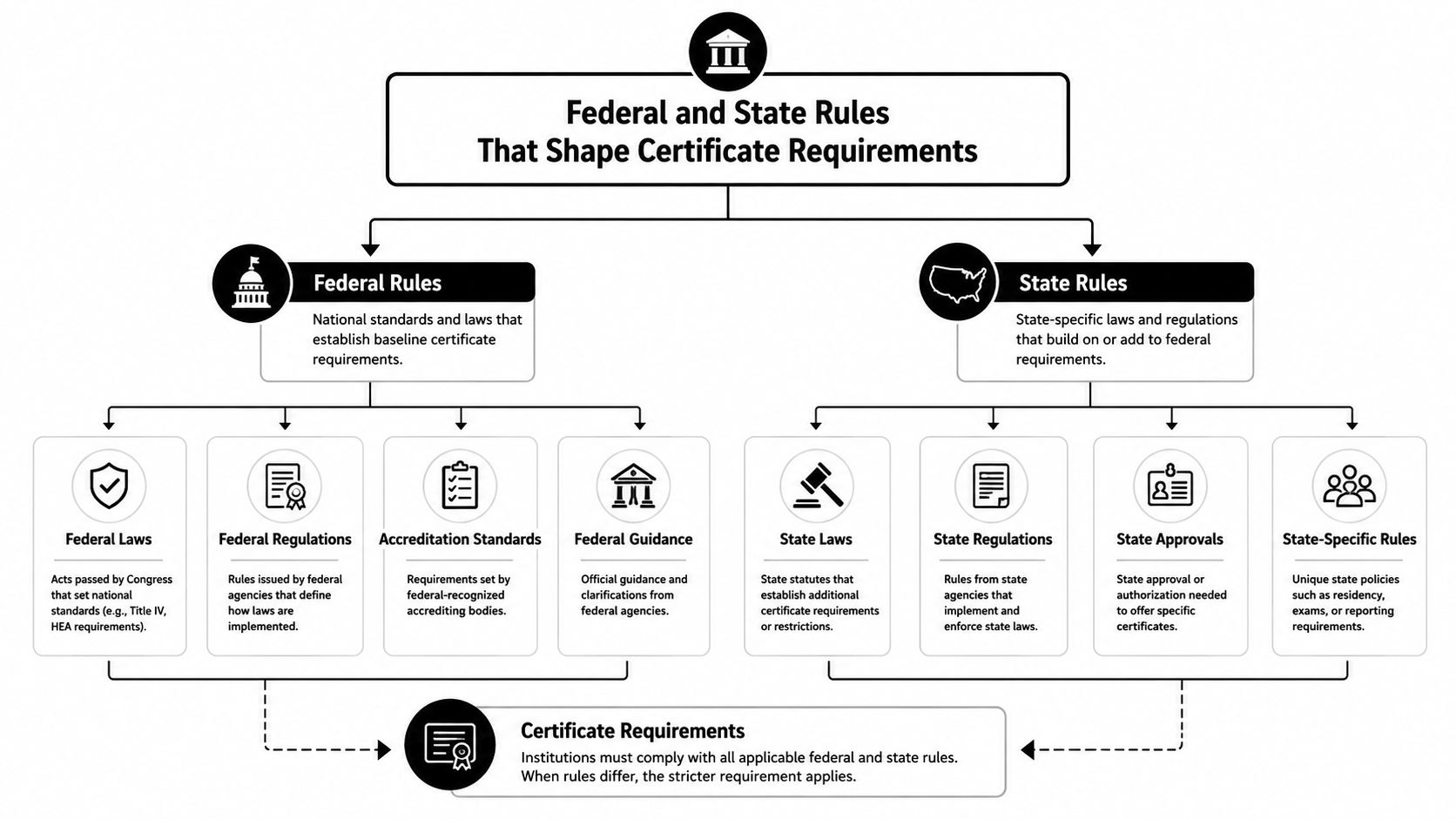
For B2B buyers, the takeaway is blunt. Federal rules tell you what must be true. State and program rules tell you what must be shown. If your vendor can't trace the certificate back to the right governing standard, you're holding paper, not protection.
How to Verify a Recycling or ITAD Vendor Before You Sign
Most vendor failures show up before the first pallet moves. The certificate looks polished, but the scope is fuzzy, the dates don't line up, and the downstream story gets vague the second you ask for supporting records. That's why vendor review should be a conversation, not a PDF dump.
Five questions that cut through the noise
Start with the issuing entity. Who signed the certificate, and are they authorized to issue it for the service being sold. Then ask what exactly the certificate covers, because a general recycling certificate doesn't prove drive destruction, and a destruction certificate doesn't prove responsible downstream material handling.
Next, check the method. If the vendor says data was destroyed, the document should show whether the process was sanitization, shredding, degaussing, or another defined method. If the certificate references a standard or third-party attestation, read that reference closely instead of assuming it means what you want it to mean. For a practical vetting framework, the step-by-step vendor vetting tips are useful because they force the same discipline procurement teams need here.
Red flag: a certificate that covers equipment the vendor never physically received is not evidence, it's fiction.
You also need to see the asset detail. Serial numbers, counts, and pickup dates should tie back to your internal transfer record. If the vendor refuses a serialized list, that's a sign they want a loose process, not an auditable one.
Here's a simple checklist you can use before the first pickup:
| Verification Question | What the Certificate Should Show | Red Flag |
|---|---|---|
| Who issued it | Named facility or authorized signer | No signer, or a generic company name only |
| What equipment it covers | Asset type, serials, counts, or pickup reference | “All items” with no scope detail |
| How it was handled | Recycling, destruction, reuse, or donation method | No method, or contradictory language |
| Where it went | Downstream destination or responsible processor | No downstream disclosure at all |
| What backs it up | Test report, chain record, or attestation reference | Certificate stands alone with no support |
Reworx Recycling's vendor selection criteria sit in the same lane, because a good vendor should make verification easy, not decorative. If the paperwork feels hard to get before the contract, it'll be worse after the pickup.
Sample Wording and Printable Templates You Can Adapt
Good certificate language is boring on purpose. It should identify the parties, identify the assets, describe the treatment, and leave little room for interpretation. If a template tries to sound impressive, it usually gets weaker where it matters.
Certificate of Recycling and Certificate of Data Destruction language
For a Certificate of Recycling, the core wording should state that the listed assets were received, processed, and routed to a recycling stream in accordance with the service scope. Include the client name, facility name, date range, equipment description, and count or weight. If serial numbers are available, list them, because that's what lets an auditor match the certificate to the pickup record.
For a Certificate of Data Destruction, the language should be even tighter. It should name the media type, the destruction or sanitization method, the date completed, and the authorized signer. If the work was done on-site, note the witness or escort reference in the internal record, even if the customer-facing certificate stays brief. Reworx Recycling's destruction certificate template is a useful reminder that the certificate is only one part of a defensible file.
Short version: if the certificate can't be tied to a specific pickup, specific assets, and a specific method, it won't survive an audit.
Use this internal checklist when you build or review a template:
- Facility and Client Identification: verify legal entity names, addresses, and pickup reference numbers.
- Asset Description: capture equipment type, counts, serial numbers where possible, and condition notes.
- Processing Method: record recycling, shredding, sanitization, donation, or reuse.
- Downstream Outcome: note whether the equipment was recycled, redeployed, or destroyed.
- Authorization: include the signer's name, title, date, and contact point for follow-up.
Why each field exists
Auditors care about traceability, not flair. The facility and client fields prove the parties are real. The asset fields prove the certificate applies to the right load. The method and outcome fields prove the work was completed as stated. The signature closes the loop.
Keep the internal record a little richer than the customer-facing certificate. Chain-of-custody handoffs, witness notes for on-site destruction, and retention dates belong in the file even if they don't belong in the glossy version. That's how you make the next review easier instead of harder.
Building a Procurement Workflow With a Real Audit Trail
A clean certificate doesn't rescue a messy workflow. If procurement, IT, facilities, and sustainability all touch the same equipment but nobody owns the handoff record, the audit trail breaks somewhere between the warehouse and the spreadsheet. That's the part many organizations underestimate.
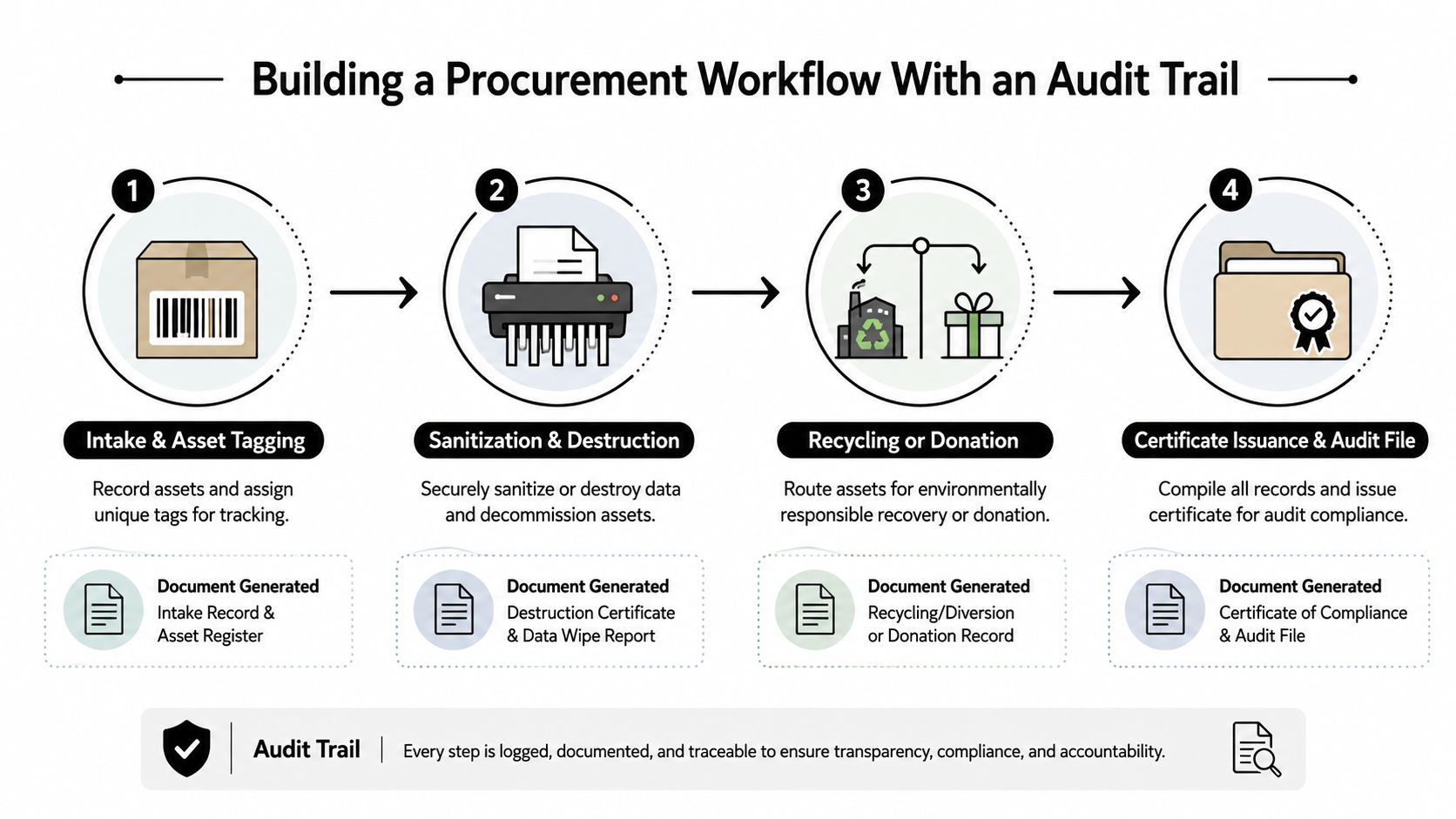
Who owns what in the process
IT should tag the assets and confirm what's leaving service. Facilities should manage the physical handoff and pickup access. Procurement should confirm the vendor's certificate package before award, not after the truck is already on site. Finance and sustainability should reconcile the finished file against the original request, because the final records need to match the transaction.
The chain of custody matters most when the asset changes hands more than once. If a device is collected, staged, sanitized, donated, or recycled, each step needs a record that can be linked back to the original intake. That's where a simple, consistent workflow beats a heroic cleanup effort at year-end.
Here's the operational truth. The certificate itself is the end of a process, not the process. If your team treats it like the first document worth filing, you'll lose context and spend time reconstructing events later. Chain-of-custody documentation is the part that keeps that from happening.
Keep the audit file boring. The more dramatic your cleanup week is, the worse your workflow was the rest of the year.
Donation-based recyclers like Reworx Recycling add a second reporting layer when working equipment is redeployed instead of shredded. That gives sustainability teams a cleaner story for reuse, diversion, and community benefit without changing the basic recordkeeping discipline. The key is still the same, every exit path needs a document trail.
Putting It Together and Partnering With Reworx Recycling
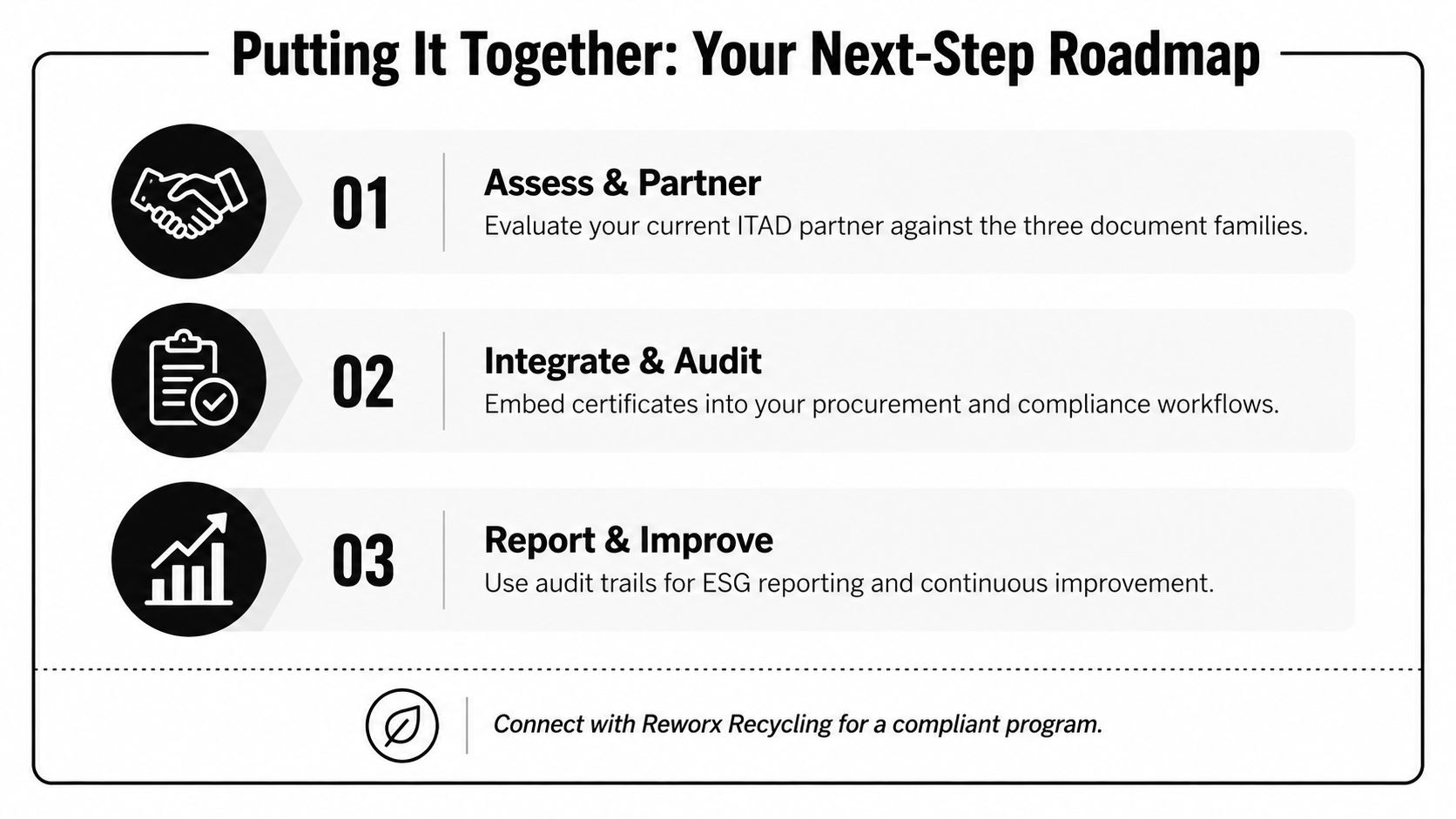
If you're closing a real audit gap this quarter, don't start with a policy memo. Start with the three document families, the vendor verification questions, and the workflow handoff points that directly touch the equipment. Once those are consistent, the rest of the file gets easier to defend.
The move to make this month
First, standardize your certificate template so it always asks for the same asset details, method, signer, and supporting reference. Second, run your current vendor through the checklist in this article and stop accepting vague downstream language. Third, reconcile one recent pickup end to end so you can see where the file breaks before the next audit does it for you.
That's the practical model. Assess and partner, then integrate and audit, then report and improve. If you do those three things, certificate requirements stop being a scramble and start becoming part of your control system.
Reworx Recycling handles donation-based electronics recycling, IT equipment disposal, secure data destruction, and related documentation for businesses that need a cleaner audit trail. If you want to tighten your paperwork and move retired devices through a compliant process, visit Reworx Recycling and schedule the next step before the next pickup becomes another missing-file problem.