A relocation shortlist can look brilliant until the finance team notices that Metro Atlanta's office vacancy reached 25.0% in Q3 2025 while asking rents reached an all-time high of $33.30 per square foot in Q4 2025. That contradiction captures why a serious answer to why businesses are relocating to Metro Atlanta requires more than a list of airport, tax, and talent advantages. The region offers exceptional connectivity and corporate depth, but companies still need to test building quality, workforce retention, incentives, and the disposal of technology left behind.
Introduction and What Relocation Success Actually Looks Like
An operations leader evaluating Atlanta usually starts with a spreadsheet. The shortlist includes labor access, occupancy costs, customer proximity, distribution routes, and the practical question of whether the new site can support the company's next phase. The IT manager has a different list: servers, laptops, network equipment, storage media, laboratory devices, and the old hardware that will either travel, be resold, donated, recycled, or securely destroyed.
That second list often arrives too late. A move can be financially sound and still create avoidable risk if equipment inventories are incomplete, data-bearing devices leave the building without documented controls, or the company pays to transport assets it should have retired. Teams building the business case should therefore include budgeting for commercial office projects alongside technology transition planning, not treat both as unrelated workstreams.
Practical rule: A relocation succeeds when the new operation opens with the right people, space, systems, and asset records, not merely when the lease is signed.
This briefing takes a decision-grade view of Metro Atlanta. It examines market access and the corporate cluster effect, operating costs, population and job growth, logistics infrastructure, incentives, and two uncomfortable facts that promotional explainers often omit. The office market is split between desirable modern space and challenged older buildings, while migration data raises questions about long-term talent retention.
The final issue is operational. A move creates an IT asset disposition, or ITAD, project whether leadership names it that way or not. Companies should decide early what will move, what will be retired, how data will be destroyed, and how reusable equipment can support community access. For a forward-looking view of local commercial conditions, readers can also review Metro Atlanta's real estate market outlook before finalizing a site and transition budget.
Market Access and the Corporate Cluster Effect
Eighty percent of the U.S. population is within a two-hour flight of Atlanta, according to Georgia's official Metro Atlanta economic development profile. That reach matters to companies whose leaders, customers, suppliers, and investors are distributed across the country. Metro Atlanta also contains 17 Fortune 500 headquarters and a highly skilled workforce of more than 2.5 million people, giving a relocating company access to both executive connectivity and a substantial labor base.
The corporate concentration extends beyond Fortune 500 names. Business-climate reporting cited in the same relocation context identifies more than 330 global and North American headquarters in the metro. Those figures describe more than prestige. They indicate a market where legal advisers, accounting firms, recruiters, technology integrators, construction contractors, logistics providers, and other specialized services have reasons to maintain local capability.
Why clusters reduce relocation friction
A corporate cluster works like an anchor store in a shopping district. The anchor doesn't supply every need, but it attracts foot traffic and makes adjacent businesses viable. In Metro Atlanta, established employers create demand for professional services and specialized suppliers. Those providers deepen the market, which makes the region more useful to another employer considering a move.
That effect can lower friction more reliably than a single incentive. A company entering an established industry network may find experienced candidates, vendors familiar with its compliance requirements, and service partners that understand the local operating environment. The practical question isn't whether Atlanta has talent. It's whether the metro has a concentration of talent and suppliers relevant to your company's specific function.
A practical cluster test
Before approving a move, leadership should map:
- Customer proximity: Identify whether major customers or accounts can be served more easily from Atlanta.
- Hiring depth: Separate broad labor availability from the specialized roles the company needs.
- Supplier density: Check whether critical vendors already operate in the metro or would need to travel in.
- Executive access: Compare flight connectivity with the locations of board members, customers, and operating teams.
A company can find Atlanta ReloScore as one input to its broader location assessment, but a score shouldn't replace a company-specific operating model. The same cluster that benefits a software business may not provide the right fit for a specialized manufacturer, healthcare operator, or distribution company. Technology demand is also part of the local picture, as explored in Atlanta's digital economy and IT demand.
Operating Costs and a Pro-Business Environment
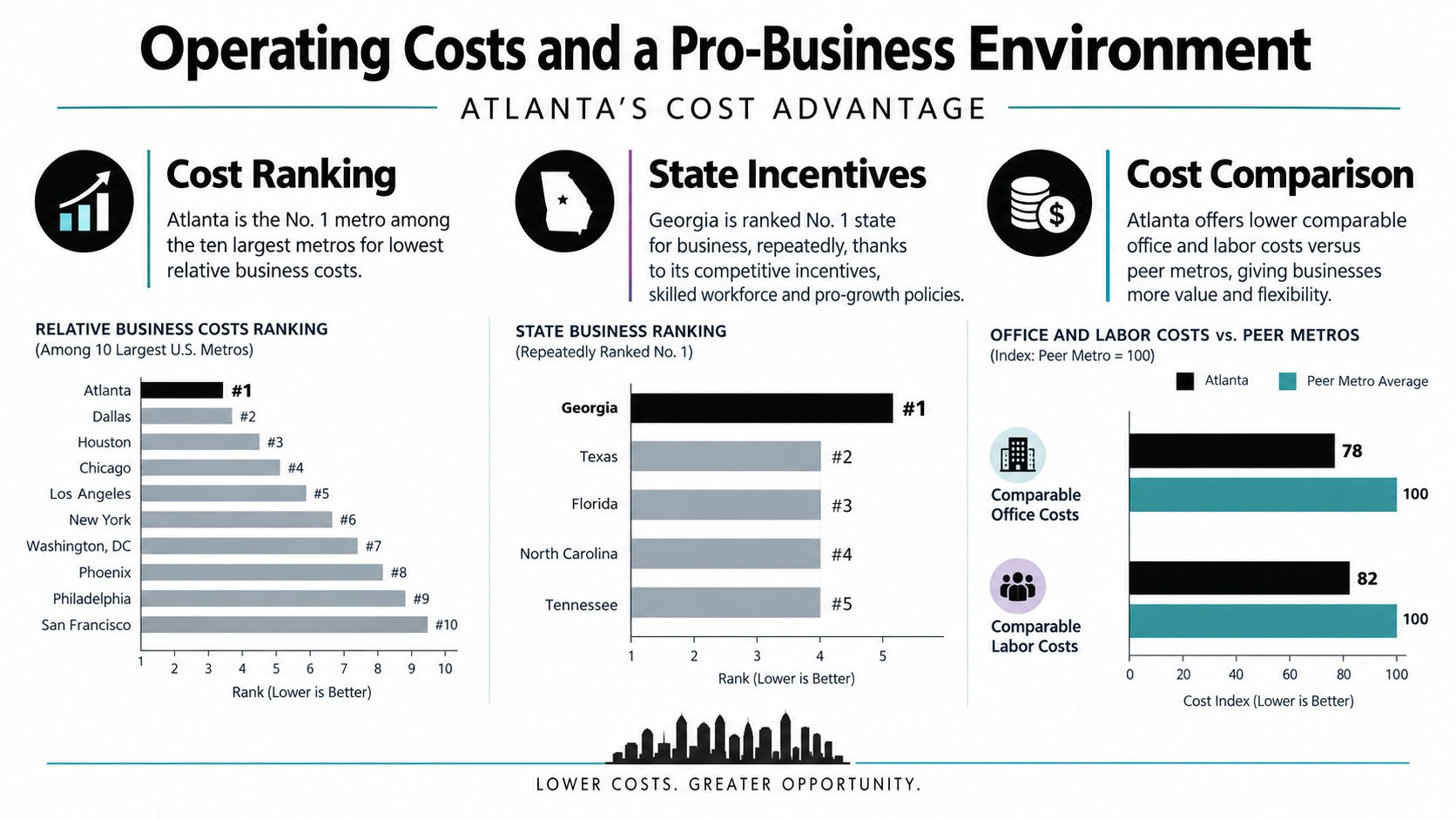
Atlanta's cost case is strongest when finance teams model the full operating system, not just the lease. The metro has been described as the No. 1 metro area for lowest relative business costs among the nation's 10 largest metro areas, while Georgia has ranked the No. 1 state to do business multiple times in recent years, according to business-climate reporting on Atlanta's relocation appeal.
The benefit varies by operating model. A headquarters, contact center, warehouse, data center, and software team place different demands on labor, property, utilities, transportation, and expansion capacity. A cheaper lease can become an expensive choice if the site limits hiring, increases commuting friction, or requires major upgrades.
Growth expands the operating base
Metro Atlanta gained nearly 735,000 residents over the past decade, a 12.8% increase, according to U.S. Census Bureau population estimates. A separate business and growth analysis reports that the region adds about 100,000 new residents each year. Together, these indicators support a practical conclusion: population growth can widen the hiring pool, strengthen customer demand, and create more room for expansion, although those benefits differ by submarket and role.
Georgia's employment trend provides another reason to test the region as a long-term operating base. The state added more than 280,000 jobs between 2019 and 2023, a pace described as more than twice the national job production rate in the cited business-climate reporting. That growth does not guarantee rapid hiring for a specific employer. It does mean relocation plans should account for an expanding labor market rather than assume conditions will remain static.
Build a total-cost comparison
A credible relocation model separates one-time transition costs from recurring expenses. Include:
- Occupancy: Rent, tenant improvements, furniture, security, and building services.
- People: Recruiting effort, compensation assumptions, training, commuting constraints, and retention programs.
- Movement: Freight, installation, downtime, temporary storage, and equipment handling.
- Expansion: The cost of adding staff, workstations, warehouse capacity, or technical infrastructure.
- Compliance: Data destruction, records handling, environmental requirements, and asset documentation.
The growth figures are planning inputs, not a promise of effortless hiring. Finance and operations leaders should compare submarkets, job categories, retention assumptions, and site requirements before approving a move.
Office costs also require scrutiny. Metro Atlanta's headline affordability can coexist with 25% office vacancy and record rents in class-A buildings, creating a split market rather than one uniform price advantage. A relocation case should therefore show where Atlanta creates savings, where premium space or weak demand adds exposure, and how leadership will monitor both after the move.
Logistics Infrastructure and Supply Chain Reach
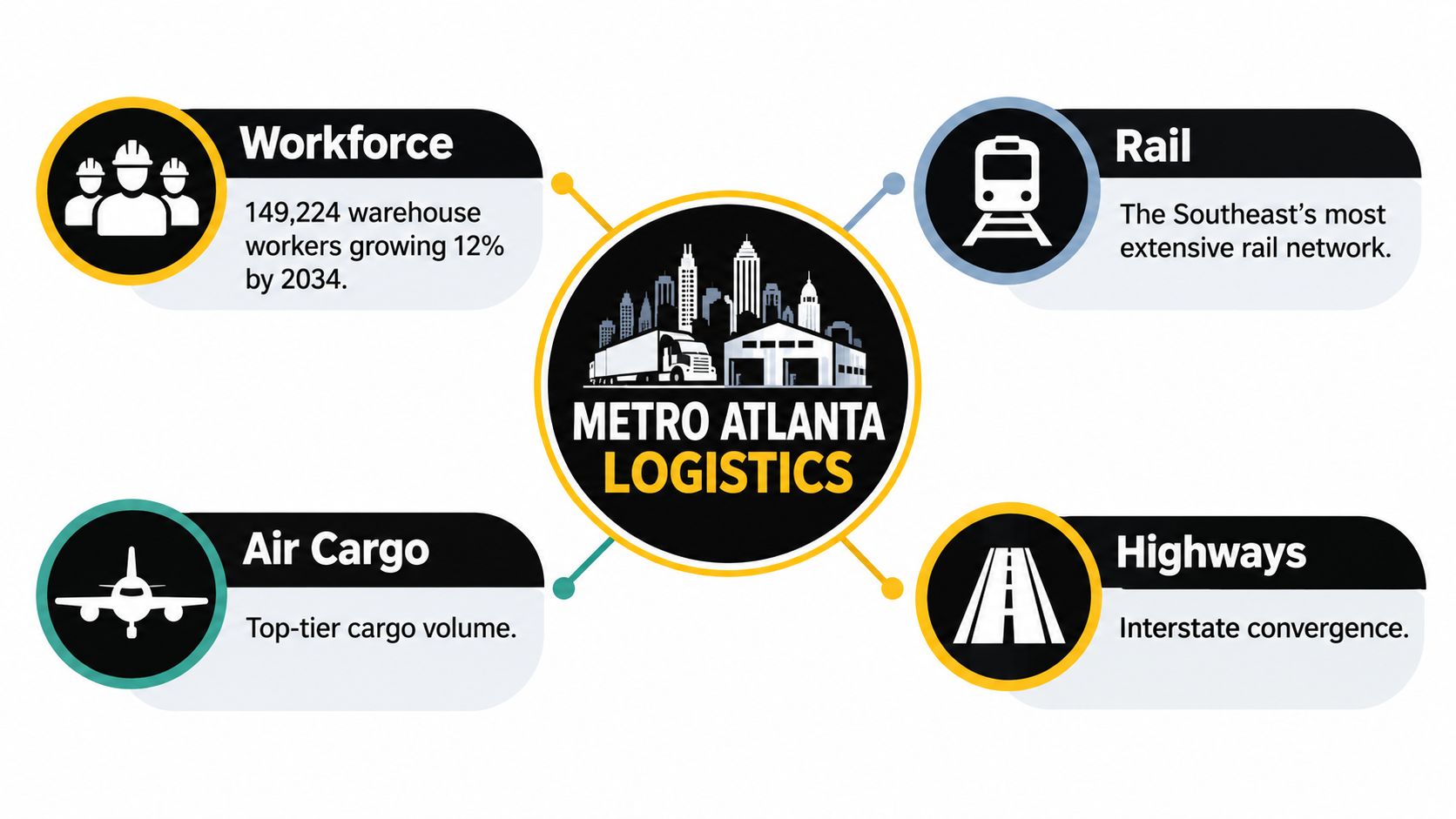
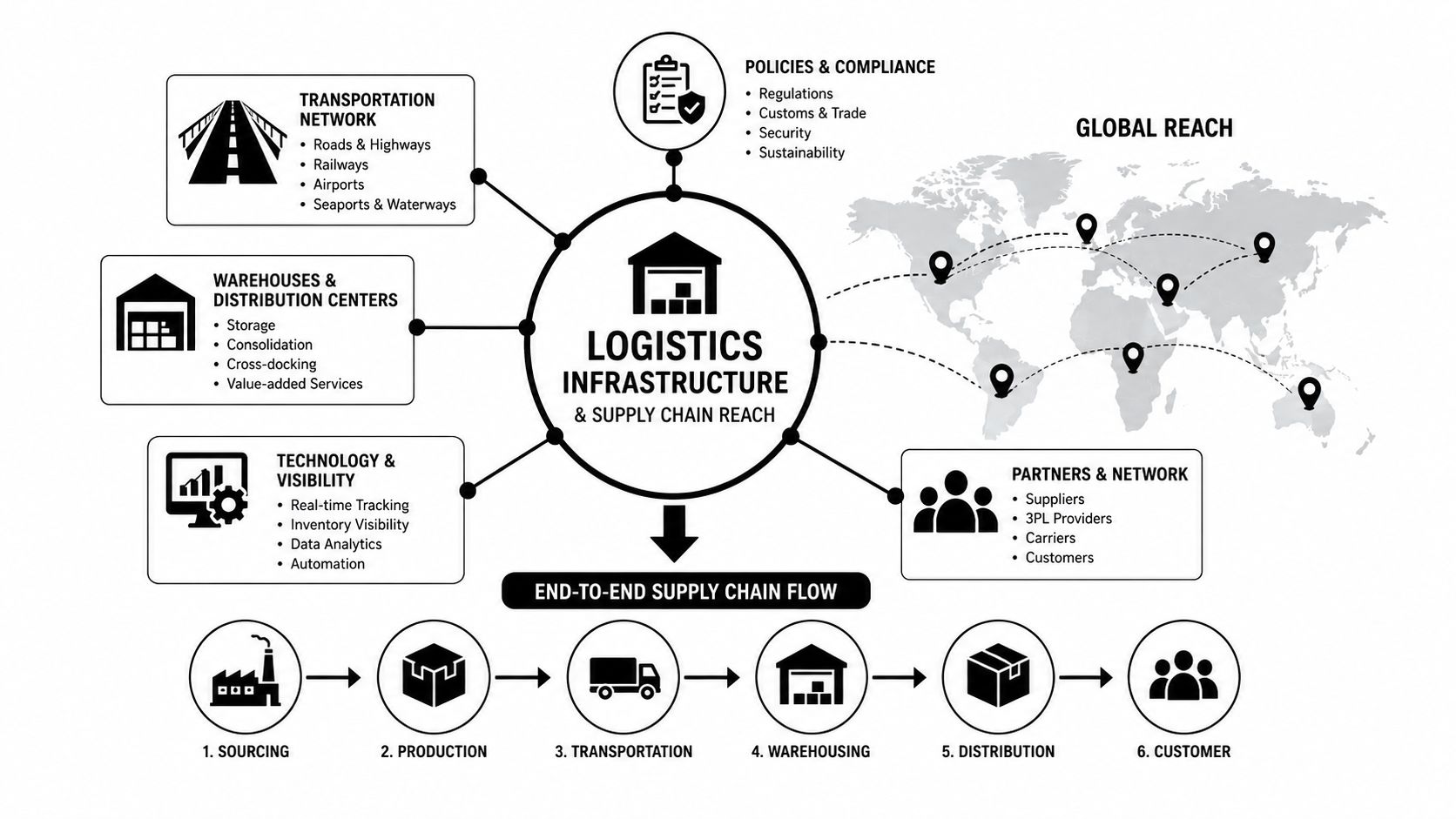
Atlanta's logistics case rests on network density, not a single transportation asset. CBRE's Atlanta industrial market analysis reports 149,224 warehouse workers, with that workforce expected to grow 12% by 2034. The analysis also places average pay for non-supervisory warehouse workers at $17.78 per hour, while describing the Southeast's most extensive rail system and the region's largest intermodal hub.
The rail network includes CSX, Norfolk Southern, and nearly two dozen short-line railroads. Companies can use that range of connections to position inventory and move goods across the Southeast. The practical benefit is optionality: a site may support different inbound, outbound, and contingency routes instead of relying on one carrier or mode.
Multimodal density changes the handoff problem
Supply chains involve transfers among ports, rail, air, roads, warehouses, and final delivery. Every transfer creates work around schedules, documentation, loading, and damage control. Atlanta's concentration of modes can reduce gaps between those steps, helping companies manage cycle times and inventory placement.
The same infrastructure supports reverse logistics during a relocation. Retired laptops, servers, monitors, networking equipment, and other electronics need a documented route out of the facility. A distribution-center move should schedule that outbound stream alongside deliveries to the new site. Otherwise, obsolete hardware can sit in temporary storage, remain exposed to unauthorized access, or become mixed with equipment designated for deployment.
That coordination is often overlooked because inbound freight receives more attention than asset recovery. It still affects downtime, storage requirements, chain of custody, and the timing of the technology cutover.
Labor cost still belongs in the model
The $17.78 per hour average for non-supervisory warehouse roles supports Atlanta's operating-cost case, but it does not determine the final labor outcome. Management should test staffing availability, shift coverage, training time, supervision, retention assumptions, and facility design. A lower wage bill can disappear if the building requires inefficient handling or the operation cannot fill its shifts.
The useful question is whether Atlanta's transportation assets simplify your particular inbound, outbound, and reverse-logistics pattern.
Companies handling air-sensitive equipment, IT hardware, or time-critical inventory should compare airport, rail, and highway connections against actual service requirements. Hartsfield-Jackson Atlanta International Airport and regional business activity offers a relevant local reference point, while the decision should rest on lane-level needs, carrier choices, access to the facility, and recovery routes for retired assets.
The Nuances Most Relocation Guides Leave Out
Metro Atlanta's office market doesn't support a simple “cheap space is available” narrative. Vacancy stood at 25.0% in Q3 2025, yet asking rents reached an all-time high of $33.30 per square foot in Q4 2025, according to the Atlanta office market report from Newmark. The apparent contradiction comes from a bifurcated market. Class-A and spec-suite properties are capturing much of the small-to-mid-size demand, while older buildings with fewer amenities struggle.
That changes the meaning of a relocation cost advantage. A company may find substantial availability, but its preferred building could command a premium. Selecting an obsolete property solely because the headline rent looks attractive can create renovation, employee-experience, energy, security, and technology costs that narrow the original savings.
Quality matters more than vacancy alone
Site selection teams should compare buildings through an operating lens:
- Technical readiness: Confirm power, connectivity, security, access controls, and space for equipment.
- Employee experience: Assess amenities, transit access, parking, and the building's ability to support recruitment.
- Adaptability: Determine whether the floor plan can accommodate hybrid work, growth, collaboration, and secure areas.
- Total occupancy cost: Include improvements, furniture, maintenance, fit-out delays, and required upgrades.
The office search also intersects with the physical removal of technology. A building that can't support a clean loading plan or secure staging area may complicate office cleanout and equipment disposition. Planning an office relocation with an asset strategy helps facilities and IT teams avoid treating abandoned hardware as an afterthought.
The talent advantage needs a retention test
A Regions analysis found that, for the first time in 25 years of its data, outflows from Atlanta to other U.S. metros narrowly outpaced inflows, according to Regions' Atlanta economic update. That finding doesn't erase the region's workforce advantages, but it does challenge the assumption that population momentum will automatically solve long-term hiring.
Knowledge-work employers should ask harder questions. Which roles can be recruited locally? Which employees will relocate with the company? How will the organization compete for specialized workers if retention softens? A durable business case may require a hybrid hiring model, stronger internal mobility, remote flexibility, and a submarket chosen for employee access rather than merely available square footage.
Incentives That Lower the Cost of a Georgia Move
Georgia's incentives can improve a relocation model, but companies shouldn't count a credit until they've checked the program rules, location requirements, job definitions, wage tests, and timing. The statewide job tax credit can apply to businesses in manufacturing, warehousing, distribution, logistics, software development, contact centers, data centers, telecommunications, and fintech, according to Georgia's business incentives guidance.
The Quality Jobs Tax Credit has a specific wage condition. Qualifying new jobs must pay at least 110% of the county average wage, and in some locations the credit can also reduce payroll-withholding obligations. That makes the program relevant to employers creating well-paid positions, but it also means a headcount forecast alone isn't enough for eligibility planning.
The headquarters credit has a different profile. It requires at least 50 headquarters jobs and at least $1 million spent within one year of the first hire on construction, renovation, leasing, or other establishment costs. The credit is $2,500 per new qualifying full-time job, or $5,000 when the average wage of all new qualifying jobs reaches at least 200% of the county average wage, according to Georgia's headquarters tax credit information.
Georgia Tax Credit Programs at a Glance
| Program | Who Qualifies | Key Requirement | Credit Value |
|---|---|---|---|
| Statewide job tax credit | Businesses in manufacturing, warehousing, distribution, logistics, software development, contact centers, data centers, telecommunications, and fintech | Quality Jobs Tax Credit positions must pay at least 110% of the county average wage. Some locations may allow payroll-withholding reduction | Value depends on program and location rules |
| Headquarters tax credit | Companies establishing qualifying headquarters operations | At least 50 headquarters jobs and at least $1 million spent within one year of the first hire | $2,500 per qualifying full-time job, or $5,000 when average wages reach at least 200% of the county average wage |
The decision process should begin with classification, not optimism. Determine whether the move is a headquarters relocation, an operating expansion, a logistics project, or a technology-sector investment. Then confirm the wage, job, spending, and location conditions with Georgia resources before placing credits in the approved budget. Incentives can strengthen a move, but they shouldn't rescue a weak site or an unsupported hiring plan.
Handling IT Asset Disposition and E-Waste During Your Move
A relocation creates a simple ITAD question: what should move, what should be retired, and what data must be destroyed before either happens? Start with an inventory of laptops, desktops, servers, networking hardware, storage media, medical devices, laboratory equipment, and peripherals. Mark each item for redeployment, resale, donation, recycling, or product destruction.
Next, isolate data-bearing equipment before it leaves the old facility. Use documented secure data destruction and hard drive shredding processes, with records that connect each asset to its disposition outcome. Functional devices can enter donation-based recycling programs instead of going directly to disposal, while obsolete equipment should move through responsible electronics recycling channels.
Reworx Recycling, a Smyrna, Georgia-based social enterprise, provides business pickups, equipment decommissioning, IT asset management, data center decommissioning, secure data destruction, and equipment buyback. Its services can support laptop disposal, office cleanout, facility cleanout, medical equipment disposal, and laboratory equipment disposal while advancing technology donations, digital inclusion, and workforce development. Companies planning temporary storage can also use the Standby Self Storage business guide to think through storage requirements during a transition.
The practical sequence is:
- Inventory early: Record serial numbers, condition, ownership, and data status.
- Separate destinations: Keep move-ready assets apart from end-of-life equipment.
- Destroy data securely: Complete destruction before transport or handoff.
- Document outcomes: Retain certificates, transfer records, and asset reports.
- Schedule removal: Coordinate pickups with movers, landlords, and facility managers.
For a structured local ITAD workstream, review Reworx Recycling's Atlanta IT asset disposition services.
Reworx Recycling helps businesses manage electronics recycling, IT equipment disposal, secure data destruction, equipment decommissioning, business pickups, and donation-based recycling during office and facility moves. Visit Reworx Recycling to donate old equipment, schedule a pickup, or discuss a responsible ITAD plan that supports digital inclusion and workforce development.