
A deal closes on Friday. By Monday, the combined company is sorting out duplicate laptops, retired servers, overlapping SaaS contracts, access controls, and devices that still hold regulated data. That is the practical side of Atlanta tech M&A, and it shows up fast for IT, security, and sustainability teams.
Atlanta earned its place as a fintech and enterprise software deal market through years of buyer interest in assets with real operating value. The city's history includes landmark exits such as IBM's acquisition of ISS and VMware's acquisition of AirWatch, along with later transactions involving Mailchimp and GreenSky. Those outcomes matter less as civic bragging rights than as a signal to operators. Strategic buyers keep returning to Atlanta for software, cybersecurity, and payments businesses that can be integrated into larger platforms.
That creates a planning problem long before any press release hits. Corp dev leaders need a clear thesis on where value comes from after the acquisition. IT leaders need a plan for system consolidation, secure data destruction, and chain-of-custody controls for equipment that no longer fits the go-forward environment. Sustainability managers face the same clock. If redundant assets sit too long, storage costs rise, audit trails weaken, and e-waste decisions get pushed to the least convenient point in the integration.
The companies on this watchlist matter because each sits close to categories where consolidation changes physical infrastructure, data retention obligations, and vendor footprints. In practice, every acquisition has a downstream effect on IT asset disposition. Teams that expect portfolio rationalization should prepare early for data center decommissioning support in Atlanta, device collection, and documented recycling workflows instead of treating them as cleanup work after the strategy is set.
1. Intercontinental Exchange (ICE)
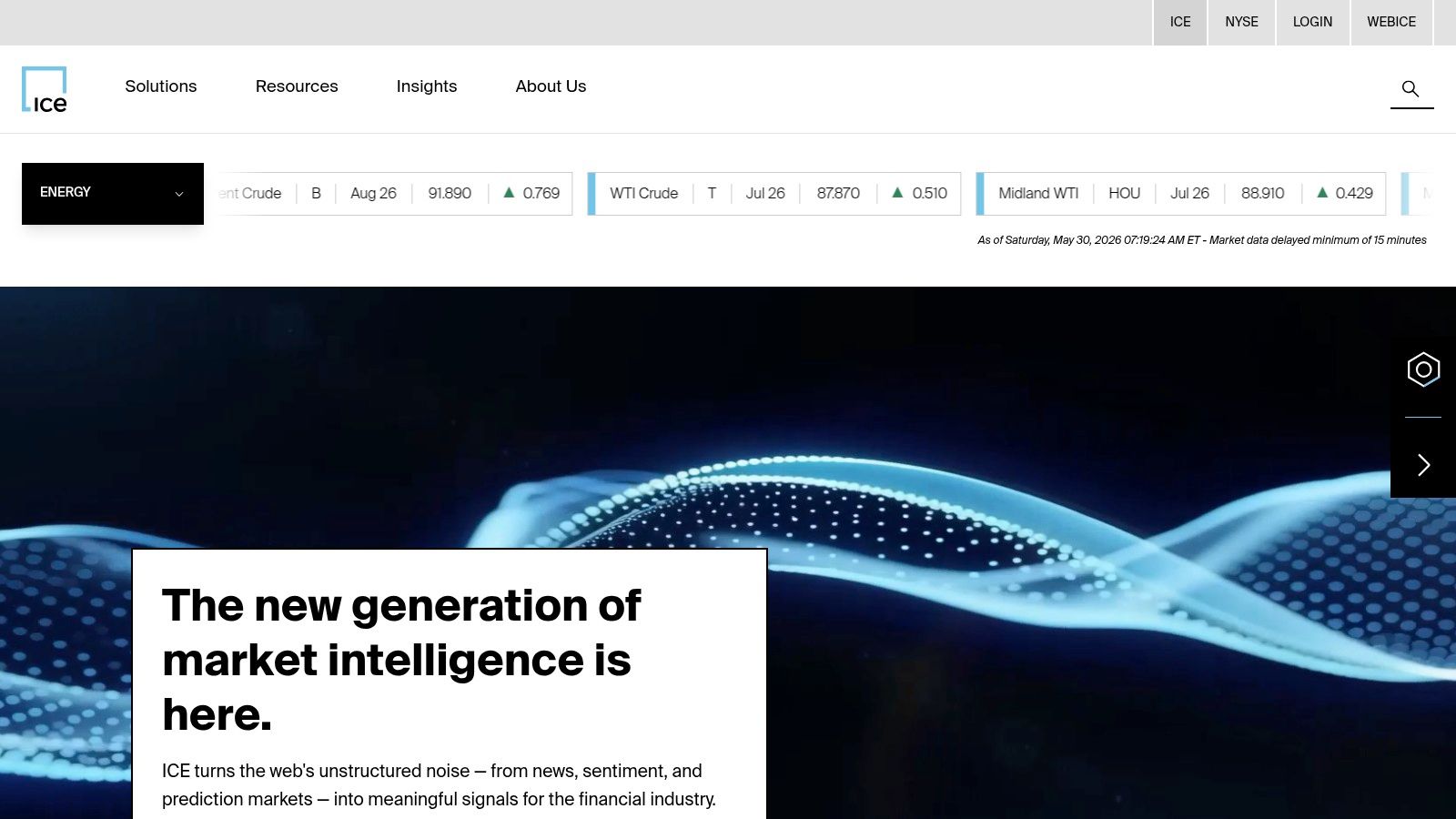
A plausible Atlanta deal scenario starts after the announcement, not at signing. ICE buys a capability that fits its market infrastructure stack. Then integration teams inherit duplicate servers, end-user devices, licensed platforms, and tightly controlled data stores that cannot be retired casually. For operators, that is the essential work.
ICE stays near the top of this watchlist because it can pursue acquisitions across exchange operations, market data, analytics, mortgage technology, and workflow infrastructure without stretching beyond its core operating model. That range matters. Buyers with established distribution, regulatory experience, and repeat integration discipline can justify acquisitions that a narrower software acquirer would struggle to absorb.
The strategic logic is straightforward. Assets tied to pricing data, benchmarks, trading workflows, post-trade infrastructure, or adjacent financial software can strengthen products ICE already sells into regulated environments. The harder question is what happens after close. Every added platform brings system overlap, retention conflicts, permissioning issues, and a larger estate of hardware that has to be accounted for before it is redeployed, wiped, or retired.
Why ICE stays on the watchlist
ICE has several advantages that make it a credible buyer in Atlanta tech.
- Adjacency is real: Data, workflow, and infrastructure assets can fit existing customer relationships and product channels.
- Integration experience lowers execution risk: Repeat acquirers usually have stronger playbooks for system mapping, vendor review, and control harmonization.
- Regulated-market expertise supports higher-value targets: Businesses that sell into financial institutions often need a buyer that understands audit trails, resilience standards, and operating controls.
The trade-off is equally clear. Acquisitions around financial infrastructure attract heavier scrutiny, longer diligence cycles, and more post-close work than a conventional SaaS tuck-in. A target may look strategically clean on a banker slide and still create expensive integration friction if data lineage is murky or legacy equipment remains in service without clear ownership.
For sellers and internal IT teams, diligence preparation should go beyond revenue mix and product fit. Document where sensitive data resides, which systems can be decommissioned, what equipment is leased versus owned, and how destruction certificates will be produced if storage media leaves service. In practice, that often pushes teams toward documented data destruction services in Atlanta for businesses before the integration calendar gets compressed.
Physical infrastructure also deserves board-level attention in deals involving ICE or any similar operator. A platform acquisition can leave behind overlapping racks, network appliances, backup hardware, and office technology that no longer belongs in the go-forward environment. That makes data center decommissioning in Atlanta part of integration planning, not cleanup. The financial case is simple. Delayed asset disposition raises storage costs, extends security exposure, and weakens the chain of custody auditors will ask to see later.
ICE is worth watching because its deal activity would signal more than corporate appetite. It would show where strategic buyers still see durable value in Atlanta, and which IT and sustainability teams should expect the operational burden that follows.
2. Equifax
Equifax is a different kind of M&A story. It doesn't need a blockbuster headline to matter. What makes it important is the repeatability of the model. Bolt-on acquisitions in verification, identity, and workforce data can create real strategic value when the buyer already owns distribution into banks, employers, and public-sector workflows.
That kind of playbook works best when the acquired product slots into an established decisioning environment. Equifax has that advantage. A niche verification capability can become much more valuable once it sits inside a broader enterprise data stack.
What works and what doesn't
What works is disciplined adjacency. Identity, fraud, and employment verification are close enough to the existing business that cross-sell can be operationally realistic instead of just banker language.
What doesn't work is sloppy diligence on security and governance. In this category, every acquisition increases the burden on access controls, retention schedules, and auditability.
A practical way to think about Equifax is to separate strategic logic from operational burden.
- Strong side of the thesis: Entrenched customer relationships make small acquired capabilities easier to monetize.
- Hard side of the thesis: Sensitive data environments leave very little room for integration shortcuts.
- Common mistake: Teams focus on commercial overlap and wait too long to map inherited devices, drives, and storage media.
That last point is where many post-close teams get exposed. Workforce and identity businesses tend to accumulate laptops, endpoints, removable media, and legacy storage tied to regulated information. During consolidation, some of that equipment needs redeployment. Some of it needs secure retirement. If the chain of custody is loose, legal and compliance teams inherit a preventable mess. That's why Atlanta data destruction services for businesses should be discussed before offices are consolidated, not after.
Buyer discipline in identity and credit-data markets isn't just about code integration. It's about controlling every place sensitive information lives, including retired hardware.
Equifax stays on this list because it represents the kind of acquirer that can keep doing meaningful M&A without changing its basic story. For vendors, that makes it a plausible strategic home. For customers, it means product bundles and workflow dependencies can shift gradually but materially over time.
3. LexisNexis Risk Solutions (RELX)
A deal closes. The product roadmap gets the attention, but the main pressure often shows up elsewhere first. Security teams need to reconcile access controls, infrastructure teams inherit old devices and storage, and compliance leaders need proof that regulated data did not follow decommissioned hardware out the wrong door.
LexisNexis Risk Solutions stands out in Atlanta because its acquisition logic is unusually disciplined. The company sits inside identity, fraud, onboarding, compliance, and risk workflows where adjacent capabilities can be added with a clear use case from day one. A document authentication tool, entity-resolution asset, or verification dataset can fit quickly if it strengthens an existing decisioning process.
That focus matters. Selective buyers in risk tech usually create more value than companies chasing broad platform stories, because the integration target is already defined. The trade-off is operational. In a regulated environment, each acquisition adds more systems, more endpoints, more retained media, and more scrutiny over where sensitive information lives.
Where post-close pressure builds
LexisNexis Risk Solutions has trust with banks, insurers, and public-sector users. That credibility supports acquisition activity, but it also raises the standard for integration. Teams cannot treat inherited infrastructure as a secondary cleanup project.
Three pressure points show up quickly:
- Data lineage gets audited: Acquired tools must fit established rules for access, retention, and jurisdiction.
- Security diligence extends to hardware: Legacy laptops, test environments, backup drives, and developer machines can carry regulated data long after the application stack is reviewed.
- Facility consolidation creates disposal risk: Office closures and team restructuring often produce surplus equipment before governance teams finish mapping what can be reused versus what must be destroyed.
For CIOs and sustainability managers, M&A gains a physical dimension. A risk analytics acquisition can leave behind racks, endpoints, removable media, and unsupported devices that should never enter a casual resale or recycling stream. Teams need an asset-by-asset decision process covering redeployment, certified destruction, and e-waste recycling in Atlanta for retired business electronics.
What makes this buyer profile worth watching
LexisNexis Risk Solutions remains relevant because it represents a practical type of acquirer. The company does not need a headline deal to change its competitive position. It can keep adding targeted capabilities that improve verification, fraud controls, and workflow depth inside accounts it already serves.
That approach tends to look clean from the outside. Inside the integration process, it rarely is. The more regulated the workflow, the less tolerance there is for loose chain-of-custody practices, undocumented storage media, or delayed IT asset disposition.
For business leaders tracking Atlanta tech M&A, that is the useful signal. If LexisNexis Risk Solutions stays active, expect disciplined tuck-in acquisitions with heavy compliance implications and a post-close burden that reaches well beyond software integration.
4. NCR Atleos
NCR Atleos belongs on this list for a straightforward reason. It sits in a part of fintech infrastructure that many investors overlook until consolidation starts. ATM networks, managed cash access, field service operations, and recurring outsourcing contracts may not get the attention that flashy software assets do, but they create the kind of installed base that strategic buyers understand very well.
The attraction is operational density. NCR Atleos combines physical footprint, recurring service relationships, and recognized network assets. That makes it relevant not only as a platform but also as a case study in what happens when digital finance still depends on distributed hardware.
Why the operational side matters
Practitioners must think differently about these situations. A transaction involving an ATM-heavy platform isn't only about contracts and cross-sell. It can also produce a messy stream of retired terminals, networking gear, monitors, drives, peripherals, and support equipment as field operations are standardized.
That's why the post-close burden can become surprisingly physical.
- Branch and retail overlap creates surplus equipment: Not all inherited endpoints can be redeployed economically.
- Service models drive refresh cycles: Standardization often accelerates retirement of mismatched hardware.
- Disposal has compliance implications: Financial devices and attached systems can't be handled like generic office junk.
If your integration plan changes field hardware standards, your e-waste and data-destruction plan needs to be approved at the same time as your procurement plan.
There's also a local relevance here. Atlanta's ecosystem keeps producing companies tied to fintech and enterprise infrastructure, and the broader bench behind those outcomes is still expanding. Built In's Atlanta coverage highlights the city's continuing startup formation, investment, and commercialization pipeline in its Atlanta startups and acquisitions roundup. That deeper bench matters because infrastructure-oriented buyers and targets don't emerge in isolation.
For companies inheriting or retiring financial hardware, Atlanta e-waste recycling services become part of the close plan. The practical goal is simple. Move obsolete equipment out fast, preserve data controls, and avoid turning warehouse space into a holding area for unmanaged risk.
NCR Atleos is worth watching because it shows that Atlanta M&A isn't only a software story. The city also produces transaction candidates where physical infrastructure, service logistics, and sustainable disposal all matter at the same time.
5. Priority Technology Holdings (Priority Commerce)

Priority Technology Holdings is one of the more interesting companies to watch because its acquisition logic is practical. It's building around connected commerce, payments, treasury, and embedded finance. That's not a story about buying for size alone. It's a story about trying to own more of the financial workflow for business customers and channel partners.
When that strategy works, retention improves because the customer depends on more than one product line. When it fails, the company ends up with overlapping systems, fragmented compliance processes, and integration debt that drags on execution.
What the roll-up thesis gets right
Priority's appeal is the stack. Merchant services, treasury functions, payables, and adjacent workflow products can reinforce each other if product design and go-to-market execution stay aligned. For a buyer or partner evaluating the company, that creates a tangible value-creation path.
I'd separate the strengths into three buckets.
- Workflow depth: More financial jobs handled inside one platform can reduce churn.
- Distribution advantage: Partnerships and bank channels can make tuck-ins more valuable than they'd be on a standalone basis.
- M&A optionality: Small adjacencies can matter if they plug directly into a broader operating system.
Where teams usually get burned
The risk isn't abstract. Payments businesses operate across vendors, sponsoring banks, compliance obligations, and customer-facing service expectations. Each added capability introduces new dependencies, and not all of them integrate cleanly.
That creates a second-order issue many executives underestimate: physical telecom and network equipment sprawl. Office moves, acquired support centers, and platform consolidation often leave behind firewalls, handsets, switches, edge appliances, and connectivity gear that nobody claims ownership of after close. For that reason, telecom equipment recycling in Atlanta can be part of a serious post-merger cleanup plan, especially when multiple payment and support environments are being combined.
The Atlanta backdrop helps this story too. Public capital and ecosystem support are reinforcing the local pipeline. The Atlanta Tech Hub reported more than $37 million in OTI investments since inception, 1,155 organic new hires from OTI-supported companies, and $85 million in city pension capital committed to private equity and venture capital, according to coverage of the Atlanta Tech Hub's three-year milestone. For M&A watchers, that suggests a healthier local bench of growth-stage targets and operators.
Priority stays on the list because it reflects a broader Atlanta pattern. The city keeps generating fintech companies that can either consolidate narrower tools or become acquisition candidates for larger commerce platforms.
6. Bakkt
Bakkt is more volatile than others on this list, and that's exactly why it deserves attention. It sits in a segment where strategy can change quickly as regulation, market structure, and customer demand shift. A company with enterprise roots, compliance ambitions, and digital-asset infrastructure experience can become a buyer, a seller, or a restructuring story depending on market conditions.
That doesn't make it unimportant. It makes it a useful signal. When companies like Bakkt pursue acquisitions or portfolio changes, they often indicate where digital asset infrastructure may become more enterprise-friendly.
What to watch with Bakkt
The core attraction is infrastructure rather than hype. On-chain settlement rails, custody-related services, and embedded digital-asset experiences can become more relevant when regulated partners want controlled exposure instead of retail speculation. That gives Bakkt strategic optionality.
Still, there are obvious trade-offs.
- Upside: The platform can potentially consolidate niche capabilities into a cleaner enterprise offering.
- Constraint: U.S. regulatory uncertainty can disrupt timing, terms, and valuation.
- Execution risk: In a reshaping business, acquisitions have to do more than add features. They have to clarify the story.
Markets tied to crypto move fast, but hardware cleanup after a pivot is slow unless someone owns it explicitly.
That last point gets ignored too often. A digital-asset company may look software-heavy from the outside, yet portfolio changes can still trigger office reductions, lab equipment retirement, endpoint refreshes, or secure teardown of devices used in engineering, operations, and support. In Atlanta, that matters because tech growth and M&A activity are occurring alongside a larger installed base of corporate systems, and mainstream deal coverage usually stops at valuation and buyer identity, as noted in this discussion of Atlanta M&A and IT refresh cycles.
Bakkt is one of the clearest examples of why Atlanta tech mergers and acquisitions to watch shouldn't be treated as a pure finance topic. In categories with high regulatory and strategic volatility, the best operators prepare for both enterprise opportunity and disciplined IT asset cleanup at the same time.
7. Cardlytics
Cardlytics is one of the more nuanced names to watch because it can plausibly be viewed from both sides of the table. It has a valuable position in card-linked offers and purchase intelligence, but it's also been moving through portfolio and partner transitions that can sharpen strategic questions. That combination often produces M&A windows.
For a strategic buyer, the attraction is obvious. Commerce media, advertiser relationships, and transaction-linked data can fit well with broader retail media or financial engagement platforms. For Cardlytics itself, portfolio streamlining can make the core business easier to evaluate.
Why this one is harder to handicap
Some companies are easy to model as buyers. Some are easier to model as targets. Cardlytics is interesting because both scenarios have logic. A focused core and an identifiable dataset can appeal to consolidators. At the same time, a company under partnership pressure may need to keep adjusting before a clean transaction materializes.
That's why this isn't a simple “good asset, bad market” story. It's more operational than that.
- Potential strength: A differentiated data asset can stay attractive even during transition.
- Near-term challenge: Partner changes can cloud the revenue picture and affect negotiating position.
- M&A implication: Buyers will look closely at dependency concentration, not just product capability.
There's also an integration wrinkle worth noting for ad-tech and commerce-media businesses. They often accumulate a mix of office endpoints, creative hardware, analytics workstations, test devices, and legacy storage across sales, client service, and engineering teams. If restructuring follows a sale or merger, the equipment trail can get messy fast. That's one reason sustainability leaders and IT managers should treat secure IT equipment disposal and computer recycling as part of workforce transition planning, not just facilities cleanup.
Cardlytics closes this list because it captures a recurring Atlanta theme. The city produces companies with real data assets, enterprise relationships, and strategic relevance, but not every outcome is a straightforward scale-up. Sometimes the watch item is the transaction itself. Sometimes it's the repositioning that makes the next transaction possible.
Atlanta Tech M&A: 7-Company Comparison
| Item | Complexity 🔄 | Resource needs ⚡ | Expected outcomes 📊 | Ideal use cases 💡 | Key advantages ⭐ |
|---|---|---|---|---|---|
| Intercontinental Exchange (ICE) | High, multi‑jurisdiction M&A and on‑chain integration | Large capital, data platforms, regulatory/legal teams | Expanded market‑data, benchmarks, and on‑chain settlement capabilities 📊 | Large strategic tuck‑ins; data/benchmark consolidation; blockchain infra | Proven deal execution, breadth of product/data adjacencies |
| Equifax | Moderate, repeatable bolt‑ons but high security diligence | Cloud data assets, cybersecurity, compliance resources | Strengthened identity/fraud and workforce verification; cross‑sell uplift 📊 | Acquiring niche verification/data providers for financial/HR workflows | Entrenched enterprise relationships and demonstrated ROI |
| LexisNexis Risk Solutions (RELX) | Moderate‑high, regulated integration and privacy constraints | Global data networks, AI analytics talent, legal/compliance teams | Enhanced KYC/KYB, sanctions/AML and fraud risk suites 📊 | Buying AI identity/document verification for regulated customers | Scale and industry credibility for sensitive identity tools |
| NCR Atleos | High, global operational integration and deal approval risk | Large operational teams, hardware/service networks, capital | Recurring ATMaaS revenues; potential cost synergies post‑close 📊 | Outsourcing/managing large ATM deployments and ATMaaS programs | World's largest retail ATM footprint and subscription model |
| Priority Technology Holdings | Moderate, multiple fintech workflows and partner integrations | Engineering, banking partnerships, compliance and credit risk teams | Improved SMB retention and embedded finance revenue growth 📊 | Roll‑ups to build unified commerce, payments, payroll stacks for SMBs | Integrated stack and growing bank/fintech distribution |
| Bakkt | Moderate‑high, crypto regulatory volatility and strategic pivots | Compliance/custody infrastructure, stablecoin rails, partner banks | On‑chain settlement rails and B2B2C crypto/payment offerings 📊 | Building regulated digital‑asset rails and stablecoin settlement | ICE heritage compliance posture and platform consolidation optionality |
| Cardlytics | Moderate, partner churn and portfolio streamlining to manage | Retail/ad partnerships, analytics platform, advertiser networks | Focused retail‑media analytics; potential M&A interest or buyer 📊 | Retail media consolidation; leveraging card‑linked purchase intelligence | Large card‑linked dataset and streamlined core analytics after divestitures |
Positioning Your Business for Atlanta's Tech Evolution
Atlanta will keep producing acquisition stories worth following because the city now has both a proven exit history and a deeper ecosystem behind it. The older landmark transactions established credibility. The newer pipeline shows that local company formation, investment support, and commercialization activity are still creating targets and strategic options. For business leaders, that means Atlanta tech mergers and acquisitions to watch are no longer occasional headlines. They're part of the operating environment.
The practical takeaway is broader than corp dev. Finance teams need to think about partner concentration and pricing power. IT leaders need tighter asset inventories before a merger forces rapid consolidation. Sustainability managers need a plan for electronics recycling, office cleanout work, secure data destruction, and donation-based recycling before redundant devices begin stacking up in storage rooms.
That planning matters because transactions don't only create winners and losers in the market. They also create duplicate laptops, retired networking gear, obsolete peripherals, decommissioned racks, and storage media that still contain sensitive data. In a city with continued growth in fintech, data, cybersecurity, and enterprise software, those operational aftereffects will keep expanding alongside deal activity.
For organizations going through upgrades, relocations, or post-merger cleanup, Reworx Recycling is one relevant option for handling computer recycling, IT equipment disposal, and broader IT asset disposition in a secure and sustainability-focused way. The donation-based social enterprise model is especially relevant for companies that want technology transitions to support community benefit alongside risk reduction.
The best M&A preparation isn't only financial. It's operational. Know which systems you can integrate, which vendors you can consolidate, which assets you can redeploy, and which devices need secure retirement. If your business is preparing for growth, an acquisition, or a facility reset in metro Atlanta, handle end-of-life technology with the same discipline you'd apply to contracts, diligence, and compliance. That's how you keep a deal from creating avoidable security exposure and unnecessary waste after the headline fades.
If your organization is planning an office cleanout, data center decommissioning project, laptop disposal effort, or broader ITAD program after a merger or technology refresh, Reworx Recycling can help you donate old equipment, schedule a pickup, and manage secure, sustainable recycling that supports community impact.