An Atlanta IT director signs off on a network refresh, and the hard part seems over. New switches are mounted, old PBX gear is disconnected, firewall appliances are boxed, and the telecom closet finally looks manageable again.
Then the primary question lands on someone's desk: what exactly should happen to all of that retired equipment?
That question gets treated like a facilities task far too often. It isn't. Old telecom hardware can hold configuration files, credentials, call data, and network maps. It also falls into a part of electronics recycling that many general guides barely address. In Atlanta, that gap matters because businesses retiring routers, switches, PBX systems, and fiber infrastructure still have to think about compliance, data security, environmental handling, and asset value.
Your Strategic Guide to Telecom Equipment Recycling in Atlanta
A familiar example is an office in Tech Square, Midtown, or Alpharetta that has just migrated from legacy voice infrastructure to cloud communications. The project team focuses on cutover dates, uptime, and user adoption. Weeks later, the retired telecom gear is still sitting in storage because no one wants to make the wrong disposal decision.
That hesitation is reasonable. Public guidance often covers laptops, desktops, and monitors, but not the telecom layer. Specific recycling options and certifications for routers, switches, PBX systems, and fiber optic cabling in Atlanta are rarely detailed, which leaves businesses uncertain about Georgia compliance and telecom-specific handling. Improper disposal can risk fines of up to $25,000 under Georgia EPD regulations, and specialized telecom decommissioning can divert 98% from landfills, according to Reworx Recycling's Atlanta e-waste recycling information.
Practical rule: If a device ever stored credentials, configurations, call records, or access logs, treat it like a data-bearing asset until proven otherwise.
That changes the conversation. Telecom equipment recycling Atlanta companies need isn't just a truck, a pallet, and a receipt. It's a controlled process that answers four business questions:
- What are we retiring
- What data risk does it carry
- What documentation do we need
- Can any of it be remarketed instead of scrapped
An experienced ITAD consultant looks at old telecom hardware the same way they look at retired servers. Some assets need wiping. Some need shredding. Some still hold resale value. Some can support donation-based recycling or broader sustainable recycling goals, but only after security and compliance are handled correctly.
For Atlanta organizations, that's where a specialized workflow matters. It turns a cluttered back room into a documented asset disposition project with clear chain of custody, secure data destruction, and a path for electronics recycling that aligns with both corporate policy and community impact.
What Telecom Equipment Can Your Atlanta Business Recycle
Most organizations underestimate how much telecom hardware they own. They remember the obvious items, like desk phones and a few switches, but forget what's mounted in closets, attached in racks, tucked above ceilings, or sitting in backup storage after earlier upgrades.
Atlanta's telecom refresh cycle isn't slowing down. With the city's data center market adding 500MW of capacity since May 2025 and telecom equipment recycling demand rising 35% year over year, this category has become more important for local IT teams. The same source notes that specialized telecom hardware can deliver 25% to 40% higher resale value through remarketing, but only when certified data wiping is part of the process, which many general recyclers miss, according to All Green Recycling's Atlanta recycling overview.
Core network gear
Start with the equipment that routes and controls traffic inside your environment.
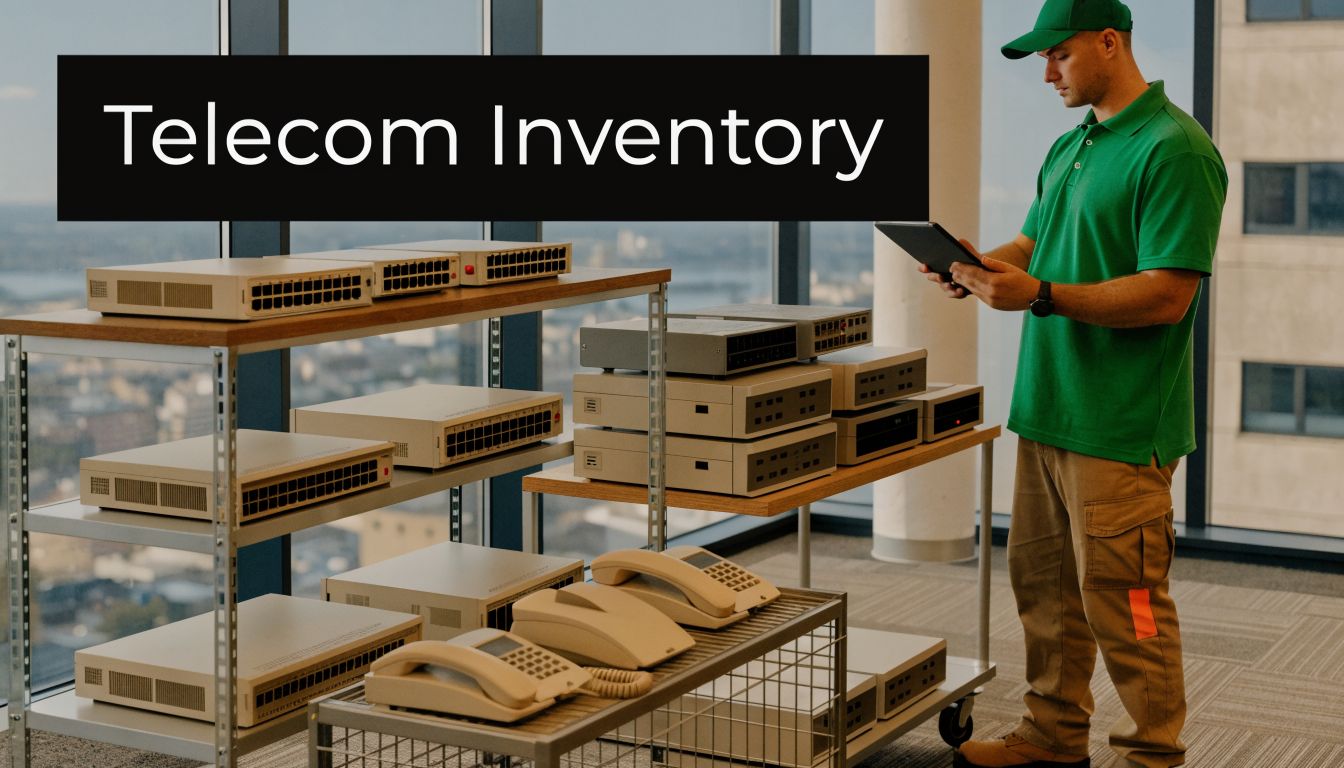
- Enterprise switches like Cisco Catalyst units, stackable access switches, and core chassis often contain startup configs, VLAN settings, and management information.
- Routers may store WAN settings, credentials, routing tables, and remote access configurations.
- Firewalls and security appliances can hold VPN profiles, rulesets, certificates, and event data.
These assets aren't just metal boxes. They often carry the operational blueprint of your network.
Voice and communications systems
A second category sits between telecom and classic IT.
| Equipment type | Common examples | Why recycling needs care |
|---|---|---|
| PBX systems | Legacy phone controllers, voicemail systems | May hold call routing and user data |
| VoIP phones | Desk phones, conference phones | Can include user settings and provisioning data |
| Unified communications gear | Gateways, SBCs, call managers | Often bridges voice, security, and network functions |
Many office cleanout projects encounter problems. Facilities teams see “old phones.” Security teams should see devices tied to users, extensions, and communications records.
Cabling and supporting infrastructure
Not every asset stores data, but that doesn't mean it should go in the trash.
Consider these common items:
- Patch panels and rack accessories, especially during data center decommissioning or facility cleanout
- Cat5e and Cat6 cabling, fiber optic cable, and patch cords removed during renovation
- Network racks and cabinets
- Power distribution gear associated with telecom rooms
- Wireless access points and antenna hardware
A useful test is simple. If the item was part of connectivity, voice, perimeter security, or a structured cabling plant, ask for a telecom-specific disposition decision rather than treating it as generic scrap.
That approach helps IT, facilities, and sustainability teams work from the same asset list. It also makes computer recycling, secure data destruction, and product destruction decisions much cleaner when the pickup day arrives.
Understanding E-Waste Compliance for Atlanta Organizations
Compliance gets confusing because several obligations overlap. One rule covers environmental handling. Another covers data disposal. A third may come from your own industry, such as healthcare, finance, education, or government contracting.
For Atlanta businesses, the practical issue isn't memorizing every regulation. It's building a process that stands up during an audit, vendor review, or internal risk assessment.
What compliance means in day-to-day operations
A telecom recycling project usually touches three areas at once:
- Environmental responsibility through lawful electronics recycling and landfill diversion
- Information governance through secure handling of devices that may contain sensitive data
- Operational control through documented movement of assets from your facility to final disposition
Atlanta already has visible recycling infrastructure. Keep Atlanta Beautiful runs electronics recycling on the second Saturday of each month at 320 Irwin Street in downtown Atlanta, and Georgia Tech hosts an electronics recycle day during Earth Day each spring. For businesses, R2-certified facilities in the metro area can support pickups for qualifying bulk equipment under Georgia's closed-loop system approach, as described by Georgia Tech's electronics recycling guidance.
Why chain of custody matters
Chain of custody is the evidence trail showing who handled an asset, when it moved, where it went, and what happened to it. If a retired router disappears between your loading dock and a downstream vendor, the problem isn't theoretical anymore.
A sound chain of custody should answer questions like these:
- Was each asset inventoried before pickup
- Were serialized devices matched to shipping records
- Was data destruction documented
- Did the recycler identify final outcomes such as remarketing, dismantling, or shredding
If you can't answer those questions, your recycling process may be environmentally responsible but still operationally weak.
Compliance is rarely broken by a single dramatic mistake. More often, it fails through informal handoffs, incomplete records, and assumptions about what a vendor “probably” did.
Certifications and what they signal
Certification isn't a marketing extra. It's a shortcut for vendor due diligence.
Here's how decision-makers usually interpret the most relevant standards:
- R2-certified processing signals structured electronics recycling and downstream controls
- e-Stewards programs are often used when organizations want another recognized environmental benchmark
- NAID AAA data destruction controls matter when physical media destruction and documented security are priorities
For a healthcare network, law firm, bank, university, or municipal office, those distinctions affect vendor approval. They also affect how confidently you can defend your disposal process to legal, compliance, and procurement teams.
The practical takeaway is simple. Telecom equipment recycling Atlanta organizations need should be managed like an ITAD event, not a janitorial haul-away.
For a local compliance overview focused on business disposal issues, review Fulton County e-waste law considerations for businesses.
Ensuring Total Data Security During Equipment Disposal
The most expensive mistake in telecom disposal usually isn't environmental. It's assuming old network gear doesn't contain meaningful data.
That assumption fails all the time. Switches can store VLAN and management settings. Routers can retain credentials and routing information. Firewalls may contain VPN keys, certificates, and policy data. PBX systems and telecom servers can hold user profiles, call information, and administrative logs. A factory reset doesn't automatically make those risks disappear.
Why software wiping isn't always enough
For some assets, validated sanitization works. For others, especially modern SSD-based storage or embedded flash, physical destruction is the safer answer.
The strongest benchmark in the source material is clear. Physical destruction of telecom hard drives and data-bearing components through industrial shredding to less than 2mm particles guarantees irreversible data loss. That same process reaches a 98% material recovery rate, and NSA/CSS evaluations found a 0% data recovery success rate after shredding, according to Beyond Surplus's Atlanta recycling guidance.
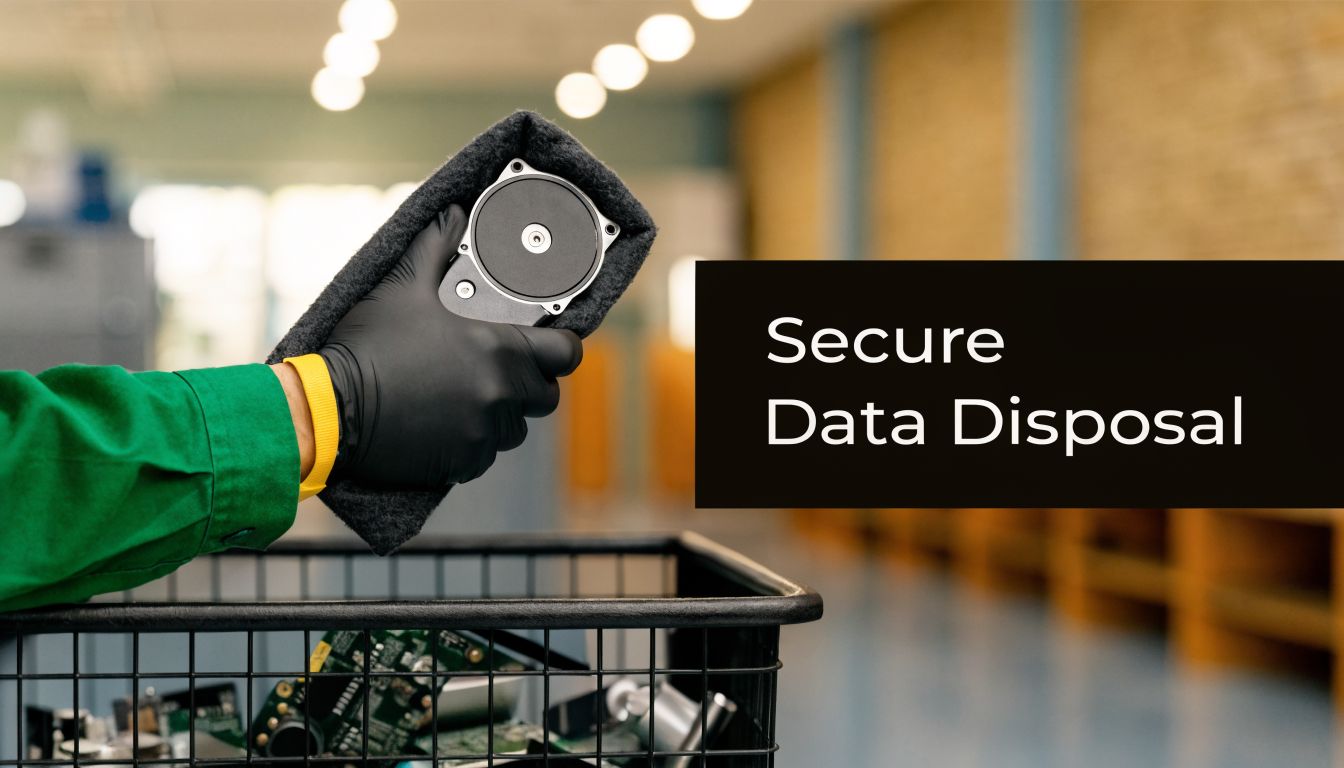
That matters because software wiping can miss remnants on worn SSDs. Wear-leveling can leave data in areas the operator never sees, which is one reason telecom and server retirement policies increasingly separate logical erasure from physical destruction decisions.
A practical decision model for IT directors
Use a simple risk split:
| Asset condition | Likely approach | Why |
|---|---|---|
| Resalable gear with manageable risk | Validated wiping or sanitization | Preserves reuse value |
| Embedded storage with uncertain access | Remove and destroy data-bearing parts | Reduces hidden risk |
| High-sensitivity media | Shred to compliant particle size | Eliminates recovery risk |
Secure data destruction integrates into broader cyber hygiene. If your team is updating retirement procedures, it also helps to review broader strategies to avoid cyber data breaches so equipment disposal is aligned with credential management, monitoring, and incident prevention.
What documentation you should require
A recycler should be able to provide more than a pickup confirmation. Ask for:
- Serialized asset reporting when applicable
- A clear method statement for wiping, dismantling, or shredding
- Certificates of data destruction
- Disposition reporting that distinguishes resale, component recovery, and destruction
“If the vendor can't explain exactly how they handle embedded storage in telecom hardware, you should assume they're treating specialized gear like generic e-waste.”
For organizations that need a local reference point for secure disposal planning, guidance on safe IT equipment disposal and data security in Atlanta outlines the kind of controls worth verifying before a pickup is scheduled.
A secure outcome isn't just about destroying drives. It's about proving, after the fact, that every device was handled in a way your legal, security, and compliance teams can defend.
Your Step-by-Step Guide to Telecom Recycling Logistics
Most telecom disposal projects become messy before the truck arrives. The confusion starts inside the business. One team owns the hardware, another owns the closets, and a third owns risk. A clean process fixes that.
The simplest way to manage telecom equipment recycling Atlanta companies generate is to treat it like a mini decommissioning project with a named owner, an asset list, and required documentation.
Step 1 through Step 3
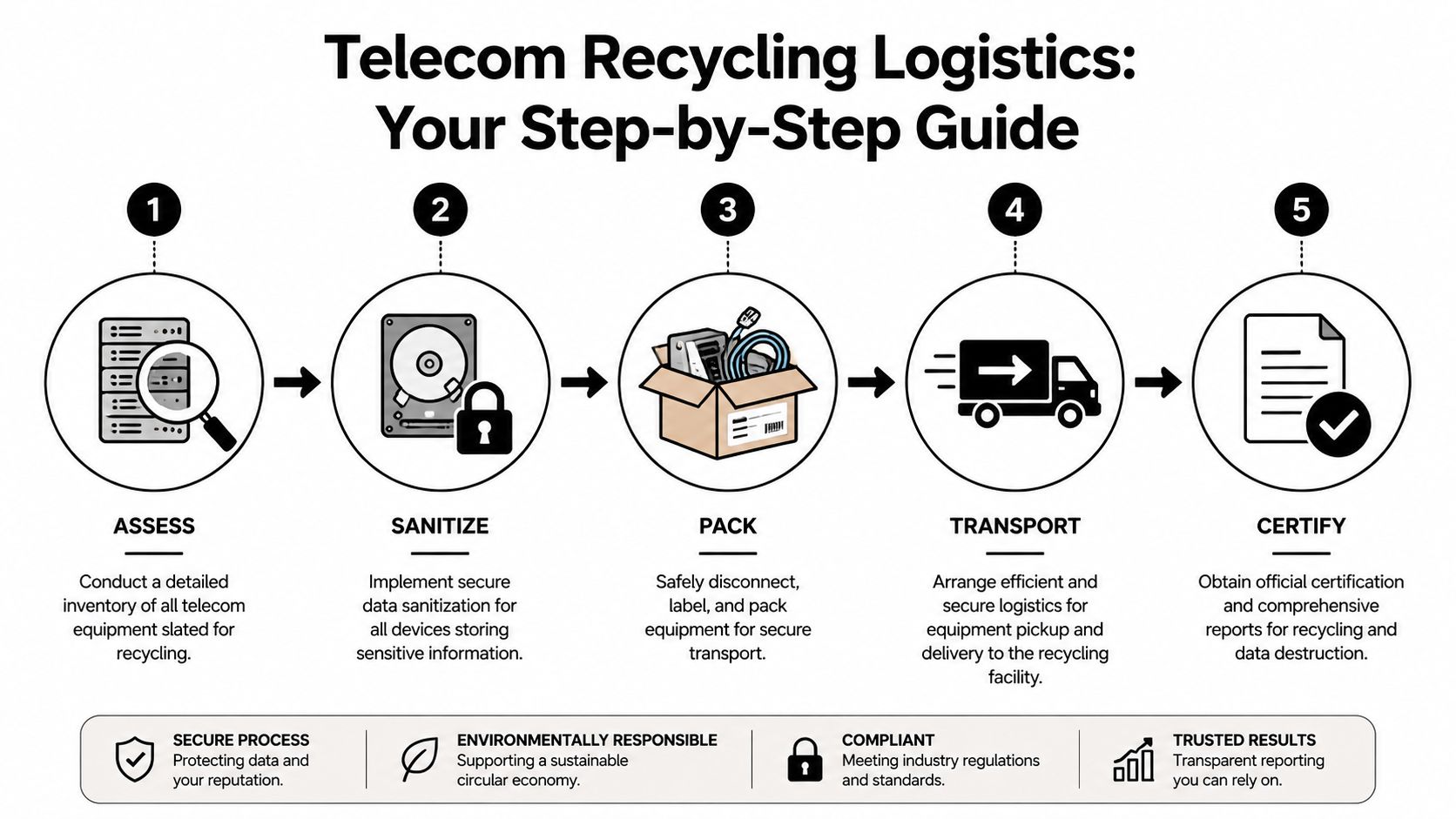
Build a real inventory
Don't start with a pickup request. Start with a count. List routers, switches, PBX controllers, VoIP phones, rack hardware, patch panels, transceivers, wireless gear, and removed cabling. Record model numbers where practical. If a unit has a serial number, capture it.Separate data-bearing from non-data-bearing equipment
This one step prevents expensive mistakes. Firewalls, routers, PBX systems, call managers, and anything with internal storage should go into a review queue for sanitization or destruction. Empty racks, metal trays, and passive cabling can follow a different path.Identify what might still have value
Don't assume retired means worthless. Some network equipment is surplus, not end-of-life. If gear is relatively current, powers on, or comes from a standardized enterprise fleet, ask for an IT asset disposition review before approving destruction.
Operational note: The best inventory lists are created by the people who physically touch the assets. Have network staff and facilities staff walk the area together.
Step 4 and Step 5
After the internal prep, the logistics piece becomes much easier.
Disconnect, label, and stage equipment securely
Use pallet zones, shelf zones, or room labels. Keep processed assets separate from equipment that's still in service. If your team is doing an office cleanout or facility cleanout at the same time, don't mix telecom assets with general junk removal.Schedule pickup and confirm required paperwork
Ask in advance what documents you'll receive after collection. For larger projects, ask whether the vendor can support asset tracking, decommissioning notes, and certificates tied to your inventory.Review final reporting
The job isn't complete when the equipment leaves. It's complete when your records show where it went, how data was handled, and what was recycled, remarketed, or destroyed.
A simple owner matrix
| Task | Best internal owner |
|---|---|
| Asset inventory | IT or network operations |
| Area access and staging | Facilities or office operations |
| Data handling approvals | Security or compliance |
| Vendor coordination | ITAD lead, procurement, or IT manager |
| Record retention | Compliance, finance, or IT admin |
Teams that manage recurring moves, adds, and changes often benefit from building this process into broader reverse logistics planning for electronics and IT assets. That reduces scrambling during office relocations, data center decommissioning, and year-end refresh cycles.
When the workflow is clear, pickup day becomes routine instead of disruptive.
Recovering Value with Telecom Equipment Buyback Programs
Many IT teams still frame retirement as a cost center. That mindset leaves money on the table.
Telecom hardware belongs to a larger value chain. The U.S. electronic goods recycling industry is projected to reach $27.7 billion as of 2026, and that scale matters because it means retired enterprise equipment is part of a significant resource and remarketing market, according to IBISWorld's analysis of the U.S. electronic goods recycling industry.
Why buyback changes the business case
A buyback program works best when your retired gear falls into one of these groups:
- Still-usable enterprise hardware with current secondary market demand
- Equipment suitable for refurbishment after testing and data handling
- Mixed lots where some assets are remarketed and others are recycled responsibly
This is the core of IT asset disposition. You don't send every retired item straight to destruction. You classify assets by risk, reuse potential, and processing path.
That shift matters financially in three ways:
Recovered value can offset disposal activity
Proceeds from reusable gear can reduce the cost of handling lower-value items.Procurement teams get a cleaner story
A refresh project looks better when retirement planning includes value recovery instead of pure write-off.Sustainability reporting improves
Reuse and remarketing extend equipment life before final recycling, which aligns with circular-economy goals better than immediate destruction of everything.
What to ask during valuation
Not every vendor assesses telecom gear well. Ask direct questions.
- Do you evaluate routers, switches, and firewall appliances individually or only by weight
- Can you separate resale candidates from scrap candidates
- Will you document what was remarketed versus physically destroyed
- How do you handle mixed loads that include computer recycling, telecom, and peripherals
A useful outcome is one where the vendor identifies reusable network hardware, recycles the rest under zero-landfill policies where applicable, and gives your finance team a transparent settlement or credit.
For organizations exploring this route, options to get money for old electronics can help frame the questions to ask before disposing of enterprise gear outright.
Retired telecom hardware is often neither pure waste nor pure resale inventory. The value comes from sorting it correctly.
That's the strategic lens. Compliance protects the downside. Buyback and remarketing improve the upside.
A Checklist for Selecting the Right ITAD Partner in Atlanta
Vendor selection is where good intentions either become a controlled program or collapse into vague promises. The right ITAD partner doesn't just collect equipment. They help your team reduce legal exposure, document data destruction, and route each asset to the right outcome.
Use this checklist the same way you'd use a security review sheet for a SaaS vendor. If a recycler can't answer these questions clearly, keep looking.

The non-negotiables
Recognized certifications
Ask whether the provider operates with standards such as R2 or e-Stewards, and whether data destruction practices align with the level of security your organization requires.Telecom-specific handling
A vendor should be comfortable discussing routers, switches, PBX gear, firewall appliances, fiber infrastructure, and embedded storage. If they only talk about laptops and monitors, that's a warning sign.Documented chain of custody
Pickup receipts alone aren't enough. You need evidence of movement, processing, and final disposition.Secure data destruction options
Ask when they use wiping, when they remove media, and when they physically destroy components.
The operational filters
A strong provider should also answer practical questions without hesitation.
| Question | Why it matters |
|---|---|
| Can they handle office cleanouts and facility cleanouts | Telecom gear is often retired during moves and renovations |
| Do they support data center decommissioning projects | Many telecom assets sit inside larger infrastructure retirements |
| Can they provide reporting suitable for ESG or audit needs | Sustainability and compliance teams often need the same records |
| Do they manage pickup logistics cleanly | A sloppy pickup process creates avoidable risk |
The strategic differentiators
These aren't always mandatory, but they often separate a transactional recycler from a useful long-term partner.
- Buyback capability for surplus network hardware
- Support for corporate donation programs when appropriate for eligible equipment
- Experience with product destruction for branded or restricted items
- Alignment with social enterprise recycling or donation-based recycling models if your organization has community impact goals
One Atlanta-area option businesses evaluate is Reworx Recycling, which offers electronics recycling, secure data destruction, pickup support, and IT equipment disposal services as part of a donation-based social enterprise model.
The right vendor should make your internal approval easier. If legal, security, facilities, and sustainability all need separate explanations, the process is probably too weak.
A good checklist does more than screen vendors. It protects your team from choosing a recycler that's fine for consumer drop-off but unprepared for enterprise telecom work.
Frequently Asked Questions About Telecom Recycling
Can we recycle only a small amount of telecom equipment
Often, yes. A business may only have a few office phones, one small router, and an older switch after a minor upgrade. The key is to ask about drop-off versus pickup options and whether any of the devices contain storage that needs secure handling.
Can old server racks and network cabling be included in a facility cleanout
Yes, that's a common scenario. During office cleanouts, facility cleanouts, and network room upgrades, companies often retire racks, patch panels, structured cabling, access points, and voice equipment together. It helps to separate passive hardware from anything that may store configurations or logs.
What happens to shredded telecom media afterward
After secure destruction, downstream processors recover materials from the shredded output. The important point for your business is that data-bearing parts are rendered unreadable before material recovery takes place, so security comes first and recycling follows.
Are office phones considered data-bearing devices
Some are, some aren't. Basic handsets may have minimal risk, but IP phones and unified communications endpoints can store user or provisioning information. Treat them as review items until someone with technical knowledge confirms otherwise.
Can telecom recycling be part of a broader ITAD project
Absolutely. Many organizations combine telecom equipment recycling Atlanta projects with laptop disposal, computer recycling, medical equipment disposal, laboratory equipment disposal, or full data center decommissioning. That can simplify logistics if the asset streams are documented properly.
Should we destroy everything to be safe
Not necessarily. Destruction is appropriate for high-risk or non-reusable data-bearing assets. Other equipment may be suitable for sanitization, resale, or donation-based recycling depending on condition, policy, and market demand. The better question is not “destroy or recycle?” It's “what is the correct disposition path for each asset type?”
If your team is planning a telecom refresh, office cleanout, or broader IT asset disposition project, Reworx Recycling offers a practical place to start learning the process. Businesses can use their resources to plan electronics recycling, schedule a pickup, explore secure data destruction, and identify opportunities for donation-based recycling that support community impact alongside responsible equipment retirement.