
Your phone system probably isn't failing all at once. It's failing in small, expensive ways. Calls ring on the wrong devices, remote staff rely on personal cell numbers, and every office move or staffing change turns into a support project. Then you search for “voip service providers near me” and get a wall of national brands that all sound interchangeable.
The harder question isn't who sells cloud calling. It's who can support your business where you operate. That means local number availability, realistic porting support, field presence when you need desk phones deployed, and a support model that doesn't leave your office manager stuck translating telecom jargon. It also means thinking beyond installation. If you're replacing aging phones, adapters, or conference hardware, that old gear still needs secure retirement through a partner like Reworx Recycling.
Businesses have already made this shift at scale. U.S. businesses added more than 35 million VoIP lines from 2010 to 2018, reaching 41.6 million total lines, up from 6.2 million at the start of the decade, according to Tech.co's summary of Statista VoIP data. That's why the market now feels crowded.
If you're comparing options while also improving your small business online presence strategies, get to the shortlist quickly. These are the providers I'd put in front of a business owner, IT manager, or facilities lead who wants modern calling without creating a migration mess.
1. Nextiva
Nextiva is one of the easier recommendations for a business that wants a safe, scalable default. It handles voice, messaging, and video in one platform, and the admin side doesn't punish smaller teams that don't have a dedicated telecom specialist. That matters more than feature checklists suggest.
Its public positioning is also clearer than many quote-first vendors. If you're comparing “voip service providers near me” because you want less ambiguity, Nextiva usually makes the shortlist fast.
Where it fits best
Nextiva works well for small and mid-sized organizations that want straightforward rollout now and optional complexity later. You can start with core phone service, then expand into contact center, analytics, and more advanced workflow tools as the business grows.
A few practical strengths stand out:
- Clean admin experience: Day-to-day user management is manageable for office admins and IT generalists.
- Useful core features: Auto attendants, routing, SMS, and integrations cover what most businesses use.
- Scalable path: You won't need to rip and replace just because your team adds locations or support queues.
For businesses evaluating regional telecom support alongside cloud calling, Reworx has a useful local resource on telecom services near me.
Practical rule: If your team is nervous about change, pick the platform your least technical administrator can manage after the consultant leaves.
The trade-off is that some deeper analytics and automation features sit higher in the stack. If your sales or support leaders want detailed dashboards from day one, price the higher tiers early instead of assuming the base package covers everything.
Use Nextiva when simplicity, growth room, and broad business fit matter more than being flashy.
2. Dialpad
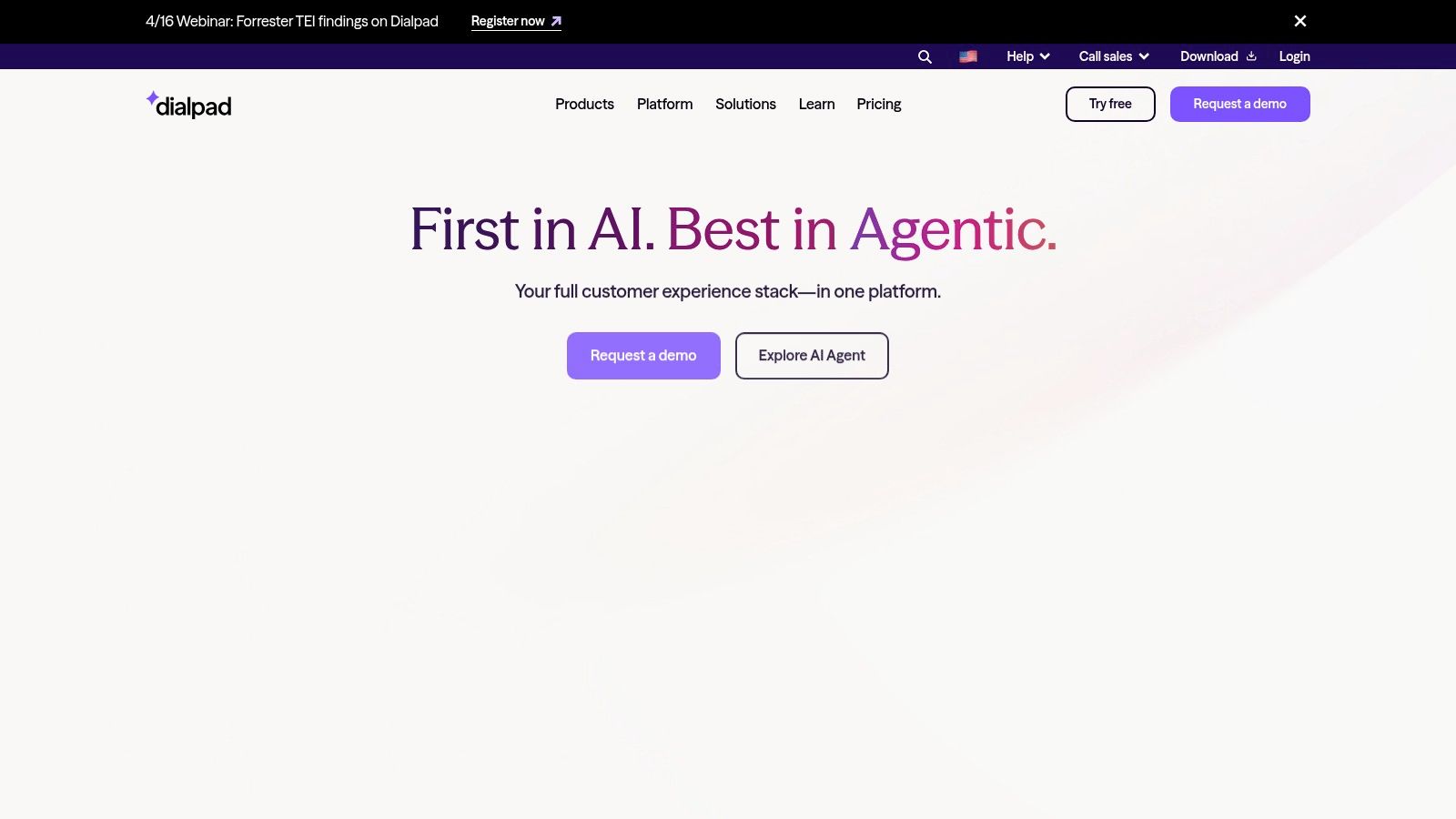
Dialpad is the option I lean toward when the team wants AI features, not just marketing language about AI. Its core experience feels modern, and the platform is built around transcription, summaries, and voice intelligence instead of treating those as bolt-ons.
That's a good fit for distributed teams, client-facing staff, and managers who need better call visibility without listening to recordings all day.
What stands out in practice
Dialpad's real-time sentiment analysis is listed in market research with latency under 2 seconds, which is one reason AI-heavy shops keep evaluating it for customer-facing workflows, as noted by Grand View Research's mobile VoIP market analysis. That doesn't make it right for every office, but it does show where the product differentiates.
I'd consider Dialpad when you want:
- AI in the daily workflow: Transcriptions and summaries reduce note-taking friction.
- Strong app experience: Staff can work comfortably from desktop or mobile without the desk phone mindset.
- Good fit for hybrid teams: It supports organizations where the office is only one endpoint.
There's a second consideration most buyers miss. If you're replacing old VoIP handsets, conference phones, or ATAs, the project overlaps with end-of-life device planning. Reworx's overview of IT asset disposition is worth reviewing before the migration starts.
Dialpad's limitation is depth in some admin and reporting layers unless you move up-plan. That's not unusual, but it matters if operations leaders expect advanced supervision tools from a lower tier.
Use Dialpad when your team values AI-generated context, fast adoption, and a cleaner user experience over legacy-style telecom administration.
3. Zoom Phone
Monday morning is when Zoom Phone usually proves its value. A company already running on Zoom Meetings wants to replace an aging PBX without retraining every employee on a new interface. In that situation, keeping meetings, chat, and calling in one environment can shorten rollout time and reduce support tickets in the first few weeks.
For a search like "voip service providers near me," Zoom Phone is a reminder that "near me" does not always mean a small local carrier. It often means a national platform with the right local execution. The practical checks are straightforward. Can the provider port your existing local numbers without delays, support E911 correctly for each site, and give you access to an installer or partner who can handle desk phones, conference rooms, and network testing on location if needed?
That is where Zoom Phone makes sense for many midsize businesses. The platform has broad name recognition, but the buying decision should still come down to local fit.
Where Zoom Phone fits best
I look at Zoom Phone for businesses that already depend on Zoom day to day and want the phone system to feel like an extension of tools staff already use. That reduces training time, but it also changes the migration plan. Teams can move users in phases, keep a mix of softphones and physical devices, and avoid rebuilding habits from scratch.
Its practical strengths are clear:
- Strong fit for existing Zoom customers: Calling, meetings, and chat sit in the same user environment.
- Flexible device strategy: Mobile apps, desktop apps, desk phones, and room devices can coexist.
- Good "near me" potential through partners: Local deployment support often comes from resellers, MSPs, and carrier relationships rather than Zoom alone.
The trade-off is that local support quality can vary more than buyers expect. One region may have an excellent Zoom partner who handles porting, handset staging, and QoS validation well. Another may leave more of the project on your internal IT team. Ask who owns number porting, who handles on-site cutover, and who troubleshoots carrier-side issues after go-live.
Cost also needs a closer look than the homepage suggests. Front-desk workflows, queue handling, and some reporting needs may push you into add-ons or higher tiers. That is manageable, but only if you price the actual deployment, not the entry package.
If you are clearing out old handsets, cordless units, or conference room gear during the migration, include a plan for business battery recycling for retired telecom hardware. Many office phone systems include battery-backed accessories that should not end up in general waste.
For companies already standardized on Zoom and willing to verify local implementation support before signing, Zoom Phone is often one of the faster paths to a stable phone rollout.
4. Vonage Business Communications
Vonage Business Communications is a good fit for companies that know they'll want more than a basic phone system. It has enough extensibility to support a business that might later care about APIs, customer engagement workflows, or custom integrations.
That makes it more interesting than entry-level VoIP platforms, but also less ideal for buyers who want the simplest possible setup.
Best for businesses that will keep customizing
VBC makes sense when the phone system won't stay “just phones” for long. Teams using Microsoft Teams, CRM workflows, or add-on contact center capabilities can build around it instead of starting over later.
Its practical strengths are easy to summarize:
- Mature feature set: Calling, messaging, video, and common business routing are well covered.
- Integration potential: Better suited to organizations that connect communications to workflows.
- API path: Useful when the business has internal development resources or outside implementation support.
The downside is cost creep. Annual terms and add-ons can change the total value story quickly, especially if you start small and keep layering tools.
There's also the cleanup issue most telecom vendors leave out. As businesses replace desk phones and related hardware, they often forget the disposal side until old equipment is stacked in a closet. Reworx has practical guidance on how to dispose of old computers, and the same discipline applies to retired communications devices moving through an office cleanout or facility cleanout.
Use Vonage Business Communications if you want a communications platform with room for customization and can tolerate a less minimalist commercial model.
5. GoTo Connect
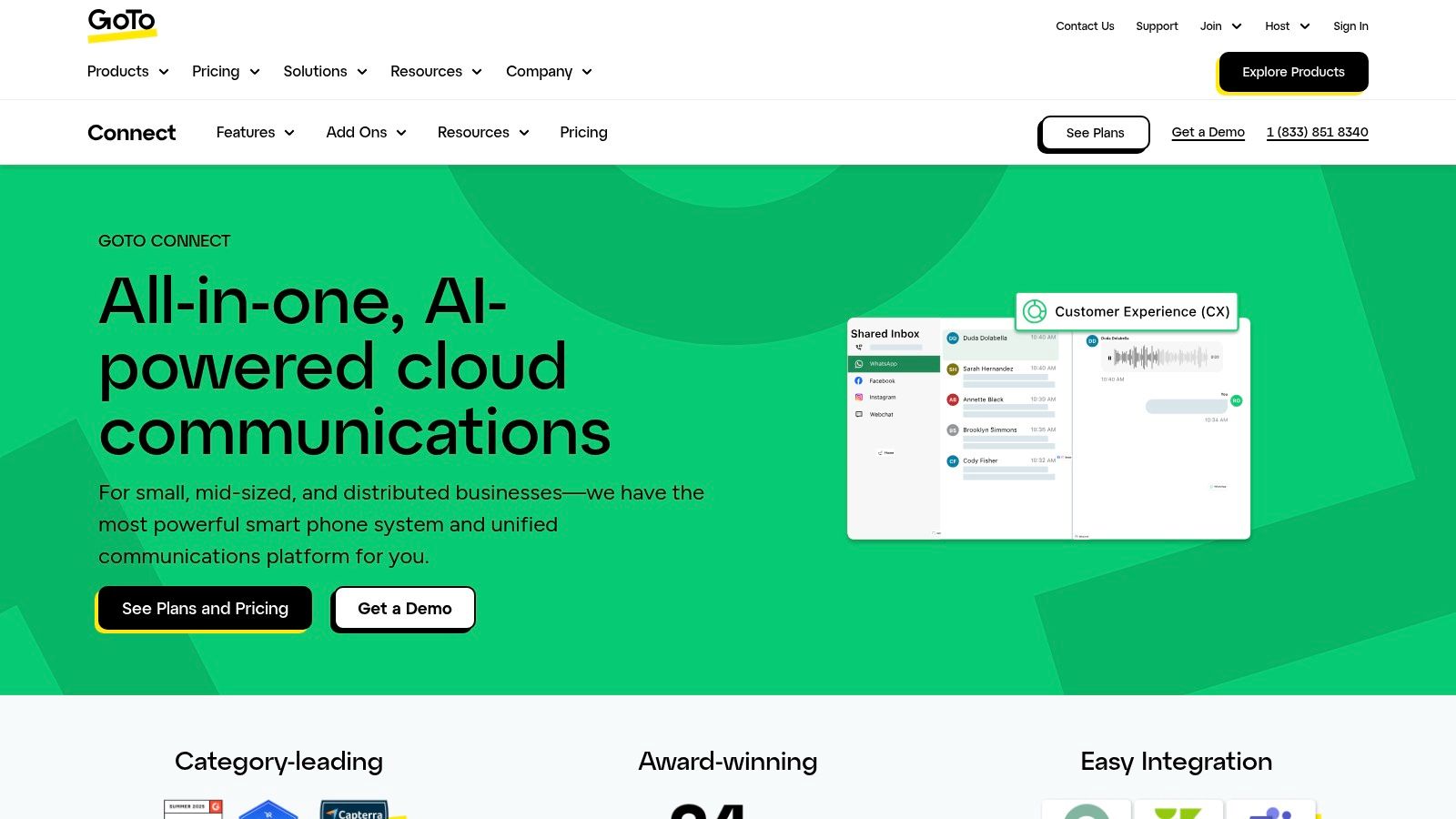
GoTo Connect tends to appeal to operations-minded buyers. The telephony foundation is strong, the dial-plan tools are practical, and the platform is built for companies that still care how calls move across departments and locations.
That sounds obvious, but not every cloud phone system is equally strong once you move past basic app calling.
Strong for multi-site logic
I like GoTo Connect for offices that need more than a simple receptionist menu. If you have multiple sites, departmental routing, ring groups, queue logic, and mixed device types, the platform handles those realities well.
Its value shows up in areas like:
- Dial-plan control: Helpful when call flow matters to revenue or service delivery.
- Multi-device support: Good for offices blending desk phones, mobile use, and remote staff.
- Included telephony depth: You get serious call-handling tools without immediately moving to enterprise packages.
Field note: A polished mobile app doesn't fix a badly designed call flow. Build the routing map first, then pick the provider.
The weakness is pricing transparency. The platform often pushes buyers toward sales conversations instead of giving a clean self-serve comparison path. That slows decision-making for smaller organizations.
One overlooked issue during cutover is backup power. Some VoIP setups still depend heavily on local adapters, batteries, and edge devices. If those are being replaced during your move, handle them through a documented recycling stream. Reworx offers a battery recycling service, which matters when old telecom gear includes battery-backed components.
Use GoTo Connect when your business needs real telephony structure and not just a softphone app with a business logo.
6. Ooma Office
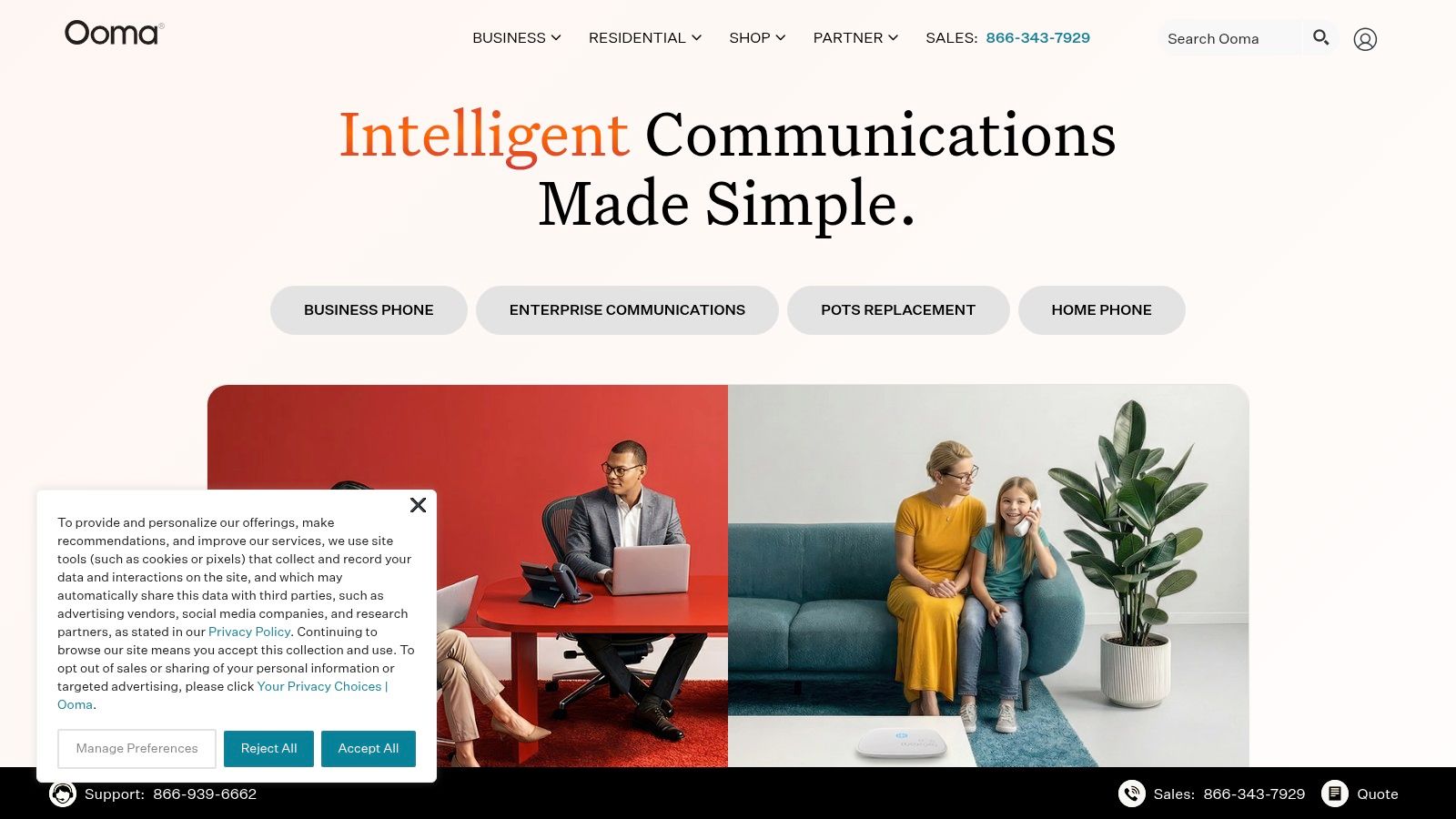
Ooma Office is often the right answer for companies adopting VoIP for the first time. It doesn't try to overwhelm smaller teams with enterprise complexity, and month-to-month flexibility lowers the risk for businesses that are still testing what they need.
That makes it especially practical for smaller offices, professional services firms, and businesses replacing a very old phone setup.
Good when simplicity matters more than expansion
Ooma works best when your requirements are stable. You want calling, basic routing, mobile access, and a system staff can figure out quickly. For that scenario, it's a practical entry point.
Reasons businesses choose it:
- Low learning curve: Front desk and office teams usually adapt quickly.
- Contract flexibility: Useful if you don't want to lock into a longer commitment early.
- Clear feature packaging: Easier to understand than some quote-heavy vendors.
The trade-off is predictable. Once you want deeper integrations, richer analytics, or more advanced AI, larger UCaaS vendors pull ahead. Ooma can still work, but it stops being the obvious favorite.
Reliability planning also matters more with simpler deployments because buyers sometimes assume “cloud” means “outage-proof.” It doesn't. Some analyses cite average VoIP downtime at 4.2 hours per year compared with 1.1 for landlines, and they note that Ooma acknowledges internet dependency in its broader category context, as discussed in Axvoice's provider comparison page. That's why I always ask about backup internet, call forwarding, and emergency handling before signing.
For first-time adopters that want straightforward service and less contract risk, Ooma Office is a reasonable place to start.
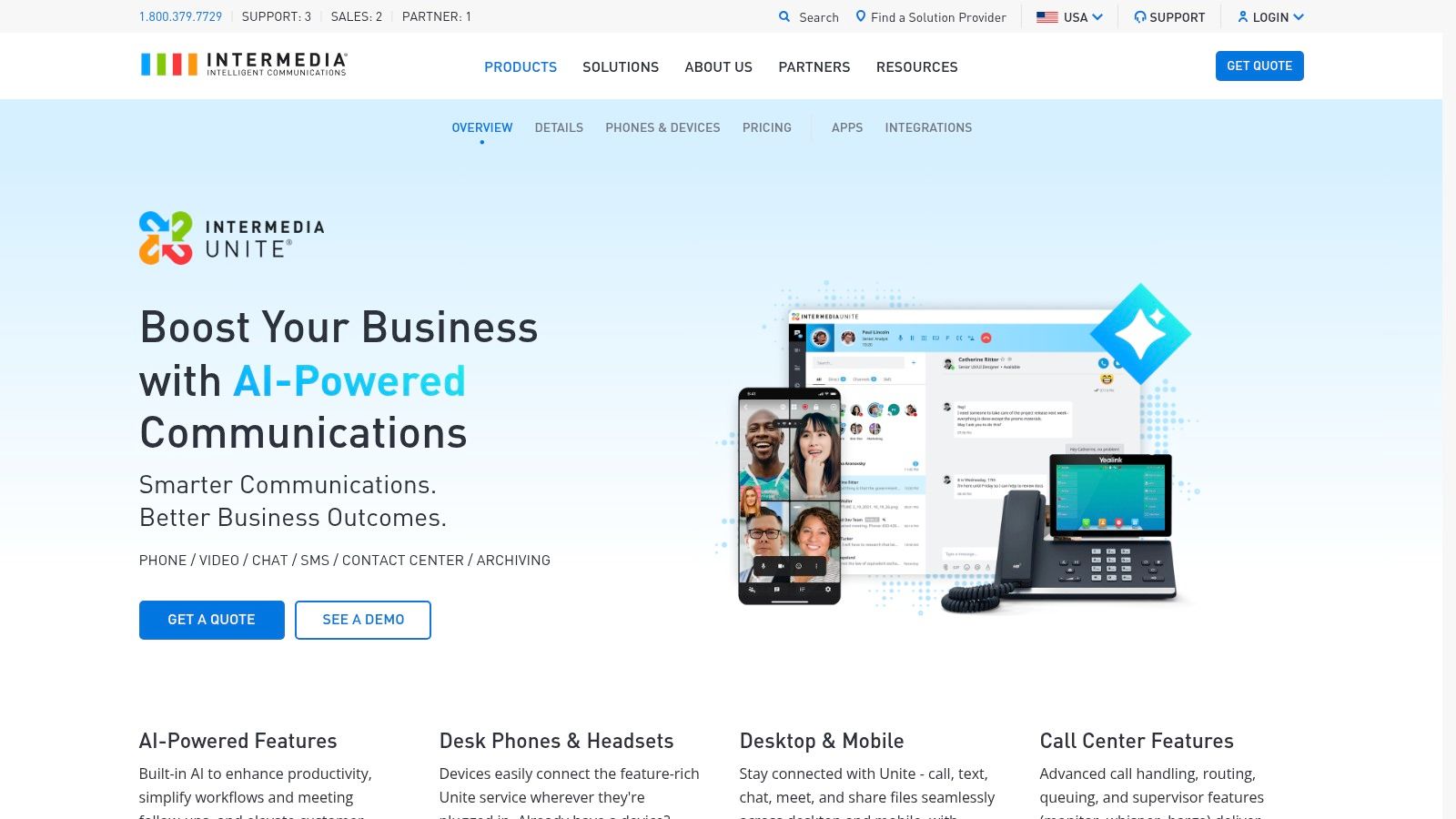
7. Intermedia Unite
Intermedia Unite is the sleeper pick for regulated environments and organizations with compliance sensitivity. It doesn't always win the popularity contest, but it addresses practical issues that many businesses only discover after rollout, especially around archiving, storage, and device-inclusive deployments.
That makes it more relevant than its market profile might suggest.
Why some regulated teams prefer it
Intermedia is attractive when procurement wants fewer moving parts. Device-included plans can simplify rollout, and compliance-oriented options reduce the number of bolt-on products you need to evaluate.
It's especially worth a look when you need:
- Built-in international calling breadth: Helpful for organizations with predictable global call needs.
- Compliance-minded options: Better aligned with businesses that archive communications.
- Simpler procurement: Included devices can reduce deployment friction.
The compromise is ecosystem breadth. The biggest providers generally offer wider name-brand integration coverage and larger surrounding partner networks. If your operation depends on a very specific third-party software stack, verify it early.
One more reality check. VoIP gear isn't just a calling problem at end of life. Phones, adapters, and related hardware can retain logs, contacts, and configuration data. A background analysis on provider content gaps notes a claim that a 2025 Verizon DBIR found 18% of breaches involved recycled electronics with residual data, and it also argues that provider content often ignores secure decommissioning concerns in this category, as described on Voiply's state page discussing disposal risks. Whether you're handling office phones, conference units, or routers, secure retirement should be planned with your broader IT equipment disposal process.
Use Intermedia Unite when compliance, procurement simplicity, and device-inclusive deployment matter more than brand recognition.
8. 8×8
A common "near me" mistake is assuming the best VoIP option is the one with the closest sales office. For 8×8, local fit usually means something else. It means whether the provider can support your numbers in the markets where you operate, deliver consistent call quality across offices, and give your team support coverage that matches your business hours.
8×8 tends to fit companies with several locations, remote staff in different regions, or a growing mix of phone, video, and contact center needs. I usually bring it into the conversation when a client has outgrown the simpler small-business systems and needs tighter control over routing, reporting, and user management across sites.
A stronger choice when "near me" includes network reach
8×8 is not the lightest platform to roll out, and that is the trade-off. You get more administrative depth, broader international capability, and a platform that holds up better once multiple departments start asking for different call flows, policies, and analytics.
What stands out:
- Local meaning beyond geography: 8×8 can be a good fit when your business needs coverage across several cities or countries, not just one nearby office.
- Number porting and expansion flexibility: Important if you are keeping established local numbers while adding users in new regions.
- Microsoft and CRM alignment: Useful for companies that already run heavily through Teams, Salesforce, or similar systems.
- Quality visibility: Admins get more tools to monitor call performance and troubleshoot site-specific issues.
The caution is deployment discipline. If you have one office, basic call handling, and no real reporting requirements, 8×8 can feel heavier than necessary. That usually shows up in longer setup time, more decisions during implementation, and a steeper learning curve for admins.
I also look closely at support expectations. A national provider can still work for a business searching for "VoIP service providers near me" if it has reliable number availability, responsive onboarding, and partner or service coverage where you operate. That is the practical test. Not whether the headquarters is local, but whether the provider can support your locations, your porting timeline, and your day-to-day telecom operations without creating extra work for IT.
Choose 8×8 when your business has multi-site complexity, international calling requirements, or a local-number strategy that extends beyond a single office.
9. Comcast Business VoiceEdge
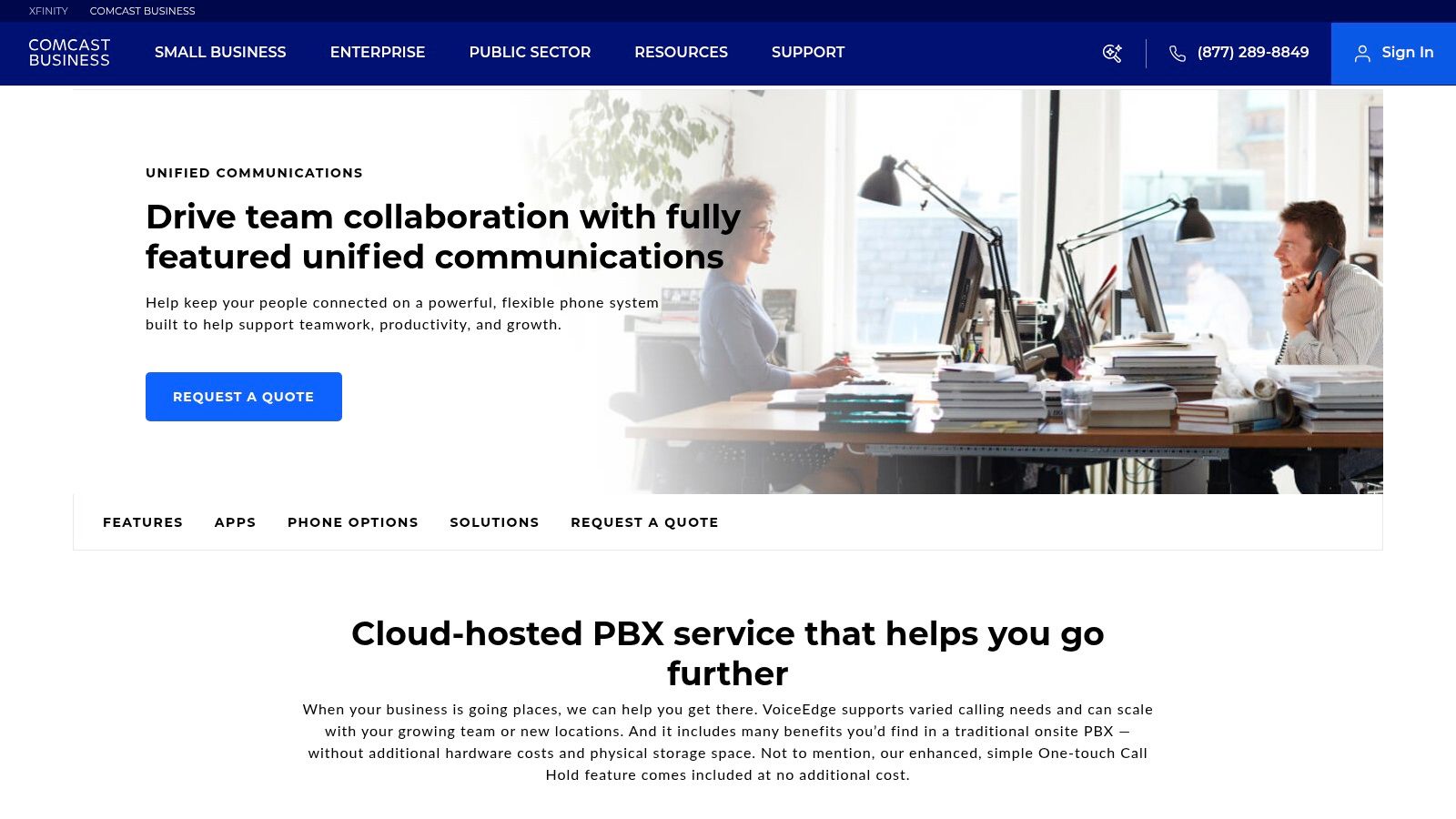
For businesses that mean “local” in a strict sense, Comcast Business VoiceEdge belongs on the list. It combines the hosted PBX layer with the carrier relationship many offices already have for internet access. That's useful when the business prefers one provider for circuit, phones, and field support.
This is one of the few entries where “near me” encompasses truck rolls, onsite installation help, and local account coverage.
When bundled service is the point
Comcast Business VoiceEdge is strongest for offices that don't want to coordinate between an ISP and an over-the-top voice vendor. If your Atlanta-area office already buys Comcast connectivity, there's a practical argument for keeping the service relationship consolidated.
That can help with:
- Bundled support: One vendor owns more of the problem path.
- Onsite assistance: Helpful for offices that still need physical phone deployment.
- Carrier-managed approach: Better for teams that want less hands-on telecom administration.
The caution is administration and porting. Carrier-hosted systems can be convenient, but they can also become frustrating if the implementation team is weak or the account structure is rigid. Pilot the service, test support responsiveness, and verify number porting timelines before committing.
This option also fits businesses doing larger office cleanouts, data center decommissioning projects, or multi-site telecom refreshes where voice service and hardware removal need to be coordinated with broader electronics recycling and secure data destruction work.
Use Comcast Business VoiceEdge when local field support and ISP bundling are more important than app-first flexibility.
10. AT&T Office@Hand / AT&T Phone for Business
A common real-world scenario is a business with AT&T fiber in three offices, old PRI or analog lines in one location, and a finance team that wants one carrier relationship instead of another standalone VoIP contract. In that case, AT&T deserves a serious look. The appeal is not flashy software. It is operational fit.
For a "voip service providers near me" search, "near me" does not always mean a small local reseller. It often means the provider can support your sites in the markets where you operate, has local number inventory, and can port existing numbers without turning a cutover into a month-long problem. AT&T is strongest when those carrier-level details matter more than having the lightest admin portal or the lowest advertised seat price.
Best for businesses that want carrier reach and local number continuity
AT&T gives companies more than one path into cloud voice. Some teams will look at Office@Hand for a fuller UC setup with calling, messaging, and meetings. Others will care more about AT&T Phone for Business as a managed option that lines up with existing internet, SIP, or legacy voice migrations.
That makes AT&T a practical fit for:
- Multi-site number porting: Useful when keeping established local numbers is tied to customer trust, branch marketing, or compliance records.
- Carrier-backed local presence: Better for businesses that need service across multiple metros, not just one office with a simple plug-and-play rollout.
- Legacy telecom cleanup: A solid option for organizations retiring older PBX hardware, fax lines, analog devices, or uneven circuits across locations.
- Single-vendor procurement: Simpler for teams that want voice, connectivity, and account management under one provider.
There are trade-offs. Small deployments can end up paying for a heavier service model than they need, especially if the business mainly wants basic cloud calling with easy self-service administration. Some SMBs will find that software-first providers move faster during trials, MACD requests, and day-to-day changes.
My advice is to evaluate AT&T on three points that matter to the "near me" question. First, ask how they handle local support escalation for each office you plan to migrate. Second, confirm local number availability and porting process by rate center, not just by city. Third, test how well the voice plan matches your current AT&T connectivity and failover design.
If those answers are clear, AT&T can be a strong choice for established SMBs and larger organizations that care about local footprint, carrier coordination, and a cleaner path off older phone systems. For teams already in the AT&T ecosystem, AT&T Phone for Business is worth a close review.
Top 10 Local VoIP Providers, Quick Comparison
| Provider | Core features ✨ | UX & Reliability ★ | Pricing / Value 💰 | Target audience 👥 | Unique strength 🏆 |
|---|---|---|---|---|---|
| Nextiva | Unlimited US/CA calling & SMS, auto attendants, analytics, integrations | ★★★★ Easy admin; scales to contact center | 💰 Transparent SMB pricing; annual discounts | 👥 SMBs & non‑IT admins | 🏆 Clear pricing + simple rollout |
| Dialpad | AI transcriptions, realtime summaries, unlimited calling, apps | ★★★★ Modern UX; strong built‑in AI | 💰 Competitive entry pricing; some add‑ons | 👥 Distributed teams, AI‑forward SMBs | 🏆 Native voice AI & summaries |
| Zoom Phone | Metered/unlimited calling, IVR/queues, deep Zoom integration | ★★★★ Seamless if already on Zoom | 💰 Metered or unlimited plans; add‑ons often quote | 👥 Organizations using Zoom Meetings | 🏆 Tight Meetings/Rooms unification |
| Vonage (VBC) | 50+ phone features, messaging, CRM integrations, APIs | ★★★★ Mature platform; extensible | 💰 Clear tiers (Mobile/Premium/Advanced); add‑on costs | 👥 Growing orgs needing APIs & integrations | 🏆 Extensibility via APIs & marketplace |
| GoTo Connect | Cloud phone + included video, dial‑plan tools, multi‑site admin | ★★★★ Robust admin for multi‑device/site | 💰 Quote‑based; entry commonly mid‑$20s/user (verify) | 👥 Multi‑site offices & admins | 🏆 Strong telephony features at base plans |
| Ooma Office | Unlimited calling (plan dep.), virtual receptionist, simple apps | ★★★ Easy, low learning curve | 💰 Low‑cost, month‑to‑month; transparent fees | 👥 First‑time VoIP SMBs | 🏆 Contract‑free, predictable pricing |
| Intermedia Unite | Unlimited domestic + intl to 33 countries, archiving, device bundles | ★★★★ Compliance‑minded; device options | 💰 Competitive global calling; device‑included plans | 👥 Regulated orgs & global teams | 🏆 Compliance archiving (FINRA/SEC/HIPAA) |
| 8×8 | Cloud PBX, analytics, Teams integration, global PSTN footprint | ★★★★ Enterprise‑grade; learning curve for small teams | 💰 Quote‑based; strong global coverage | 👥 Multi‑site & global enterprises | 🏆 Broad international reach & analytics |
| Comcast Business VoiceEdge | Carrier‑hosted PBX, device leasing, on‑site install/porting | ★★★ Local field support; some porting/admin reports | 💰 Bundle pricing; quote‑based (ISP+voice benefit) | 👥 Atlanta‑area offices preferring carrier‑managed | 🏆 ISP + voice bundle with local support |
| AT&T Office@Hand / Phone for Business | Cloud voice, managed VoIP, legacy/PBX migration, SLAs | ★★★★ Strong support for AT&T customers | 💰 Quote‑based; bundles with AT&T connectivity | 👥 Organizations already on AT&T services | 🏆 Single‑vendor path + nationwide SLA support |
Make Your Choice and Complete the Upgrade
The right answer usually isn't the provider with the longest feature list. It's the one that fits your operating model. If your business needs fast adoption and low admin overhead, Nextiva or Ooma may be better choices than a more complex enterprise platform. If your users already live in Zoom or Microsoft-centric workflows, Zoom Phone or 8×8 can reduce friction. If local support matters because you want a bundled carrier relationship and potential onsite help, Comcast Business VoiceEdge or AT&T may deserve more weight than software-only buyers expect.
“Near me” also needs a more practical definition than most comparison pages give it. In a modern VoIP purchase, local relevance means number availability in your area, clean porting support, realistic E911 setup, support coverage in your time zone, and a deployment model that matches your office footprint. For some businesses, local means a field technician can visit the site. For others, it means the provider can support a hybrid team spread across home offices while still keeping the business number structure intact.
Security and end-of-life handling should be part of the same decision. Businesses often spend weeks evaluating call quality and contract terms, then leave old desk phones, conference units, routers, and adapters sitting in storage rooms. That creates unnecessary operational clutter and can create data exposure if devices retain logs, contacts, or account settings. It also works against sustainability goals that many organizations now include in procurement and facilities planning.
Reworx Recycling should be part of the project plan, not an afterthought. If you're upgrading your communications stack, there's a good chance the move overlaps with electronics recycling, laptop disposal, office cleanout work, IT asset disposition, or secure data destruction requirements. Reworx helps businesses handle those transitions responsibly, with a donation-based recycling model that supports community impact while keeping outdated technology out of the wrong disposal stream. That's especially relevant for organizations managing broader IT equipment disposal, product destruction, facility cleanout work, or sustainable recycling initiatives tied to ESG and corporate donation programs.
One more point from the field: migrations go better when you break them into phases. Pick the provider. Confirm numbers and call flows. Pilot with a small user group. Train front-desk and manager roles first. Then remove legacy hardware on a documented schedule. Businesses that treat decommissioning as part of rollout usually avoid the final month of disorder that turns a clean telecom upgrade into a messy facilities problem.
Choose the phone platform that fits your business now. Then finish the job properly. Once the new service is live, schedule the pickup, retire the old hardware, and close the loop with a secure and sustainable handoff to Reworx Recycling.
If your business is replacing phones, clearing telecom closets, or planning a broader technology refresh, connect with Reworx Recycling to handle electronics recycling, donation-based recycling, secure data destruction, and IT equipment disposal the right way. Reworx helps organizations schedule pickups, support corporate donation programs, and complete office and facility cleanouts with a practical focus on sustainable recycling, community impact, and responsible ITAD.