You've got a room full of aging laptops, a few racks of retired servers, and finance wants a clean number before the next refresh cycle starts. The equipment isn't just taking up floor space. It's carrying storage cost, data handling risk, and enough logistical friction that nobody wants to own the problem for long. That's exactly where cost recovery strategies stop being a finance phrase and start becoming an operational tool.
In IT asset disposition, the difference between a messy liquidation and a disciplined recovery plan is usually hidden in the details. Data security, reverse logistics, compliance documentation, and device condition all change what you can recover, what you should subsidize, and what will always remain a net disposal cost. Reworx Recycling works in that gap every day, where the answer isn't just “recycle it,” but “what can be resold, what must be destroyed, and what should be priced separately?”
Why Cost Recovery Matters for IT Asset Disposition
A decommissioning project usually begins with a crowded staging area, a facilities team that wants the space back, and a finance lead asking whether old hardware can offset any of the project cost. If that question is answered by guesswork instead of a model, the organization usually loses twice, once through hidden handling costs and again through missed recovery value.
The policy logic behind cost recovery is straightforward. Public-sector frameworks treat it as recovering the efficient costs of a specific activity from the non-government sector, not as a broad fee collection exercise. The Australian Government's Cost Recovery Policy allows agencies to charge for some or all of the efficient costs of a government activity, and related guidance requires full-cost calculation before fees are set, including direct, support, and indirect costs, which is a useful model for ITAD pricing too. For a legal lens on the same problem set, the asset recovery legal resources page is a practical reference point. Australian Government Cost Recovery Policy
That matters in IT asset disposition because retired equipment carries more than resale value. Storage, transport, testing, chain of custody, data destruction, and the compliance paperwork finance will ask for later all sit on the cost side of the ledger. If those costs are not isolated early, organizations end up treating every device the same, even though a clean batch of business laptops behaves very differently from obsolete network gear or media-rich storage hardware.
Practical rule: if the asset list is mixed, do not price the program as if everything is equally recoverable. Separate the assets first, then decide what is salvage, what is donation-ready, and what is pure disposal.
That separation is where many ITAD programs either protect margin or give it away. A pallet of recent laptops can sometimes generate enough buyback revenue to offset the low-value recycling and destruction work that comes with the rest of the lot. Older servers, damaged peripherals, and storage devices with heavier security requirements often move in the opposite direction, where the recovery value is limited and the net disposal cost is real. That trade-off is why a structured view of asset recovery beats simple recycling.
Simple recycling clears the room. Cost recovery strategies try to capture value where it still exists, while preventing the expensive mistake of assuming every unit has positive residual value. Reworx Recycling's guide on maximizing value in IT asset disposition is useful when you are comparing resale, refurbishment, and destruction paths and trying to see which parts of a program can cross-subsidize the rest.
Building Your Cost Recovery Foundation
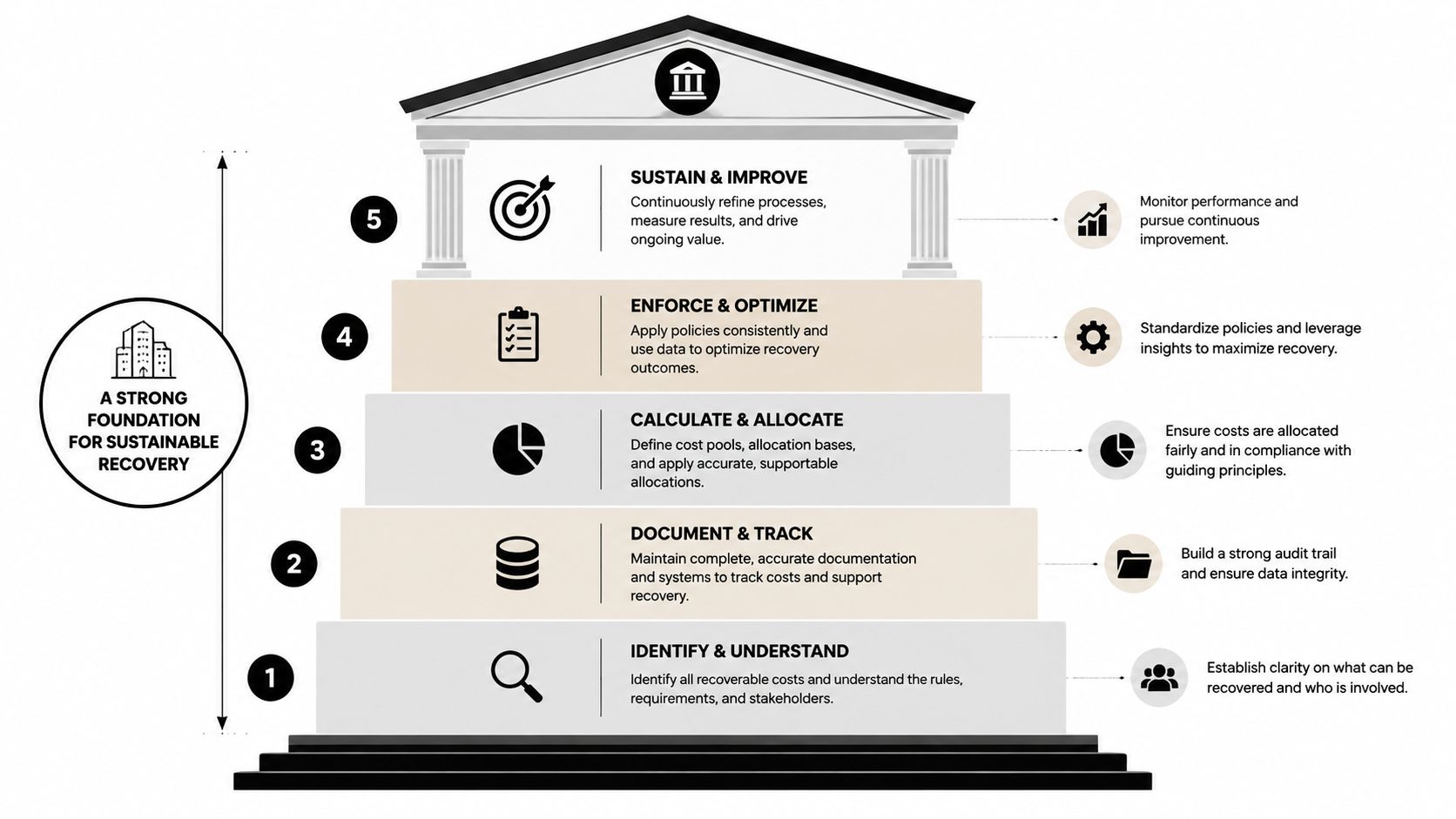
A defensible recovery program starts with a full-cost model. The Bayes and University guide is explicit about the sequence, identify each cost as direct, direct-support, or indirect, apportion shared support and overhead, then calculate the full cost of service before adding contingency, risk, or profit. That structure keeps the conversation grounded when finance asks why the project fee isn't just a flat per-device number. Bayes Cost Recovery Guide
Start with cost classification, not pricing
Direct costs are the easy part. In ITAD, that's labor for packing and sorting, transport to the processing site, secure destruction, and downstream handling. Direct-support costs are the pieces that keep the work moving, like facility space, handling equipment, insurance, and the systems used to track custody and disposition.
Indirect costs are where most programs get sloppy. Administrative oversight, compliance management, environmental reporting, and finance coordination all consume time, but they're often buried inside overhead and never attached to the project. That's how under-recovery happens, staff time gets undercounted, shared services get ignored, and the final fee looks cheaper than the actual program cost.
A good habit is to track these items with the same discipline you'd use for fixed assets. If the team can't explain what was received, where it went, and what happened to it, the cost model won't survive audit scrutiny either. For a practical bookkeeping lens, keeping fixed asset records straight is a useful reference point when you're matching inventory, depreciation status, and end-of-life records.
Use records that finance can defend
The most practical control is documentation that shows when costs changed and why. If transport quotes rise or downstream processing fees shift, keep dated invoices and purchase-price variance tracking so the team can point to a real change instead of hand-waving about inflation. Plantemoran's guidance makes that point directly, detailed invoices and variance tracking are what justify passing costs on to customers. Plantemoran cost recovery guidance
That discipline matters in ITAD because the work is lumpy. A storage cleanout with eighty desktops isn't priced the same way as a secure decommission of mixed servers, printers, and peripherals. The only way to keep the model defensible is to make the cost base visible before anyone starts talking about margin, donation credit, or resale proceeds.
Reworx Recycling's asset inventory management fits naturally here, because recovery starts with knowing what you have, not what the spreadsheet says you have.
Revenue Channels and Valuation Methods
The world generated 62 million metric tons of e-waste in 2022, but only 22.3% was formally collected and recycled, which shows how much value still leaks out of end-of-life electronics systems. Global e-waste estimate That gap is why valuation has to be asset-specific. If you treat every unit as scrap, you'll miss the devices that can offset the low-value pile.
Compare the channels before you choose the path
| IT Asset Recovery Channel Comparison | Channel | Typical Recovery Rate | Volume Requirements | Time to Revenue |
|---|---|---|---|---|
| 1 | Direct resale | Highest when devices are current, clean, and tested | Best for small to medium lots with consistent models | Fastest when demand exists |
| 2 | Manufacturer or third-party buyback | Strong on standardized gear with known market demand | Often needs enough volume to justify inspection and logistics | Moderate |
| 3 | Refurbishment for redeployment or donation | Value appears as avoided purchase cost or community benefit | Works best when devices still support user needs | Slow to moderate |
| 4 | Parts harvesting | Lowest cash return, but useful for niche components | Only makes sense when volume or uniqueness supports teardown | Slowest |
That table is only useful if you segment the assets correctly. Age, condition, and data sensitivity determine which path makes sense. A batch of recent laptops with intact batteries and predictable configurations can support resale or buyback. Older desktop towers, failed drives, and mixed peripherals usually move toward parts recovery or disposal, especially once secure handling is added.
Practical rule: high-value assets can cross-subsidize low-value recycling, but only if the valuation is honest. A weak mix of devices, heavy data handling, or poor chain-of-custody often turns the entire lot into a net cost.
The fastest way to lose money is to assume that gross revenue equals recovery. A resale channel may look attractive on paper, then collapse under testing, wiping, storage, and shipping costs. That's why the decision has to include time to revenue, not just device value.
For a service perspective on turning discarded equipment into value, the internal page on money for old electronics is relevant when you're deciding whether an asset lot belongs in resale, refurbishment, or disposal.
When operators want a simple outside reference on how waste streams can become income streams, income from waste disposal is a useful commercial framing point, especially if you're trying to explain why some lots deserve a separate fee structure instead of a blanket recycling rate.
Negotiating ITAD Provider Contracts
The contract decides whether the recovery plan works or gets eaten by hidden costs. Fixed-fee service agreements are easy to budget, but they can hide assumptions about volume, device mix, and destruction scope. Revenue-sharing models sound attractive when resale value is strong, but they can disappoint if the provider controls the valuation method or subtracts too many service charges before sharing proceeds.
Read the structure before you read the price
A hybrid agreement usually gives the best balance. It can include a baseline service fee, a resale or buyback component, and minimum guarantees for pickup and processing. That structure helps when volumes fluctuate, because one year's server refresh can look nothing like the next year's printer purge.
The weakest proposals are the ones that bundle everything into a vague “all-in” rate. If data destruction, pickup windows, reporting, certificates, and downstream recycling aren't clearly separated, the customer has no way to see where margin is being made or where extra charges will appear later.
Ask for the service levels in writing, not as marketing copy. Pickup scheduling, processing timelines, certificates of destruction, and liability limits belong in the contract language.
The quality of the provider also shows up in the warranties. Data destruction warranties should be explicit, and liability caps should match the risk profile of the assets being handled. If the vendor won't clearly state how chain of custody is documented, that's a problem, not a negotiation detail.
A useful way to pressure-test a proposal is to ask three questions. What happens if the asset mix changes? What's excluded from the price? How is value recovered from resale or parts harvested, and when does the customer see the accounting? If the answers are vague, the provider is probably protecting its own margin at the customer's expense.
Reworx Recycling's contract negotiation tips are a sensible starting point for teams comparing fixed-fee, shared-revenue, and hybrid options.
Secure Data Destruction and Compliance Requirements
Data security sits underneath every other cost line. If the organization gets the destruction method wrong, any recovery gain can disappear into incident response, audit cleanup, or legal review. The right answer depends on the data type, the industry, and the chain-of-custody controls already in place.
Match the method to the risk
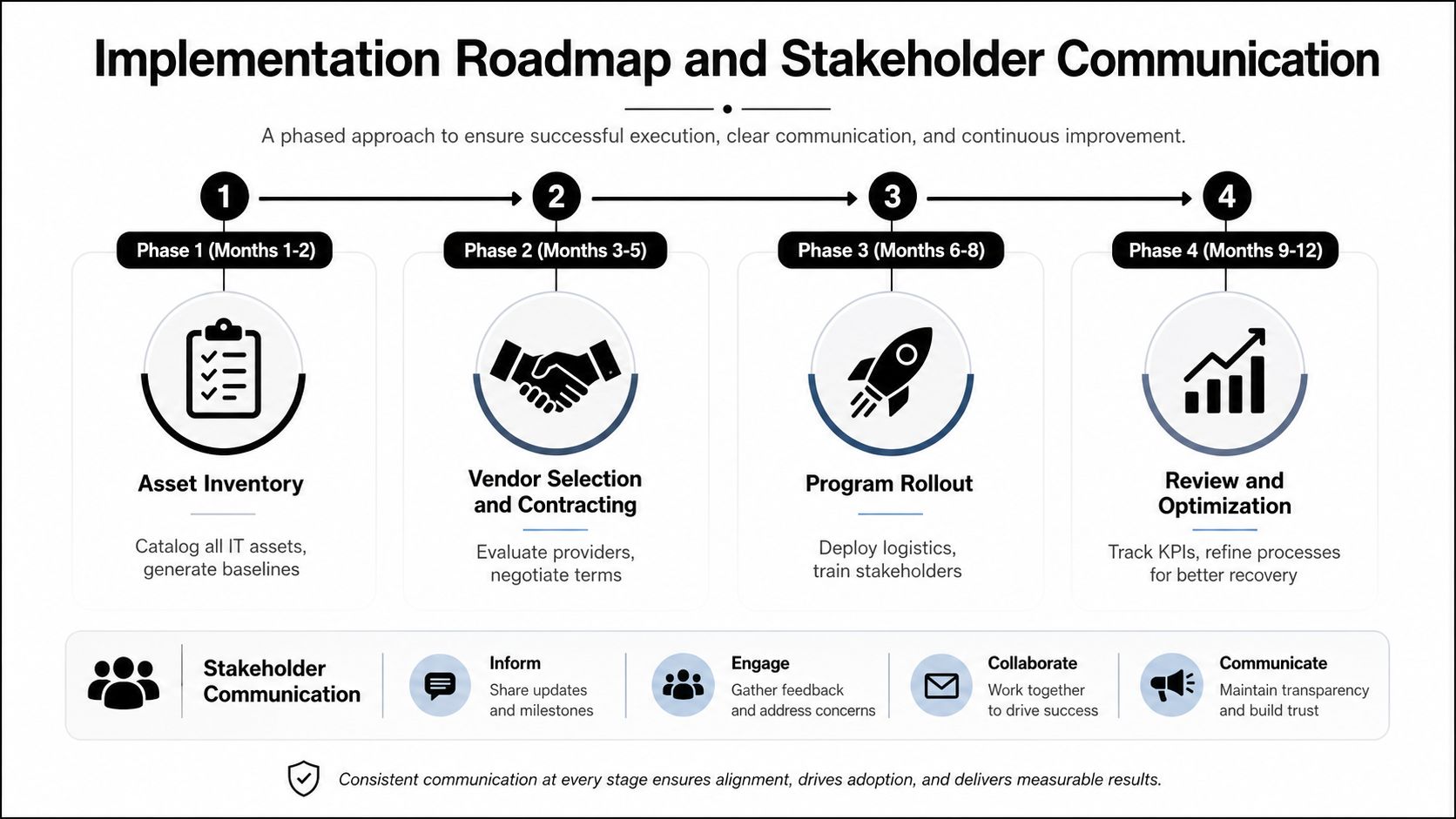
HIPAA, SOX, GLBA, and state-level privacy requirements all push organizations toward secure handling, but they don't always demand the same destruction method. In some cases, physical shredding is the cleanest option. In others, degaussing or controlled wiping may be appropriate if the device path and documentation are strong enough for the regulatory context.
The primary cost issue is not just the destruction itself. It's the documentation that proves the work happened. Certificates of destruction, custody logs, and vendor due diligence create the audit trail that finance and legal teams need later. If the provider can't show those records, the cheaper option often becomes the more expensive one after the fact.
Keep the controls practical
Here's the balance that usually works in the field.
- Use shredding for high-risk media: Drives with sensitive regulated data usually justify physical destruction when the audit burden is high.
- Use degaussing selectively: It can make sense where media type and internal policy support it, but it isn't a universal shortcut.
- Keep custody documentation tight: Every handoff needs traceability, from pickup to final processing.
- Review insurance and liability coverage: A vendor without adequate downstream coverage shifts risk back to you.
- Avoid unnecessary paperwork: Extra forms don't add value if they don't strengthen the audit trail.
The NARUC workbook's discussion of surcharges is useful here because it shows how organizations can recover a targeted cost bucket through a clearly identified charge rather than folding everything into a single opaque fee. NARUC workbook on surcharges That same logic applies to ITAD, where secure destruction and compliance work may need to be priced as a distinct line item rather than hidden inside a general recycling charge.
The safest programs are the ones that document only what matters. Too much paper slows the process. Too little proof breaks the audit trail. The goal is secure destruction that supports recovery, not security theatre that drains margin.
For teams that need a managed service option, secure data destruction services fit naturally into a broader ITAD workflow when the devices carry regulated or sensitive content.
Implementation Roadmap and Stakeholder Communication
Cost recovery fails most often when the operational and financial teams never agree on the same story. IT wants the floor cleared, finance wants a defensible number, facilities wants the space back, and sustainability wants the environmental outcome tracked. The program works when those groups get the same cost model and the same assumptions from the start.
Build the rollout in phases
The GSA guidance is blunt about the mechanics, cost-recovery planning should start with a detailed cost model and transparent pricing and rate-adjustment processes, not rough estimates or flat markups. GSA cost recovery guidance That's the right sequence for ITAD too, because the fee structure needs to match the labor, logistics, and disposal profile.
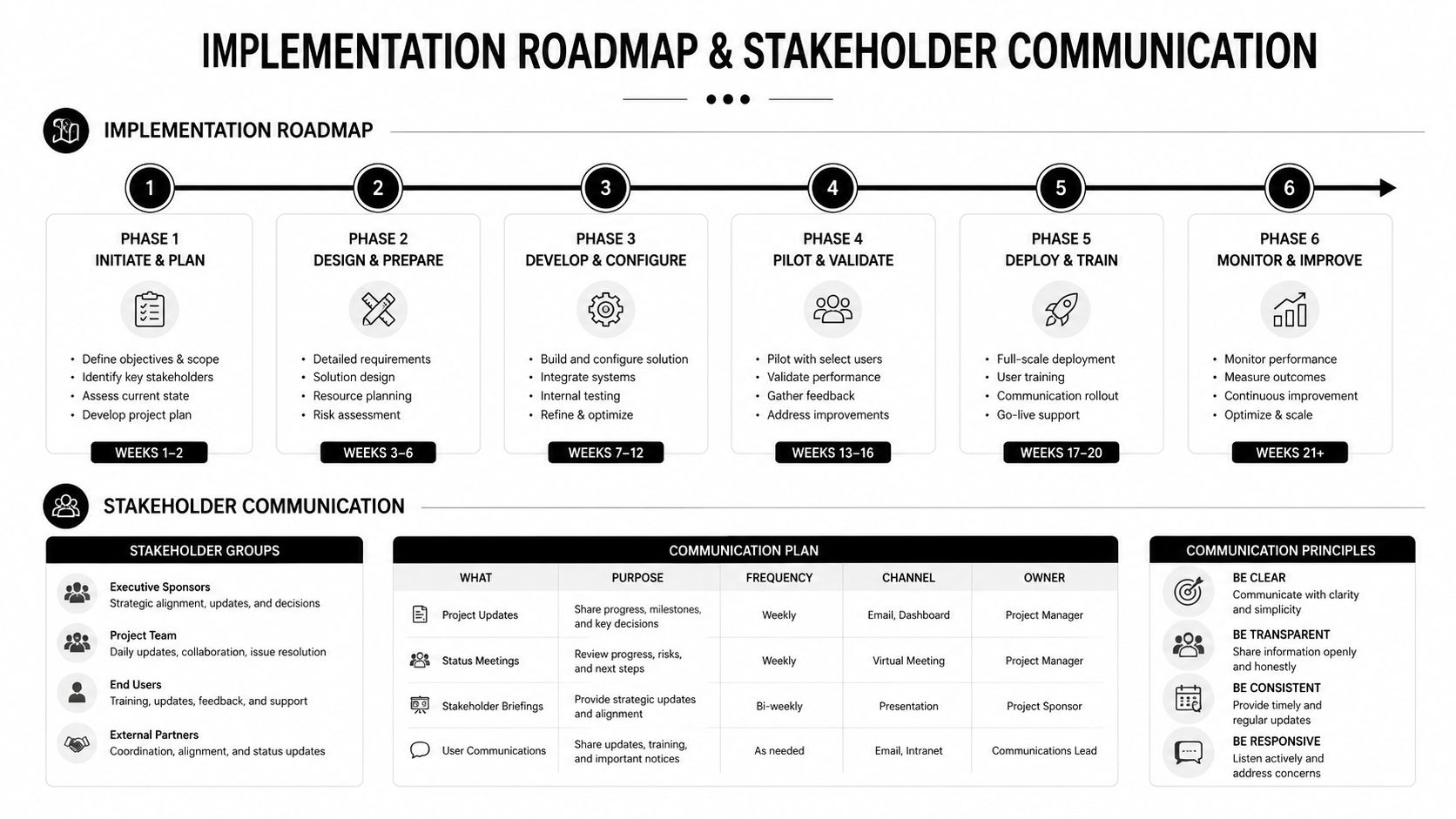
A workable rollout usually begins with an asset inventory and condition review, then a pilot lot, then a full program launch, and finally a review cycle that checks what happened against the model. The point isn't to make the first estimate perfect. The point is to make the next one better.
Communicate differently to each stakeholder
CFOs usually care about the recovery logic, not the recycling story. They want to know which costs are offset by resale, which are unavoidable, and where rate adjustments are justified by documentation. Facilities managers care about space, handling, and pickup timing. Sustainability leaders want to see diversion, donation, and responsible downstream processing tied back to the business objective.
A simple internal message works better than a long pitch. The program reduces risk, clears inventory, and creates a traceable path for value recovery. When the devices still have market value, buyback can help subsidize the rest of the stream. When they don't, the honest answer is a net disposal cost, and the budget needs to reflect that upfront.
The best KPI set is narrow and auditable. Track recovery by device category, processing cost by lot, revenue offset from resale or buyback, and the pass-fail status of compliance checks. If those numbers trend in the right direction, the program is doing its job. If they don't, the model needs to be revised before the next refresh cycle.
For organizations ready to turn a backlog of retired hardware into a managed project, Reworx Recycling handles electronics recycling, IT asset disposition, donation-based recycling, and secure collection workflows that support both cost recovery and responsible end-of-life handling. Visit Reworx Recycling to schedule a pickup or start a decommissioning plan that fits your asset mix and compliance needs.