
You've booked the ticket, chosen the hat, and told everyone this will be an unforgettable Louisville weekend. Then Derby Saturday arrives, your group is split between two hotel lobbies, your rideshare drops you blocks from Churchill Downs, and the security line is already moving slower than expected. The Kentucky Derby is a spectacular day, but first-time visitors who treat it like an ordinary afternoon at the races usually spend too much time solving avoidable problems.
This Kentucky Derby visitor guide and travel tips article treats Derby week as a logistics event. You'll find practical arrival windows, transport decisions, bag guidance, lodging tradeoffs, weather planning, and a four-day Louisville itinerary built around the realities of moving through a crowded city.
Picture Your First Derby Morning
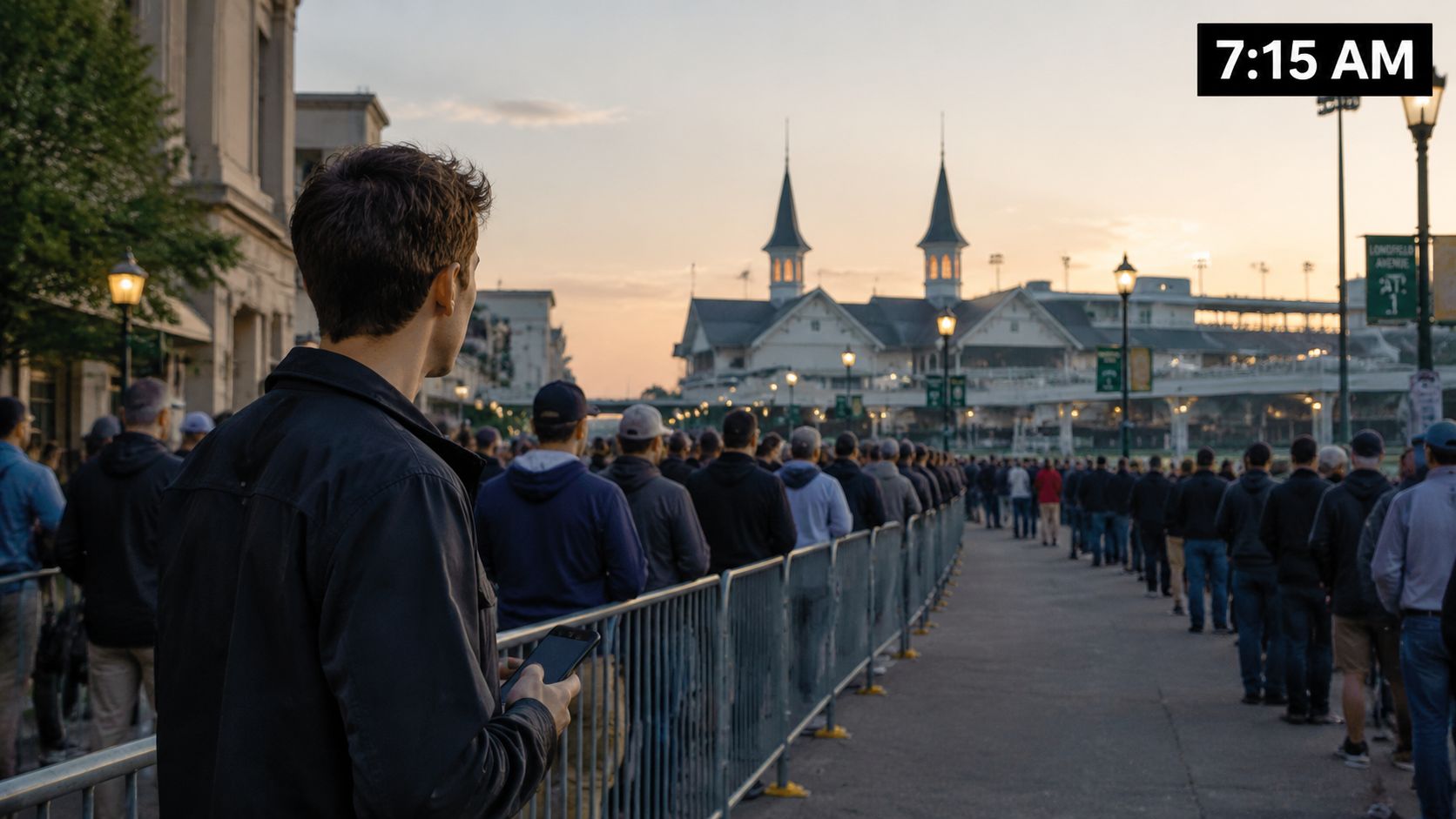
At 7:15 a.m. on Derby Saturday, you're standing with your group in a security queue near Longfield Avenue. The line is full of mint juleps in souvenir glasses, bright hats, rain jackets, and guests checking race schedules on phones. Somewhere beyond the gates, the crowd is already building around the paddock, and you're calculating whether there's enough time to watch an undercard race before claiming a good parade-viewing position.
That's the Derby's central challenge. The event looks like a horse race, but your day behaves like a carefully timed travel operation. Hotel checkout, transport, walking distance, bag screening, gate selection, finding your seat block, and choosing a meet-up point all consume time. If one person in a split group loses phone service or enters through the wrong gate, the inconvenience can last for hours.
Build the day around fixed decisions
Make these choices before leaving your hotel:
- Choose the gate first: Check your ticket access and select the entrance that matches it. Don't assume the closest street is the fastest entrance.
- Set an arrival window: Plan to be near the track well before the racing you care about. Early arrival gives you time for walking, searches, restrooms, and orientation.
- Create two meeting points: Pick one location inside the venue and another outside it. A single meet-up point is a weak plan for large groups.
- Prearrange the return: Book a shuttle, designate a driver, or agree on a post-race neighborhood meeting place. Don't depend on finding one another beside the track after the Derby.
Security screening deserves special attention. Churchill Downs says the event is rain-or-shine, many seating areas are outdoors and uncovered, and guests should arrive early to accommodate search procedures. A compact bag and a charged phone matter more than a last-minute accessory. If your group is carrying old business devices or sensitive equipment before or after the trip, keep that separate from race-day planning and use a dedicated local service such as Louisville hard-drive shredding for secure data handling.
The bugle call changes the mood instantly. By then, a well-planned visitor has already solved the small problems that overwhelm an unprepared guest. The reason this preparation matters is scale. The Derby began at Churchill Downs on May 17, 1875, and the inaugural race drew an estimated 10,000 spectators, according to Kentucky historical records. The event later grew into a globally recognized first-Saturday-in-May tradition, with modern attendance reaching roughly 150,000 annually and the 2015 record standing at 170,513 fans.
Why Derby Week Is a Logistics Event
A crowd of 170,513 changes every ordinary travel assumption. One road closure affects more than drivers. A full parking area pushes guests toward shuttles, shuttle demand slows boarding, and delayed arrivals create denser security lines. The result is a chain reaction across South Louisville, from hotel departures to the final walk through the gate.
Churchill Downs parking is largely permit-only or pre-sold, and Central Avenue closures affect Oaks and Derby days. Official visitor information directs many riders toward designated shuttle, bus, or rideshare zones rather than the track frontage. The practical lesson is simple: the fastest itinerary usually isn't the shortest route on a map.
| Metric | Figure | Planning Impact |
|---|---|---|
| Attendance record | 170,513 fans | Treat the track as a major crowd-management operation, not a routine sporting venue |
| Airport distance to Churchill Downs | Roughly 5 miles | A short geographic distance can still produce a long Derby transfer |
| Airport distance to downtown | About 7 miles south | Downtown and airport lodging create different transport decisions |
| Recent pre-Derby inbound seats at SDF | More than 16,000 | Flights and ground transport should be arranged early |
| Recent Sunday outbound seats at SDF | Nearly 20,000 | Departure planning matters immediately after the race |
| 2026 projected departing travelers | About 20,000, an 8% increase over 2025 | Expect concentrated airport demand after Derby weekend |
The airport pressure is real. Louisville Muhammad Ali International Airport travel guidance identifies SDF as the primary airport, roughly five miles from Churchill Downs and about seven miles south of downtown. Recent reporting cited more than 16,000 inbound seats before Derby and nearly 20,000 outbound seats on the Sunday after the race. For 2026, projections point to about 20,000 departing travelers, an 8% increase over 2025, and the airport has described post-Derby Sunday as its busiest day of the year.
Convert crowd size into rules
Don't build your plan around optimistic traffic conditions. Use these rules instead:
- Arrive early enough to absorb friction: Your buffer should cover the trip to the drop zone, the walk to the gate, screening, and finding your seat.
- Eat before the busiest meal period: Pre-order food where possible, and don't wait until the crowd peaks to decide where everyone will eat.
- Pin meeting spots before entry: Cell service and landmarks become less useful when thousands of guests converge.
- Reserve lodging and transport as soon as plans firm up: Late Derby bookings can create severe price and inventory problems.
Corporate groups and high-net-worth guests often need a more controlled transfer than a standard rideshare can provide. For private aviation and premium transport planning, high-net-worth Derby transport can help frame the options, especially when timing, privacy, and client experience matter more than minimizing the fare. For businesses managing technology transitions around a major event calendar, Kentucky IT asset disposition services address a separate operational need without adding electronics to the travel load.
Choosing the Right Ticket Type
Your ticket determines more than the view. It affects weather exposure, walking requirements, food access, dress expectations, betting convenience, and where your group can comfortably regroup. First-time visitors often overpay for prestige they won't use or save money in a way that makes the day exhausting.
The broad choices range from general-admission and infield access to reserved seating and hospitality areas. Infield admission suits groups that prioritize atmosphere and budget over a guaranteed seat. Reserved areas work better for guests who want a defined location, while first-turn and third-floor options appeal to newcomers who want strong views of the course and the twin spires. Turf Club and premium terrace areas make more sense for corporate hosts entertaining clients.
| Tier | View | Food/Drink | Best For |
|---|---|---|---|
| Grandstand | Strong track access with a busier shared environment | Depends on ticket package | Visitors who want structure without the highest hospitality level |
| Reserved Seats | A defined seat and more predictable viewing | Usually purchased separately unless included in the package | First-timers who value certainty |
| First Turn | Energetic perspective with broad race-day atmosphere | Package dependent | Guests seeking finish-line energy and a classic Derby feel |
| Third Floor | Elevated course and twin-spires views | Better access in upgraded areas | First-time visitors who want a strong visual experience |
| Turf Club or Terrace | Premium access and more controlled surroundings | Premium food and drink options may be included | Corporate hosts, VIP guests, and client entertainment |
The Turf Club and higher hospitality areas are the clear choice when indoor comfort, premium buffets, climate-controlled space, and dedicated betting tellers matter. They're also easier for corporate groups that need to talk, host clients, and regroup without standing in the densest public areas. Infield access is the opposite decision. It's lively and informal, but guests should accept standing-room conditions and less control over the day.
Ticket availability moves quickly. General sale activity typically begins in the late fall, while Oaks packages and hospitality inventory can disappear well before Derby weekend. Don't buy a premium ticket just because it sounds impressive. Match the access level to the people attending, the amount of time they'll spend at Churchill Downs, and whether the trip is centered on one race day or several Derby Week experiences.
For a one-day visitor, I favor a good reserved or first-turn option over a cheaper ticket that leaves the group wandering. Multi-day travelers can split the experience between Oaks and Derby, using one day for atmosphere and another for the main event.
Getting In Without Losing the Day
Treat Derby arrival as a timed logistics problem. Parking is largely permit-only or pre-sold, Central Avenue closes around the major race days, and rideshare users are sent to designated transportation areas. Before leaving, confirm three points: your drop-off location, the walking route to the gate, and the exit plan after the final race. The official Churchill Downs visitor information should be your final check for current transport instructions.
Private vehicles work when parking is secured in advance. A last-minute drive is a poor choice because road restrictions, screening, and the post-race departure can each add delay. The Kentucky Exposition Center shuttle can help eligible ticket holders. TARC routes 4, 6, or 29 offer another option for visitors who want to avoid direct track traffic.
Compare the arrival choices
| Mode | Typical Transit Time | Drop-off / Parking | Cost Range | Security Buffer |
|---|---|---|---|---|
| Prebooked private parking | Route dependent | Authorized or reserved lot | Varies by lot and ticket | Add a substantial walking and screening buffer |
| Shuttle | Route dependent | Designated shuttle area | Depends on eligibility and service | Allow time for boarding and the final walk |
| TARC | Route dependent | Designated bus stops and detours | Standard transit fare applies | Build in transfer and crowd delays |
| Rideshare | Route dependent | Taylor Boulevard or Longfield Avenue zones | Dynamic pricing applies | Include the walk from the zone to your gate |
| Airport transfer from SDF | Route dependent | Airport pickup, then designated track zone | Transfer fare varies | Leave room for airport pickup and track congestion |
SDF sits close to Churchill Downs, but Derby traffic can turn a short transfer into a long one. Do not schedule a tight airport-to-gate connection on race morning. Flying in? Complete luggage collection, pickup, and ground transport well before your planned entry window. Rideshare users should save the pickup zone and establish a meeting point before entering, since phone service and crowd movement can complicate the exit.
Pack for the search line
Churchill Downs enforces a restricted bag policy from Saturday, April 25, 2026 through Derby Day on Saturday, May 2, 2026. Each guest may bring one bag no larger than 12″ x 6″ x 12″, according to the official event information. Check the prohibited-items list before leaving your hotel. Consolidate essentials, keep identification accessible, and avoid bringing anything you may have to surrender at screening.
The best transport plan protects your energy and your departure. A shuttle or public-transit route may take longer on paper, yet it can remove parking searches and uncertain post-race driving. If your organization is handling data center decommissioning in Bowling Green, schedule that facilities work separately from race-day movement. Keep the Derby itinerary focused on arrival, entry, and the trip home.
A Realistic Derby Day Timeline
Derby Day rewards visitors who treat the schedule as a sequence of protected windows. Gates open at 9 a.m., according to reported 2026 visitor information. The main race comes late in the card, so arriving only for the Derby means missing much of the day and joining the most concentrated arrival period.
Use this operating schedule
- 6:00 a.m.: Wake up, check weather, charge phones, and confirm tickets, identification, transport, and meeting points.
- 7:00 a.m.: Leave your hotel or airport-area lodging. Earlier is better for groups with mobility needs or unfamiliar transport arrangements.
- 8:30 a.m.: Plan to be in position for the early racing atmosphere, even though official gates open at 9 a.m. Treat this as a target for reaching the surrounding area, not a promise of entry.
- 9:00 a.m.: Enter once gates open. Complete security before searching for food, restrooms, seats, or the paddock.
- Late morning: Watch the paddock and place early bets before the busiest activity builds. Decide where your group will eat before everyone is hungry.
- Noon: Take a proper food and hydration break. Don't postpone it until the main race buildup.
- Afternoon: Pace yourself through the card. Schedule a final bathroom stop and phone check before the Derby crowd begins concentrating around the main event.
- 6:57 p.m.: Treat the Kentucky Derby as the anchor point for your exit plan. Leave valuables secured, confirm your external meeting location, and don't assume you'll reach a vehicle immediately after the finish.
The post-race departure is its own event. Parking areas can take a long time to clear, and rideshare demand concentrates around the designated zones. If your group isn't required to leave immediately, a short cooldown at a downtown bar or restaurant can be more comfortable than standing curbside while traffic clears. Agree on this before the race, not while the crowd is moving toward the exits.
Practical rule: Protect the final hour. A bathroom stop, water refill, and confirmed meeting point are more valuable than squeezing in one last concession visit.
Where to Stay Without Overpaying
Derby lodging is a location decision, not a brand decision. Premium properties close to the action can reach roughly $3,000 to $8,000 per night, while some airport-area rooms have been listed near $800 to $1,049 per night, as reported by WDRB's Louisville hotel coverage. Those spreads show why you should compare the entire trip cost, including transport, meals, parking, and the value of avoiding a long return journey.
Downtown is the easiest zone for visitors who want restaurants, nightlife, and a straightforward post-race recovery. It also attracts the sharpest demand. Airport-area lodging can simplify parking and airport access, but guests should expect a less walkable Derby evening. Suburban properties around St. Matthews or Jeffersontown may offer better value and organized shuttle access, though a fixed shuttle schedule reduces flexibility.
| Zone | Derby Night Rate | Transit to Track | Shuttle Access | Best For |
|---|---|---|---|---|
| Downtown Louisville | Demand can be very high | Direct rideshare or arranged transfer | Property dependent | Visitors prioritizing restaurants and easier post-race plans |
| Airport corridor | Often lower than premium downtown inventory, but varies sharply | Direct transfer toward Churchill Downs | Property dependent | Airport arrivals, drivers, and guests seeking practical access |
| St. Matthews or Jeffersontown | Often positioned as an edge-of-core option | Longer road transfer | Some properties may offer Derby-week service | Value-focused visitors willing to follow a schedule |
Book early, then compare cancellation terms. A slightly farther hotel with a dependable shuttle can beat a closer room that leaves you competing for rideshare service. If you're considering a private rental, managing a Kentucky rental with Global offers a useful planning perspective for visitors comparing alternatives to traditional hotels.
For corporate groups, prioritize a property with a lobby large enough for scheduled departures and a quiet space for client conversations. For families and older guests, ask about elevators, shuttle loading, breakfast hours, and luggage storage before paying a premium for a central address.
Packing and Dress Code by Visitor Type
Derby style matters, but stamina matters more. Churchill Downs is an outdoor venue with uncovered seating areas, and the official guidance recommends checking the weather, considering sunscreen and a lightweight clear poncho, and bringing chapstick when your seating area is outside. Umbrellas aren't allowed, so rain protection needs to fit the venue's rules and your bag limit.
A restricted bag makes disciplined packing essential. Each guest is limited to one bag no larger than 12″ x 6″ x 12″ during the specified 2026 restriction period, according to Churchill Downs event information. Infield visitors entering through the infield gate may bring up to two unopened 24-ounce plastic bottles of water per person. Boxed lunches or food in clear containers are allowed only when they fit within the same bag-size limit, as described by Kentucky Derby visitor reporting.
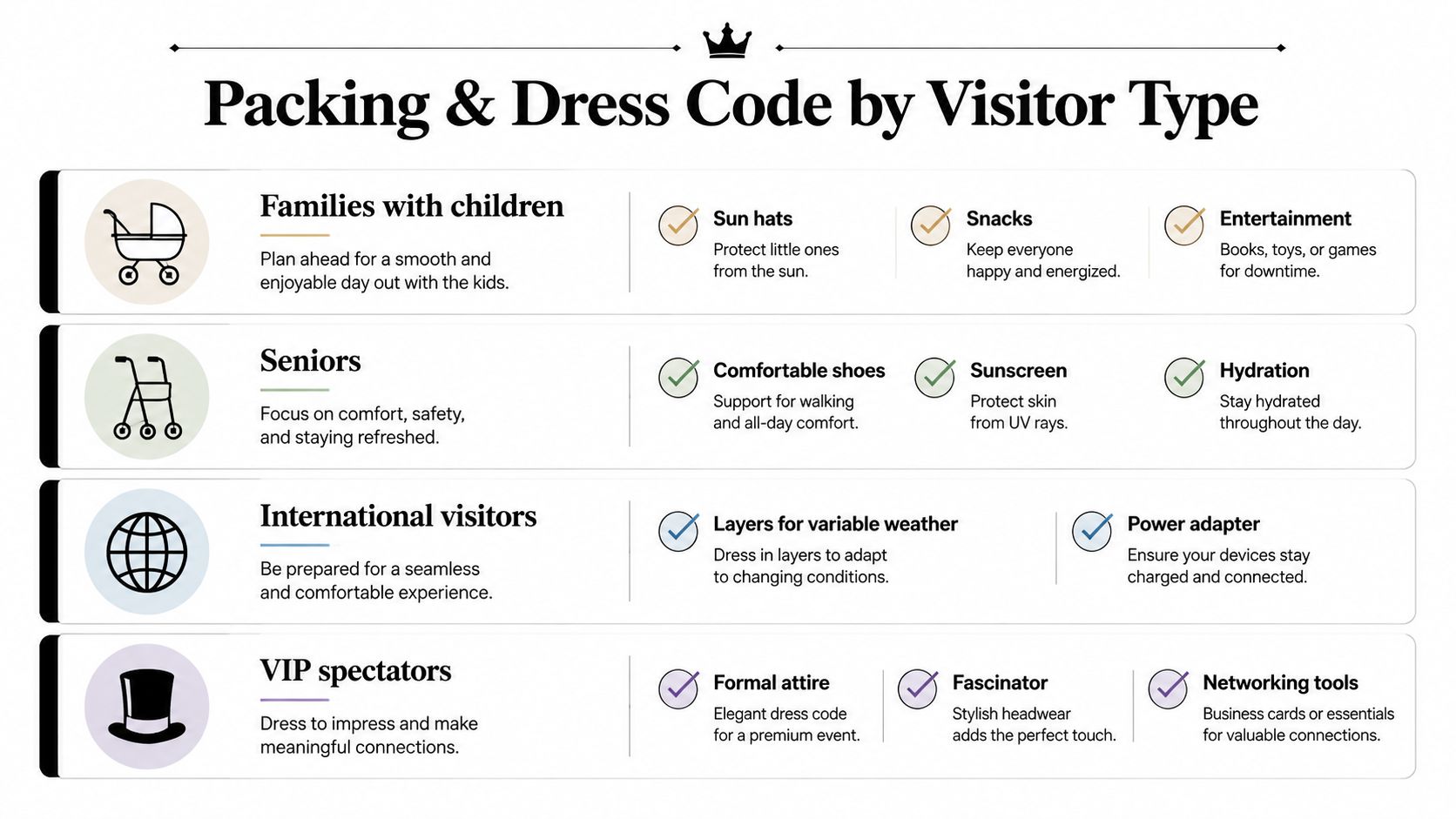
Families with children
Pack sun protection, compact snacks that meet venue rules, wipes, and a small entertainment option. Put the group's meeting information inside the child's clothing or on a card, and establish a visible meeting place before entering. Strollers and infant supplies may require special screening, so check the current accessibility and family provisions before travel rather than assuming standard stadium rules apply.
Seniors and mobility-limited guests
Choose cushioned shoes with reliable traction. Formal footwear that pinches or slips becomes a serious problem after hours on hard surfaces and uneven walkways. Bring approved mobility aids, hydration, necessary medications, and a written list of medical needs, then confirm accessible routes and seating details with Churchill Downs before Derby Day.
International visitors
Kentucky spring weather can shift from warm to wet during one long outing. Wear layers, bring a compact clear poncho, and carry the appropriate power adapter for your devices. Learn the venue's bag, payment, identification, and betting procedures before arrival, because American stadium-style entry rules may differ from what you're used to.
VIP and corporate guests
For reserved club areas, men generally look polished in a suit or dress shirt, while women often choose a dress with a statement hat or fascinator. Verify the dress code for your specific area before traveling. Some club sections restrict jeans and sneakers, while infield environments are substantially more casual.
Keep phone battery packs, sunglasses, sunscreen, Band-Aids, and a foldable poncho accessible. Religious headwear should be addressed through the venue's current accommodation process, and guests with mobility or medical needs should contact the track in advance. The winning outfit is the one that still feels comfortable when the weather changes and the walk back to transport takes longer than expected.
Derby Week Itinerary Beyond the Track
Louisville deserves more than a hotel, a race, and a rushed departure. Derby week works best when each Churchill Downs visit is paired with one neighborhood or cultural anchor, giving your group somewhere purposeful to go before the next transport decision.
| Day | Track Focus | Off-Track Anchor | Neighborhood | Travel Buffer |
|---|---|---|---|---|
| Thursday | Thurby racing and local Derby atmosphere | Bourbon tasting or a relaxed meal | Downtown or NuLu | Leave time for track egress before dinner |
| Friday | Kentucky Oaks and its pink-attire tradition | Muhammad Ali Center and dinner | Downtown, NuLu, or the Waterfront | Arrange evening transport before the Oaks crowd builds |
| Saturday | Kentucky Derby and the full race card | Pre-race hotel routine, then post-race cooldown | Churchill Downs and downtown | Protect the morning arrival and return windows |
| Sunday | Recovery day and Derby Museum visit | Brunch or horse-farm tour along Old Frankfort Pike | Downtown, St. Matthews, or the horse-country corridor | Keep the airport transfer separate from sightseeing |
Thursday is the best day to combine racing with a slower Louisville experience. Attend Thurby, then move toward a bourbon tasting or dinner rather than stacking another crowded event immediately afterward. Friday's Oaks atmosphere is distinct from Derby Day, and the pink-attire tradition gives visitors a more focused fashion and social theme.
Saturday should remain simple. Wake early, verify weather and bags, leave on schedule, and use the preplanned route. Don't add a distant brunch reservation between hotel checkout and the track. The city's geography may look manageable, but Derby traffic turns small detours into missed windows.
Sunday gives you room to recover. Plan brunch, visit the Kentucky Derby Museum and local electronics recycling resources only if your schedule allows, and consider a horse-farm outing along Old Frankfort Pike. Keep airport departure plans separate from optional sightseeing, especially because SDF experiences concentrated post-Derby demand.
A corporate version
Corporate groups should replace bourbon-bar hopping with private dining rooms, hotel meeting spaces, and scheduled transfers. Assign one trip lead to tickets and timing, another to client hospitality, and a third to transportation. Give every guest a printed or digital itinerary with the hotel, gate, meeting point, dress expectation, and return plan.
The final checklist is short:
- Confirm ticket access and entry gate.
- Pack within the one-bag restriction.
- Check the forecast and carry rain protection that meets venue rules.
- Reserve lodging and ground transportation early.
- Set an internal group meeting point.
- Protect the post-race departure window.
- Keep airport plans independent from optional Sunday activities.
Reworx Recycling helps businesses manage electronics recycling, IT equipment disposal, secure data destruction, and responsible equipment donations while supporting community access to technology. Before or after your Louisville trip, visit Reworx Recycling to donate old equipment, schedule a business pickup, or discuss a responsible IT asset disposition partnership.