For IT managers and corporate sustainability leaders, the sight of retired IT equipment piling up is a familiar challenge. This isn't just about office clutter; it's a complex issue that touches on environmental compliance, data security, and corporate social responsibility. A strategic approach to global electronic recycling is not merely an operational cost—it's a critical business function that safeguards your brand, protects your data, and can even generate value.
The Growing Challenge of Corporate E-Waste
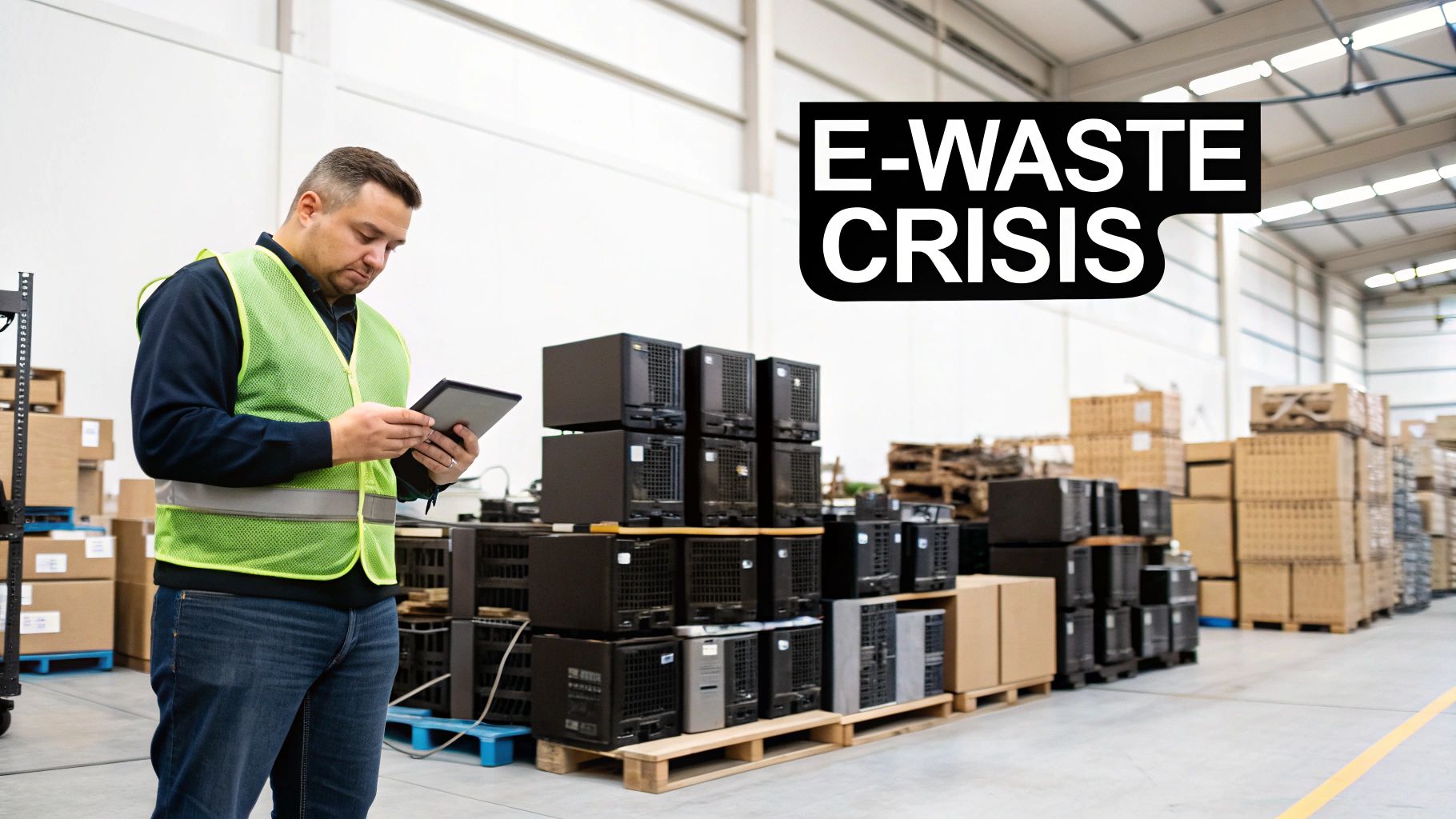
The relentless pace of technological advancement has a significant downside: a rapidly growing stream of electronic waste, or e-waste. Every server decommissioned, every laptop fleet upgraded, and every facility cleanout contributes to a global challenge of unprecedented scale. This isn't just old hardware; it's a complex mixture of valuable recoverable materials and hazardous substances that demand specialized handling.
The responsibility for IT managers and sustainability leaders is clear. First, how do you dispose of these assets without exposing sensitive corporate data? Second, how can this process align with your organization’s environmental, social, and governance (ESG) goals? The days of ignoring the issue are long gone. The sheer volume of e-waste is staggering and continues to outpace our collective capacity to manage it responsibly.
The Scale of the E-Waste Tidal Wave
The magnitude of the global e-waste problem is difficult to comprehend. To provide a clearer picture, let's examine the data.
The Global E-Waste Snapshot
This table outlines key figures from 2022, offering a clear perspective on the scale of the e-waste crisis and why decisive corporate action is essential.
| Metric | Figure (2022 Data) | Implication for Businesses |
|---|---|---|
| Total E-Waste Generated | 62 million tonnes | Your retired IT assets are part of a massive global stream requiring responsible management and a compliant ITAD partner. |
| Growth Since 2010 | More than doubled | The problem is accelerating, making proactive IT asset disposition (ITAD) policies more critical than ever for risk mitigation. |
| Formal Recycling Rate | Only 22.3% | The vast majority of e-waste is not handled through certified channels, creating significant environmental and data security risks. |
These figures paint a stark picture. Businesses are generating e-waste at an unprecedented rate, yet global recycling infrastructure is struggling to keep pace. This gap means millions of tons of electronics are disposed of improperly, leading to severe consequences for both the environment and corporate data security.
For every five electronic items discarded globally, four are not entering a formal, safe recycling system. This represents a significant loss of valuable resources and a major threat to environmental and human health.
Partnering with a dedicated social enterprise like Reworx Recycling provides a powerful, responsible solution. We help your business transform this challenge into an opportunity, converting your retired assets into community value while ensuring every device is disposed of securely and ethically. You can learn more about the environmental impact of electronic waste and understand why a proactive strategy is indispensable for any modern organization.
Navigating Global E-Waste Regulations
Understanding the web of global e-waste regulations can be daunting for any business, especially those with a national or international footprint. Compliance is not just about following rules; it's about avoiding significant legal, financial, and reputational penalties. The regulatory landscape is a complex patchwork of national laws, state mandates, and international treaties, each with specific requirements for IT equipment disposal.
This regulatory pressure has fueled a robust market for responsible recycling services. The global e-waste recycling market is projected to reach an estimated USD 80.43 billion by 2025. North America is a key driver, thanks to stringent laws like the Resource Conservation and Recovery Act (RCRA) and a well-developed recycling infrastructure. You can explore the data on the growth of the e-waste recycling market to see how these regulations are shaping the industry.
Key International and US Frameworks
To operate compliantly, businesses must be aware of several key legislative frameworks that govern the end-of-life management of electronics. These regulations set the standards for everything from product design to the transboundary movement of hazardous materials.
A few of the most important regulations include:
-
The Basel Convention: This international treaty is fundamental for global trade. It regulates the movement of hazardous waste between nations, specifically to prevent "toxic trade"—the dumping of e-waste from developed nations into developing countries ill-equipped to handle it safely. For any business involved in global electronic recycling, this convention dictates shipping protocols, destinations, and required documentation.
-
Europe's WEEE Directive: The Waste Electrical and Electronic Equipment (WEEE) Directive is a cornerstone of European environmental policy. It operates on the principle of Extended Producer Responsibility (EPR), making manufacturers financially responsible for the collection and recycling of their products. This incentivizes designing for sustainability from the very beginning.
-
US Resource Conservation and Recovery Act (RCRA): In the United States, RCRA is the primary federal law governing the management of solid and hazardous waste. Because e-waste often contains hazardous materials like lead from CRT monitors or mercury from LCD screens, its disposal is subject to strict federal regulations. Non-compliance can result in substantial fines.
Think of these regulations as a global compliance net. One misstep in one country can send ripples through your entire supply chain, hitting your brand reputation and your bottom line.
Why Compliance Demands an Expert Partnership
Given the complexity and variability of these laws, attempting to manage global electronic recycling in-house is a significant risk. The most reliable way to ensure compliance is to partner with a certified recycler. Certifications like R2 (Responsible Recycling) and e-Stewards are not merely logos; they are verifiable proof that a partner adheres to the highest industry standards for environmental protection, data security, and worker safety. These certifications guarantee that your IT disposal practices align with global best practices and legal requirements.
Working with a certified expert like Reworx Recycling removes the regulatory guesswork. We navigate these intricate frameworks daily, ensuring your retired assets are managed in full compliance with all applicable laws, from local ordinances to international treaties. To better understand what these certifications mean for your business, review our guide on essential e-waste certification standards.
By engaging a knowledgeable and certified partner, you transform a potential corporate liability into a clear demonstration of responsible governance. You gain the peace of mind that comes from knowing your IT asset disposition strategy is not only compliant but also ethically and environmentally sound.
The Hidden Dangers of Improper E-Waste Handling
What truly happens to your old electronics after they leave your facility? This is a critical question for every IT manager and sustainability leader. Without a certified partner, there is a significant risk that your retired assets could enter a dangerous and unregulated informal recycling sector.
This shadow economy is characterized by hazardous practices. In many developing nations, workers—often including children—dismantle electronics without protective equipment. They employ primitive methods like open-air burning and acid baths to extract small quantities of valuable metals like gold and copper. In doing so, they release a toxic cocktail of lead, mercury, and brominated flame retardants directly into the air, soil, and water.
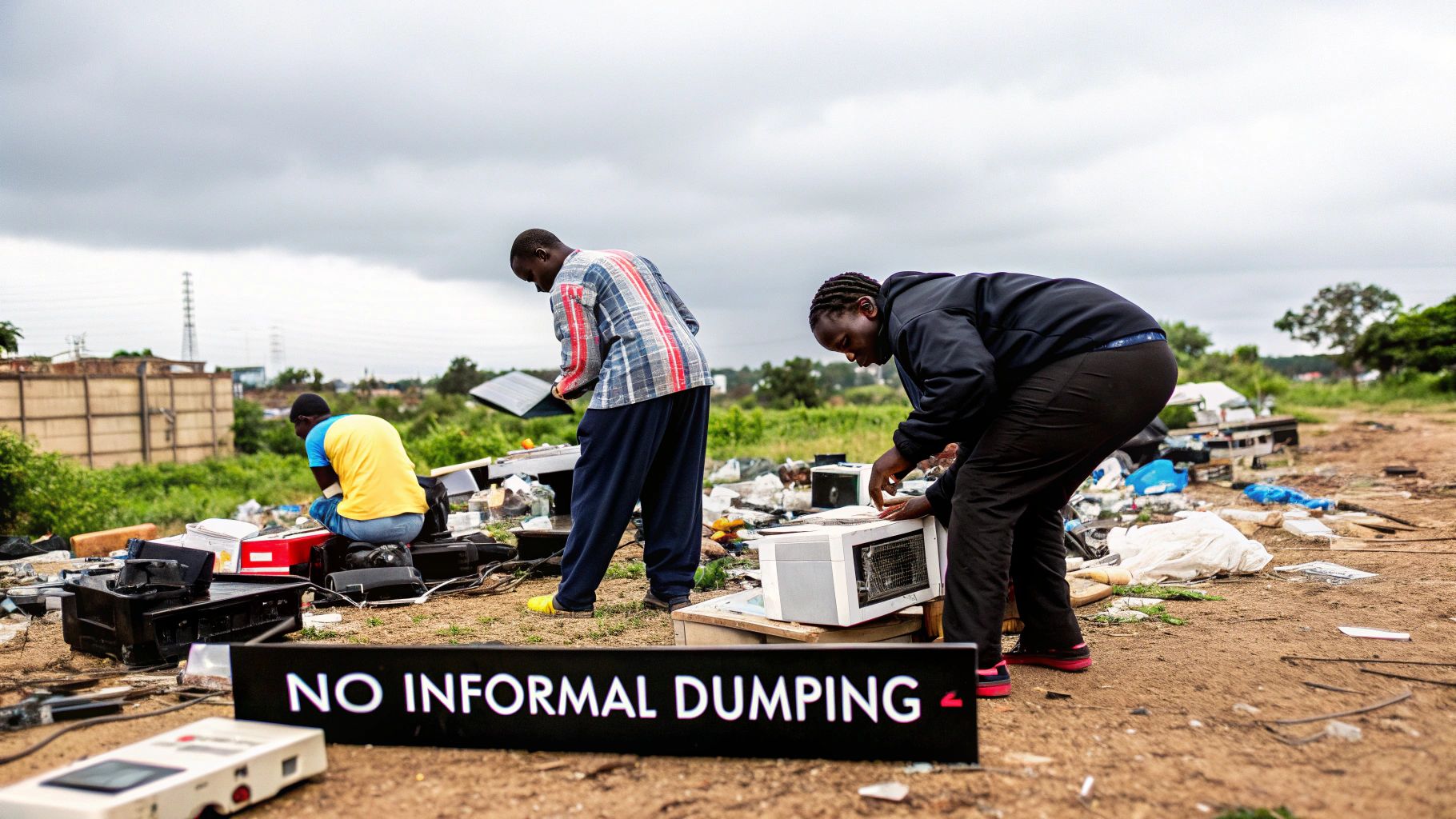
This leads to devastating public health crises and severe environmental degradation, transforming once-viable land and water sources into toxic hazards. The scale of this unaccounted-for e-waste is alarming.
A shocking 82.6% of the world's e-waste is not processed through formally documented channels. This means a colossal 34.1 million metric tons are handled informally, posing immense risks from toxic exposure and unsecured data.
The Business Risks of the Informal Sector
The consequences of the informal e-waste trade extend far beyond environmental harm—they create direct and substantial risks for the businesses whose equipment ends up there. When your company's assets fall into the wrong hands, the fallout can be immediate and severe.
Two major threats stand out:
-
Massive Data Breach Vulnerabilities: Those retired hard drives, servers, and company smartphones are repositories of sensitive information. Without proper data sanitization, they can contain everything from customer data and financial records to valuable intellectual property. Informal handlers have no protocols for secure data destruction, leaving your information exposed and easily recoverable.
-
Severe Reputational Damage: Imagine a news report tracing a toxic e-waste dump in another country back to electronics bearing your company's asset tags. The damage to your brand’s reputation could be catastrophic, undermining years of work building customer trust and a positive public image.
To avoid these dangers, organizations need a systematic risk management process to identify, analyze, and mitigate these threats. For a deeper analysis of the specific liabilities, you can explore our guide on the environmental and legal impacts of improper commercial e-waste disposal.
Neutralizing Threats with Certified Disposal
Choosing a transparent, certified recycling partner is the only way to completely neutralize these threats. A reputable ITAD provider offers an audited, secure chain of custody that guarantees your assets are handled responsibly from the moment they leave your control.
This is where a dedicated partner like Reworx Recycling becomes essential. Our certified processes ensure every single device is managed with the highest standards of security and environmental care.
Here’s how we protect your business:
- Secure Data Destruction: We provide certified data destruction services, including hard drive shredding, that render all information completely unrecoverable, eliminating the risk of a data breach.
- Audited Product Destruction: For proprietary equipment or branded materials, our product destruction services ensure they cannot be resold or re-enter the market, protecting your brand integrity.
- Transparent Reporting: We deliver detailed documentation and certificates of destruction, providing you with a clear, auditable trail that proves your compliance and commitment to responsible global electronic recycling.
By partnering with Reworx Recycling, you are not just shielding your business from legal and reputational risks. You are actively contributing to a safer, more sustainable solution and turning a potential liability into a clear statement of corporate responsibility.
IT Asset Disposition (ITAD) as a Strategic Advantage
It’s time to shift perspective. Instead of viewing retired electronics as a liability—a collection of obsolete equipment taking up valuable space—consider them a source of untapped value. This is where IT Asset Disposition (ITAD) transforms a logistical burden into a strategic advantage for your organization.
ITAD is far more than simple recycling. It is a comprehensive program for managing the entire end-of-life journey of your IT assets, from initial decommissioning and secure transport to certified data sanitization, asset remarketing, and, finally, responsible recycling. A well-executed ITAD strategy doesn't just clear out old equipment; it actively recovers financial value, safeguards your most sensitive data, and reinforces your brand’s commitment to sustainability.
The Core Components of a Modern ITAD Program
A premier ITAD program is built on several key pillars that work in concert to maximize value and mitigate risk. Without these, you are left with a fragmented approach that can create dangerous security gaps and leave money on the table.
A truly comprehensive program must include:
- Secure Logistics and Chain of Custody: From the moment an asset leaves your facility, it must be tracked. Secure, GPS-enabled transportation and a meticulously documented chain of custody ensure nothing is lost or stolen, protecting both the physical hardware and the invaluable data it contains.
- Certified Data Destruction: This is non-negotiable. Any legitimate ITAD partner must provide certified data destruction, whether through physical shredding or cryptographic erasure that meets strict standards like DoD 5220.22-M and NIST 800-88. This provides an auditable, ironclad record that all sensitive information has been permanently eliminated.
- Asset Refurbishment and Remarketing: Not all retired equipment is "waste." Many devices, from laptops and servers to specialized medical and laboratory equipment, retain significant residual value. An effective ITAD strategy identifies these assets, professionally refurbishes them, and resells them through established channels to generate a financial return for your company.
A truly strategic ITAD program shifts the entire conversation from cost mitigation to value creation. By identifying and reselling viable assets, businesses can often offset—or even profit from—their electronics disposal process, turning an expense into a revenue stream.
Comparing Standard Recycling with Strategic ITAD
To fully appreciate the difference, it helps to compare the two approaches side-by-side. Basic recycling often only satisfies minimum compliance, while a strategic ITAD program delivers a comprehensive solution with far greater benefits.
| Feature | Standard Electronics Recycling | Strategic ITAD Program (Reworx Model) |
|---|---|---|
| Primary Goal | Dispose of e-waste and avoid landfills. | Maximize value recovery, ensure data security, and create social impact. |
| Data Security | Often limited; may not offer certified or audited data destruction. | Certified data destruction is a core, non-negotiable component with full documentation. |
| Value Recovery | Minimal to none. Assets are typically shredded for raw materials. | Focuses on refurbishment and resale of viable assets to generate financial returns. |
| Reporting | Basic recycling receipts. | Detailed, asset-level reporting, including certificates of data destruction and impact metrics. |
| Social Impact | Generally none. | Donation-based model channels viable equipment to communities, boosting CSR. |
This table provides a high-level overview. For a more in-depth exploration of how these processes function on a global scale, you can review our comprehensive guide to global IT asset disposition (ITAD).
The Reworx Advantage: Adding Social Impact
Partnering with a social enterprise like Reworx Recycling adds a powerful and unique layer to your ITAD strategy. We integrate all the best practices of a traditional ITAD program—secure logistics, certified data destruction, and value recovery—with a mission-driven focus on community empowerment.
Our donation-based recycling model transforms your retired corporate assets into vital resources. Viable computers, laptops, and other IT equipment are professionally refurbished and provided to nonprofit organizations, schools, and underserved individuals. This approach directly supports digital inclusion, fuels workforce development programs, and helps bridge the technology gap in our communities.
When you choose Reworx Recycling, your IT asset disposition program becomes more than a smart business decision. It becomes a cornerstone of your Corporate Social Responsibility (CSR) efforts, creating a measurable, positive impact that resonates with your employees, customers, and stakeholders. You don't just solve a logistical problem; you become a partner in building a more equitable and sustainable future.
Embracing a Circular Economy with Social Enterprise Recycling
What if your company's retired technology wasn't actually "waste"? For decades, the prevailing industrial model has been linear: take, make, and dispose. This approach is inherently wasteful, built on the flawed assumption of infinite resources and negligible disposal consequences. We now understand this is unsustainable and a primary driver of our significant environmental challenges.
Fortunately, a smarter, more sustainable paradigm is gaining global traction: the circular economy.
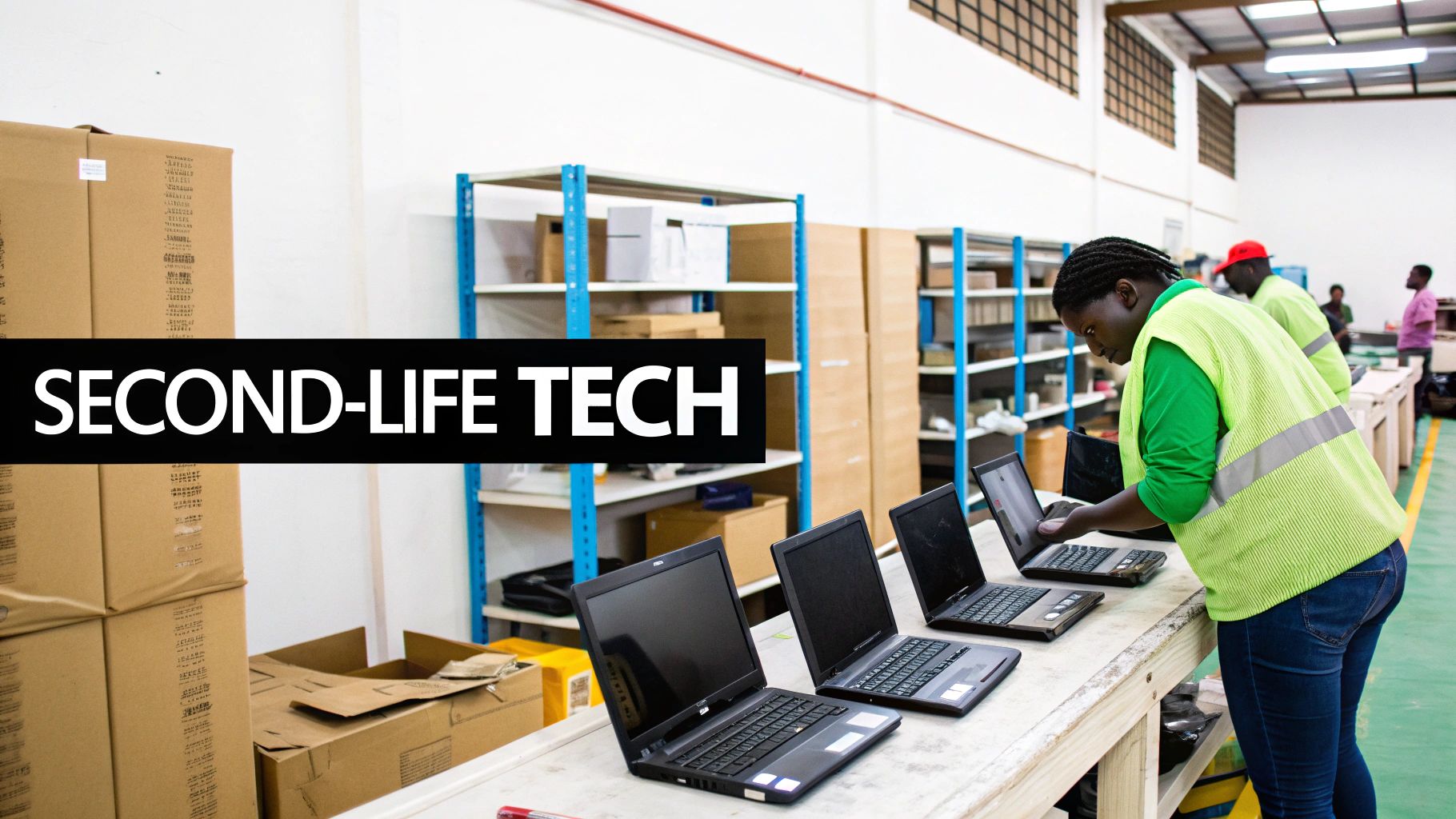
Instead of a one-way path to the landfill, this model creates a closed loop. It is designed to keep products, components, and materials in use for as long as possible. When a device is retired, its journey is not over. It is recovered, refurbished, reused, or recycled into valuable raw materials that can begin the cycle anew.
Applying Circular Principles to Electronics
Electronics are a prime example of where the circular economy can have a profound impact. A single computer contains a wealth of materials, from precious metals like gold and copper to aluminum and plastics. In 2022 alone, the raw materials locked within the world's e-waste were valued at an astonishing $91 billion. Yet, the vast majority of that value is discarded.
A circular approach to IT hardware focuses on extending the life of every device through several key actions:
- Repair and Maintenance: Fixing devices when they malfunction instead of immediately replacing them.
- Refurbishment: Professionally restoring functional equipment to like-new condition for resale or donation.
- Remanufacturing: Rebuilding products using a combination of reused, repaired, and new parts to create a fully functional device.
- Material Recovery: When a device reaches its true end-of-life, its raw materials are safely extracted and recycled to manufacture new products.
By adopting these practices, businesses can drastically reduce their environmental footprint, conserve natural resources, and often unlock hidden financial value from assets they once considered worthless.
"In a circular economy, e-waste is seen as a valuable resource that can be recovered and recycled… By recycling e-waste in a circular economy, we can reduce the need for mining and other forms of resource extraction, which can help to conserve the environment and reduce pollution."
This requires a fundamental shift in mindset. Instead of focusing on simple disposal, the goal becomes preserving value and regenerating resources. This is the core principle of responsible global electronic recycling.
How Social Enterprises Magnify Circular Impact
This is where partnering with a social enterprise like Reworx Recycling elevates the benefits of the circular economy. A conventional recycler might only shred devices for raw material recovery. Our model, however, always prioritizes the highest-value actions first—reuse and refurbishment. This is the foundation of our donation-based recycling program.
Our entire mission is built on circular principles. We don't see your old laptops, servers, or medical equipment as scrap; we see them as opportunities to empower communities. By giving this equipment a second life, we create a powerful dual benefit for our corporate partners.
The Dual Benefit for Your Business
When you partner with Reworx Recycling, you do much more than responsibly dispose of e-waste. You engage with a model that delivers real, measurable results for both your sustainability targets and your social responsibility goals.
- Achieving Sustainability Goals: By donating your equipment, you become an active participant in the circular economy. You divert tons of electronics from landfills, conserve the immense energy and resources required to manufacture new devices, and receive detailed reports documenting your positive environmental impact.
- Boosting Your CSR Profile: Your donated assets become critical tools for nonprofits, schools, and workforce development programs. This directly supports digital inclusion and empowers underserved communities, creating a powerful story of social good that strengthens your brand and resonates with employees and customers.
Choosing Reworx Recycling transforms IT disposal from a tactical task into a strategic initiative. You fulfill your environmental obligations while making a tangible difference, turning a potential liability into a powerful statement of corporate citizenship.
Building Your Responsible E-Waste Management Action Plan
Understanding the global e-waste challenge is the first step; taking action is where meaningful change happens. For IT managers and sustainability leaders, the next move is to translate knowledge into a concrete strategy that protects your organization and upholds your corporate values. This roadmap provides a clear, actionable framework for building an effective e-waste management program.
A robust plan is not merely about disposal. It's a proactive system that secures your data, ensures regulatory compliance, and aligns with your company’s core principles. By following a structured approach, you can convert a significant liability into a strategic asset.
Step 1: Conduct a Thorough IT Asset Audit
You cannot manage what you do not measure. The foundational step is to create a comprehensive inventory of every piece of electronic equipment your organization owns. An internal IT asset audit provides a complete picture of everything currently in use—or collecting dust—across all departments and locations.
This audit must be detailed, documenting key information for each asset:
- Asset Type and Age: Categorize everything specifically, from servers and laptops to specialized medical or laboratory equipment.
- Condition: Assess whether the asset is functional, repairable, or at its end-of-life.
- Data Sensitivity: Flag every device containing sensitive corporate, customer, or employee data. This is a critical step for risk management.
- Location: Document the physical location of each asset, which is especially important for multi-site organizations or those planning a facility cleanout.
This audit provides the data necessary to make informed decisions regarding data destruction, refurbishment potential, and recycling priorities. For additional guidance, resources like A Guide on How to Reduce Electronic Waste offer practical tips to support your efforts.
Step 2: Establish a Formal Disposal Policy
With your inventory complete, the next step is to formalize your procedures. A written IT equipment disposal policy eliminates ambiguity and ensures consistent, responsible practices across the organization. This document serves as your company's official commitment to ethical e-waste management.
Your policy should clearly define:
- Approved Disposal Channels: Mandate that all e-waste must be handled exclusively by a certified partner, such as Reworx Recycling.
- Data Destruction Protocols: Require certified data destruction for any data-bearing device before it leaves your premises.
- Roles and Responsibilities: Designate the specific departments or individuals responsible for managing retired assets.
- Documentation Requirements: Require certificates of destruction and recycling to create a verifiable audit trail for compliance purposes.
Step 3: Vet and Select a Certified Recycling Partner
This is arguably the most critical decision in the process. Not all recyclers operate with the same standards. You must select a partner whose certifications, processes, and values align with your own. This is the only way to guarantee your e-waste is managed legally, securely, and ethically.
Look for a partner that provides:
- Industry Certifications: Credentials like R2 or e-Stewards are the gold standard and serve as non-negotiable proof of responsible practices.
- Secure Chain of Custody: A documented process that tracks your assets from your facility to their final disposition.
- Certified Data Destruction: Verifiable proof that your sensitive information has been permanently destroyed.
- Transparent Reporting: Detailed reports that document the disposition of your assets and quantify the environmental impact.
Partnering with Reworx Recycling streamlines this final step. Our social enterprise model not only meets these critical requirements but also transforms your retired assets into community benefits through our corporate donation programs. We simplify the process of scheduling a facility cleanout or office cleanout, providing the assurance that comes from a secure, sustainable, and socially impactful service. For a deeper dive, explore our guide on optimizing your company's e-waste recycling strategy.
Your Questions About Global E-Waste Recycling, Answered
When planning for IT equipment disposal, many questions arise. This is perfectly normal. Most businesses we work with share common concerns about data security, logistics, and ensuring they are making the right choices. Let's address some of the most frequent questions we hear.
A responsible e-waste plan boils down to three key steps: a comprehensive Audit, a formal Policy, and the selection of a certified Partner.
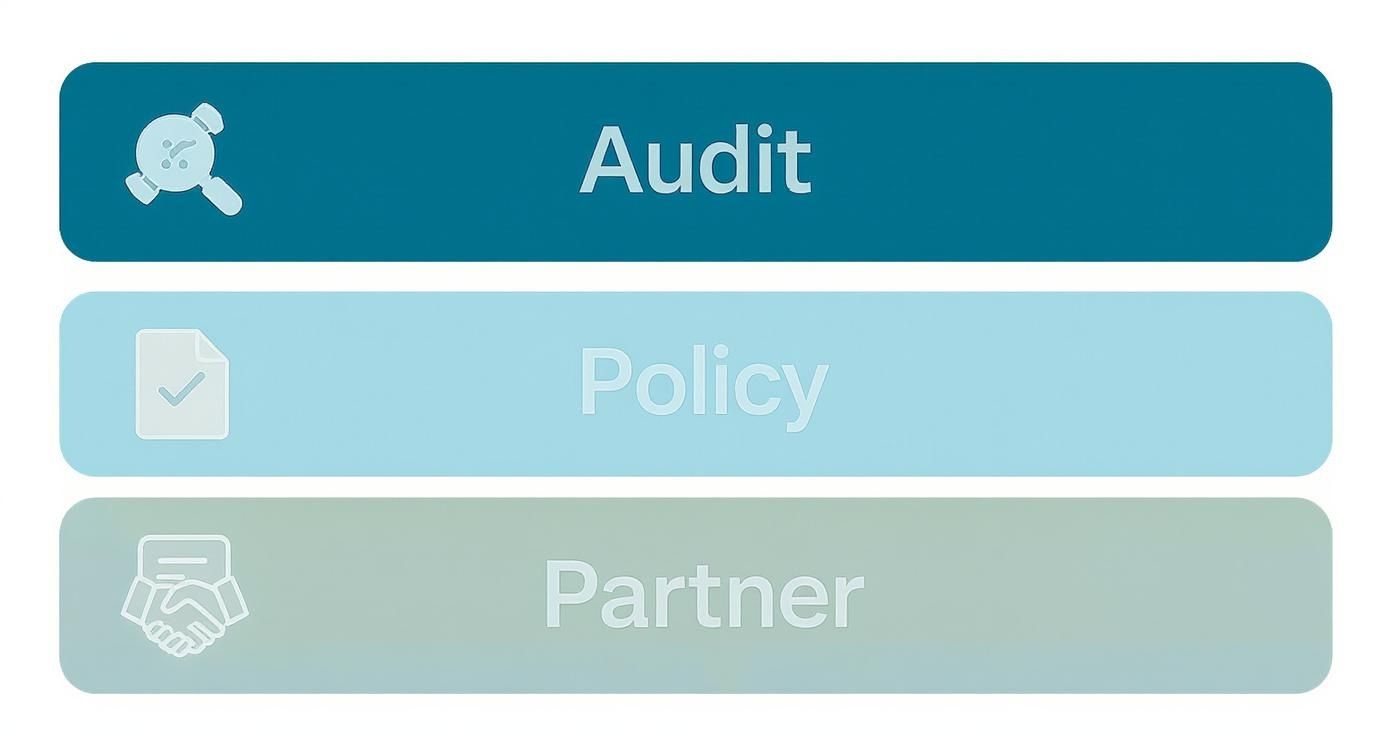
Following this simple workflow transforms a complex task into a structured, manageable process. It ensures you are not only compliant but also secure, and that you are extracting the maximum strategic value from your retired technology.
Is My Company Data Secure During Recycling?
Yes, provided you choose the right partner. At Reworx Recycling, secure data destruction is not an optional service; it is a fundamental and non-negotiable component of our process.
We offer both on-site and off-site hard drive shredding that adheres to the strictest industry standards. Upon completion, we provide a Certificate of Destruction, giving you a clear audit trail and absolute peace of mind. This is the definitive way to eliminate the risk of a data breach from legacy equipment.
What Is The Difference Between Recycling And ITAD?
Think of it this way: standard recycling is primarily a destructive process. It focuses on dismantling old devices to recover raw materials like plastic, metal, and glass.
IT Asset Disposition (ITAD), in contrast, is a comprehensive, value-focused strategy. It includes secure logistics, guaranteed data destruction, and, crucially, a process to identify assets that still hold functional value. Viable equipment can be refurbished and remarketed. ITAD shifts the perspective from e-waste as a disposal cost to a potential source of revenue, embodying a core principle of the circular economy.
Why Partner With A Social Enterprise Like Reworx?
Working with a social enterprise like ours adds a powerful dimension of positive impact to your sustainability initiatives. It’s about more than just recycling; it’s about community empowerment.
Our donation-based recycling model ensures that functional equipment—such as laptops and computers—is refurbished and redeployed to support nonprofits, schools, and workforce development programs. This approach elevates your corporate social responsibility efforts by transforming your retired assets into tools for digital inclusion. You are not just mitigating a negative (landfill waste); you are creating a tangible, measurable positive social outcome.
Ready to transform your retired IT assets into a force for good? Partner with Reworx Recycling to build a secure, compliant, and socially impactful electronics disposal program. Explore our recycling services and schedule your pickup today!