
Digital transformation drives business growth, but it casts a long shadow: a mounting crisis of electronic waste, or e-waste. When outdated technology is improperly discarded, toxic materials can seep into our ecosystems, while valuable, finite resources are lost forever in landfills. For modern businesses, managing IT assets responsibly is no longer an optional green initiative; it's a strategic imperative for risk management, corporate social responsibility, and brand integrity.
The Growing Challenge of Corporate E-Waste
Innovation is essential for a competitive edge, but the rapid cycle of technology upgrades comes with a significant environmental cost. Every new server, laptop, and piece of medical equipment eventually reaches its end-of-life, contributing to a global torrent of discarded electronics. This isn’t just about overflowing landfills—it's a complex environmental hazard with serious consequences for planetary health and resource stability.
The scale of the problem is staggering and accelerating. In 2022, the world generated a colossal 62 million metric tonnes of e-waste, marking an 82% increase from 2010. Projections show this figure will climb to 82 million tonnes by 2030, a clear signal that our consumption of new technology is far outpacing our capacity to manage the old. To understand the gravity of these numbers, you can explore why e-waste is one of the fastest-growing waste streams.
Why E-Waste Is a Unique Corporate Threat
Unlike standard office waste, electronic devices are a complex mix of both hazardous materials and valuable commodities. This duality makes proper disposal a critical responsibility and, if mishandled, a significant missed opportunity. For business owners and IT managers, understanding both sides of this equation is the first step toward developing a robust, sustainable IT asset disposition (ITAD) strategy.
Here is a summary of the primary environmental impacts of electronic waste:
- Toxic Contamination: Devices contain hazardous substances like lead, mercury, and cadmium. In landfills, these heavy metals can leach into the soil and contaminate groundwater supplies, posing a direct threat to ecosystems and human health.
- Resource Depletion: E-waste is also a rich source of precious metals, including gold, silver, and copper. Discarding these devices means losing these finite resources, which increases the demand for environmentally destructive mining operations to extract new materials.
- Air Pollution: When e-waste is improperly processed—for instance, burned in open pits to recover metals—it releases toxic dioxins and other hazardous pollutants directly into the atmosphere, contributing to air quality degradation.
The core challenge for corporate sustainability leaders and IT managers is clear: how do we manage our end-of-life technology in a way that protects the environment, ensures secure data destruction, and aligns with our corporate social responsibility goals?
This is more than an operational checklist item; it is an opportunity to transform a potential liability into a positive outcome. By partnering with a dedicated social enterprise like Reworx Recycling, businesses can ensure their old equipment is handled ethically, converting potential waste into valuable resources for the community and the planet.
What Really Happens to Old Electronics?
When a company's outdated computers, servers, or laboratory equipment are discarded, their journey is often more perilous than most realize. Each device is a potential toxic time bomb, packed with hazardous materials that pose a direct threat to our environment and public health.
This is not an abstract problem but a tangible risk associated with every retired asset in your inventory. The internal components of a computer, medical device, or office machine contain a cocktail of harmful substances. This includes lead in circuit boards and older CRT monitors, mercury in switches and flat-screen displays, cadmium in rechargeable batteries, and brominated flame retardants (BFRs) in plastic casings.
When these items are dumped in a landfill, their toxic lifecycle begins.
From Landfill to Water Supply
The contamination process often starts underground. As rainwater percolates through a landfill, it dissolves these hazardous chemicals, creating a toxic liquid known as leachate. This poisonous sludge can then migrate through the soil and into underground aquifers—the very sources that supply drinking water to communities.
A single discarded server or a pallet of old laptops contains enough heavy metals to contaminate a significant volume of groundwater. This is not a short-term issue; the pollution can persist for decades, creating long-term health risks for both humans and local ecosystems. The environmental impact of electronic waste rapidly escalates into a public health crisis once these toxins enter our water systems.
The infographic below illustrates the rapid growth of the e-waste problem, with projections showing a massive increase from 2010 to 2030.
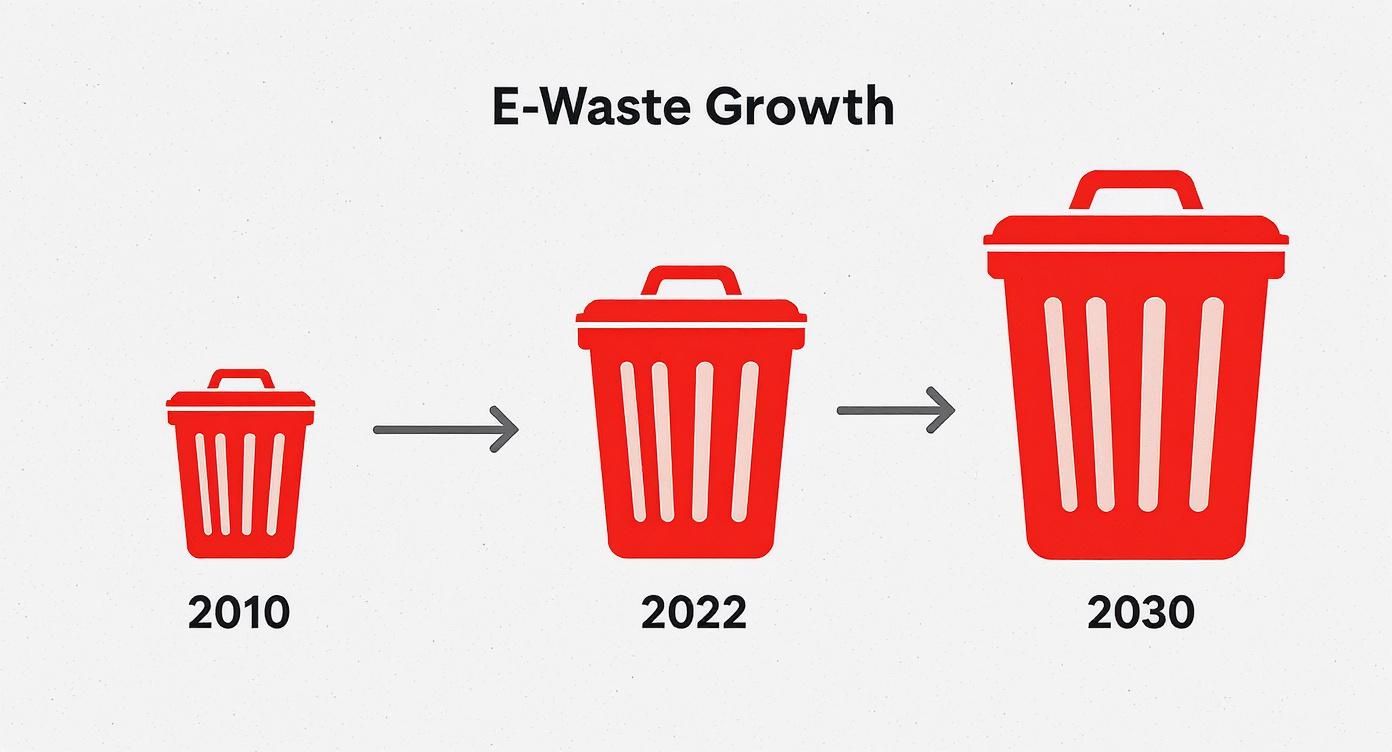
This trend underscores a critical point: the volume of potential toxic time bombs entering our landfills is set to explode, highlighting an urgent need for responsible disposal solutions like donation-based recycling and certified IT equipment disposal.
Air Pollution from Improper Disposal
The danger is not confined to our soil and water. In many parts of the world, e-waste is burned in open-air pits in an attempt to recover small amounts of valuable metals like copper and gold. This crude and dangerous method releases a cloud of highly toxic chemicals and carcinogens directly into the atmosphere.
When plastic casings and circuit boards treated with brominated flame retardants are incinerated, they produce dioxins and furans. These are among the most toxic human-made substances known and have been linked to severe health problems, including cancer, reproductive issues, and developmental disorders.
This airborne pollution does not remain localized. It can travel long distances, affecting communities far from the original burn site. For businesses, this creates a significant reputational and ethical liability. An office cleanout or product destruction project that results in equipment being improperly burned directly links a company’s brand to global air contamination. The entire journey of a device must be managed correctly, a topic we cover in our guide on the lifecycle of IT equipment from acquisition to recycling.
Choosing a certified partner for IT equipment disposal is the only way to defuse these toxic time bombs. At Reworx Recycling, we ensure every component is managed safely and responsibly. We prioritize refurbishment to extend the life of devices, and for equipment that has reached its true end-of-life, we utilize certified processes to dismantle it without harming the environment. This approach prevents harmful chemicals from ever entering our land, water, or air, protecting both the planet and your company's reputation.
Mapping the Global E-Waste Footprint
To fully grasp the environmental impact of e-waste, it is essential to zoom out from local landfills and view the problem on a global scale. The sheer volume of discarded electronics is a testament to modern consumption, but the burden of this waste is not shared equally. For any business leader, understanding this global dynamic is crucial for developing responsible corporate policies.
It is well-documented that corporate consumption, particularly in developed nations, is a major driver of this challenge. The constant demand for the latest technology and rapid IT refresh cycles in North America and Europe generate a disproportionately large amount of e-waste per capita. This creates a significant downstream effect that extends far beyond national borders.
The Uneven Distribution of E-Waste
The global e-waste landscape reveals a stark divide between regions. The type and quantity of discarded electronics vary dramatically from one continent to another, painting a complex picture of consumption and disposal. Asia produces the largest total volume at approximately 24.9 million tonnes annually, largely due to its massive population.
However, a closer look reveals a different story. Europe has a much higher per capita average of 16.2 kg, which highlights the intense consumption patterns of its developed economies. You can explore more detailed regional data to see how e-waste statistics break down globally.
This imbalance underscores a critical point for corporate social responsibility (CSR): decisions made in a corporate headquarters in one country can have profound environmental consequences on the other side of the planet.
The Unethical Export of a Toxic Problem
A darker side to the global e-waste narrative is the unethical practice of exporting discarded electronics from wealthy nations to developing countries with lax environmental regulations. Often disguised as donations or sales of "used goods," vast quantities of non-functional and hazardous IT equipment end up in locations ill-equipped to handle them safely.
This has led to the rise of dangerous, informal recycling economies where workers, including children, dismantle devices without protective gear. They often resort to burning circuit boards and using acid baths to extract trace amounts of valuable metals, exposing themselves and their communities to a cocktail of toxic chemicals.
This practice effectively outsources the environmental and health risks of e-waste. It allows companies in developed nations to absolve themselves of a problem they created, while communities elsewhere bear the cost with contaminated water, polluted air, and severe health crises.
For any business genuinely committed to ethical operations, this reality makes a transparent and verifiable chain of custody for all retired assets an absolute necessity.
Partnering with a certified electronics recycler like Reworx Recycling ensures that your old equipment will never become part of this harmful global trade. We guarantee that every item is processed responsibly, whether it's refurbished for local community benefit or recycled using certified, environmentally sound methods. This commitment to ethical IT equipment disposal is fundamental to reducing your company's global environmental impact. For more insights on future trends, check out our guide on the future of e-waste trends and innovations in recycling.
Turning Electronic Waste into Valuable Resources
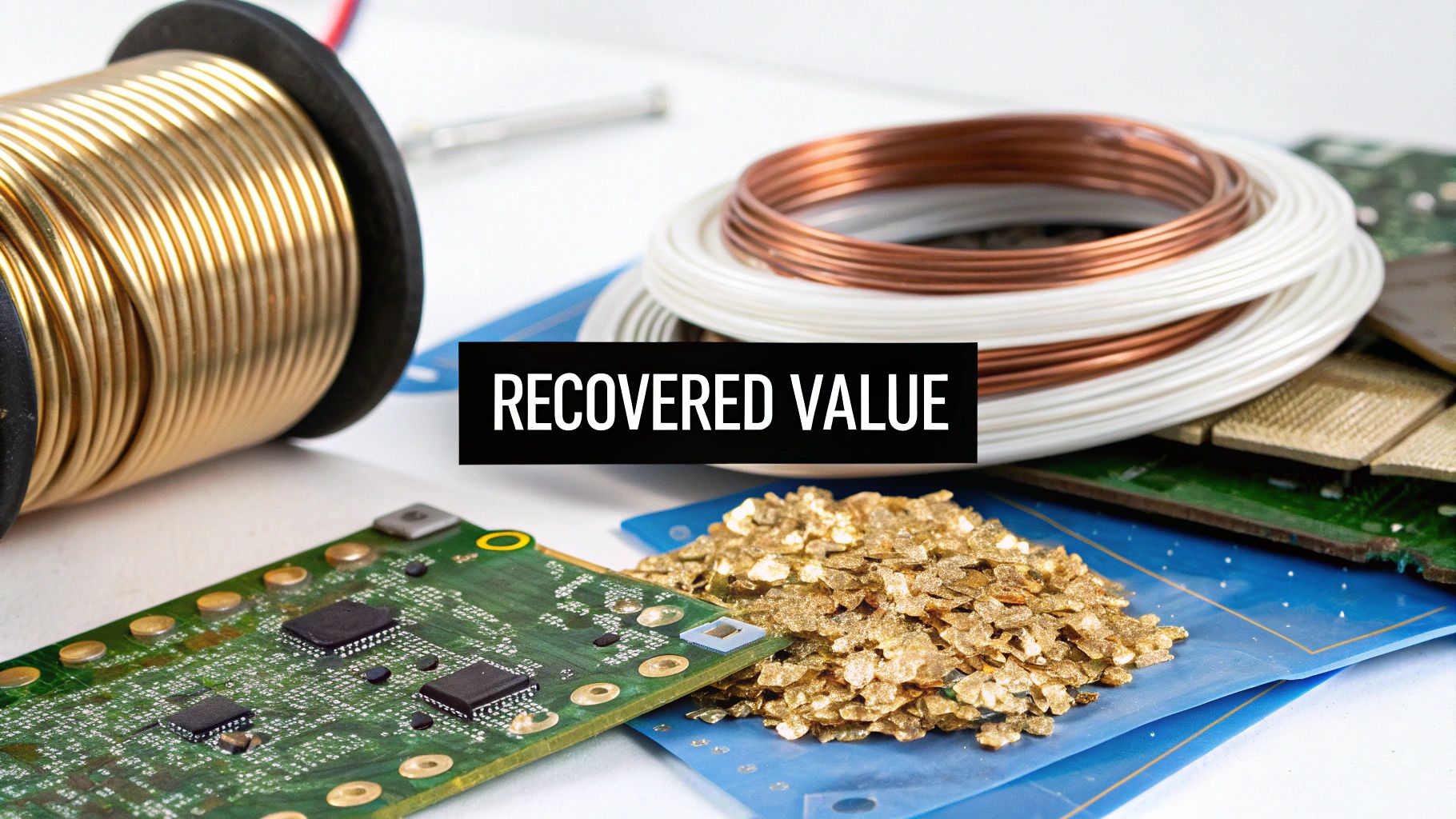
The environmental impact of electronic waste extends beyond pollution; it also represents a massive loss of valuable and finite resources. Instead of viewing old IT equipment as trash, businesses should see it as a rich "urban mine" filled with materials that can be recovered and repurposed.
This shift in perspective fundamentally changes the conversation around IT asset disposition (ITAD).
Every retired server, laptop, and smartphone contains a surprising amount of precious metals. This includes gold, silver, palladium, copper, and rare earth elements—all critical components for manufacturing new electronics. When these devices are landfilled, these commodities are lost forever, forcing manufacturers to rely on destructive virgin mining.
The True Cost of Virgin Mining
Extracting raw materials from the earth is an intensive and damaging process. It leads to habitat destruction, consumes vast quantities of water, and generates significant carbon emissions from heavy machinery. Compare this to recovering the same materials from electronics that are already in circulation.
- Gold Recovery: Recycling one metric ton of circuit boards can yield 40 to 800 times more gold than mining the same amount of ore.
- Copper Conservation: You can recover 30 to 40 times more copper from recycled circuit boards than from an equivalent amount of raw ore.
- Reduced Carbon Footprint: Reclaiming metals through electronics recycling consumes a fraction of the energy required for virgin mining, significantly reducing greenhouse gas emissions.
By treating e-waste as a resource, sustainable ITAD becomes a sound business decision. The economic value locked within discarded electronics is substantial. Globally, the raw materials in e-waste are valued at over $60 billion annually—a staggering figure that underscores what we lose when we simply throw these items away.
Connecting ITAD to the Circular Economy
This resource-first approach aligns a company’s asset retirement plan directly with the principles of the circular economy. The goal is to transition from the traditional "take-make-dispose" model to a system where materials are continuously reused, refurbished, and recycled.
By participating in a certified recycling program, your business actively contributes to this circular flow. You are not just disposing of old equipment; you are feeding valuable raw materials back into the global supply chain, reducing reliance on environmentally harmful mining and preserving natural resources for future generations.
This change in mindset is vital for any organization committed to its environmental, social, and governance (ESG) goals. Choosing the right partner ensures that the potential value in your old assets is properly realized. It helps to see a breakdown of unlocking value after electronics recycling.
Much of the gold recovered is considered scrap, so understanding how much is scrap gold worth is key to appreciating the economic benefits. At Reworx Recycling, we specialize in converting this potential liability back into a valuable commodity. Our certified processes ensure maximum material recovery, helping your business close the loop and contribute to a more resource-efficient future. Through our donation-based social enterprise model, we transform your retired assets from potential waste into powerful tools for conservation and community benefit.
Building Your Corporate E-Waste Strategy
Understanding the environmental toll of e-waste is the first step, but taking decisive action is what truly matters. The next move is to transition from awareness to implementation by developing a comprehensive corporate e-waste strategy. This is not merely a disposal checklist; it is a holistic plan that minimizes your environmental footprint, enhances data security, and recovers potential value from retired assets.
A robust plan, often termed an IT Asset Disposition (ITAD) plan, provides a clear roadmap for every piece of technology your company retires. It establishes protocols for how assets are managed from the moment they are decommissioned to their final destination, whether that is donation, refurbishment, or secure recycling.
Key Components of a Successful ITAD Plan
A well-structured ITAD plan addresses several critical areas, safeguarding your business from environmental liabilities, financial penalties, and reputational damage. The objective is to create a seamless, defensible process for managing all end-of-life electronics.
Here are the essential elements of an effective plan:
- Clear Asset Retirement Policies: Define specific criteria for when technology is retired. This ensures consistency and prevents serviceable equipment from being discarded prematurely while flagging assets that may pose a security risk.
- Prioritization of Reuse and Refurbishment: The most sustainable action is to extend an asset's lifespan. Your strategy should always explore opportunities for donation or refurbishment before considering recycling.
- Secure Data Destruction Protocols: This is non-negotiable. Your plan must mandate certified data destruction for any device that has stored sensitive information. This is a crucial step to protect your company, customers, and employees from data breaches. You can explore our guide to implement an IT asset disposition strategy to delve deeper into this process.
By formalizing these steps, you transform asset disposal from a logistical challenge into a strategic advantage, significantly strengthening your ESG (Environmental, Social, and Governance) credentials.
Comparing Different Disposal Methods
When it is time to dispose of old IT assets, not all paths lead to the same outcome. Businesses have several options, each with its own set of advantages and disadvantages. Selecting the right one is essential for achieving your sustainability and security objectives.
To clarify the choices, let's compare the most common disposal methods side-by-side.
Comparing E-Waste Disposal Methods for Businesses
| Disposal Method | Environmental Impact | Data Security Risk | Value Recovery | Best For |
|---|---|---|---|---|
| Landfill/General Waste | Very High: Toxic leaching, resource loss. | Extreme: Data is fully exposed and easily stolen. | None: All potential value is permanently lost. | No one. This method is irresponsible and often illegal. |
| Local Recycler | Variable: May not be certified; risk of export. | High: Data destruction may not be verified. | Minimal: Focus is on scrap value, not reuse. | Quick, low-volume disposal of non-sensitive items. |
| ITAD Reseller | Moderate: Focus is on reselling high-value items. | Low to Moderate: Depends on their security standards. | High: Maximizes financial return on newer assets. | Companies with new, high-value equipment seeking financial ROI. |
| Reworx Recycling | Very Low: Zero-landfill, donation-focused. | Very Low: Certified, secure data destruction. | Social Value: ROI is in community impact & ESG. | Businesses focused on CSR, ESG, and total risk mitigation. |
As the comparison shows, a donation-based social enterprise model like Reworx Recycling offers a superior blend of environmental responsibility, data security, and positive community impact. This approach transforms a facility cleanout or data center decommissioning into a powerful demonstration of your company's commitment to corporate citizenship. As you develop your strategy, it is also beneficial to explore opportunities like the US EPA Grant Funding that can support sustainable initiatives.
Ultimately, choosing a partner like Reworx Recycling enhances your reputation, reduces your environmental footprint, and ensures your retired assets create social good instead of environmental harm.
How Reworx Recycling Creates a Positive Impact
Understanding the environmental impact of electronic waste is important, but taking decisive action is what drives change. At Reworx Recycling, we do more than offer advice; we provide a direct, impactful solution to the challenges of IT asset disposition, turning the complex task of managing retired technology into an opportunity for tangible environmental and social good.
Our unique donation-based social enterprise model is designed to give your retired IT equipment a second life. Instead of viewing old assets as waste, we see them as valuable resources. This approach allows your business to actively participate in the circular economy, transforming a potential liability into a powerful tool for community development.
Bridging the Digital Divide
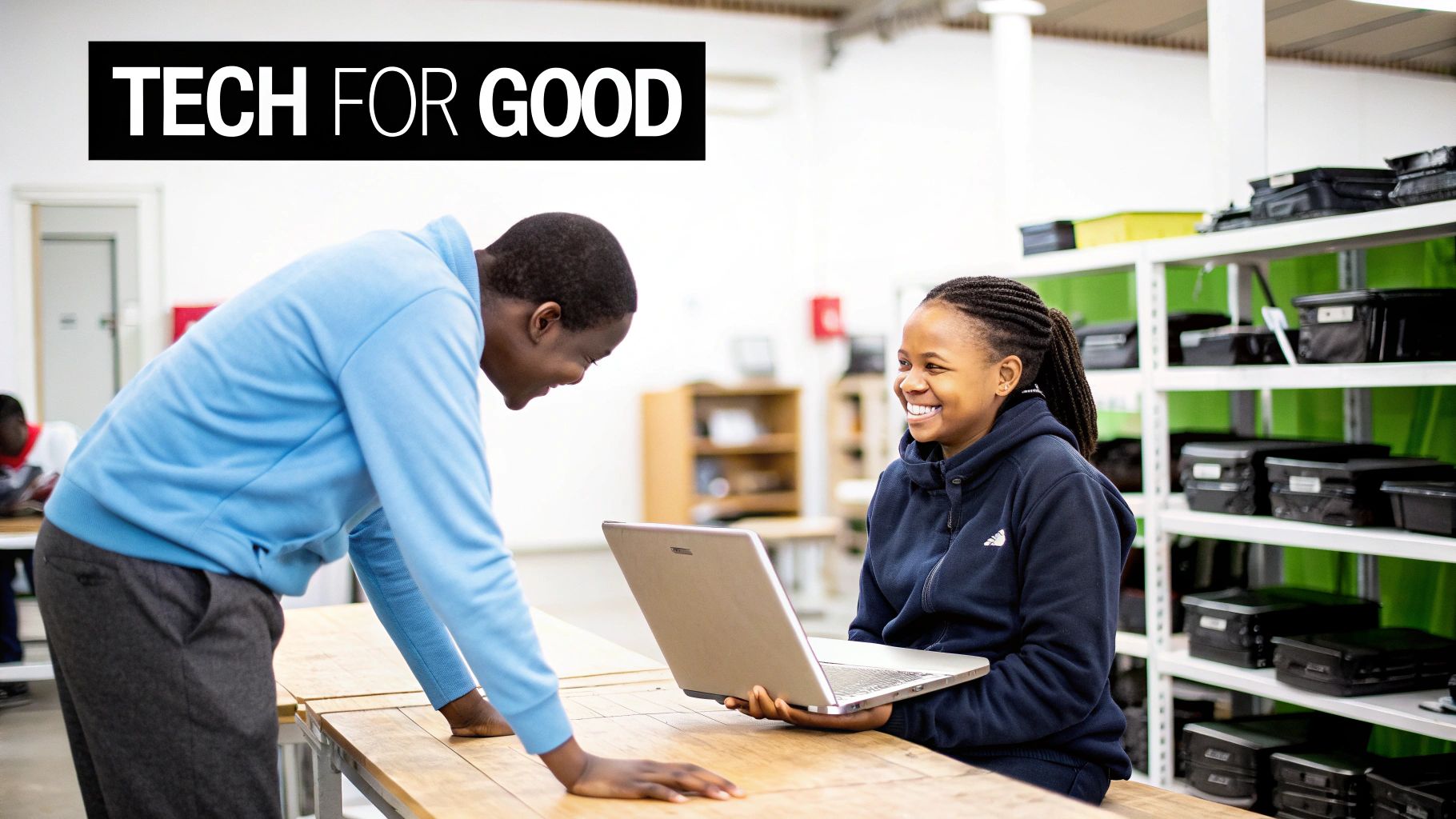
Many of the devices retired from corporate environments are still perfectly functional. We take usable IT equipment such as laptops, desktops, and tablets and meticulously refurbish them. These renewed devices are then donated directly to schools, non-profits, and underserved communities, helping to bridge the digital divide one piece of hardware at a time.
Your company’s retired technology can provide students with new learning tools, equip job seekers with the resources they need for training, and connect families to essential digital services. This process not only has a positive social impact but also extends the useful life of your assets and dramatically reduces their environmental footprint.
Choosing a donation-based model is more than a smart operational decision; it's a direct investment in a more sustainable and equitable future. Every device you donate helps foster new opportunities and reduce environmental strain.
Certified, Zero-Landfill Recycling
What about assets that are truly at the end of their lifecycle? For equipment that cannot be reused, our commitment to environmental protection is absolute. We adhere to a strict zero-landfill policy, which guarantees that no part of your equipment will ever contribute to soil or water contamination.
Our certified recycling process meets the highest industry and environmental standards. We carefully dismantle each device to recover valuable commodities like copper, aluminum, and precious metals, ensuring they can be reused in new manufacturing. This responsible approach keeps hazardous materials out of the ecosystem and conserves finite natural resources. We delve into our commitment in more detail in our article about Reworx Recycling's role in environmental sustainability.
The entire process is designed for simplicity and peace of mind. From scheduling a seamless office or facility cleanout to receiving your official certificate of secure data destruction, we provide a transparent and reliable service. When you partner with Reworx Recycling, your business is actively combating the environmental impact of e-waste while making a tangible difference in the community.
Your Top Corporate E-Waste Questions, Answered
When it comes to managing retired electronics, business leaders often have many questions. The landscape of IT asset disposition is filled with concerns about data security, logistics, and environmental regulations. Gaining clarity on the process is the first step toward making responsible and informed decisions.
This section provides clear, straightforward answers to the most common questions we hear from our corporate partners. Our goal is to equip you with the confidence to build an IT disposal strategy that is not only effective but also sustainable and socially responsible.
Is Electronics Recycling Really Secure?
This is typically the primary concern for any IT manager or business owner, and rightly so. The answer is yes—but only when working with a certified recycler. A trusted partner like Reworx Recycling provides certified data destruction, guaranteeing that all sensitive information is permanently and verifiably erased before any device proceeds to the next stage.
This is not just a recommendation; it is a critical risk mitigation measure. Simply deleting files is insufficient. Professional data destruction involves either physically shredding the hardware or using advanced software to render the data completely unrecoverable, protecting your business from a potentially devastating—and costly—data breach.
What Happens to Our Donated Equipment?
Donating your old technology is about giving functional equipment a second life where it can have the greatest impact. When you partner with a social enterprise like Reworx Recycling, we follow a simple yet powerful hierarchy:
- Reuse First: Our primary goal is always to refurbish any device that still has operational life. Our technical team tests, cleans, and repairs laptops, desktops, and tablets to restore them to working condition.
- Community Distribution: These refurbished computers are then donated to schools, non-profits, and other community organizations to help bridge the digital divide.
- Responsible Recycling: For any equipment that is truly at its end-of-life or too obsolete to be useful, we ensure it is ethically recycled through our certified, zero-landfill process. This allows us to recover valuable materials for reuse.
This approach maximizes the social and environmental value of your retired assets, transforming what would have been a waste stream into a genuine community benefit.
How Much Does Corporate E-Waste Recycling Cost?
The cost can vary, but you might be surprised at how affordable it is to do the right thing—in many cases, it can even be free. Reworx Recycling offers convenient business pickups and equipment decommissioning services that are designed to be cost-effective for organizations of all sizes.
By focusing on recovering value through refurbishment and responsible material reclamation, we can often offset the costs of logistics and processing. This makes proper e-waste disposal accessible and removes the financial barrier that stops many companies from acting. Choosing a responsible partner isn't just an environmental decision; it's a smart financial one.
Ready to manage your company's retired technology responsibly and make a positive community impact? Partner with Reworx Recycling to handle your IT equipment disposal needs securely and sustainably. Visit our blog to learn more and schedule a pickup today!