Atlanta had 1,459.2 MW of data-center inventory in 2025, with 2,076 MW under construction, while AWS committed about $11 billion to cloud infrastructure in Georgia. Add $1.2 billion in startup venture capital across 82 rounds and 15% five-year tech-job growth, and Atlanta's rise looks less like a branding exercise and more like measurable infrastructure-led expansion.
Those figures answer the central question behind why Atlanta is becoming the South's tech hub. Capital is reaching startups, hyperscalers are building physical capacity, employers are adding workers, and the city's network infrastructure is supporting increasingly data-intensive operations. The consequence extends beyond investment and employment. Every new facility, office, server room, and technology refresh creates a practical requirement for secure IT asset disposition, responsible electronics recycling, and credible sustainability planning.
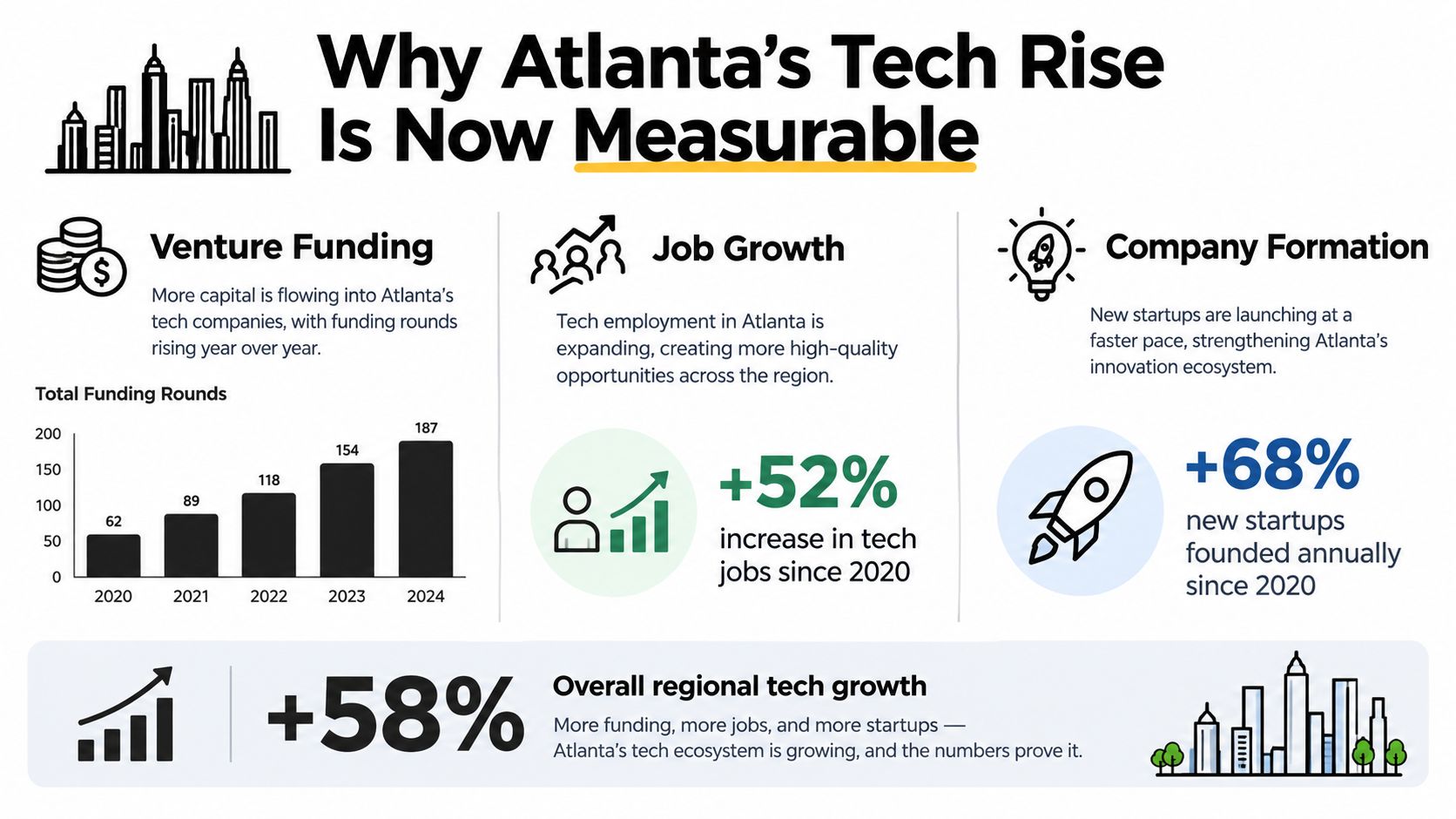
Why Atlanta's Tech Rise Is Now Measurable
A city can call itself a technology hub long before its economy proves the claim. Atlanta's recent figures provide a stronger basis for the description because they connect venture funding, company support, hiring, and payroll in the same ecosystem.
Atlanta's Office of Technology and Innovation reported that startups raised $1.2 billion across 82 venture-capital funding rounds in 2025. The same reporting identified 1,155 new hires and $69.3 million in salaries generated by companies supported through Atlanta Tech Hub programs. Those figures describe operating businesses and employed people, not just pitch decks or speculative interest. Atlanta's measurable technology growth and IT demand therefore has a direct connection to payroll, office capacity, equipment procurement, and eventual hardware retirement.
The institutional support behind those outcomes also has scale. Atlanta Tech Hub mobilized more than $37 million in investments since launch and supported 146 companies in 2025, according to reporting on the city's technology initiatives. The Atlanta Tribune's coverage of Atlanta Tech Hub's expansion shows why the data matters: a functioning ecosystem isn't defined by one successful startup, but by a repeatable pipeline that helps multiple companies secure capital, hire staff, and develop commercial operations.
Capital formation is only the first test
Venture capital becomes meaningful when companies convert it into products, facilities, employees, and customer delivery. Atlanta's combination of funding rounds and hiring indicates that the city's technology economy is producing a visible operating layer beneath its investment narrative.
That operating layer also has a longer history. Coverage of Atlanta's startup database describes an ecosystem with a combined enterprise value of $33.5 billion, 14,800 new jobs, and $3.9 billion in economic impact since 2016. These milestones suggest that the current funding cycle is building on institutional development rather than appearing in isolation. Dealroom's account of Atlanta's startup ecosystem places today's expansion within a sustained pattern of investment, talent development, and company formation.
For local business owners and facilities managers, the implication is practical. A growing technology base increases demand for laptops, monitors, networking equipment, servers, storage devices, and specialized electronics. It also creates a predictable stream of retired assets. Atlanta's technology story becomes more credible when the same numbers that demonstrate growth also imply a need for disciplined equipment lifecycle management.
The Infrastructure Stack Behind Atlanta's Growth
Startups and funding can move between cities. Physical infrastructure is harder to replicate. Atlanta's advantage increasingly rests on the density of its data centers, carrier hotels, fiber routes, and cloud connectivity, which give technology companies a platform for moving large volumes of data with resilience.
Metro Atlanta rose from the sixth-largest U.S. data-center hub to the second-largest, behind Northern Virginia, according to infrastructure reporting. The region was also identified as the first inland American market directly connected to a cable landing station through a 450-mile fiber route. Atlanta's data-center and carrier-interconnect infrastructure helps explain why the city can attract workloads that depend on consistent east-west traffic between facilities and north-south connections to users, clouds, and enterprise systems.
Carrier hotels matter because they concentrate network interconnection in facilities where providers can exchange traffic without forcing every connection through a distant market. Fiber routes reduce unnecessary packet distance, while multiple pathways improve redundancy. Those characteristics are relevant to financial services, streaming platforms, real-time applications, and cloud on-ramp strategies where latency and availability affect operations.
Capacity is becoming a competitive asset
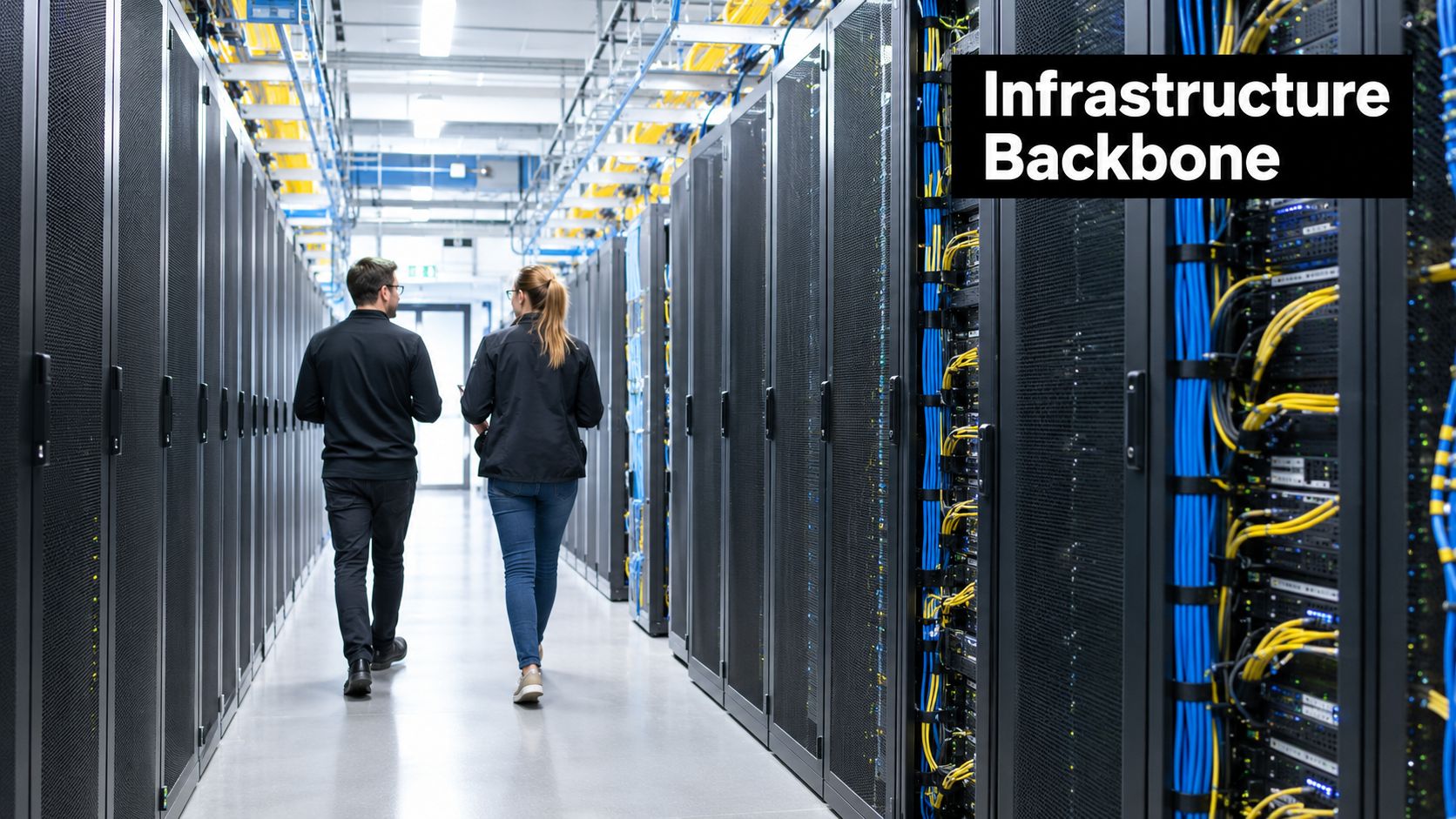
The market's recent capacity figures show that Atlanta isn't merely maintaining legacy connectivity. The region ended 2025 with 1,459.2 MW of total data-center inventory, an increase of 458.8 MW year over year, and had 2,076 MW under construction, according to CBRE. CBRE's Atlanta data-center market report identifies Atlanta as the second-largest U.S. market behind Northern Virginia.
Leasing demand reinforces the construction data. CBRE reported that Atlanta became the country's top data-center market for leasing activity in 2024, overtaking Northern Virginia for the first time since the internet era began reshaping commerce. The Atlanta Journal-Constitution's reporting on data-center leasing treats that shift as a market-leadership event, not merely another year of expansion.
Hyperscaler spending adds a second layer to the infrastructure case. AWS announced about $11 billion in cloud-infrastructure investment across Georgia, while Microsoft is expanding regionally and Google and Meta operate data centers in central Georgia. Georgia State University's discussion of data centers and infrastructure investment connects those commitments to capital deployment, employment, and demand for construction, networking, power, maintenance, and equipment services.
That scale creates a sustainability question alongside an economic one. Large facilities need clear processes for equipment refreshes, storage-device handling, server retirement, and data center decommissioning. The infrastructure stack attracts technology activity, but organizations still need an asset-disposition stack to manage what that activity eventually replaces. For Atlanta facilities, telecom services and equipment recycling support can form part of that operational planning.
From Funding to Employment and How the Ecosystem Converts Investment
Funding alone doesn't establish a durable technology economy. The stronger test is whether capital produces companies that hire workers, generate enterprise value, and create demand for suppliers and professional services.
Startup Genome reported $898.2 million in early-stage funding for Atlanta technology startups from the second half of 2022 through 2024, along with an ecosystem impact value of $37.8 billion. The same ecosystem profile recorded $26.9 billion in total exit value from 2020 through 2024. Startup Genome's Atlanta ecosystem profile places these figures in a broader assessment of startup performance and economic influence.
The ranking detail is particularly revealing. Atlanta ranked 11th among U.S. metropolitan startup ecosystems, while ranking 10th in funded startups and 7th in workers employed by startups, according to the same profile. That pattern suggests that Atlanta's relative strength isn't limited to attracting checks. Its companies are also absorbing labor at a comparatively strong level.
The employment signal is more important than the headline rank
A city can rank highly in startup visibility without creating a broad operating economy. Atlanta's higher position for startup employment than for overall ecosystem ranking points to a different form of strength, one based on execution and workforce absorption.
That distinction affects local procurement. Startups that employ teams need offices, devices, connectivity, security systems, storage, and technical support. As those companies mature, they establish recurring technology refresh cycles instead of making one-time purchases. A startup ecosystem with employment depth therefore creates a more durable market for computer recycling, laptop disposal, secure data destruction, and office cleanout services.
The same logic applies to enterprise providers that serve technology companies. Data-center technicians, managed-service firms, construction contractors, security vendors, and logistics operators all handle equipment that may contain sensitive information or recoverable materials. Capital moves through the ecosystem in several directions, and each direction can create an ITAD requirement.
Practical rule: Treat startup growth as an equipment-lifecycle issue from the first office expansion, not only when a company closes a facility.
The employment signal also changes how local sustainability leaders should evaluate technology growth. A company may expand its workforce while replacing devices, opening additional workspaces, or moving infrastructure into colocation and cloud environments. Those changes can produce surplus monitors, laptops, servers, switches, batteries, and peripherals even when the organization is financially healthy.
Atlanta's venture ecosystem therefore has a two-sided effect. It supports innovation and employment, while increasing the number of organizations that must document what happens to retired equipment. The city's ability to convert investment into operating companies makes responsible hardware management a recurring business function rather than an occasional cleanup project. Atlanta's tech talent and workforce planning challenges sit within that broader cycle of hiring, expansion, and asset turnover.
Real-World Impact on Local Businesses and Facilities
Atlanta's technology expansion becomes tangible inside loading docks, server rooms, school storage areas, and offices preparing for relocation. The relevant question for a facilities manager isn't whether the city has attracted investment. It's how many retired devices the next expansion, refresh, or cleanout will create, and whether the organization can account for each one.
Consider three local operating situations.
A data-center expansion introduces servers, racks, power equipment, networking hardware, and storage devices at a scale that ordinary office recycling processes can't handle. As capacity changes, facilities may need equipment decommissioning, reverse logistics, secure chain-of-custody procedures, and product destruction for assets that can't be reused. A rushed removal can leave devices in temporary storage, where access controls and inventory records become difficult to maintain.
A scaling startup typically replaces employee laptops, monitors, docking stations, and networking equipment as teams grow or technology standards change. The company may distribute devices across remote workers, a central office, and third-party infrastructure. Without a formal IT asset disposition process, old equipment can remain in closets or move between employees without a clear record of data destruction.
A corporate facility expansion or relocation creates a different mix. Office cleanout projects can combine computers with printers, phones, displays, access-control systems, furniture-mounted electronics, and specialized equipment. Schools, public agencies, healthcare organizations, and laboratories may also face medical equipment disposal or laboratory equipment disposal requirements that call for careful sorting and documented handling.
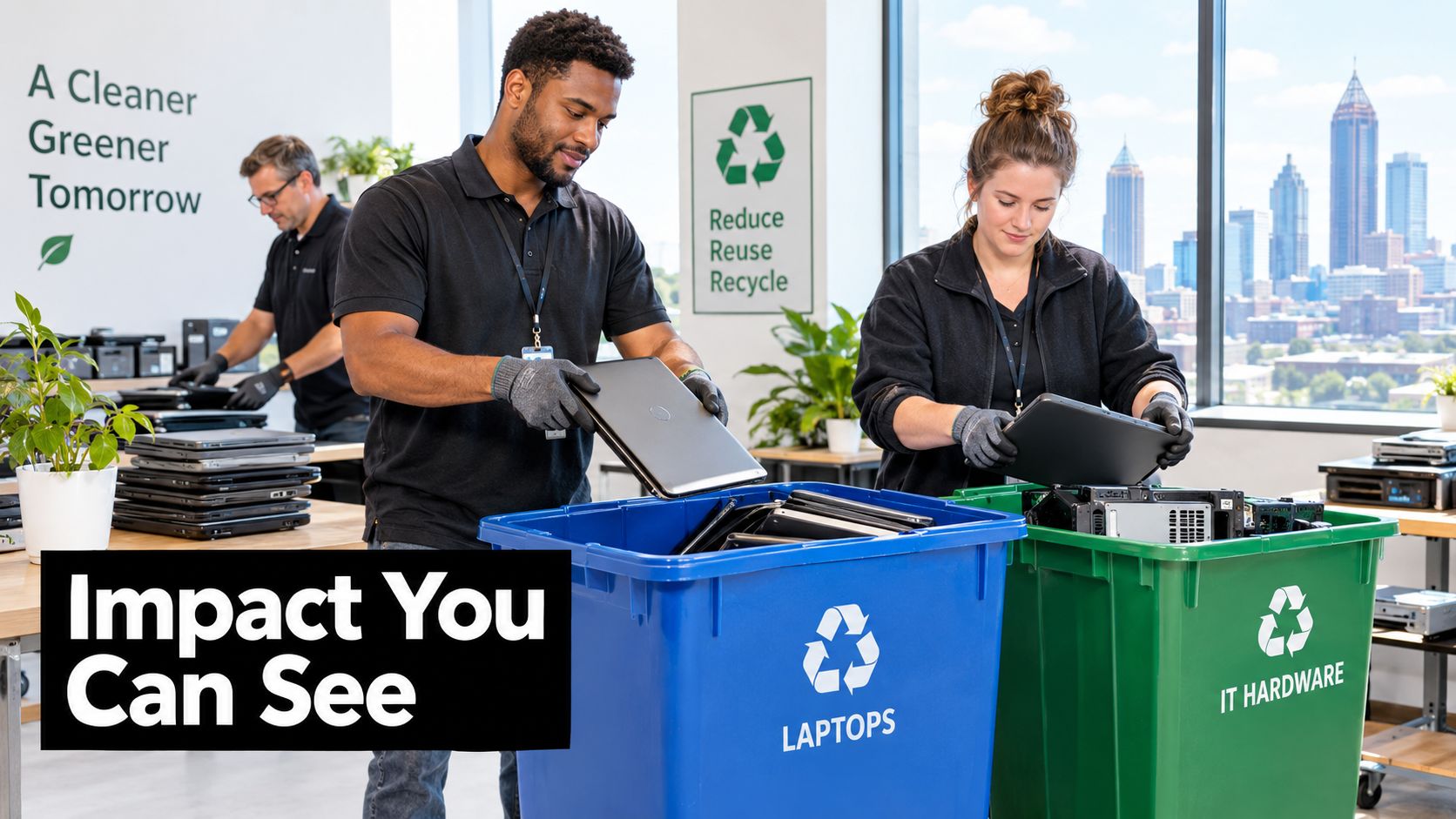
Growth creates a facilities problem before it creates a recycling problem
Organizations often notice the waste issue only after equipment begins to accumulate. By then, storage rooms may contain mixed assets, undocumented drives, damaged devices, and equipment that different departments believe someone else owns.
A more reliable process begins with separation:
- Identify ownership: Record the department, site, asset type, and disposition status before equipment leaves its assigned area.
- Isolate data-bearing devices: Keep hard drives, solid-state drives, servers, laptops, and networking equipment under controlled access until secure data destruction is complete.
- Separate reuse from recycling: Working devices may support donation programs or internal redeployment, while damaged or obsolete components require material recovery.
- Plan the movement: Coordinate pallets, loading access, pickup windows, and facility safety requirements before the cleanout begins.
- Close the record: Retain certificates, inventory outcomes, and destruction documentation that sustainability, security, finance, or compliance teams may need later.
The result is a connection between Atlanta's regional growth and everyday facility work. More technology activity means more physical assets moving through organizations. Responsible electronics recycling isn't an optional final step added after expansion. It's part of the logistics system that makes expansion manageable.
What Rising Tech Activity Means for IT Disposal and Sustainability
Atlanta businesses don't need to predict the next technology cycle to improve their disposal decisions. They need a repeatable process that protects information, preserves potential reuse value, and separates materials correctly when devices reach end of life.
Four groups face different versions of the same challenge:
- Small and mid-sized businesses often lack dedicated asset-disposition staff, so a vendor pickup and documented workflow can prevent retired equipment from becoming unsecured inventory.
- IT managers need to connect device records, access controls, data destruction, and final disposition rather than treating recycling as a separate task.
- Schools and universities may have large mixed inventories across classrooms, labs, administrative offices, and storage areas, with opportunities for donation-based recycling when equipment remains usable.
- Sustainability leaders and facilities teams need measurable records showing where assets went, which materials were recovered, and how sensitive storage devices were handled.
A practical retirement framework
Start with the data. Identify every device that stores or transmits information, including laptops, desktops, servers, phones, external drives, printers, and network appliances. A thermal label printer used for inventory control can be useful in a warehouse or office cleanout, and teams comparing equipment options may find this guide to thermal label printers helpful when designing an asset-tagging workflow.
Next, choose the correct disposition path. A working laptop may be suitable for redeployment or donation. A device with a failed drive may need parts recovery and secure destruction. A server leaving a data center may require a coordinated decommissioning plan that covers racks, drives, cables, and supporting equipment rather than a simple curbside pickup.
Then document the outcome. Secure data destruction should be matched to the storage technology and the organization's risk requirements. IT asset disposition, or ITAD, should also account for transportation, inventory reconciliation, reuse, recycling, and reporting. These records help sustainability teams demonstrate responsible handling while helping IT managers confirm that sensitive information didn't leave the organization with an unprocessed device.
Security principle: Recycling a device doesn't prove that its data was destroyed. Data destruction and material recovery need separate controls and records.
Atlanta's expanding technology density raises the stakes because more organizations are retiring equipment within the same regional market. A documented process reduces the chance that devices will sit in unsecured storage, enter an unsuitable waste stream, or lose recoverable value. Businesses reviewing local options can examine e-waste recycling services in Atlanta as part of a broader lifecycle policy.
Donation-based electronics recycling adds a community dimension. Usable equipment can support digital inclusion and workforce development when organizations distinguish functional assets from material that should be dismantled. That approach helps a company manage laptop disposal and facility cleanout responsibly without assuming that every old device belongs in the same destination.
How Reworx Recycling Supports Atlanta's Tech-Growth Cycle
Atlanta's growth creates a natural overlap between economic development and responsible asset management. A city adding data-center capacity, startup employees, and technology facilities will also produce more retired hardware. The organizations that plan for both sides can reduce operational risk while directing usable equipment toward community benefit.
Reworx Recycling operates as a donation-based social enterprise serving organizations that need electronics recycling and IT asset disposition. Its services include customer drop-off, business pickups, equipment decommissioning, IT asset management, recycling consultations, and secure hard-drive shredding with data destruction. That range allows a business to address a single laptop disposal request or coordinate a larger facility cleanout.
The operating model matters because hardware rarely retires in a neat sequence. A company may have working monitors, obsolete servers, damaged laptops, printers, networking devices, and data-bearing drives in the same shipment. Sorting those assets into reuse, donation, destruction, and material-recovery paths helps prevent valuable equipment from being discarded with items that require specialized handling.
Community impact is part of the lifecycle decision
Recycling protects materials and keeps electronics out of inappropriate disposal channels. Donation supports digital inclusion when usable devices can reach people or organizations that need access to technology. Workforce development adds another layer by connecting responsible equipment handling with practical community opportunity.
Businesses evaluating the broader market can also review investors in recycling and circular-economy businesses to understand why electronics recovery and social enterprise recycling are receiving attention beyond conventional waste management. The relevant point for Atlanta companies is operational: sustainability programs become more credible when they connect environmental outcomes, information security, and community impact.
Reworx Recycling's services also fit the requirements of organizations managing sensitive assets. Secure hard-drive shredding can address storage devices that shouldn't be resold, while pickup coordination and decommissioning support can help IT and facilities teams plan a controlled transition. Equipment buyback options may help recover value from surplus hardware, subject to the condition and type of assets involved.
For corporate donation programs, the organization should define eligibility, documentation, transport, and data destruction before collecting devices. That preparation makes the program easier to audit and reduces confusion about whether an item is being donated, resold, dismantled, or destroyed. The lifecycle of IT equipment in Atlanta is therefore best understood as a managed sequence, from acquisition and deployment through reuse, secure disposition, and material recovery.
Looking Ahead and Staying Responsible as Atlanta's Tech Sector Expands
Atlanta's next phase won't be measured only by new funding announcements or construction activity. It will also be measured by whether businesses can retire technology securely as facilities expand, teams grow, and infrastructure changes.
The existing indicators point to continuing operational pressure. Data-center capacity is expanding, startup companies are converting investment into employment, and Georgia's technology base includes more than 14,300 technology companies and 165,000 employees statewide, while Atlanta has experienced 15% growth in technology jobs over the past five years. Georgia also has more than 85 data centers employing about 23,000 people, according to Atlanta Magazine's overview of Georgia's technology sector.
That environment calls for planning before equipment becomes surplus. IT managers should define secure data destruction standards, asset records, approved downstream channels, and pickup procedures before a refresh or relocation begins. Facilities teams should include loading access, temporary storage, worker safety, and equipment sorting in project schedules. Sustainability leaders should align recycling documentation with corporate reporting and donation goals.
Atlanta's technology infrastructure will support growth more reliably when responsible equipment retirement is treated as infrastructure too.
SMBs can start with a written inventory and a recurring pickup schedule. Schools can separate reusable devices from damaged electronics before an e-waste drive. Data-center operators can integrate decommissioning, reverse logistics, and chain-of-custody controls into change-management procedures. Corporate sustainability teams can evaluate whether their vendors support secure data destruction, material recovery, donation, and transparent reporting in one workflow.
The opportunity is clear, but so is the responsibility. Atlanta is becoming the South's tech hub because capital, infrastructure, and employment are reinforcing one another. The organizations that manage the resulting hardware responsibly will help ensure that the city's technology growth produces community value without creating an unmanaged e-waste burden.
Reworx Recycling provides business pickups, electronics recycling, secure data destruction, equipment decommissioning, and IT asset disposition for Atlanta-area organizations managing retired technology. Visit Reworx Recycling to plan a pickup, donate usable equipment, or discuss a responsible recycling program for your office, school, facility, or data center.