
Indianapolis remains active and relatively affordable in 2026, with homes moving in about 17 to 21 days and typical values near $232,000 to $259,000. Conditions are shifting toward more buyer advantage than in recent years, so prepared buyers can be selective without assuming every listing will wait for them.
You may be watching a home go pending before you've finished comparing lenders, while another listing sits long enough for the seller to discuss repairs or closing help. That contrast defines the current Indianapolis housing market. The city isn't frozen, but it also isn't operating with the same seller dominance buyers faced during the sharpest post-pandemic competition.
This Indiana Indianapolis Housing Market and Home Buying Guide focuses on the practical middle ground, including affordability, neighborhood differences, financing, timing, inspections, and negotiation. The most useful question isn't whether Indianapolis is a buyer's or seller's market. It's whether the specific home and neighborhood you want are moving quickly enough to require urgency, or slowly enough to reward careful terms.
Understanding the Current Indianapolis Housing Market
A buyer searching this spring could reasonably feel two different markets at once. Redfin reported that Indianapolis homes sold in a median of 21 days over the prior three months, with a $259,000 median sale price, up 2.3% year over year. Zillow's July 2026 snapshot showed a $232,142 typical home value and a 17-day median time to pending, pointing in the same direction, active demand with quicker movement for homes priced appropriately. Redfin's Indianapolis housing market update and Zillow's Indianapolis home value data provide the most useful citywide reference points.
Transaction volume also remains steady. Redfin recorded 3,541 homes sold in June 2026, compared with 3,427 a year earlier, while Zillow listed 3,916 for-sale listings and 1,351 new listings in its snapshot. Those figures suggest buyers have more choice than during the tightest periods, but desirable homes can still attract attention quickly.
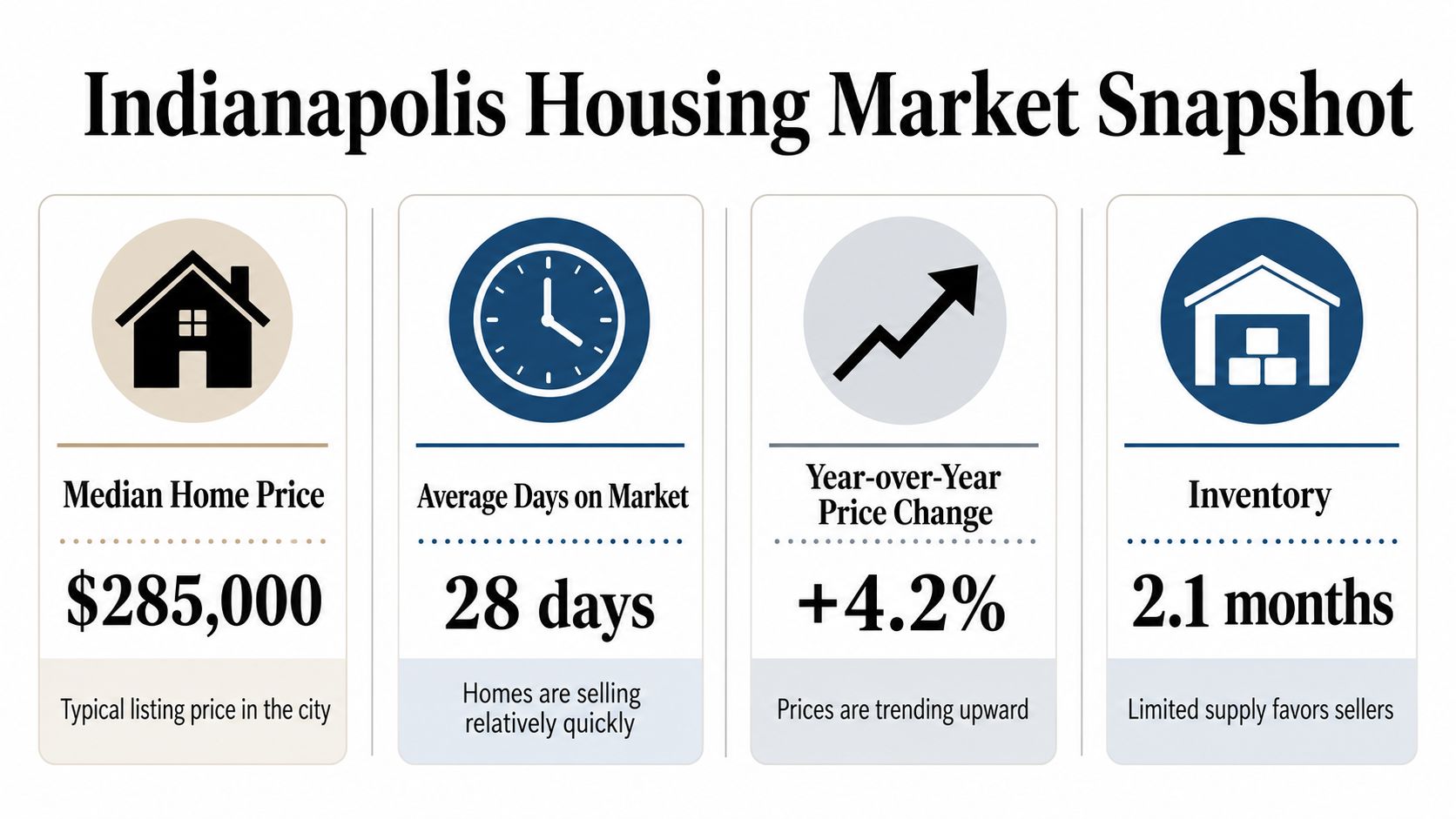
How to read the mixed signals
Zillow reported a 0.996 median sale-to-list ratio and said 22.9% of sales closed above list price. That combination matters. Many buyers may have room to negotiate, but a well-maintained property with accurate pricing can still command strong terms.
Practical rule: Treat citywide averages as orientation, not permission to submit a slow offer on a home that fits a scarce niche.
| Metric | Indicator | What It Means |
|---|---|---|
| Typical home value | $232,142 | A broad value reference, not a guaranteed price for a specific neighborhood |
| Median sale price | $259,000 | A useful benchmark for completed transactions |
| Median time to pending | 17 days | Properly priced homes may move before the broader sale cycle ends |
| Median days to sale | 21 days | Buyers should prepare before touring seriously |
| Sale-to-list ratio | 0.996 | Negotiation is possible on some listings, but pricing still matters |
| Sales above list | 22.9% | Competition remains concentrated in attractive, correctly priced homes |
The result is a market between extremes. Indianapolis isn't uniformly seller-controlled, and buyers shouldn't assume every seller will accept a steep discount. Before making an offer, compare recent nearby sales, listing condition, price changes, and the time similar homes spend waiting for a buyer. A useful benchmark is the California housing market forecast resource, not because its geography matches Indianapolis, but because it illustrates why broad market labels should never replace local analysis.
Price Trends and Affordability Shifts
Indianapolis still carries a reputation for relative affordability, but the historical record shows why many local buyers feel stretched. The Indiana Business Research Center reported that the Indianapolis MSA median home price reached $310,000 in March 2026, up 1.6% year over year and nearly 37% above March 2021, when the median was $226,500. The Indiana Business Research Center's housing analysis places today's pricing in a longer context rather than treating recent moderation as a return to earlier affordability.
That distinction is important for first-time buyers. A slower rate of appreciation doesn't erase the price increase that occurred over the previous five years. A household comparing its current budget with a 2021 search may find that the same type of home now requires a larger down payment, a different neighborhood, or more tolerance for repairs.
Cooling doesn't mean prices have reset
The recent direction is softer than the strongest seller years, but Indianapolis hasn't returned to its earlier price structure. The Indiana Business Research Center also reported that 89 of the nation's 300 largest housing markets saw median prices decline from March 2025 to March 2026. That broader shift helps explain why some Indianapolis sellers are more open to credits, repairs, or adjusted expectations, even while the metro's long-term price level remains higher compared with 2021.
A buyer should separate two questions:
- Value question: Is this home reasonably priced compared with nearby properties of similar age, condition, and location?
- Budget question: Can the monthly payment, taxes, insurance, maintenance, and closing costs fit comfortably without relying on a future refinance?
Those questions often lead to different answers. A home can be fairly priced and still be unaffordable for a particular household. Conversely, a buyer with stable finances may find that a negotiated credit improves the immediate cash requirement without requiring a lower purchase price.
Historical context also prevents overreaction. Waiting for a dramatic correction is not a complete strategy, especially when the market is changing unevenly across neighborhoods and property types. Use the Arkansas cost-of-living comparison as a reminder that affordability is regional and personal. Indianapolis may compare favorably with expensive major metros, but your own income, savings, commute, and financing terms determine whether a particular purchase works.
Neighborhood Profiles and Price Expectations
Citywide figures can hide the decision that matters most, where you'll live. Indianapolis buyers should compare neighborhood types rather than assume the median value describes every part of the metro. Urban areas, established suburbs, and emerging corridors can have different home conditions, commute patterns, listing activity, and buyer competition.
Three search environments
Urban core and walkable districts often attract buyers who prioritize access to restaurants, cultural venues, employment centers, and established streetscapes. Older housing can create a wider spread between a renovated property and one requiring major systems work. Buyers may gain an advantage on homes needing updates, but move-in-ready listings can still draw immediate attention.
Established suburbs offer a different balance. Buyers may find more conventional floor plans, garages, mature landscaping, and access to suburban services, but they should compare school boundaries, commute times, homeowners association rules, and property taxes carefully. A slightly lower list price may not compensate for a longer commute or major deferred maintenance.
Emerging corridors and outer suburban areas can provide newer construction or more space, although buyers should evaluate construction quality, future infrastructure, utility arrangements, and the distance to daily services. Newer homes can reduce immediate repair concerns, but builder contracts and upgrade pricing deserve close review.
| Area Type | Price Range | Typical DOM | Buyer Leverage |
|---|---|---|---|
| Urban core and walkable districts | Varies widely by renovation and location | Faster for turnkey homes, slower for major projects | Moderate, strongest where condition issues are visible |
| Established suburbs | Varies by school area, lot, and home condition | Mixed, depending on price and presentation | Moderate when listings need updates |
| Emerging corridors | Varies by construction age and amenities | Can be steadier where buyers have more alternatives | Often greater room to compare homes and terms |
The table intentionally avoids pretending that one price range or days-on-market figure applies uniformly. Zillow's citywide 17-day median to pending is a useful reference, but it can't tell you whether a particular block is competitive. Ask your agent to compare active listings, pending listings, and recent closed sales within the same micro-market.
Neighborhood test: If you'd be disappointed to lose the home, prepare to act quickly. If several comparable properties are available, prioritize inspection protection and total cost over a reflexive bid.
Commute, condition, and monthly affordability should narrow your search before emotions take over. The Atlanta real estate market trends resource offers a useful comparison point for understanding why metro-level averages can conceal meaningful neighborhood variation, even though Indianapolis requires its own local research.
Mortgage Options and Indiana Homebuyer Programs
Financing should be organized before you fall in love with a house. Start by asking a lender for a full preapproval, not just a rough online payment estimate. The lender will need income, asset, debt, and credit documentation, and the resulting budget should include more than principal and interest.
A conventional mortgage may suit buyers with stronger credit and savings, while government-backed options can serve households that need different qualification terms. The right choice depends on the borrower's finances, property type, cash reserves, and comfort with the total monthly obligation. Buyers with nontraditional income or documentation questions may also benefit from reviewing alternative documentation mortgage advice from New American Funding, LLC., then discussing eligibility directly with a licensed lender.

Indiana assistance worth investigating
The Indiana Housing and Community Development Authority offers qualifying first-time buyers 5% of the home price as down payment assistance. The program requires first-time buyer status or a purchase in a targeted census tract, and IHCDA lists a $250 reservation fee along with 30-year fixed-rate mortgage options. Review the current IHCDA homebuyer programs directly because eligibility and program availability must be confirmed before you make an offer.
A separate Indiana homebuyer resource states that Indianapolis Homebuyer Assistance can provide up to $15,000 or more in deferred or forgivable down-payment and closing-cost help within city limits. It identifies income limits typically around 80% to 120% of area median income and says counseling is required. Treat those details as a starting point, then verify current rules with the administering organization and your lender.
Use this order:
- Set a payment ceiling: Include taxes, insurance, maintenance, and required fees.
- Gather documents: Prepare income and asset records before requesting preapproval.
- Compare assistance: Ask whether assistance affects the rate, lien position, repayment, or offer timing.
- Confirm property eligibility: Some programs restrict location, occupancy, or property type.
- Request a realistic preapproval: Make sure the letter reflects the offer amount and financing structure.
A strong financing file can help you negotiate without taking on a payment that undermines your household budget. For related planning considerations, consult this Alabama homeowners insurance guide, while recognizing that your Indianapolis lender and insurance professional must provide local figures.
Step-by-Step Home Buying Timeline and Checklist
A successful purchase usually feels less like a single decision and more like a sequence of smaller decisions made in the right order. Indianapolis buyers should plan for a 45- to 60-day path from listing to contract, followed by another 30 to 45 days to close when financing is involved, based on the practical benchmark outlined in the Federal Reserve Bank of St. Louis market series.
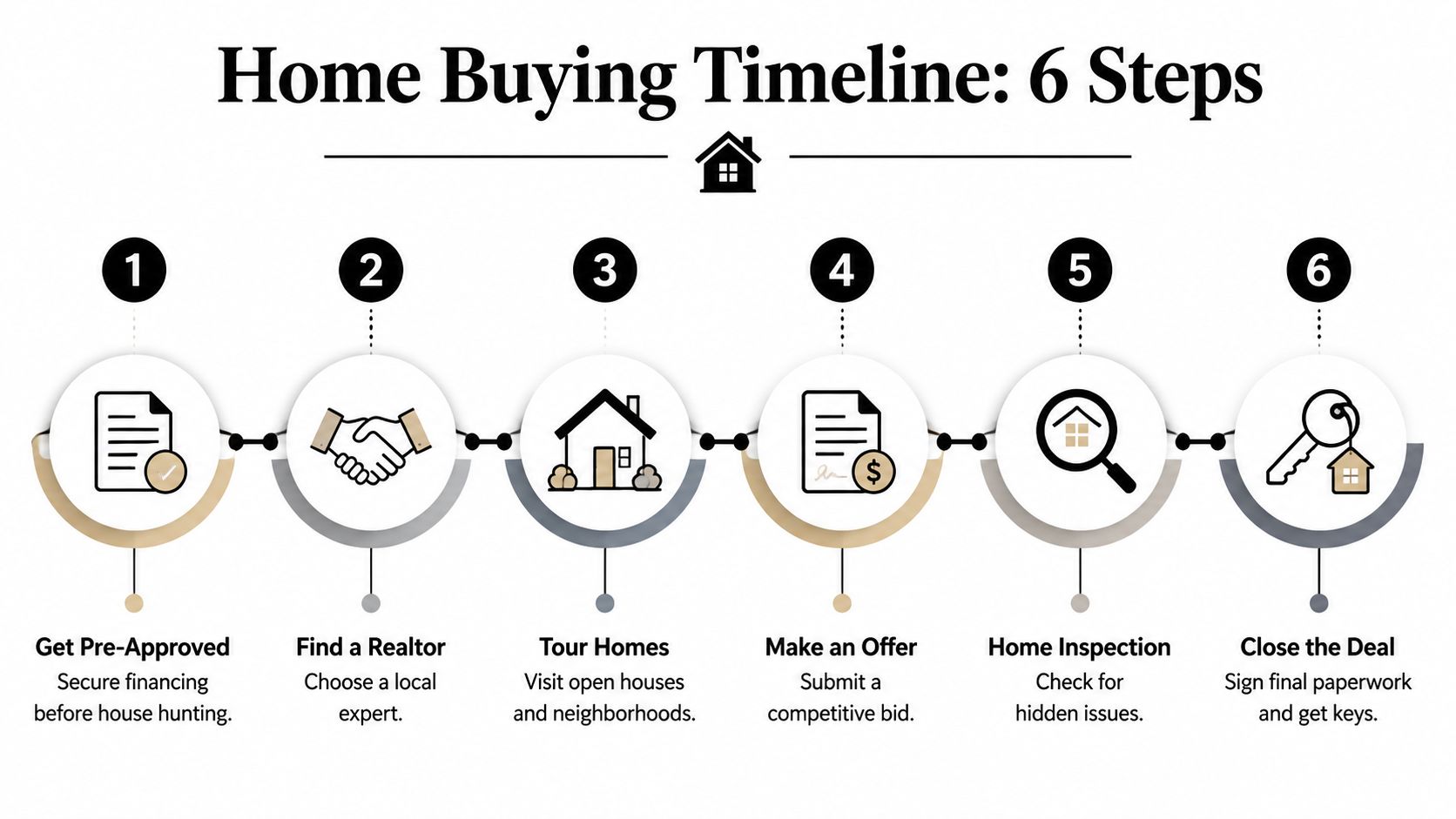
Build the sequence before touring
1. Get preapproved. Confirm the loan amount, estimated cash needed, and conditions that could delay underwriting. This step keeps your search tied to a defensible budget.
2. Choose local representation. Interview agents about neighborhoods, contract terms, inspection practices, and communication. You want someone who can explain tradeoffs, not just forward listings.
3. Tour homes and streets. Visit at different times when possible. Check traffic, parking, noise, drainage, nearby construction, and the condition of surrounding properties.
4. Make an offer. Decide the price, earnest money, inspection terms, financing contingency, closing date, and requested credits. A lower price with risky terms may be less attractive than a well-supported offer with clear timing.
5. Complete due diligence. Schedule the inspection promptly, review disclosures, confirm insurance availability, and send requested documents to the lender. The appraisal supports the lender's collateral decision, but it doesn't replace your inspection.
6. Close the deal. Review the closing disclosure, verify wire instructions through a trusted phone number, complete the final walkthrough, and bring the identification and funds requested by the settlement provider.
Where buyers lose time
Delays often begin when buyers wait to gather documents, schedule inspections too late, or treat lender requests as optional. Sellers may also need time to complete agreed repairs, and appraisers or title professionals can identify issues that require additional review.
Keep a shared checklist with your agent and lender. Record every deadline in one calendar, and ask who owns each task. The buyer, lender, inspector, title company, and agent all handle different parts of the transaction, so clear responsibility prevents avoidable confusion.
Negotiation, Inspection, and Closing Strategies
The current market gives prepared buyers more room to negotiate, but influence isn't the same as entitlement. Zillow reported a 0.996 median sale-to-list ratio, while 22.9% of sales closed above list price. Those figures support a measured approach: ask for terms that reflect the property's condition and recent comparable sales, but don't assume every seller will accept a discount.
Make the offer fit the property
A home that has sat longer, undergone a price change, or needs visible work may justify a repair credit, closing-cost contribution, or rate buydown request. A newly listed property with strong comparable sales may require a cleaner offer. Your agent should explain which terms are customary and how each request affects the seller's net proceeds.
Consider the complete offer rather than focusing only on price:
- Inspection protection: Preserve the ability to investigate significant defects.
- Appraisal planning: Decide how you'll respond if the appraised value is below the contract price.
- Closing flexibility: Offer a date that helps the seller when your schedule allows.
- Credits and repairs: Prioritize safety, structural concerns, water intrusion, major systems, and defects that affect financing or insurability.
An inspection is not a demand for a perfect house. It's a way to distinguish normal wear from problems that could create immediate financial risk. Buyers who want a practical overview of potential concerns can review these homeowner tips from Bulls Eye Repair and then discuss property-specific findings with a licensed inspector.
Negotiation principle: Protect against expensive uncertainty first. Cosmetic preferences can wait when the inspection identifies a roof, foundation, electrical, plumbing, or moisture concern.
Protect the closing
Send lender documents promptly, respond to title questions, and avoid opening new credit accounts or making large unexplained deposits during underwriting. Confirm insurance arrangements early, because a problem obtaining coverage can affect the lender's approval and closing schedule.
A buyer's strongest position comes from knowing the walk-away point before submitting the offer. Decide how much cash you can safely bring, which defects you can repair, and whether a seller credit is more valuable than a price reduction. That preparation keeps negotiation rational when another buyer appears or an inspection report feels overwhelming.
Local Resources and Next Steps for Buyers
Start with three conversations, a local real estate agent, an Indiana lender, and a housing counselor familiar with available assistance. Ask each professional to explain fees, deadlines, eligibility, and the risks of the options they recommend. You should be able to compare answers without feeling pressured to make an immediate commitment.
Use current listing data to create a focused search. Set a comfortable payment ceiling, identify the neighborhoods that fit your commute, separate essential features from preferences, and decide which repairs you're willing to handle. Then track homes that go pending, return to the market, or receive price changes. Those signals can tell you more about your target area than a national headline.
After closing, organization prevents small responsibilities from becoming expensive problems. A practical guide to four essential organizing tips for new homeowners can help you establish records for warranties, maintenance, utilities, and important documents.
Buyers should also plan for the belongings and technology left behind during a move, renovation, or home office transition. Responsible computer recycling in Indianapolis can help keep outdated devices and sensitive data out of ordinary waste streams.
The best next step is a written plan. Include your financing target, preferred areas, inspection priorities, maximum offer, required assistance, and closing timeline. A clear plan lets you move quickly when the right home appears without confusing speed with overpayment.
Reworx Recycling helps households and businesses handle old computers, laptops, and other electronics through responsible recycling and secure data destruction, with a mission that supports community access to technology and workforce development. Visit Reworx Recycling to learn about donating equipment, scheduling a pickup, or partnering on a responsible electronics recovery program.