When a corporate cell phone reaches the end of its lifecycle, the initial steps taken are the most critical. Simply storing it in a drawer or tossing it into a standard recycling bin introduces a significant security risk. A foundational element of any responsible IT Asset Disposition (ITAD) strategy is the proper preparation of each device.
Executing this preparation correctly ensures no sensitive company data—from client information to proprietary communications—is left vulnerable.
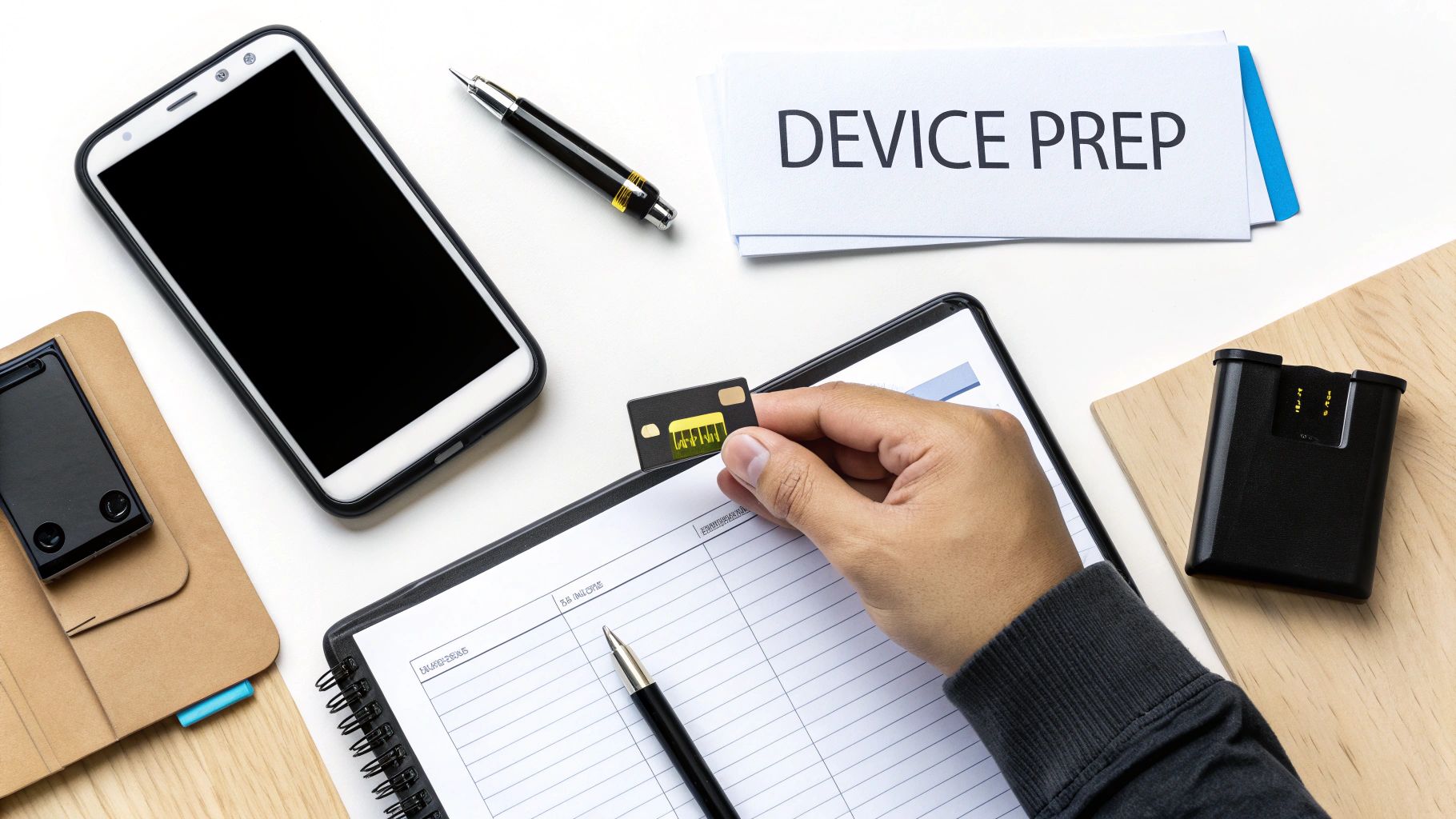
This isn't merely a "best practice"; it is an essential defense against data breaches. Unfortunately, many companies overlook these steps, contributing to the growing global e-waste problem. Data from the EPA highlights the environmental cost, as improper electronics disposal releases harmful materials into ecosystems.
This inaction perpetuates a cycle of waste and risk. As a social enterprise, Reworx Recycling provides a secure, sustainable alternative for businesses, turning retired assets into community benefits.
Backing Up Essential Corporate Data
Before any device is wiped, the first priority is to secure essential data. Losing access to critical contacts, project files, or client communications can disrupt business operations. The objective is to create a secure, accessible archive of all important information stored on the phone.
Businesses have two primary options for this:
- Cloud-Based Backups: Services like iCloud for Business or Google Workspace are ideal for corporate environments. They provide automated, encrypted backups that IT managers can often oversee remotely, streamlining the management of an entire fleet of devices.
- Encrypted Physical Drives: For highly sensitive information or as a redundant backup, transferring data to an encrypted external hard drive is a prudent measure. This creates an "air-gapped" layer of security, keeping the data completely isolated from network threats.
Regardless of the method chosen, always verify that the backup completed successfully before proceeding. A failed backup means permanent data loss once the phone is wiped.
Wiping The Device With A Factory Reset
A factory reset is the standard method for erasing user data, reverting the phone to its original software state and clearing apps, settings, and local files. The process varies slightly between operating systems, but the goal is the same.
For modern smartphones with built-in encryption, a factory reset is a powerful tool. It essentially destroys the encryption keys, which makes all the stored data unreadable and inaccessible.
On an iPhone, this is located under Settings > General > Transfer or Reset iPhone by selecting "Erase All Content and Settings." For Android devices, the path is typically Settings > System > Reset Options > Erase all data (factory reset).
While this is a strong preliminary step, it may not meet strict corporate compliance standards, which often require certified proof of data destruction. For a deeper understanding of secure ITAD, consider a professional partner like Reworx Recycling.
Removing Physical Storage Components
The final preparatory step is often overlooked: physically removing any hardware capable of storing data. This simple but vital action closes a common security loophole.
Before the phone leaves your possession, ensure you:
- Remove the SIM card. SIM cards can store contact information and carrier details that could potentially be linked back to your organization.
- Extract any external memory cards. A single microSD card can hold thousands of documents or other sensitive corporate files. Forgetting to remove it is equivalent to handing over a portable hard drive.
By completing these foundational steps—backing up, wiping, and removing physical media—you establish a secure baseline to dispose old cell phone assets responsibly. This diligent preparation protects your business from data leaks and regulatory penalties, paving the way for secure recycling, donation, or IT asset disposition.
Achieving Compliant Data Destruction
For any organization managing IT assets, relying solely on a factory reset for an old cell phone is a significant gamble. While the device may appear clean, residual data can often be recovered with specialized software, leaving your company exposed to major compliance risks under regulations like HIPAA, GDPR, or CCPA.
This is not a hypothetical threat; it is a tangible vulnerability that can result in substantial financial penalties and lasting reputational damage. To build a secure IT Asset Disposition (ITAD) process, it is crucial to understand why a simple reset is insufficient for B2B needs.
Beyond The Factory Reset
A factory reset was designed for consumer convenience, not for enterprise-grade security. It primarily removes the pointers to your data, signaling to the operating system that the space is available. However, the actual data—client lists, internal emails, financial records—often remains on the storage chip until it is overwritten by new information.
This gap creates a window of opportunity for individuals with forensic tools to reconstruct supposedly "deleted" files. For a business, that is an unacceptable risk. You require a method that guarantees permanent data erasure.
The most significant issue is verifiability. A factory reset provides no audit trail or proof of destruction. If a data breach occurs and regulators investigate, stating you "reset the phone" is not a defensible position.
Certified Methods for Absolute Security
To truly dispose old cell phone data in a manner that satisfies compliance standards, businesses must utilize certified data destruction methods. These techniques are engineered to be irreversible and, critically, auditable. They generally fall into two categories.
-
Software-Based Overwriting: This is a far more robust process. Specialized software writes patterns of random data (such as ones and zeros) over every sector of the device's storage. It doesn't just remove pointers; it actively replaces the original data, making recovery impossible. This process often adheres to standards set by the Department of Defense (DoD 5220.22-M) or the National Institute of Standards and Technology (NIST SP 800-88).
-
Physical Destruction: When a device contained highly sensitive information or is at the end of its useful life, physical destruction provides the ultimate security guarantee. This involves industrial shredders that grind the entire phone—including its memory chips—into minute, irrecoverable fragments.
The appropriate choice depends on the data's sensitivity and the intended next step for the device. For phones slated for refurbishment and donation, software overwriting is ideal. For obsolete or damaged phones that held critical data, shredding is the only way to be 100% certain.
The Power of A Certificate of Destruction
Partnering with a professional ITAD provider like Reworx Recycling delivers the final, essential piece of the security framework: the Certificate of Destruction. This legally recognized document serves as your official record that data on specific devices (identified by serial number) was destroyed in a compliant and verifiable manner.
This certificate is your proof of due diligence. It protects your business from liability in the event of an audit or investigation by demonstrating that you took professional, concrete steps to safeguard sensitive information. Without it, you are relying on hope instead of documented proof. You can learn more by reviewing a complete guide to secure data destruction, which details these processes.
Compliant data destruction is not just about deleting files. It is about managing risk, fulfilling legal obligations, and protecting your company’s most valuable asset—its information. By moving beyond simple resets to adopt certified, professional methods, you ensure your retired mobile devices never become a liability.
Choosing Your Disposal Path: Resale, Donation, Or Recycling
Once your company's old phones have been securely backed up and wiped, the next step is to choose a disposition path. Allowing them to accumulate in a storage closet is not a strategy—it is a security and environmental liability. For businesses, the decision typically involves one of three options: reselling, donating, or recycling.
Each path presents distinct advantages and disadvantages. The optimal choice depends on your company’s strategic goals, whether they are financial recovery, social impact, or environmental stewardship.
Whether you're making room for the latest iPhone models like the Apple iPhone 17 Pro Max or clearing out retired assets, defining your disposal path is a critical step in your ITAD program.
This decision tree offers a straightforward framework. If a device held sensitive data, physical destruction is the safest route. If not, secure wiping opens the door to reuse.
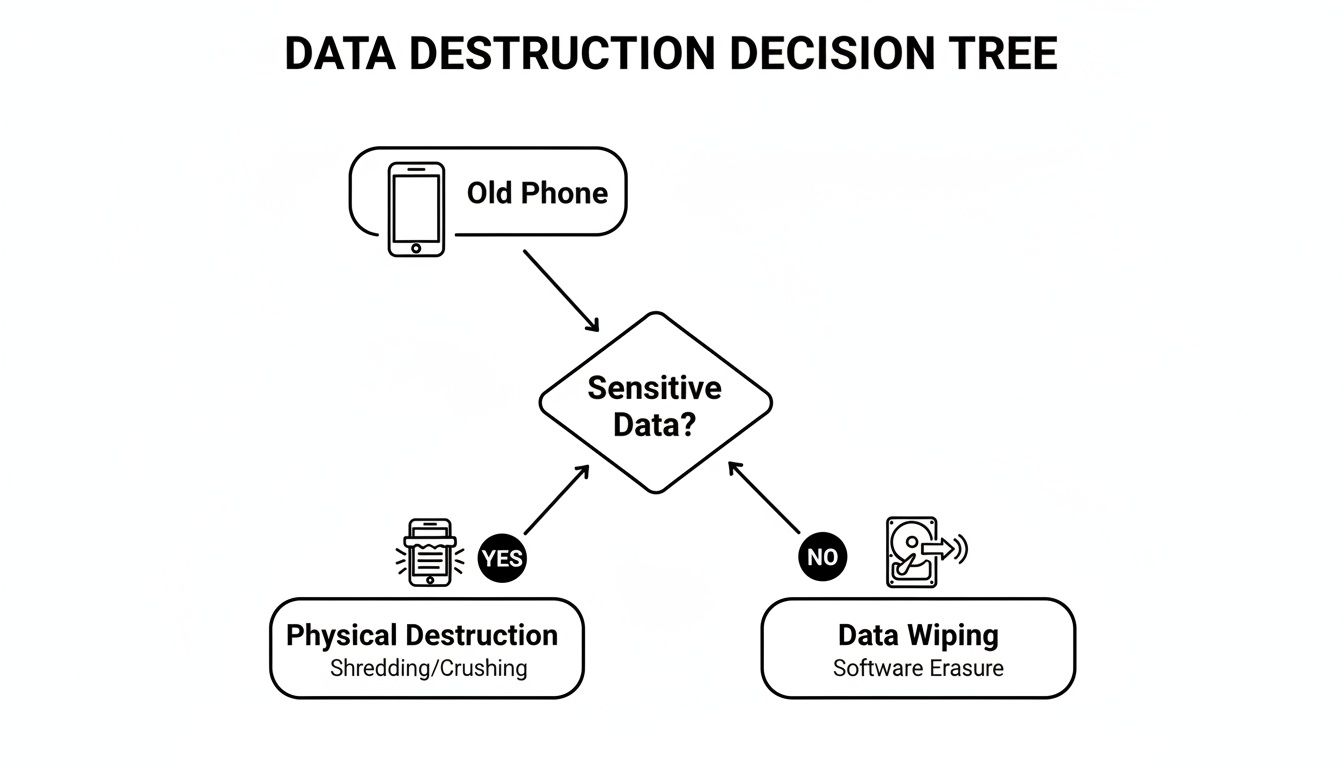
The primary takeaway is that data sensitivity dictates whether a device can be safely repurposed or must be completely destroyed to eliminate risk.
Comparing Phone Disposal Methods for Businesses
To clarify the decision, a side-by-side comparison is useful. Each path offers a different balance of financial return, security, and impact.
| Disposal Method | Financial Return | Data Security Risk | Environmental Impact | Social Impact | Best For |
|---|---|---|---|---|---|
| Resale/Buyback | High | Low (with certified vendor) | Positive (reuse) | Neutral | Businesses with newer, high-value devices seeking to recover asset value. |
| Donation | None (tax benefits) | Low (with certified partner) | Positive (reuse) | High | Companies focused on CSR goals and supporting community initiatives. |
| Recycling | None | Very Low | High (prevents pollution) | Neutral | Organizations with broken, obsolete, or low-value phones needing responsible disposal. |
There is no single "best" answer. The right approach depends on the condition of your device fleet, your corporate values, and your operational objectives.
Reselling For Financial Return
For newer, functional smartphones, reselling is an effective way to recover a portion of your initial investment. This capital can be used to offset the cost of new equipment. Businesses typically approach this through a few channels.
- Carrier Trade-In Programs: Most mobile carriers offer credit for old devices during an upgrade cycle. While convenient, this route may not provide the highest financial return.
- Third-Party Buyback Services: Companies specializing in IT asset buybacks often provide more competitive pricing, particularly for bulk quantities. This approach frequently yields a better return than carrier programs.
- Direct-to-Consumer Sales: Selling directly on online marketplaces is an option but introduces significant logistical challenges, including managing listings, shipping, and customer service, making it impractical for most businesses.
While financially attractive, reselling must be managed carefully. It requires a realistic assessment of each phone's value and a partnership with a reputable vendor who guarantees secure data wiping. Learn more about how equipment buyback programs for offices can integrate into your ITAD strategy.
Donating For Social Impact
For companies focused on community engagement, donating functional devices through a certified social enterprise like Reworx Recycling transforms an end-of-life asset into a powerful tool for social good. This is more than just offloading old equipment; it is an opportunity to champion digital inclusion.
By donating, your company's old phones can be professionally refurbished and provided to non-profits, students, or underserved communities, giving them access to essential technology. It’s a direct way to turn your IT asset disposition into a meaningful corporate social responsibility (CSR) story.
This path offers several compelling benefits for your organization:
- Strengthens Brand Reputation: It demonstrates a clear, tangible commitment to community support and sustainability.
- Potential Tax Advantages: Donations made to certified non-profits may be eligible for tax deductions.
- Supports a Circular Economy: You extend the useful life of electronics, reducing e-waste and the demand for new manufacturing.
Partnering with a donation-based social enterprise ensures devices are handled responsibly, with secure data destruction performed before they are given a second life.
Recycling For Environmental Responsibility
Not every phone is a candidate for resale or donation. Devices that are broken, obsolete, or too old must be recycled. This is not a secondary option; it is an essential environmental obligation.
Cell phones contain hazardous materials like lead, mercury, and cadmium. If these devices end up in a landfill, these toxins can leach into the soil and groundwater, causing significant environmental damage.
This is why choosing a certified e-waste recycler is non-negotiable. Certified partners, such as those with R2 or e-Stewards credentials, undergo regular audits to ensure they adhere to strict protocols. They safely dismantle devices to recover valuable materials like gold, silver, and copper. This process prevents pollution and reduces the need for virgin resource extraction, making it a cornerstone of a sustainable ITAD program.
Why Certified E-Waste Recycling Is Non-Negotiable
After determining the appropriate disposal path for your old corporate phones, the most critical step is selecting the right partner. Not all electronics recyclers operate under the same standards. Choosing an uncertified vendor can expose your business to significant environmental, legal, and reputational risks.
Engaging a certified e-waste recycler is not just a preference; it is a fundamental requirement for any responsible organization.
Old cell phones are filled with toxic materials—lead, mercury, cadmium—that can contaminate soil and groundwater if they are landfilled. This is precisely why discarding them in the trash is never an acceptable option.
The scale of the e-waste problem is staggering. The world produces millions of metric tons of e-waste annually, yet only a small fraction is properly recycled. This represents a massive missed opportunity. For instance, recycling one million cell phones can recover 35,000 pounds of copper, 772 pounds of silver, and 75 pounds of gold.
What Do E-Waste Certifications Actually Mean?
To ensure your electronics are managed responsibly, look for specific industry certifications. These are not just logos; they are guarantees that a vendor adheres to the highest standards for environmental safety, data security, and worker protection. They create an auditable trail and hold recyclers accountable.
In the U.S., two primary certifications are critical for businesses to recognize:
- R2 (Responsible Recycling): This is a comprehensive standard covering environmental performance, worker health and safety, and data security. It also mandates the tracking of all materials downstream. An R2-certified facility has been thoroughly audited to verify it properly manages the entire lifecycle of an electronic asset.
- e-Stewards: Developed by the Basel Action Network, the e-Stewards standard is known for its stringent requirements. It maintains a zero-tolerance policy against exporting hazardous e-waste to developing nations and using prison labor, with a strong focus on global environmental justice.
The presence of these certifications signals that you are working with a partner whose processes have been independently verified as ethical and compliant.
The Gamble of Using an Uncertified Recycler
Partnering with an uncertified recycler is a significant risk. These operators often cut corners through illegal exportation of toxic waste, landfill dumping, or unsafe labor practices, all of which create direct liability for your company.
The chain of custody is broken, leaving you without verifiable proof that your assets and data were managed correctly.
Legal penalties for non-compliance with environmental regulations can be severe, including substantial fines and cleanup costs. Furthermore, a data breach traced back to an improperly handled device can cause devastating financial and reputational damage.
A certification is more than a logo on a website. It’s your insurance policy—your proof that an ITAD partner is committed to protecting your business and the planet. It’s a critical piece of corporate risk management.
Partnering With a Certified Social Enterprise
This is where a partner like Reworx Recycling provides unique value. As a certified social enterprise, we not only meet rigorous R2 standards but also integrate a powerful community mission into our operations.
When you dispose old cell phone assets with us, you are doing more than meeting a compliance requirement.
You are actively supporting a circular economy and helping to bridge the digital divide. We transform your retired electronics into opportunities for others while providing the auditable documentation—such as certificates of destruction and recycling—that your business requires. Choosing a certified partner like Reworx ensures your e-waste becomes a force for good, benefiting both the environment and our community.
Partnering With A Social Enterprise For ITAD
Selecting an IT Asset Disposition (ITAD) partner is more than a logistical necessity; it is a strategic business decision. While a traditional recycler focuses on material breakdown, partnering with a social enterprise adds a powerful second dimension: measurable community impact. This approach transforms the routine need to dispose old cell phone assets into a tangible opportunity to enhance your brand’s commitment to Corporate Social Responsibility (CSR).
When you work with a partner like Reworx Recycling, your company's retired technology is not just shredded or melted down. Instead, it is given a second life to make a meaningful difference. This dual-return model delivers both certified, responsible electronics recycling and a positive social outcome.
Beyond Recycling: The Dual Return On Investment
The core distinction lies in the mission. A standard recycler's role ends once an asset is processed. For a social enterprise, the work has just begun. By choosing a mission-driven organization, your retired cell phones become vital tools for promoting digital inclusion.
This translates into concrete actions:
- Refurbishment for a Cause: Functional devices are securely wiped, repaired, and then donated to non-profits, schools, or low-income families, directly helping to bridge the digital divide.
- Workforce Development: Many social enterprises, including Reworx, provide job training and employment opportunities for individuals facing barriers to work.
- Community Support: Revenue generated from recycling and reselling assets is reinvested into community programs, creating a sustainable cycle of positive impact.
This model transforms the ITAD equation. Instead of being a simple operational expense, it becomes a visible, reportable component of your company’s sustainability and community engagement initiatives. It is a natural alignment for businesses looking to connect with broader goals, such as those championed by various environmental groups.
By choosing a social enterprise, you are not just disposing of equipment; you are investing in your community. Every device you donate contributes to a larger story of empowerment and environmental stewardship.
Streamlining The Process For Businesses
A common misconception is that working with a social enterprise is more complex. In reality, partners like Reworx Recycling offer streamlined, professional services designed specifically for the needs of modern businesses. Our process is built for efficiency and security, from initial contact to final reporting.
We manage everything from small office cleanouts to large-scale facility or data center decommissioning projects. Our team coordinates all logistics, ensuring a secure chain of custody from the moment your equipment leaves your premises.
Turning Disposal Costs Into A CSR Win
Ultimately, this partnership reframes the concept of asset retirement. What was once a simple disposal task becomes a powerful narrative that resonates with employees, customers, and stakeholders. It is a tangible demonstration that your company’s values extend beyond its financial statements.
Making this strategic choice offers key advantages:
- Enhanced Brand Reputation: Publicly aligning with a social mission strengthens your brand and appeals to socially conscious consumers.
- Improved Employee Engagement: Employees are proud to work for a company that makes a positive local impact, boosting morale and retention.
- Contribution to the Circular Economy: By prioritizing refurbishment and reuse, you extend the lifecycle of electronics, reducing waste and conserving natural resources.
Working with Reworx Recycling allows you to use your ITAD program as a key pillar of your CSR strategy. To see how we build these relationships, learn more by exploring our guide on partnering for impact with Reworx. It is how a necessary operational task becomes a compelling story of corporate citizenship.
Got Questions About Phone Disposal? We've Got Answers.
Even with a well-defined strategy, questions inevitably arise when it is time to retire a fleet of old cell phones. Navigating compliance regulations, logistics, and internal policies can be complex. Here are answers to some of the most common questions from IT managers and business leaders developing their IT Asset Disposition (ITAD) plans.
Is a Factory Reset Enough to Secure Our Company Phones?
No, it is not. While a factory reset is a reasonable first step for a personal device, it is critically insufficient for business phones containing sensitive corporate data.
A factory reset merely hides the data; it does not permanently destroy it. Widely available data recovery tools can often retrieve information from a "reset" phone, exposing your company to a potential data breach and non-compliance fines under regulations like GDPR or HIPAA.
For true security, businesses require certified data destruction. This is the only method that guarantees data is permanently erased and provides the necessary documentation for audits.
For corporate assets, the standard isn't just "deleted," it's "irrecoverable." Certified destruction methods provide the proof you need to meet compliance requirements and protect your organization from liability.
At Reworx Recycling, our process extends far beyond a simple reset. We use professional-grade software to overwrite data sector by sector. For maximum security, we also offer physical destruction of the phone's storage media, rendering data 100% unrecoverable. We then issue a formal certificate of destruction for your records, providing a clear, auditable trail of your due diligence.
What Is the Difference Between Donating and Recycling Phones?
This question gets to the core of defining your company’s goals. Both are responsible options, but they address different needs for end-of-life electronics.
-
Recycling: This is a de-manufacturing process where a phone is broken down into its base materials—such as gold, copper, silver, and plastic. These commodities are then sold back into the manufacturing supply chain for use in new products. Recycling is the appropriate path for broken, obsolete, or non-functional phones, ensuring hazardous materials are kept out of landfills.
-
Donating: This process focuses on giving a working device a second life. When you donate through a social enterprise like Reworx Recycling, we securely wipe and refurbish the phones. These devices are then distributed to communities in need, helping to bridge the digital divide and support non-profit missions. It is an environmentally sound choice that adds a powerful layer of social impact.
In short, recycling is about recovering materials, while donating is about extending a device's useful life to benefit the community.
How Does Our Company Arrange a Bulk Pickup?
We make this process as seamless as possible. Arranging a bulk pickup for your old equipment—whether it's for a few dozen phones or a full office cleanout—should not be a logistical burden.
At Reworx Recycling, our system is designed for business convenience. Simply fill out our online pickup scheduling form with a few details about the type and quantity of equipment.
Our logistics team will handle the rest, coordinating directly with your point of contact to schedule a secure pickup from your facility at a time that minimizes disruption to your operations.
What Documentation Should We Get From an Electronics Recycler?
Receiving proper documentation from your ITAD partner is a critical component of risk management and compliance. Any certified, reputable recycler must provide a clear and detailed paper trail confirming the disposition of your assets.
You should always expect to receive two key documents:
- A Certificate of Recycling: This document certifies that your devices were processed in accordance with all local, state, and federal environmental regulations, serving as proof that you diverted e-waste from landfills.
- A Certificate of Data Destruction: This is non-negotiable for any data-bearing device. It should list the serial numbers of the specific assets and confirm that all data was destroyed using compliant, verifiable methods.
Together, these documents establish a secure chain of custody and provide the auditable proof your company needs to demonstrate responsible IT asset management.
Ready to transform your company's old electronics from a liability into a force for community good? Partner with Reworx Recycling for certified, secure, and socially responsible IT asset disposition. Our donation-based recycling programs help businesses achieve their sustainability goals while making a tangible local impact. Schedule a pickup or learn more about our corporate donation programs by visiting our Recycling Blog.