62 million tonnes of e-waste were generated in 2022, and only 22.3% was formally collected and recycled in an environmentally sound manner. For a business clearing out laptops, docking stations, monitors, and storage devices, the best free electronics recycling drop off depends on the equipment category and whether you need secure data destruction, documented ITAD handling, or a simple consumer-style counter drop-off.
The practical mistake is loading a van before you've matched the devices to the right pathway. A finance team with a few old MacBooks, a facilities crew with mixed peripherals, and an IT manager retiring a rack of drives all have different acceptance, security, and logistics needs. Reworx Recycling fits into that bigger picture because it combines free local customer drop-off with pickups, ITAD support, secure hard-drive shredding, and donation-based community impact, which makes it useful when “free” is only one part of the decision.
Use the list below to sort your load before you leave the office. Check whether the site accepts your exact device type, whether batteries or accessories need to be removed, whether the program serves businesses or only residents, and whether you'll get the documentation your team needs.
1. Reworx Recycling
A mixed office cleanout is where Reworx Recycling fits well. A Smyrna-based team can handle electronics recycling, IT asset disposition, data center decommissioning, secure data destruction, and equipment buyback, so business owners are not forced to split a single retirement project across retail counters, haulers, and data-destruction vendors. That matters when the load includes laptops, monitors, storage media, and other equipment with different handling needs. Its local drop-off option is described on the 24/7 drop-off box page, which gives teams a simple place to start when they need flexible drop-off outside normal business hours.
Why it works for business loads
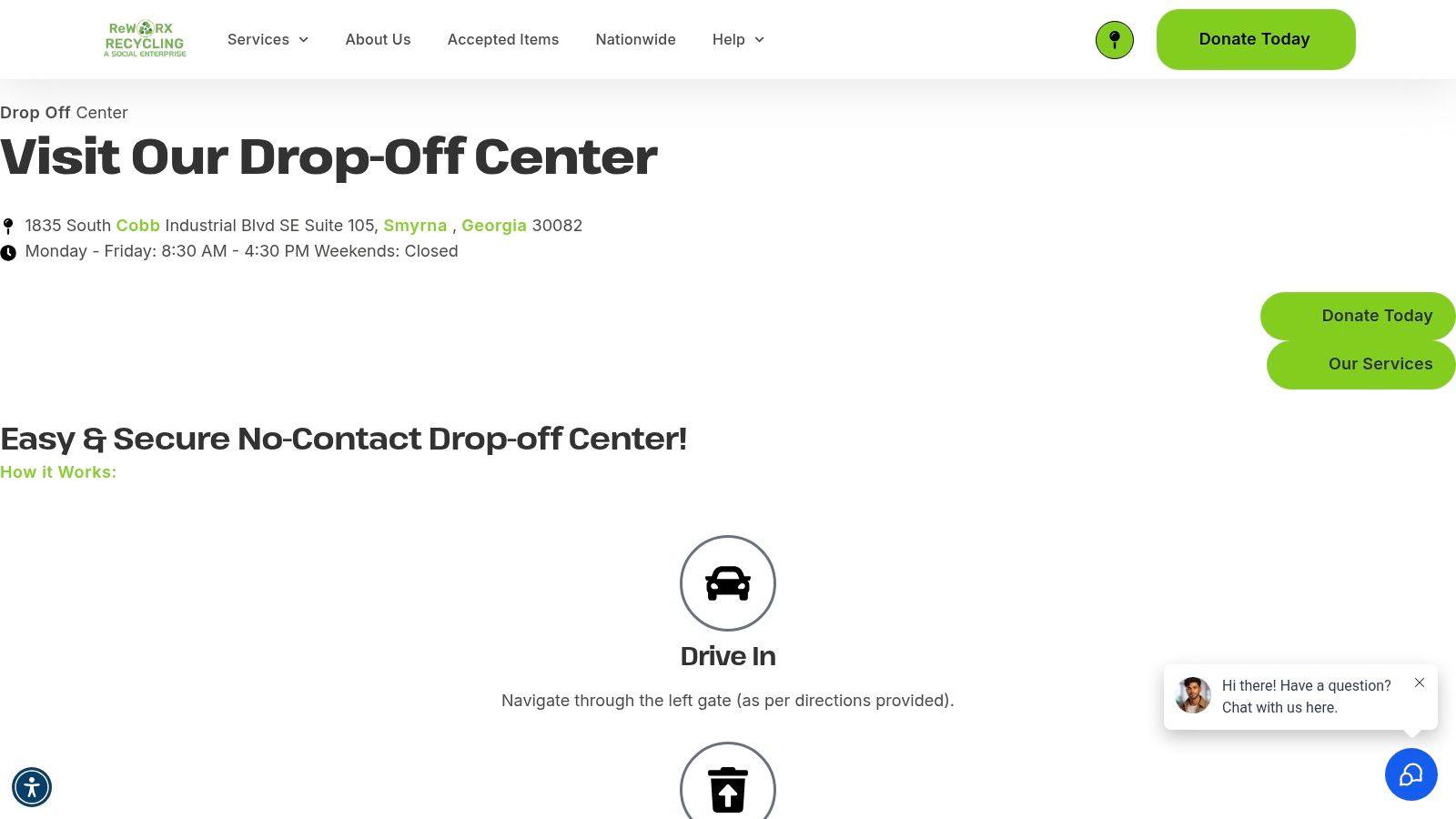
Reworx is built for projects consumer counters usually handle poorly, such as office cleanout, facility cleanout, and equipment retirement where data-bearing devices have to be separated from everything else. That makes it a practical fit for sustainability leaders who want a reuse-oriented recycling path and for IT managers who need a cleaner handoff for hard drives, surplus laptops, and end-of-life hardware. The team is at 1835 S Cobb Industrial Blvd SE #103, Smyrna, GA 30082, and businesses can call 678-449-0003 to confirm acceptance before arrival or to coordinate a larger project.
The trade-off is straightforward. A specialist partner can reduce handling risk and simplify documentation, but it still helps to verify what the site takes, especially for devices with batteries, mixed accessories, or unusual form factors.
Where it stands out
- Single-provider convenience: one vendor can cover drop-off, pickup, decommissioning, and value recovery.
- Security-minded handling: secure hard-drive shredding and data-destruction support fit devices that held sensitive records.
- Flexible logistics: free local drop-off works for smaller loads, while pickups help distributed offices.
- Community impact: donation-based recycling supports reuse and downstream community benefit.
- Planning support: practical guidance helps teams prepare for refreshes and device drives.
For teams deciding whether to use a free drop-off route or a more controlled asset-retirement process, Reworx is strongest when the load needs business-grade handling without adding another vendor layer.
2. Best Buy Electronics Recycling
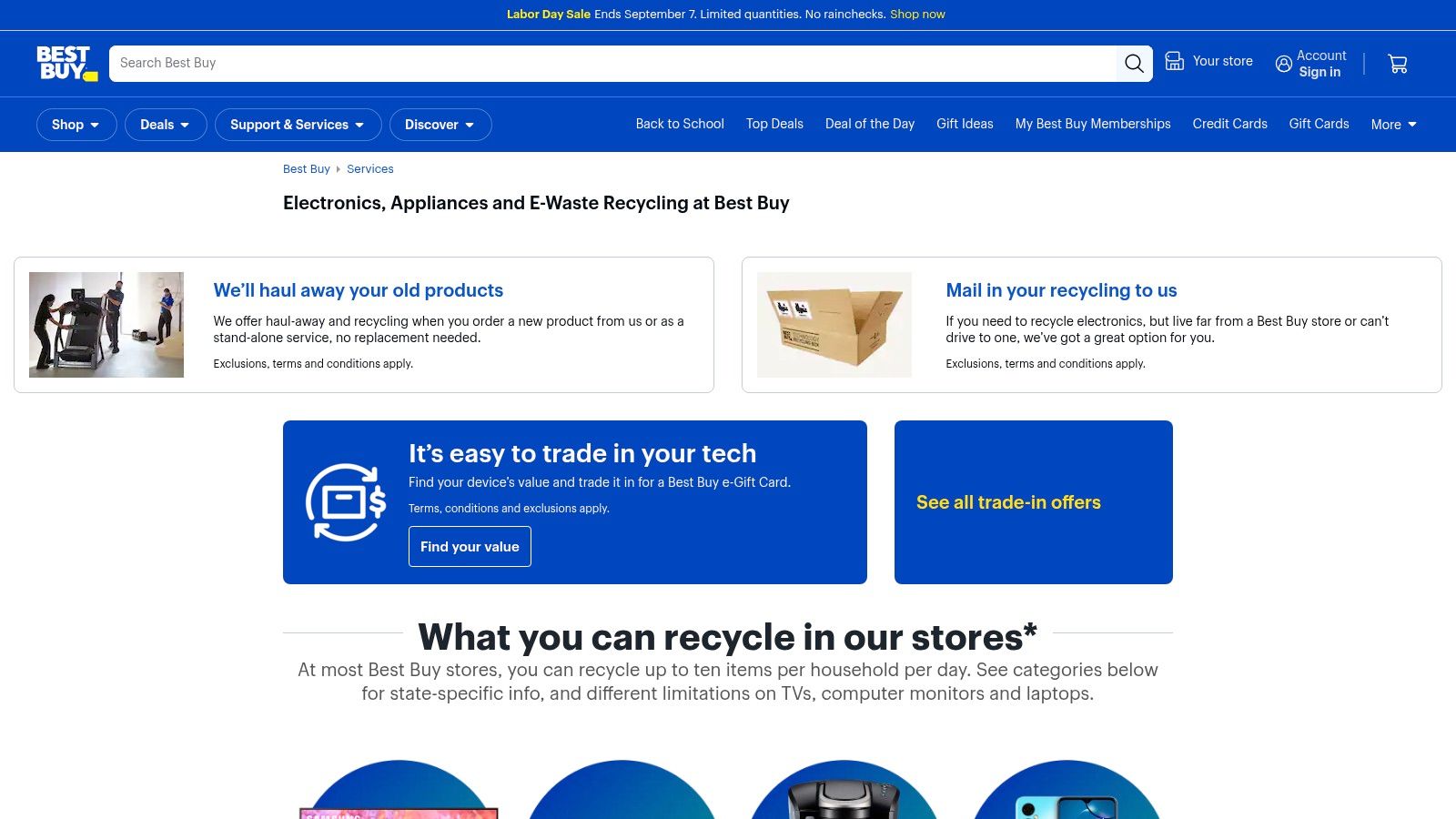
A national retailer can be the right move when the load is ordinary office tech and you need a familiar drop-off path. Best Buy fits that lane for computer recycling, small peripherals, and consumer devices that do not require a formal chain of custody. Its electronics recycling page spells out state-specific rules and exceptions, which is useful before a facilities or IT lead sends staff across town.
Best for small mixed consumer loads
Best Buy works well for a few keyboards, cables, older speakers, or mixed accessories that do not warrant a specialty vendor. For office admins, the appeal is simple, many locations are easy to reach, and the drop-off process is familiar. Store limits still vary, so a manager should confirm what a local branch accepts before planning a cleanup day.
If your load includes a TV or monitor, pause before you go. Review the dedicated where to take old TVs for recycling guidance first, because some states attach fees or other local rules that can change the cost of a free run.
Use it when speed matters more than paperwork
Best Buy is a practical drop-off option, but it is not the right fit for secure data destruction or documented ITAD workflows. A business clearing out a handful of employee desktops can still use it, yet the route works best when the goal is quick diversion and the devices are basic enough to fit a retail recycling lane.
If the load includes storage devices, mixed accessories, or equipment you need to hand off through a controlled process, a specialist ITAD partner can save time and lower risk.
3. Staples Free Tech Recycling
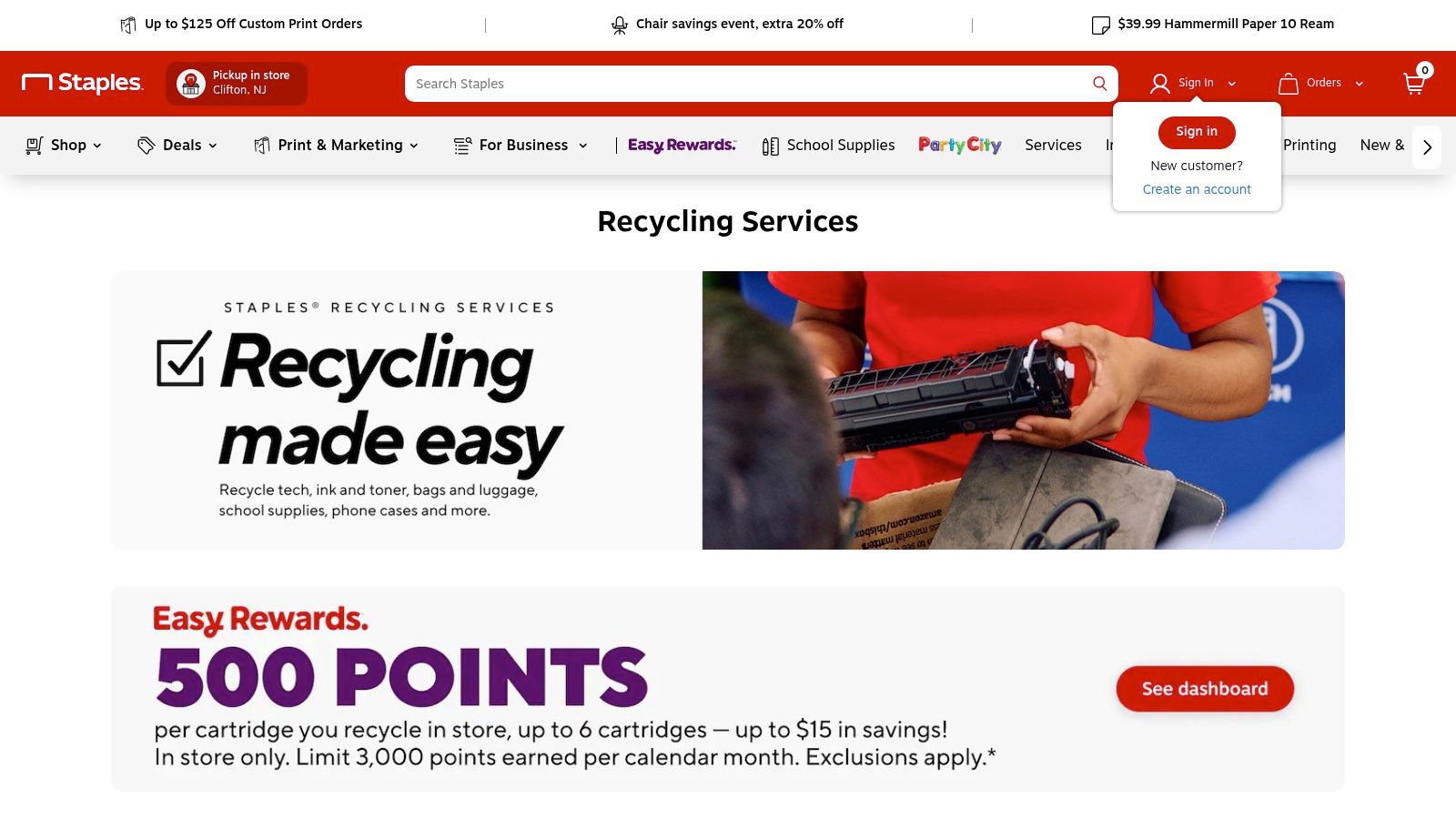
A facilities manager with a box of keyboards, cables, mice, and other desk odds often needs the simplest possible drop-off. Staples fits that lane well. Its in-store program is easy to use, and the retailer explains the process through its Staples recycling program. For office teams clearing out drawers and break rooms, the value is convenience.
The everyday office option
Staples works because staff can stay in a normal errand routine. Many locations accept small electronics and accessories over the counter, so an office admin can hand off mixed items without setting up a special pickup. It suits office cleanout work where the gear is light, the volume is modest, and speed matters more than process.
Accepted items still have limits, and those limits matter. Staples is not the right route for large devices, damaged equipment, or anything that needs formal destruction records. If you want a broader view of what small office items can usually move through retail recycling, see this guide to common electronics you can recycle. Store policies can also vary, and a local branch may decline items that pose a safety issue.
Retail drop-off works best when the question is “Can we get these small devices out of the office today?” not “Can we document every handoff for audit purposes?”
Best use case
Staples fits laptop disposal accessories, chargers, mice, and similar low-risk items that do not need a controlled ITAD workflow. It is a practical choice for quick cleanup runs and for teams that want to keep everyday clutter moving out of the office without a lot of planning. For business loads that are simple enough to hand off at retail, it stays an easy, low-friction option.
4. Goodwill and Dell Reconnect
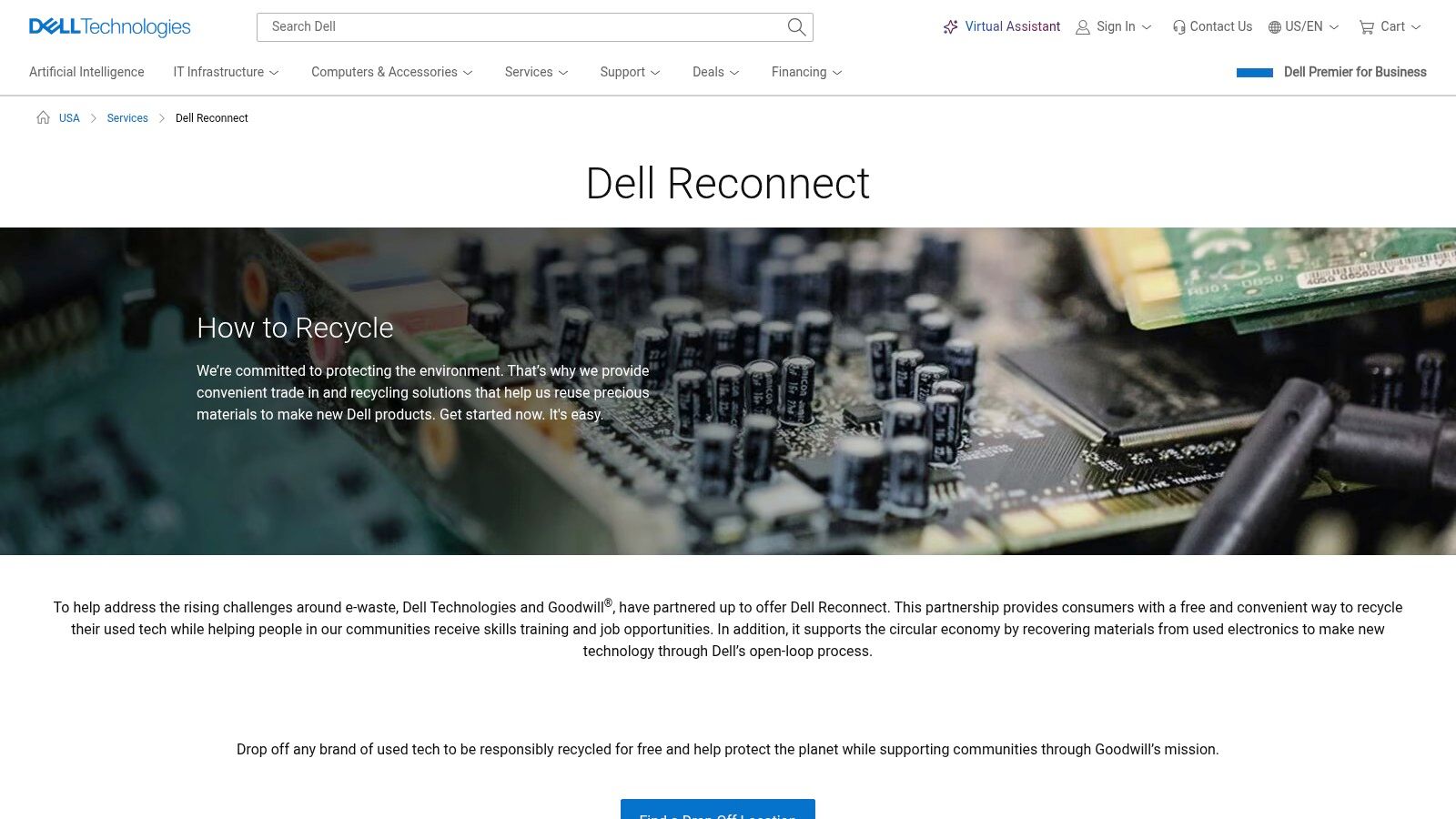
A nonprofit retiring five donor-funded desktops each quarter can use Goodwill and Dell Reconnect to clear hardware while supporting workforce programs. The program accepts used computer equipment of any brand and in any condition at participating Goodwill sites, and its Dell Reconnect page outlines the partnership. For organizations that want social enterprise recycling with a simple drop-off path, it fits well.
A donation path with community value
This route works well when the equipment still belongs in a reuse-and-recovery stream. Goodwill's donation structure supports workforce programs, and the Dell Reconnect partnership gives the drop-off lane a clear electronics purpose instead of treating the devices like general clutter. If a company wants its retirement project to support a broader community outcome, that combination matters.
A practical bonus is accessibility. Participating sites make local handoff easier than many specialty recyclers, which helps small businesses with a short list of computers clear gear without arranging a pickup.
Know the boundaries
The trade-off is scope. This is mainly a computer-equipment route, not a catch-all for every electronic item. Business-grade documentation is also not the standard retail experience, so if your compliance team needs chain-of-custody records, a secure destruction certificate, or deeper asset management, Reworx is the better fit. Goodwill and Dell Reconnect work best when the goal is to move usable or recyclable computer gear into a mission-driven stream without adding unnecessary process.
5. Apple Trade In and Recycling
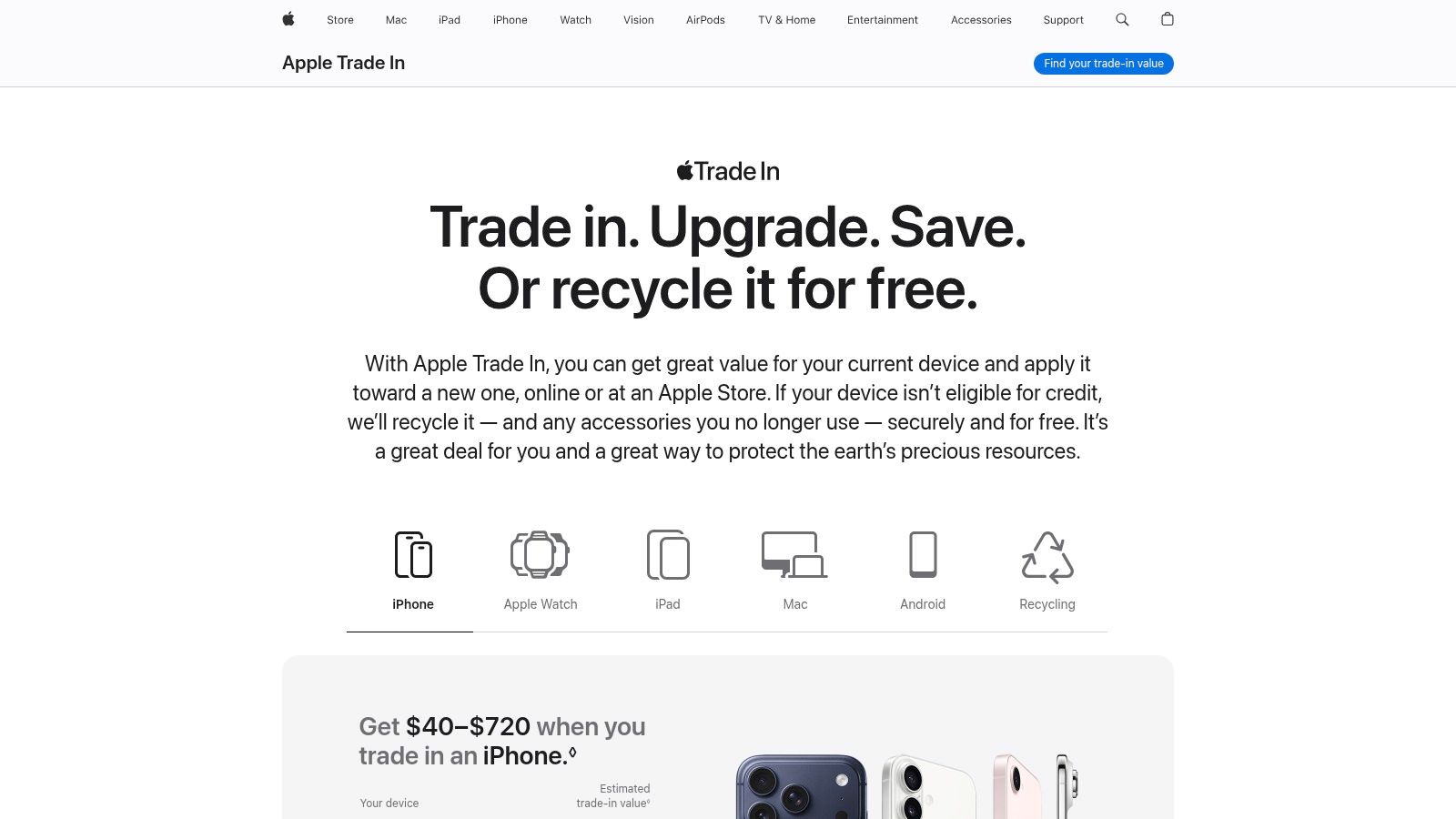
Apple's program fits a batch of Apple-branded gear that needs a manufacturer route. The company's trade-in page covers trade-in and recycling options, with store and mail paths for eligible devices. That makes it practical for offices retiring old MacBooks, iPhones, iPads, or Apple accessories that still belong in the Apple stream.
Best for Apple-only refreshes
The process is narrow, which is the point. Eligible devices may qualify for trade-in credit, while ineligible items can still follow Apple's recycling path. For teams standardizing on Apple hardware, that creates a clear off-ramp without sorting through a broad list of mixed-brand intake rules.
The trade-off is scope. Apple Trade In is not a general electronics intake line for mixed office cleanouts, and it does not replace ITAD reporting or destruction certificates. If your team is also deciding how to dispose of a cell phone, the requirements should be checked before anything leaves the office, especially when compliance or data security is part of the handoff.
Where it fits in a business workflow
Apple Trade In works well for small, defined batches of consumer devices. It is a good fit when the equipment is clearly Apple-owned, the condition is known, and the team wants a manufacturer path without extra sorting.
For mixed hardware, secure drives, or larger decommissioning projects, keep Apple devices in this lane and use a separate process for the rest. That approach preserves the simplicity of Apple's program without asking it to do a job it was not built to handle.
6. Samsung Recycling Program
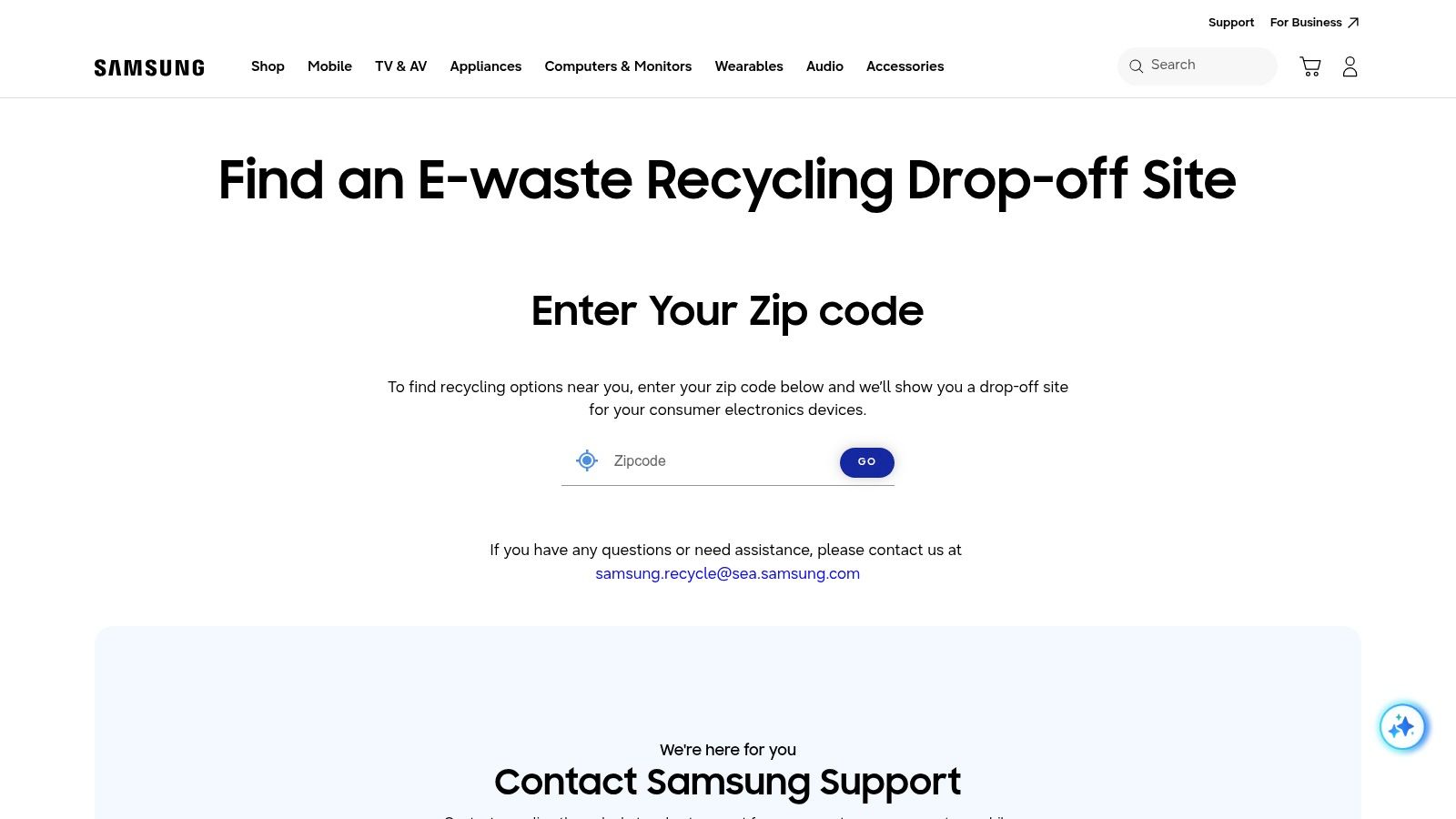
Samsung's U.S. sustainability program gives businesses more than one disposal path. Its sustainability support page points users to a zip-code locator for drop-off sites and events, along with mail-back options for many products. That mix helps teams with multiple offices or staggered retirements move devices without forcing every load into the same channel.
A flexible manufacturer route
Samsung works well because it combines local and remote options. If a nearby drop-off site or event is available, a team can clear devices quickly. If not, mail-back keeps the process moving without waiting for a one-time collection day. That helps sustainability managers who need a manufacturer program that fits distributed offices and smaller device batches.
The trade-off is consistency. Accepted items and free eligibility vary by state and location, so the locator should be checked before anything leaves the office. Some sites and events are periodic, which means planning matters more here than at an always-open retail counter.
Good fit for planned cleanups
Samsung is a practical choice when the load is mostly covered consumer electronics and the team wants a manufacturer-aligned route. It works less well for a rushed office purge with drives, mixed accessories, and sensitive data. In those cases, split the load and send the business-critical pieces to an ITAD partner.
7. Reworx Recycling Smyrna GA Drop Off Center
A Smyrna drop-off stop works well for teams that want a local intake point and still need an ITAD partner for the loads that cannot stay simple. Reworx's recycling drop-off center page supports free customer drop-off, while enterprise services cover pickups, decommissioning, equipment buyback, and secure destruction for larger projects.
The local answer with enterprise depth
The value here is flexibility. A business can hand off a small load in person, then move a bigger office refresh through the same provider without starting over. Free drop-off handles routine e-waste, while the paid side supports IT equipment disposal, product destruction, and secure data destruction for devices that need a tighter chain of custody.
That trade-off matters. The Smyrna center is convenient for nearby organizations, but it is still a location-based option, so travel and scheduling have to fit the office routine. Enterprise pickups and destruction services add cost, yet they also reduce handling risk and let IT leaders keep control over the process.
For teams that care about diversion and data security, a local intake point plus a planned pickup path gives more control than a retail counter alone.
Best use case
Use the Smyrna center for standard e-waste and smaller refreshes. Move sensitive assets, decommissioning work, or formal asset retirement into Reworx's broader ITAD services when the job needs documented handling and tighter oversight.
Free Electronics Drop‑Off: 7-Provider Comparison
| Service | Implementation Complexity 🔄 | Resource Requirements ⚡ | Expected Outcomes 📊 | Ideal Use Cases 💡 | Key Advantages ⭐ |
|---|---|---|---|---|---|
| Reworx Recycling | 🔄 Medium, end-to-end ITAD workflows and reverse logistics | ⚡ Low–Med, free drop-off for individuals; enterprise services use fees/staff | 📊 High, secure data destruction, e‑waste diversion, value recovery | 💡 Offices, schools, gov't or orgs needing compliant ITAD and flexible logistics | ⭐ Comprehensive single‑provider ITAD, secure hard‑drive shredding, buyback |
| Best Buy Electronics Recycling | 🔄 Low, standardized retail drop‑off process | ⚡ Low, walk‑in; potential fees for TVs/large items in some states | 📊 Medium‑High, large‑scale diversion via certified partners | 💡 Consumers with small/medium electronics near stores | ⭐ Wide store network and clear state‑specific guidance |
| Staples Free Tech Recycling | 🔄 Low, simple counter drop‑off at stores | ⚡ Low, walk‑in convenience; quantity limits possible | 📊 Medium, effective for small tech and accessories | 💡 Office workers and small businesses discarding peripherals | ⭐ Everyday, no‑appointment recycling at nationwide locations |
| Goodwill + Dell Reconnect | 🔄 Low, donation‑style drop‑off at participating Goodwill sites | ⚡ Low, free for accepted computer gear; uses existing retail infrastructure | 📊 Medium, reuse/diversion of computer equipment plus local impact | 💡 Consumers donating or recycling computers to support community programs | ⭐ Free computer recycling that supports Goodwill mission and training |
| Apple Trade In and Recycling | 🔄 Low–Med, in‑store or mail‑in trade‑in/recycling workflows | ⚡ Low, no‑cost for Apple devices; mail‑in shipping optional | 📊 Medium, recycling plus potential trade‑in credit for eligible devices | 💡 Apple customers seeking trade credit or simple device disposal | ⭐ Trade‑in value option + Apple store support and mail‑in convenience |
| Samsung Recycling Program | 🔄 Low–Med, zip‑code locator + partner/drop‑off events or mail‑back | ⚡ Low, multiple pathways; some planning for events or state rules | 📊 Medium, manufacturer‑backed recycling aligned with state laws | 💡 Samsung owners or remote users needing mail‑back or local drop‑offs | ⭐ Nationwide manufacturer program with mail‑back and partner network |
| Reworx Recycling (Smyrna, GA Drop‑Off Center) | 🔄 Low (local drop‑off) / Med (fee‑based enterprise ITAD) | ⚡ Low–Med, free local drop‑off; business pickups and shredding are fee‑based | 📊 High, onsite secure shredding, ITAD, and compliance support | 💡 Smyrna residents for free drop‑off; orgs needing secure destruction & ITAD | ⭐ Local free drop‑off combined with enterprise‑grade secure destruction and buyback |
Turn a Free Drop-Off Into a Controlled Asset-Retirement Process
The cleanest decision rule is simple. Use retailer or manufacturer locations for eligible small quantities and clearly accepted consumer devices. Use Goodwill and Dell Reconnect when the load is computer-focused and the workforce mission matters. Contact Reworx Recycling when a business needs local Smyrna drop-off, pickups, secure data destruction, decommissioning, buyback, or broader ITAD coordination.
Before anyone leaves the office, run a short prep sequence. Build an asset inventory so you know what's going out. Separate batteries and accessories according to the selected program's rules. Back up needed files, remove accounts and activation locks, and identify any storage media that still needs secure handling. Confirm acceptance and quantity limits, then request documentation whenever business controls require it.
That last step matters more than many teams expect. A phone charger box is easy to drop at a retail counter, but a retired laptop fleet often carries logins, local files, and storage devices that should be handled with more care. If you need help sorting a mixed load, professional data recovery can also be part of the larger retirement plan before devices leave your control.
For organizations that want recycling to do more than clear floor space, Reworx is the practical next step. It helps businesses donate old equipment, schedule a pickup, and partner on responsible recycling that supports technology donations, digital inclusion, and workforce development.
Reworx Recycling gives businesses a clean path for free electronics recycling drop off, along with pickups, secure hard-drive shredding, and ITAD support when the job is bigger than a storefront run. If your team is ready to retire laptops, manage office cleanout, or coordinate a donation-based recycling project, visit Reworx Recycling and get the process moving.