You've got a half-open box on the receiving dock, a pile of loose fill on the floor, and someone asking whether it all goes in recycling. Don't guess. Packing peanut recycling only works when you identify the material first, then route it to the right channel, because the wrong bin turns usable filler into contamination and wasted labor.
If you manage warehouse overflow, office cleanouts, or recurring shipments, treat packing peanuts as a receiving decision, not a disposal afterthought. Starch-based peanuts and EPS polystyrene peanuts need different handling, and the practical answer is usually reuse first, then donation, then specialized recovery. That's the only approach that makes sense in a mixed business environment where shipping, waste, and storage all compete for space.
Why Packing Peanuts Are a Different Recycling Problem
A warehouse manager sees the same thing every week, a box breaks down, and the loose fill keeps growing. The mistake is to assume all packing peanuts belong in the same recycling stream as bottles, cartons, or office paper. They don't. Packing peanut recycling is mostly a reuse system, not a curbside recycling stream, and that distinction changes everything.
The historical model was built around collection and direct reuse, not material reprocessing. The Plastic Loose Fill Council was founded in 1991 to promote the recycling and reuse of polystyrene loose fill, and a 1990s Franklin Associates analysis found that business reuse of consumer-returned polystyrene peanuts led to a 50% reduction in purchases of new packaging filler. That same study reported that nearly 30% of all polystyrene peanuts were reused industry-wide, and reuse reduced virgin polystyrene demand by 22 million pounds in 1994 alone. Those numbers show why this category never fit neatly into mixed municipal systems, it depended on closed-loop collection and direct reuse, not a standard curbside process. Plastic Loose Fill Council history and reuse data
The modern waste system is even less forgiving. The EPA reported that containers and packaging made up 82.2 million tons of U.S. municipal solid waste in 2018, with a recycling rate of 53.9% overall, but packaging plastics remain a small and difficult subset of that stream. For expanded polystyrene, the recovery picture is still weak, which is why you can't treat foam peanuts like office paper or corrugated cardboard. EPA containers and packaging data
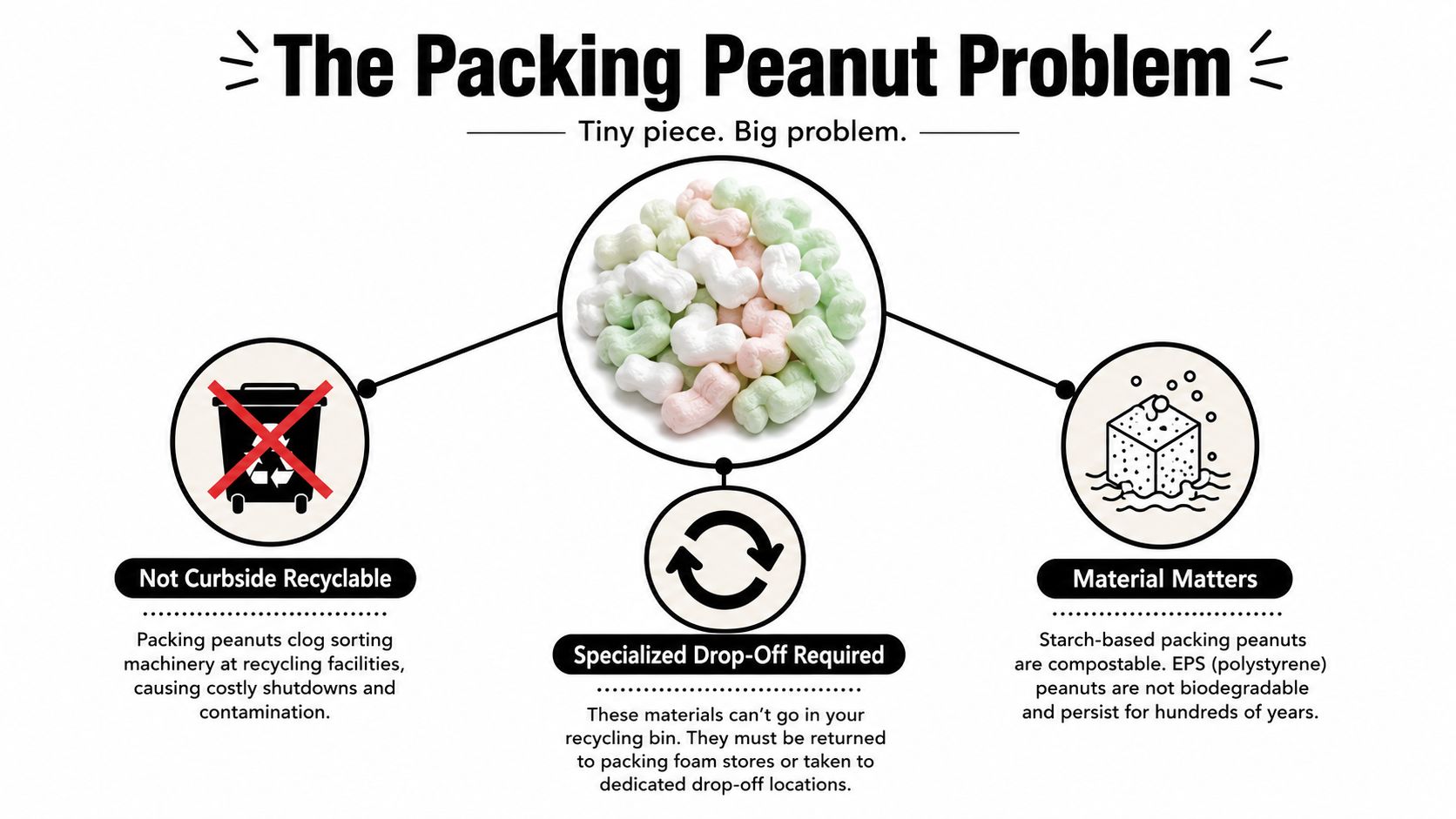
Practical rule: if the loose fill isn't clearly identified, don't let it near the mixed recycling cart.
That's why the first move is simple. Identify the material, separate it from the rest of the box, and send it into a reuse or specialized recovery path. If your team is still tossing everything into a commingled bin, the issue isn't the peanuts, it's the process.
Identifying Starch-Based vs Polystyrene Peanuts
You don't need a lab to sort loose fill correctly. You need a habit your receiving team can run in under a minute. A quick look, a quick squeeze, and a simple water test will tell you what you're handling before it gets mixed with tape, labels, or cardboard.
Fast field tests that actually work
Starch-based peanuts are made from plant-derived starch sources such as sorghum, potatoes, corn, grains, or cornstarch, and they dissolve in water. EPS polystyrene peanuts are plastic foam, and they don't. That difference matters because one belongs in compost or dissolution handling, while the other belongs in reuse or specialized foam recovery. Biodegradable starch-based peanut overview
Use three checks at the dock:
- Water-drip test: a starch peanut softens and dissolves, while EPS stays intact.
- Two-finger squeeze: starch compresses more readily, EPS feels springy and rebounds.
- Visual scan: most peanuts have the familiar loose-fill shape, but dyed starch variants can look different, so don't rely on color alone.
Drop one sample into a cup of water, not the whole bag. A small test is enough to classify the load without creating a mess.
Also watch for impostors. Static-charged EPS scraps can cling to cardboard, and dyed starch peanuts can stain if they get damp in a wet storage area. That's why the receiving dock needs a labeled split, one bin for compostable starch fill, one for clean EPS destined for reuse. If the streams mix, the whole bag becomes a contamination problem.
Set up the dock so people don't have to think
A good receiving process is boring in the best way. Put a clearly marked bin near the inbound area, train staff to separate loose fill before the box gets flattened, and make sure the team knows never to throw unidentified peanuts into general recycling. If you already use a packing workflow for outbound shipments, fold the classification step into that routine so it doesn't feel like extra work. For packaging teams that also handle e-commerce returns, the same discipline applies when items are repacked for outbound shipping. Reworx packaging guidance for shipped electronics
The point is speed. If staff can classify peanuts in seconds, they'll do it. If the process is confusing, the load ends up contaminated, and nobody wins.
Safe Storage and Handling at the Office or Warehouse
Once you've identified the material, storage becomes the next gate. A lot of businesses lose the value they just sorted, because clean peanuts get mixed with dust, tape, and torn packaging scraps. Keep the stream clean, dry, and separated, or don't bother collecting it at all.
Bag it clean and keep it dry
For EPS packing peanuts, the usable route depends on clean feedstock. Earth911 notes that recyclable streams typically need peanuts separated from cardboard, paper, plastic bags, tape, and labels, then bagged together in a clear plastic bag and kept clean and dry. That's not a nicety, it's the difference between accepted material and a rejected load. Earth911 packing peanut guide
Use a simple rule set:
- Clear bag only: pack peanuts in a transparent bag so handlers can see contamination.
- No mix-ins: keep out paper, labels, tape, cardboard, and plastic film.
- Dry storage: moisture ruins reuse value fast.
- Separate by type: starch fill should never sit in the same container as EPS.
Clean loose fill is storage inventory. Dirty loose fill is trash with extra steps.
If your dock is tight, stack bagged peanuts on a pallet and keep them off the floor. That protects the material and makes it easier to move when a shipper, donation partner, or specialized outlet is ready to take it. It also helps housekeeping, because loose foam drifting through a warehouse is the kind of mess that gets everyone annoyed.
Don't ignore worker safety
Loose-fill EPS can create a handling headache if it's allowed to accumulate in a storage room. The safest habit is simple, collect small volumes often and don't let bags sit open. If your operation already tracks worker-protection procedures for warehouse tasks, fold peanut handling into the same routine so the receiving team doesn't invent its own shortcuts. Worker protection standards guidance
The standard is straightforward. If it's clean, dry, and bagged, you can keep it in circulation. If it's torn up, damp, or mixed with other box debris, it should move out quickly instead of becoming another shelf burden.
Reuse, Donation, and Mail-Back Programs That Work
Most generic guides fail because they jump straight to disposal, but packing peanuts are still a reusable shipping asset when you handle them correctly. If you're managing a business, the smartest move is to route clean EPS into reuse first, then use a mail-back or drop-off option when you don't have a nearby partner.
Start with reuse partners before you think about waste
Call local pack-and-ship stores, shipping counters, and office supply partners that handle outbound cartons. Some UPS Store and FedEx Office locations accept clean loose fill for reuse, but don't assume every branch will take it, call ahead and confirm bag requirements. That conversation is worth the minute it takes, because a clean bag of EPS can protect someone else's shipment instead of going to the landfill.
For businesses that generate peanuts regularly, set up a recurring pickup or transfer point with a local partner that can move the material quickly. Schools, makerspaces, and small e-commerce shippers can also absorb inventory fast if you keep the peanuts clean and dry. Reuse works best when you treat it like inventory rotation, not a one-off cleanup.
If you don't have a nearby drop-off, mail-back programs fill the gap. That's where a service like Reworx Recycling's recycle-by-mail option fits into a business workflow for packaged materials that need a shipment-based recovery route. Use it when geography makes local handoff impractical.
Pick the channel that matches volume
| Channel | Typical Cost | Volume Fit | Best For |
|---|---|---|---|
| Local drop-off | Low | Small to moderate | Offices, retail backrooms, low-volume warehouses |
| Mail-back | Moderate | Small to moderate | Remote sites, multi-location businesses, no nearby partner |
| On-site pickup | Varies | Moderate to high | Warehouses, recurring overflow, bulk office cleanouts |
The right answer depends on how much loose fill you move and how often it shows up. If peanuts arrive every week, build the process into your shipping and receiving routine. If they show up only after a large office cleanout, plan a one-time transfer and move on.
Composting Starch-Based Peanuts and Choosing Better Alternatives
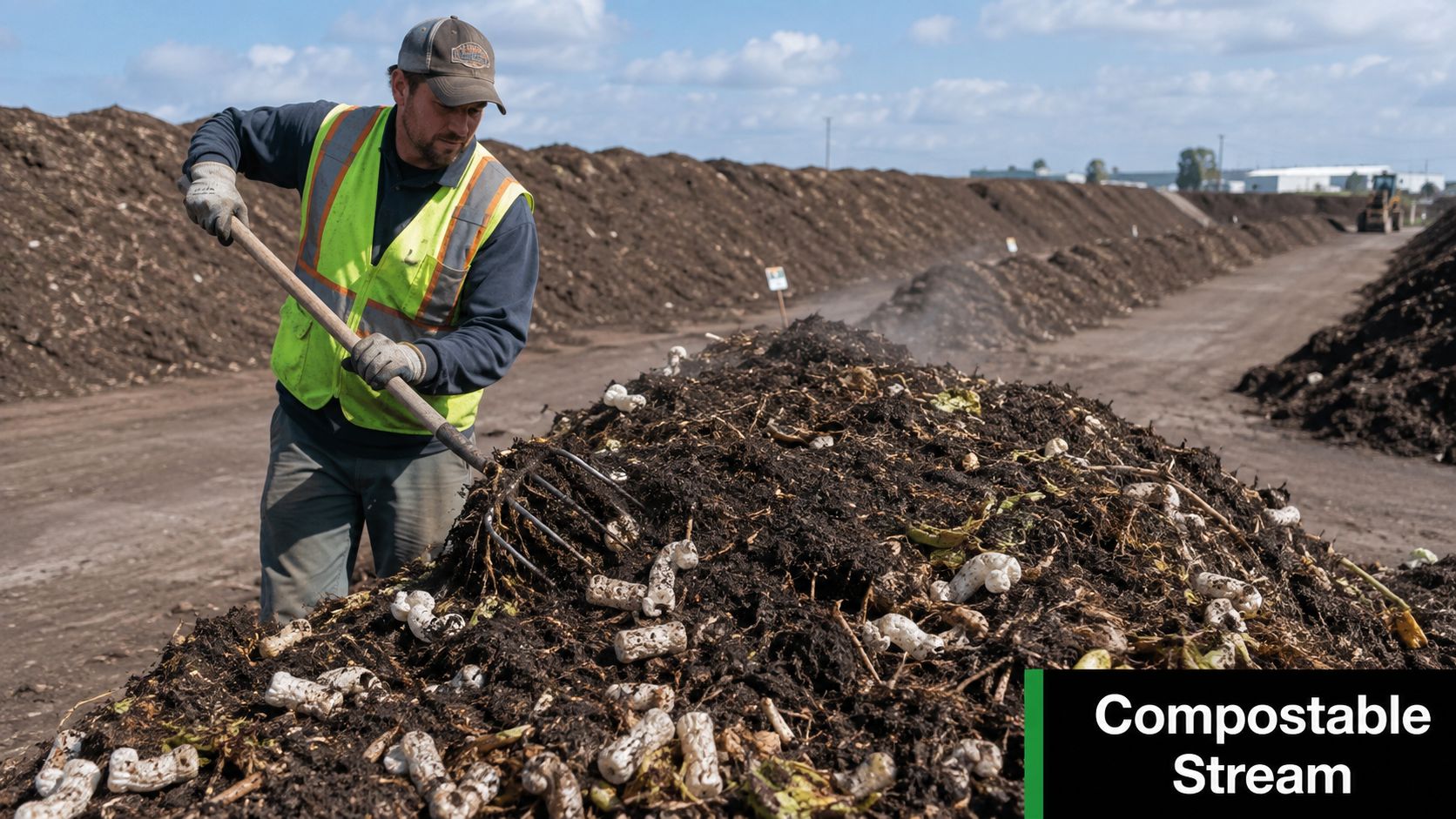
Starch-based peanuts are the easy win, but only if you treat them like a compostable stream, not a foam problem. They're made from plant starch and dissolve in water, which gives them a completely different end-of-life path from EPS. That's why businesses should stop asking whether all packing peanuts are recyclable and start asking whether the incoming material is compostable, reusable, or neither.
Composting needs the right system
A starch peanut belongs in compost only when your system can break it down. Home composting is fine for small volumes, but commercial composting is the better choice for warehouse-scale output because it's built for consistent moisture and microbial activity. If you're unsure which setup makes sense, a practical primer like choose the right composting system helps frame the decision without overcomplicating it.
For small offices, a countertop or backyard compost path can handle occasional starch peanuts. For larger operations, don't assume a DIY bin will keep up. Wet, compacted, or contaminated material slows the whole process down.
Buy less waste in the first place
The stronger move is procurement. Ask suppliers to specify compostable loose fill on purchase orders when starch peanuts make sense, and push vendors away from sending EPS when your receiving team doesn't need it. That shift doesn't eliminate the need for reuse, because EPS will still show up in the supply chain for years, but it cuts the volume of plastic foam you have to manage in the first place. If your business is trying to reduce landfill waste more broadly, use Reworx Recycling's landfill reduction guidance as a model for tightening the rest of your packaging stream.
My opinion is simple. If your operation ships enough to control packaging specs, switch the default to starch-based loose fill where it makes sense, keep EPS out of mixed recycling, and keep reuse as the backstop for the foam that still arrives.
A Quick Packing Peanut Checklist and Where Reworx Fits
Use this at the receiving dock and don't overthink it. Identify the material. Separate starch from EPS. Keep it clean and dry. Bag it clearly. Route it to reuse, compost, or specialized recovery. If the material is mixed with tape, labels, or cardboard scraps, stop treating it like a recovery stream and move it out.
That same dock is usually where office cleanouts start, too. Businesses handling shipping waste are often also managing surplus laptops, old peripherals, and decommissioned IT gear, which is where donation-based electronics recycling and IT asset disposition become part of the same operational picture. Reworx Recycling handles free customer drop-off, business pickups, equipment decommissioning, and secure hard drive shredding with data destruction, so it can cover both the boxes and the hardware that came in them.
One clean process beats five ad hoc fixes every time.
If your team wants a more organized way to handle shipping leftovers, office cleanouts, and end-of-life devices together, keep the receiving checklist simple and route the next batch the right way.
If your business is sorting packing peanuts, it's probably also dealing with old computers, printers, and other surplus equipment. Reworx Recycling can help with electronics recycling, secure data destruction, pickups, and donation-based reuse so the whole cleanout moves faster. Visit Reworx Recycling to plan your next pickup or partner with a team that handles the hard part without making your staff do guesswork.