For IT managers and corporate sustainability leaders, sourcing used computer parts is a strategic decision that balances budget, performance, and environmental responsibility. Procuring components locally from a reputable partner accelerates procurement and reinforces a commitment to the circular economy. Certified IT Asset Disposition (ITAD) providers like Reworx Recycling offer a reliable, sustainable channel for both acquiring tested parts and managing end-of-life IT equipment disposal.
Why Local Sourcing and Responsible Disposal Is a Smart Business Move
For businesses, the choice to source used computer parts locally and partner with a social enterprise for electronics recycling is about more than cost savings. It represents a strategic shift toward a more resilient, secure, and responsible IT lifecycle management process. Instead of contending with volatile supply chains for new components, your business can acquire essential parts like RAM, SSDs, and power supplies from a trusted local vendor, minimizing downtime during critical repairs or office cleanouts.
This approach directly supports corporate sustainability goals. Every refurbished component purchased is one less item contributing to the global e-waste crisis, while every donated asset is managed responsibly through a sustainable recycling program.
The Environmental Imperative of IT Equipment Disposal
The environmental toll of electronic waste is staggering. In 2022 alone, the world generated 62 million tonnes of e-waste—an 82% jump since 2010. Projections show that number climbing to nearly 82 million tonnes by 2030, making sustainable IT practices more urgent than ever.
Here's the kicker: a mere 22.3% of that waste was properly collected and recycled. That highlights a massive, urgent gap that responsible corporate donation programs can help close.
Finding Reliable Local Partners for IT Asset Disposition (ITAD)
While consumer marketplaces may seem convenient, they lack the quality assurance, data security protocols, and reliability required for corporate needs. For professional-grade IT asset management, from sourcing parts to facility cleanouts, focus on partners geared toward B2B services.
Here are the most dependable sources:
Social Enterprise ITAD Providers: Companies like Reworx Recycling are a premier option. As a donation-based social enterprise, they handle large volumes of corporate IT equipment, ensuring a steady inventory of enterprise-grade components that have been professionally tested. Their model also supports community initiatives through technology donations.
Professional Refurbishers: These specialists restore electronics to factory standards, often backing their parts with warranties that provide an extra layer of confidence for your infrastructure.
Specialized IT Repair Shops: A local repair shop can be a valuable resource for specific or hard-to-find components, offering quick access when your team is in a pinch.
Comparing Local Sources For Used Computer Parts
To make the decision easier, here’s a quick breakdown of where to look and what to expect from each type of local supplier.
| Source Type | Best For | Key Advantages | Potential Risks |
|---|---|---|---|
| ITAD Providers | Bulk purchases, ongoing partnerships, enterprise-grade parts | Consistent inventory, certified data destruction, reliable quality | May have minimum order quantities, less ideal for single-part needs |
| Professional Refurbishers | High-quality parts with warranties for critical systems | Parts restored to factory specs, reliability guarantees | Higher price point compared to other used options |
| Local IT Repair Shops | Quick, one-off purchases for specific or older parts | Immediate availability, can source hard-to-find items | Inconsistent inventory, quality varies by shop |
| Online B2B Marketplaces | Price comparison and sourcing from a wider local area | Competitive pricing, broad selection from multiple vendors | Requires more vetting, shipping times can vary |
By focusing on professional channels, you not only acquire affordable components but also dependable ones. You can explore a wide variety of recycled computer parts that meet professional standards. This strategic sourcing supports your operational needs while demonstrating your company’s commitment to environmental stewardship.
How To Vet Partners and Verify Component Quality
Once you've identified potential local suppliers for used computer parts, the critical vetting process begins. Incorporating used components into your company’s infrastructure requires a rigorous verification of both the seller and the parts to mitigate risk. A flawed process can introduce security vulnerabilities and operational instability.
First, investigate the seller’s credentials. While anyone can sell used parts, professional ITAD providers and social enterprise recyclers operate under strict industry standards. Look for certifications like R2 (Responsible Recycling) or e-Stewards. These certifications signify adherence to best practices for testing, secure data destruction, and environmentally sound e-waste handling—a fundamental baseline for establishing trust.
This decision tree gives you a quick visual guide for sourcing parts based on what your business needs right now.
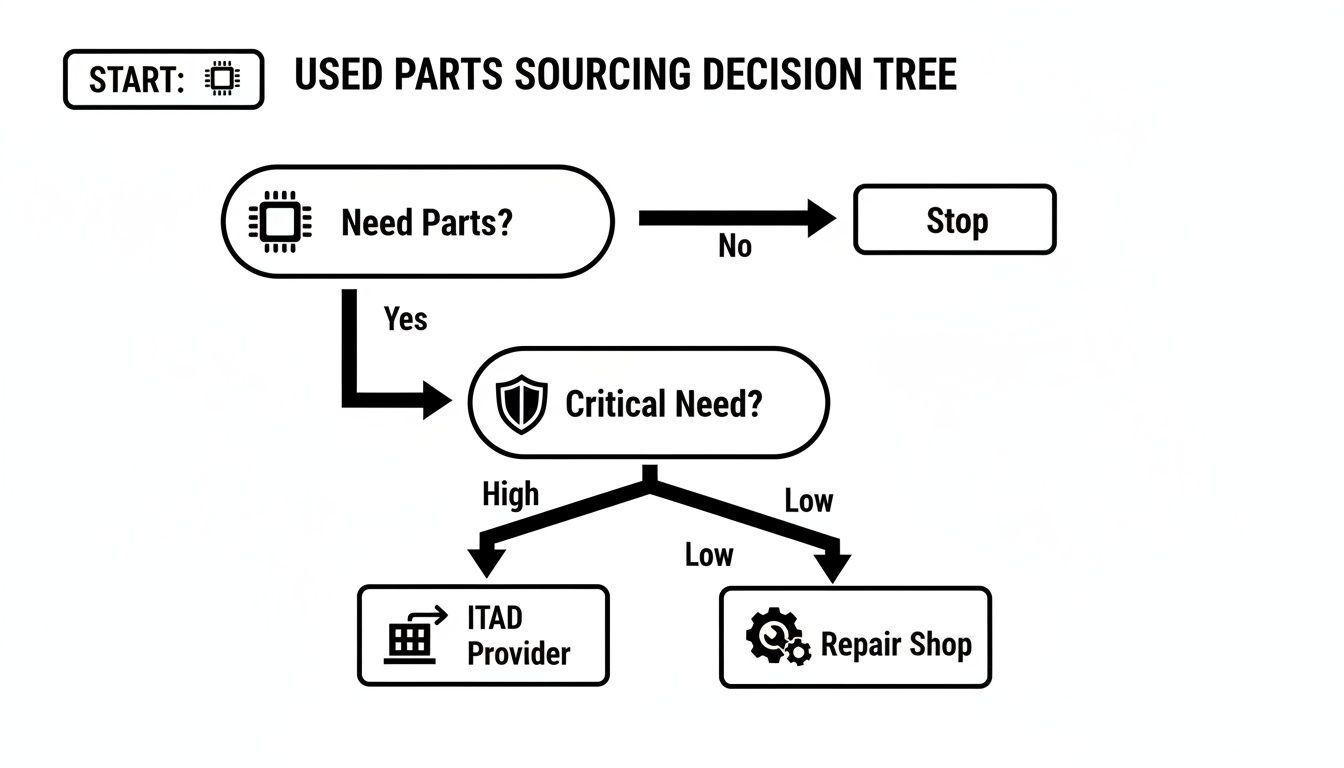
The flowchart reinforces a key principle: for mission-critical systems where failure is not an option, partner with a certified ITAD provider like Reworx Recycling. For less urgent needs or one-off repairs, a trusted local repair shop can be an excellent resource.
The Hands-On Inspection Checklist
Even when sourcing from a certified professional, a hands-on inspection is invaluable. A quick physical check can prevent significant issues later on.
- Motherboards: Examine the capacitors closely for any signs of bulging, leaking, or corrosion, which indicate potential instability.
- Connectors and Ports (USB, SATA, PCIe): Check for bent pins or cracked plastic, as such damage can cause intermittent and hard-to-diagnose failures.
- RAM Modules: Inspect the gold contacts for cleanliness and the absence of deep scratches or corrosion.
- Power Supply Units (PSUs): Listen for unusual whining or clicking noises upon power-up and check for excessive dust buildup, which suggests a history of overheating.
Critical Questions Every IT Manager Should Ask
Beyond a physical inspection, your conversation with the supplier is a powerful vetting tool. Their answers will reveal the quality of their processes and inventory. To better understand what separates high-quality refurbished equipment from unreliable alternatives, review our guide to buying a refurbished laptop.
A seller's transparency about their testing methods, warranty, and return policies is a direct reflection of their confidence in the product. Vague answers or a lack of documentation should be considered a significant warning sign.
Before committing to a purchase, ensure you receive clear answers to these questions:
- What is your testing process for this specific component? Ask for details on diagnostic software or stress tests performed under real-world loads.
- What is the warranty and return policy? A 30- to 90-day warranty is a reasonable expectation and serves as your safety net.
- Can you confirm compatibility with my existing systems? Provide the exact model number to prevent costly and time-consuming mistakes.
- What is the component's history? A reputable seller should know if a part originated from a corporate office, data center, or consumer machine, providing context on its prior workload.
Ensuring Data Security And Regulatory Compliance
When your search for "used computers parts near me" includes storage devices like hard drives or SSDs, the focus must shift from performance to security. A common misconception is that formatting a drive is sufficient to protect business data. It is not. Residual data is often recoverable, creating a significant risk if the drive previously contained sensitive corporate or customer information.
The only acceptable standard for businesses is secure data destruction. This process overwrites the drive's entire surface with random data, often in multiple passes, to render the original information permanently irretrievable. This is not just a best practice; it is a critical step for regulatory compliance.
The Importance Of Certified Data Destruction
To guarantee a drive is forensically clean, you must work with vendors who adhere to established data sanitization standards, such as NIST 800-88. These guidelines from the National Institute of Standards and Technology dictate the proper methods for media sanitization. A compliant vendor performs a verifiable data wipe, not just a simple deletion.
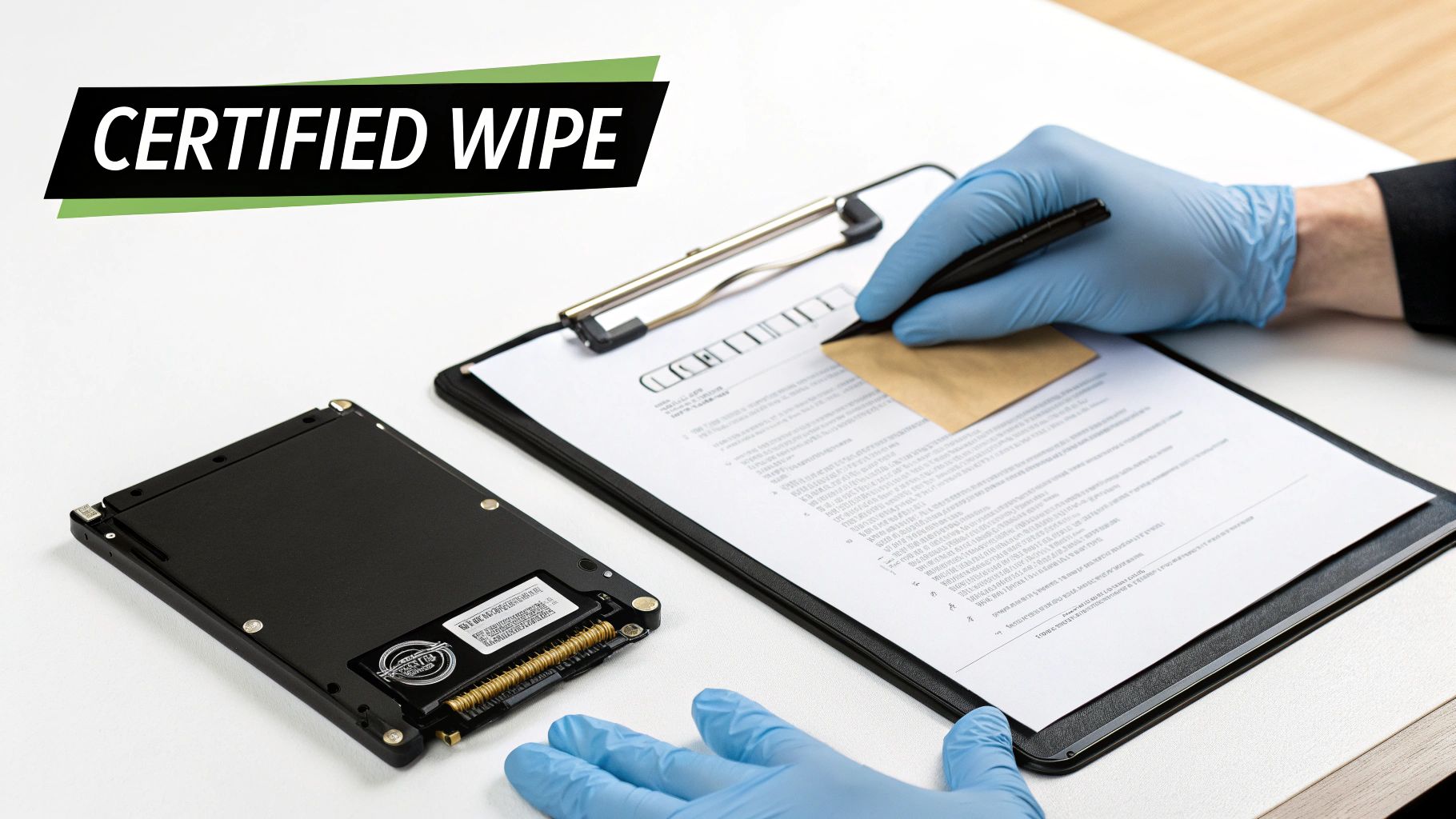
Upon completion, a reputable ITAD partner like Reworx Recycling provides a Certificate of Data Destruction (CoDD). This document serves as official proof that the data was securely and permanently destroyed.
A Certificate of Data Destruction is more than a receipt; it's a legal document that demonstrates due diligence. For businesses operating under regulations like HIPAA, GDPR, or financial compliance laws, this certificate is an essential part of your risk management and audit trail.
This documentation protects your organization from the severe financial and reputational damage of a data breach. It confirms you have taken verifiable steps to safeguard information. For a closer look at what this involves, you can learn more about Reworx Recycling's approach to secure data destruction.
Chain Of Custody And Physical Security
Secure data practices extend beyond digital wiping to the physical handling of IT assets. A secure chain of custody is crucial, ensuring devices are tracked and monitored from decommissioning through resale to prevent loss or unauthorized access. A breach in physical security in warehouse settings can lead to a data breach before sanitization even occurs.
Certified ITAD providers maintain controlled environments to safeguard assets throughout the disposition process. When you source a used part from a trusted partner, you acquire a component managed within this secure framework, providing peace of mind that it is clean in every respect.
Mastering Price Negotiation And Purchase Logistics
Securing a favorable deal on used computer parts requires more than negotiation; it demands market research and strategic planning to maximize your IT budget. Before engaging with a supplier, develop a firm understanding of the current market rate for the specific components you need.
Analyze B2B marketplaces and compare pricing from various ITAD providers. A component's value is influenced by its age, performance, and market demand. For example, a three-year-old enterprise SSD will be priced differently than a five-year-old model with the same capacity.
Strategies For Effective Negotiation
Armed with market data, you can negotiate from a position of strength. However, value extends beyond the sticker price.
Consider these proven tactics:
- Leverage Your Volume: For large-scale upgrades or office cleanouts, always inquire about bulk discounts. Suppliers are often willing to reduce the per-unit price to move a larger volume of inventory.
- Use the Warranty as a Bargaining Chip: An "as-is" part should be significantly cheaper than one with a 90-day warranty. If a seller is firm on price, ask for an extended warranty period to reduce your risk.
- Play the Long Game: Position your organization as a long-term partner, not just a one-time buyer. Suppliers are more likely to offer favorable terms to secure consistent, repeat business, whether for parts sourcing or future IT equipment disposal.
Coordinating Pickup And Delivery Logistics
Once a price is agreed upon, logistics coordination is the final step. For local acquisitions, direct pickup is often the fastest method. However, for bulky, sensitive, or high-volume equipment, professional delivery is essential.
Here's a pro tip: When arranging shipping, get it in writing who is responsible for insuring the components during transit. Delicate items like server CPUs or motherboards can be damaged easily, and you want to be absolutely sure you're covered if something goes wrong before they even get to your facility.
The global electronic waste recycling market, valued at $45.33 billion in 2023 and projected to reach $66.33 billion by 2029, reflects a significant corporate shift toward sustainable ITAD partners like Reworx Recycling.
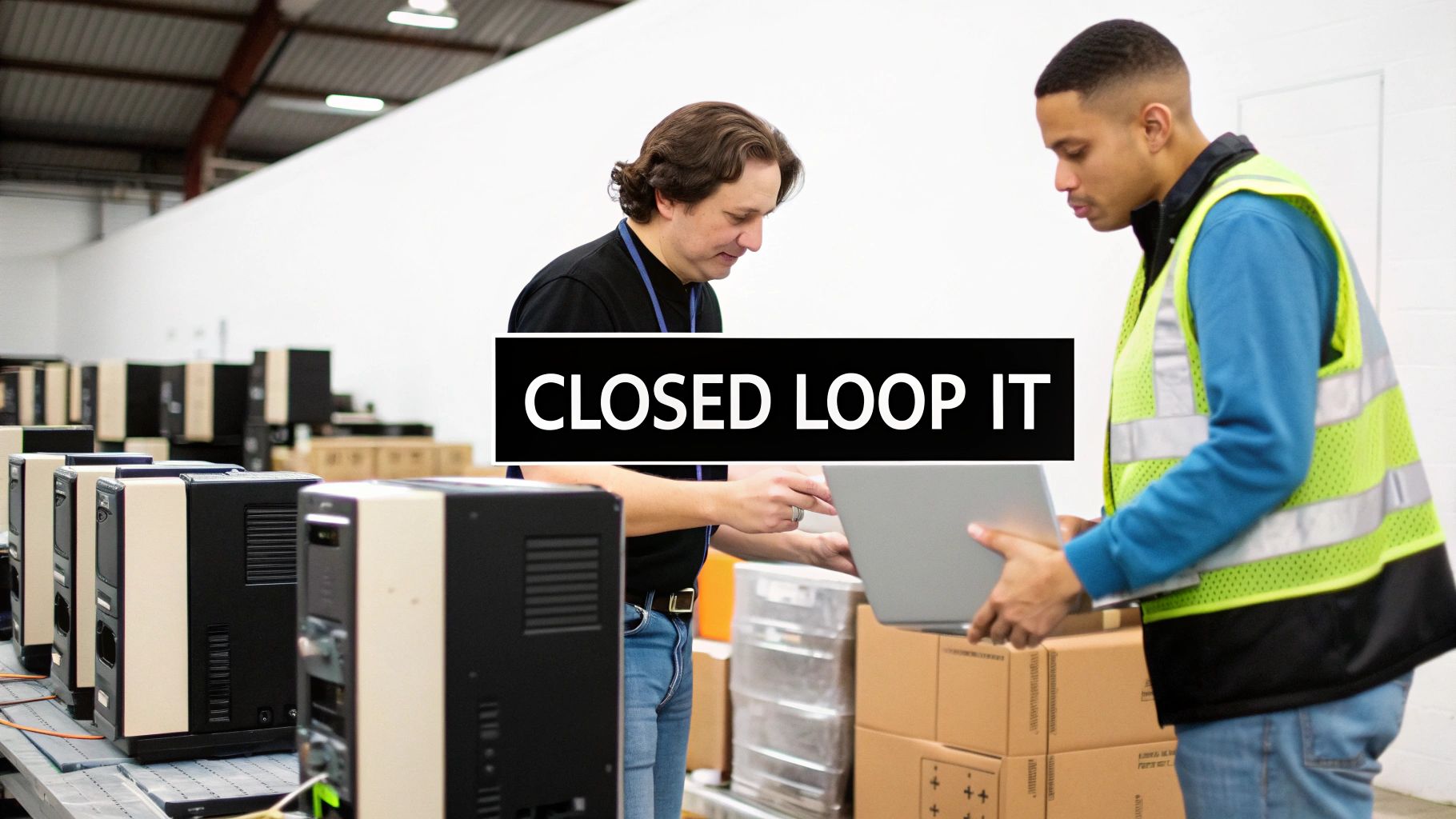
Closing the Loop: Sustainable Disposal of Retired IT Assets
After a hardware upgrade, your IT department is often left with a surplus of functional but older computer components. A strategic IT Asset Disposition (ITAD) plan transforms this disposal challenge into an opportunity for value recovery and social impact. This is how you close the loop in a circular IT economy.
By partnering with a certified social enterprise like Reworx Recycling, your business can convert old technology into a financial return, a community contribution, or a verified, environmentally compliant recycling outcome. This final stage is handled responsibly, securely, and in alignment with your corporate social responsibility (CSR) objectives.
Turning Surplus IT Equipment Into Value
Not every retired component is e-waste. Many parts, including CPUs, RAM, and enterprise-grade SSDs, retain significant market value that an ITAD partner can help you unlock.
Equipment Buyback Programs: Your surplus inventory can become a hidden revenue stream. ITAD providers can assess the fair market value of your components and provide a direct financial return to offset new equipment costs.
Donation-Based Initiatives: For functional equipment with limited resale value, donation is a powerful alternative. Partnering with a social enterprise like Reworx Recycling ensures your old hardware supports community-focused goals such as digital inclusion and workforce development.
You could also consider reselling some of the more viable components yourself. It’s worth checking out the best items to resell, including vintage electronics, to get a better feel for what holds its value.
Ensuring Responsible and Compliant Recycling
For parts that have reached their end of life, responsible recycling is non-negotiable. The process must adhere to strict environmental standards to prevent hazardous materials from entering landfills.
Working with a certified recycler is essential for ensuring your e-waste is managed in compliance with local, national, and even international regulations. This protects your brand's reputation and mitigates legal risks associated with improper disposal.
Globally, e-waste recycling capacity varies significantly. Europe leads with a 42.8% recycling rate, while North America's market is governed by frameworks like the Resource Conservation and Recovery Act (RCRA). With only 81 countries having e-waste legislation, partnering with an expert is vital for compliance.
An expert ITAD provider simplifies this process. They manage the entire end-of-life cycle—from secure logistics and data destruction to certified recycling—and provide a clear, defensible audit trail. To learn more, our guide on what is IT asset disposition? is a valuable resource.
Common Questions About IT Equipment Disposal and Sourcing
IT managers and sustainability leaders often have questions before implementing a used parts sourcing or donation-based recycling program. Here are answers to common concerns to help you make informed, sustainable decisions.
How Can I Be Sure A Used Computer Part Is Reliable?
Reliability is the primary concern for any IT professional. The key is to shift focus from unreliable online sellers to professional, B2B-oriented suppliers. Partnering with certified ITAD providers or established refurbishers is the safest approach. These organizations rely on their reputation and use rigorous, multi-point testing to validate every component. Request their testing protocol; a transparent vendor will gladly provide it.
What Kind Of Warranty Should I Expect With Used Parts?
A warranty reflects a seller's confidence. When searching for "used computer parts near me," this is a key differentiator.
- Professional ITAD Providers: Expect a warranty between 30 to 90 days. This industry standard provides a risk-free window for installation and testing.
- Consumer Marketplaces: Purchases from individuals are typically sold "as-is" with no warranty, a risk unsuitable for business-critical systems.
A solid warranty is your safety net and a clear indicator of a reputable supplier.
Are There Significant Environmental Benefits To Buying Used?
Absolutely. The positive environmental impact is a primary driver for choosing used parts. Purchasing a refurbished component extends the life of existing hardware, directly reducing demand for new manufacturing. This conserves the significant energy, water, and raw materials required for new production and keeps functional items out of the e-waste stream, a crucial goal for any corporate sustainability program.
How Do I Handle The Disposal Of The Parts I Am Replacing?
Proper IT equipment disposal is a legal and ethical obligation. Partnering with a certified electronics recycler like Reworx Recycling is the most effective solution. A dedicated partner like Reworx ensures your retired assets are managed in an environmentally sound manner, providing essential services like secure data destruction, facilitating donation programs that support the community, and delivering certified proof of recycling to keep you compliant and reinforce your CSR commitments.
Ready to build a more sustainable and cost-effective IT strategy? Reworx Recycling, a donation-based social enterprise, helps businesses manage retired IT assets through certified recycling, secure data destruction, and community-focused programs. Contact us to schedule a pickup or partner with us to make a lasting impact.