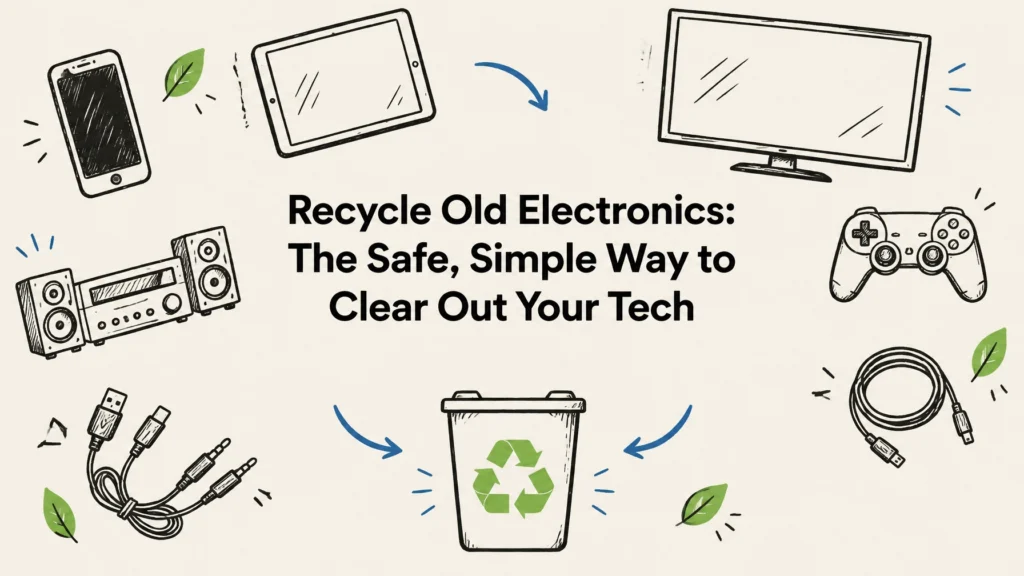
To recycle old electronics safely, sort out devices you can reuse, protect any personal information, then take the rest to a recycler that explains what it accepts and how it handles data. Phones, tablets, game systems, audio equipment, computers and cables may all be candidates, but acceptance varies by recycler. A quick check before you pack up can save you a wasted trip.
What household electronics can you recycle?
A home clean-out can turn up a surprising mix: old phones in a drawer, a tablet no one uses, a game controller with a missing cable, or a router from an internet provider you no longer have. Many electronic devices contain materials that should be handled through an appropriate reuse or recycling program rather than put in the household trash.
Reworx accepts many types of electronics, including computers, phones, tablets, audio and video equipment, game systems, networking devices and cables. Some items have special requirements, fees or restrictions, and not every household appliance or electronic item is accepted. Check the accepted items list or ask us about a specific item before you bring it in or schedule service.

How to recycle old electronics in five steps
1. Gather your devices and sort them
Start by collecting electronics from closets, drawers, desks and entertainment centers. Group similar items together, and keep accessories with the device when you can. Chargers, power cords, keyboards and mice may also be accepted, but it’s worth checking first.
Set aside anything that still works and could be used by someone else. Reuse can be a good option for working equipment, while broken or outdated items may be better suited to recycling.
2. Back up and sign out of devices
Before letting go of a phone, tablet, computer or game console, save any photos, contacts or files you want to keep. Then sign out of accounts and remove the device from linked services, such as account or trusted-device lists.
For devices you plan to give away or sell, follow the manufacturer’s instructions for a factory reset or secure erase. Simply deleting files may not remove all the information stored on a device. Remove SIM and memory cards if the device has them.
3. Choose the right data-destruction method
A secure wipe and physical shredding serve different purposes. A working device that may be reused can often be wiped using a process aligned with NIST 800-88 guidance. If a drive is damaged, cannot be reliably erased, or should not remain intact, shredding the hard drive is another option.
At Reworx, we offer free data destruction for eligible devices. Depending on the device and its condition, that may mean wiping or hard drive shredding. Ask how your equipment will be handled, how it stays accounted for during the process, and whether you’ll receive a certificate of destruction. Our hard drive shredding service provides a certificate for records.
If you’re clearing out a work device that may contain customer, employee or business data, keep the destruction record with your files. Organizations should confirm that the recycler’s process fits their own privacy and compliance requirements.

4. Prepare batteries and damaged devices carefully
Remove a battery only if the device is designed for safe, user removal. Don’t pry open a sealed device or try to remove a swollen, leaking or damaged battery yourself. Loose batteries may need to go through a separate local battery collection program, so check local instructions rather than placing them in a recycling box or household trash.
Keep devices dry, and set aside anything with a damaged battery. Contact the collection site for directions before transporting it. Reworx does not accept loose batteries, so ask us about the specific device and its battery before drop-off or pickup.
5. Pick a recycling option that fits your clean-out
The best option depends on how much equipment you have and whether any items might have resale value. Here’s a quick comparison:
| Option | Best for | What to check |
|---|---|---|
| Drop-off | A few smaller items you can transport | Accepted items, location, access hours and any item-specific fees |
| Pickup | A larger collection or equipment that’s hard to move | Whether pickup is available for your address and household items |
| Buyback | Working equipment that may have resale value | What devices qualify and how value is assessed |
Reworx provides free nationwide pickup for eligible collections and serves all 50 states. Pickup availability for household equipment can depend on the service and location, so confirm what applies before you plan around it. Residential drop-off may be another option. We’re headquartered in Smyrna, Georgia, in metro Atlanta, and can help you check the right route for your items wherever you’re located.
If you have equipment that may still be worth something, ask about equipment buyback. For regular recycling, see our electronics recycling service.
What to ask before handing over electronics
A few simple questions can help you choose a recycler with confidence:
- Do you accept each item I have, including its accessories or battery?
- How do you protect data-bearing devices during collection and processing?
- Do you wipe eligible storage devices or shred them, and can you provide a certificate of destruction?
- How do you handle equipment that may be reused, and how are items sent for recycling processed downstream?
- Is pickup available at my address, or should I use a drop-off option?
Look for clear answers about handling, data security and downstream processing. Reworx uses certified eco-friendly recycling programs and responsible, R2-style downstream processing. If you’re comparing recyclers, ask about their specific downstream partners and processes rather than assuming every provider handles equipment the same way.
For a small household batch, ask whether a tamper-proof drop-off box is available nearby and confirm its location and hours before you go. Access and options can vary. You can also ask about after-hours or flexible scheduling, and text us for a quick answer or help getting started.

A responsible clean-out can do more than clear a shelf
Recycling keeps old electronics in a managed process instead of leaving you to guess how to dispose of them. When equipment can be refurbished and reused, it may also help someone else get access to useful technology.
Reworx’s mission includes bridging the digital divide by getting refurbished technology and support to marginalized and vulnerable communities for education and career readiness. So, when an item is suitable for refurbishment, your old tech may help support a new opportunity.
FAQs about recycling old electronics
Where can I recycle old electronics near me?
Start by checking what your local collection program accepts, then look for a recycler that can explain its data and downstream handling. Reworx serves all 50 states; ask us which pickup or drop-off option is available for your address and items.
Do I need to wipe my phone before recycling it?
Back up what you want to keep, sign out of accounts, remove your SIM and memory card if present, and follow the manufacturer’s reset instructions. For extra assurance, ask the recycler about its data-destruction process.
Can I recycle electronics with a broken screen or that won’t turn on?
Often, yes, but it depends on the item and the program. Tell the recycler what’s damaged, especially if the device has a swollen or leaking battery, and ask for instructions before bringing it in.
Is electronics pickup free?
Reworx offers free nationwide pickup for eligible collections. Household pickup availability can vary by address, item and service, so confirm your options before scheduling.
Ready to clear out your tech?
Make a quick inventory, check the accepted items list, and tell us what you have. You can schedule a pickup or request service, and text us if you’d like help choosing the right option.