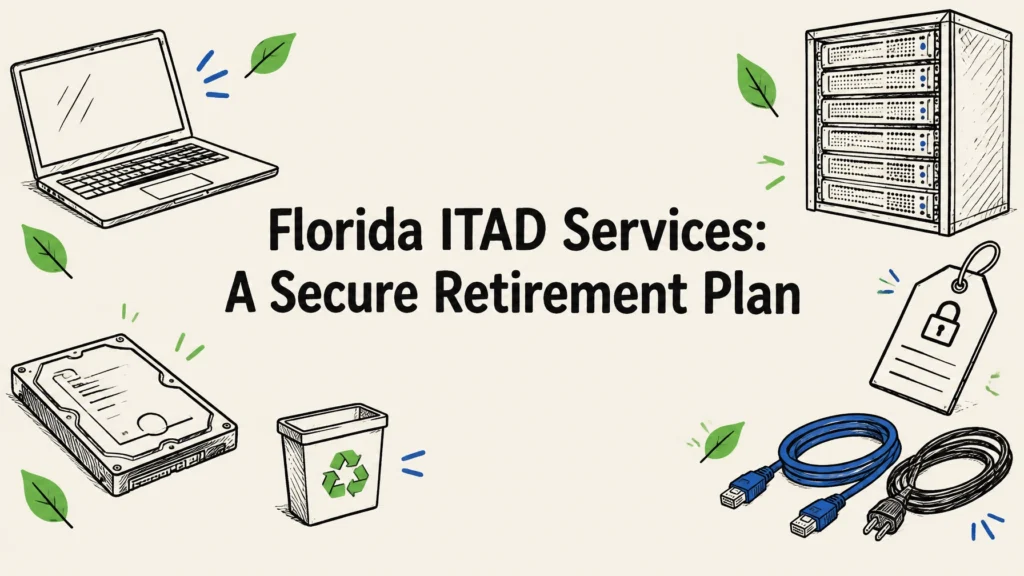
Florida ITAD services help businesses retire computers, servers, phones, network equipment, and other technology while protecting the information they hold and routing equipment responsibly. A sound process tracks assets from pickup through data destruction, reuse, or recycling, with records that document what happened. Reworx Recycling offers free nationwide pickup and free data destruction, including secure wiping or hard drive shredding with a certificate of destruction.
What IT asset disposition means for your business
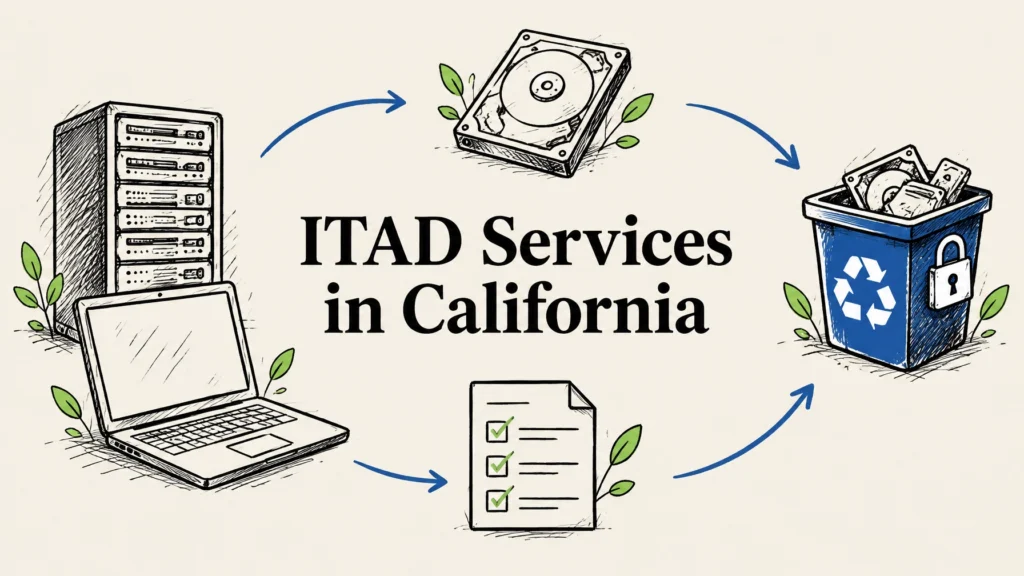
IT asset disposition, or ITAD, is the planned handling of business technology when it is no longer needed. It can cover inventory, secure transport, data sanitization, reuse or equipment buyback, and responsible recycling.
That’s useful whether you are replacing a few laptops, clearing an office, or decommissioning servers and network hardware. A clear process helps your team avoid leaving data-bearing equipment in a storage room or sending devices out without knowing how they will be handled.
Florida does not have a general statewide requirement that every business recycle all unwanted electronics. That does not mean every device or component can go in the trash. Batteries and certain hazardous or universal-waste items may have separate handling requirements. The Florida Department of Environmental Protection’s electronics waste guidance is a useful starting point; confirm how rules apply to your equipment and organization.
Data is a separate concern. Florida’s Information Protection Act addresses reasonable disposal of covered personal information. Depending on your industry, contracts and requirements such as HIPAA or PCI DSS may also shape your process. If you have a retention schedule or legal hold, check it before authorizing destruction.
Build security into each step
The equipment that leaves your site may contain customer records, employee information, saved credentials, or business files. Deleting visible files or formatting a drive is not the same as securely sanitizing it.
For reusable media, ask about a verified wipe using a NIST 800-88-style approach. For drives that cannot be reliably wiped, or that your policy requires you to destroy, hard drive shredding offers a physical route. Whichever method you choose, ask how assets are tracked, how handoffs are documented, and what proof you will receive.

Wiping, degaussing, or shredding?
The right method depends on the media type, whether you want to reuse the device, and your organization’s security policy. Degaussing is for magnetic media and is not suitable for SSDs or flash storage.
| Method | Best fit | What to confirm |
|---|---|---|
| Wiping | Media intended for reuse or resale | The method follows your policy, results are verified, and the asset is identified in a report |
| Degaussing | Suitable magnetic media, such as some traditional hard drives or tapes | The media type is compatible; the drive may no longer be usable |
| Shredding | Media that must be physically destroyed or cannot be wiped reliably | The media is tracked through destruction and listed on a certificate |
Reworx offers free data destruction through secure wiping or hard drive shredding. A certificate of destruction gives you a record of the service. Ask whether the documentation will identify relevant assets or serial numbers, the method used, and the date. For a closer look at the service, visit our hard drive shredding page.
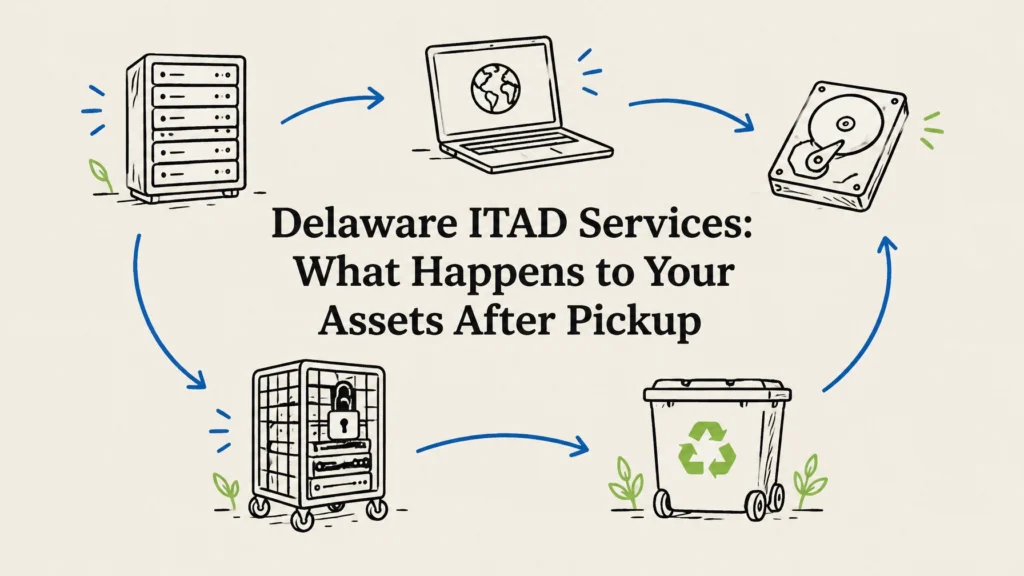
How a Florida ITAD project runs
A well-organized project begins before equipment is loaded. These steps help your team prepare and make the handoff easier to document.
-
Set the scope. List the locations, equipment types, approximate quantities, and preferred timing. Include computers, servers, storage devices, phones, printers, monitors, and networking equipment as applicable.
-
Check records and holds. Confirm that devices are no longer needed for business, legal, or retention purposes. Identify equipment that requires special handling or a specific destruction method.
-
Prepare an inventory. Record asset tags or serial numbers when possible, along with device type and condition. Separate data-bearing devices from accessories and general electronics so the handling plan is clear.
-
Arrange secure pickup. Coordinate access, loading areas, and handoff contacts. Reworx provides free nationwide pickups, and after-hours scheduling can help when regular business hours are not practical. Tamper-proof drop-off boxes may also be an option for suitable projects; confirm availability and accepted items when arranging service.
-
Sanitize, destroy, or assess for reuse. Data-bearing equipment is wiped or physically destroyed according to the agreed plan. Working equipment may be assessed for equipment buyback or another reuse path, while end-of-life electronics are sent through responsible recycling.
-
Collect and retain the records. Request the certificate of destruction and any available disposition documentation. Keep these with your inventory and project records so your team can show what happened to retired assets.
Choosing a recycling and ITAD partner
The provider you choose should be able to explain the path from pickup to final disposition in plain language. Before scheduling, consider asking:
- How do you maintain chain of custody from collection through processing?
- Which data destruction methods are available, and how do you decide which one fits?
- What information appears on the certificate of destruction?
- How do you handle equipment that may still have resale or reuse value?
- How do you manage downstream recycling and document responsible processing?
- Can you work around our site access needs or schedule an after-hours pickup?
Look for clear answers rather than broad assurances. A responsible electronics recycling program should explain how equipment is sorted and routed, and how data-bearing devices are handled separately from ordinary recycling. Reworx offers nationwide IT asset disposition services and electronics recycling for businesses with both small and bulk equipment needs.

Reuse, buyback, and responsible recycling
Not every retired device needs the same outcome. Equipment that is functional and suitable for another user may have reuse or buyback potential. Devices that are obsolete, damaged, or unsuitable for reuse can be routed for responsible recycling through eco-friendly certified processing and vetted downstream channels.
That distinction matters: reuse can extend the useful life of working technology, while recycling helps recover materials from equipment that has reached the end of its service life. Reworx’s social-enterprise mission also supports bridging the digital divide by getting refurbished technology to marginalized and vulnerable communities for education and career readiness.
Reworx Recycling serves organizations nationwide across all 50 states, with headquarters in Smyrna, in metro Atlanta. Businesses can text for fast service questions, request flexible scheduling, or ask about tamper-proof drop-off boxes for an appropriate project.
FAQs about Florida ITAD services
How much does ITAD cost in Florida?
Cost depends on the equipment, project scope, logistics, and services requested. Reworx offers free nationwide pickup and free data destruction; ask for a project review to understand what applies to your equipment and whether any devices may qualify for buyback.
Do Florida businesses legally have to recycle electronics?
Florida does not have a general statewide mandate requiring all businesses to recycle every type of electronic equipment. However, some components may have specific handling rules, and data-protection requirements may apply to information stored on retired devices. Check current state guidance and your organization’s obligations.
How can a Florida business securely destroy data on old computers?
Choose a method based on the media and your security policy. Reusable drives may be securely wiped and verified; drives that cannot be wiped reliably or must not be reused can be shredded. Keep a certificate of destruction and related asset records.
What electronics can a business include in an ITAD pickup?
Common items include laptops, desktops, servers, phones, monitors, printers, storage devices, and networking equipment. Share an equipment list when you arrange service so the provider can confirm what it accepts and how any special items should be prepared.
Plan your next equipment retirement
Before your next refresh or office cleanout, make a simple inventory and decide which devices need wiping, shredding, reuse assessment, or recycling. Then arrange a pickup and confirm how your equipment will be tracked and documented. Text Reworx Recycling at 678-449-0003 or visit reworxrecycling.org to get started.