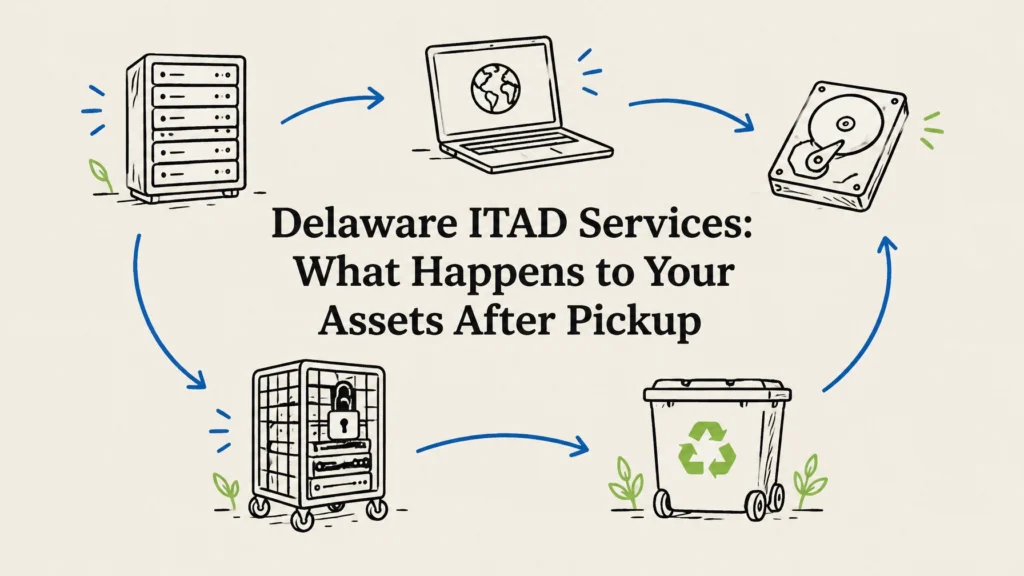
If you’re searching for electronics recycling near me in Delaware for your business, look for more than a place that accepts old devices. A dependable IT asset disposition (ITAD) partner should help protect company data, document what happens to your equipment, and route reusable electronics and materials to responsible next steps.
Public drop-off programs may suit household electronics or certain eligible organizations, but they may not handle a company’s full inventory, data security, or chain-of-custody needs. Before you choose a route, confirm current Delaware rules and program eligibility, then match the service to your equipment and risk requirements.
What businesses need from electronics recycling
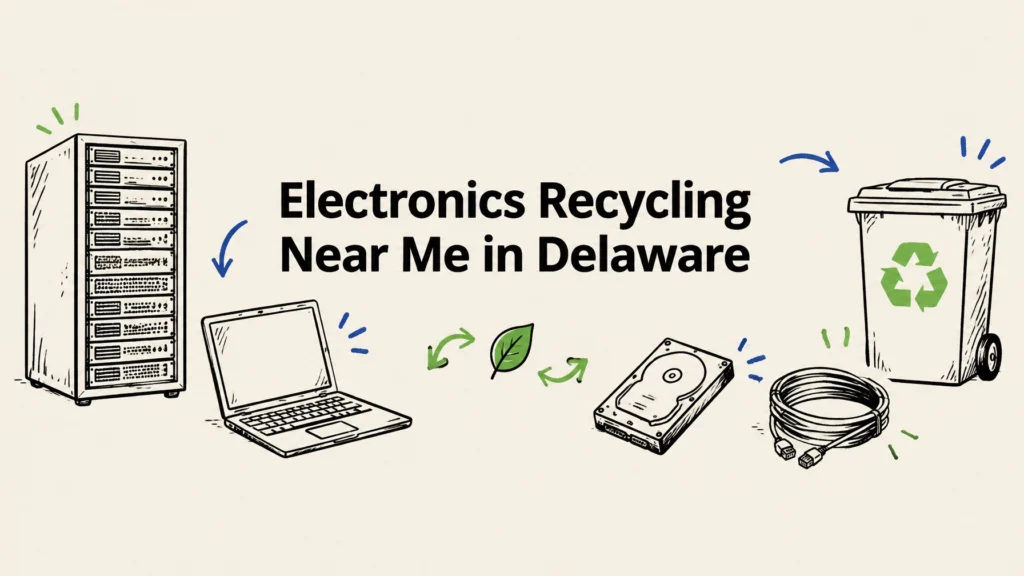
A company’s retired electronics can include much more than laptops. Servers, networking equipment, desktops, monitors, printers, phones, tablets, storage devices, cables, and accessories may all need a clear disposition plan.
The right plan considers three things:
- Data: Does the device store confidential or personal information?
- Condition and value: Could it be reused, refurbished, or eligible for equipment buyback?
- End-of-life handling: If it can’t be reused, how will it be recycled responsibly?
A household drop-off is usually designed for individuals bringing a limited amount of equipment. Business ITAD is a managed process for larger or more sensitive inventories. It can include pickup coordination, an equipment inventory, secure handling, data destruction, and records of completion.
| Residential drop-off | Business ITAD |
|---|---|
| Often suited to a small number of household devices | Designed for organized business equipment clear-outs |
| Accepted items and eligibility can vary by program | Scope can include servers, laptops, network devices, and storage media |
| Usually not built around company inventory records | Can include tracking and chain-of-custody documentation |
| Data handling may be limited or separate | Data destruction can be arranged and documented |
Check the Delaware DNREC electronic-waste guidance and confirm current eligibility with the relevant program before taking business equipment to a public drop-off. Different items may fall under different handling rules, so don’t assume every electronic device belongs in the same collection stream.

How to choose an electronics recycling partner in Delaware
Ask a prospective recycler to explain what happens from the moment your equipment leaves your site until it is reused or processed. A clear answer should cover secure collection, data-bearing devices, downstream handling, and the records you’ll receive.
Partner-vetting checklist
- Confirm the service covers your equipment and location. Share a rough inventory that includes device types, quantities, and pickup locations. Ask how the provider handles servers, networking gear, computers, phones, storage media, and accessories.
- Ask how data is destroyed. Find out whether drives are wiped using a NIST 800-88-style process, physically shredded, or handled another way. The best method depends on the device, its condition, and your organization’s data-retention policy.
- Get the chain-of-custody details. Ask how devices are identified, secured during transport, and tracked. For sensitive equipment, clarify when data destruction happens and who is responsible at each handoff.
- Request written proof. Ask whether you’ll receive an inventory or processing record and a certificate of destruction for data-bearing media. Make sure the records will be detailed enough for your internal files.
- Understand downstream recycling. Ask how equipment that cannot be reused is processed and whether the recycler can explain its environmental standards and downstream partners. Look for certified eco-friendly programs and responsible downstream processing.
- Discuss reusable equipment and possible value recovery. Some working equipment may have resale or buyback potential. Ask what condition, age, or configuration information is needed for an evaluation, and don’t assume every item will qualify.
- Check the logistics before booking. Confirm pickup arrangements, preparation expectations, scheduling flexibility, and whether tamper-proof drop-off boxes are available for your needs. For an after-hours project, ask about flexible scheduling in advance.
These questions help you compare options without focusing only on convenience. If a provider can’t explain what happens to data-bearing devices or how you’ll receive proof of destruction, keep looking.
Wiping or shredding: which is right for your devices?
A secure wipe removes data through a software process. For eligible, functioning devices, a NIST 800-88-style wipe may be appropriate when the equipment could be reused. Ask what method is used and how successful completion is verified.
Physical shredding destroys the drive or storage media, making it unsuitable for reuse. It may be a better fit for damaged devices, media that cannot be reliably wiped, or situations where your policy requires physical destruction. Remember that some devices use solid-state storage rather than a traditional hard drive, so confirm that the destruction method fits the media type.
Whichever route you choose, keep the process documented. A useful record should connect the devices or media to the service performed and include a certificate of destruction when applicable. Businesses should also align the decision with their own privacy, retention, and security requirements, including any relevant HIPAA, PCI DSS, or state data-breach obligations.

Preparing equipment for pickup or drop-off
A little preparation makes a business electronics collection easier and reduces the chance of equipment being overlooked.
- Create a basic inventory, grouped by device type and location.
- Identify devices that contain data, including computers, servers, phones, and storage media.
- Back up business data you still need and follow your organization’s retention policy.
- Sign out of accounts and remove SIM cards from phones when appropriate.
- Label equipment that needs special handling or has a known issue.
- Keep devices and accessories together where practical, and tell the provider about unusually large or sensitive items.
- Confirm whether batteries, lamps, or other components need separate handling under current guidance.
Don’t erase or dismantle company devices if your IT or compliance team requires a specific, documented process. Agree on the data-destruction plan before the equipment is collected.
What happens during a business ITAD project?
A typical project starts with a conversation about equipment, location, timing, and data requirements. Your provider then coordinates collection or another agreed handoff and explains how the equipment will be tracked.
Data-bearing devices are wiped or shredded according to the selected plan. Equipment with reuse potential may be evaluated for recovery, while end-of-life electronics are directed to responsible recycling. Reworx provides nationwide pickup across all 50 states, free data destruction, hard drive shredding, and certificates of destruction. We support certified eco-friendly recycling with R2-style responsible downstream processing.
For a project with tight building access or a limited service window, ask about after-hours scheduling. Tamper-proof drop-off boxes may also be an option for suitable projects. Reworx is headquartered in Smyrna, in metro Atlanta, and serves Delaware businesses as part of our nationwide service area.
Explore our IT asset disposition services to see how a managed process can support a business equipment retirement project.
Can old business equipment help someone else?
Before recycling everything, ask whether any devices may be suitable for reuse or buyback. Equipment condition, age, and configuration affect what options are available, so provide an accurate inventory and request an assessment rather than assuming a payment or donation outcome.
Reuse can also have a community benefit. Reworx’s mission includes bridging the digital divide by helping get refurbished technology to marginalized and vulnerable communities for education and career readiness.
Frequently asked questions
Where can businesses recycle electronics in Delaware?
Businesses can work with an ITAD or electronics recycling provider that can manage commercial equipment, data destruction, and documentation. Public programs may have limits on eligibility or the types and amounts of equipment accepted, so confirm details before using a drop-off option.
Is Delaware’s electronics recycling law only for manufacturers?
Delaware’s electronic-goods programs and waste rules can apply differently depending on the program, the equipment, and who is generating or handling it. Don’t assume that a consumer collection option covers your company’s inventory. Check current guidance with DNREC and confirm requirements that apply to your business.
Should we wipe or shred business hard drives?
Wiping may be suitable for functioning media intended for reuse when the process meets your organization’s requirements. Shredding physically destroys the media and may be a better fit when a drive is damaged or your policy requires destruction. Ask for documentation either way. Learn more about hard drive shredding.
Can an electronics recycler pick up equipment from a Delaware office?
Reworx offers free nationwide pickup, including for businesses in Delaware. Pickup details depend on your equipment and location, so share an inventory and preferred timing when you request service.
What should we do before recycling company laptops?
Back up records you need, follow internal data-retention rules, sign out of accounts when appropriate, and remove SIM cards from phones. Keep data-bearing equipment identified so the agreed wipe or shredding process can be completed and documented.
Arrange a secure electronics pickup
If your Delaware business is planning an office cleanout, technology refresh, or equipment retirement, start with a simple inventory and tell us what needs to be handled. Reworx can help you plan free nationwide pickup, data destruction, hard drive shredding, and responsible recycling. Text us for fast service or call 678-449-0003 to discuss your project.