Electronics recycling in Florida gives businesses a practical way to retire computers, servers, networking equipment, and other devices while protecting data and keeping usable materials in circulation. Florida does not have a generally applicable statewide e-waste recycling mandate for businesses, but hazardous-waste rules and your organization’s data-security responsibilities still matter. With a clear inventory and a trusted recycler, you can make equipment disposal easier to manage.
What business electronics can you recycle?
Business e-waste can include desktop computers, laptops, monitors, servers, network switches, routers, phones, printers, and cables. You may also have storage devices, peripherals, or specialty electronics that need a separate review.
Before arranging a pickup, make a list of what you have and where it is. If your organization has equipment at multiple offices, note the location of each group and whether it is ready to move. A recycler can help confirm which items they accept and how they should be prepared.
Batteries, mercury-containing equipment, and older CRT monitors may need special handling. Florida’s electronics waste guidance explains that general solid-waste and hazardous-waste rules may apply, even though the state does not have a specific business electronics-recycling mandate. When you are unsure about a particular item or waste stream, check with your environmental or facilities team before disposal.

A four-step process for Florida business IT equipment disposal
A little preparation can make a technology cleanout safer and more efficient. Use this process whether you are retiring a few laptops or clearing out a room of business equipment.
-
Inventory the equipment. Record device types, quantities, locations, and serial numbers where practical. Note which items contain storage media and flag equipment that may need special handling.
-
Sort by condition and purpose. Separate working or repairable equipment from broken or obsolete items. Identify any assets that may have resale value, and set aside devices that need secure data destruction.
-
Prepare data-bearing devices. Back up records you need to keep, sign out of accounts, remove SIM cards, and follow your organization’s device-management procedures. Do not rely on deleting files or restoring factory settings as proof that business data is unrecoverable.
-
Arrange a documented handoff. Confirm the pickup or drop-off plan, accepted equipment, data-destruction method, and paperwork you will receive. For larger cleanouts, ask how assets are tracked from collection through final disposition.
Reworx Recycling offers free nationwide pickup and free data destruction. Our team can coordinate flexible or after-hours scheduling, and you can text us for a fast response. Reworx is headquartered in Smyrna, in metro Atlanta, and serves organizations across all 50 states.
Protect business data before equipment leaves your site
Company computers and storage devices may hold customer details, employee records, financial information, or internal files. A secure disposition plan should account for data before equipment is moved, not after it arrives at a recycler.
Depending on the device and your security policy, data can be removed with a secure wipe using a NIST 800-88-style process, or the hard drive can be physically shredded. Wiping may be a fit for equipment being prepared for reuse. Shredding is an option when a drive should not be reused or your policy calls for physical destruction.
Ask your recycler what happens to drives that cannot be wiped, how devices are tracked during transfer, and whether you will receive a certificate of destruction. Keep that certificate with your asset records. If your organization has obligations under HIPAA, PCI DSS, state data-breach laws, or internal security standards, confirm that the chosen process and documentation match your requirements.

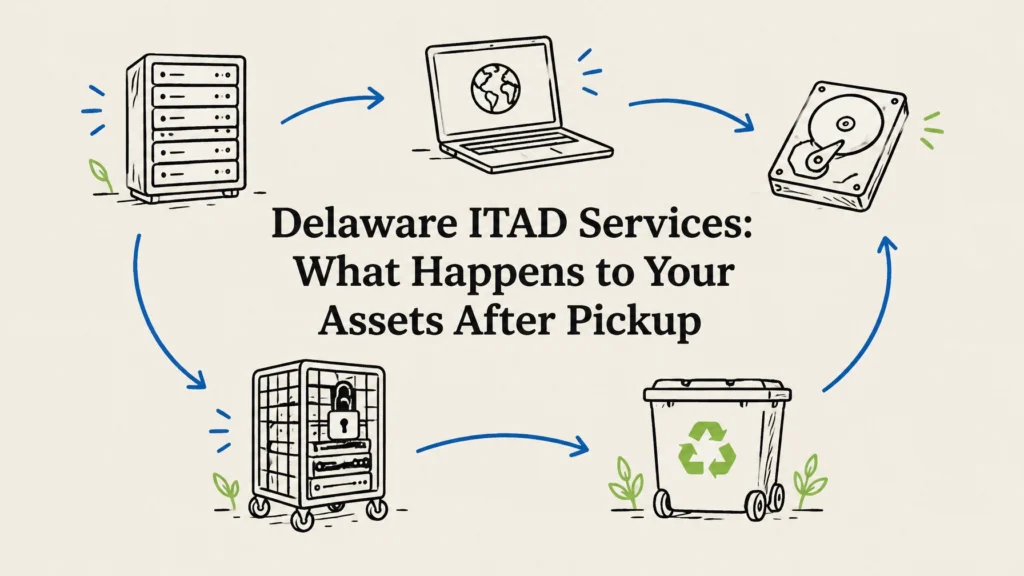
What happens to business equipment after pickup?
Not every device needs the same outcome. Equipment in good working condition may have another useful life, while damaged or obsolete items may need materials recovery.
| Equipment condition | Possible next step | Why it matters |
|---|---|---|
| Working and suitable for reuse | Refurbishment or donation | Keeps useful technology in circulation |
| Working with resale value | Remarketing or equipment buyback | May help your organization recover value |
| Broken, outdated, or not reusable | Responsible recycling | Supports materials recovery and reduces improper disposal |
Reworx’s equipment buyback program can assess eligible used equipment for potential value recovery. A recycler should explain how it determines whether items are candidates for reuse, resale, or recycling, and how downstream processors handle equipment that cannot be reused. Reworx uses certified eco-friendly recycling programs and responsible downstream processing.
Our mission also includes bridging the digital divide by helping provide refurbished technology to marginalized and vulnerable communities for education and career readiness.
Choosing an electronics recycler in Florida
A reliable partner should be clear about data security, transportation, and what happens after equipment leaves your site. Ask questions before scheduling, especially if you are retiring a large volume of devices or handling sensitive data.
Useful questions include:
- Do you provide free nationwide pickup for our equipment and location?
- Is data destruction included, and can you wipe or shred hard drives?
- Will we receive a certificate of destruction?
- How do you document custody and track equipment?
- What happens to reusable, resale-ready, and end-of-life items?
- Can you accommodate a scheduled after-hours handoff?
- Can we use tamper-proof drop-off boxes for a collection program?
For organizations that need a fuller equipment retirement plan, Reworx IT asset disposition services can help coordinate secure handling and responsible outcomes. For straightforward electronics recycling, review our electronics recycling services. Ask about pickup, drop-off, and scheduling options that fit your location and volume.
Frequently asked questions
Does Florida have an e-waste law for businesses?
Florida does not have a generally applicable statewide requirement for businesses to recycle all discarded electronics. However, federal hazardous-waste rules may apply to certain materials, and businesses still need to protect data and follow applicable local requirements.
How do I recycle company computers in Florida?
Start with an inventory, identify devices that contain data, and decide whether each drive should be wiped or shredded. Then arrange a documented pickup or drop-off with a recycler that can explain its data-security and downstream processes.
Can a business recycle servers and networking equipment?
Yes, servers, routers, switches, and other IT equipment are common business recycling items. Share the equipment types and approximate quantities with your recycler so it can confirm acceptance and plan the handoff.
Is data destruction included with electronics recycling?
Reworx offers free data destruction. Depending on the device and your needs, data-bearing equipment can be securely wiped or hard drives can be shredded, with a certificate of destruction for your records.
Make your next equipment cleanout simpler
A short inventory and a clear data-destruction plan can take much of the stress out of Florida electronics recycling. Reworx Recycling offers free nationwide pickup, free data destruction, flexible scheduling, and equipment buyback options for eligible assets.
To get started, call 678-449-0003 or text us for fast service.