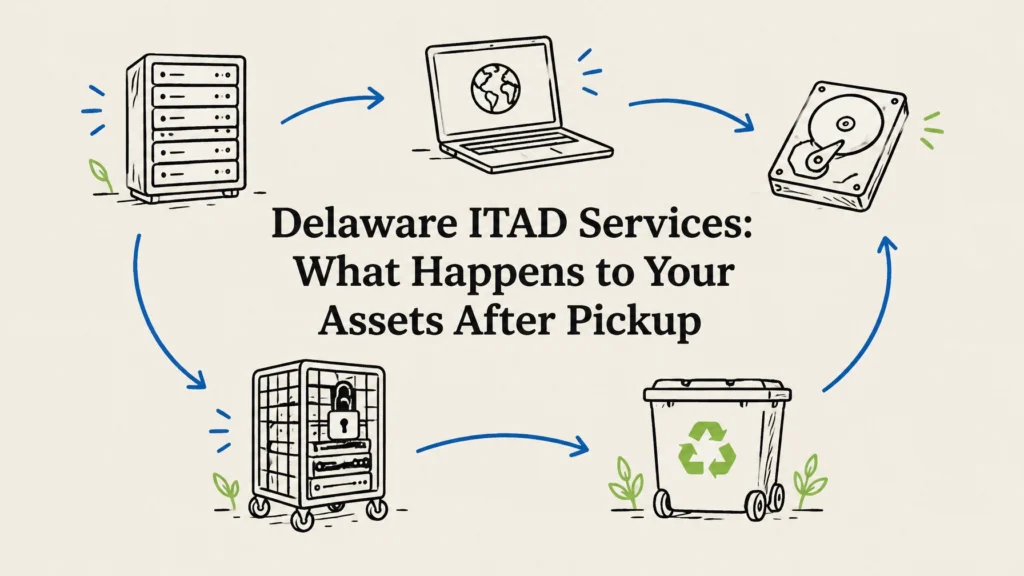
When your retired laptops, servers, and network equipment leave your Delaware workplace, a good IT asset disposition (ITAD) process keeps them accounted for, protects the data they hold, and gives each item a responsible next step. Reusable equipment may be considered for remarketing, while equipment that can’t be reused goes to responsible recycling. You should also receive clear documentation showing how data-bearing assets were handled.
What happens after an ITAD pickup?
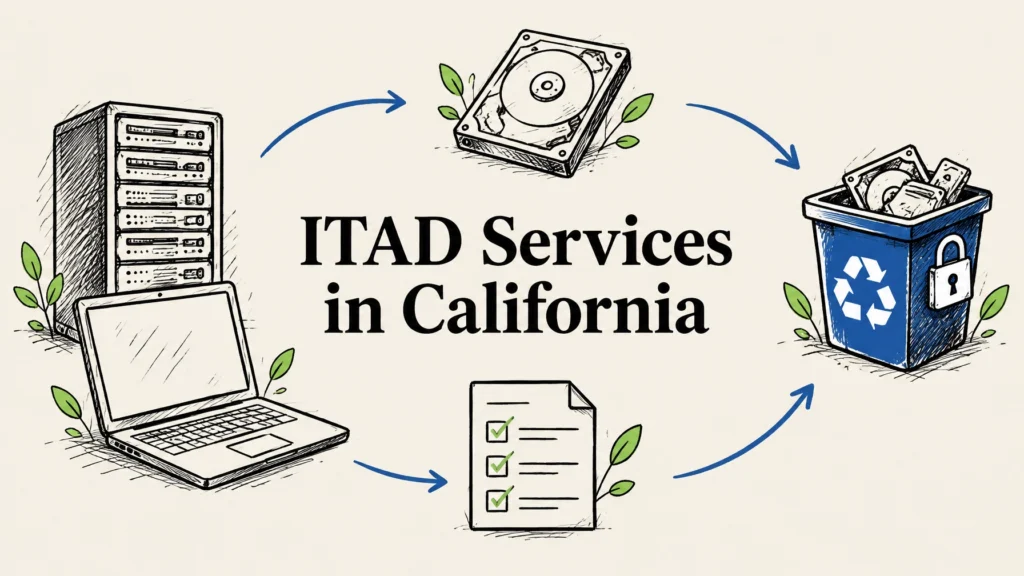
A pickup is the start of the process, not the finish. Assets move through inventory and custody tracking, data destruction, condition review, and a final route for reuse, resale, or recycling.
The exact path depends on what you’re retiring, whether equipment still works, and your organization’s data-handling requirements. For Delaware businesses, it helps to agree on the process and records before equipment leaves your site.

The ITAD journey, step by step
-
Inventory and pickup planning. Identify what you’re retiring, including computers, laptops, servers, storage devices, networking equipment, phones, and peripherals. Note asset tags or serial numbers when available, and flag devices that may hold sensitive data. Reworx Recycling offers free nationwide pickup, including service for organizations in Delaware.
-
Documented handoff and transport. At pickup, confirm which equipment is being transferred and who is responsible for it. Ask your provider how it records handoffs and keeps assets accounted for from your location through processing. A clear chain of custody helps you reconcile what left your building with what was received.
-
Data destruction. Before a data-bearing device is reused or otherwise processed, its information needs an appropriate, documented disposition. Depending on the media and your requirements, that may mean a secure wipe in a NIST 800-88-style process or physical hard drive shredding. Reworx provides free data destruction and a certificate of destruction. The certificate gives your team a record of the destruction service; keep it with your asset and project documentation.
-
Condition review and value recovery. Equipment is assessed to determine whether it may be suitable for reuse or remarketing. Working devices with potential resale value may be eligible for equipment buyback, depending on their condition and market demand. Not every item will qualify, so ask how an offer is determined and what information will be included.
-
Reuse or responsible recycling. Reusable equipment may be refurbished or remarketed after data handling. Items that are no longer suitable for reuse are directed to eco-friendly recycling and responsible downstream processing. Ask your provider how it manages downstream materials and what closeout information is available for your project.
What each part of ITAD does for your business
| ITAD component | What it covers | Why it helps |
|---|---|---|
| Pickup and logistics | Collection and transfer of retired equipment | Makes bulk equipment removal easier to plan |
| Data destruction | Wiping or physical drive destruction | Helps protect information and document its handling |
| Asset remarketing | Review of potentially reusable equipment | May recover value from eligible assets |
| Electronics recycling | Responsible processing of equipment not reused | Keeps end-of-life electronics in appropriate recycling streams |
| Reporting | Destruction records and project closeout details | Helps your team retain a useful audit trail |
The table is a starting point, not a substitute for a project-specific plan. Before scheduling, ask which services apply to your equipment and what documentation you’ll receive.
Wiping or shredding: how to choose
A secure wipe may be a fit when a device or drive could be reused and the media supports a suitable, verifiable process. Physical destruction, such as hard drive shredding, may be preferable when a drive is damaged, can’t be reliably wiped, or your policy calls for destruction.
The right method depends on the type of storage, the condition of the equipment, and your organization’s security requirements. For example, a traditional hard drive and a solid-state drive may not be handled identically. Ask how the provider selects a method, what happens if a wipe cannot be completed, and whether the certificate identifies the relevant devices or media.

Data destruction is part of your broader security process. Delaware organizations should consider their own policies and any applicable obligations, which may include HIPAA, PCI DSS, contractual requirements, or state data breach laws. Requirements vary by organization and the information involved, so check with your compliance or security team rather than assuming one method fits every asset.
For more on secure methods and service options, see Reworx data destruction services.
Can retired equipment still have value?
Sometimes. Laptops, servers, switches, and other IT equipment may have a second life if they’re functional and there’s demand for them. Equipment buyback is one way to explore value recovery, but eligibility and value depend on the specific devices, their condition, and current market demand.
Ask for a clear explanation of the assessment and offer before deciding how to handle eligible assets. Also confirm that data destruction happens before any equipment is reused or remarketed. Learn more about equipment buyback.

Preparing your Delaware business for pickup
A little preparation can make the handoff simpler:
- Make a list of equipment and identify data-bearing devices where possible.
- Back up files your organization needs to keep.
- Sign out of accounts and remove device-management locks when appropriate.
- Remove SIM cards and memory cards from phones or other devices.
- Separate equipment that needs special handling, such as damaged devices or loose drives.
- Confirm access, loading arrangements, and pickup timing with your provider.
If you don’t have a loading dock or need to avoid interrupting business hours, ask about flexible or after-hours scheduling. Reworx can also discuss tamper-proof drop-off boxes for suitable collection needs. For a quick response, you can text Reworx to ask about service.
Choosing ITAD services in Delaware
A provider should be able to explain what happens to your equipment after pickup, how it handles data, and how it documents the work. Before choosing a partner, ask:
- How will equipment and handoffs be tracked?
- Which data destruction methods are available, and how is the method selected?
- What happens to a device if a wipe cannot be completed?
- What will the certificate of destruction cover?
- How are reusable assets assessed for buyback or remarketing?
- How does the provider manage responsible downstream recycling?
Reworx Recycling serves customers across all 50 states. Our headquarters are in Smyrna, in metro Atlanta, and we coordinate nationwide pickup and electronics recycling services for businesses and organizations. Our mission also includes bridging the digital divide by helping get refurbished technology to marginalized and vulnerable communities for education and career readiness.
Frequently asked questions
What does ITAD cost in Delaware?
Cost depends on the equipment, project size, pickup requirements, data destruction needs, and whether any equipment qualifies for buyback. Ask for a project-specific explanation of what’s included rather than assuming one price applies to every pickup.
Can I watch my hard drives get destroyed?
Ask the provider whether witnessed destruction is available for your project and what scheduling or location options apply. If you don’t attend in person, ask what documentation you’ll receive, including the certificate of destruction.
What industries in Delaware need data destruction?
Any organization retiring devices that may contain sensitive or confidential information should consider secure data destruction. That can include businesses, nonprofits, schools, healthcare organizations, and financial or professional services teams. The specific method should reflect your data and internal requirements.
What happens to equipment that still works?
Working equipment may be considered for refurbishment, remarketing, or equipment buyback. Its route depends on condition, data handling, and market demand. Equipment that isn’t suitable for reuse should go through responsible electronics recycling.
Does Reworx offer ITAD pickup in Delaware?
Yes. Reworx offers free nationwide pickup, including Delaware, along with free data destruction for qualifying service needs. To discuss your equipment and arrange next steps, visit Reworx IT asset disposition services, or text or call 678-449-0003.