To choose a trustworthy electronics recycler in California, look beyond a “certified” label: ask how the recycler protects your data, documents custody, and manages equipment after pickup. Get its data-destruction options and certificate details in writing, ask where materials go, and compare any buyback offer separately from recycling and service fees.
Finding a certified electronics recycler near you can feel like a simple search-and-schedule task. But if you are handing over laptops, servers, phones, or household devices, the right partner should make it easy to understand what happens next and give you useful records.
California has a state program for covered electronics, but choosing a recycler still means checking the security, documentation, and downstream handling that matter for your own devices.
What “certified” should mean to you
Certification can be a helpful starting point, but the word alone does not tell you exactly what a recycler does. Ask which certification or approval applies, what facility it covers, and whether its scope matches the service you need.
A recycler may coordinate collection and work with downstream partners for some processing. That is not automatically a problem. What matters is whether the company can explain who handles your equipment, how it tracks materials, and how it oversees those partners.
Look for clear answers about responsible downstream processing. That means reusable equipment is assessed for its next use, while equipment that cannot be reused is separated into material streams and sent to appropriate processing partners. Ask how the company documents those destinations instead of relying on broad claims such as “everything is recycled.”
At Reworx, we provide certified eco-friendly recycling and nationwide electronics recycling services. We’re based in Smyrna, Georgia, in metro Atlanta, and serve customers across all 50 states, including California.
Data destruction: get the details and the proof
A trustworthy recycler should explain what happens to any device that may contain personal or business data. This includes computers, phones, tablets, servers, storage drives, and some network equipment.
For reusable data-bearing devices, ask whether the recycler offers secure wiping using a NIST 800-88-style approach. For drives that are faulty, unsuitable for reuse, or require physical destruction, ask about hard drive shredding. The right option depends on your security needs and whether you want the device or media to remain usable.
Just as important, ask what documentation you will receive. A certificate of destruction gives you a record that the agreed destruction took place. Find out whether it identifies the date, method, and assets processed, and ask how the recycler tracks equipment from pickup through its final handling.
Businesses may also need to consider internal policies and obligations related to sensitive information, including HIPAA, PCI DSS, or state data breach laws. A recycler cannot decide your compliance requirements for you, but it should be able to explain its process and provide documentation you can retain.

Reworx offers free data destruction, including wiping or hard drive shredding with a certificate of destruction. Ask us which option fits your equipment and what records will be provided.
Questions to ask before handing over your electronics
Use this checklist when comparing recyclers. You can send the same questions to each company so it is easier to compare the answers.
- What equipment do you accept? Ask about the specific items you have, such as laptops, desktops, servers, monitors, phones, tablets, printers, switches, and cables. If you have a large or mixed load, share an inventory before arranging pickup.
- What happens to devices that contain data? Ask whether they are wiped, physically shredded, or handled another way, and how exceptions such as failed or locked drives are managed.
- What proof will I receive? Request a sample certificate of destruction and ask what asset or serial-number details can appear in your records.
- How do you track equipment after collection? Ask how custody is documented, where data-bearing devices are secured, and whether the company can explain the role of any downstream partners.
- Where do reusable items and recyclable materials go? Ask how the recycler distinguishes equipment suitable for reuse from material that needs further processing and what documentation supports its answer.
- Is pickup free, and what scheduling options are available? Confirm whether there are fees or conditions for your location and load. Ask about flexible or after-hours arrangements if normal business hours do not work.
- Can newer equipment qualify for buyback? Ask how the company evaluates the models and condition, how it handles data destruction, and what may affect the offer.
- What documentation will I receive for the full job? Beyond a destruction certificate, ask what pickup, inventory, and recycling records are available for your files.
Compare green flags with red flags
| Green flags | Red flags |
|---|---|
| Explains its certification or approval and the facility it covers | Uses “certified” without explaining what it applies to |
| Describes wiping and shredding options and provides a destruction certificate | Says data is “handled” but cannot explain how or provide records |
| Explains custody, downstream partners, and material handling | Won’t say what happens after collection |
| Gives clear pickup terms and documents any buyback offer | Offers a vague price without explaining evaluation or deductions |
Can you recover value from used IT equipment?
If you are replacing relatively recent laptops, servers, or networking gear, ask about equipment buyback before treating everything as recycling. Equipment that is still useful may have resale or reuse value, depending on its model, condition, completeness, and market demand.
A clear offer should explain how equipment is assessed and what happens if some items do not qualify. Ask when the value is confirmed, whether any deductions may apply, how data is secured before resale, and how non-qualifying devices will be handled.

Reworx has an equipment buyback program for businesses looking to recover value from used IT assets. Send an equipment list with models and condition notes so the recycler can assess what may qualify. Keep the offer and recycling plan clear for any items that are not suitable for resale.
Make the handoff convenient and well documented
A good recycler should make the logistics understandable, too. Ask how pickup is scheduled, whether you need to pack or label equipment, and how the team confirms what it collected. For a small amount of household electronics, a drop-off may be more practical than a business pickup.
Reworx offers free nationwide pickup, with flexible and after-hours scheduling options. Tamper-proof drop-off boxes may also be available for suitable arrangements. You can text us for a quick response about service options and what to prepare.
Before collection, back up files you want to keep, sign out of personal accounts, and remove SIM or memory cards where applicable. For a business collection, prepare an asset list if you have one, and separate equipment that must be retained from the items being recycled or considered for buyback.
When you choose a recycler, documentation is part of the service, not an afterthought. Keep the pickup record, inventory, certificate of destruction, and any buyback terms together. Reworx also supports the mission of bridging the digital divide by giving refurbished technology to marginalized and vulnerable communities for education and career readiness.
Frequently asked questions
How do I know if an electronics recycler is legit?
Ask what certification or approval applies to the facility handling your equipment, and request a clear explanation of its data-security and downstream processes. A trustworthy recycler should answer directly and provide relevant documentation, including a destruction certificate when data-bearing devices are destroyed.
Can I get paid for old IT equipment?
Possibly. Newer laptops, servers, and network equipment may qualify for buyback depending on their model, condition, and resale potential. Request an itemized assessment and clarify how data destruction and equipment that does not qualify will be handled.
What should I ask an e-waste recycler?
Ask what devices it accepts, how it wipes or shreds data-bearing media, what documents you will receive, how custody is tracked, and where equipment goes after pickup. If you have newer assets, ask whether they qualify for buyback and how the offer is determined.
Do recyclers destroy data for free?
Policies vary, so confirm the terms with the recycler before scheduling. Reworx provides free data destruction and can explain whether wiping or shredding is appropriate for your devices.
What happens to electronics after recycling?
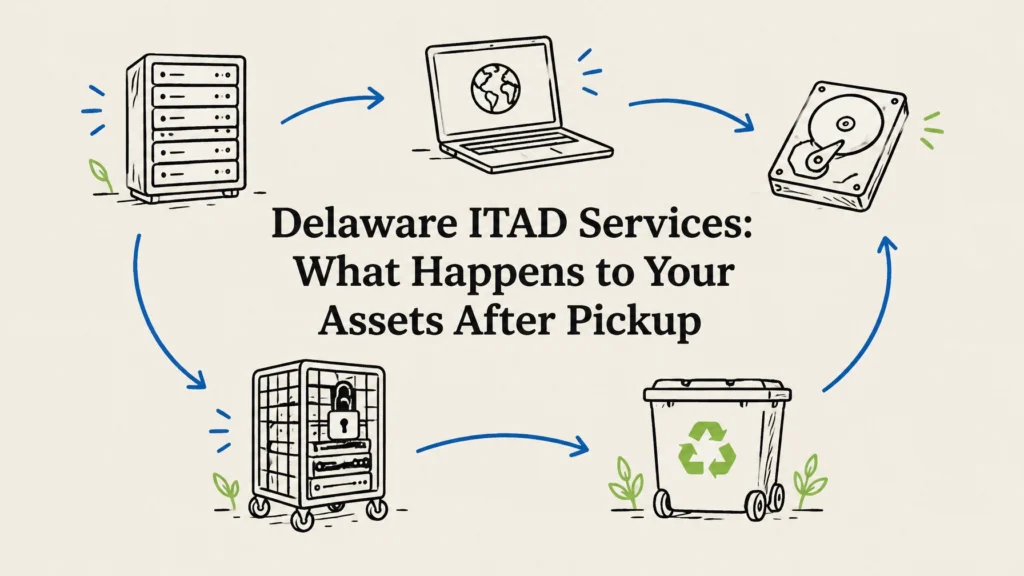
A recycler assesses which equipment may be suitable for reuse, securely handles data-bearing devices, and separates non-reusable items for responsible downstream processing. Ask how the recycler documents the chain from collection to final handling.
If you’re comparing electronics recyclers in California, start with your device list and the questions above. Contact Reworx about electronics recycling to discuss free nationwide pickup, data destruction, flexible scheduling, or buyback options for newer equipment.