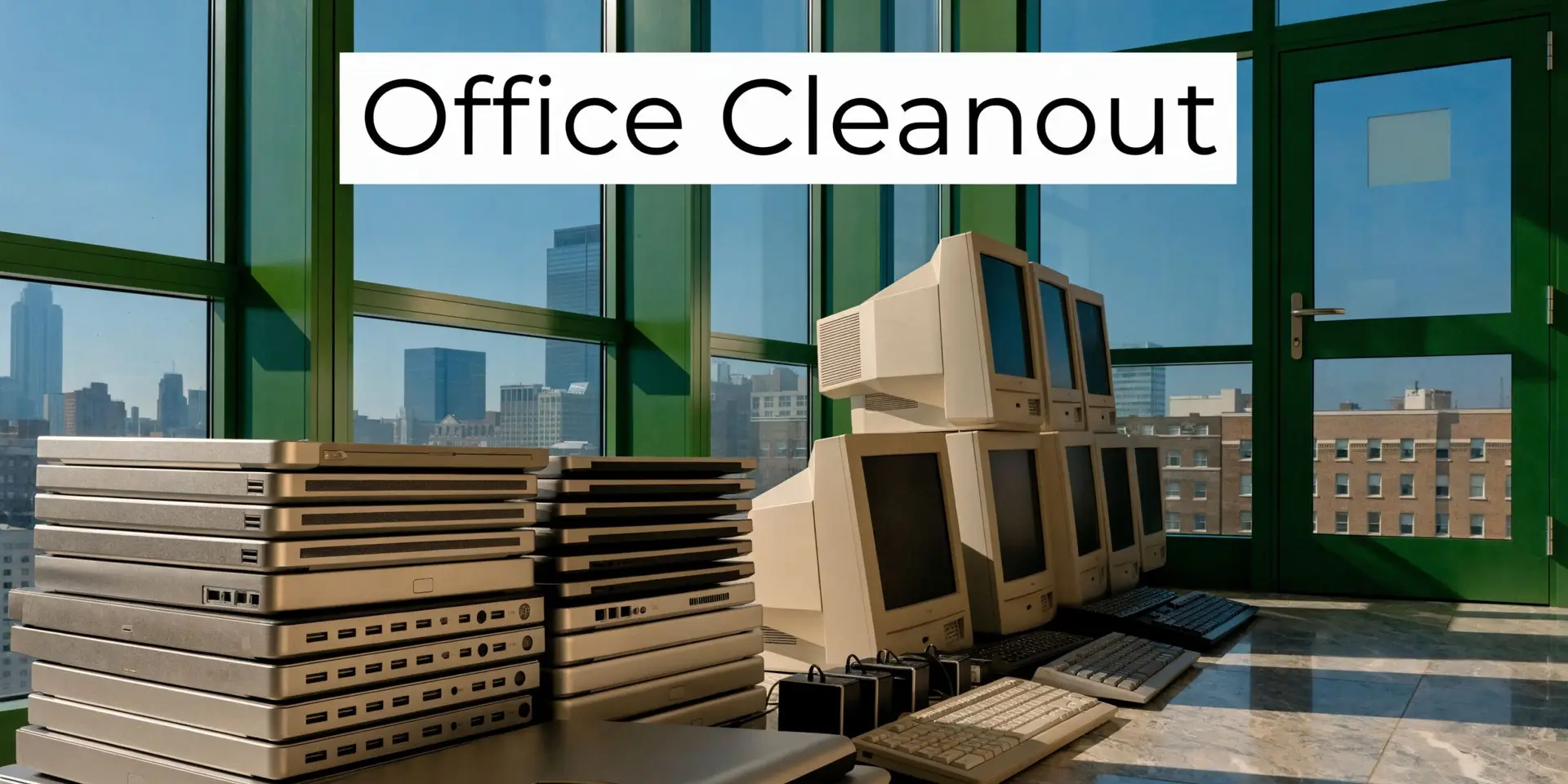
A lease turnover, hardware refresh, or department move can leave an NYC facilities manager with the same problem. A locked room full of laptops, monitors, docking stations, network gear, and a few mystery boxes nobody wants to claim.
That pile is not just clutter. In New York City, it touches compliance, data security, logistics, and reporting at the same time. If your team handles electronic waste recycling nyc as an afterthought, the risk does not stay in the basement. It lands on operations, IT, legal, and sustainability.
The practical approach is simple. Treat retired electronics like controlled assets until final disposition is documented. That means inventory first, secure handling second, recycling or reuse through a compliant pathway third, and records at the end. When companies do that well, an office cleanout becomes manageable. When they do it poorly, they create a preventable mess.
Navigating Your Next Office Cleanout in NYC
A Midtown office closes one floor. A Brooklyn design firm replaces aging laptops. A nonprofit in Queens clears out a storage room before a renovation. Different organizations, same operational headache.
Many teams start with good intentions and bad process. Someone asks whether building staff can take everything out with ordinary commercial trash. Someone else suggests a weekend drop-off. IT wants drives removed first. Facilities wants the room empty by Friday.
That is where electronic waste recycling nyc gets real. The work is not just hauling equipment away. It is deciding what still has use, what contains sensitive data, what qualifies under covered electronic equipment rules, and who will sign off on removal.
What usually goes wrong
In practice, office cleanouts break down in a few familiar ways:
- No ownership: Facilities assumes IT is tracking assets. IT assumes procurement already retired them.
- Mixed staging: Reusable laptops get stacked with broken monitors and loose cables.
- Security gaps: Devices leave the site before anyone confirms wiping or destruction requirements.
- Last-minute hauling: The move date drives the decision instead of compliance.
A partner built for donation-based recycling and IT equipment disposal can solve more than transport. A social enterprise model matters because some equipment may still support community reuse instead of moving straight to shredding.
What a better process looks like
A clean program starts before pickup day:
- Separate by condition. Working devices, repairable devices, and end-of-life scrap should not sit in one pile.
- Flag regulated data. Finance, healthcare, legal, and education devices need tighter chain-of-custody controls.
- Coordinate with the building. Freight elevator access, loading dock windows, and certificate of insurance requests can delay a job fast.
- Choose a documented outcome. Donation, resale, secure destruction, or recycling should be defined before anything leaves.
Tip: If your team cannot explain where each asset category is going before pickup, you are not ready for pickup.
A structured recycler can help turn a rushed cleanout into a controlled disposition process with both compliance value and community value.
Understanding NYC and NYS E-Waste Mandates
New York does not treat covered electronics like ordinary trash. For businesses, the key rule is operational. You need a lawful disposition path, and that path changes depending on the size of your organization.
Under city guidance, small businesses with fewer than 50 full-time employees and nonprofits with fewer than 75 employees can use free manufacturer recycling programs, while larger businesses must hire paid recyclers. The same guidance notes a standard $100 fine for improper disposal on the NYC electronics disposal page at NYC business electronics disposal guidance. That is the compliance cliff many mid-sized companies miss until they are already planning an office move or tech refresh.
The core business issue is not the rule. It is the gap in planning
A ten-person office can often lean on manufacturer take-back options if the equipment fits program rules. A larger office with mixed brands, older devices, and frequent refresh cycles usually cannot.
That creates several practical trade-offs:
- Budgeting: Free take-back for some entities does not help a larger business that needs recurring pickups and documented data handling.
- Mixed-vendor hardware: A single manufacturer program may not cover the full asset mix in a real office.
- Aging inventory: Older hardware may fall outside practical take-back workflows even when a theoretical program exists.
- Audit exposure: If disposal decisions are improvised, documentation is usually weak.
Covered items and defensible handling
New York State’s electronics recycling framework focuses on covered electronic equipment and requires businesses to route that material through approved recycling channels rather than landfill disposal. For many facilities teams, the mistake is assuming “electronics” is one simple category. It is not.
Build an internal checklist around these questions:
- Is it covered electronic equipment under the law?
- Does it contain storage media or embedded data?
- Is it potentially reusable, donatable, or resalable?
- Do we have documentation for where it went?
If your current process is just “call someone when the closet is full,” you do not have a program. You have a recurring risk event.
For businesses that need a compliant operating model, a useful starting point is to align internal procedures with a dedicated New York electronics recycling workflow and then tailor it to your locations, asset mix, and reporting needs.
Key takeaway: The legal requirement is only half the challenge. The harder part is building a repeatable process your facilities and IT teams can follow under deadline pressure.
Developing Your Compliant IT Asset Disposition Plan
Most e-waste problems begin long before the truck arrives. They start when a company retires assets without a written ITAD workflow.
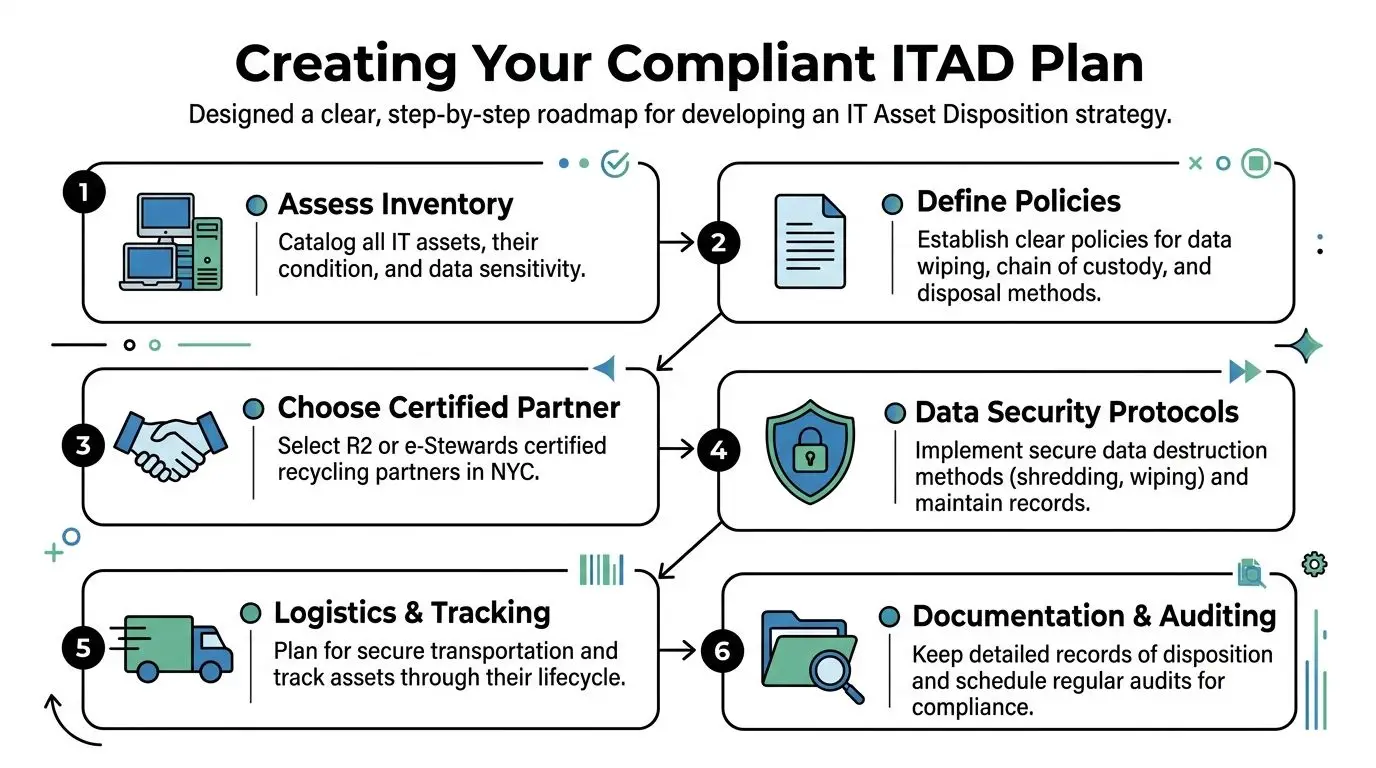
A compliant plan under New York’s framework needs four things: inventory, a certified recycling pathway, secure data destruction, and records. State guidance also makes the practical point clear. Enterprises need certified recyclers, and improper disposal or using uncertified vendors does not meet a defensible standard. That same guidance also references 95%+ diversion rates achieved by expert partners like Reworx on the New York State DEC page for electronic waste recycling requirements.
Start with asset inventory and triage
Do not begin with pickup scheduling. Begin with a list.
At minimum, track device type, location, business unit, user status, and whether the item holds data. For larger projects, add condition notes and disposition category. That lets you separate reusable laptops from dead monitors and segregate high-risk devices from simple peripherals.
A practical triage model looks like this:
- Reuse candidates: Newer devices suitable for redeployment or donation.
- Recovery candidates: Assets with residual value that may fit buyback or refurbishment.
- Recycle-only assets: Damaged or obsolete units headed for dismantling and material recovery.
- Special handling items: Devices with sensitive data, custom configurations, or regulatory exposure.
Put policy in writing
Informal habits break under pressure. Written policy holds.
Your ITAD plan should define:
- Who authorizes retirement
- Who approves data destruction method
- Who can release equipment to a vendor
- What documentation must be collected after pickup
- How long records are retained for audit and sustainability reporting
Use plain language. A short policy people follow beats a long policy people ignore.
Choose a certified pathway
Not every hauler is an ITAD partner. For electronic waste recycling nyc, ask whether the vendor can support the full chain, not just loading and transport.
Review qualifications around:
| Question | Why it matters |
|---|---|
| Are they operating through certified recycling pathways? | This supports lawful processing and audit defensibility. |
| Can they separate reuse, recovery, and recycling streams? | Mixed handling destroys value and complicates reporting. |
| Do they provide destruction and pickup records? | You need proof, not verbal assurance. |
| Can they manage office cleanouts and ongoing pickups? | One-off service and program management are different capabilities. |
A practical reference point for internal planning is what IT asset disposition involves in operational terms.
Close the loop with records
The final step is the one companies skip most often. Records are what make the plan real.
Keep pickup receipts, asset manifests, destruction certificates where applicable, and final disposition summaries. If your sustainability team needs diversion reporting or your compliance team needs vendor paperwork, those records should already exist in one controlled file path.
Tip: If your documentation lives in three inboxes and a spreadsheet on someone’s desktop, your ITAD process is not auditable.
Prioritizing Secure Data Destruction and Chain of Custody
For most organizations, the hardware is not the main risk. The data is.
That is why vague promises like “we take security seriously” are not enough. Many NYC e-waste guides mention data security but leave out the details that matter in a real audit. For organizations handling sensitive information, it is critical to verify recycler certifications such as NAID and R2, chain-of-custody records, and auditable proof of destruction, because liability often remains with the originating organization if data is compromised downstream, as noted by the LES Ecology Center discussion of secure recycling concerns.
What secure destruction should include
A serious process does not begin at the recycling plant. It begins at pickup or earlier.
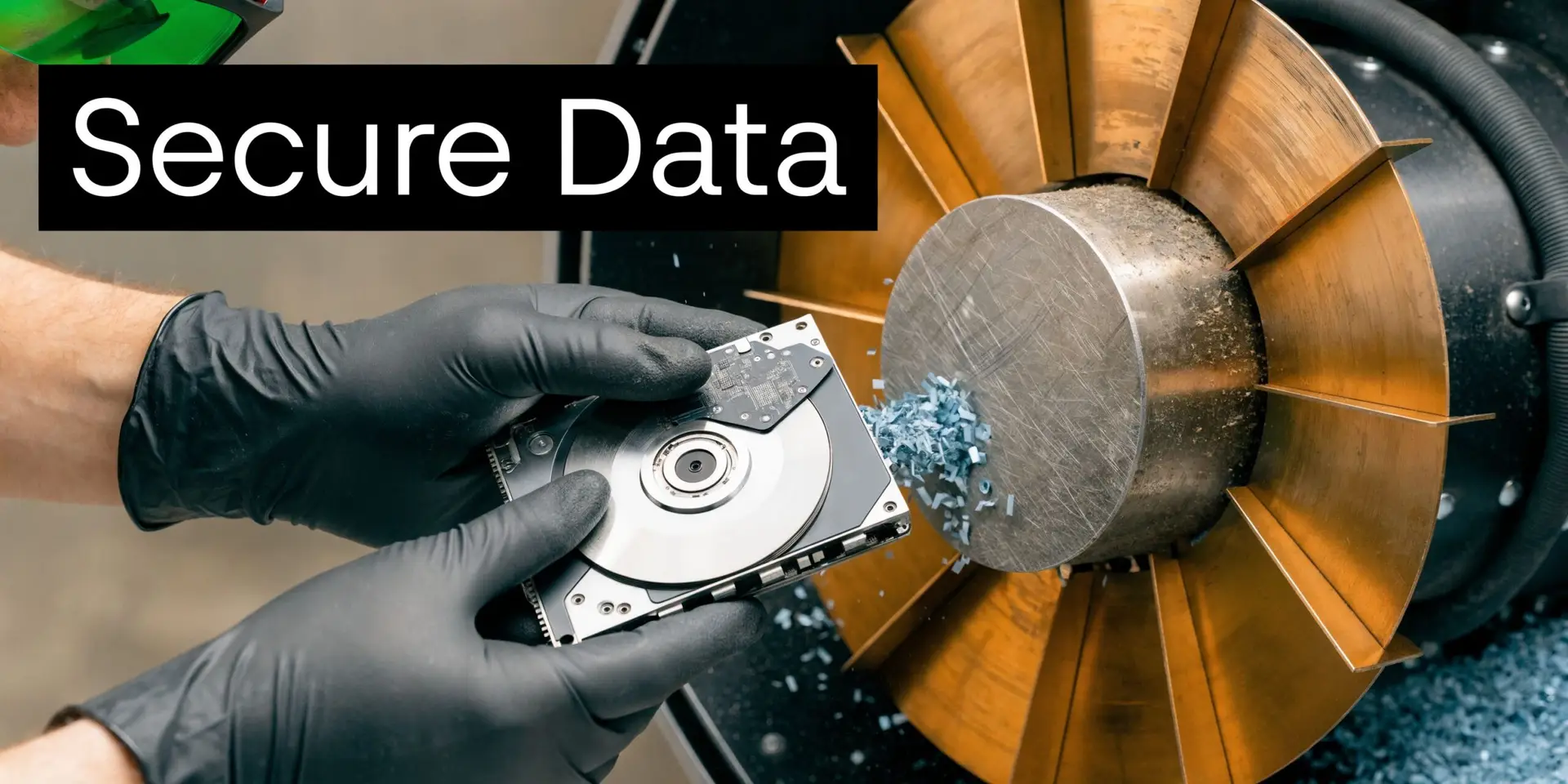
For devices with storage media, define the destruction method before release. Depending on the asset and internal policy, that may mean software wiping, physical shredding, or erasure aligned with NIST 800-88 practices. What matters is that the method fits the data risk and that the outcome is documented.
Ask direct questions:
- When does custody transfer occur?
- Is every serialized device logged before leaving the site?
- How is transport secured?
- Who handles drives once they arrive?
- What document proves the destruction happened?
Why chain of custody matters
Chain of custody is the evidence trail. Without it, your company is relying on trust at the exact point where trust is weakest.
A proper chain should show:
- Asset identification at collection
- Transfer from your staff to the recycler or transport team
- Receipt at the processing location
- The destruction or wiping event
- Final certification or reporting back to the client
This matters even more for schools, healthcare providers, law firms, and financial organizations. If regulated data leaves your premises without a documented path, the problem is no longer just an e-waste issue. It becomes a governance issue.
What to require from a vendor
Many facilities managers focus on price and pickup speed. Those matter, but they are not enough.
Use this vendor screen:
- Security controls: Ask about background checks, access restrictions, and handling procedures.
- Documentation: Require manifests and certificates that map to your internal asset list.
- Standards alignment: Confirm how wiping or destruction is performed and evidenced.
- Audit readiness: Make sure the vendor can answer detailed follow-up questions months later.
For organizations that need a benchmark for service scope, review what a dedicated secure data destruction service should include, then compare providers against those operational requirements.
Key takeaway: If a recycler cannot show you the custody trail and final proof of destruction, you are outsourcing the work but keeping the risk.
Coordinating Logistics Across the Five Boroughs
In New York City, logistics can make or break an otherwise compliant recycling plan. A clean pickup in an office park is one thing. A removal from a high-rise with tight dock windows, elevator reservations, and union or building rules is something else.
The first operational decision is whether your organization needs scheduled pickup or can rely on a smaller-scale drop-off option. For most businesses, pickup is the safer choice because it preserves custody, reduces internal handling, and better supports office cleanout workflows.
Pickup versus drop-off
Here is the practical comparison facilities teams usually need:
| Option | Best fit | Main advantage | Main limitation |
|---|---|---|---|
| Scheduled pickup | Office cleanouts, server removals, recurring corporate e-waste | Better control over timing, custody, and reporting | Requires coordination with building operations |
| Community or event drop-off | Very small volumes with low sensitivity | Simple for a limited number of items | Weaker fit for business documentation and sensitive assets |
For internal collection design, the city’s residential model offers a useful operational lesson. e-cycleNYC uses designated secure bins and schedules pickups once 20 items are collected, which provides a practical template businesses can adapt for workplace programs, according to the NYC e-cycleNYC program page.
Borrow what works from the city model
Businesses do not need to copy a residential program exactly. They should copy the discipline.
A workable internal setup often includes:
- A designated accumulation area: Preferably locked, labeled, and separate from ordinary junk storage.
- Clear item rules: Staff need to know what belongs in the electronics stream and what does not.
- Pickup triggers: Volume, project deadline, or refresh cycle should trigger scheduling before storage becomes chaotic.
- Internal audits: Facilities and IT should periodically verify that the staging area matches policy.
A provider that supports reverse logistics for business electronics flows can be useful when you need recurring pickups across multiple offices or a structured process for facility cleanouts.
Borough-specific realities
A few constraints show up repeatedly across the five boroughs:
- Manhattan: Freight reservations and loading dock time windows drive everything.
- Brooklyn and Queens: Mixed building types can mean inconsistent access and staging space.
- Bronx: Larger cleanouts may have more space but still need controlled loading and documentation.
- Staten Island: Travel and route planning matter more, especially for smaller loads.
Tip: Book the building before you book the truck. Elevator approvals and dock access often create more delay than the recycling vendor.
From Cost Center to Value Creator with Reworx Recycling
Most companies first look at e-waste as a disposal problem. That is too narrow.
A better lens is asset strategy. Some retired devices still hold value. Others can support donation-based recycling programs that strengthen ESG reporting, employee engagement, and community relationships. The same disposition process that protects compliance can also produce reuse, recovery, and social impact when the workflow is set up correctly.
NYC offers proof that structured systems change behavior. Improperly disposed electronic waste in the city’s residential waste stream fell by nearly 60% from 2005 to 2017, and programs serving over 3.1 million New Yorkers directly helped divert more than 29 million pounds of e-waste in five years, according to this report on NYC e-waste reduction through structured recycling programs. For business leaders, the lesson is straightforward. Convenience and structure produce better outcomes than ad hoc disposal.

Where the value comes from
A smart office cleanout can create value in more than one lane:
- Asset recovery: Newer equipment may qualify for remarketing or buyback.
- Donation: Usable systems can support digital inclusion instead of immediate scrap processing.
- Material recovery: End-of-life equipment still contains recoverable commodities through certified recycling.
- Reporting value: Clean documentation supports ESG and sustainability narratives without guesswork.
A social enterprise model distinguishes itself from a simple hauling model. Reworx Recycling can fit into that strategy as one option for organizations that want electronics recycling, IT asset disposition, secure data handling, and donation-based reuse tied to community benefit, along with asset recovery services for qualifying equipment.
What does not work
Facilities teams lose value when they:
- send everything to one stream without triage,
- hold equipment too long and let condition degrade,
- ignore donation pathways for usable hardware,
- or treat reporting as a cleanup task after removal.
The strongest programs make one decision early. They decide that end-of-life electronics are not garbage. They are controlled assets with different financial, environmental, and social outcomes depending on how they are handled.
Partner with Reworx for Compliant and Impactful Recycling
Electronic waste recycling nyc is manageable when the process is disciplined. Inventory assets before pickup. Separate reuse from scrap. Require secure data destruction where needed. Keep chain-of-custody and disposition records in one place. Coordinate building access early, not the day before removal.
That protects your organization from avoidable mistakes. It also gives your team a practical way to turn office cleanouts, laptop disposal, computer recycling, and broader IT equipment disposal into a cleaner operational program.
For businesses that want more than a haul-away transaction, a social enterprise approach adds another layer of value. Usable devices can support community outcomes, while end-of-life equipment moves through a compliant recycling path. That combination is good governance and good corporate citizenship.
If your business needs a practical next step, connect with Reworx Recycling to discuss donation-based recycling, secure data destruction, office cleanout support, or a pickup plan for retired IT equipment.