When it comes to retiring old data center equipment in Baton Rouge, it’s not just a logistical task—it's a critical issue of security, compliance, and environmental responsibility. For IT managers, business owners, and sustainability leaders, handling this process strategically is essential. Working with a certified social enterprise like Reworx Recycling transforms this challenge from a potential liability into a powerful opportunity for corporate social responsibility and community impact.
The Growing Need for Strategic ITAD in Baton Rouge
As Louisiana’s capital and a major hub for healthcare, petrochemical, and state government operations, Baton Rouge’s data center infrastructure is in a state of perpetual expansion. This growth creates a constant cycle of technology upgrades, leaving IT managers with a significant question: what is the most secure and responsible way to handle retired hardware?
This is far more than a simple office cleanout. It's a complex challenge involving secure data destruction, adherence to strict regulations, and corporate sustainability goals. Without a formal IT Asset Disposition (ITAD) plan, Baton Rouge businesses expose themselves to significant operational and reputational risks.
The Scale of E-Waste in the Capital Region
The volume of technology cycling through Baton Rouge is immense. Consider the state's Data Center Operations (DCO), which manages an infrastructure of approximately 5,000 physical and virtual servers and over 11 petabytes of storage. As this technology ages and is decommissioned, it generates a massive stream of e-waste that requires proper management.
This constant turnover of servers, storage devices, and networking gear makes a strategic IT Asset Disposition (ITAD) plan an absolute necessity. A well-designed ITAD strategy does more than just dispose of old equipment; it transforms the entire end-of-life process.
By treating equipment disposal as a strategic function, businesses can turn a compliance headache into an opportunity. This approach not only secures sensitive data but also aligns with corporate responsibility goals, creating value where others see only waste.
Why a Formal Disposal Plan Is Non-Negotiable
A casual approach to data center equipment disposal is a recipe for disaster. The risks associated with improperly retired assets are too significant to ignore. A formal strategy provides a clear framework to address these critical areas:
- Mitigating Security Risks: Every retired server and hard drive represents a potential data breach. A strategic plan ensures all data is destroyed using certified methods, safeguarding sensitive corporate, customer, and patient information.
- Ensuring Regulatory Compliance: With Baton Rouge's strong government and healthcare presence, regulations like HIPAA are non-negotiable. A formal ITAD process with complete documentation is your best defense against costly fines and legal challenges.
- Meeting Sustainability Goals: Modern businesses are increasingly judged on their environmental impact. A responsible disposal plan that prioritizes sustainable recycling and reuse demonstrates a genuine commitment to corporate social responsibility (CSR), enhancing your brand's reputation.
A well-planned ITAD strategy is essential for any Baton Rouge organization managing sensitive data. To help you get started, here's a look at the core components your plan should include.
Core Components of a Baton Rouge ITAD Strategy
| Pillar | Key Objective | Primary Action Item |
|---|---|---|
| Data Security | Prevent data breaches from retired assets. | Implement certified data destruction (wiping or shredding) for all storage media. |
| Regulatory Compliance | Adhere to local, state, and federal laws (e.g., HIPAA, FACTA). | Maintain a complete chain-of-custody and receive Certificates of Destruction. |
| Environmental Responsibility | Minimize landfill waste and promote a circular economy. | Partner with an R2 or e-Stewards certified recycler to ensure proper disposal. |
| Value Recovery | Maximize financial return on retired equipment. | Identify assets eligible for refurbishment, resale, or component harvesting. |
Focusing on these four pillars will help you build a comprehensive and effective disposal process from start to finish.
Partnering with a social enterprise like Reworx Recycling offers a complete solution. Our certified processes make sure your data center equipment disposal in Baton Rouge Louisiana is secure and compliant. Even better, our donation-based model helps turn your retired assets into resources for community programs, blending your operational needs with a powerful social mission. Our comprehensive IT asset disposition services in Baton Rouge are designed to help you navigate this complex landscape with confidence.
Building Your Decommissioning Plan and Asset Inventory
A successful data center decommissioning project doesn’t begin the day you start unplugging servers. It starts weeks, or even months, in advance with a meticulous plan. This initial phase serves as your blueprint for a secure, documented, and efficient data center equipment disposal in Baton Rouge, Louisiana. It’s the key to transforming a potentially chaotic facility cleanout into a well-orchestrated operation.
The first step is to create a detailed project plan that outlines the scope, timeline, and stakeholder responsibilities. This document acts as the central playbook for everyone involved, from your IT department to facilities management. It must clearly define project goals, assign roles, and establish a realistic schedule for every phase, from initial shutdown to final asset removal.
Establishing the Framework for Disposal
This process must be treated as a formal project, not just "getting rid of old gear." This means assigning a dedicated project manager, defining clear roles and responsibilities, and setting up regular check-ins to monitor progress and address challenges.
The plan must also consider the unique operational needs of your Baton Rouge business. For a healthcare provider, the plan must ensure zero disruption to patient care systems. For a state government agency, every step must align with public procurement and asset management regulations.
A well-structured decommissioning plan is your first line of defense against scope creep, budget overruns, and security oversights. It provides the clarity and control needed to navigate a high-stakes project with confidence.
The Critical Role of a Comprehensive Asset Inventory
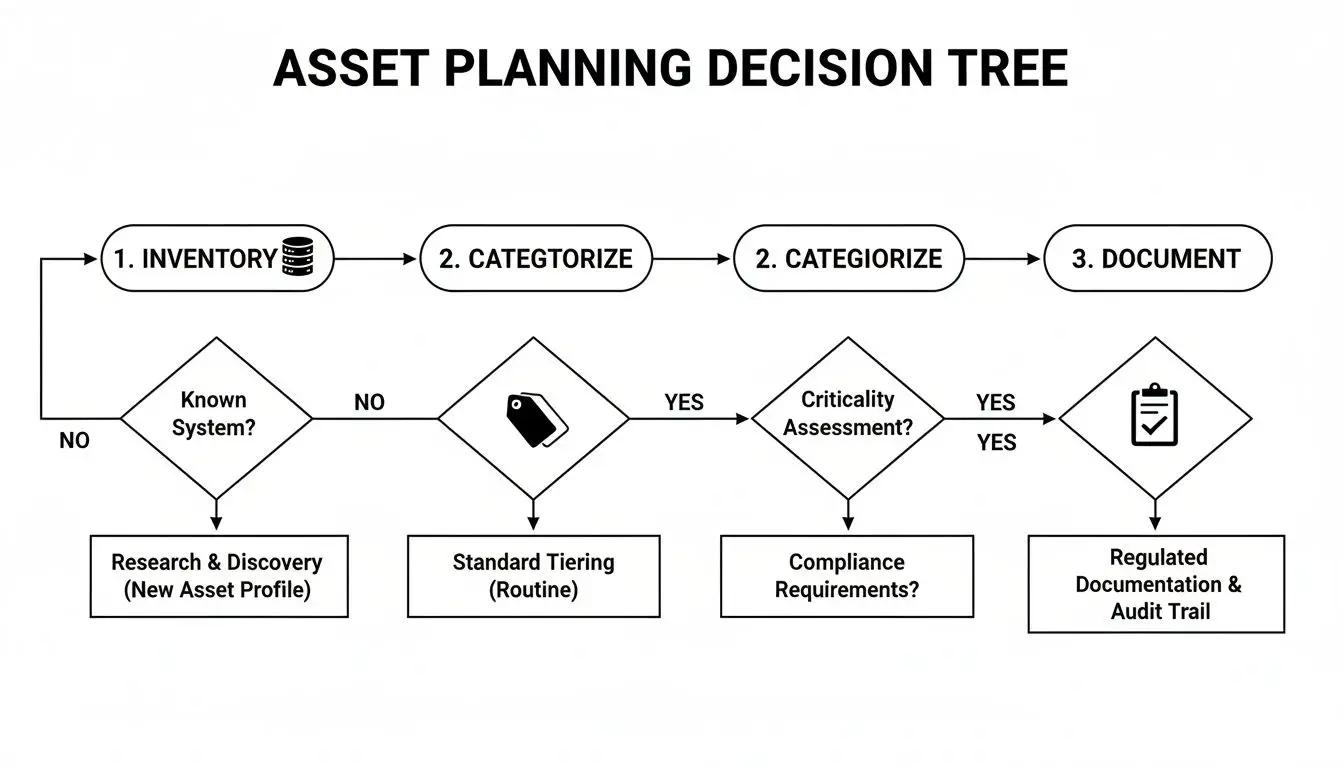
With your plan in place, it’s time for the most important hands-on task: a complete asset inventory. You cannot secure, track, or recover value from assets you don’t know you have. This inventory must be exhaustive, capturing every single piece of hardware slated for retirement.
This is more than a simple headcount. Creating a proper asset inventory is a core tenet of good IT Asset Management (ITAM). Use a detailed spreadsheet or a dedicated ITAM system to log each item meticulously.
Ensure you capture these details for every asset:
- Asset Type: (e.g., Server, Storage Array, Switch, PDU)
- Manufacturer and Model: (e.g., Dell PowerEdge R740)
- Serial Number: The unique identifier for tracking.
- Internal Asset Tag: Your company's internal tracking number.
- Physical Location: (e.g., Rack U-34, Row C)
- Data-Bearing Status: A clear "Yes" or "No" to flag items requiring secure data destruction.
This level of detail is non-negotiable. It forms the foundation for your chain-of-custody documentation and is precisely what an ITAD partner like Reworx Recycling needs to provide an accurate quote and account for every device. For additional guidance, our server decommissioning checklist can be a valuable resource.
Categorizing Assets for Maximum Return
Once your inventory is complete, the next strategic step is to categorize the equipment based on its end-of-life potential. This is crucial for maximizing financial return and achieving your sustainability goals.
Group your assets into three primary categories:
- Remarketing: This includes newer or high-demand equipment, such as servers less than 3-5 years old, enterprise SSDs, and networking hardware that can be refurbished and resold.
- Donation/Reuse: This category is for functional but older equipment, like workstations, laptops, and monitors, which can be given a second life through corporate donation programs managed by a social enterprise like Reworx Recycling.
- Recycling: This is the destination for obsolete, broken, or proprietary equipment with no resale value. These assets must be ethically de-manufactured and their raw materials recycled.
This categorization provides a clear disposition path for every asset. It helps you estimate potential revenue from buyback programs, identify opportunities for corporate social responsibility, and ensure all remaining materials are handled in an environmentally sound manner. Getting this right from the start sets the stage for a secure, compliant, and financially intelligent project.
Achieving Data Security and Regulatory Compliance
For any Baton Rouge organization, from state agencies on North 4th Street to healthcare providers like Our Lady of the Lake, nothing is more critical than data security during equipment disposal. Once you have a handle on your inventory, the entire focus has to shift to making sure every last byte of sensitive information is gone for good.
Getting this wrong isn't just a minor mistake. It's a direct path to a data breach, devastating fines under laws like HIPAA, and a hit to your reputation that can be impossible to repair.
This is where you have to get serious about how you destroy that data. Each method offers a different level of security, and the right choice really depends on the hardware you're dealing with and your company's own risk tolerance.
Choosing Your Data Destruction Method
I can't stress this enough: just deleting files or reformatting a drive is a recipe for disaster. These actions only hide the data, making it laughably easy to recover with simple software. To do it right, you need one of three professional approaches.
Data Wiping (Sanitization): Think of this as a software-based deep clean. The process overwrites every single sector of a drive with random data, usually in several passes. It's a fantastic option for newer, working hard drives (HDDs) and solid-state drives (SSDs) because it keeps the hardware intact for resale or donation. For this to be truly effective, the process has to meet strict standards like NIST 800-88.
Degaussing: This method uses an incredibly powerful magnetic field to scramble the data on magnetic media like older HDDs and backup tapes. It completely destroys the magnetic patterns that store your data, rendering the drive useless and the information unrecoverable. One big caveat: it’s totally ineffective on SSDs, which don't use magnetic storage.
Physical Shredding: When you need the absolute highest level of security, nothing beats turning hardware into confetti. Industrial shredders physically pulverize hard drives, SSDs, and other media into tiny fragments. This is the go-to for devices with top-secret data or for any organization that requires undeniable, physical proof of destruction.
As Louisiana's capital, Baton Rouge has a unique challenge. Public sector IT upgrades produce tons of retired servers, and the state's own data centers protect over 2.5 petabytes of data every night. As that tech gets replaced, the old gear has to be managed by ITAD partners who live and breathe standards like R2 and NAID.
The Power of Certifications and Documentation
So, how do you know a vendor actually does what they say they will? It all comes down to third-party certifications and rock-solid documentation.
A Certificate of Data Destruction isn't just a piece of paper. It's your legally defensible proof of compliance. This document is your audit-ready record, confirming that specific, serialized assets were destroyed according to privacy laws like HIPAA and GLBA, shielding you from future liability.
These top-tier certifications are your assurance that a partner is serious about security and ethical practices. When you're choosing a partner for data center equipment disposal in Baton Rouge Louisiana, keep an eye out for these credentials:
- NAID AAA Certification: This is the gold standard for the data destruction industry. It verifies that a vendor’s security, hiring practices, and procedures are rigorously audited and meet the highest standards.
- R2v3 (Responsible Recycling): This certification goes beyond data. It ensures your vendor handles e-waste in an environmentally sound way, tracking all materials to their final destination.
When you make these certifications a priority, you're not just checking a box; you're performing essential due diligence to protect your organization. At Reworx, we build our entire process around these standards. To see exactly how we operate, you can take a look at our secure data destruction services.
How to Select the Right ITAD Partner in Baton Rouge
Let’s be honest, picking an ITAD partner is where the rubber meets the road for your entire data center decommissioning project. This single choice has a direct line to your data security, your compliance record, and even your company's reputation here in Baton Rouge.
Get it right, and the process is a smooth, secure, and documented success. Get it wrong, and you could be looking at some serious financial and legal headaches.
A true partner is so much more than a junk hauler. They're your security consultant, compliance guide, and logistics expert, all rolled into one. You need someone who can provide a transparent, auditable trail for every single server, drive, and switch, giving you solid proof that your data and legal duties are covered.
The Vendor Landscape in Baton Rouge
When you start looking around the Baton Rouge area, you'll find that companies offering disposal services tend to fall into three main camps. Knowing the difference is the first step to finding a good fit, whether you're a state agency, a healthcare facility, or a growing local business.
Basic Recyclers: These are the folks who focus on collecting e-waste and breaking it down for scrap. While they play a role in keeping electronics out of landfills, they often don't have the high-security data destruction or detailed reporting that corporate compliance demands. They're really only a fit for hardware that never stored sensitive data.
IT Asset Disposition (ITAD) Firms: These are the specialists. As B2B partners, they’re built to handle the entire lifecycle of retired IT assets. This includes secure transportation, certified data destruction, and the kind of detailed reporting auditors love. Many also find ways to get you a return on newer equipment by refurbishing and reselling it.
Social Enterprises: This is where a company like Reworx Recycling comes in. We take the security and compliance of a top-tier ITAD firm and add a powerful community mission. We don't just recycle or resell—we make it a priority to turn your old equipment into opportunities for digital inclusion. It’s a model that transforms a simple disposal project into a genuine act of corporate social responsibility.
To make it even clearer, here’s a quick breakdown of how these vendor types stack up for businesses in Baton Rouge.
ITAD Vendor Comparison for Baton Rouge Businesses
| Vendor Type | Primary Focus | Key Benefit | Best For |
|---|---|---|---|
| Local Scrapper/Recycler | Material recovery (scrap metal). | Low-cost or free basic removal. | Non-sensitive hardware with no data storage. |
| Traditional ITAD Firm | Data security and value recovery. | Certified data destruction and potential revenue sharing. | Businesses needing compliance and financial return. |
| Social Enterprise (Reworx) | Security, social impact, and sustainability. | Certified processes plus community benefit and CSR alignment. | Organizations aiming to meet compliance goals while making a positive social impact. |
Your Vendor Selection Checklist
When you're vetting a potential ITAD partner, you have to do your homework. Don't be shy about asking the tough questions and demanding to see the proof. Your organization's security depends on it.
Certifications Are Non-Negotiable
Industry certifications aren't just fancy logos; they are your independent proof that a vendor walks the walk. You absolutely must see current copies of these two:
- R2v3 (Responsible Recycling): This is the leading standard for environmental safety, data security, and worker protection in electronics recycling.
- NAID AAA Certification: The gold standard for data destruction. It verifies a vendor’s high-security protocols, employee screening, and operational integrity through surprise audits.
Verify Their Insurance Coverage
Things can go wrong. A reputable partner will carry substantial liability insurance, specifically including coverage for data breaches. This is your financial backstop if a security incident happens while your assets are in their hands. Always ask to see their Certificate of Insurance.
A partner’s willingness to openly share their certifications and insurance documentation is a direct indicator of their transparency and professionalism. Any hesitation should be considered a major red flag.
Scrutinize the Chain of Custody
Ask them to walk you through their process, step-by-step, starting from the moment they show up at your Baton Rouge facility. How do they inventory everything on-site? Are their trucks GPS-tracked and securely locked? What happens when your gear arrives at their facility? An unbroken, documented chain of custody is your best defense in an audit.
Inquire About Downstream Transparency
Your responsibility doesn't end when the truck pulls away. You need to know where all the pieces go. Ask a potential partner about their downstream vendors—the companies that handle shredded hard drives, hazardous materials, and other components. A certified partner will have a fully vetted and audited network of other certified processors.
Ultimately, choosing the right partner is about finding an alignment of security, compliance, and values. By working with Reworx Recycling, you’re not just choosing a provider that meets the industry’s highest standards—you’re choosing one that shares your commitment to making our community better. To see how our process works from start to finish, you can explore our full range of Louisiana ITAD services.
Managing Logistics and Maximizing Financial Returns
Smart data center disposal is a balancing act between rock-solid security and savvy financial management. After you've vetted and chosen the right partner, the focus shifts to the nitty-gritty: getting equipment out of your Baton Rouge facility and pulling out any remaining value. This is where the rubber meets the road—turning all that careful planning into a smooth, secure, and financially sound operation.
The logistics involved go far beyond just calling a moving truck. A professional ITAD process is about meticulous coordination. It's about ensuring a secure, seamless handoff from your data center floor all the way to the final processing facility, covering everything from on-site packing to secure transport.
Coordinating Secure Transportation and Logistics
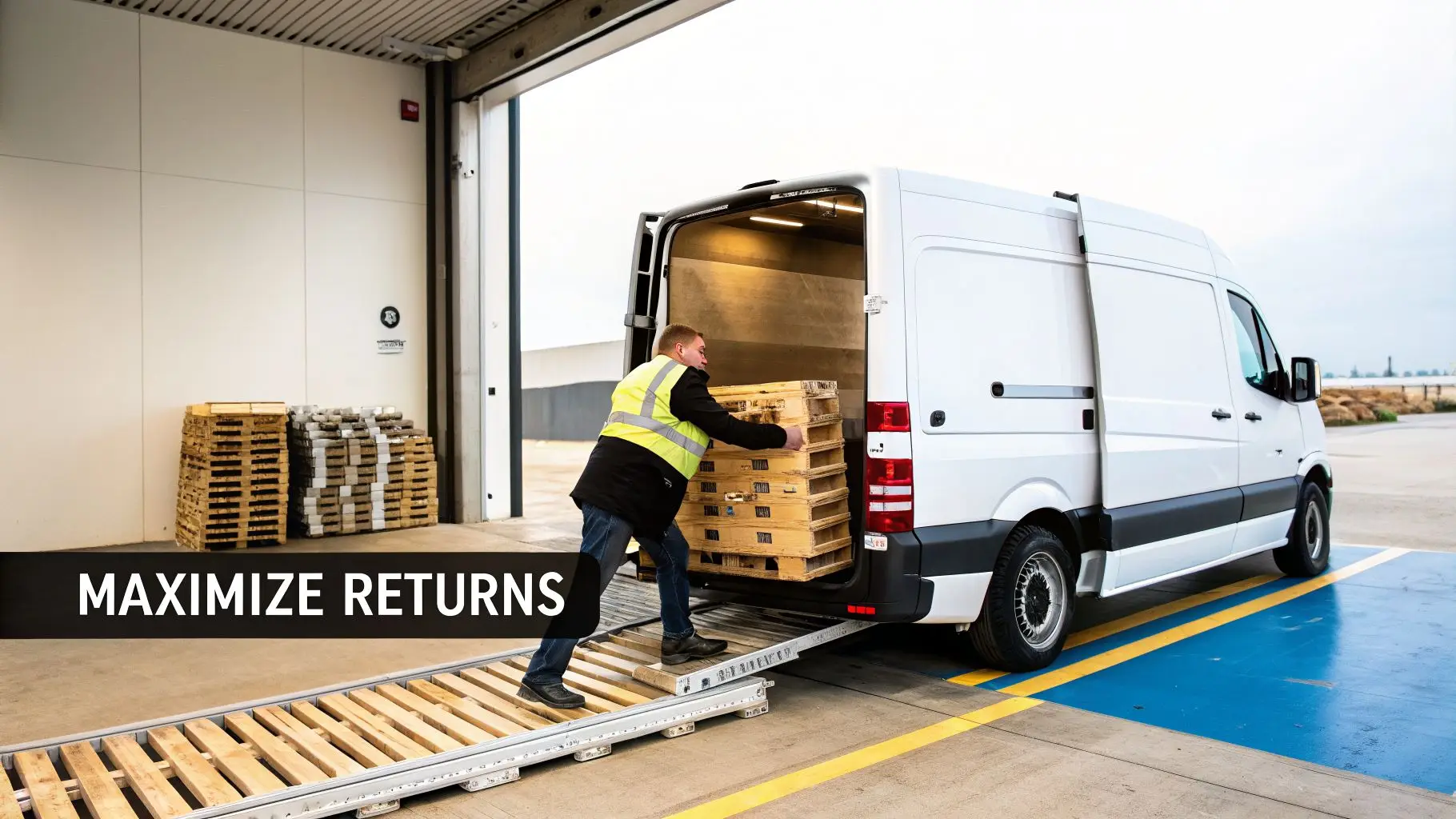
Getting your equipment physically removed is a critical moment where security can easily fall apart. Your partner should be managing this entire process, starting with a dedicated on-site team that handles the de-racking, palletizing, and wrapping of every single asset.
This is about more than just moving fast; it’s about maintaining control. A professional crew makes sure every item is accounted for and locked down before it ever leaves your building. From there, the assets are loaded onto locked, GPS-tracked vehicles for transit, keeping that chain of custody secure from your door to theirs.
For any organization in Baton Rouge, this documented transportation is non-negotiable. It’s what stands between you and the nightmare scenario of assets getting lost or stolen in transit, which could easily lead to a devastating data breach.
The Importance of a Documented Chain of Custody
Throughout the entire pickup and transport phase, a strict chain of custody is an absolute must. Every pallet should be inventoried on the spot, with serialized reports generated right there at the point of collection.
This documentation acts as your continuous record, tracking your assets through every stage of the journey. When the equipment arrives at the processing facility, it’s immediately checked against the original manifest. This confirms that everything arrived safely and securely, giving you the auditable proof you need for both compliance and your own internal peace of mind.
By treating logistics with the same seriousness as data destruction, you create an unbroken security chain. Every documented step, from on-site packing to GPS-tracked transport, is a layer of protection for your organization.
Unlocking the Financial Value of Retired Assets
Too many businesses in Baton Rouge, Louisiana see data center equipment disposal as nothing more than a cost. But with a strategic approach, this expense can actually become a source of revenue. A top-tier ITAD partner doesn’t just recycle—they actively work to recover the financial value still locked away in your old hardware.
This process is often called value recovery or remarketing. It all comes down to identifying equipment that still has a home in the secondary market. Not everything is destined for the shredder.
The Cost-Benefit Analysis of ITAD
At its core, value recovery is a straightforward cost-benefit analysis. The costs tied to secure logistics and certified data destruction can often be partially, or even fully, offset by the revenue you get from reselling functional equipment.
A partner like Reworx Recycling can handle this entire process for you. We evaluate each asset to see its potential for refurbishment and resale. This service transforms what could have been a major operational expense into a much more manageable—and sometimes profitable—project. You can get more details by learning about maximizing value through IT asset disposition and the financial strategies involved.
Identifying High-Value Assets for Buyback
The key to a successful buyback program is knowing which assets hold their value best. Generally, these categories have the strongest potential for remarketing:
- Enterprise Servers: Newer models, typically 3-5 years old, from top manufacturers are always in demand.
- Storage Arrays: High-capacity SAN and NAS systems, especially those loaded with solid-state drives (SSDs), hold significant value.
- Networking Equipment: Enterprise-grade switches, routers, and firewalls from brands like Cisco and Juniper are highly resalable.
- High-Performance Components: Even individual parts like CPUs, RAM, and enterprise-grade SSDs can be harvested and sold separately.
Through a refurbishment process, data-wiped devices are tested, repaired if needed, and prepped for a second life. This doesn't just put money back in your budget; it also supports a circular economy and shrinks the environmental footprint of your IT refresh cycle. It’s an approach that turns retired hardware from a liability into a real asset.
Common Questions on Data Center Disposal in Baton Rouge
Even with a solid plan for decommissioning your data center, questions always pop up. It's only natural. IT managers and business owners in Baton Rouge need clear, direct answers to feel confident they're handling everything correctly. We hear these concerns all the time, so we’ve put together some straightforward information to help you manage your project.
Getting these details right isn't just about checking a box—it directly impacts your company's security, compliance, and budget.
What Are the Biggest Risks of Improper Data Center Equipment Disposal in Louisiana?
The stakes are incredibly high, and a mistake can have lasting consequences. The most obvious threat is a data breach. For the many healthcare and government-related organizations in Baton Rouge, this could mean staggering financial penalties under laws like HIPAA. Just as damaging is the hit to your brand's reputation, which can erode the trust you've built with customers and partners.
It’s not just about the data, either. Louisiana has specific regulations for electronic waste. Simply dumping old equipment can lead to fines for environmental non-compliance.
The primary risks include staggering financial penalties from data breaches under laws like HIPAA, irreversible brand damage, and fines for not complying with Louisiana's environmental regulations. Partnering with a certified ITAD vendor like Reworx with auditable processes is your strongest safeguard against these threats.
How Much Does It Cost to Dispose of Data Center Equipment in Baton Rouge?
That's the million-dollar question, and the honest answer is: it varies. The final cost of a data center equipment disposal Baton Rouge Louisiana project really depends on a few key things:
- Volume of Equipment: How much hardware are you actually retiring? This is the biggest factor.
- Types of Devices: Specialized gear or equipment with hazardous materials might have different processing costs.
- Services Required: Do you need on-site hard drive shredding or complex logistics? These services will naturally affect the price.
But here’s something important to remember: don’t just look at this as an expense. With a good value recovery program, you can seriously minimize or even eliminate the costs. A partner like Reworx Recycling will assess your retired assets to see what can be resold. The revenue from our equipment buyback program often offsets the project costs, sometimes turning a line-item expense into a positive return.
Can My Business Donate Old Data Center Equipment for a Tax Benefit?
Yes, absolutely. This is one of the great things about working with a social enterprise. When you partner with Reworx Recycling, our donation-based model makes it simple to put your functional, retired equipment to good use. The specific tax benefits will depend on your company’s financial situation, but the value goes way beyond a deduction.
The real win here is how it helps you meet your Corporate Social Responsibility (CSR) goals. Donating equipment supports digital inclusion, getting much-needed technology into local schools and nonprofits. Reworx provides all the documentation of this social impact, giving you a powerful story to share in your corporate reports and with your stakeholders.
What Is a Certificate of Destruction and Why Is It So Important?
Think of a Certificate of Data Destruction as your get-out-of-jail-free card. It's one of the most critical documents in the entire ITAD process. This formal, legal paper is your official audit trail, proving that your hard drives and other storage devices were destroyed according to all relevant privacy laws.
This certificate is non-negotiable for a few reasons:
- It proves you did your due diligence to protect sensitive information.
- It’s your legal proof of compliance if a security auditor ever comes knocking.
- It shields your organization from liability in case of a legal challenge.
Without this document, you have no verifiable proof that your data was handled securely. That leaves your organization wide open to some serious risks you just don't want to take.
Ready to transform your end-of-life technology into an opportunity? Reworx Recycling provides secure, compliant, and socially responsible IT equipment disposal for businesses throughout Baton Rouge and across Louisiana. Partner with us to protect your data, champion sustainable recycling, and empower our community through technology donation. Schedule a pickup or learn more about our corporate donation programs today. Explore our services and mission on our Recycling Blog.