When the time comes for data center equipment disposal in Alexandria, Louisiana, it’s more than just a cleanup job. It's a precise operation involving careful inventory, ironclad data sanitization, and eco-friendly recycling. For local businesses, from healthcare providers to manufacturing firms, getting this wrong can be costly. Partnering with a donation-based social enterprise and certified IT asset disposition (ITAD) specialist like Reworx Recycling is the smartest way to protect your data, stay compliant, and manage the end-of-life for all that retired hardware while supporting your community.
Your Guide to Data Center Decommissioning In Alexandria
So, your data center hardware in Alexandria is ready for retirement. This process can feel overwhelming. You're juggling sensitive data, valuable physical assets, and a maze of environmental regulations. The stakes couldn't be higher.
We've put together this guide to give IT managers, business owners, and corporate sustainability leaders in Louisiana a clear roadmap. We’ll break down the complexities of decommissioning, turning what feels like a major headache into a strategic move that protects your company, aligns with corporate donation programs, and even recovers some of your initial investment.
The Growing Need for Secure ITAD
Technology moves fast, and hardware becomes obsolete quicker than ever. This isn't just a hunch; it's fueling a massive global industry focused on retiring old equipment. The market for data center ITAD is projected to skyrocket from $12 billion in 2026 to over $27.38 billion by 2032.
What’s driving this? The relentless push of AI and cloud adoption, forcing constant hardware upgrades. Storage is a huge piece of this puzzle. With enterprise data doubling every couple of years, we're left with billions of old drives that all need certified data destruction to keep companies out of hot water. A solid understanding of the proper disposal of electronic waste is the foundation of any good decommissioning plan.
This whole process really boils down to a few critical stages.
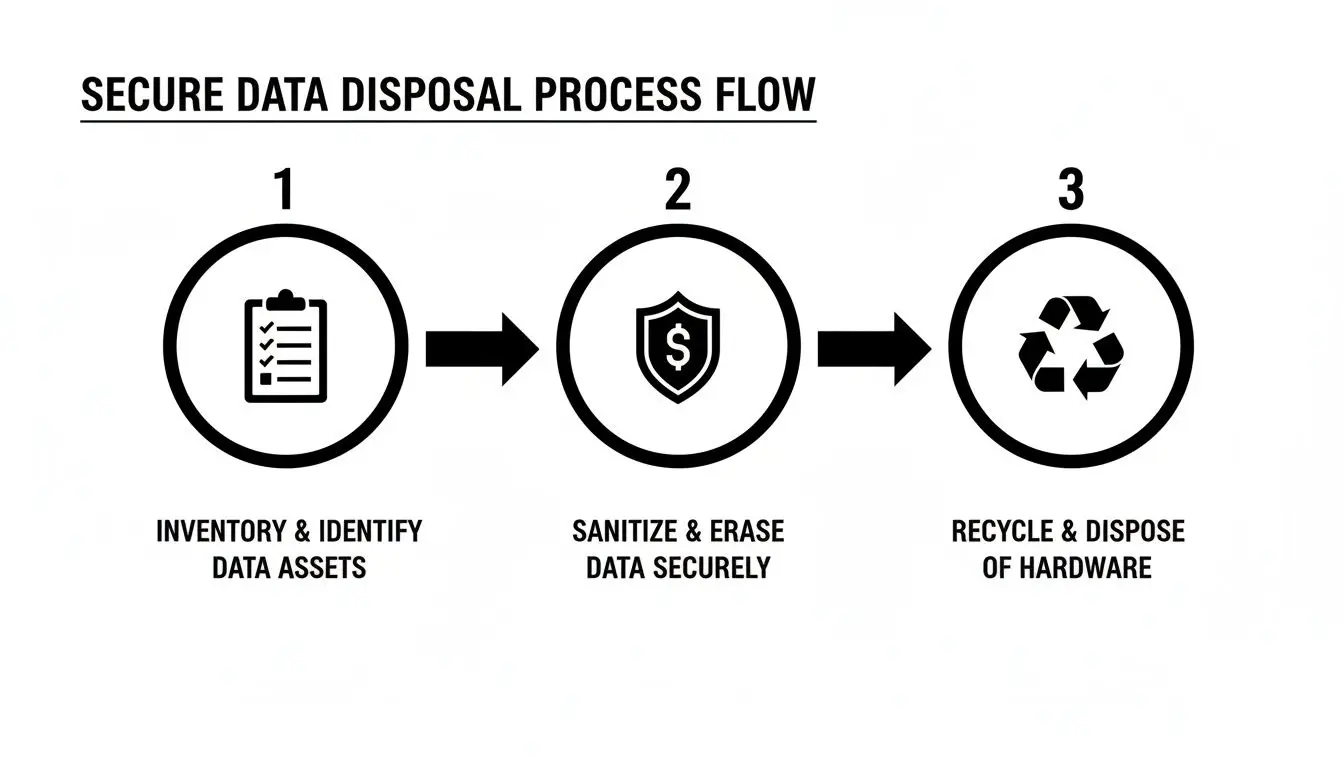
As you can see, a successful project hinges on a documented, step-by-step workflow. It starts with knowing exactly what you have and ends with certified, sustainable recycling.
To help you organize your project, this table breaks down the essential phases of a data center decommissioning project.
| Phase | Key Actions | Primary Goal |
|---|---|---|
| 1. Planning & Inventory | Audit all hardware, document serial numbers, create a project timeline. | Establish a clear scope and a single source of truth for all assets. |
| 2. Data Destruction | Perform on-site or off-site data wiping, degaussing, or physical shredding. | Ensure 100% data sanitization and receive certificates of destruction. |
| 3. Logistics & Transport | Securely pack and transport assets with a documented chain of custody. | Maintain security and accountability from your site to the final facility. |
| 4. Processing & Recycling | Sort assets for remarketing, responsible recycling, or compliant disposal. | Maximize asset value recovery and meet all environmental regulations. |
Following a structured checklist like this ensures no critical step is missed.
Partnering for Success
Trying to navigate this complex process alone is a huge risk. One misstep can lead to a devastating data breach, heavy compliance fines, or environmental damage that can tarnish your brand's reputation for years. This is where bringing in a specialist like Reworx Recycling makes all the difference.
We're a donation-based social enterprise, which means we do more than just manage your disposal project. We help your company achieve its corporate social responsibility goals by turning a potential liability into a positive impact on the community through technology donations and digital inclusion programs. We ensure your retired assets are handled securely, ethically, and with complete peace of mind.
For companies with facilities in other parts of Louisiana, we have resources for you, too. Take a look at our guide on data center decommissioning for businesses in New Orleans.
Start With Strategic Planning And Asset Inventory
When a data center project wraps up, the temptation is to jump right in and start unplugging hardware. But a successful decommissioning starts long before you touch a single server. For any business in Alexandria, this initial phase of strategic planning and creating a bulletproof asset inventory is the most critical step.
Rushing here is a surefire way to run into security risks, compliance headaches, and lost revenue. Before you do anything else, you need to know exactly what you’re dealing with.
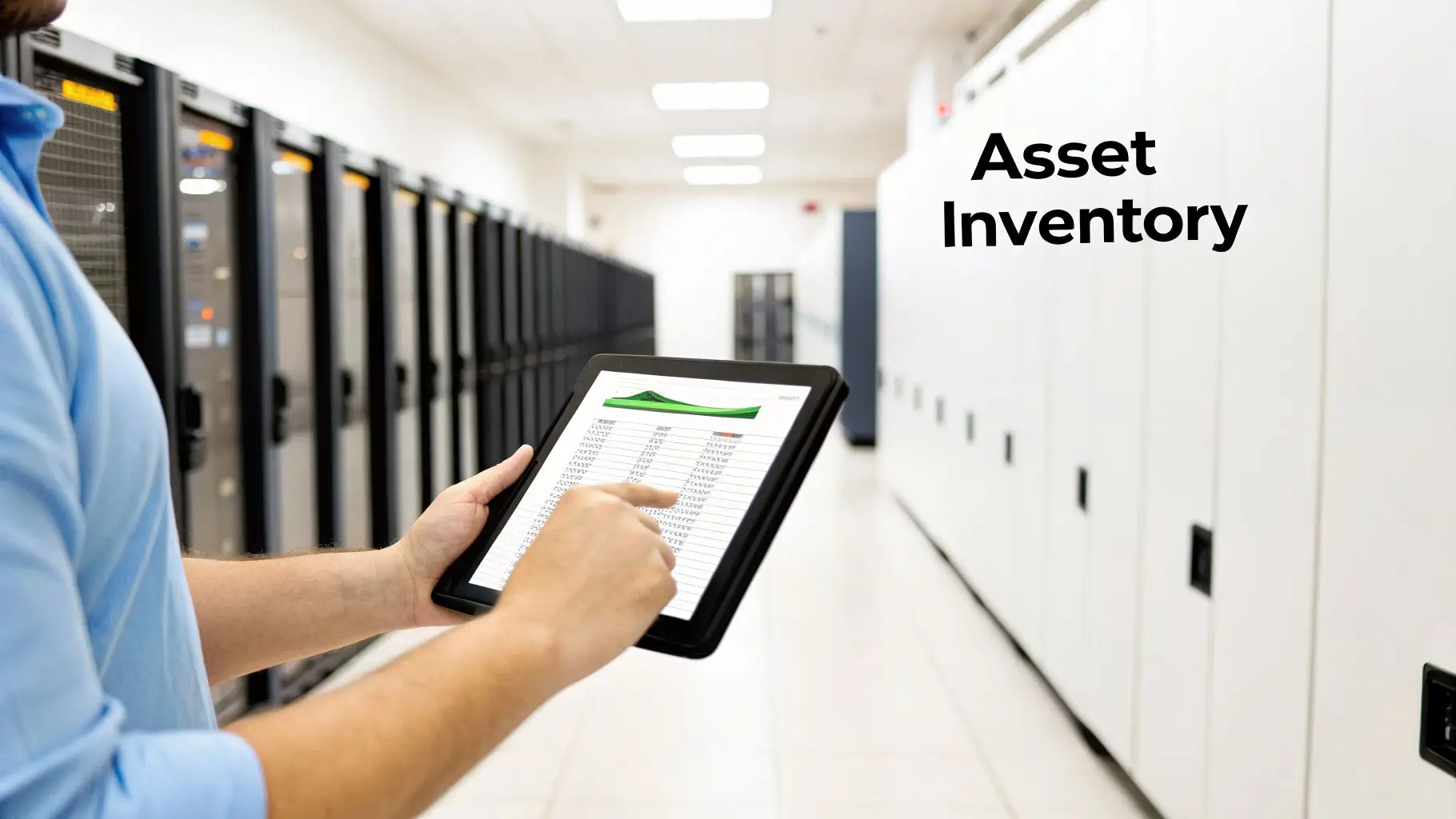
Your first real task is to identify every single piece of equipment slated for removal. This goes far beyond just servers and storage arrays. You need to account for networking gear, power distribution units (PDUs), and even server racks themselves. A meticulous audit isn't just a good idea—it's non-negotiable for any computer recycling or IT equipment disposal project.
Building Your Master Inventory List
This inventory list becomes the single source of truth for the entire project. For every asset, you have to document the key details. This isn't just busywork; it’s a foundational piece of any data center equipment disposal plan that ensures accountability and helps you decide on the best disposition strategy.
For each item, your inventory sheet should capture:
- Asset Tag: Your company’s internal tracking number.
- Serial Number: Absolutely essential for tracking and chain of custody.
- Make and Model: This helps you figure out the specs and what it might be worth.
- Physical Location: The exact rack and U-position where the hardware lives.
- Data-Bearing Status: A simple "Yes" or "No" to flag every item that needs data destruction.
This detailed log is vital for your own records, but it's also a requirement for any reputable ITAD partner you work with. It's the starting point for the chain-of-custody record that will follow each asset from your facility to its final destination. To get a head start, you can explore our comprehensive server decommissioning checklist for a much deeper dive.
Defining Disposition Paths And Project Scope
Once your inventory is locked in, you can start sorting assets into different end-of-life paths. Not everything is heading for the shredder. Some newer gear might have significant resale value, while older equipment could be perfect for donation or sustainable recycling.
By categorizing assets early, you transition from a simple "disposal" mindset to a strategic "asset recovery" approach. This shift allows you to identify opportunities for financial return and community impact before physical work begins.
This is also the moment to define the project's overall scope. Set clear timelines, assign roles to your team, and start thinking through the logistics. For example, a business in Alexandria should be aware of potential slowdowns from local noise ordinances that regulate when construction and heavy equipment can operate.
Planning for these local factors from the start prevents costly delays down the road. A partner like Reworx Recycling can help navigate these details, turning a complex facility cleanout into a smooth operation that even benefits local community donation programs.
Alright, you've got your asset list buttoned up. Now comes the part of the project where the stakes are highest: making sure every last bit of data is gone for good and getting the old gear out of your facility.
This isn't just a technical task. For any business in Alexandria, mishandling data destruction can lead to a nightmare of data breaches, hefty fines, and a reputation that’s hard to rebuild. It's a stage that demands precision, not just with the data, but with the physical hardware itself.
The process of de-racking, palletizing, and hauling out old equipment is heavy-duty work. We’re talking about dense, awkward servers and storage arrays. One wrong move can mean a damaged server, a scratched floor, or worse, an injured team member. It's a job for professionals who know how to maneuver this kind of equipment safely out of your building.
Choosing The Right Data Destruction Method
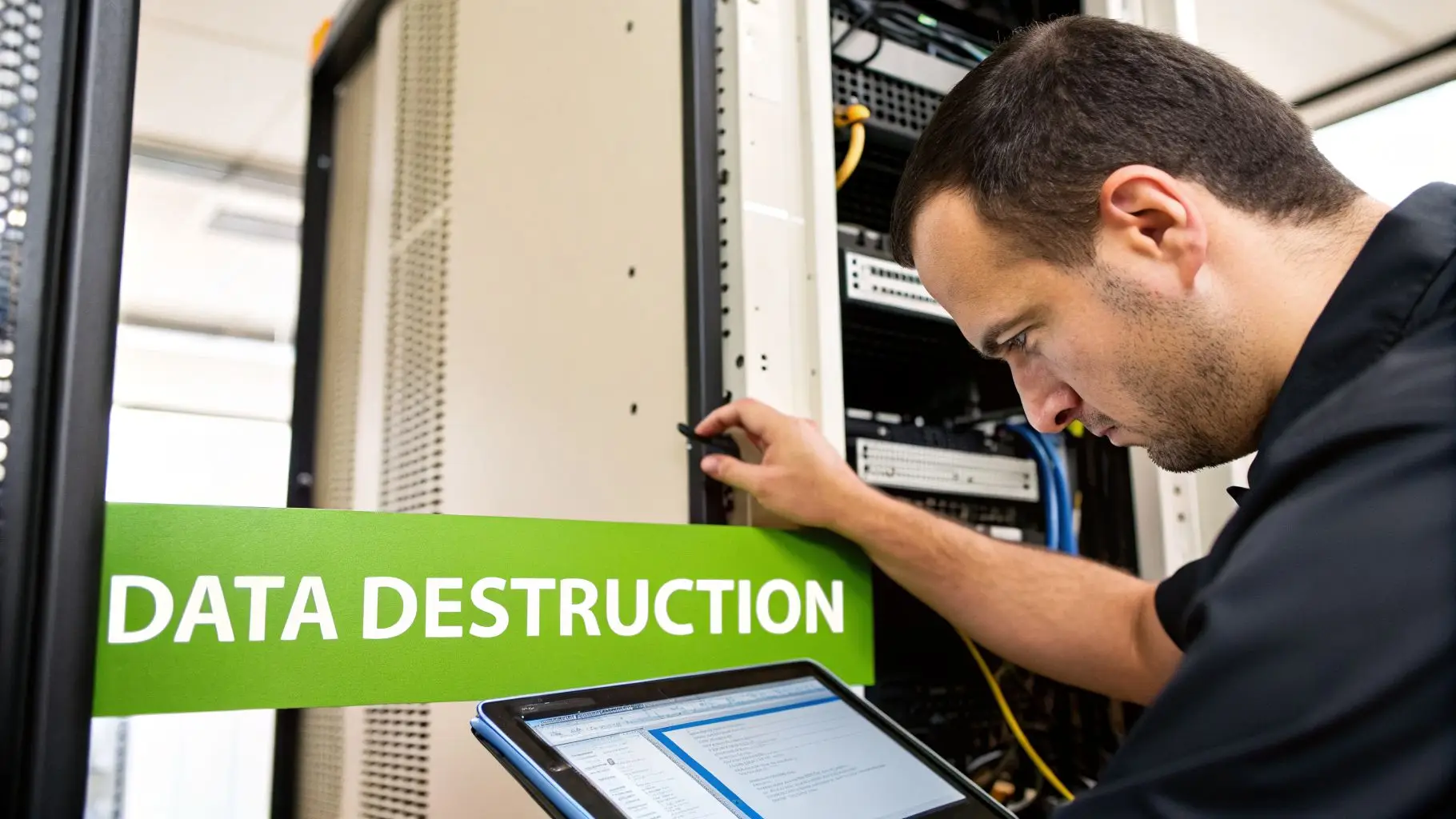
So, how do you make the data disappear? Your choice really boils down to whether you want to reuse the drive or just make sure it can never be used again.
Software Wiping (NIST 800-88 Standard): Think of this as the best option for newer, high-value drives (both HDD and SSD) you’d like to resell or use elsewhere. Specialized software overwrites the drive's data repeatedly, making it impossible to recover. This process preserves the hardware, so you can capture its remaining value.
Physical Destruction (Shredding): When a drive is old, has already failed, or you simply need the ultimate peace of mind, shredding is the way to go. The drives are fed into a machine that pulverizes them into tiny metal fragments. This product destruction method ensures there's no coming back from that.
It's absolutely essential to work with a vendor who gets the difference and can guide you. You can get a deeper dive into these methods in our overview of secure data destruction services.
A Rock-Solid Chain Of Custody
From the second a server is unplugged at your Alexandria site to its final disposition, you need a documented, unbroken trail. This chain of custody is your proof that you’ve handled everything by the book. It tracks each asset by its serial number, every step of the way.
A robust chain of custody isn't just paperwork; it’s a security protocol. It ensures that no asset is lost, stolen, or mishandled, providing auditable proof that you managed the disposal process responsibly from start to finish.
A certified ITAD partner like Reworx Recycling includes this documentation as a standard part of our service. We use locked, GPS-tracked trucks and serialized seals on every shipment. This meticulous approach gives you the assurance that your data center decommissioning in Alexandria is secure, compliant, and completely transparent.
Choose The Right ITAD Partner In Louisiana
Picking the right IT Asset Disposition (ITAD) partner might be the single most critical decision you'll make during a data center decommissioning. It's a choice that has a direct line to your data security, environmental compliance, and even your bottom line. For any business in Alexandria, getting this wrong simply isn't an option.
A great partner doesn't just haul away old tech—they transform a logistical nightmare into a strategic asset. You need a provider who genuinely understands the specifics of data center equipment disposal in Alexandria, Louisiana, not just another recycling company.

Look For Key Certifications
Your first filter should always be certifications. These aren't just logos for a website; they're your proof of a vendor's commitment to secure and responsible processing. Two of the most important ones you'll see are:
- R2v3 (Responsible Recycling): This certification is a big deal. It guarantees the vendor follows the highest standards for environmental safety, worker health, and data security all the way down the recycling chain.
- e-Stewards: Known for its incredibly strict global policies, this standard completely prohibits the export of hazardous e-waste to developing nations.
A vendor holding these certifications has already passed intense audits. That gives you peace of mind, knowing your laptop disposal or medical equipment disposal project won't become a data breach liability or an environmental disaster.
Go Beyond Basic Recycling
There’s a world of difference between a standard electronics recycler and a full-service social enterprise. A basic recycler might just break down your old servers for scrap metal. But a true partner, like Reworx Recycling, offers a complete, end-to-end solution.
We look past simple disposal and find ways to weave the project into your company's corporate social responsibility goals. We carefully evaluate retired assets for any refurbishment and donation potential, which directly supports digital inclusion and workforce development right here in Louisiana communities. It’s an approach that turns an operational cost into a story of positive community impact. You can see exactly how our specialized ITAD services for Louisiana deliver that value.
The demand for these services is skyrocketing. The data center decommissioning market, valued at around $5 billion in 2026, is projected to balloon to over $15 billion by 2033. This boom is fueled by constant tech upgrades and stricter green initiatives, which means companies are under immense pressure to responsibly handle millions of old servers and hard drives. For a deeper dive into these numbers, you can explore the full research on the data center decommissioning service market.
When you're vetting potential partners, don't be shy. Ask direct questions like, "Can you show me a sample Certificate of Destruction?" and "What does your chain-of-custody documentation actually look like?" The quality of their answers will tell you everything you need to know about their professionalism and dedication to security.
Finally, choosing a partner with a real, established presence in Louisiana is a smart move. They'll have a firm grasp of the local logistics and regulations, offering both the capability and the convenience your Alexandria operations need.
Maximize Asset Value And Ensure Compliance
When you look at a rack of retired data center equipment, what do you see? If the answer is "a pile of junk," you're leaving money on the table. For businesses in Alexandria, decommissioning isn't just about clearing out space—it's a careful balancing act between recovering financial value and staying on the right side of environmental laws.
Think of it less as disposal and more as smart asset recovery. A good strategy starts with a hard look at your inventory. Newer servers, switches, or storage arrays with in-demand components can often be remarketed to bring back a chunk of your original investment. On the other hand, older hardware can be routed to donation-based recycling, putting its raw materials back to work and supporting the community.
Turning Old Tech Into New Capital
This is where a strategic partner really shines. At Reworx Recycling, we don't just see what your equipment was; we see what it's still worth. By sorting out what’s suitable for resale or refurbishment, we help you transform a potential expense into a revenue stream. It's the core of maximizing value through IT asset disposition, turning that end-of-life hardware into a real financial asset.
And it’s a big deal. The global market for IT equipment disposal, which is full of data center gear, is expected to reach $1,257.6 million by 2026. With companies replacing servers and storage every 3-5 years, the demand for professional ITAD services like ours for refurbishment, resale, and material recovery is only growing.
Valuable materials like gold, silver, and platinum from circuit boards offer a tangible financial return. Plus, certified recycling programs can slash landfill waste by up to 90%. For a deeper dive into these trends, you can explore the IT equipment disposal market research.
Navigating Louisiana's Compliance Landscape
Of course, getting some cash back is only half the story. The other half is strict compliance. Trying to navigate the maze of Louisiana and federal e-waste regulations on your own is a recipe for headaches, potential fines, and reputational damage. Older electronics are often full of hazardous materials like lead, mercury, and cadmium, and they have to be handled just right.
An ITAD partner isn't just a vendor; they are your compliance shield. Choosing a certified provider ensures that every piece of equipment is disposed of in a way that meets or exceeds all legal requirements, providing you with the documentation to prove it.
This paperwork is your ticket to peace of mind for any data center equipment disposal in Alexandria, Louisiana. Certified ITAD providers like Reworx Recycling will give you detailed certificates of destruction and recycling. These reports are gold during internal audits and are perfect for bolstering your company’s sustainability reporting.
By working with a social enterprise, you're not just checking a box for compliance. You’re also creating positive outcomes in the community, turning a routine operational task into a powerful statement of corporate responsibility.
Common Questions About Data Center Disposal In Alexandria
When it comes to decommissioning a data center in Alexandria, a lot of the same questions pop up time and again. It makes sense—the stakes are high, from protecting sensitive data to staying on the right side of Louisiana’s environmental laws. Getting straightforward answers is the first step to building a decommissioning plan you can feel good about.
We hear these questions all the time from businesses in the Alexandria area, so let's get right to them.
What Is The First Step I Should Take?
Before a single server gets unplugged, your first move is creating a detailed asset inventory. This isn't just a quick count; it's a master list of every single piece of hardware you plan to dispose of.
You'll want to document the make, model, serial number, and internal asset tag for each item. This inventory becomes the backbone of the entire project, crucial for tracking every asset, figuring out its potential resale value, and maintaining a secure chain of custody. Don't rush this—solid documentation now will save you from major headaches down the road.
How Can I Guarantee My Data Is Securely Destroyed?
This is usually the biggest worry, and for very good reason. The only way to guarantee total data security is by partnering with a certified ITAD provider who offers verifiable, industry-standard destruction methods.
You really have two main, accepted options here:
- Software Wiping: This uses specialized software to overwrite all data on a drive according to NIST 800-88 standards. The major benefit is that it keeps the drive intact for potential reuse or resale.
- Physical Shredding: This is exactly what it sounds like. Hard drives and other storage media are physically pulverized into tiny fragments, making the data completely and permanently unrecoverable.
A trusted partner like Reworx Recycling will always issue a Certificate of Data Destruction for every single drive they handle. This gives you a clear, auditable paper trail for your compliance records.
Can We Recover Any Costs From This Old Equipment?
Absolutely. It’s a common misconception that old data center gear is just junk. In reality, it's often a collection of valuable assets waiting to be recovered. The trick is to work with an ITAD partner who knows how to find and maximize that value.
By evaluating your inventory for remarketable components—such as newer servers, memory modules, and networking gear—you can often recoup a significant portion of your initial investment. This turns a disposal cost into a revenue-generating opportunity.
Even much older equipment still holds value in its raw materials. A good partner will focus on getting you the best possible financial return while ensuring every component is handled responsibly.
What Are The Logistics Of A Large-Scale Facility Cleanout?
A full data center or office cleanout is a serious logistical challenge. It means de-racking hundreds of pounds of equipment, packing it all professionally, and transporting it securely. This is definitely not a DIY job.
Professional ITAD services are built to manage all of this for you, from start to finish. A proper service includes:
- An experienced, insured team to handle all the on-site labor.
- The right tools and equipment to safely remove and palletize hardware without damaging your facility.
- Secure, GPS-tracked vehicles for transportation.
- A strict chain of custody from the moment it leaves your Alexandria facility until it arrives at the processing plant.
Trying to tackle this with an in-house team often leads to damaged equipment, dings in the walls, or even employee injuries. Leaning on professionals makes the entire process smooth, safe, and efficient.
Ready to tackle your data center decommissioning with confidence? Reworx Recycling provides the secure, compliant, and socially responsible ITAD services your Alexandria business needs. Partner with us to turn your retired assets into a positive community impact. Schedule a pickup, donate your old equipment, and let’s build a more sustainable future together.