Zero landfill electronics recycling means managing retired equipment so reuse and refurbishment come before parts recovery and material recycling, with landfill avoided as a routine destination. For businesses, that takes more than arranging a pickup: you need a clear path for each device, secure data handling, and records that show what happened after collection. A reuse-first program can help your organization reduce waste while protecting its information and recovering value from equipment.
What zero landfill means for a business
Zero landfill is an operating standard, not just a sustainability slogan. It asks your team and its recycling partner to consider the best next use for each item, then document how equipment and leftover materials are handled.
That matters because retired laptops, servers, phones, network devices, printers, monitors, and specialized equipment can carry different risks and opportunities. Some may still be useful; others may contain data or need careful downstream processing. A hauling-only service may clear space, but it may not provide the device-level tracking and disposition details a business needs.
A strong program supports a circular economy for IT: equipment stays useful for longer, and materials are recovered when a device no longer has a practical second life.
The reuse-first hierarchy for electronics
Use this order when deciding what should happen to business electronics:
- Reuse internally. Check whether a working device can support another team, location, training room, or backup inventory.
- Refurbish for another use. Equipment that needs testing, repair, or minor upgrades may be suitable for a second life after its data is handled appropriately.
- Harvest usable components. If a whole system is no longer practical to reuse, some components may still have value for repair or reuse.
- Recover materials. When a device or component cannot be reused, send it through responsible recycling and downstream processing.
- Manage residuals carefully. Ask how remaining materials are handled and request documentation for exceptions. “Zero landfill” should be supported by clear reporting, not assumed from the word recycling.

This hierarchy keeps sustainable e-waste disposal focused on retaining the most value first. It also helps teams distinguish items that are simply old from equipment that is broken, unsafe, or unsuitable for reuse.
Why public collection may not fit corporate needs
Municipal collection can be helpful for residents with small amounts of household electronics. It usually isn’t a substitute for a business disposition program with scheduled pickups, asset records, secure handling, and reporting.
For example, Boston’s Zero Waste Days are resident-focused and require proof of Boston residency; the city says it does not accept waste from businesses. Business equipment can also include servers, networking hardware, storage devices, and larger or specialized loads that don’t fit a typical public drop-off event.
For corporate electronics recycling in Boston, check the collection rules before planning a disposal route. A business needs a process that can handle its equipment mix, manage data-bearing assets, and provide records for internal review. Boston businesses can work with providers using nationwide logistics, including Reworx, whose home base is 1835 S Cobb Industrial Blvd SE #103, Smyrna, GA 30082.
Build a corporate zero-landfill program
Start before the next office move, equipment refresh, or server-room project. A little planning makes it easier to keep electronics out of general waste and route each item through the right process.
- Map your equipment. List user devices, servers and other infrastructure, peripherals, and specialized equipment. Record model, serial number, location, condition, and whether it stores data when possible.
- Set handling rules. Decide who approves retirement, where equipment is stored, how handoffs are recorded, and which items need wiping or physical destruction.
- Plan for different events. A routine laptop return, office cleanout, data center decommissioning, and lab-equipment project may need different schedules and handling.
- Make reuse part of the decision. Identify what could be redeployed, refurbished, donated, or considered for equipment buyback before sending it for materials recovery.
- Choose practical measures. Track disposition paths, data-security records, sites and teams covered, and any problems that slow the process.
- Give employees simple instructions. Tell staff where to bring devices, how to record the handoff, and not to place electronics in general trash or mixed recycling.

Your asset map does not need to be perfect on day one. It should be useful enough to identify data risks, equipment that may have a second life, and anything that needs special review.
Protect data while keeping equipment in circulation
Reuse and data security go together. Before a computer, phone, or storage device changes hands, establish how its data will be handled and what proof your organization needs.
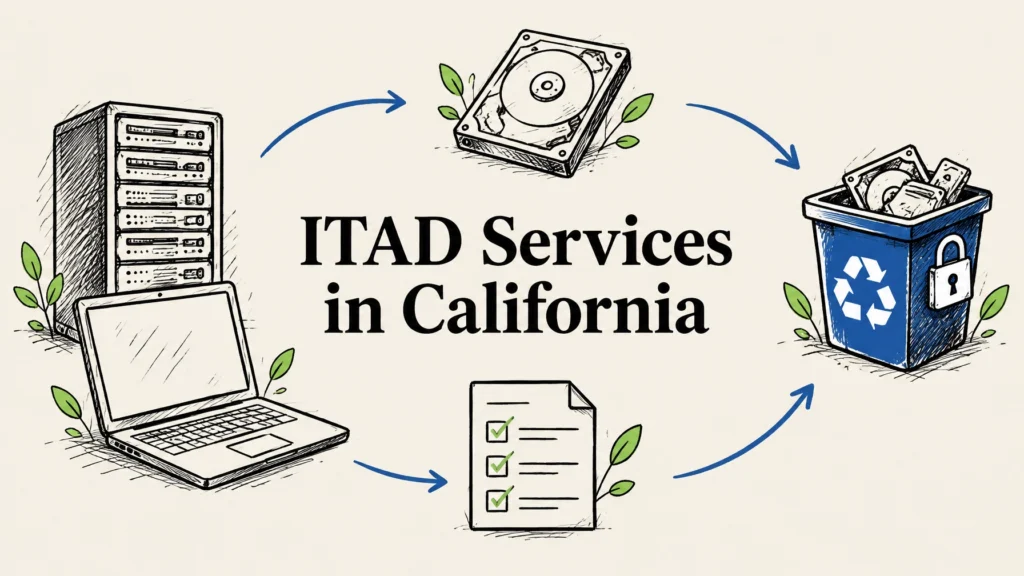
A provider should explain which devices can be sanitized using a documented wipe method, such as a NIST 800-88-style process, and which should be physically destroyed. Hard drive shredding may be appropriate when reuse is not suitable or your policy requires destruction. Ask how the provider maintains chain of custody and whether you’ll receive a certificate of destruction for devices that are destroyed.
These records can support your organization’s review of obligations related to privacy, HIPAA, PCI DSS, state data breach laws, or other internal requirements. Requirements vary, so confirm your organization’s policy with the appropriate security or compliance lead.
Reworx offers free data destruction and hard drive shredding with a certificate of destruction. For assets that may be suitable for another use, ask how data is handled before any equipment is considered for reuse.
How to evaluate an electronics recycling partner
Look for a provider that can explain the path from pickup to final disposition, not just the removal date. Ask about the certification scope for the facilities involved, data destruction options, asset tracking, downstream processing, and the reports you’ll receive. A certification claim should match the actual facility and service handling your equipment.
| Warning sign | Why to ask more |
|---|---|
| Vague answers about downstream destinations | You may not be able to verify what happened after collection. |
| A hauling-focused pitch with little discussion of reuse | Valuable equipment could skip higher-priority reuse options. |
| No clear explanation for data-bearing devices | Your team needs to know how data is protected and documented. |
| Generic paperwork with no useful asset detail | It may be hard to reconcile equipment and disposition records. |
| One process for every device | A laptop, failed server, and broken printer may need different paths. |
Try asking what happens to a retired laptop, a failed server, and a broken printer. A mature partner should explain why their next steps may differ.
For a business program that includes pickups, data handling, and end-of-life planning, learn more about IT asset disposition and electronics recycling. Reworx provides free nationwide pickups across all 50 states, with flexible after-hours scheduling, tamper-proof drop-off boxes, and text-for-fast-response service. Its programs focus on certified eco-friendly recycling and responsible downstream processing. Ask for details about the facilities, documentation, and disposition paths relevant to your specific equipment.
The reuse-first approach can also create a community benefit. Reworx is a social enterprise that gives refurbished tech to marginalized and vulnerable communities for education and career readiness.
Start with the equipment you already have
A practical first step is to audit the devices waiting in storage, identify which contain data, and separate potential reuse from equipment that needs recycling. Then choose a provider that can explain its process and document the outcome.
A clear zero landfill electronics recycling program can help your business lower disposal risk, recover more value from IT, and make sustainable e-waste disposal easier to manage. Start with your current backlog or next refresh cycle, and set the rules before equipment leaves your control.
Frequently asked questions
What does zero landfill electronics recycling mean?
It means prioritizing reuse and refurbishment, then recovering components and materials, while avoiding landfill as a routine destination. Businesses should ask for documentation that explains how equipment and residuals were handled.
Can businesses use Boston’s public e-waste collection?
Boston’s Zero Waste Days are resident-focused and do not accept waste from businesses. Corporate electronics recycling generally calls for a business-ready pickup and disposition plan.
What happens to equipment that can’t be reused?
A responsible partner should explain whether components can be recovered and how remaining materials are sent for recycling or other appropriate handling. Ask how exceptions are recorded.
How do we start a zero-waste IT program?
Begin with an equipment inventory, identify data-bearing assets, and set written rules for approval, storage, handoff, and disposition. Then choose a provider that can support reuse-first decisions and supply records for data destruction and final outcomes.