IT asset recovery is the structured process of identifying retired technology, protecting the information it holds, recovering value where possible, and responsibly managing what remains. A clear program helps your business decide what happens to each device, keep records from pickup through final disposition, and turn an equipment backlog into a repeatable workflow.
What IT asset recovery means for a business
Retired equipment often collects in storage rooms because daily work takes priority. But a laptop, server, phone, hard drive, or network switch does not stop carrying responsibility when it leaves service. It may still hold sensitive data, have resale or reuse value, or need a documented recycling route.
A simple starting rule: if a device connected to your network or stored business information, treat its retirement as a managed process, not a cleanup task.
IT asset recovery brings three kinds of value into one plan:
- Financial value: resale, equipment buyback, useful components, or internal redeployment.
- Security value: controlled handling and documented data sanitization or destruction.
- Environmental and community value: extending the life of usable equipment and responsibly recycling the rest.
That is why IT asset disposition value recovery is about more than the offer for a batch of laptops. It also includes avoided replacement costs, reduced storage and handling, reliable records, and the right final route for every asset.

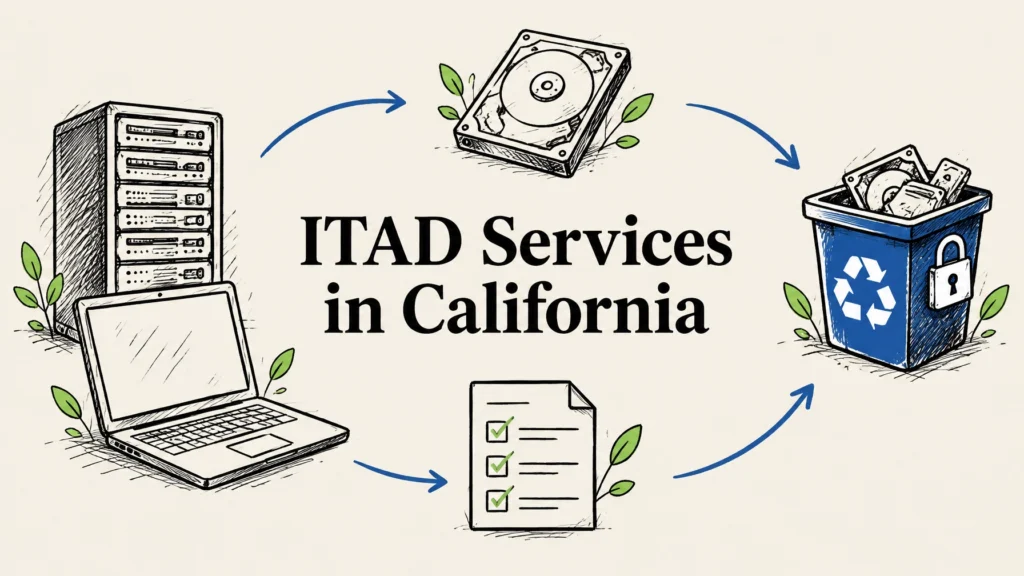
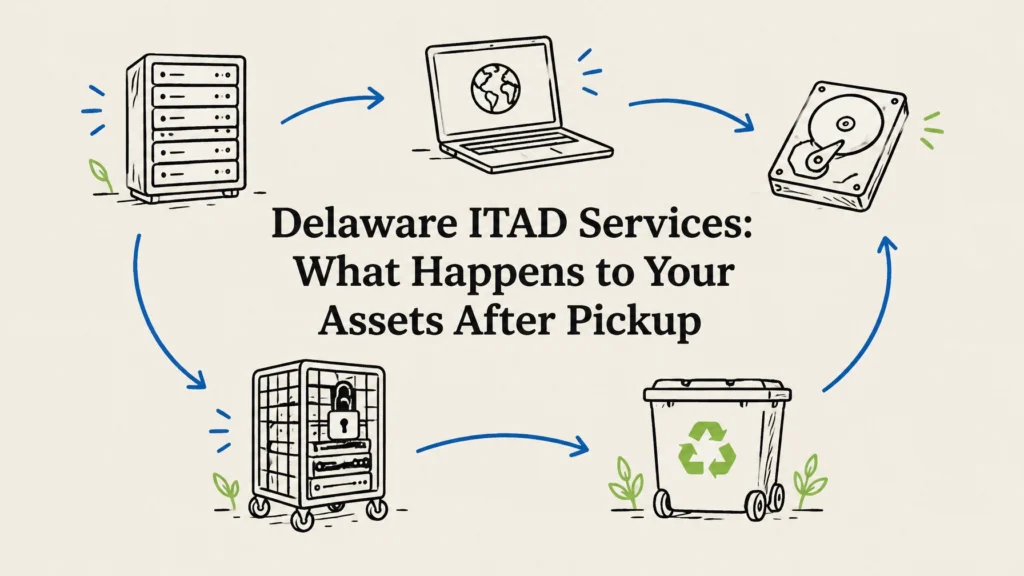
The IT asset recovery lifecycle: a practical six-step process
A repeatable lifecycle makes it easier to keep equipment, data, and documentation together. You can adapt these steps to a refresh, office move, server decommissioning, or ongoing ITAD program.
-
Identify and inventory assets. Record what is leaving service, including asset tags or serial numbers where available, location, condition, lease status, and whether it contains storage media. Include laptops, desktops, servers, phones, tablets, drives, and networking equipment.
-
Approve retirement and plan handling. Confirm who owns the decision, whether equipment can be redeployed, and whether any lease or contract terms affect its next destination. Set aside devices that need special review before they are moved.
-
Prepare and transfer securely. Label and stage equipment in an approved area. Record who handled it, how it was packed or secured, and when custody transferred. A documented handoff helps you identify and investigate any mismatch between what left your site and what arrived.
-
Log and triage equipment at intake. The processor should receive and record the assets, then sort them by condition and likely next step. Reconcile the intake record with your release inventory and follow up on exceptions.
-
Sanitize data before reuse or resale. For reusable devices, an appropriate wipe based on NIST SP 800-88-style practices may be an option. For failed, damaged, or higher-risk media, hard drive shredding may be more suitable. The method should fit the media, your requirements, and the intended outcome.
-
Recover value and close out the records. Route each item to redeployment, remarketing, parts recovery, donation, or recycling. Collect the final asset and data records, any applicable certificate of destruction, and a clear summary of the outcome.
The key control is sequence: secure and account for the equipment, address data, then determine its next life.
Match equipment condition to its next step
Not every device should follow the same route. A practical ITAD program sorts assets rather than treating a mixed load as one undifferentiated batch.
| Asset condition | Typical next move | What to consider |
|---|---|---|
| Recent and working | Test, then consider resale or redeployment | Data must be sanitized before reuse or sale |
| Working but older | Consider internal reuse, donation, or parts recovery | Compare usefulness with handling and repair needs |
| Broken or obsolete | Responsible electronics recycling | Confirm the downstream route and closeout records |
| Data-bearing media | Sanitize or destroy before release | Match the method to media condition and data risk |
A drive that cannot be reliably wiped should not be treated as ready for resale. Likewise, a device with little resale value may still be suitable for parts recovery or responsible materials recycling.
Where IT asset disposition value recovery comes from
The resale price is only one part of the business case. Look at the full picture:
- Equipment buyback: Some current-generation laptops, servers, phones, and network devices may have resale value based on condition and market demand.
- Internal redeployment: Moving a suitable device to a lower-demand role can avoid a new purchase.
- Parts recovery: A complete system may have limited value while some of its components remain useful.
- Avoided operational costs: A planned process can reduce long-term storage and make refresh projects easier to manage.
- Mission and environmental value: Reuse can keep serviceable equipment working longer, while certified eco-friendly recycling helps direct non-reusable equipment through responsible processing.
Connect hardware retirement to software cleanup, too. When a device is removed from service, review whether its accounts, licenses, and access should also be retired or reassigned.
For current-generation or surplus equipment, Reworx equipment buyback offers a route to explore recovery options. The right path depends on the actual equipment and its condition, so ask how mixed batches and items without a resale market will be handled.
Build an ITAD program your team can follow
An ITAD program does not have to start with complicated software. Begin with a living inventory and a short policy that people can use consistently.
Your inventory should capture:
- Asset identity and location
- Current status, such as in use, spare, retired, or awaiting pickup
- Whether the device contains storage media
- Retirement approval and any lease or ownership restrictions
- Data handling and final disposition notes
Then assign clear responsibilities. Decide who approves retirement, updates the inventory, stages devices, coordinates pickup, and files the final records. Train facilities, department administrators, and other staff who may handle equipment, not only IT.
For security, ask a provider how it tracks assets from pickup through intake and final processing. Confirm whether it can provide serialized records, custody details, method confirmation, and a certificate of destruction. Those documents support internal reviews and help your team demonstrate how it addressed requirements that may apply to it, such as HIPAA, PCI DSS, state data breach laws, or contract-specific standards. The applicable obligations depend on your organization and the data involved.

Reworx provides free nationwide pickups across all 50 states and free data destruction. Data-bearing devices can be wiped or sent for hard drive shredding, with a certificate of destruction. Ask what asset-level records and custody documentation will be available for your project.
How to choose an ITAD partner
A useful partner should make the program easier to manage, not just take equipment away. Before choosing one, ask:
- How do you document custody and reconcile the equipment received?
- Which devices are candidates for reuse, buyback, parts recovery, or recycling?
- What happens to items with no resale value?
- What data sanitization or destruction options are available?
- What certificates and final disposition records will we receive?
- Can you handle smaller, mixed batches and coordinate flexible pickup times?
Small and midsize organizations may have lower volumes or a wider mix of equipment than a large refresh project. Flexibility matters. Reworx offers tamper-proof drop-off boxes, after-hours scheduling, and text-for-fast-response service to make coordination easier. Its certified eco-friendly recycling program uses responsible, R2-style downstream processing.
Reworx is headquartered at 1835 S Cobb Industrial Blvd SE #103, Smyrna, GA 30082, its home base in metro Atlanta, and serves organizations nationwide. Reworx is a social enterprise that gives refurbished tech to marginalized and vulnerable communities for education and career readiness.
For a broader look at secure handling, reuse, and recycling as one process, explore Reworx IT asset disposition services. For the data-handling part of your plan, see Reworx data destruction services.
Frequently asked questions about IT asset recovery
What happens to equipment with no resale value?
It can still be processed responsibly. If it contains data-bearing media, the data should be sanitized or the media destroyed first. The remaining equipment can then be routed to parts recovery or responsible recycling, with records of the outcome.
How do we handle leased equipment?
Check the lease agreement and return instructions before sending leased assets for buyback, recycling, or another disposition. Confirm who owns the equipment and whether the lessor specifies data sanitization or return-condition requirements.
What documentation should we expect from an ITAD provider?
Ask for records that connect assets to their intake and final outcomes. For data-bearing devices, confirm how the sanitization or destruction method is recorded and whether you will receive a certificate of destruction. Ask how custody transfers and exceptions are documented, too.
Should we wipe a drive or shred it?
That depends on the storage media, its condition, your security requirements, and whether the device is intended for reuse. A suitable, verifiable wipe may preserve a reusable device. Shredding can be appropriate for damaged or higher-risk media that should not be reused.
Turn retired technology into a managed process
A well-run ITAD program starts with an inventory, keeps custody and data security visible, and gives each asset a clear final route. Reworx can help your team plan a free nationwide pickup, discuss data destruction and equipment buyback, and arrange flexible service. You can also text Reworx for a fast response and a practical next step.