For businesses in Iowa City, retiring old data center equipment is more than just a cleanup task. It's a high-stakes process involving data security, environmental compliance, and recovering value from IT assets. Properly decommissioning servers, storage arrays, and networking gear requires a professional IT Asset Disposition (ITAD) partner to manage the risks and ensure a responsible outcome. As a donation-based social enterprise, Reworx Recycling offers a path that not only secures your business but also strengthens the community.
Navigating Data Center Decommissioning in Iowa City
Iowa City's dynamic blend of higher education, advanced healthcare, and a growing tech sector creates unique challenges for IT equipment disposal. For IT managers and sustainability leaders, a hardware refresh or cloud migration is not the end of a project—it's the beginning of the critical decommissioning phase. Simply discarding old servers creates immense liability for your data, brand reputation, and the local environment.
However, this process can be a strategic opportunity. A professional ITAD plan from a partner like Reworx Recycling helps your organization achieve several key objectives simultaneously:
- Protect Sensitive Data: Implement certified, verifiable data destruction for all storage media.
- Ensure Full Compliance: Adhere to federal, state, and local environmental regulations.
- Recover Value: Recapture financial returns from retired assets that can be remarketed.
- Enhance Corporate Social Responsibility: Demonstrate your commitment to sustainability and community support.
Local Needs and Global E-Waste Trends
The need for structured data center decommissioning is a global trend with a significant local impact. The global e-waste problem is staggering, with the UN reporting that 62 million tonnes were generated in 2022 alone. This figure is projected to climb to 82 million tonnes by 2030. Alarmingly, only 22.3% of this e-waste is properly recycled, leaving billions in recoverable materials wasted.
This is why a thoughtful approach to data center equipment disposal in Iowa City Iowa is so vital. For local institutions in education and healthcare managing sensitive research data or patient records, the stakes are exceptionally high. Your disposal process must be airtight, from initial inventory to the final certificate of destruction.
A comprehensive plan covers every stage, from unplugging hardware to its secure off-site transport. If you're outlining the steps, our detailed server decommissioning checklist is a valuable resource. It helps translate global best practices into a secure, streamlined, and responsible initiative for your Iowa City operations, turning a complex challenge into a strategic advantage.
Creating Your Decommissioning and Disposal Blueprint
The first step in any successful data center equipment disposal Iowa City Iowa project is drafting a detailed decommissioning plan. This roadmap prevents costly mistakes and ensures every piece of hardware is tracked from shutdown to final disposition. It's not just about moving boxes; it's about maintaining control, security, and intelligent asset management.
The foundation of your plan is a meticulous inventory. Every asset—servers, storage arrays, networking gear, racks, power distribution units (PDUs), and cables—must be identified, tagged, and logged. This step is crucial for establishing a solid chain of custody, a requirement for both compliance and security.
Asset Inventory and Valuation
With a complete inventory, you can determine the value of your equipment. Not all retired gear is e-waste. Your team must assess which assets retain value for resale and which should be designated for secure recycling or donation.
This is where you separate valuable assets from liabilities. Newer servers may be ideal for refurbishing, while decade-old hardware is more of a data risk than an asset. This reverse logistics process can turn an expense into a revenue source. For businesses in Iowa City, partnering with an ITAD specialist like Reworx Recycling simplifies this valuation, helping you achieve the best return while responsibly handling non-viable electronics.
A smart ITAD process always follows three core principles: securing data, recovering asset value, and ensuring total compliance.
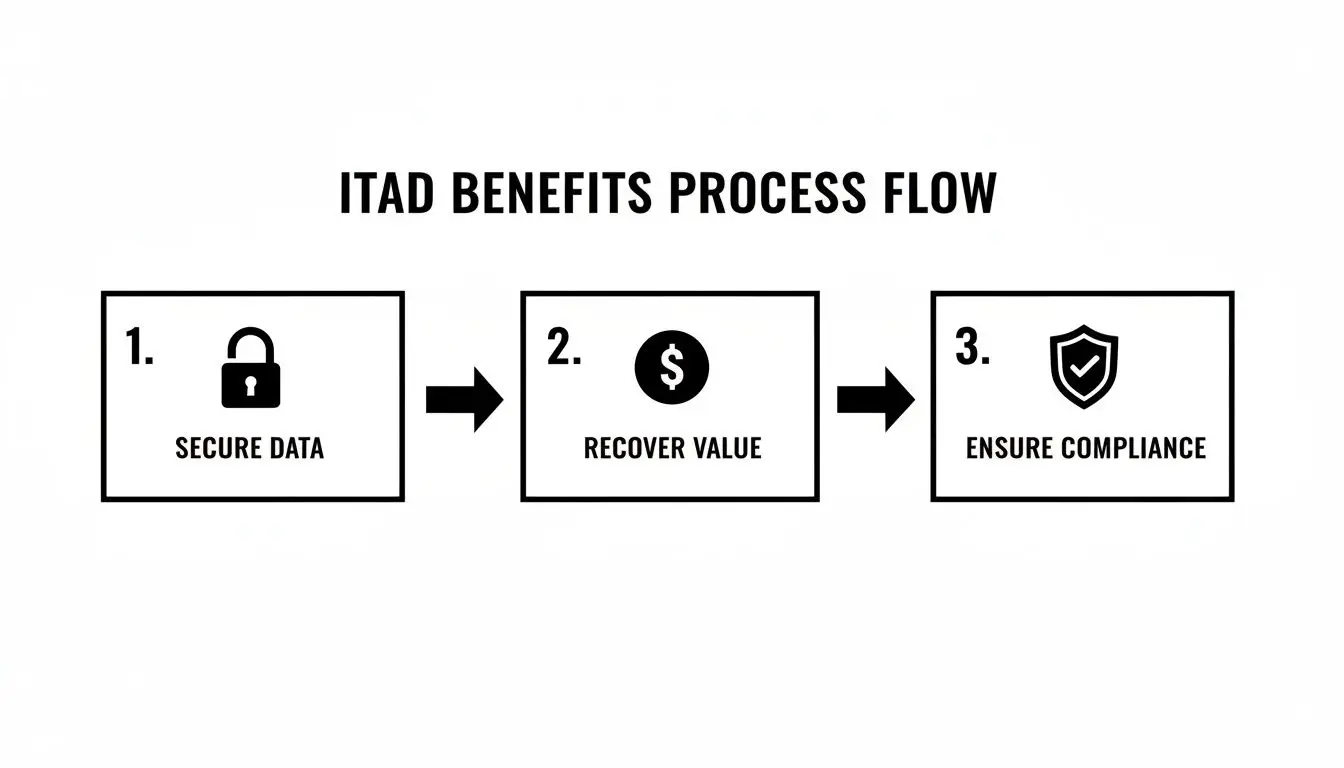
This workflow illustrates how a well-organized ITAD strategy prioritizes information security, then focuses on recapturing financial value, all while meeting regulatory requirements. It’s a complete, risk-managed cycle.
To provide a clearer picture, here’s a breakdown of the key stages in a typical data center decommissioning project. Use this as a high-level checklist to ensure nothing is overlooked.
| Phase | Key Actions | Primary Goal |
|---|---|---|
| Initial Planning & Strategy | Define scope, set goals, assemble project team, and establish a budget. | Create a clear roadmap and align all stakeholders from the start. |
| Asset Inventory & Valuation | Catalog all hardware, software, and components. Assess fair market value for resale vs. recycling. | Gain full visibility into assets and determine their financial potential. |
| Data Destruction | Choose and execute data sanitization methods (wiping, degaussing, or physical shredding). | Eliminate data breach risks and ensure 100% data security. |
| On-Site Decommissioning | Physically de-rack, disconnect, and prepare equipment for transport. | Safely and efficiently remove assets from the live environment with minimal disruption. |
| Logistics & Transportation | Securely pack and transport assets with documented chain-of-custody. | Ensure assets are securely moved from your site to the processing facility. |
| Processing & Disposition | Sort assets for remarketing, recycling, or certified destruction. | Maximize value recovery and ensure environmentally responsible disposal. |
| Final Reporting | Receive certificates of data destruction and recycling, plus detailed asset settlement reports. | Provide auditable proof of compliance and a transparent financial summary. |
This table outlines a proven path from start to finish. By following these phases, you can methodically manage the complexities of decommissioning and avoid common pitfalls.
Setting Timelines and Coordinating Stakeholders
Once you have cataloged and valued your assets, you can create a realistic timeline and budget. A common mistake is underestimating the time required for physical removal and transport, especially when working in a live data center where disruptions are not an option.
Your budget should account for all potential costs:
- Labor Costs: For the hands-on work of de-racking, packing, and moving heavy equipment.
- Logistical Hurdles: Such as limited freight elevator access or the need for after-hours work.
- Data Destruction Fees: Certified wiping or shredding is essential and comes with a cost.
- Recycling Costs: For equipment with no remaining resale value.
A key piece of advice: bring all stakeholders together from day one. Your decommissioning team should include representatives from IT, facilities, finance, and compliance. Early alignment prevents last-minute issues and ensures all requirements are met.
For example, your facilities manager coordinates site access, while your finance department approves the budget and tracks asset depreciation. When these teams collaborate, projects run smoothly. This unified approach provides the framework to manage even a large-scale facility cleanout with confidence.
To learn more about building a robust framework, explore our guide on how to implement an IT asset disposition strategy. This level of structured planning is what distinguishes a chaotic cleanout from a professionally managed project.
Achieving Absolute Data Security Through Certified Destruction
When decommissioning equipment, data security is the most critical element for any Iowa City organization, especially in healthcare, finance, or university research. Simply deleting files or reformatting a drive is a risk you cannot afford—it does not stop determined data thieves.
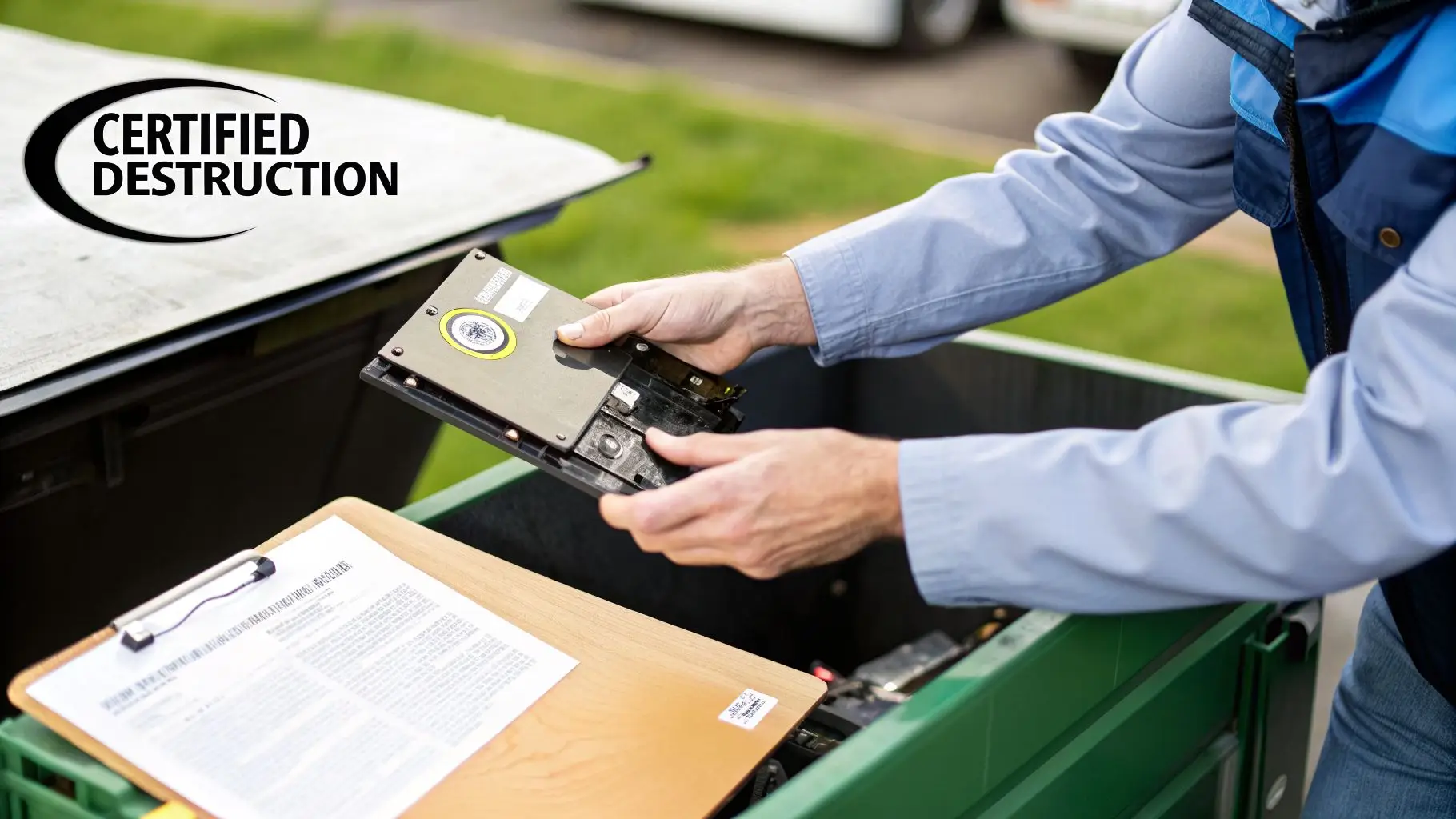
To achieve absolute security, you need certified, verifiable destruction for every server, HDD, and tape drive you retire. This is where data center equipment disposal Iowa City Iowa moves beyond basic file deletion to methods that make data recovery physically impossible.
Comparing Data Destruction Methods
There are three primary methods for secure data destruction. The right choice depends on the media type, your security needs, and whether you plan to reuse or resell the assets.
Software Overwriting: This method uses specialized software to write patterns of ones and zeros over the entire drive, often multiple times, following standards like DoD 5220.22-M. It's an excellent choice for hard drives (HDDs) that can be resold, but it is not effective for solid-state drives (SSDs) due to their wear-leveling technology.
Degaussing: This technique uses a powerful magnetic field to instantly scramble all data on magnetic media like HDDs and tape drives. Degaussing is fast and effective but renders the media unusable afterward.
Physical Shredding: For the highest level of security, nothing surpasses physical destruction. Industrial shredders grind hard drives, SSDs, and other media into tiny, irrecoverable pieces. This is the gold standard for highly sensitive data and is often required for compliance with regulations like HIPAA and GLBA.
The demand for secure IT asset retirement is growing. The global market for data center decommissioning is projected to expand significantly in the coming years, driven by increasing pressure from data security regulations and environmental mandates.
The Importance of Certified Proof
A data destruction job is not complete without the documentation to prove it. A Certificate of Data Destruction is your official, auditable record that your data was securely and permanently destroyed. This document is your shield against liability in an audit or legal challenge.
For any Iowa City business, receiving a detailed Certificate of Destruction is essential for demonstrating due diligence. This certificate should list every asset by serial number, confirming the destruction date and method.
Partnering with a trusted ITAD provider like Reworx Recycling ensures this critical step is integrated into every project. We provide meticulous documentation that meets the toughest compliance standards, giving you complete peace of mind. To see how we handle this, review our guide on certified hard drive destruction. It's the final, crucial step in protecting your organization from a data breach.
Fulfilling Environmental and Regulatory Responsibilities in Iowa
When decommissioning a data center in Iowa City, proper equipment disposal is a serious legal and ethical duty. Mishandling e-waste can lead to environmental contamination from heavy metals like lead and mercury and result in steep fines for violating federal and state laws. For any business committed to corporate citizenship, getting this right is non-negotiable.
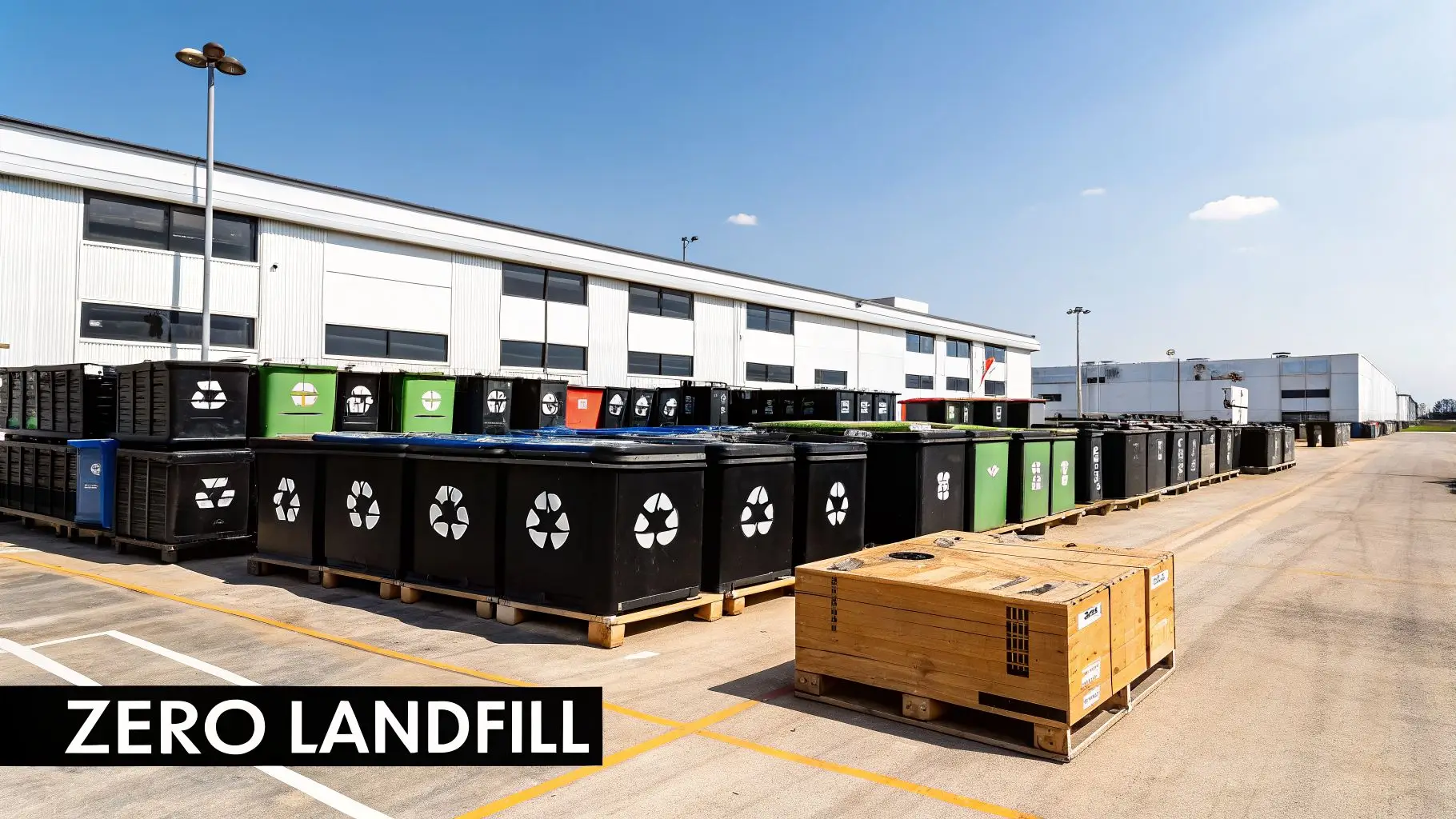
Iowa has a strong commitment to environmental protection, and your disposal methods must align with this standard. Sending old servers to a landfill is not an option. Your e-waste contains hazardous materials regulated by federal laws like the Resource Conservation and Recovery Act (RCRA), which holds you, the generator, liable from "cradle to grave."
Navigating E-Waste Certifications
To protect your business and the environment, partner with a certified e-waste recycler. It’s the only way to ensure responsible handling.
Look for these two primary industry certifications:
- R2 (Responsible Recycling): This certification guarantees that the recycler meets high standards for environmental safety, worker health, and data security throughout the recycling process.
- e-Stewards: Often considered the gold standard, e-Stewards prohibits the export of hazardous e-waste to developing countries and ensures all processes meet the strictest environmental and social benchmarks.
Choosing a partner with these certifications is more than a compliance step; it is tangible proof that your old equipment will be handled responsibly, keeping it out of landfills and unregulated scrapyards.
A partner like Reworx Recycling, a donation-based social enterprise, provides this assurance. We adhere to a zero-landfill policy for all electronics, which not only demonstrates a commitment to sustainability but also enhances your company's Environmental, Social, and Governance (ESG) profile.
The Power of Proper Documentation
Doing the right thing is half the battle; proving you did it is the other. When auditors or stakeholders have questions, a clear and complete paper trail is essential. This documentation is your undeniable proof of a compliant and responsible disposal process.
Your ITAD partner must provide these key documents:
- Chain-of-Custody Records: A detailed log tracking every asset by serial number from your facility to its final disposition.
- Certificates of Data Destruction: Verifiable proof that all data was sanitized according to industry standards.
- Environmental Compliance Reports: Official documentation confirming your equipment was recycled in line with all relevant regulations.
This level of reporting protects your organization from liability and offers concrete evidence of your corporate stewardship to customers, investors, and the Iowa City community. You can find more insights on responsible practices in our guide to electronics recycling in Iowa.
By prioritizing certified partners and thorough documentation, you can turn a standard end-of-life process into a powerful statement about your company’s values.
How to Choose the Right ITAD Partner in Iowa City
Selecting the right partner for your data center equipment disposal in Iowa City Iowa is the most critical decision in your decommissioning project. The right partner acts as a strategic extension of your team, while the wrong one can expose you to data breaches, environmental fines, and reputational damage.
It's vital to distinguish between a true ITAD partner and a simple scrapper. A scrapper may offer cash for old gear but often lacks the certified processes needed for data security and compliance. A genuine ITAD partner provides a complete solution, from strategy and buyback programs to office cleanouts and certified data destruction.
Key Criteria for Vetting ITAD Providers
When evaluating potential partners, be rigorous. This is a risk mitigation exercise.
Here are the non-negotiables to ask about:
- Certifications: Does the vendor hold top-tier certifications like R2 (Responsible Recycling) or e-Stewards? These are your proof of environmental compliance.
- Data Destruction Methods: Do they offer a range of options, including on-site and off-site shredding, degaussing, and certified software wiping? Can they issue a detailed Certificate of Data Destruction for every drive?
- Logistical Capabilities: Can they manage the entire process, including on-site de-installation, professional packing, and secure, GPS-tracked transport? A good partner should simplify your workload.
- Reporting and Transparency: Will you receive a full, transparent report detailing the chain-of-custody, asset value, and final disposition of each item? A trustworthy partner has nothing to hide.
This level of scrutiny is more important than ever as the ITAD market grows, bringing in new, unproven providers.
The Social Enterprise Difference with Reworx Recycling
Beyond the core checklist, there’s another layer to consider. Choosing a social enterprise like Reworx Recycling fundamentally changes the outcome of your project. We view your end-of-life equipment not just as waste to be processed, but as a resource to fuel our community-focused mission.
When you choose to donate your retired equipment through Reworx, you are directly supporting digital inclusion and workforce development programs. We refurbish functional devices for underserved families and use our recycling operations to create valuable job training opportunities.
This approach offers a more holistic and rewarding solution. Your disposal project aligns perfectly with your company's ESG (Environmental, Social, and Governance) goals. What was once an expense becomes a powerful story of corporate responsibility you can proudly share with your stakeholders and the Iowa City community.
By carefully vetting providers and understanding the unique impact a social enterprise can make, you will find a partner that not only protects your organization but also amplifies its positive social footprint.
Ready to transform your IT equipment disposal into a force for good? Partner with Reworx Recycling. Schedule a pickup or contact us today to learn how your business can contribute to a more sustainable and equitable future.
At Reworx Recycling, our mission goes beyond secure and compliant disposal. We turn your retired technology into opportunities for our community. Visit our blog to learn more about how our donation-based social enterprise can benefit your business and our community.