For IT managers and corporate sustainability leaders in Alaska, managing retired electronics is more than a compliance task—it's a significant logistical challenge. The state’s vast geography, from the business hubs of Anchorage to remote industrial sites, demands a sophisticated and secure approach to IT asset disposition (ITAD).
Properly handling an office cleanout or data center decommissioning is non-negotiable. It’s about ensuring airtight data security, adhering to environmental regulations, and safeguarding your company’s reputation. A misstep can expose sensitive corporate and customer data, leading to severe financial and reputational damage. This guide outlines a strategic framework for turning this operational necessity into a corporate asset.
The Unique Challenges of IT Equipment Disposal in The Last Frontier
In a state defined by logistical hurdles and pristine natural environments, a standard recycling playbook is insufficient. Alaska businesses face distinct challenges that require specialized solutions for tasks like computer recycling and laptop disposal.
- Logistical Complexity: How do you cost-effectively and securely transport bulky assets like servers, medical equipment disposal items, or laboratory equipment disposal inventory from a remote location? Shipping costs can be a major barrier.
- Data Security: Maintaining a secure chain of custody is paramount, especially when IT assets travel hundreds or thousands of miles to a processing facility. Secure data destruction is critical.
- Environmental Responsibility: Protecting Alaska’s unique environment is a core corporate responsibility. Ensuring hazardous materials in electronics do not contaminate local ecosystems is essential for any sustainable recycling program.
These are not minor considerations; they demand a partner with proven expertise in navigating such a demanding landscape.
A Strategic Approach to IT Asset Disposition (ITAD)
Fortunately, strategic partnerships and innovative models are making responsible electronics disposal more accessible. Initiatives across the state demonstrate a growing commitment to proper e-waste management, from urban centers to the most rural villages.
For Alaskan businesses, the right ITAD strategy is not a burden—it's a competitive advantage. It reinforces your commitment to sustainability, fortifies data security, and creates a positive community impact.
To scale these efforts, tapping into local resources is key. Exploring Alaska's Grant Funding Ecosystem can help identify support for large-scale or community-wide recycling projects.
Partnering with a social enterprise recycling firm like Reworx Recycling adds another layer of value. Instead of simply destroying outdated technology, our donation-based recycling model refurbishes functional equipment for a second life, helping bridge the digital divide. Reworx simplifies the process with nationwide services, coordinating all logistics for both large and remote collections. We manage everything from secure data destruction to refurbishment, transforming your retired IT assets into a force for good.
You can explore our nationwide electronics recycling services at https://www.reworxrecycling.org/we-cover-all-50-states/ to see how we assist businesses in every corner of the country, including right here in Alaska.
The unique recycling environment in Alaska presents distinct hurdles that require tailored solutions. Below is a breakdown of the common challenges and how businesses can strategically address them.
Key Considerations for Alaska Business Electronics Recycling
| Challenge | Impact on Businesses | Strategic Solution |
|---|---|---|
| Extreme Logistics & High Costs | Shipping heavy electronics from remote locations is often prohibitively expensive and complex, leading to stockpiling. | Partner with a recycler offering consolidated, nationwide logistics. Look for options like palletized shipping or coordinated regional pickups to reduce costs. |
| Data Security Chain of Custody | Long transit distances increase the risk of data breaches if assets are not properly secured from pickup to final processing. | Choose a certified recycler that provides documented, secure chain of custody, on-site data destruction options, and detailed reporting. |
| Environmental Compliance | Strict regulations govern the disposal of hazardous materials (e.g., lead, mercury) found in electronics, with significant fines for non-compliance. | Work exclusively with R2 or e-Stewards certified recyclers who adhere to the highest environmental standards and prevent illegal exporting. |
| Lack of Local Infrastructure | Many remote communities lack accessible, certified e-waste processing facilities, making responsible disposal difficult for local businesses. | Leverage mail-back programs for smaller items and coordinate with a nationwide provider for large-scale collections that serve multiple organizations in an area. |
By proactively addressing these issues, Alaskan businesses can create an ITAD program that is not only compliant and secure but also efficient and aligned with corporate social responsibility goals.
Preparing Your IT Assets for Secure Disposal
Before any retired IT equipment leaves your building, the first move is always to protect your data. For IT managers and business owners, this is about more than just hitting 'delete.' Proper data sanitization is an absolute must for responsible Alaska electronics recycling, safeguarding your company's information, your clients' privacy, and your hard-earned reputation.
A data breach from an old, forgotten hard drive can have devastating consequences. That's why securing your IT assets before they're gone is the best strategy for preventing data breaches. This isn't just a suggestion; it's a core piece of any responsible e-waste plan, especially before an office cleanout or data center decommissioning.
Establishing a Clear Inventory
You can't manage what you don't measure. The foundation of any good IT asset disposition (ITAD) project is a rock-solid inventory. Before you even think about pickup or disposal, you have to know exactly what you're dealing with. Think of it as your roadmap—it ensures every single device holding data is accounted for.
- Document Everything: Fire up a spreadsheet and list each asset. Include the type (laptop, server, HDD), serial number, and any internal asset tags.
- Note the Condition: Is it working, repairable, or just plain dead? This simple classification helps sort items that could be reused from those headed straight for material recovery.
- Flag Data-Bearing Devices: This is the big one. Clearly mark every device that stores data. The obvious ones are computers and servers, but don't forget about networking gear, office phones, and even printers that often have their own internal drives.
A tight inventory is the first link in your chain of custody. It gives you a clear, auditable record of what’s leaving your control and makes the logistics a whole lot smoother. No device gets left behind.
Professional Data Sanitization Methods
Simply deleting files or doing a quick reformat on a hard drive just doesn't cut it. With the right tools, that data is often recoverable. To truly protect sensitive business information, you need professional-grade methods that make the data impossible to get back.
There are two main industry-standard ways to go about it:
- Data Erasure: This method uses specialized software to overwrite the entire hard drive with random data, often in multiple passes. This approach, which follows standards like NIST 800-88, completely wipes all information but leaves the physical drive intact and ready for reuse. It's the go-to choice for newer equipment that will be refurbished and given a second life.
- Physical Destruction: When a drive is old, broken, or held top-secret information, physical destruction is the only way to be 100% certain. This means shredding the drive into tiny, confetti-like pieces, making data recovery physically impossible.
The right choice depends on the asset's potential for reuse and your own internal security policies. A certified partner like Reworx Recycling can handle both, giving you peace of mind that your data is handled according to the highest industry standards.
This infographic shows the process we use for Alaska e-waste, focusing on logistics, security, and the positive impact we can make together.
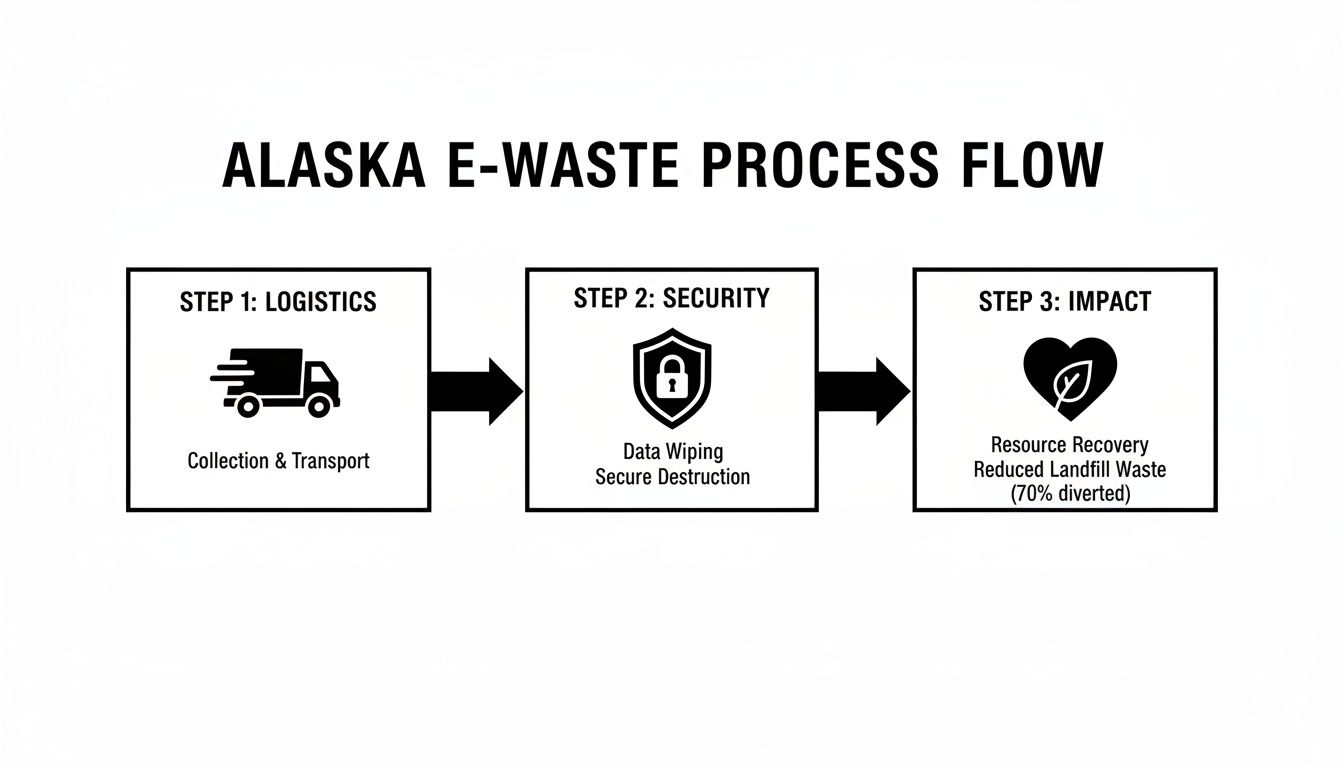
As you can see, secure data destruction isn't just a step in the process—it's the central pillar that connects the logistics of collection to positive outcomes for our communities.
Maintaining an Unbroken Chain of Custody
From the second an asset is out your door, you need a clear record of where it is and who has it. This is what we call the chain of custody. A transparent, well-documented chain of custody is your proof that every device was handled securely and recycled the right way.
A documented chain of custody is not just a best practice; it's a critical liability shield. It provides auditable proof that your organization met its legal and ethical obligations for data security and environmental compliance.
Your recycling partner should provide serialized reporting that tracks each device from your facility to its final destination, whether that's refurbishment, resale, or destruction. This paperwork, including a Certificate of Data Destruction, is essential for any compliance audits and for your own internal records.
For any business owners or IT managers wanting to dig deeper, Reworx offers a complete guide on how to prepare your company's electronics for recycling. Working with a certified social enterprise ensures every single step is managed with the highest level of security and accountability.
Choosing a Certified and Responsible Recycling Partner
Once you've prepped your assets, the next big decision is picking an IT Asset Disposition (ITAD) partner. This is a critical step. Not all electronics recyclers are the same, and for organizations in Alaska, getting this choice right is absolutely essential for protecting your data, your reputation, and the environment.
Who you choose will determine if your old tech becomes a security nightmare or a benefit to the community. This goes way beyond just finding someone to haul away old equipment. A truly responsible partner gives you a secure, verifiable process from the moment they pick up your gear until its final disposition. This is where industry certifications become your most reliable guide.
Why R2v3 and e-Stewards Certifications Matter
When you're looking at potential vendors, certifications aren't just a "nice-to-have"—they're a must. Two in particular stand out as the gold standard in the ITAD world: R2v3 (Responsible Recycling) and e-Stewards. These aren't just logos to slap on a website; they represent a deep, audited commitment to doing things the right way.
-
R2v3 Certification: This standard covers the entire lifecycle of an electronic device. It ensures recyclers are following strict rules for environmental safety, worker health, data security, and tracking where materials go. An R2v3-certified partner gives you peace of mind that your e-waste won't be illegally exported or tossed in a landfill.
-
e-Stewards Certification: Developed by the Basel Action Network, e-Stewards is often seen as the most stringent standard out there. It has a zero-tolerance policy for exporting hazardous electronic waste to developing nations and puts a heavy emphasis on secure, audited data destruction.
Working with a recycler holding these certifications is a powerful form of assurance. It tells you they've been independently audited and meet the highest global standards for handling sensitive data and materials. Honestly, this should be your first and most important filter when evaluating options for Alaska electronics recycling.
Key Questions to Ask Any Potential Partner
Beyond just checking for certifications, you need to dig a little deeper. Asking direct, pointed questions is the best way to gauge a vendor's transparency and skill. Before you sign anything, make sure you get crystal-clear answers to these:
- Can you give me a complete, serialized report for all my assets? A reputable partner should be able to track every single device from pickup to its final destination, providing a detailed report that matches your own inventory.
- What's your data destruction process, and will I get a Certificate of Data Destruction? They need to clearly explain their methods—like NIST 800-88 compliant wiping or physical shredding—and confirm they provide auditable certificates for every single data-bearing device.
- Do you have a zero-landfill policy? This question gets to the heart of their environmental commitment. The goal should always be to maximize material recovery and reuse, not just move waste from one place to another.
- Can you walk me through your downstream vendor process? This is all about transparency. You have a right to know where your materials are going after they leave the primary facility. A certified partner will have a fully audited and vetted network of downstream processors.
For a more detailed checklist, our guide on selecting a reliable e-waste recycling partner offers additional insights to help you make an informed decision.
The Added Value of a Social Enterprise Model
Choosing a certified recycler is non-negotiable for compliance and security. But when you partner with a social enterprise like Reworx Recycling, you elevate your ITAD program from a simple operational task to a powerful corporate social responsibility (CSR) initiative.
By choosing a donation-based social enterprise, your company’s retired but still-functional technology—like laptops, monitors, and tablets—can be securely refurbished and given a second life. This directly supports digital inclusion by providing essential tools to students, non-profits, and underserved communities right here in Alaska and across the nation.
This approach transforms your routine tech upgrade or facility cleanout into a real, tangible community investment. Instead of being destroyed, your old assets create new opportunities. And for any non-functional items, Reworx provides the same rigorous, certified data destruction and responsible recycling, ensuring you meet all your security and environmental obligations while maximizing your positive impact.
Managing Recycling Logistics Across the State
Getting bulky or sensitive electronics from your office to a certified processing facility is a huge hurdle, especially in a state as vast as Alaska. When your business is managing a facility cleanout or a major IT refresh, you need a solid plan that balances cost, security, and raw efficiency. The right approach really depends on where you are and just how much equipment you’re moving.
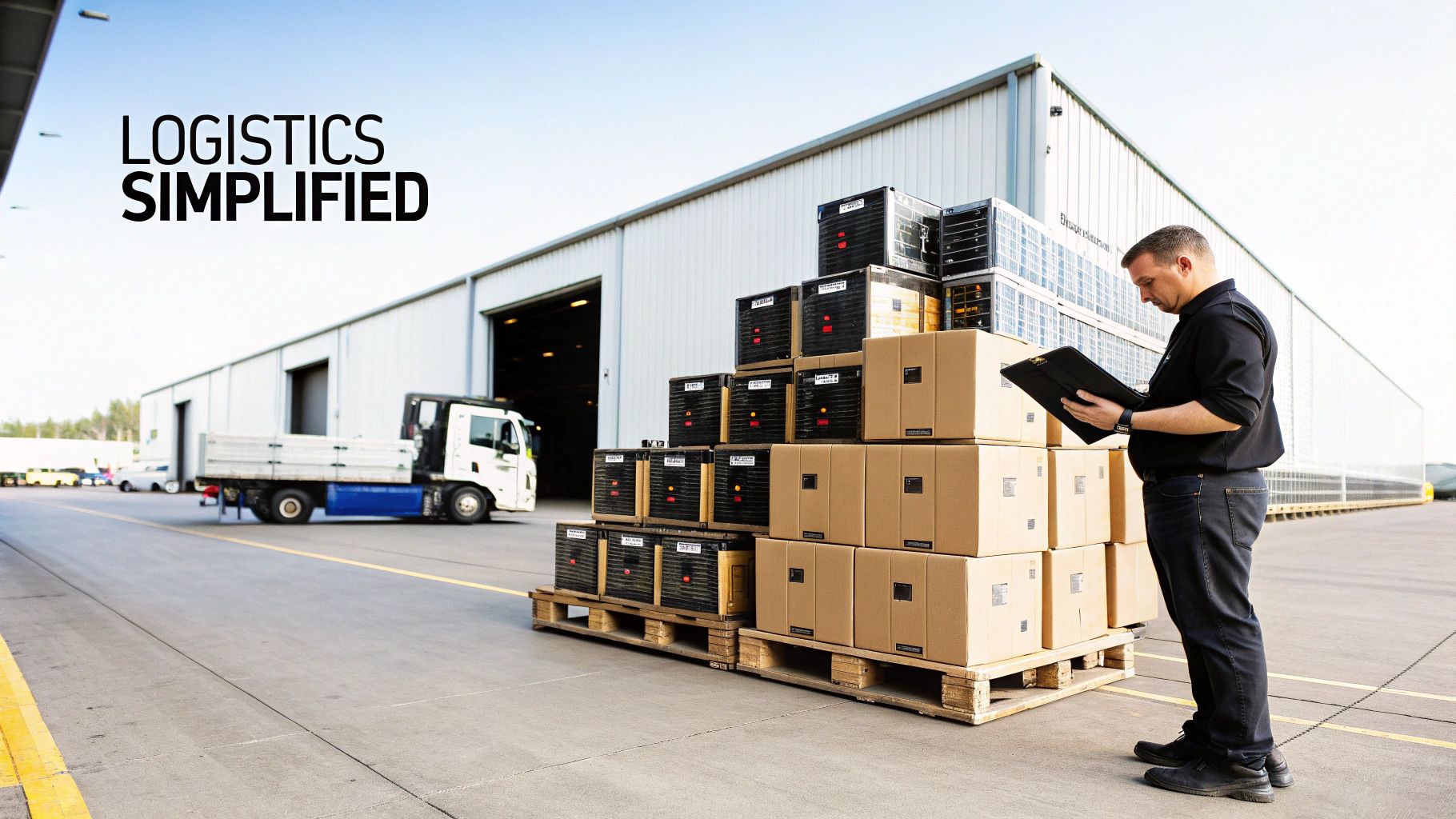
Think about a large financial institution in Anchorage upgrading its entire server room. For a project like that, a scheduled pallet pickup is almost always the answer. It’s perfect for high-volume, consolidated disposals. We’re talking about inventorying the assets, shrink-wrapping them onto pallets, and loading them directly onto a freight truck. This minimizes handling and, crucially, maintains a secure chain of custody from the moment it leaves your building.
Now, picture a small engineering firm in a remote community like Nome that needs to retire a few dozen laptops. Their challenges are completely different. For them, a mail-back program is often the most practical solution. A certified recycler can provide secure, prepaid shipping boxes specifically designed to protect devices in transit. This ensures that even businesses in the most far-flung locations have a clear path to responsible Alaska electronics recycling.
Comparing E-Waste Logistics Options for Alaskan Businesses
Choosing the right transport method is critical for a smooth and secure process. Let's break down the common options to help you decide what fits your situation best.
| Logistics Method | Best For | Key Considerations |
|---|---|---|
| Scheduled Pallet Pickup | Large-scale disposals, office cleanouts, data center decommissioning, and businesses in major hubs like Anchorage or Fairbanks. | You'll need enough space for palletizing assets and a loading dock or forklift for easy loading. This method offers the highest level of security for bulk disposals. |
| Mail-Back Programs | Smaller businesses, organizations in remote locations, or for disposing of smaller quantities of high-value or sensitive devices. | Make sure the provider offers serialized tracking and tamper-evident packaging. It's a great way to keep a consistent recycling schedule without waiting to build up a large volume. |
| Coordinated Regional Collection | Multiple businesses in a less-populated region combining their e-waste to make a single, cost-effective freight shipment feasible. | This takes coordination with neighboring organizations and a central spot for consolidation. It's an excellent way to share the logistical costs and responsibilities. |
Making the right choice from the start prevents headaches, ensures security, and keeps your project on track.
Ensuring a Secure Chain of Custody
No matter which method you go with, maintaining an unbroken and documented chain of custody is non-negotiable. This is your auditable proof that every single device was handled securely, from your front door to its final destruction.
Here’s a real-world scenario: a regional medical clinic is retiring old diagnostic tools and patient check-in tablets. These devices are loaded with highly sensitive protected health information (PHI). For this project, the best approach is a combination of on-site hard drive shredding followed by a locked, sealed pallet shipment. This process guarantees data is physically destroyed before it leaves their premises, and the serialized asset tracking confirms every item is accounted for when it arrives at the recycling facility.
This is where having a nationwide partner like Reworx Recycling makes a world of difference. We act as your single point of contact to manage these complex logistics. Whether you need to coordinate a cleanout across multiple locations in the state or just find the best shipping option for a remote office, our team cuts through the complexity. To learn more, check out our insights on the benefits of remote e-waste recycling services.
The goal of any logistics plan should be to make responsible recycling easy and secure, no matter where your business is located. A strong partner removes the guesswork, ensuring compliance and peace of mind.
These logistical challenges are part of a much bigger picture. According to the EPA, responsible electronics recycling conserves natural resources and reduces the pollution and greenhouse gas emissions caused by manufacturing new products. By choosing a certified, domestic partner, you ensure your company’s retired assets contribute to a healthier planet.
Turning E-Waste Into a Community Asset
A smart plan for Alaska electronics recycling is so much more than a line item in your operational budget. It’s a genuine opportunity to create real, lasting value for communities right here at home.
For sustainability leaders and IT managers, the story of your company's retired technology doesn't have to end with a certificate of destruction. It can be the start of a new chapter—one that strengthens Alaskan communities and puts your commitment to corporate citizenship on full display. This is where responsible IT asset disposition (ITAD) becomes a powerful act of social good.

The choice you make for your IT equipment disposal is a direct reflection of your organization's values. When you partner with a social enterprise like Reworx Recycling, you do more than just check a compliance box. You become an active participant in a circular economy that extends the life of valuable technology, conserves resources, and champions digital inclusion.
From Corporate Office to Community Classroom
Think about the journey of a retired corporate laptop. Through a standard recycling process, it’s securely wiped and broken down into its base materials. That’s an environmentally sound outcome, no question. But through a donation-focused model, that same laptop can make a far greater impact.
After undergoing our rigorous, certified data destruction and professional refurbishment, that device can be placed into the hands of a student who needs it for homework, a small non-profit managing its operations, or an individual seeking job training. This is the heart of our dual mission at Reworx: provide best-in-class, secure ITAD services while turning e-waste into a community asset.
This approach is especially critical in a state like Alaska, where many communities face unique economic and social hurdles.
The state's key industries—oil and gas, fishing, and tourism—rely on a skilled workforce. By donating functional IT equipment, your business directly supports workforce development programs and educational initiatives that empower Alaskans with the digital literacy skills needed to thrive in these sectors.
Your company’s retired assets can become the very tools that empower Alaskans, bridging the digital divide one device at a time.
The Power of Corporate Donation Programs
Weaving a corporate donation program into your ITAD strategy is a seamless way to amplify your social impact. It turns a routine operational task—like an office cleanout or tech refresh—into a measurable contribution to your corporate social responsibility (CSR) goals.
Here’s how straightforward it is with a partner like Reworx:
- Secure Logistics: We manage the entire process, from scheduling a pickup at your facility in Alaska to transporting the equipment securely.
- Certified Data Destruction: Every single data-bearing device undergoes audited data sanitization. You get full documentation for your compliance records.
- Assessment & Refurbishment: Our technicians assess all functional equipment, making any necessary repairs and upgrades to prepare it for a productive second life.
- Community Distribution: We partner with local schools, charities, and non-profits across the state to get the refurbished technology to those who need it most.
This model guarantees your data stays secure and your environmental obligations are met, all while creating a positive, reportable social outcome. The story is simple and compelling: your old tech is helping build a stronger community.
Partner with Reworx for a Greater Impact
Ready to transform your company's e-waste from a liability into a cornerstone of your corporate citizenship? Partnering with Reworx Recycling makes it easy to manage your retired IT assets responsibly and with purpose. We handle all the complex logistics and security so you can focus on the positive impact.
Your business can be a catalyst for change. Whether you're managing a large-scale facility cleanout in Anchorage or retiring a few dozen devices from a remote office, your decision can support digital equity and workforce development across Alaska.
Schedule a pickup or learn more about our corporate donation programs to see how your retired IT equipment can make a real difference. Let's work together to turn e-waste into opportunity.
Your Questions About Alaska E-Waste Answered
When you're dealing with IT asset disposition, a lot of questions pop up, especially for businesses trying to manage things in Alaska's unique environment. IT managers and sustainability leaders often ask us the same things, so we've gathered the most common queries to give you clear, direct answers for your Alaska electronics recycling strategy.
What Is the Most Secure Way to Dispose of IT Equipment?
When any equipment holds sensitive data, the only real option is to work with a certified ITAD provider like Reworx Recycling. We offer auditable, fully documented data destruction that gives you peace of mind.
Just deleting files or reformatting drives isn't enough—that data is often surprisingly easy to recover. True security comes down to one of two professional methods:
- Cryptographic Erasure: This is a software-based wipe that overwrites every single sector of a drive, following strict NIST 800-88 standards. It makes data completely irretrievable but keeps the hardware intact for reuse.
- Physical Shredding: For devices at the absolute end of their life, this is the ultimate guarantee. We use mechanical shredders to pulverize a hard drive into tiny, unrecognizable fragments, making data recovery impossible.
No matter which method is used, you should always insist on receiving a Certificate of Data Destruction. Think of it as your official proof of compliance—a critical document for limiting corporate liability.
My Business Is in a Remote Alaskan Community—What Are My Options?
We get it. Logistics are a huge hurdle for businesses outside the main hubs, but there are definitely effective solutions.
For smaller batches of devices, secure mail-back programs are a convenient and safe bet. But if you’re looking at a full office cleanout, it almost always makes more sense to consolidate everything onto pallets for a single, scheduled freight shipment.
It's also worth checking with your local municipalities or tribal governments. They sometimes organize regional collection events or have backhaul programs that can make the process much simpler. A national partner like Reworx can step in to help coordinate these complex logistics, giving you a single point of contact even for the most remote operations.
How Does a Donation-Based Recycling Program Work?
A donation-based model, like the one we run at Reworx Recycling, is all about maximizing both security and social good. Instead of just shredding every retired asset, we first look for functional equipment that has the potential for a second life.
Here's how it works for your business:
- We collect your retired laptops, desktops, and tablets and transport them securely.
- Every single device undergoes certified, auditable data wiping to eliminate all sensitive information.
- The functional equipment is professionally refurbished and tested by our technicians.
- Finally, we donate these refreshed devices to schools, non-profits, and community organizations to help bridge the digital divide.
You still get all the necessary documentation for data destruction and recycling, but with the huge plus of turning a disposal liability into a powerful community asset. It’s a great way to bolster your company's social responsibility goals.
What Types of Equipment Can Be Recycled?
A good ITAD service can handle a much wider array of business electronics than just your standard office computers. This includes all sorts of assets that are essential to modern industries.
Our services cover:
- Standard Office Tech: Laptops, desktops, servers, monitors, and networking gear.
- Specialized Hardware: Data center equipment, medical diagnostic tools, and even laboratory equipment disposal.
- Business Systems: Point-of-sale (POS) systems, telecommunication devices, and industrial controllers.
Certified recyclers are equipped to handle the unique materials and data security needs of all these items, ensuring every last piece of your retired inventory is managed responsibly. For a deeper dive into what we accept and other common inquiries, you can always check out our frequently asked questions about electronics recycling.
Your company's retired IT assets can become a powerful tool for community development. At Reworx Recycling, our donation-based social enterprise makes it easy for Alaskan businesses to recycle responsibly while making a tangible social impact. Whether you're planning an office cleanout or decommissioning a data center, partner with us to turn your e-waste into opportunity.
Schedule a pickup or learn more about our corporate donation programs today.