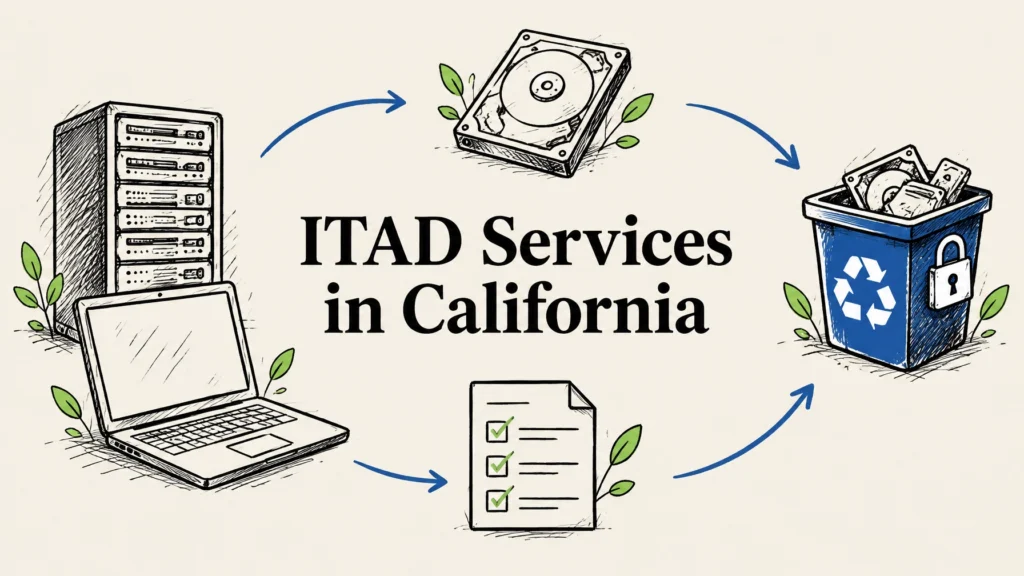
ITAD services help California businesses retire computers, servers, storage media, and other technology with a plan for data security, responsible recycling, and possible value recovery. California has rules for handling certain unwanted electronics, but requirements can depend on the device and the activity involved. Before a project, confirm current guidance with CalRecycle and the California Department of Toxic Substances Control (DTSC).
Why California businesses need a clear ITAD plan
An equipment refresh can leave you with laptops, monitors, servers, networking equipment, phones, and storage drives to manage. Some devices may still have resale or reuse potential. Others may need secure data destruction or responsible recycling.
California’s e-waste framework includes restrictions on disposing of certain covered electronics in regular trash and landfills, as well as a Covered Electronic Waste program funded through fees on certain devices. These rules do not necessarily apply in the same way to every electronic item. The specific handling requirements can depend on what the device is, whether it is considered waste, and how it is collected or processed.
For businesses, the practical takeaway is simple: don’t assume old electronics belong in a dumpster or that one rule covers every device. Check current state guidance, identify which equipment needs special handling, and choose a provider that can explain its process and documentation.
What does “certified recycler” mean?
The term can refer to different things. California authorization or notification requirements are not the same as voluntary recycler certifications, and a certification by itself does not confirm that every activity or facility meets every state requirement.
When evaluating a provider, ask which facilities and downstream partners will handle your equipment, what authorization or registration applies, and what environmental certifications cover the actual processing sites and work. For responsible downstream processing, you can also ask whether the provider follows recognized practices, such as those associated with R2 or e-Stewards. Verify details that matter to your organization rather than relying on a general claim.
The four pillars of a business ITAD project
A full-service IT asset disposition project connects equipment tracking, data security, environmental handling, and reporting. Use these pillars to compare providers and build a plan your team can review later.
| Compliance pillar | What to consider | What a provider should explain |
|---|---|---|
| Disposal legality | Which devices may have special handling requirements | How equipment is sorted and routed, and how you can check current state requirements |
| Data security | Which media hold sensitive information and what method is appropriate | Wiping or physical destruction, custody controls, and the records you receive |
| Reporting | Whether your team needs proof of pickup, processing, or destruction | Asset-level records, a certificate of destruction, and how discrepancies are handled |
| Sustainability | Whether equipment can be reused before recycling | How reusable assets are evaluated and how remaining electronics reach responsible downstream processors |
A provider should be able to describe each stage in plain language. If your organization has HIPAA, PCI DSS, state data-breach law, contract, or internal-policy obligations, use those requirements to guide your questions. A recycling service cannot decide which rules apply to your organization, so confirm requirements with your compliance or legal team.
Secure data destruction: wiping or shredding?
Deleting files or resetting a device does not, by itself, show that stored information has been securely removed. A data-bearing asset should be accounted for until its data has been handled using a method appropriate to the media, the device’s condition, and your plans for reuse.
For equipment that may be reused, a secure wipe aligned with NIST SP 800-88-style practices may be appropriate when the media and process support it. If a drive is damaged, cannot be reliably wiped, or must not be reused, physical hard drive shredding may be the better route. The choice should be documented rather than assumed.
Ask for a clear chain of custody from pickup through processing. For destroyed media, request a certificate of destruction that identifies what was handled and records the outcome. For a wipe, ask what evidence is available to show the process completed. A certificate is most useful when it can be matched to your inventory.

A California ITAD project, from audit to certificate
A defined process helps your IT, facilities, security, and sustainability teams coordinate. Here is a practical sequence to adapt to your organization:
- Build an asset inventory. List the equipment you plan to retire, including laptops, desktops, servers, network devices, phones, monitors, and storage media. Record asset tags or serial numbers when available, and flag devices that may contain sensitive data.
- Decide what needs to happen to each item. Identify equipment that may be suitable for reuse or resale, equipment that needs data wiping, and media that should be physically destroyed. Note unusual items, damaged drives, and equipment with batteries so handling questions are raised early.
- Confirm the handling plan. Check applicable state guidance and your organization’s policies. Ask the provider where equipment will go, how data-bearing devices will be protected in transit, and which downstream facilities or partners may process the material.
- Schedule collection and record the handoff. Agree on pickup details and reconcile the equipment collected against your inventory. Free nationwide pickup can make larger projects easier to coordinate across locations. Depending on the project, tamper-proof drop-off boxes and after-hours scheduling may also help with access and timing.
- Review the results and close the file. Match certificates of destruction, wipe records, and recycling or disposition reporting to the original inventory. Follow up on missing or mismatched items before closing the project.
Reworx offers free data destruction and can arrange secure wiping or hard drive shredding, with a certificate of destruction for applicable destruction services. If your equipment may have resale value, ask whether it is eligible for equipment buyback and how that option fits with your data-security requirements.
Recover value without losing sight of security
Not every retired asset has the same outcome. Some equipment may be suitable for reuse or buyback. Other devices may be outdated, damaged, or better suited to material recovery through electronics recycling.
Value recovery should come after the data-handling plan, not instead of it. Ask how the provider decides whether equipment can be reused, how sensitive information is addressed first, and how items that cannot be reused are routed. Reworx provides IT asset disposition services and electronics recycling for organizations planning equipment retirement.

Responsible recycling also means asking what happens beyond the initial pickup. Look for clear answers about downstream processing and the environmental standards or certifications that apply to the facilities involved. Reworx’s certified eco-friendly recycling programs are designed to support responsible handling, while asset reuse can help extend the useful life of eligible equipment.
Reworx serves organizations nationwide across all 50 states, with headquarters in Smyrna, Georgia, in metro Atlanta. For teams coordinating a project, you can also text for fast service; pickup and scheduling needs can be discussed for your locations.
Questions to ask before choosing an ITAD provider
Before booking, ask:
- What equipment do you accept, and are any items excluded?
- How do you document pickup, transport, and receipt?
- When do you recommend wiping, and when do you recommend shredding?
- What records will we receive for data destruction and final disposition?
- Which downstream facilities handle the equipment, and what standards or certifications apply to them?
- Can you coordinate pickup across multiple sites or outside regular business hours?
A provider should answer these questions clearly and explain where your organization needs to confirm its own legal or compliance requirements.
Frequently asked questions
Is it illegal to throw away electronics in California?
Some covered electronic devices are subject to special handling rules and should not go in ordinary trash or to a solid-waste landfill. The requirements depend on the device and circumstances, so check current CalRecycle electronics guidance and DTSC rules before disposal.
What are certified electronics recyclers in California?
“Certified” can mean a voluntary environmental or data-security certification, while state authorization and notification are separate matters. Ask which facilities will handle your equipment, what requirements apply to them, and which certifications cover the specific sites and activities.
How much do ITAD services cost in California?
Pricing depends on the equipment, quantity, condition, data-destruction needs, pickup locations, and project logistics. Ask for a quote that explains what is included, whether equipment buyback may apply, and how data destruction and reporting are handled.
Can a California business use a nationwide ITAD provider?
Yes, a nationwide provider can coordinate projects across locations, but you should still confirm how equipment from each site will be collected, documented, and routed. Reworx offers free nationwide pickup and free data destruction, with flexible scheduling options available by arrangement.
When you’re ready to retire business electronics, start with an inventory and a data-security plan. Then contact Reworx about data destruction or coordinate a pickup to discuss the right next step for your equipment. Reworx’s mission also includes bridging the digital divide by helping get refurbished technology to marginalized and vulnerable communities for education and career readiness.